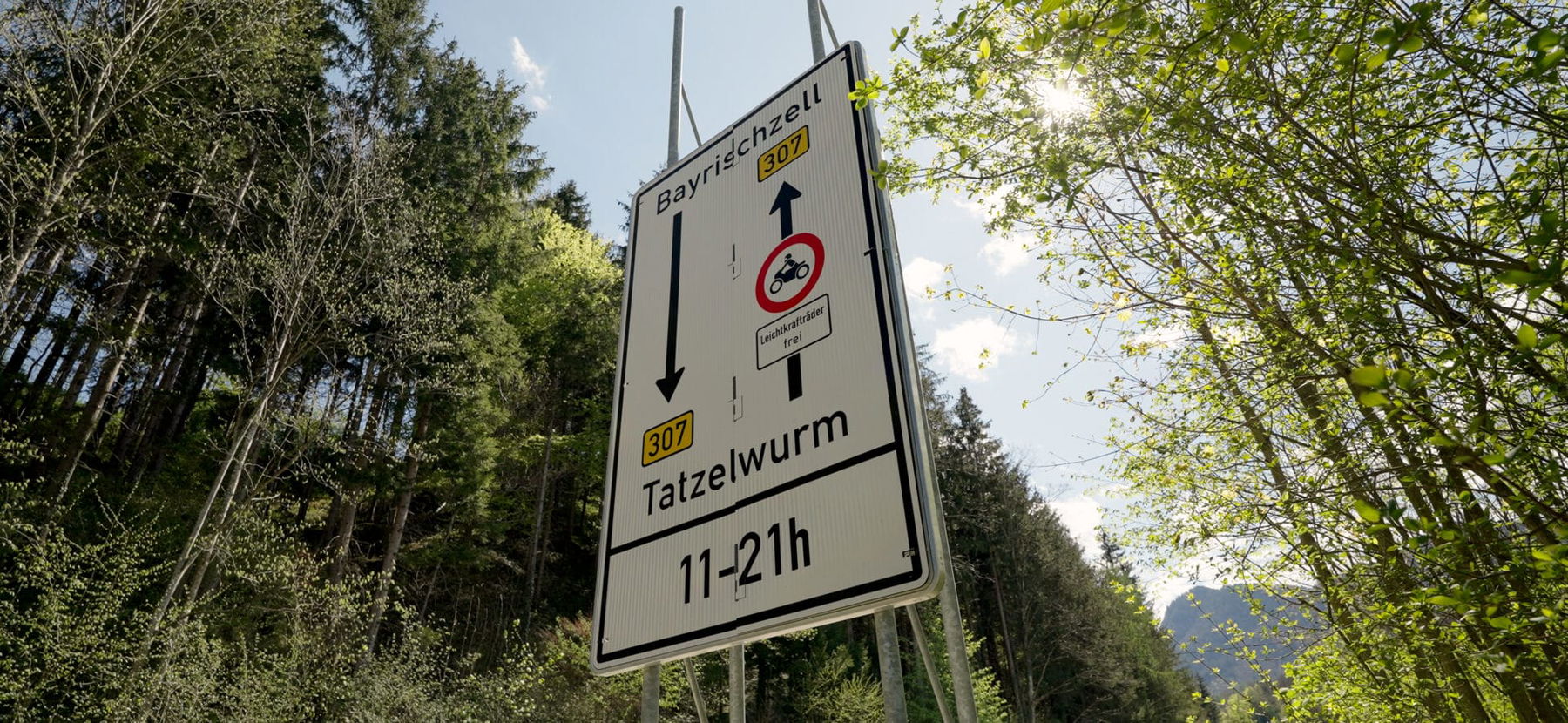
- The B500 round table meets on 17 November and aims to set measures for the 2027 season
- In Thuringia, the accident commission will discuss the rumble strips near Oberhof in November, and a weekend riding ban is also being demanded
- At the Sudelfeld, the districts of Rosenheim and Miesbach must decide on 2027 after the end of the traffic trial
For many motorcyclists, autumn is the time when the bike is deregistered or put away for the winter. For authorities, district offices and accident commissions, however, this is when decisions about the next season begin. At several well-known routes in Germany, discussions are currently under way that will determine where riders will still be allowed to ride freely in spring 2027. A look back shows that this timing is no isolated case, and that a closure rarely stays where it was decided.
Which decisions on road closures for motorcycles are due this winter?
Decisions are due on at least three routes in the coming weeks: on the B500 in the Black Forest, between Zella-Mehlis and Oberhof in Thuringia and at the Sudelfeld in Upper Bavaria. In each case, the question is what will apply from the 2027 season.
B500: Round table aims to decide on measures for 2027
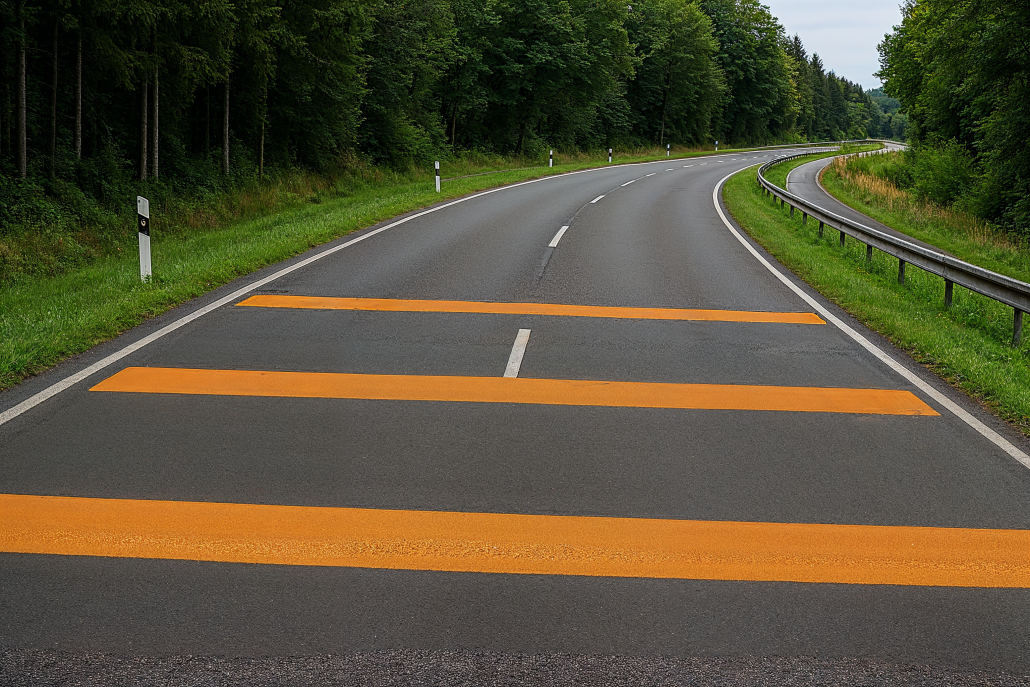
On the Black Forest High Road, a round table will meet for the second time on 17 November. At the first meeting in September, authorities, towns and police agreed on a common approach. More checks are planned, including with unmarked vehicles and drones. The existing legal options for confiscating motorcycles are to be used consistently. Also on the list are rumble strips and markings in bends, logbook requirements and one-way rules on sections with a particularly high number of accidents. The reason is the current season’s record: by September, police had counted 23 motorcycle accidents on the B500, and four people died.
A riding ban has not officially been decided. The mayor of Baden-Baden calls it “the very last resort”. The one-way rule nevertheless deserves attention. A genuine one-way street would have to apply to everyone, including residents, buses and delivery traffic, and is therefore considered unlikely. Rennleitung #110, an association founded by active and former police officers that is open to everyone and with which the mayor wants to work in future, was not admitted to the meeting. According to the association, however, a temporary closure for motorcycles only in one direction was openly discussed with it, following the Bavarian model as at the Sudelfeld. This has not been officially confirmed. If the one-way rule is meant in this way, it would be a road closure in one direction for motorcyclists, even if it is called something else.
Oberhof: Rumble strips under review
Since September 2025, rumble strips have been installed at seven points on the road between Zella-Mehlis and Oberhof. In November, the accident commission of the Schmalkalden-Meiningen district will discuss whether they stay or are removed again. At the same time, a bus operator’s demand to close the route to motorcycles at weekends is on the table.
Sudelfeld: Traffic trial ended, decision open
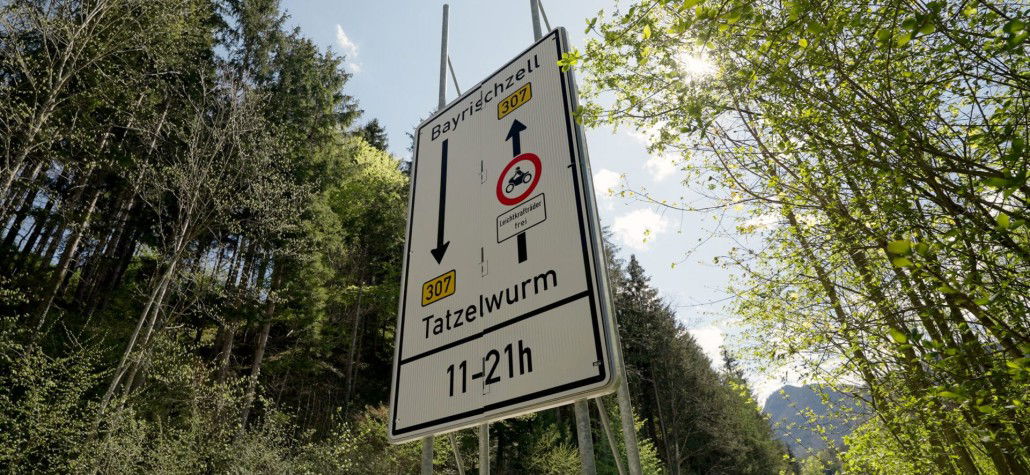
At the Sudelfeld, the B307 towards Bayrischzell was closed to motorcycles daily from 11 am to 9 pm in the 2025 and 2026 seasons, each time from spring to autumn. The traffic trial ended at the end of September 2026, a month earlier than originally ordered. Over the winter, the districts of Rosenheim and Miesbach will decide whether it will continue in 2027 or whether the closure will even become permanent. There is no fixed timetable for this yet.
Why are decisions on road closures usually made in autumn and winter?
The official explanation is obvious: a season’s accident record is only complete in autumn. Near Oberhof, for example, the police statistics are available at the end of October at the earliest, and the discussion takes place in November.
However, this is precisely where the contradiction lies. For many motorcyclists, the season is not even over at the end of October. A record that is finished just a few days after the end of the season can hardly reflect the last few weeks. And on the B500, the measures are supposed to take effect from the 2027 season, so the schedule is tight.
Regardless of the reason, the timing has a clear effect. In November, many motorcycles are deregistered. Those who are still riding rarely set off on a protest ride in wet and cold conditions. By the time the signs go up in spring, the news is months old, and many of those affected have come to terms with it. None of the authorities say whether they deliberately choose this timing, and it cannot be proven either. The only certainty is that the decisions fall at a time when hardly any motorcyclist is paying close attention.
When were previous motorcycle closures announced?
A look at well-known cases shows a similar pattern. Decisions were either made after the end of the season or so shortly before the start that there was hardly any time for objections.
- At the Feldberg in the Taunus, plans for closures became public in November 2021.
- That the rule at the Kesselberg would remain permanent became known in mid-January 2025.
- At the Sudelfeld, covered signs suddenly appeared along the route in April 2025 without any prior announcement. Motorcycles.News was on site after a tip-off, looked under the covers and reported on it before there was a press release. The district offices only commented on 23 April, and the closure applied from 30 April.
- On the B274 in the Rhein-Lahn district, the weekend closure was announced on 1 July 2025, in the middle of the season. It came into force in August, so there were only a few weeks in between there too.
What happens to motorcycle traffic after a closure?
The traffic does not disappear, it shifts to other routes. This is shown most clearly by the development from the Kesselberg via the Sudelfeld to the Sylvenstein.
At the Kesselberg between Lake Kochel and Lake Walchen, motorcycles had already been banned from riding uphill, towards Lake Walchen, on weekends and public holidays since 1978. In 2023, this was reorganised in a traffic trial. Since then, the uphill route has been closed to motorcycles daily from April to October between 3 pm and 10 pm, but in return it is open at weekends until the afternoon. This rule has applied permanently since 2025, while the downhill route remains open.
Accidents fell on the closed section itself. The State Building Authority in Weilheim reports a drop of around 40 percent for the route between Kochel and Urfeld in the two trial years. Accidents caused by motorcyclists fell from an average of 20.8 per year in the period 2018 to 2022 to 11.5 per year in 2023 and 2024.
Elsewhere, however, the figures rose. As early as summer 2023, police observed that motorcyclists had been switching to other routes since the extended Kesselberg closure, and described the situation at the Sudelfeld as similar to a race track. In April 2025, they explicitly spoke of a displacement effect towards the Sudelfeld. The Rosenheim district office also considers an effect of the Kesselberg rule possible, as accident figures there rose from 2023. The response to this was the next closure.
The fundamental problem becomes clear in a response from the Rosenheim district office to an inquiry by Motorcycles.News. Asked whether the consequences of the Sudelfeld closure for routes such as the Sylvenstein are being recorded, the authority referred to its jurisdiction: it can only issue orders within its own district. Each office thus solves its own problem, while where the traffic moves afterwards lies outside its field of view.
This effect is already an issue on the B500 too. The mayor of Baden-Baden himself says that motorcyclists are switching routes, and already names the Rote Lache and the route near Loffenau as the next sections for measures.
Is the Sylvenstein facing the next motorcycle closure?
It is already being demanded, but nothing has been decided. The mayor of Lenggries called for a partial closure in August 2025, explicitly as a last resort. The district office has so far considered a riding ban legally unfeasible because the roads are too important for traffic across the border to Austria.
The shift to the Sylvenstein reservoir near Lenggries began even before the closure at the Sudelfeld. In April 2024, police spoke of the motorcycle scene migrating from the Kesselberg to the Sylvenstein. For 2024, they counted 16 motorcycle accidents there with nine seriously injured. The mayor now attributes the accidents to diverted traffic from the Kesselberg and Sudelfeld. According to him, the fire brigades from Fall and Vorderriß were called out to a total of 50 incidents in 2025. However, the police’s season record for 2025 shows fewer accidents on the B307 between Kaiserwacht and Vorderriß than in the previous year.
The mayor has not yet said which section he wants closed. The stretch of the B307 between the dam and the Faller-Klamm bridge is considered a hotspot. It does not lead to the Achen Pass, but via Fall to Vorderriß. From there, a toll road leads to Wallgau or into the Tyrolean Riss valley with the Großer Ahornboden, which can only be reached by vehicle via Bavaria. A closure would therefore not cut off the route there, but would lengthen it considerably via Wallgau and the toll road.
Why do traffic trials often turn into permanent closures?
A traffic trial is legally easier to enforce than an indefinite closure. Many closures therefore begin as a trial and are then continued.
The evaluation of such a trial has a built-in weakness. Where motorcycles are not allowed to ride, they cannot crash there either. A decrease in accidents on the closed section is therefore almost inevitable and says little about how many accidents have merely shifted to other routes. Nevertheless, the result is usually regarded as a success and as a reason to keep the rule. At the Kesselberg, the trial became a permanent rule, and on the B274 the weekend closure was extended. In Tyrol, the rule under which motorcycles with a stationary noise level of more than 95 decibels according to the vehicle documents may not use certain routes has been renewed every year since 2020, in 2026 from 15 April to 31 October. Yet the registered stationary noise level says nothing about how “loud” a motorcycle is when riding. Both the Sudelfeld and the Tyrolean model are often cited as role models in the debate.
What role do motorcycle associations play in road closures?
Associations and clubs are often the only ones representing motorcyclists in these procedures. They write statements, hold talks with authorities and, if necessary, go to court, as with the lawsuit against the Sudelfeld closure supported by the BVDM.
How much weight their voice carries depends heavily on how many members and supporters stand behind them. Precisely because decisions are made in winter, when little attention is paid to the routes, organised representation is particularly important here. This also applies to motorcyclists who never ride an affected route themselves: every closure shifts traffic to other roads, and the chain from the Kesselberg to the Sylvenstein shows how far this can reach. An overview of current road closures for motorcycles in Germany and neighbouring countries shows how many routes are now affected or threatened.
Frequently Asked Questions
-
When will a decision be made on the measures for the B500?
The B500 round table meets for the second time on 17 November 2026. Specific measures for the 2027 season are to be decided there, such as more checks and logbook requirements. A riding ban has not officially been decided.
-
Will the Sudelfeld be closed to motorcycles in 2027?
That is still open. The traffic trial with the daily closure towards Bayrischzell ended at the end of September 2026. The districts of Rosenheim and Miesbach will decide over the winter whether there will be a continuation or a permanent rule.
-
Why are road closures for motorcycles usually decided in winter?
Authorities point out that the accident figures for a season are only available in autumn. At the same time, many motorcycles are deregistered by then, and protest is harder to organise. No authority confirms whether the timing is chosen deliberately.
-
How long does the Kesselberg closure apply?
Since 2025, the uphill section has been closed to motorcycles every year from April to October, daily between 3 pm and 10 pm. Downhill it remains open. The rule emerged from a traffic trial in 2023 and 2024.
-
Will the Sylvenstein be closed to motorcycles?
Not so far. Since August 2025, the mayor of Lenggries has been calling for a partial closure as a last resort. The district office has so far considered a riding ban legally unfeasible because of the cross-border traffic.