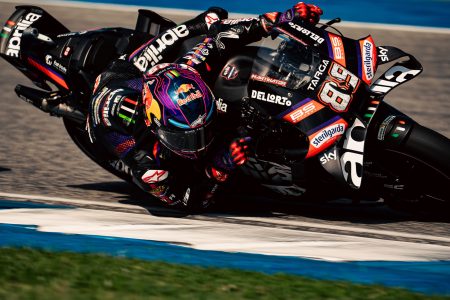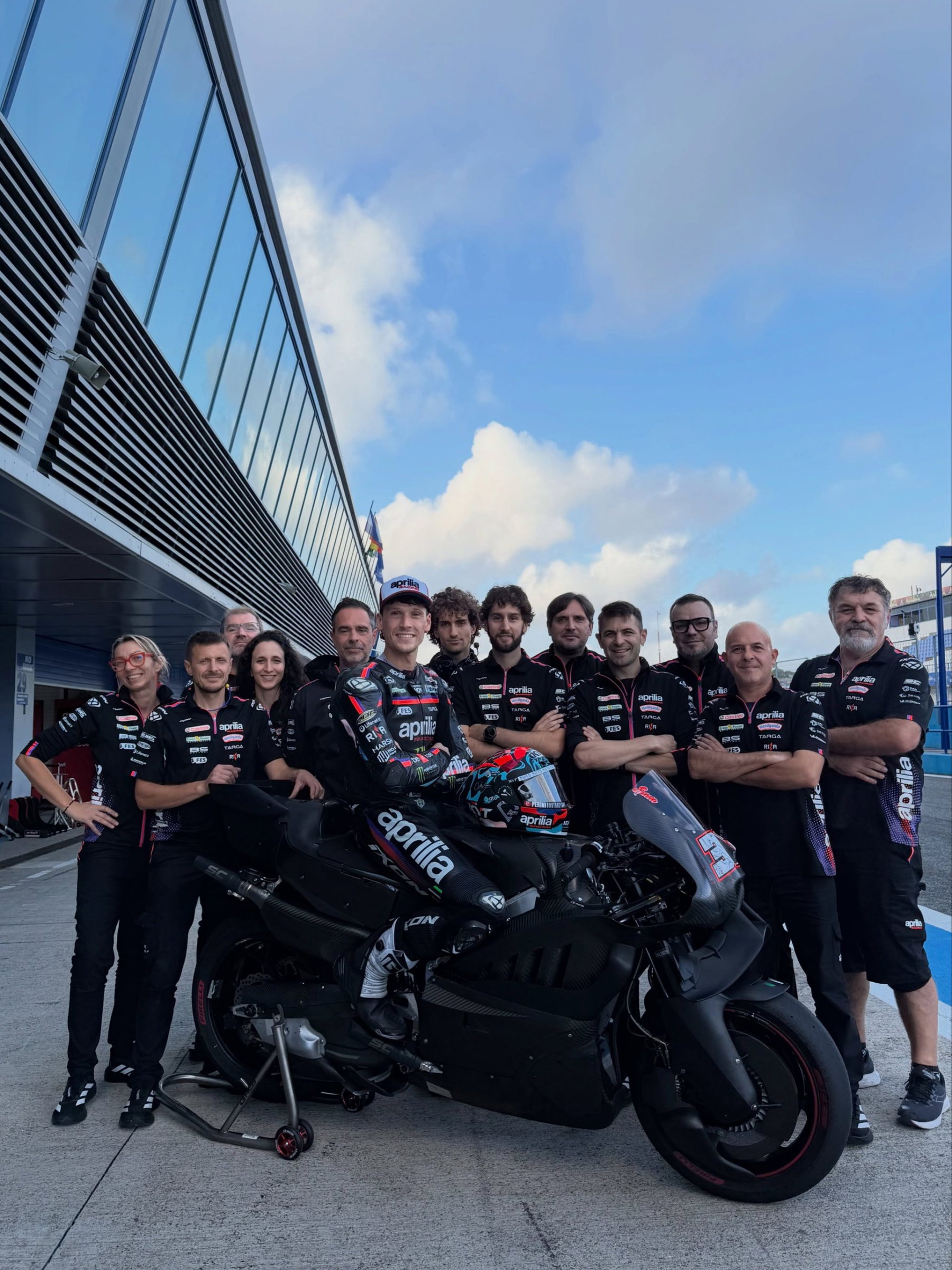
- The upper front fairing shrinks from 600 to 550 mm in 2027, and the nose moves back by 50 mm
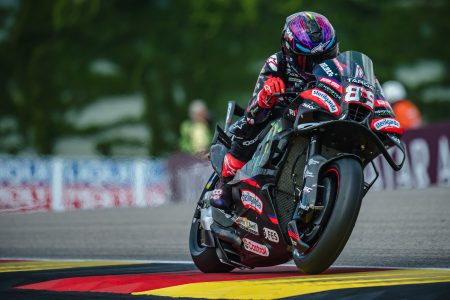
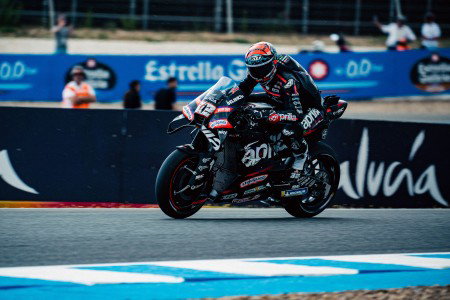
- Aprilia’s 850 carries a multi-layered front wing that is far more detailed than the version seen in April
- At the Valencia test on 1 December, all full-time riders will ride the new bikes for the first time
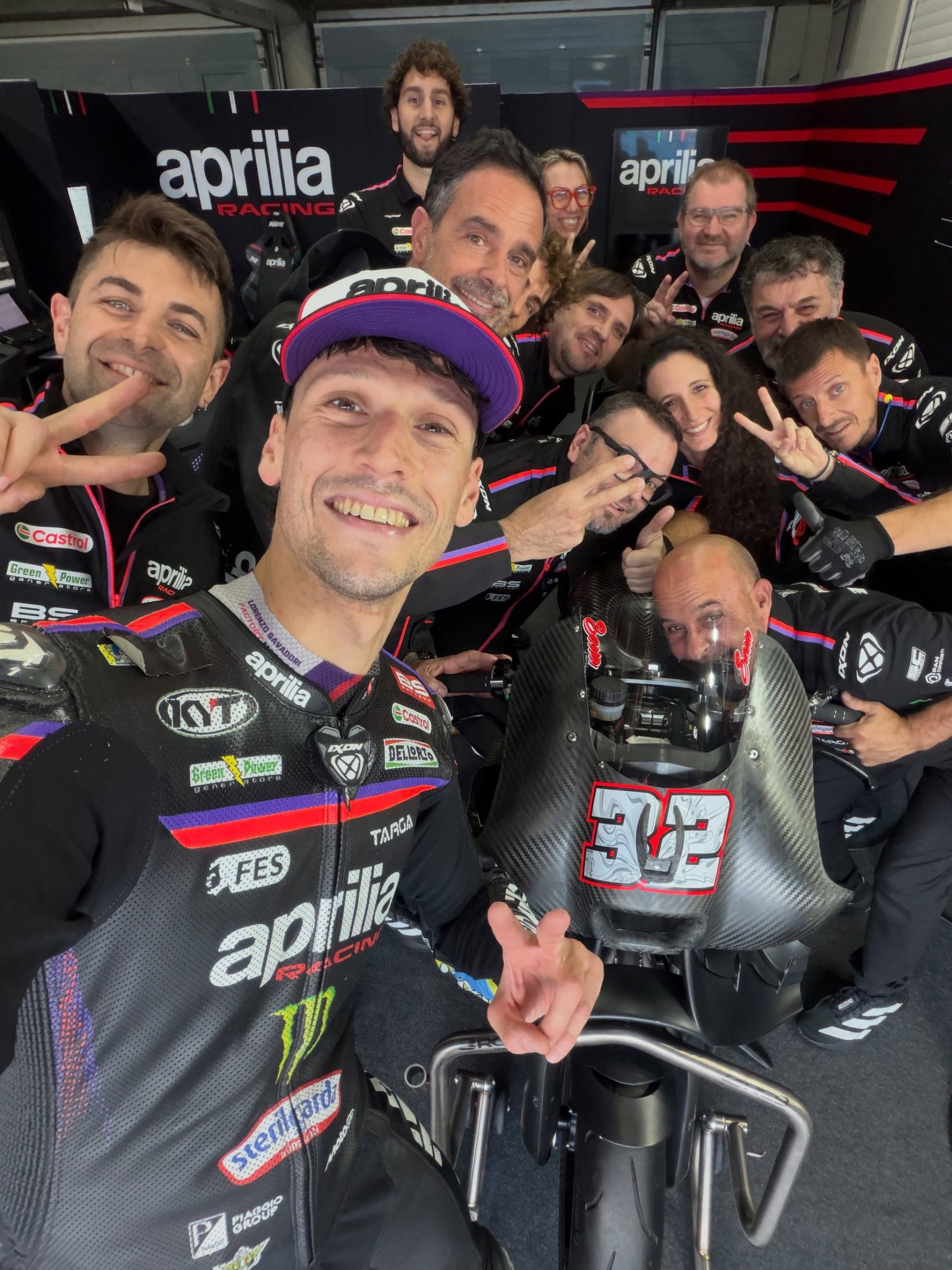
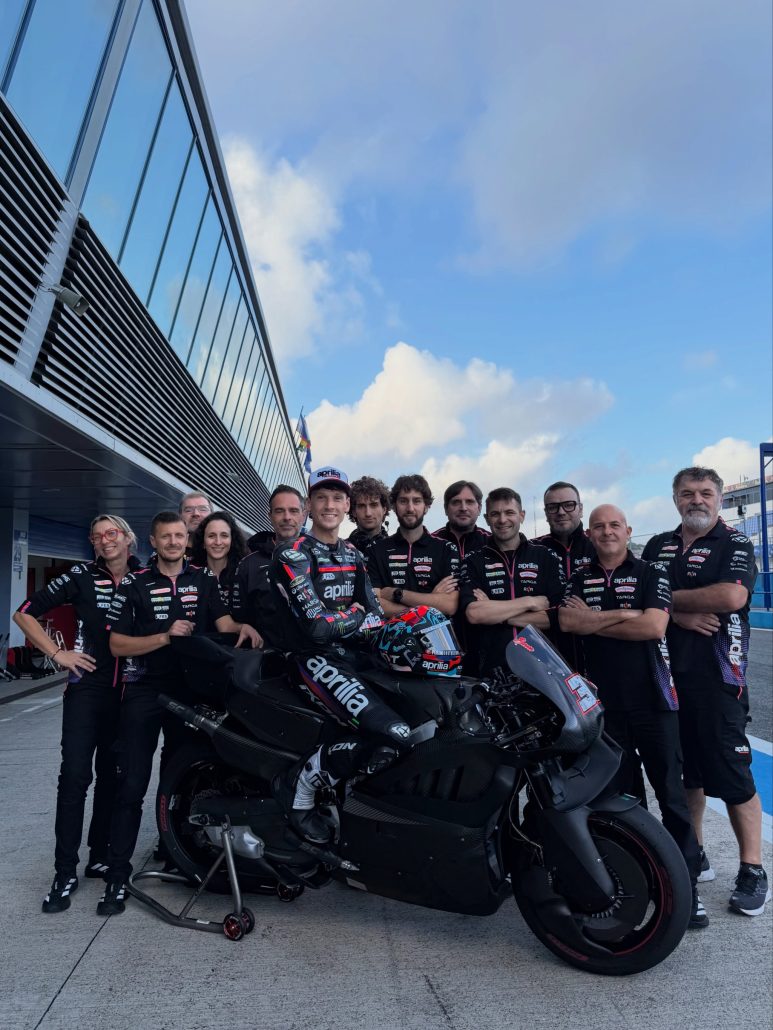
Less displacement, new tyres, no ride-height devices and curtailed aerodynamics: for the 2027 MotoGP season, much of what has defined the bikes of recent years is changing. So far, however, there is no sign that the wings on the prototypes are becoming an afterthought. After the last test-rider session at Jerez, Aprilia test rider Lorenzo Savadori published photos and a video of the new RS-GP on Pirelli tyres, and they show a front end that the engineers in Noale have clearly put a lot of work into. At the same time, Romano Albesiano, formerly technical chief at Aprilia and now at Honda, explains why work on airflow is set to increase rather than decrease from 2027.
What changes in MotoGP aerodynamics in 2027?
From 2027, the fairings of MotoGP bikes will be narrower, shorter at the front and lower at the rear. This is meant to reduce downforce and make it easier to follow another rider in the slipstream again.
Specifically, the upper part of the front fairing may only be 550 instead of 600 millimetres wide, a good eight percent less. The foremost point of the fairing, the nose, has to sit 50 millimetres further back. At the rear, the permitted height drops from 1,250 to 1,150 millimetres, exactly eight percent. The side wing elements that taper backwards along the front fairing must also be narrower.
Another new rule is that everything behind the rider that has an aerodynamic effect counts as homologated aerodynamics. Manufacturers therefore have to define this area before the season and may only change it once per year afterwards. This also ends the era of the seat winglets that Aprilia introduced in the second half of the 2025 season and that Honda adopted shortly afterwards. The FIM had postponed their ban to 2027 in December 2025, which is why they were still allowed in the 2026 season.
On top of that come changes that are not directly related to airflow but have a strong influence on the balance of the bikes. Displacement drops from 1,000 to 850 cc, Pirelli replaces Michelin as tyre supplier, and ride-height and holeshot devices are banned completely. The bikes will run on fuel that is 100 percent of non-fossil origin.
What does Aprilia’s new front wing for the 850 look like?
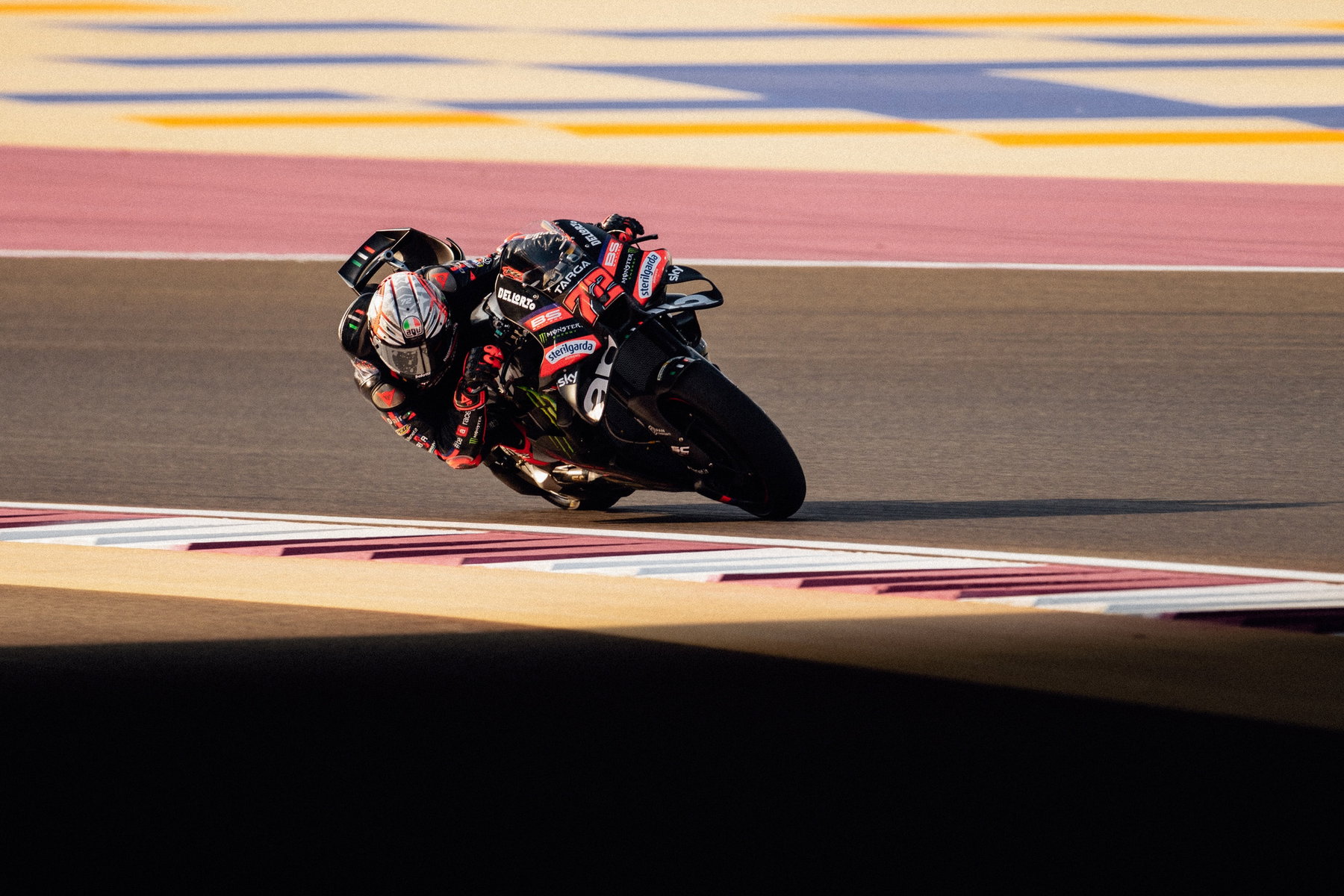
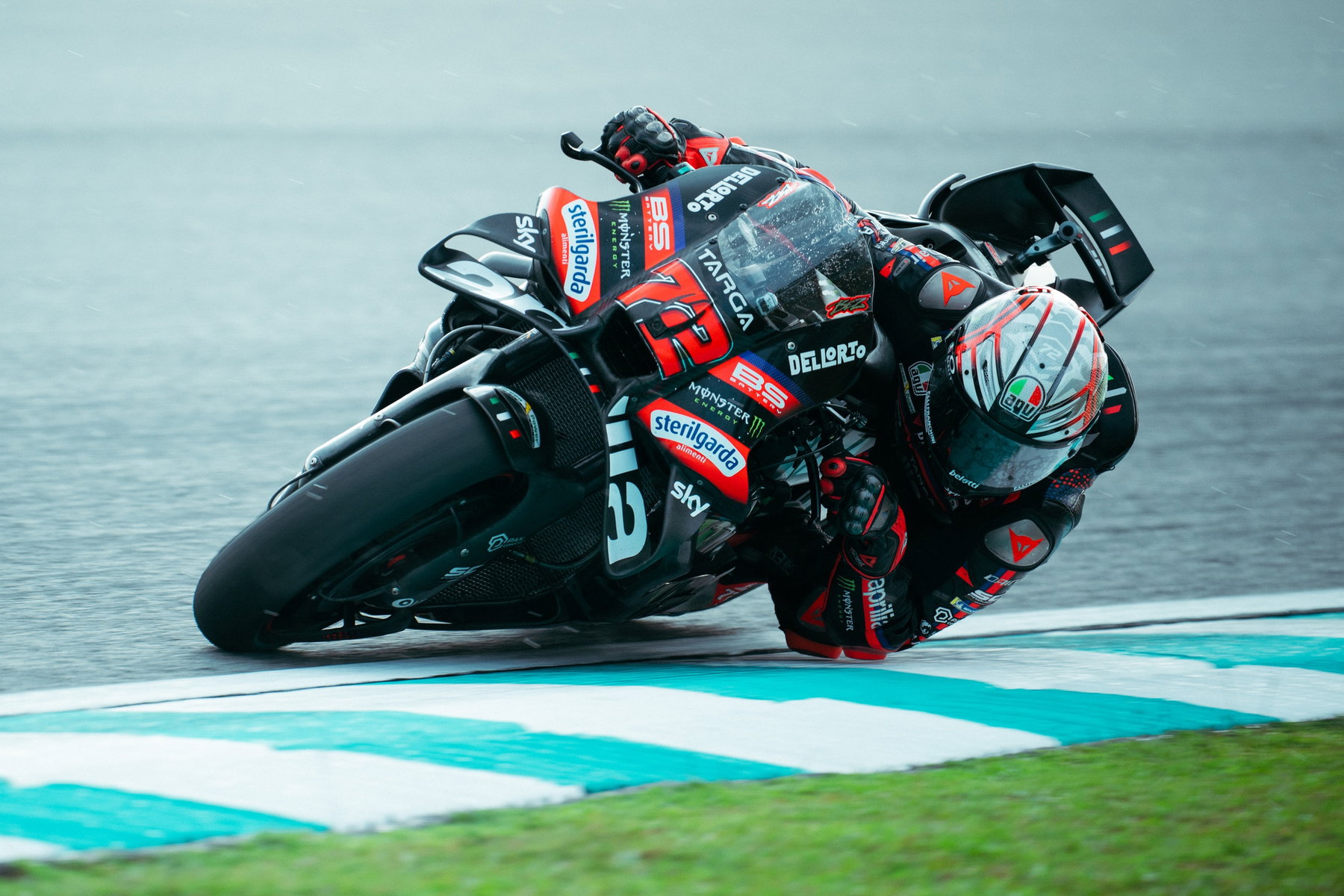
The front wing of the new Aprilia has several stacked layers on the sides and its shape is reminiscent of a moustache. It looks considerably more elaborate than the solution the 850 used when it first hit the track at the end of April.
At that first outing in the rain at Jerez, the bike already had a modified nose and a protruding wing built to the 2027 dimensions, and seat winglets were already missing back then. Compared with the latest images, however, that front end was still fairly simple. The new wing also differs clearly from the current 1000: the 2026 RS-GP uses a closed box wing, in which the wing elements on the outer sides are joined to form a kind of frame, a design that is widespread across the field.
The new version is not final either. The aerodynamics of the 850s are likely to keep evolving at every factory until the 2027 season opener in Buriram. That Aprilia is putting so much effort into this particular area fits the course it has followed in recent years. The seat winglets that disappear in 2027 also originally came from Noale.
Why does Romano Albesiano think aerodynamics will become even more important?
Albesiano expects the new rules to hit mainly the visible wings, but not aerodynamics as a whole. Because engineers have long been optimising the airflow around the entire bike, he believes the topic will become even more important.
The Honda technical director assumes that less downforce will be generated by the wings in future. At the same time, he points out that while the winglets get the most attention, the real work is done on the pressure conditions in every area of the bike. If part of the downforce at the front disappears, development simply shifts to other zones.
Albesiano knows both sides well, as he was technical chief at Aprilia before moving to Honda. He once compared the basic principle of winglets to an aircraft wing turned upside down: instead of lift, it generates a force that presses the bike onto the tarmac and gives the tyre more grip.
Which components become aero parts on the 850?
Almost every visible component now has to work both mechanically and aerodynamically. According to Albesiano, this even applies to parts that at first glance have nothing to do with airflow.
A good example is the swingarm. Ducati had already fitted a deflector under the swingarm in 2019, which ended up before the MotoGP Court of Appeal at the time and was declared legal. Aprilia has also been running its own aero solution on this component on the RS-GP26 for several races. Albesiano sees the same pattern with the exhaust: it no longer only has to be optimal for engine performance, but also has to fit into the overall aerodynamic concept.
For the Honda technical chief, however, the biggest areas of development remain the fairing, especially its lower part, and the tail. At the rear, there is an additional hurdle in 2027, because the rules there not only limit the height but also allow only one update per season. A development that goes in the wrong direction can therefore only be corrected once during the year.
How much downforce will be lost under the new rules?
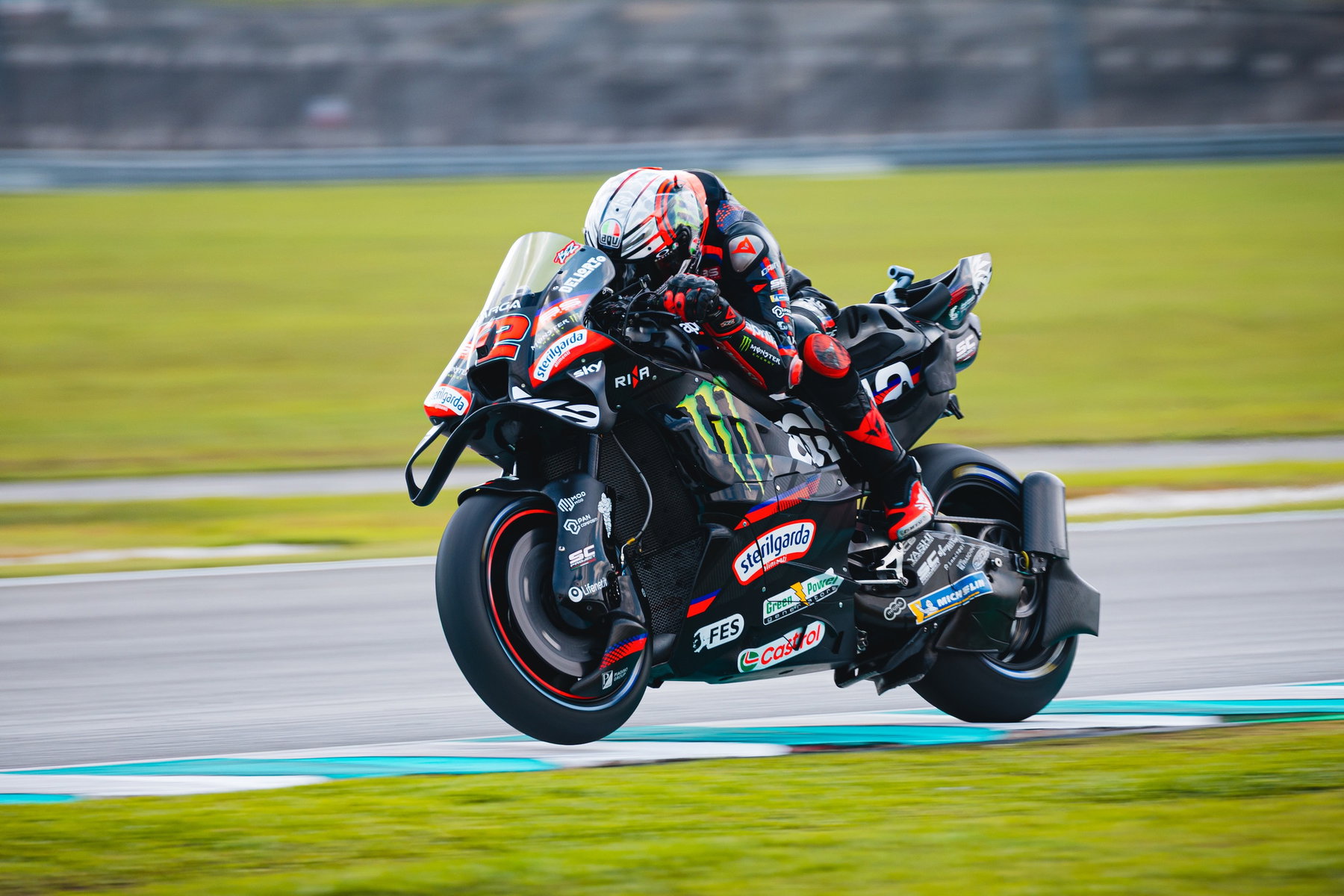
Aprilia technical chief Fabiano Sterlacchini estimated a year ago that the 850s will have between 30 and 50 percent less downforce than today’s bikes. One reason is that the nose will sit behind the front axle in future, putting less load on the front wheel.
A look at the current figures shows how much that is. Modern winglets generate around 35 to 50 kilograms of downforce on the front wheel at around 350 km/h. Based purely on Sterlacchini’s range, roughly 17.5 to 35 kilograms would remain. This is only a rough guide, as his estimate refers to downforce in general and not specifically to the winglets.
This downforce is needed in several places. On the straight, the winglets stop the front wheel from lifting under acceleration, so the electronics have to cut less power. Under hard braking at the end of the straight, they press down on the front wheel as well, and at lean angle the wings and fairing generate downforce that stabilises the tyre in fast corners. The price is drag, which costs time on long straights.
The downside for racing is the turbulent air behind a bike with a lot of aerodynamics. Anyone riding directly behind it gets less pressure on the front, and their bike becomes more unsettled around the front tyre. Sterlacchini expects overtaking to become easier with less downforce. For the engineers, he sees the biggest task in the first year as finding a coherent balance again, because power, tyres and aerodynamics all have to fit together anew at the same time.
Why the front tyre also plays a part in overtaking
For Albesiano, the quality of the racing does not depend on aerodynamics alone. The mandatory minimum pressure in the front tyre currently has a strong effect too, especially over race distance and less so in qualifying.
One example was the 2026 Indonesian Grand Prix at Mandalika, where Ai Ogura finished ahead of Pedro Acosta and Marc Marquez, even though the two had been battling for fourth place for a long time. The reason was tyre pressure: after Acosta passed in lap seven, his front pressure was no longer right, and he let Marquez back through. After that, the two swapped positions several times to keep the pressure within the permitted range and avoid a time penalty. The time they lost was enough for Ogura to close up. Acosta finished fifth, Marquez sixth.
The switch to Pirelli could change that. Albesiano hopes tyre pressure will be less critical in 2027, but explicitly does not commit himself.
When will the factories officially show their 850 aerodynamics for the first time?
The first official test with the 850s and Pirelli tyres takes place on 1 December in Valencia, after the 2026 season finale. It is open to the entire 2027 grid, and for the first time there will be official timing.
At Aprilia, Marco Bezzecchi and new signing Pecco Bagnaia are then set to ride the new RS-GP. Earlier test sessions at Brno and the Red Bull Ring involved only individual full-time riders, whereas in Valencia all of them will take part. This marks the start of preparations for the first season under the new regulations, which will take MotoGP into a completely new technical era in 2027.
How much the wings will still change before the season start in Buriram will become clear at the winter tests. But the images from Jerez already show that aerodynamics will remain a central area of development under the new regulations as well.
Frequently Asked Questions
-
What changes in MotoGP aerodynamics in 2027?
The upper front fairing becomes narrower, from 600 to 550 millimetres, the nose moves back by 50 millimetres and the tail height drops from 1,250 to 1,150 millimetres. The aerodynamics behind the rider are homologated and may only be changed once per season.
-
Are winglets banned in MotoGP from 2027?
No, winglets on the front remain allowed, but they have to be smaller because of the narrower fairing. Seat winglets, on the other hand, disappear, as do ride-height and holeshot devices.
-
How much less downforce will MotoGP bikes have in 2027?
Aprilia technical chief Fabiano Sterlacchini expects 30 to 50 percent less downforce. An important reason is the nose, which will sit behind the front axle in future.
-
When will the MotoGP full-time riders ride the 850s for the first time?
The full-time riders will get on the 850s for the first time at the official test on 1 December in Valencia. It is the first official test with Pirelli tyres and timing for the entire 2027 field.