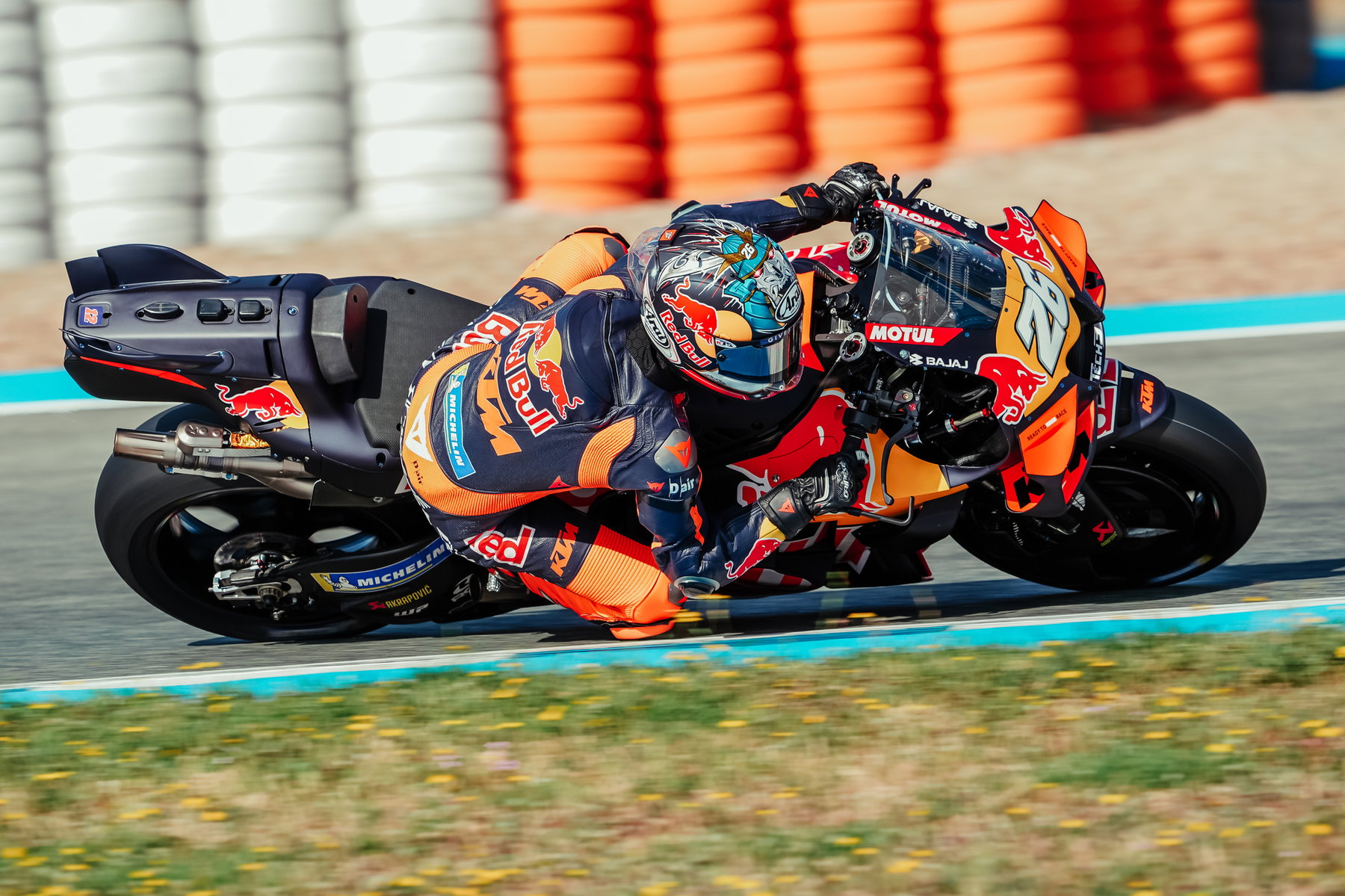
- Wildcards banned in MotoGP from 2027 for all manufacturers
- No 850cc machinery allowed for wildcard entries in 2026 either
- Tire pressure monitoring to continue despite Pirelli switch
The MotoGP Grand Prix Commission has approved several rule changes during meetings in March and April 2026, one of which carries particularly far-reaching consequences: From the 2027 season onwards, wildcard entries in the premier class of motorcycle racing will no longer be permitted. The decision applies to all five manufacturers regardless of their respective concession ranking and coincides with the biggest technical upheaval in years, the switch from 1,000 to 850 cubic centimeters of displacement.
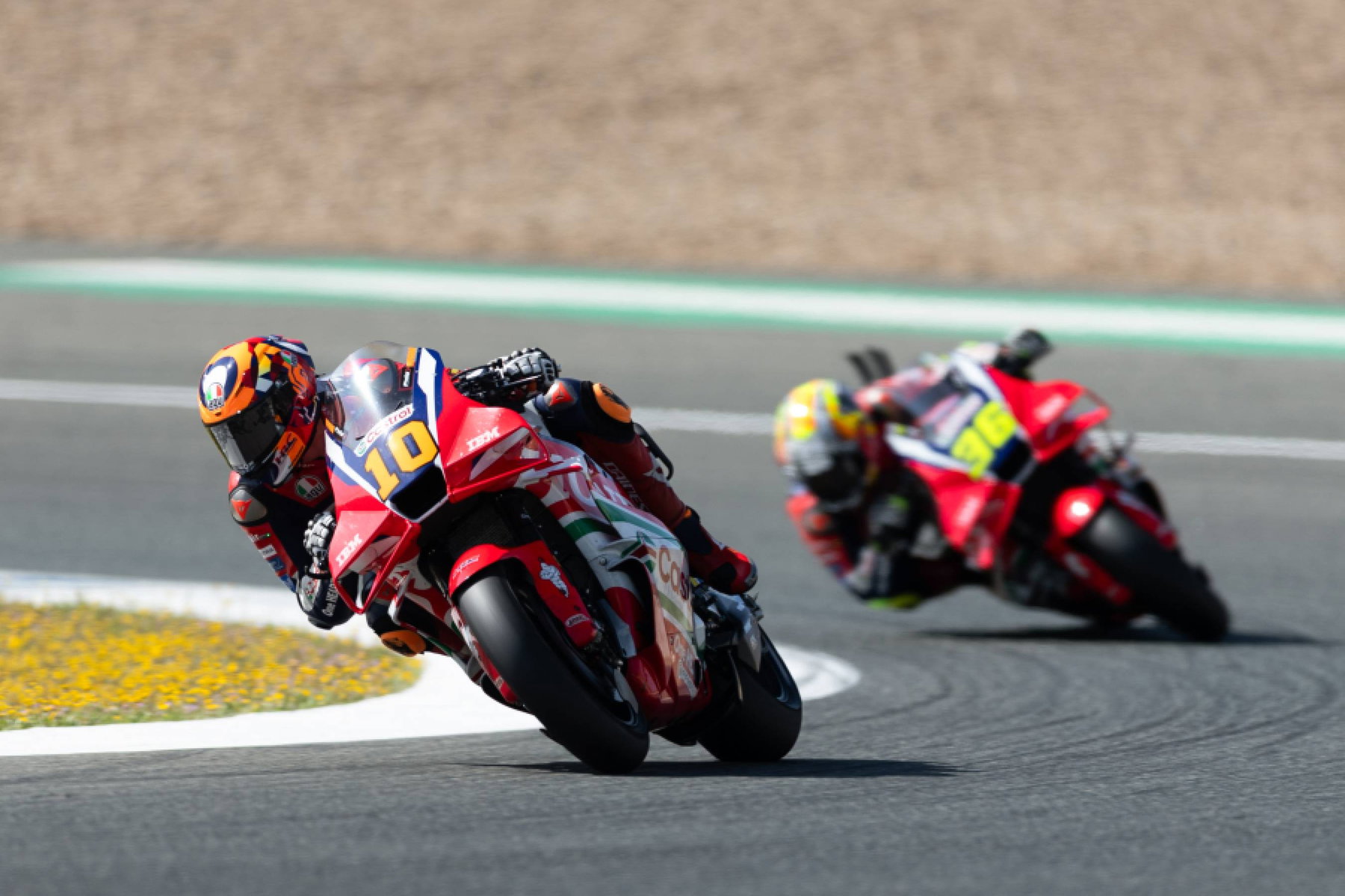
What does the wildcard ban mean specifically for MotoGP?
From the start of the 2027 season, no manufacturer may field additional motorcycles with test riders at race weekends. In the future, test riders can only participate in a Grand Prix if they are replacing an injured regular rider. Nothing changes for the Moto2 and Moto3 classes, where wildcard entries remain permitted.
According to information from The Race, the measure required the consent of all five manufacturers: Ducati, Aprilia, KTM, Honda, and Yamaha. The fact that all factories agreed suggests the decision was ultimately reached by consensus, even though their interests varied considerably.
Which test riders are affected by the wildcard ban?
The list of affected riders reads like an excerpt from the MotoGP history books. Current factory test riders include three former Grand Prix winners in Aleix Espargaro (Honda), Andrea Dovizioso (Yamaha), and Dani Pedrosa (KTM). They are joined by Takaaki Nakagami (Honda), Pol Espargaro (KTM), Michele Pirro (Ducati), Augusto Fernandez (Yamaha), and Lorenzo Savadori (Aprilia).
The case of Pedrosa particularly illustrates the significance of the decision. The Spaniard had only days earlier stated that he would never race again. Nevertheless, there had been hopes of seeing the racer, now working as a TV commentator, make one more guest appearance for KTM, with Pol Espargaro standing by as the regular replacement rider. That possibility is now definitively off the table.
The last podium by a wildcard rider in MotoGP was achieved by Pedrosa himself in the sprint race at Jerez 2024, after Fabio Quartararo was retroactively demoted due to a tire pressure penalty.
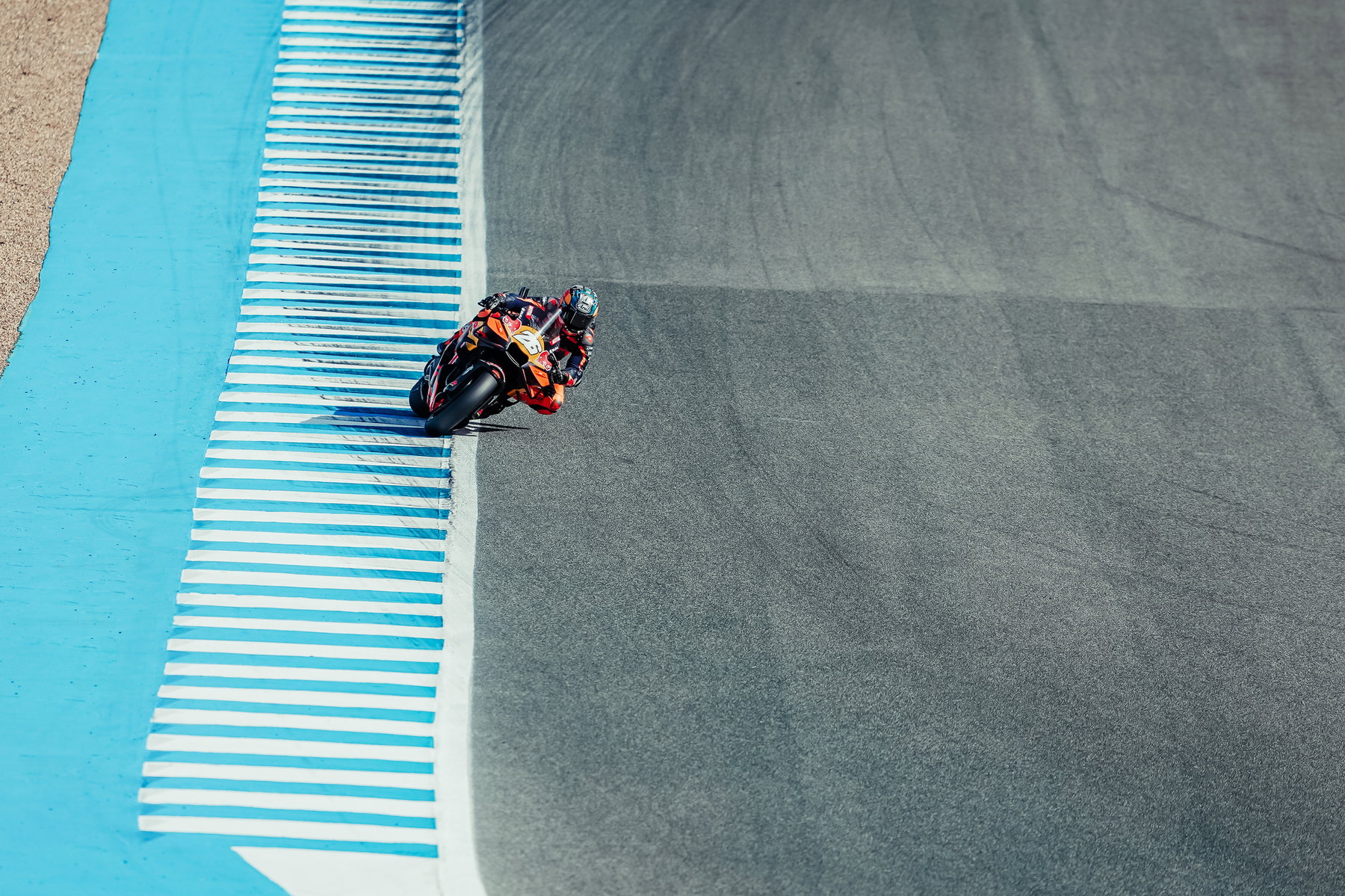
Why are wildcards being abolished right now?
The Grand Prix Commission has not given an official reason for the abolition. However, there are several plausible explanations being discussed in the paddock. An obvious factor, according to The Race, is manufacturers’ production capacity. The switch to the completely new 850cc machines ties up considerable resources at the factories. Building and maintaining additional race motorcycles for wildcard entries would represent an additional burden during this period of transition.
Even before the ban, the use of wildcards had been declining. Ducati was already unable to field wildcards due to its Concession A status. KTM has not entered a single wildcard rider since its financial difficulties began in early 2025. The only wildcards in the current 2026 season were Augusto Fernandez for Yamaha and Lorenzo Savadori for Aprilia at the Spanish Grand Prix in Jerez.
Previously, the permitted number of wildcard entries varied by concession ranking: manufacturers at the lowest Rank D could field up to six wildcards per season, while the highest-ranked manufacturer, currently Ducati at Rank A, was already subject to a complete ban.
What does the wildcard ban have to do with KTM and Tech3?
Interestingly, according to information from The Race, KTM was among the manufacturers that wanted to retain or even expand wildcards for 2027. This was possibly related to the Austrian manufacturer’s concern about losing its satellite team Tech3 and being restricted to just two motorcycles on the grid.
The fact that the rule change went through regardless could conversely be interpreted as an indication that KTM will indeed have a satellite team for 2027 and therefore no longer needs additional race appearances through wildcards.
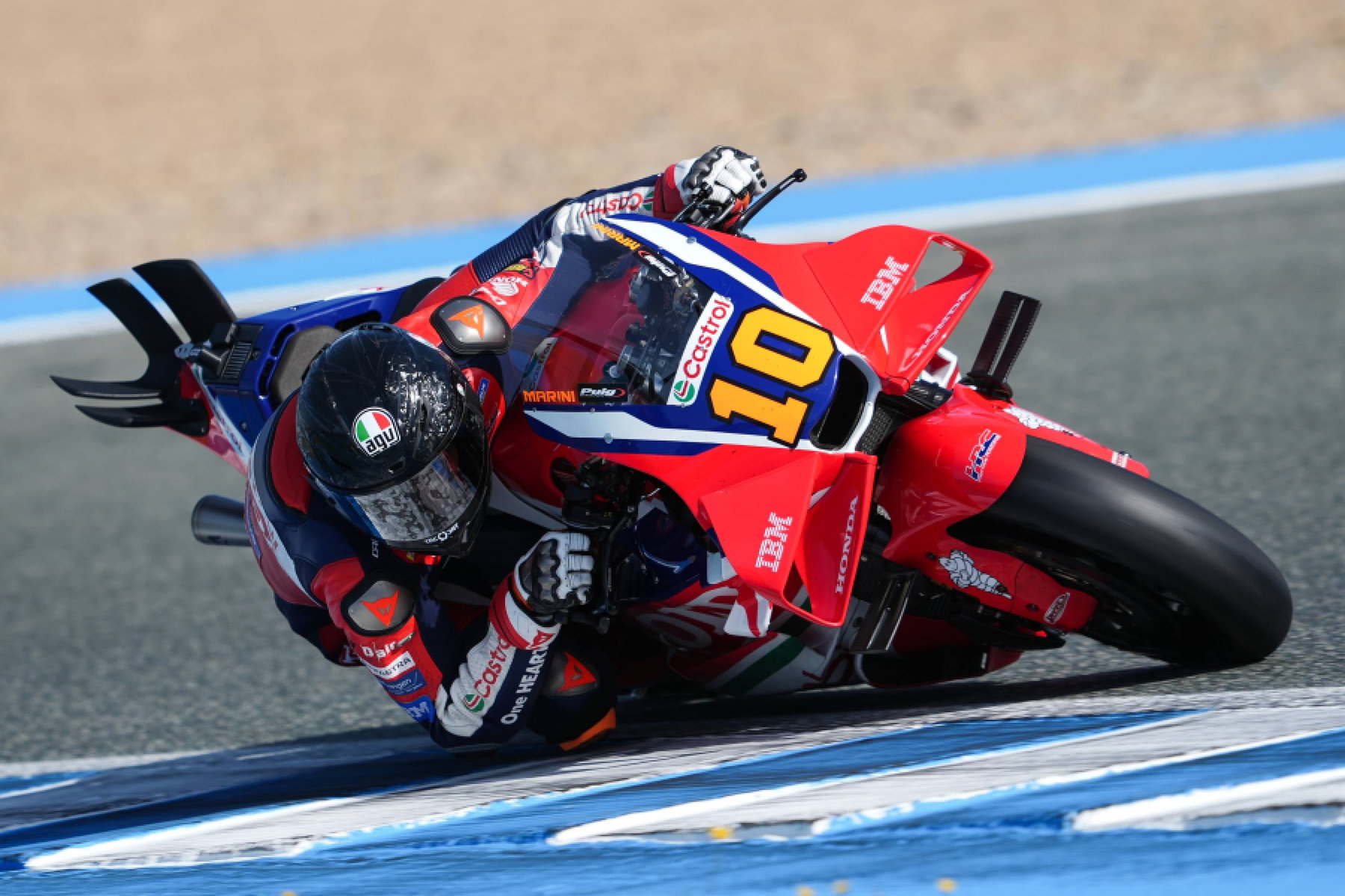
What role did wildcards play in development?
Wildcard entries traditionally served a dual function in MotoGP. On one hand, they contributed to technical development, as test riders could evaluate new components or concepts under real racing conditions. For example, Augusto Fernandez used a wildcard at Misano last season to deploy the new Yamaha V4 in race conditions for the first time.
On the other hand, wildcard appearances regularly generated additional interest among local audiences. Guest appearances by riders like Pedrosa at his home race in Spain attracted fans who wanted to see the champion on track one more time.
With the abolition, manufacturers on the lower concession ranks in particular lose a tool for improving their competitiveness. Teams that struggled to increase their performance benefited most from the wildcard system, as it provided them with an additional motorcycle under racing conditions.
For riders who wanted to use a test rider role as a springboard back into a regular seat, the chances also shrink considerably. Without wildcard opportunities, only injury replacements remain as occasions to showcase their abilities on the big stage.
No 850cc machinery for wildcards in the current season
In addition to the wildcard ban from 2027, the Grand Prix Commission also approved an immediately effective restriction for the current season: No manufacturer may use the new 850cc machines with 2027 specifications for any remaining wildcard entries in 2026, regardless of concession ranking. This means motorcycles of the new era will not be seen in race action this season.
Since all manufacturers’ development work is expected to shift entirely to the 2027 machines from mid-summer 2026 onwards, there would be little benefit in fielding additional 1,000cc motorcycles at later season races. The number of remaining wildcard entries this season is therefore likely to be minimal.
What happens with the concession system in 2027?
All manufacturers will start the 2027 season at Concession Rank B, with rankings to be reviewed and adjusted at mid-season. The precise details of the concession system for the new era have not yet been fully published according to the FIM, but one thing is clear: no rank will permit wildcards.
Tire pressure monitoring to continue under Pirelli
Another decision by the Grand Prix Commission concerns the controversial tire pressure monitoring system. It will be retained in the 2027 season as well, continuing beyond the switch from Michelin to Pirelli as tire supplier. This comes as something of a surprise, as there had been unofficial signals beforehand that the system might be abolished with the change of supplier.
However, the practical implementation may change. While under Michelin, tire pressures are monitored during the race and violations are penalized retroactively, Pirelli already uses pre-race checks in the Superbike World Championship. It is conceivable that a similar procedure could also be introduced in MotoGP.
Further rule changes by the Grand Prix Commission
In addition to the wildcard ban and confirmation of tire pressure monitoring, the Grand Prix Commission approved further adjustments. For a Start Delayed on the grid, the countdown to the warm-up lap will in future continue at the 5-minute board instead of the 3-minute board as previously. This change takes effect immediately.
Heart rate monitors are now permitted as an optional sensor in Moto2 and Moto3 with immediate effect. Additionally, clarifications were made to the wording regarding testing opportunities for MotoGP riders following injuries and to the homologation regulations for IMU electronics.
Frequently Asked Questions
-
Are wildcards completely banned in MotoGP from 2027?
Yes, from the 2027 season onwards, wildcard entries in the MotoGP class are prohibited for all manufacturers, regardless of their concession ranking. Test riders can only participate in races as replacements for injured regular riders. Wildcards remain permitted in Moto2 and Moto3.
-
Why is MotoGP abolishing wildcard entries?
No official reason was given. Likely factors include manufacturers’ production capacities during the transition to 850cc machines and the already declining use of wildcards in recent seasons.
-
When was the last wildcard podium in MotoGP?
The last podium by a wildcard rider was achieved by Dani Pedrosa in the sprint race at Jerez 2024. He moved onto the podium after Fabio Quartararo was retroactively demoted due to a tire pressure penalty.
-
Will tire pressure monitoring remain in MotoGP 2027?
Yes, the tire pressure monitoring system will continue in the 2027 season despite the switch from Michelin to Pirelli as tire supplier. However, the practical implementation may change, as Pirelli uses pre-race checks in the Superbike World Championship.
-
Can MotoGP wildcards use 850cc machines in 2026?
No, the Grand Prix Commission has banned wildcard participants from using motorcycles with 2027 specifications and 850 cubic centimeters of displacement in the current 2026 season with immediate effect.
➜ More on this topic in our overview: 2027 MotoGP Season: The Complete Overview.
➜ This article is part of our comprehensive overview: MotoGP 2026 Season: The Complete Overview – Teams, Riders, Calendar & Standings. Find all key information on this topic in one place.