- First locations: B6015 at Devil’s Elbow near Glossop and A6 between Buxton and Bakewell
- A total of seven routes have been approved, including the A57 Snake Pass and A53 Axe Edge
- In Scotland, injury crashes involving motorcycles fell by an average of 61 percent at the trial sites
Until now, the special markings for motorcyclists in Great Britain only existed in Scotland and Wales. Now the UK Department for Transport has granted special authorisation to an English highway authority for the first time: Derbyshire County Council. Together with Derbyshire Constabulary and National Highways, the council has laid the first markings along with advance warning signs. Two crash hotspots were chosen on routes that attract motorcyclists from across the country.
Where are the PRIME markings in Derbyshire?
The first PRIME markings have been laid on the B6015 Woodhead Road at Devil’s Elbow near Glossop and on the A6 between Buxton and Bakewell. Five more routes are set to follow in the coming months.
In addition to the first two sections, the Department for Transport approval covers the B5035 near Middleton-by-Wirksworth, the A623 near Peak Forest, the A54 towards Macclesfield, the A57 over the Snake Pass and the A53 at Axe Edge.
To select the sites, the council analysed motorcycle crashes from 2015 to 2024. It looked for clusters on rural roads, particularly at locations where bends or errors in controlling the motorcycle appeared to have contributed to the crash.
Not everything is being laid at once. The partners first want to gain experience at the two initial sites and then tackle the remaining sections. Whether PRIME will later be used beyond these seven routes depends on the results in Derbyshire and on further decisions by the Department for Transport.
How do the PRIME gates work before a bend?
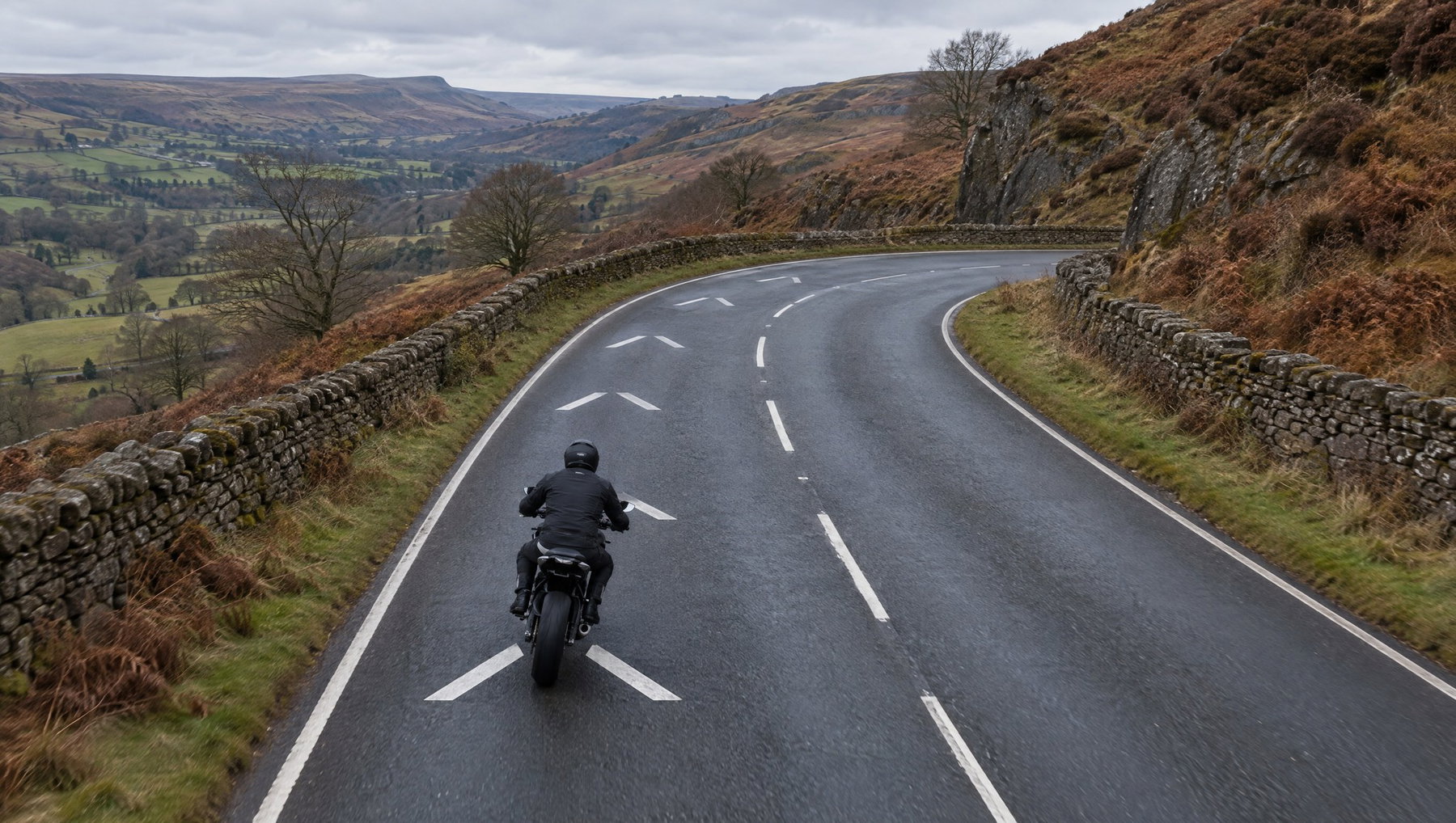
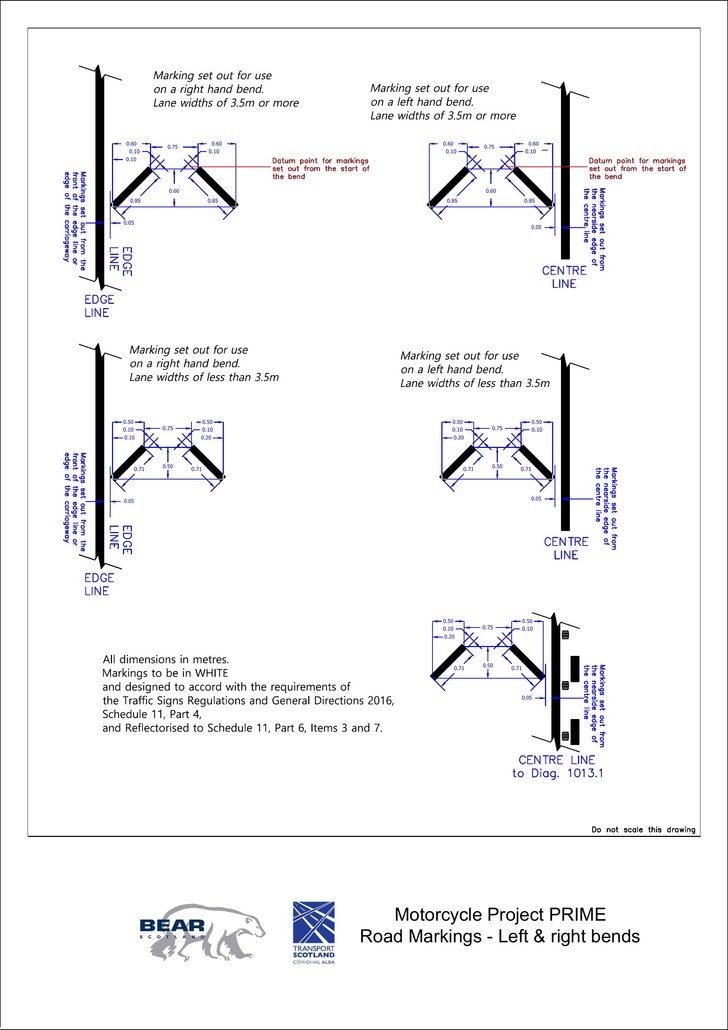
PRIME is a bend marking designed specifically for motorcyclists. It consists of an information sign and a series of broken, arrow-like markings ahead of challenging bends. Riders pass through the gaps in these so-called gates and are thus guided onto a favourable line before they start turning in.
The acronym stands for Perceptual Rider Information for Maximising Expertise and Enjoyment. The idea behind it: riders who choose the right speed and position before the bend need to brake less often while leaned over. The sign is placed well ahead of the markings so that all road users are informed in advance.
The material used was specifically tested to ensure it does not affect tyre grip. In Scotland, a durable marking tape was used that had passed several tests before being used on public roads. Independent safety audits were carried out before and after the markings were laid.
Why is Derbyshire relying on PRIME?
Above all, the police want to reduce riding errors in bends. According to Simon Blatchly, Derbyshire’s acting Chief Constable, around half of the motorcyclists involved in crashes are still the result of their own mistakes. These include taking the wrong line, drifting over the centre line into oncoming traffic and carrying too much speed into a bend.
Blatchly, who is the national police chiefs’ lead for motorcycling, drove the project forward. He rides a motorcycle himself and describes the road to approval as a lengthy one. For him, the experience from Scotland was decisive. He stresses that it is not about lecturing riders. Motorcyclists should enjoy the routes and get home safely afterwards. The markings are meant to get them thinking about their line before they reach the bend. A second problem remains, which the police continue to work on: drivers who simply fail to see motorcyclists.
In the official launch announcement, Blatchly said: “As a biker myself I am committed to doing all we can to make sure that every rider who enjoys our scenic Derbyshire roads does so in the safest way possible and gets home to their loved ones after their ride.” The police’s efforts to improve motorcycle safety also include the Own Your Ride campaign launched this year.
There is also a personal side to PRIME finding its way into England here of all places. The system was largely developed by Professor Alex Stedmon, who lived in Derbyshire and has since passed away. Charlotte Hill, the council’s cabinet member responsible for highways, speaks of a legacy that is now being put into practice in his home county.
What have the PRIME markings achieved in Scotland?
At the Scottish trial sites, the number of injury crashes involving motorcycles fell by an average of 61 percent. Crashes resulting in death or serious injury fell by 46 percent.
Scotland has been trialling PRIME on its trunk road network since 2020, funded by the Road Safety Trust. In the second phase from 2023 to 2025, 13 new bends were added in the West Highlands, including around Glencoe, Oban and Loch Lomond. Small roadside cameras recorded rider behaviour before and after the markings were laid, with a total of 47,770 motorcycles analysed across both phases. Of 18 sites studied, speed fell at 13, riding position improved at 14 and braking became less frequent at 9. However, braking also increased at one site. At some bends that were revisited several times, the effect lasted for up to five years. According to Transport Scotland, the complete crash data for the entire trial period is still being compiled.
Wales followed in August 2025 with four routes in North and Mid Wales. Since January 2026, PRIME has also been part of the UK road safety strategy up to 2035, which explicitly supports pilot trials in further regions.
How will the effect be measured in Derbyshire?
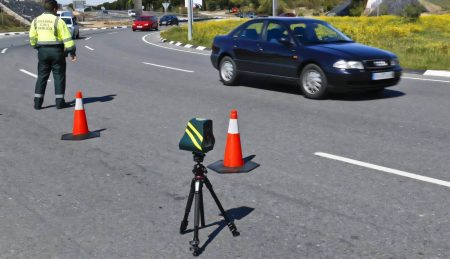
The police are using existing roadside cameras and comparing riding behaviour before and after the markings were laid. Speed, riding position and braking behaviour are recorded.
The work is being supported scientifically by Dr Elizabeth Box, who specialises in behavioural research and road safety. Ultimately, the aim is to answer whether the Scottish results can be transferred to the roads in Derbyshire. The evaluation is set to continue as more routes are added. According to Transport Scotland, other highway authorities have already approached the UK Department for Transport to trial PRIME.
Frequently Asked Questions
-
What are PRIME markings?
PRIME markings are gates made of broken lines ahead of bends that motorcyclists ride through. They are meant to help riders choose their speed and line before turning in and to brake less in the bend. A sign ahead of the route announces them.
-
Where are there PRIME markings in England?
So far only in Derbyshire, on the B6015 at Devil’s Elbow near Glossop and on the A6 between Buxton and Bakewell. The A57 Snake Pass, the A53 Axe Edge, the A623 near Peak Forest, the A54 towards Macclesfield and the B5035 near Middleton-by-Wirksworth have also been approved.
-
Are the PRIME markings slippery?
The material was specifically tested in advance to ensure it does not affect tyre grip. In Scotland, the marking tape passed several tests and independent safety audits before being used.
-
How effective are the markings?
At the Scottish trial sites, injury crashes involving motorcycles fell by an average of 61 percent, and those resulting in death or serious injury by 46 percent. Measurements of speed, riding position and braking behaviour are intended to show whether Derbyshire achieves similar results.
➜ This article is part of our comprehensive overview: Motorcycle Law & Policy: Legislation, Court Rulings and Developments for Riders. Find all key information on this topic in one place.