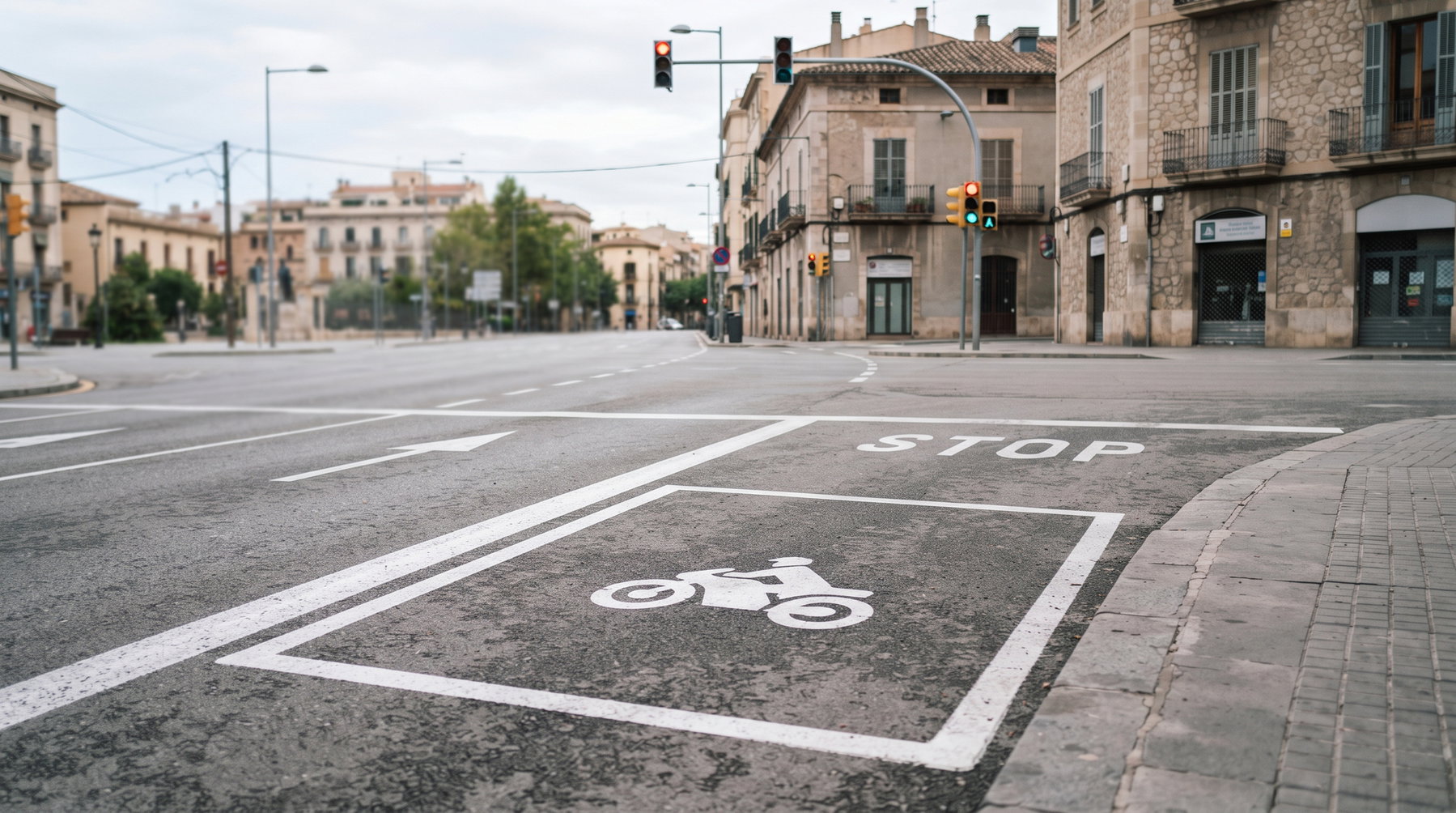
- 52 advanced stop zones are set to grow to around 100 by 2027
- Six impact absorbers rated for speeds of up to 50 km/h as a pilot project
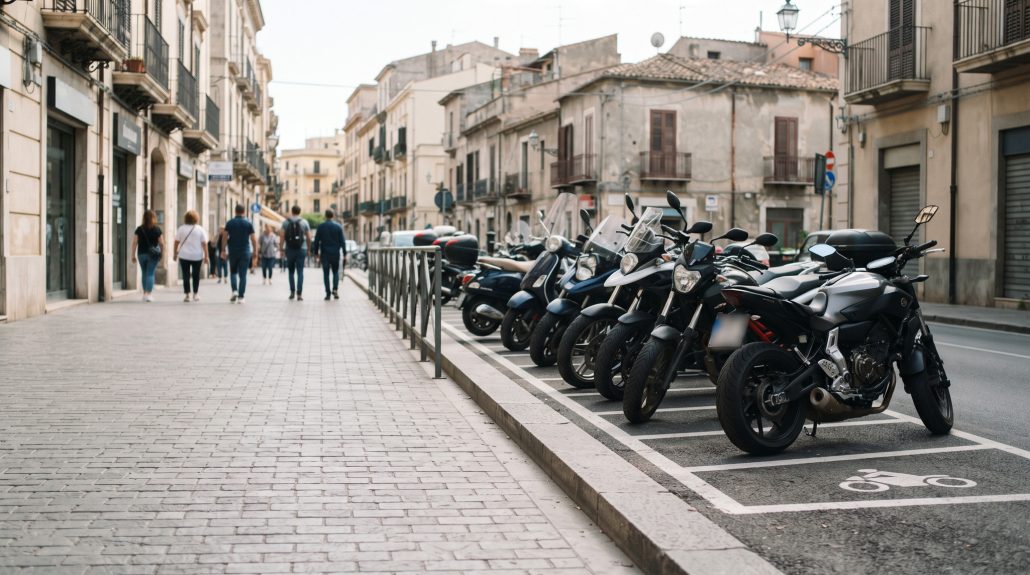
- 84,083 motorcycle parking spaces on the roadway, 40,000 more planned by 2030
In many European cities, transport policy has for years revolved around fewer cars, more space for pedestrians and cleaner air. Motorcycles and scooters often end up caught in the middle. Barcelona is taking a different route and treats the two-wheeler as a fixed part of urban traffic. On 21 July 2026, the city administration presented a package aimed specifically at the safety of motorcyclists. A comparison shows just how far that is from the situation in other countries.

What has Barcelona decided for motorcyclists?
Barcelona is announcing three measures: more advanced stop zones at traffic lights, a pilot project with impact protection and a second pilot project with reflective markings. The package is to be implemented from the end of 2026 and over the course of 2027.
The plans were presented by First Deputy Mayor Laia Bonet. They were developed in the so-called Motorcycle Observatory, a working group of the city administration. Those involved include the riders’ collective Motoristes per Barcelona, the industry association Anesdor and the victims’ association P(A)T, supported by the Spanish traffic authority DGT. Anesdor Secretary General José María Riaño said the association considered the steps “muy positivas”, meaning very positive. According to the association, motorcycles account for 20.1 percent of Barcelona’s entire vehicle fleet.
How do advanced stop zones at traffic lights work?
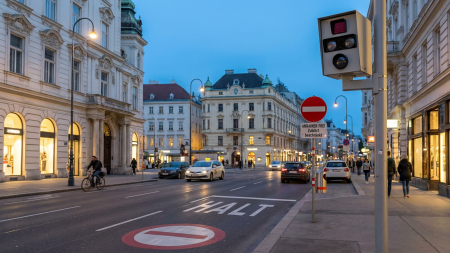
An advanced stop zone is a marked area ahead of the stop line for cars. Motorcycles can move to the front on a red light and are more visible to other road users.
In Barcelona these areas are called ZAM, short for zonas avanzadas de motos. There are currently 52 of them, set up between 2009 and 2011 and almost exclusively in the Eixample district. The main locations are Carrer d’Aragó and Gran Via de les Corts Catalanes. The signage for these 52 zones is to be revised and improved before the end of 2026. The expansion follows after that: around 20 junctions along Carrer d’Aragó will get such an area for the first time, with more to come along Gran Via. That should bring the total to 100 in 2027.
What will the planned impact protection at tunnel entrances achieve?
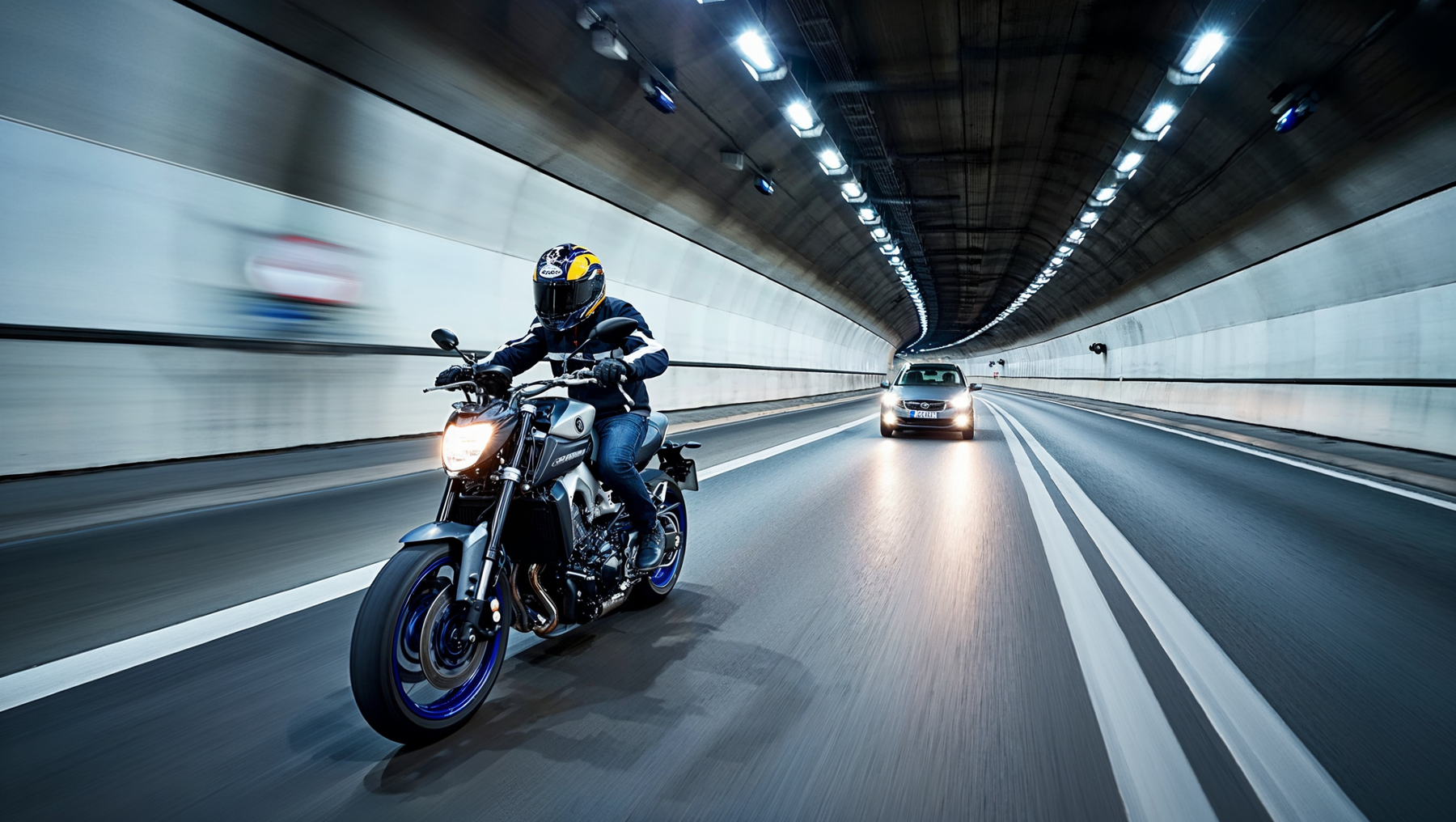
The city wants to test six impact absorbers designed to take up energy in a collision and reduce serious injuries. They are rated for speeds of up to 50 km/h.
Until now, such systems have mainly been known from motorway exits and toll stations, where speeds are considerably higher. According to the city, the Barcelona version was developed and tested specifically for urban traffic. Bonet says this is the first deployment of its kind within a built-up urban area in Spain. The absorbers are to be installed on concrete structures that are particularly dangerous in a crash, meaning at forks and exits of expressways. The locations under review include the entrance to the Tunnel de les Glòries towards Besòs, the entrance to the Tunnel de Lesseps towards Llobregat and the tunnel entrance on Ronda del General Mitre towards Llobregat. The devices are to be fitted before the end of 2026, with the actual trial running through 2027. If the results are positive, the solution is to be rolled out across the city.
A second trial is running in parallel with yellow fluorescent guidance elements that make obstacles more visible. They will be installed as early as summer 2026 on Ronda de Dalt between exits 5 and 6, where concrete barriers are in place because of construction work, and at three points on Plaça de Tetuan.
Why are motorcycles to disappear from Barcelona’s pavements?
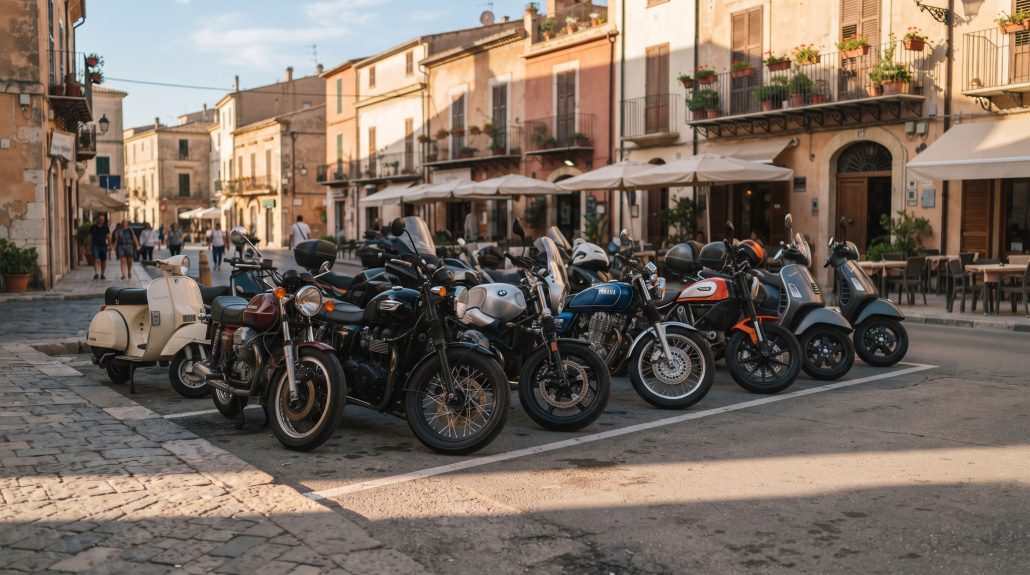
Barcelona wants to keep pavements clear for pedestrians and has been creating parking spaces on the roadway for years. In return, parking on the pavement is being restricted step by step.
The figures show the scale: between 2019 and the current status of the city’s mobility plan, the number of motorcycle parking spaces on the roadway rose from 66,959 to 84,083, an increase of 25 percent. Most of them are in the Sant Martí district with 16,095 spaces, followed by Eixample with 13,873 and Sarrià-Sant Gervasi with 12,084. Motorcycle parking spaces marked on pavements fell from 4,971 to 4,532 over the same period.
A stricter mobility ordinance has applied since 1 February 2025. Among other things, it prohibits parking next to bicycle parking areas, at dropped kerbs, on cycle lanes and where waste containers would be blocked. Access points to schools and hospitals are also covered. A total of 325 facilities are affected, 296 of them schools and 29 hospitals. More than 4,300 pavement sections are to become motorcycle-free, with 700 replacement spaces planned on the roadway in the immediate vicinity. The mobility plan provides for around 40,000 additional roadway spaces by 2030. At the presentation, Bonet conceded that this would require a change in thinking, saying that one stage of the journey would inevitably have to be made on foot in future (“Una etapa del viaje deberá ser necesariamente a pie”).
Since May 2026, the city police have been enforcing the rules more strictly, initially in the Sants, Hostafrancs and la Bordeta neighbourhoods. Fines range from 50 euros (around 57 US dollars) for parking on narrow pavements to 500 euros (around 570 US dollars) at access points to hospitals and schools. Alongside this, 2,500 additional parking spaces were created on the roadway.
How many motorcycle parking spaces are there in the United Kingdom?
In local authority car parks in the UK, 4,241 out of a total of 1,046,437 spaces were most recently designated for motorcycles. That corresponds to a share of 0.41 percent.
The figure comes from a 2025 analysis based on requests under the Freedom of Information Act. A year later, a follow-up survey of 65 local authorities shows some movement, however small: 62 additional designated spaces have been created, with room for around 194 motorcycles. Nottinghamshire reports the largest increase with 19 additional spaces spread across two council car parks, while London gained 11. Thirteen of the 65 authorities surveyed still designate no spaces at all for motorcycles. Just under half of the authorities let motorcycles park free of charge.
The survey was initiated by insurance broker Bikesure, supported by the Motorcycle Action Group. Bikesure managing director Rob Balls takes a cautious view of the result. He says the figures still do not add up and that motorcyclists deserve better, but he does see a start: “Change takes time and this is a step in the right direction.”
How does Paris regulate motorcycle parking?
In Paris, parking motorcycles and scooters on public streets has been subject to charges since 1 September 2022. Around 42,000 spaces are designated specifically for powered two-wheelers.
The fee is half the rate for cars and applies Monday to Saturday between 9 a.m. and 8 p.m. Parking is free on Sundays and public holidays. Those who do not pay, pay later: the flat-rate surcharge is 37.50 euros (around 43 US dollars) in zone 1 and 25 euros (around 28 US dollars) in zone 2. Electric two-wheelers, people with disabilities and home care workers can park free of charge under certain conditions. Parking on pavements and in dedicated bicycle spaces is prohibited and can result in towing.
What are the rules for motorcycle parking in Germany?
Germany has no nationwide regulation that guarantees motorcycles dedicated areas. Motorcycles may be parked wherever cars are allowed to park, and everything else is decided by the municipalities.
According to the Federal Motor Transport Authority, just over five million motorcycles were registered as of 1 January 2026, an increase of 0.2 percent on the previous year. Designated motorcycle parking areas do exist and can be identified by a blue parking sign with an additional plate, but they often comprise only two to 15 spaces. Parking on the pavement is not permitted under the German road traffic regulations, although many cities tolerate it as long as pedestrians are not obstructed. A fine is usually only imposed if someone is actually obstructed. There is also a practical problem: parking tickets and parking discs are hard to attach securely to a motorcycle, which is why paid areas are often avoided.
A central overview is missing. The German motorcyclists’ association BVDM maintains its own collection of motorcycle parking areas, although the data dates back to 29 December 2021. Founded in 1958, the association is currently focused above all on road closures for motorcycles and supports legal action by individual members against such orders. A survey comparable to the British analysis does not exist for Germany.
What the examples have in common
All four cities and countries face the same starting point: space in the urban environment is scarce, pavements are meant to stay clear, and the number of two-wheelers remains high. The answers differ. Barcelona is shifting parking from pedestrian space to the roadway and is additionally investing in safety technology. Paris has mainly turned the pricing screw while keeping a dense network of dedicated areas. In the UK, at least something has been moving since a publicly discussed survey. In Germany, the question is largely left to individual cities.
Barcelona’s initiative therefore fits into a development that has shaped urban traffic in Europe for several years and that is likely to serve as a benchmark for future rules in German city centres as well.
Frequently Asked Questions
-
What are the ZAM in Barcelona?
ZAM stands for zonas avanzadas de motos and refers to marked areas ahead of the stop line at traffic lights. Motorcycles position themselves there in front of the rest of the traffic and are more visible. Barcelona currently has 52 such zones and aims to reach around 100 in 2027.
-
How many motorcycle parking spaces are there in Barcelona?
There are 84,083 marked motorcycle parking spaces on the roadway, plus 4,532 spaces on pavements. The city mobility plan provides for around 40,000 additional roadway spaces by 2030.
-
What does illegal motorcycle parking cost in Barcelona?
Fines range from 50 euros (around 57 US dollars) to 500 euros (around 570 US dollars). The highest rate applies to parking at access points to hospitals and schools. Enforcement has been stepped up since May 2026, initially in the Sants, Hostafrancs and la Bordeta neighbourhoods.
-
Are you allowed to park a motorcycle on the pavement in Germany?
Under the German road traffic regulations this is not permitted. Many cities tolerate it as long as pedestrians are not obstructed, but there is no legal entitlement to it. A fine is usually only imposed if someone is actually obstructed.
➜ This article is part of our comprehensive overview: Motorcycle Law & Policy: Regulations, Court Rulings and Developments for Riders. Find all key information on this topic in one place.