- Residents along the K 18 collect 200 signatures against motorcycle noise
- CDU files motion for pilot project to close the L 409 near Dhünn-Halzenberg
- Official accident statistics 2025: Injured motorcyclists in Wermelskirchen at six-year high
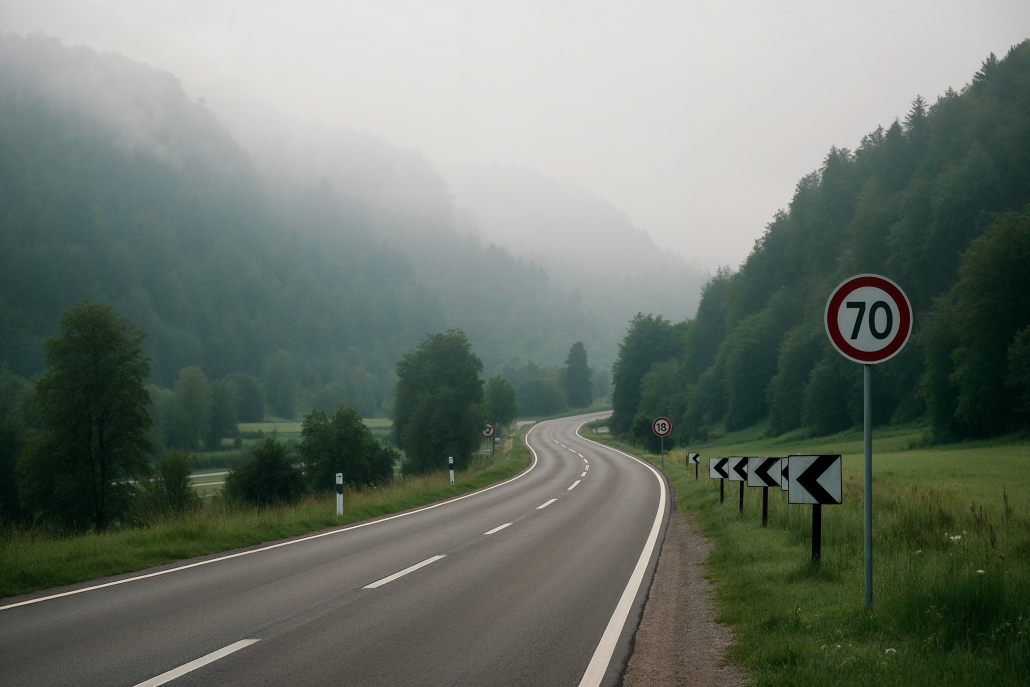
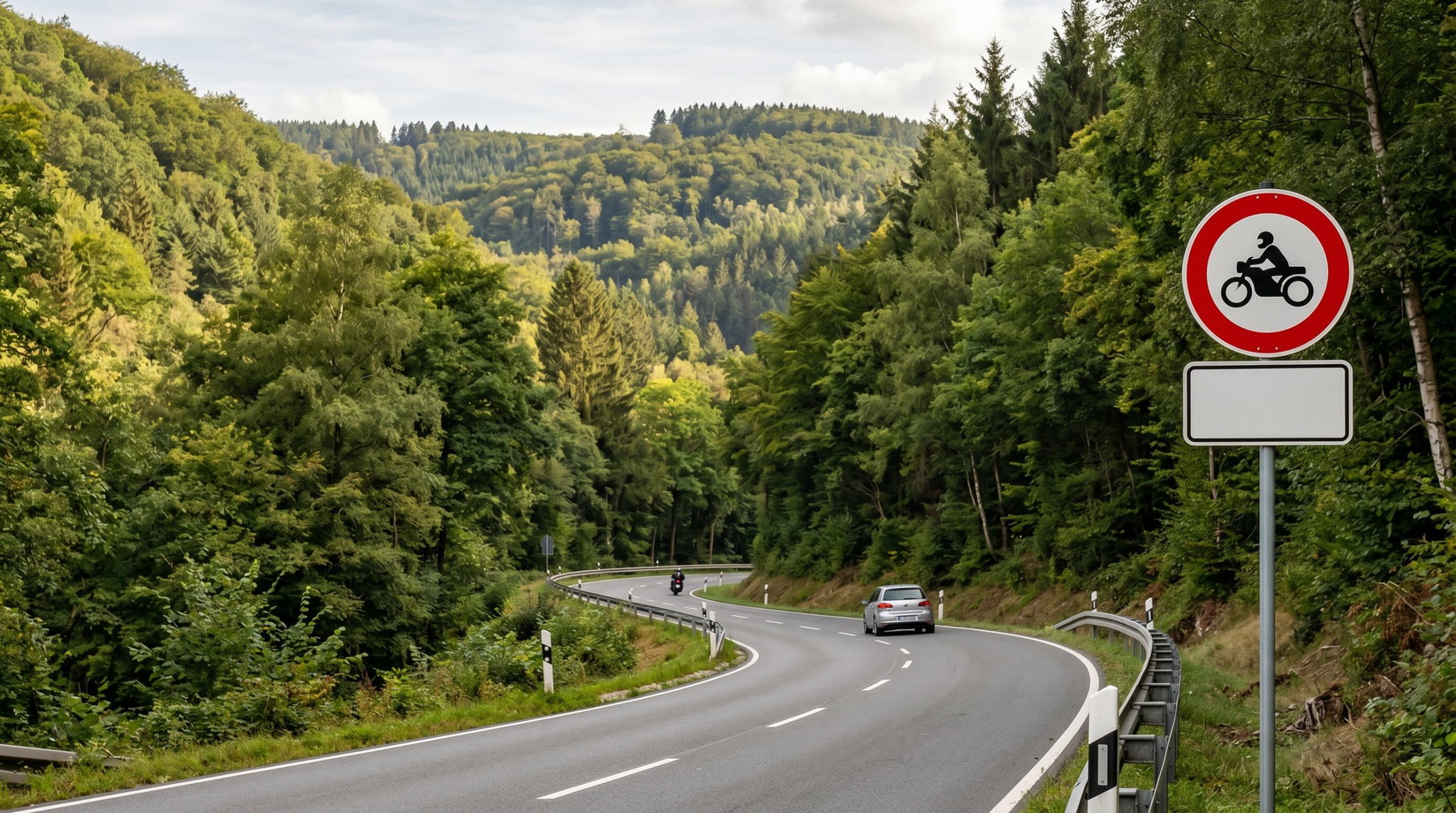
The dispute over motorcycle noise in Wermelskirchen is entering the next round. Residents along the Kreisstraße 18 in Dabringhausen and the Landesstraße 409 near Dhünn-Halzenberg have had enough. At the latest meeting of the Committee for Urban Development and Transport, the CDU faction introduced a motion calling for a trial closure of the L 409 to motorcycles. The initiative met with broad support, even though not all committee members were convinced.
200 Signatures and Years of Frustration
Around 200 signatures have already been collected by residents in the area around Asterweg and Bechhausen. They addressed their petition to the city, the police, and the administration of the Rheinisch-Bergischer Kreis. The residents say they are disturbed by reckless motorcyclists who, according to their accounts, obey neither speed limits nor noise regulations.
The situation reportedly escalates on weekends in particular. Many riders are said to traverse the routes multiple times. “Or more accurately: they race,” as one resident put it. Some motorcyclists even wear helmet cameras to film their rides and subsequently share the footage on social media.
The police usually do respond when residents call. “But most of the time the riders warn each other, and then there’s nobody left to catch,” one of those affected reported. For several years, the residents have been trying to fight the noise, so far without any decisive success. Professor Dr. Jürgen Scherkenbeck, an SPD politician and himself a resident of Bechhausen, summed up the mood: “They don’t follow any rules.” Even a speed limit sign installed on the K 18 in 2019 had brought no relief. Scherkenbeck experiences the noise and the speeding practically firsthand. “We don’t even live right next to the road like others do, but it’s already enough,” he said.
CDU Pushes for Pilot Project on the L 409
The CDU faction, led by chairman Michael Schneider, took up the issue at the committee meeting. The motion calls on the city administration to contact the Rheinisch-Bergischer Kreis regarding a possible closure of the L 409 near Dhünn-Halzenberg. “The temporary closure is intended as a pilot project,” Schneider explained. “Of course, we also have the other affected roads in mind, such as the K 18, the L 101, and others where the same applies.”
The motion specifically states that residents along the L 409 and in Halzenberg should be protected from speeding and motorcycle noise. At the same time, the measure is also intended as a safety precaution for the motorcyclists themselves, as serious accidents repeatedly occur on the L 409.
The motion also contains further demands. Young families should be encouraged to move to Halzenberg and the surrounding hamlets through less noise and less traffic. Additionally, the well-known routes used for so-called motorcycle races would become less attractive, as significantly longer detours would be necessary. This would affect connections to the K 18, K 15, and L 294 in particular. The CDU also calls for an assessment of a 30 km/h zone in Halzenberg by the responsible road authority.
Illegal Races Arranged via Social Media
What particularly concerned local politicians: According to Michael Schneider, there is reliable information that motorcyclists arrange races at the known hotspots through social media channels. These are filmed and subsequently shared on social media. “In our view, this absolutely must be stopped,” Schneider said. Residents have also observed reckless maneuvers, such as riders covering stretches with their front wheel raised.
Not All Committee Members Convinced
The majority of the committee voted in favor of the CDU motion. Three members voted against, one abstained. Jochen Krämer of the Linke cautioned: “If road users on the K 18 don’t comply with the speed limit, they certainly won’t comply with a closure like this either.”
Nevertheless, the committee members want to push the issue forward. “We talk about this every spring. Now we should finally act,” summed up Jochen Bilstein of the SPD. The matter now goes to the city council, which may then instruct the administration to take action.
Michael Schneider struck a pragmatic tone: “Even if we can’t manage to get a closure through, there are other options. Kölner Teller, for example, for traffic calming. Or solid center lines. We need to see what’s possible. The residents will likely appreciate it.”
Ten Years of Measures Without Decisive Success
Wermelskirchen is no newcomer to the motorcycle noise issue. The city is considered one of the most active municipalities in Germany in the fight against motorcycle noise and has been deploying a comprehensive package of measures since 2016. A noise action plan was drawn up in 2015/2016. Since 2016, the city has been measuring noise at nine hotspots using specialized side-mounted radar devices installed in road delineator posts. The city was one of the first municipalities in Germany to use this system. Since 2018, so-called dialogue displays have also been deployed, showing passing motorcyclists whether they are too loud or too fast. The police regularly conduct the “Coffee and Tickets” campaign, in which motorcyclists are specifically pulled over and checked. Since 2017, a motorcycle noise working group comprising residents, city administration, and police has been meeting. Banners reading “Noise Makes You Sick” hang at the hotspots. In 2018, awareness days were held under the slogan “Loud Is Out.” In 2020, the city joined the “Silent Rider” initiative. The Bundesverband der Motorradfahrer was also represented on the working group for years and even co-financed a dialogue display with 5,000 euros.
A scientific evaluation of the delineator post measurements by an engineering firm found in 2019 that the dialogue displays did in fact have a noise-reducing effect. In the Eipringhausen area, the proportion of motorcycles exceeding the threshold dropped from 34.7 percent in 2017 to 10.3 percent in 2019. Similar results were recorded at other measurement points. However, the city subsequently discontinued the evaluation of the measurement data due to cost and staffing constraints.
The problem: All these measures primarily target awareness and voluntary behavioral change. Banners, awareness days, displays, and dialogue initiatives reach those who already ride considerately. The group of reckless riders, who according to residents are the actual source of the problem, is clearly unimpressed. Residents on the working group estimated this group at around 24 percent of counted motorcyclists and described them as “uninterested in posters and displays.” In terms of actual interventions in traffic flow, such as speed limits, physical traffic calming measures, or speed cameras that also work on motorcycles, little has happened over the past ten years. Speed enforcement of motorcycles is generally considered difficult, since motorcycles do not have front license plates and suitable positions for mobile speed camera vehicles are often unavailable.
Accident Statistics 2025: Rising Numbers on the Familiar Routes
The current traffic accident report from the Kreispolizeibehörde of the Rheinisch-Bergischer Kreis provides the numbers behind the debate. In Wermelskirchen, a total of 29 motorcyclists on machines over 125 cubic centimeters were injured in accidents in 2025. That is the highest figure in a six-year comparison and more than double the 2023 figure, when 14 motorcyclists were injured. An additional ten people were injured on light motorcycles and mopeds. Among the 29 injured motorcyclists, there was one fatality.
Several road sections in Wermelskirchen appear in the official police statistics as accident black spots. In the Hülsen area on the L 409, police recorded a total of 14 accidents between 2022 and 2025, with three minor and five serious injuries. At the Halzenberg/Neuenhaus section, there were six accidents with four injuries. In the Weiler/Haarbach area, also on the L 409, there were eleven accidents with six injuries. On the K 18 near Hilgener Straße, police recorded nine accidents, seven injuries, and one fatality. The primary cause of accidents in every single case was excessive speed.
Safety or Noise Protection? The Question Behind the Motion
The numbers are clear, but a closer look is worthwhile. District-wide, a total of 99 motorcyclists were injured in 2025, an increase of nearly 24 percent over the previous year. However, the police statistics also break down the question of fault: 67 motorcyclists were the primary cause of their own accident. In 41 cases, these were single-vehicle accidents with no involvement of other road users whatsoever. The most common cause of accidents by far was excessive speed, at 42 percent. In 32 cases, however, the responsibility lay with the other party.
As early as the 2020 Motorcycle Summit in the Rheinisch-Bergischer Kreis, the responsible department head noted that motorcycle accidents involving personal injury on the L 294 and K 18 had been “exclusively single-vehicle accidents without car involvement.” This raises an uncomfortable question: If motorcyclists primarily endanger themselves, how can a closure be justified that is officially intended to “protect the residents”?
The CDU motion conflates the arguments. On one hand, it addresses the safety of motorcyclists and the accident black spots. On the other, the motion argues that an influx of young families would become more attractive and that “routes for motorcycle races would become less interesting.” At its core, the issue appears to be less about motorcyclist safety and more about keeping motorcycle traffic off the affected roads altogether so that residents can have their peace and quiet. That would be understandable from the perspective of those affected, but it is a different justification than road safety, and one that is significantly harder to enforce legally.
A closure purely on noise protection grounds is in principle possible under current law. Section 45 of the Straßenverkehrsordnung (Road Traffic Regulations) permits traffic restrictions to protect residential populations from noise. In practice, however, such initiatives have regularly failed in the past due to high legal hurdles. The noise level relevant for assessment is calculated as an annual average from the total traffic volume. High motorcycle traffic volumes on individual weekends are only factored in proportionally, making it difficult to demonstrate an “unreasonable” burden.
At the state level in North Rhine-Westphalia, the accident statistics paint a more nuanced picture. Statewide, a total of 45 motorcyclists died in accidents in 2025. The previous year, the figure was 86. That represents a decline of over 47 percent and the lowest level in a ten-year comparison. Around 35 percent of motorcycle accidents in NRW were single-vehicle accidents. In collisions with other vehicles, the primary cause in 62 percent of cases lay with the other party, meaning not with the motorcyclist.
Teenagers on Light Motorcycles as a Separate Issue
The 15- to 17-year-old age group is a chapter of its own. In the Rheinisch-Bergischer Kreis, accident numbers among teenagers reached a new high of 81 injured in 2025, the highest since 2010. The previous year, the figure was 53. The increase is primarily attributable to motorized vehicles, according to police: light motorcycles under 125 cubic centimeters, pedelecs, e-scooters, and four-wheeled light vehicles with insurance plates. Marc André Linden, head of the Criminal Investigation and Traffic Division of the Kreispolizeibehörde, emphasized: “This is actually a relatively small group, but one that is involved in a large proportion of accidents.” 38 of the 70 district-wide injured riders on light motorcycles under 125 cubic centimeters were teenagers. This issue, however, has little to do with the large motorcycles on the popular Bergisches Land routes. Among the injured motorcyclists on machines over 125 cubic centimeters, only a single teenager was involved, but 26 young adults and 63 adults between the ages of 25 and 64 were affected.
What This Means for Motorcyclists
Wermelskirchen is not an isolated case. Whether at Sudelfeld, Feldberg, Donautal, or Holzminden: More and more municipalities are discussing closures and riding bans for motorcycles, often citing road safety even though, at their core, it is the noise burden on residents that tips the scales. For motorcyclists who have valued the Bergisches Land as an attractive touring area for decades, a closure of the L 409 could set a precedent that other roads may follow. The CDU motion explicitly names the K 18, the L 101, and other roads as potential candidates. Motorcyclists who want to advocate against blanket road closures and for a more differentiated approach to the issue can turn to organizations such as the Bundesverband der Motorradfahrer (BVDM), which has already been active in Wermelskirchen, organized the 2020 BVDM demonstration, and has successfully sued against road closures. The Bund der Motorradfahrer (BdM) and regional initiatives also advocate for motorcyclists’ interests. Membership in one of these organizations supports their legal and political work against disproportionate riding bans.
What Happens Next
What happens next depends on the city council. Whether a closure of the L 409 is actually enforceable and whether the district will cooperate remains to be seen. Experiences from other regions in Germany show that road closures for motorcycles are repeatedly challenged in court and frequently do not hold up. At Sudelfeld in Bavaria, a seasonal closure was introduced in 2025; in Tyrol, a riding ban for motorcycles exceeding 95 decibels standstill noise has been in effect since 2020. In Holzminden, by contrast, planned road closures failed due to resistance from motorcyclists and politicians. In Hagen-Breckerfeld, a 40-year-old closure was overturned following a successful lawsuit by the Bundesverband der Motorradfahrer.
In 2020, the BVDM organized a demonstration in Wermelskirchen itself against a one-sided speed limit on the K 18. The argument: If the problem is single-vehicle accidents involving motorcyclists, a speed limit applying only to motorcycles constitutes unequal treatment, since comparable restrictions for cars alone are never imposed in response to single-vehicle accidents involving car drivers.
For residents along the L 409 and the K 18, the 2026 season will in any case be another test of endurance. The fundamental question remains unanswered: Whether Wermelskirchen is willing and able to move from awareness campaigns toward genuine traffic interventions. And whether such a step would hold up in court.
➜ All info & history of this road (German): L 409 bei Wermelskirchen-Halzenberg