- New cylinder head, new crankcases, around six percent more peak power
- Weight drops by 2 kg (4.4 lbs)
- Displacement changes, but Triumph has not named the exact figure yet
Shortly before the British Grand Prix at Silverstone, Triumph Motorcycles and MotoGP jointly announced that the Moto2 World Championship will run a new race engine from 2027. It is the biggest technical change since the British manufacturer replaced Honda as the class’s single supplier in 2019. Until now the class has used a race-prepared three-cylinder with 765 cc, based on the Street Triple 765 RS. That engine remains a triple, but has been redesigned in all the areas that matter.
What changes on the Triumph engine for the 2027 season?
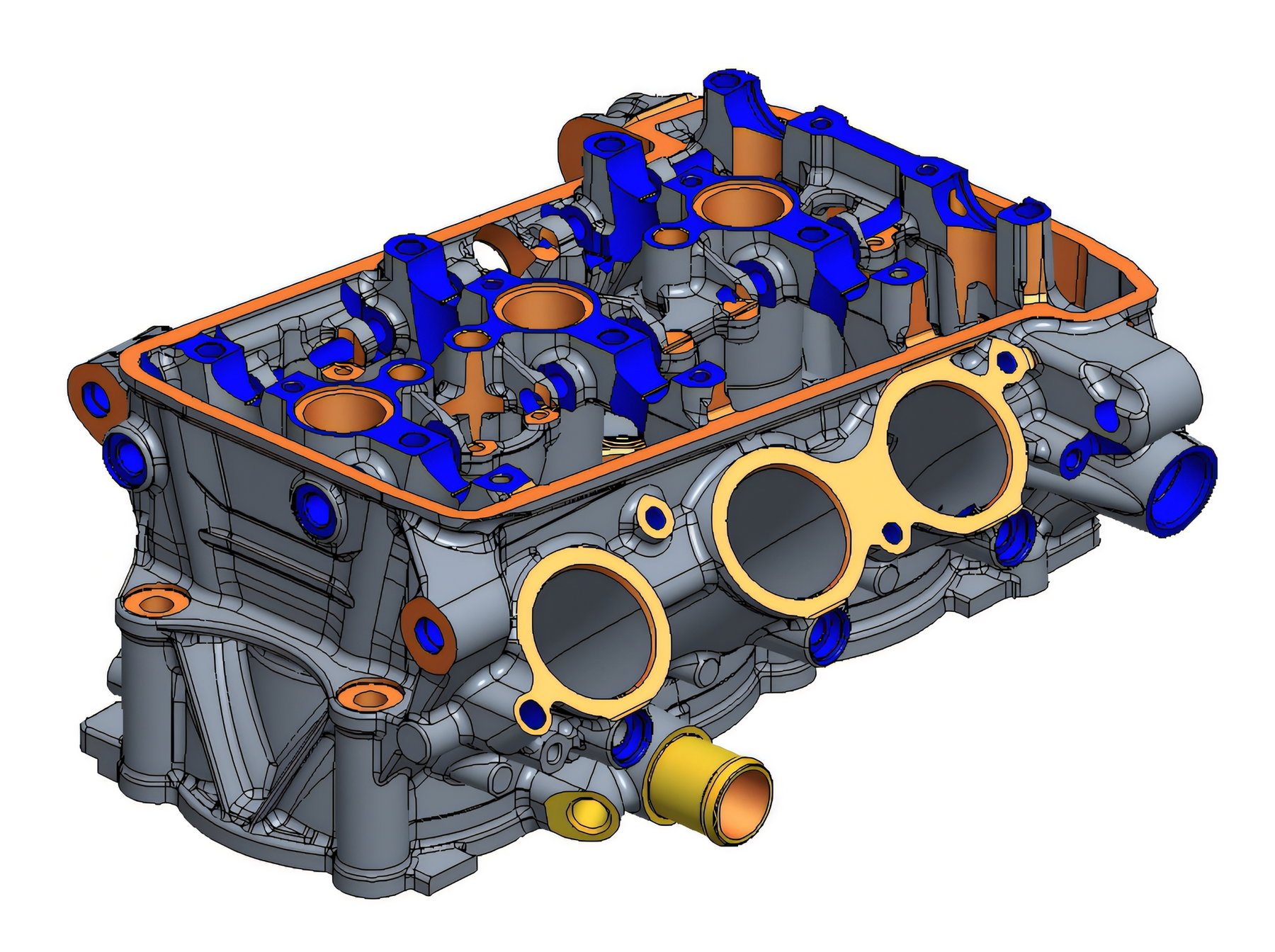
The engine gets a completely new cylinder head, new crankcases and revised internals. The aim was to get more air into the cylinders, because power and torque depend on it.
The new head uses a low-inertia valvetrain. Low inertia means the moving parts in the valvetrain weigh less, which lets the engine rev more cleanly and higher. On top of that come better-flowing ports and a redesigned combustion chamber. Together, these measures allow a higher compression ratio, which according to the manufacturer delivers more torque across the entire rev range.
To let the unit cope with the higher loads, Triumph says it has redesigned the crankcases and all internal parts. Despite the strengthened components, the complete engine is 2 kg (4.4 lbs) lighter than the current one. One detail remains open for now: Triumph has not yet quoted bore, stroke, rev limit or compression ratio.
How much power does the new Moto2 engine make?
Triumph does not give an absolute figure, only the gain: around six percent more peak power than before. The manufacturer is also holding back torque figures.
That means the actual output can only be estimated at this stage. According to media reports, the current race engine sits at roughly 144 hp (106 kW). Add the six percent and the new engine lands at approximately 152 hp (112 kW). Other estimates come out slightly lower, because even the baseline figures are quoted differently. So far, only the percentage gain can be treated as confirmed.
For context: the original Triumph race engine from 2019 made around 140 hp. Back then, though, the wider torque band mattered more than outright peak power, because it helped riders through large parts of the lap.
How big is the new displacement?
Triumph only confirms that displacement changes. Neither a figure nor the direction of the change appears in the manufacturer’s statement.
This is where accounts diverge, and it is worth a closer look. The press release itself only says that a change is coming. At a media event at the Triumph Factory Visitor Experience in Hinckley, however, the company is said to have confirmed that displacement is above the current 765 cc, without naming the exact value. Several trade outlets now assume an increase.
A report from June 2026 is more specific, claiming the Street Triple 765 RS will get an 800 cc engine for 2027 and that this unit will subsequently find its way into Moto2. Triumph has not confirmed that figure to this day. As long as it stays open, the opposite possibility cannot be ruled out either, meaning a smaller but higher-revving engine. Based on what is known today, though, more points towards an increase.
Why do all Moto2 teams have to build new chassis?
Because the engine mounting points and the position of the air intake move. The new triple therefore no longer fits into the existing frames.
All three chassis manufacturers currently represented in the class are affected: Kalex, Boscoscuro and Forward. They have to design completely new bikes for 2027. Triumph says it has been working with the constructors for around twelve months, providing them with the necessary data.
For the teams this has a practical consequence. Because the frames are new, only 2027 model-year material will be used in the 2027 season. Until now some teams have fallen back on spare chassis from earlier years, and that option disappears.
The change also opens up room to manoeuvre for the constructors. Anyone starting from scratch anyway can rethink stiffness, weight distribution and packaging. How much freedom actually remains will only become clear once the full regulations for engine and chassis are published.
When does the new engine hit the track?
Triumph has announced track testing for the coming months. A first public appearance of the new triple is set to follow before the end of 2026.
The details in the statement are not entirely consistent on this point. The summary says track testing will begin in the next few months. In the body text, by contrast, Triumph describes private testing that is already under way ahead of the official debut. According to that, the first engines will be available to the teams shortly.
From the Honda four-cylinder to the new Triumph triple
For the intermediate Grand Prix class, this is the third fundamental engine change within a few decades. In 2010, Moto2 replaced the 250 cc two-strokes, back then with a sealed four-cylinder based on the Honda CBR600RR. That unit made just under 130 hp and was comparatively close to production.
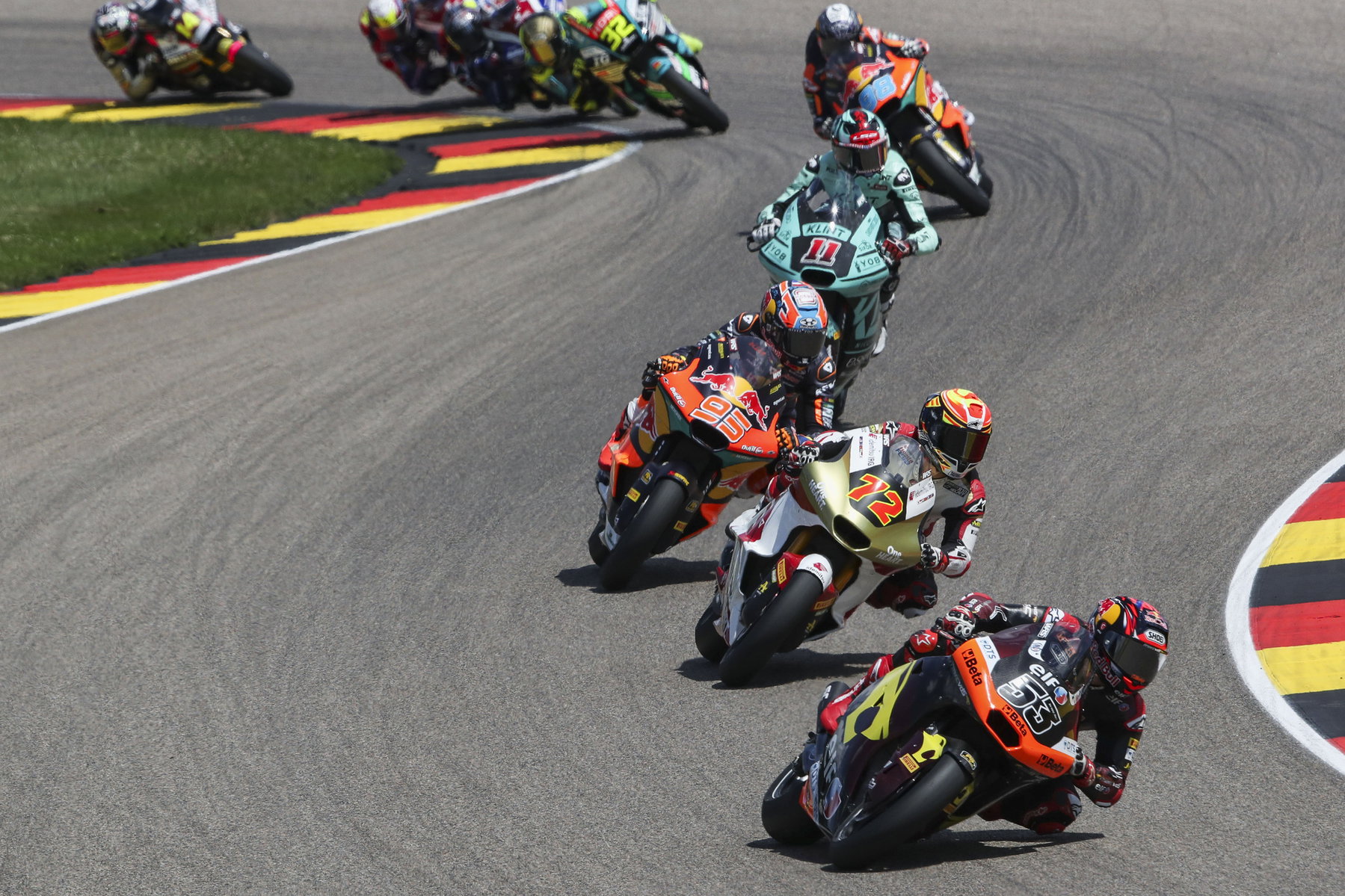
In 2019 Triumph took over. The 765 was derived from the Street Triple 765 RS, but was far more than an adapted production machine: over 80 components were changed, among them crankshaft, pistons, con-rods, balancer shaft, cylinder head, valves, gearbox and clutch. Added to that were a ride-by-wire throttle and a more sophisticated electronics package, which moved the class technically closer to MotoGP.
The engine has been revised several times since. In 2022 came a package for more power in the upper rev range, and in 2025 a race gearbox developed specifically for Moto2 with a changed shift pattern. Triumph puts the distance covered in the class so far at 1,926,132 kilometres and points to almost 100 improved lap records in practice and races across eight seasons. Chassis, electronics and tyres contributed to that as well, though, not the engine alone.
What does the new engine mean for the Street Triple?
In its statement, Triumph comments exclusively on the race engine. A conclusion about the production bike still suggests itself, because both units have shared the same basis so far.
Steve Sargent described the connection before the official announcement. He said that the development of the Moto2 engine and the production engine at Triumph always goes hand in hand, and that everything created for Moto2 also becomes part of a production motorcycle. At the same time he pointed out that the gap between Moto3 and Moto2, and between Moto2 and MotoGP, has to stay balanced, and that the engine also has to suit the requirements of the market.
One indication comes from the United States. For the 2027 model year, only the Street Triple 765 RX with the familiar 765 appears to be certified with the Environmental Protection Agency so far. According to media reports, there is no approval for the RS, R and Moto2 Edition. That is not proof, but it could point to a new production engine.
How does this fit into the 2027 season shake-up?
The new Moto2 engine is part of a comprehensive technical reset in Grand Prix racing. Key parameters change in all three classes in 2027.
In MotoGP, engines shrink from 1000 to 850 cc. At the same time Pirelli takes over as single tyre supplier, ride-height devices disappear, and aerodynamics are restricted. All five participating manufacturers confirmed their commitment through to the end of 2031 in June 2026. In Moto2, E100 fuel is being introduced on top of that.
That raises a question which can only be answered out on track: if the premier class loses displacement while the intermediate class gains it, lap times may move closer together. Triumph itself draws no connection between its own displacement change and the MotoGP rule.
For Triumph, more than one season is at stake. The contract with Dorna runs until the end of 2029 following extensions in 2021 and 2023.
Steve Sargent, Chief Product Officer at Triumph Motorcycles, sums the step up like this: “We’ve introduced more power, we’ve seen gearbox changes and now we’ve introduced a brand-new, high performance race engine that will be powering the Moto2 series from 2027.” He also says the engine has gone through an extensive test programme in which performance, durability and reliability were assessed.
Alfonso Cartujo, Sporting Director of MotoGP, commented on the announcement with the words: “Now, it will get even more powerful and we’re excited to see these new engine developments take to the track.”
Frequently asked questions
-
How much power does the Triumph Moto2 engine 2027 make?
So far Triumph has only quoted a gain of around six percent over the current engine. The manufacturer is holding back absolute figures for power and torque. Estimates in the media put it at roughly 152 hp (112 kW).
-
What displacement does the new Moto2 engine have?
Displacement changes, but the exact figure is open. Sources close to the manufacturer say the volume is above the current 765 cc. One unconfirmed report names 800 cc.
-
Why do the Moto2 teams need new chassis in 2027?
Because the engine mounting points and the position of the air intake move. Kalex, Boscoscuro and Forward therefore have to design completely new frames. Spare material from earlier model years may no longer be used in 2027.
-
How much longer will Triumph supply engines for Moto2?
The current contract with Dorna runs until the end of 2029. It came about after extensions in 2021 and 2023. Triumph has been the single supplier to the class since the start of the 2019 season.
-
When will the new engine run for the first time?
Triumph has announced track testing for the coming months, and says private testing is already under way. A public debut on track is planned before the end of 2026. It goes racing from the 2027 season.
➜ This article is part of our comprehensive overview: 2027 MotoGP Season: The Complete Overview. Find all key information on this topic in one place.