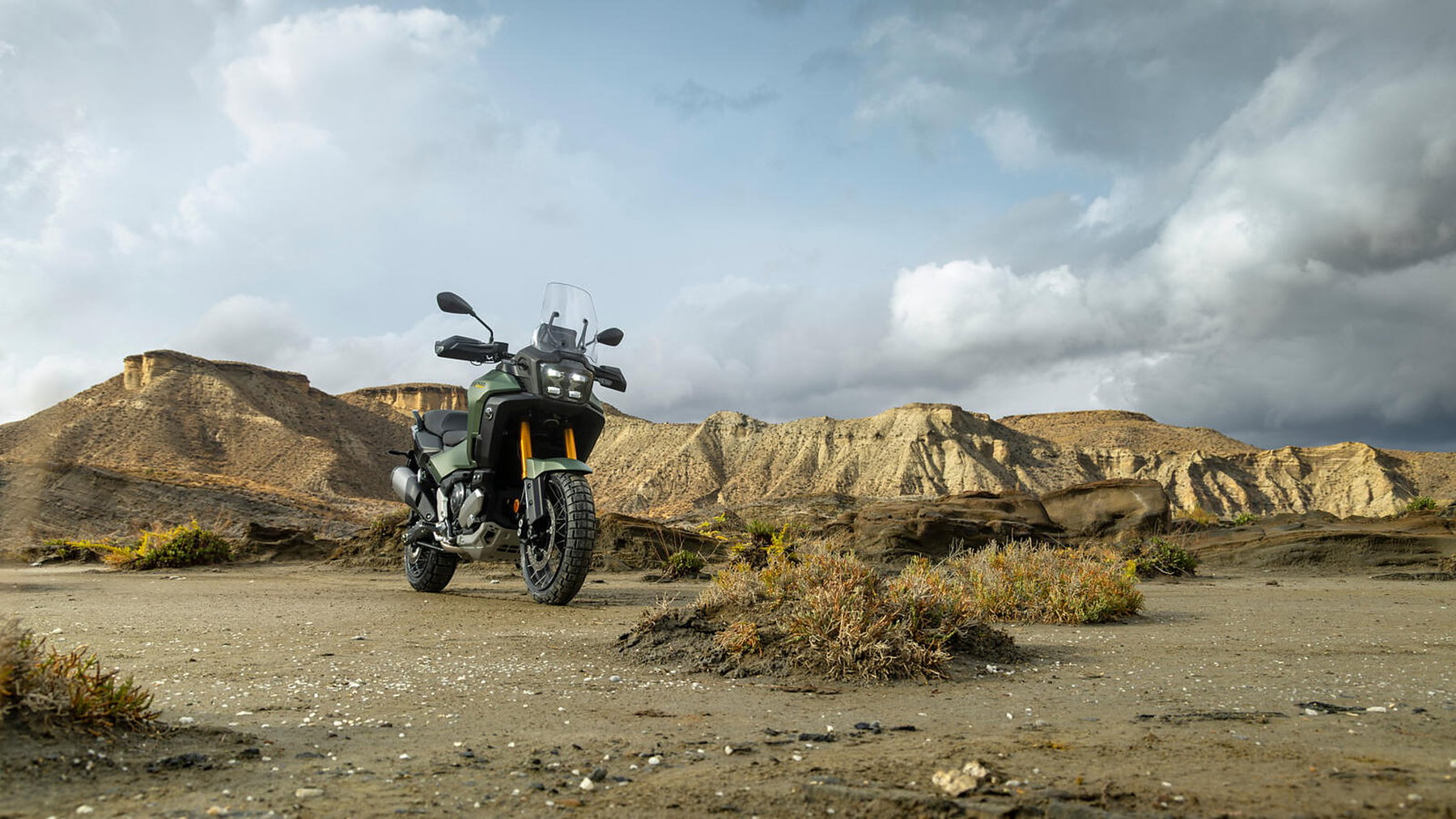
- RW700 and RW700 Explore: 689 cc, 69.3 hp (51 kW), six-speed gearbox with Y-AMT, 221 kg fully fuelled
- RW350: new 327 cc single with 29.2 hp (21.5 kW), rigidly mounted in the frame, 192 kg
- Yamaha has not announced prices yet, the RW350 is due in spring 2027
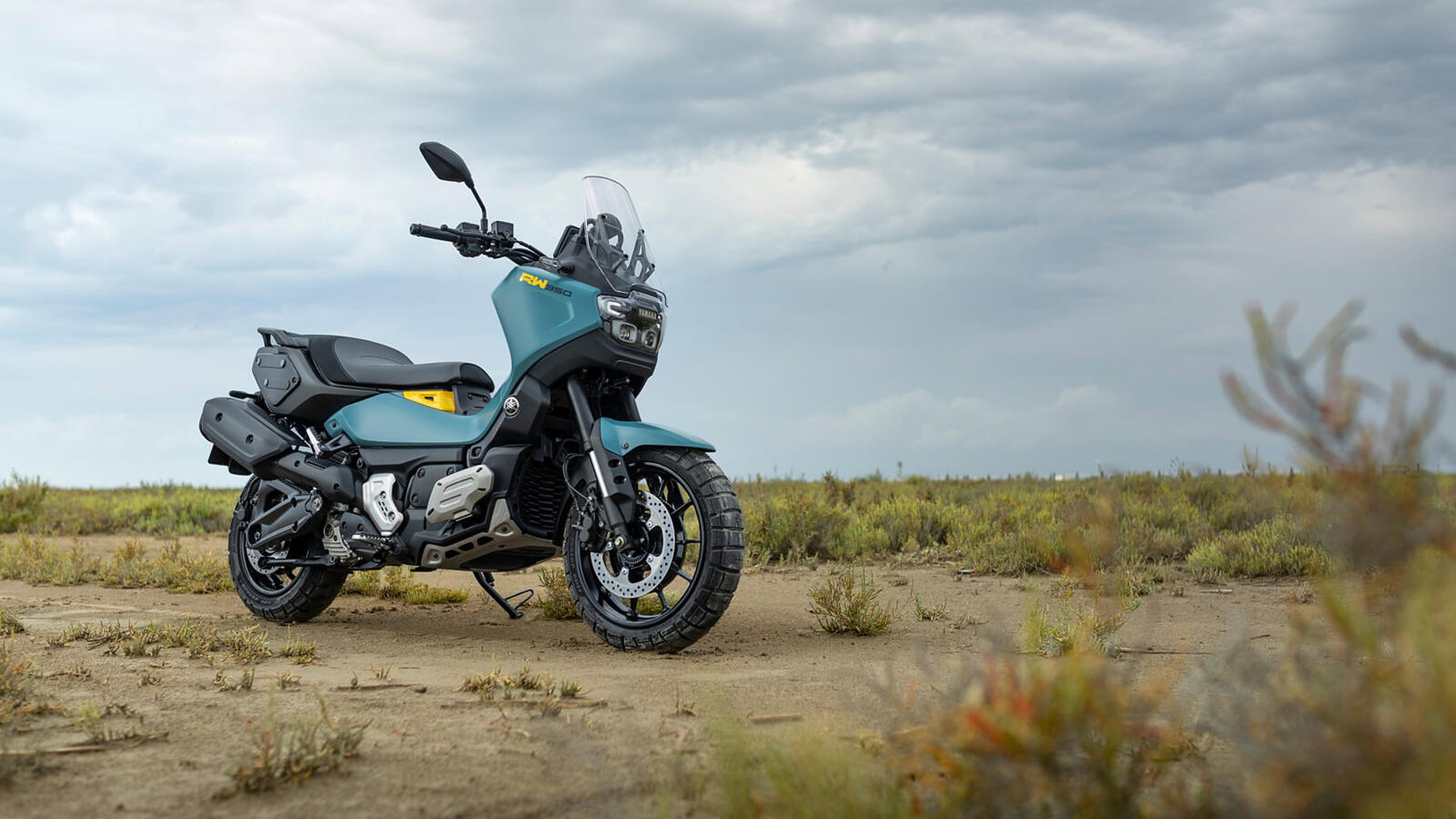
From the outside, the new RW models are scooters: step-through design, seat with helmet compartment, fold-out floorboards. Under the bodywork, however, Yamaha takes a different path than most manufacturers in this class, especially with the RW700. Instead of a CVT and a swingarm-mounted engine, the familiar CP2 parallel twin works there with six gears, a wet clutch and chain drive. The RW family is among the Yamaha new models on display at EICMA 2026 in Milan and is part of the 2027 model year. Alongside the RW700, it includes the better-equipped RW700 Explore and the smaller RW350.
What is the Yamaha RW series?
The RW series is Yamaha’s first model family of adventure scooters, meaning scooters with long suspension travel, knobbly tyres and riding modes for unpaved roads. Yamaha itself describes the RW700 as a crossover between motorcycle and scooter.
The idea behind it: in everyday use, the RW should ride like a comfortable commuter scooter, but be capable of much more on gravel or forest tracks. Yamaha brings experience from two directions. On one side are the sport scooters of the TMAX and XMAX ranges, on the other the off-road-capable Ténéré models. The RW series combines both.
The concept is not intended for hard enduro use. Yamaha itself talks about forest tracks and unpaved roads. The wheels also stay at typical scooter dimensions on the RW700, with 17 inches at the front and 15 inches at the rear. How well a 221 kg scooter with a 15-inch rear wheel performs off the tarmac remains to be seen in riding tests.
How much horsepower do the Yamaha RW700 and RW350 have?
The Yamaha RW700 produces 69.3 hp (51 kW) at 8,250 rpm, the RW350 delivers 29.2 hp (21.5 kW) at 7,000 rpm. For the RW700 and the RW700 Explore there is also an A2 version with 47.6 hp (35 kW).
The RW700’s twin has a displacement of 689 cc, meets the EU5+ emissions standard and comes from the CP2 family that Yamaha uses in the MT-07 and the Ténéré 700, among others. Maximum torque of 65 Nm (48 lb-ft) is available between 6,500 and 6,750 rpm. Yamaha states fuel consumption of 4.1 litres per 100 km, and the tank holds 14 litres.
The RW350, on the other hand, has a completely newly developed single-cylinder engine with 327 cc, four valves and an overhead camshaft. It delivers 31.5 Nm (23 lb-ft) at 5,750 rpm and has a slightly long-stroke design. This puts it a little above the XMAX’s 300 cc engine. For the RW350, Yamaha quotes 3.5 litres per 100 km, and the tank holds 13 litres. At 21.5 kW, the RW350 stays well below the A2 limit of 35 kW.
Both engines use electronic throttle control (ride-by-wire, called YCC-T at Yamaha). For the RW350’s class, this is a first for Yamaha.
How does the RW700 shift with Y-AMT off-road?
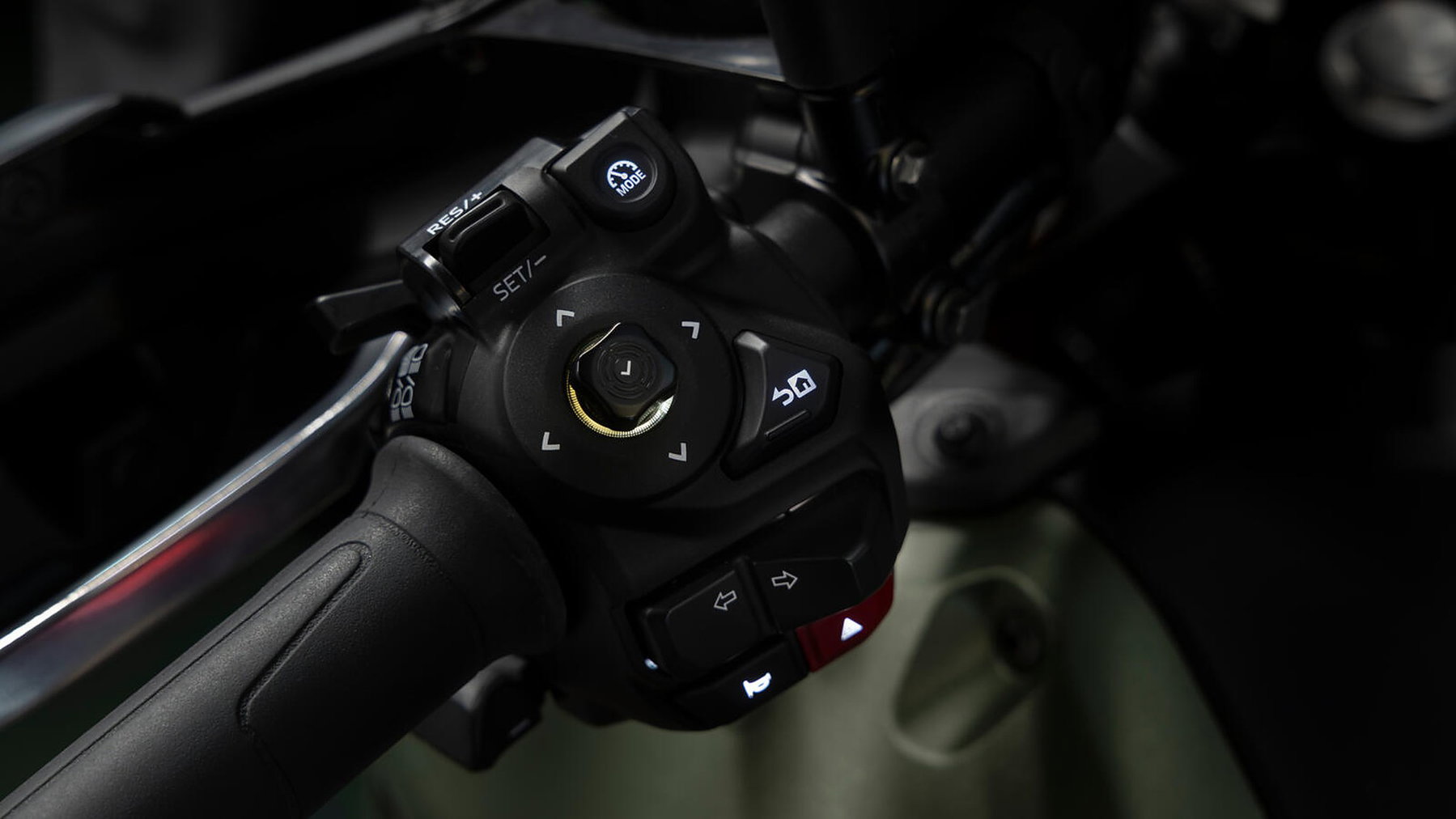
The RW700 shifts via the automated Y-AMT gearbox, either fully automatically or using a paddle switch on the left end of the handlebar. There is no clutch lever or foot shifter, and no foot brake either. Braking is done exclusively with the two hand levers.
Yamaha introduced Y-AMT in 2024 and has since fitted it to several motorcycles. With the RW700, it receives an off-road calibration for the first time. This also makes the RW700 Yamaha’s first scooter with real gears. According to the manufacturer, a gear change via the paddle takes 0.1 seconds.
Yamaha has revised the system for the scooter. A rubber damper on the clutch and modified springs on the shift shaft are designed to make gear changes smoother. The paddle has been given a new shape so that it does not interfere with the brake lever.
Things get interesting in automatic mode away from the road. In the GRAVEL riding modes, the gearbox does not shift up immediately when the rider opens the throttle or the rear wheel spins. This is intended to allow controlled slip on loose surfaces. If the rear wheel locks or the scooter decelerates sharply, the electronics intervene in the clutch to prevent the engine from stalling. Yamaha cites a rear wheel spinning on a tree trunk as an example.
Chassis and ergonomics: sitting, standing or feet forward
The basic structure of the RW700 is a high-tensile steel tube frame. At the front, an upside-down fork with 41 mm stanchions and 160 mm of travel does the work. At the rear, a linkage-mounted monoshock offers 155 mm of travel and is adjustable for preload (seven steps) and rebound. Ground clearance is 170 mm.
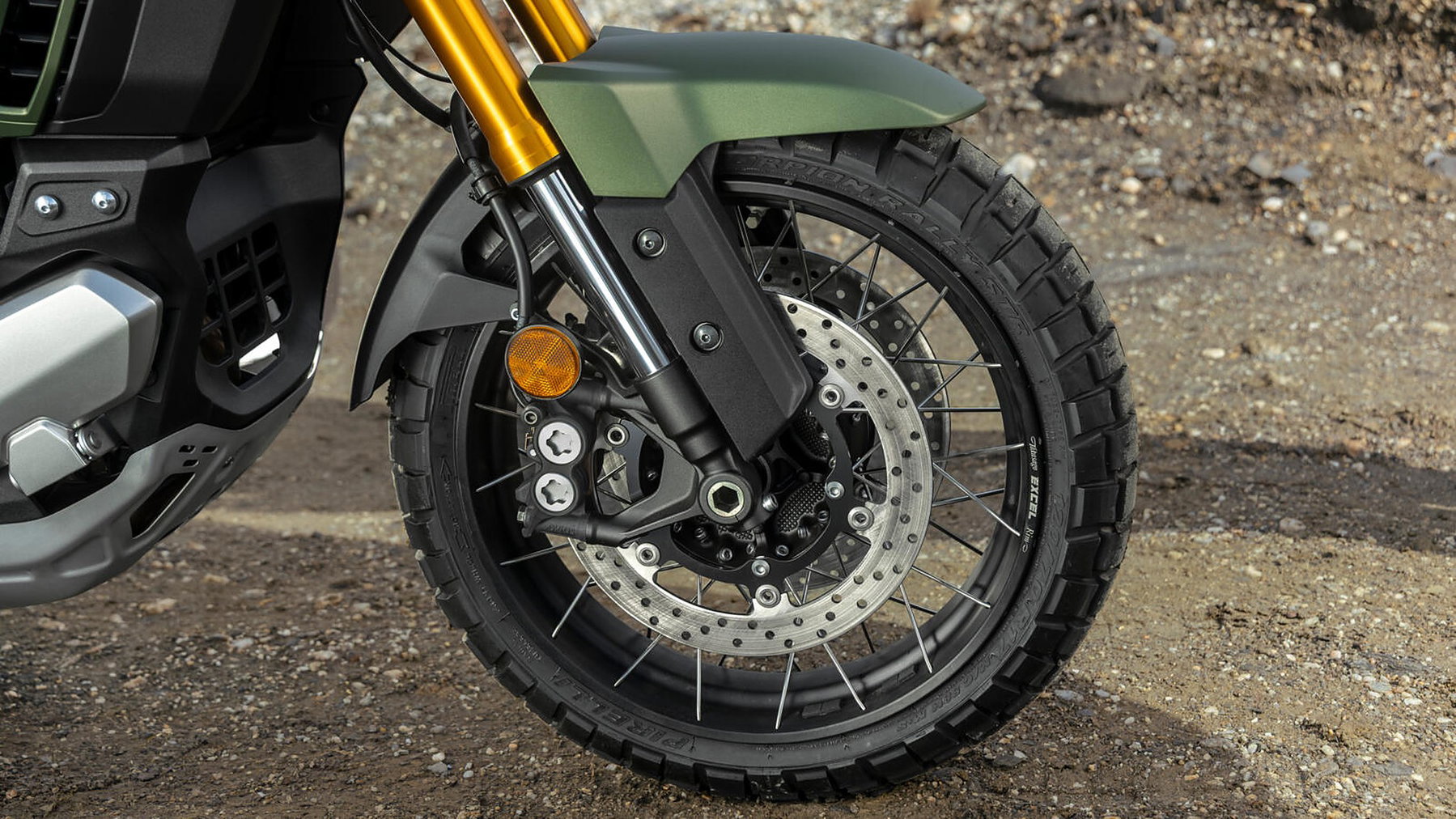
The wheels combine aluminium rims with crossed stainless steel spokes, which Yamaha is using for the first time. They are fitted with tubeless Pirelli Scorpion Rally STR tyres in 120/70 R17 and 160/60 R15. At the front, two 298 mm discs with radially mounted four-piston calipers handle braking, at the rear a 267 mm disc. An aluminium engine guard, hand guards and a fixed windscreen are standard.
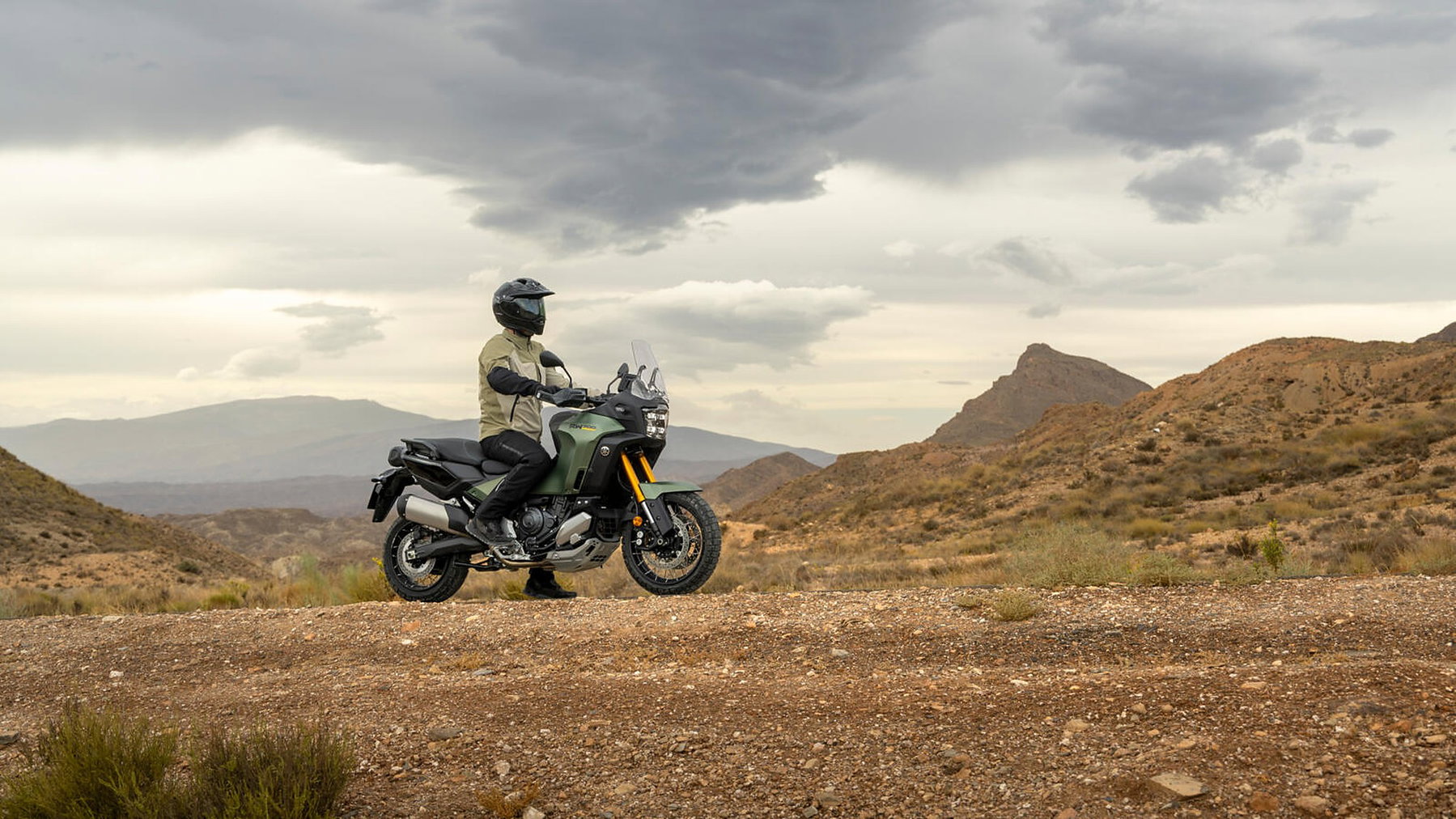
The seating position is typical of the concept. The seat height is 810 mm, and the seat is narrow at the front. There are two positions for the feet: centrally mounted enduro-style footpegs that also allow riding while standing, and folding floorboards further forward for the relaxed scooter posture. The central pegs can be adjusted to four positions, another first for Yamaha. Their rubber inserts dampen vibrations on the road and can be removed for more grip off-road.
The RW700 is 2,255 mm long, 940 mm wide and has a wheelbase of 1,585 mm. It weighs 221 kg (487 lbs) with a full tank.
What sets the RW700 Explore apart from the RW700?
The RW700 Explore has the same technology as the RW700, but gets an adjustable fork and more comfort features. These include heated grips, a heated rider seat, a centre stand and illuminated handlebar switches.
The Explore’s fork offers 15 mm of preload adjustment and eleven-step rebound adjustment. The fork bottoms are anodised in gold. The seat heating and heated grips each have ten levels. The centre stand is particularly useful for chain maintenance.
The extra equipment adds weight: the Explore weighs 224 kg (494 lbs) ready to ride. It also comes in its own colours, namely Forest Green and Midnight Black with Sage Blue accents. The standard RW700 is available in Sage Blue and Power Grey.
How does Yamaha Dynamic Ride on the RW350 work?
On the RW350, the engine is rigidly mounted in the frame, and only the CVT swings with the rear wheel. Yamaha calls this design Yamaha Dynamic Ride and is using it for the first time.
On most scooters, the engine and continuously variable transmission (CVT) form a single unit that moves up and down with the rear wheel as a so-called swingarm-mounted engine. This is simple, but makes the rear end heavy. On the RW350, by contrast, only the CVT module pivots around the axis of the crankshaft. The swingarm also includes the drive belt and the centrifugal clutch. On the right-hand side, a swingarm mounted in the engine casing supports the construction.
The advantage: unsprung mass at the rear wheel is reduced, which should allow the two rear shocks to respond more finely. A balancer mechanism additionally reduces vibration. In the mid-size class, a frame-mounted engine is rare. The SYM ADXTG 400 takes a similar approach, but uses chain drive and a monoshock.
The rear suspension travel of just 105 mm stands out. The two shocks offer seven-step preload adjustment. At the front, an upside-down fork with 37 mm stanchions and 140 mm of travel does the work. Ground clearance is 185 mm, and the seat height is 810 mm, as on the RW700.
The RW350’s wheels are cast aluminium, 16 inches at the front and 14 inches at the rear. Their design is inspired by rally cars. A damper in the rear hub is intended to smooth load changes when accelerating and braking. Dunlop D615 tyres with a knobbly tread in 120/70-16 and 150/70-14 are fitted as standard. Braking is handled by a 282 mm disc at the front and a 245 mm disc at the rear. The frame is a visibly styled steel backbone frame, visually reminiscent of fun models such as the Honda Trail 125 or the Honda Dax.
The RW350 also has central footpegs with removable rubbers and heel guards, as well as folding floorboards further forward. It is 2,170 mm long, has a 1,540 mm wheelbase and weighs 192 kg (423 lbs) with a full tank.
What electronics do the RW models come with?
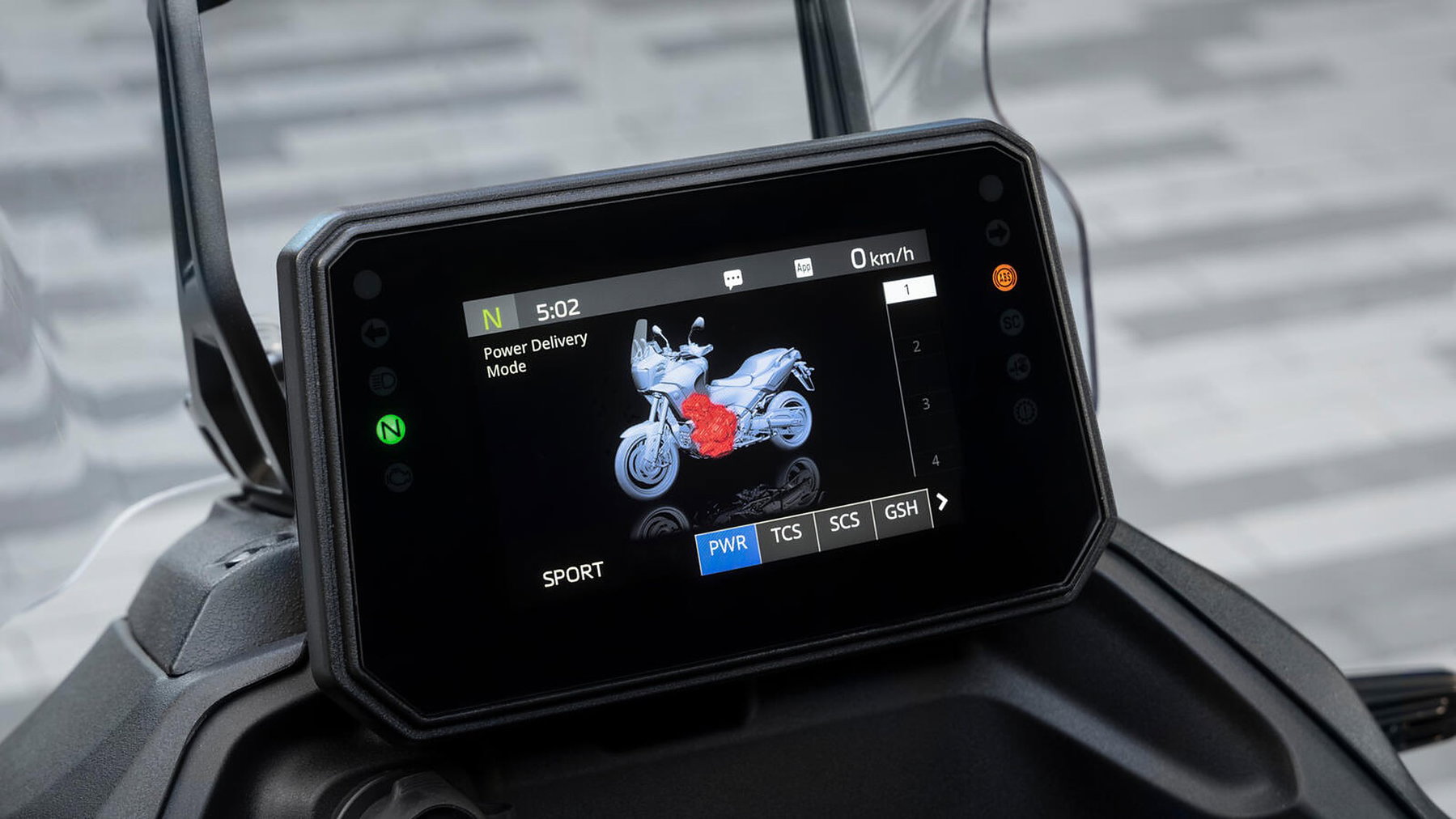
The RW700 and the RW700 Explore have a six-axis IMU and five riding modes, while the RW350 has three riding modes with their own power and traction control settings. Cruise control, a smart key and a 5-inch TFT display are standard on all three models.
On the 700s, the IMU (a sensor that measures the vehicle’s lean and movements) provides the data for lean-sensitive traction control, rear-wheel slide control, cornering brake control and engine brake management on downshifts. The riding modes are divided into two groups. ROAD includes SPORT, STREET and ECO, GRAVEL includes EXPLORE and the freely configurable EXPLORE+. The rear ABS can only be switched off in GRAVEL mode. Cornering brake control and slip control can be deactivated in all modes. On the 700s, cruise control is joined by an adjustable speed limiter.
The RW350 offers the modes STREET, EXPLORE and ECO. EXPLORE uses the same engine mapping as STREET but allows more slip at the rear wheel. ECO reduces power and is intended for rain and slippery roads.
The colour display connects to a smartphone via the free MyRide app, allowing calls to be answered and music to be controlled. Map navigation is possible with the Garmin StreetCross app. There are three display designs and a USB-C socket in the cockpit. The indicators switch off automatically, and a short tap triggers three flashes for a lane change. During emergency braking, both indicators flash automatically. The storage compartment under the seat is illuminated on both ranges and, depending on its shape, should accommodate a full-face helmet.
Yamaha also relies on plant-based and recycled materials for the RW series, including the bio-based plastic Durabio. Yamaha calls the textured surfaces of the bodywork TEXNATURE. They were inspired by the Tenryu River and the sand dunes of Nakatajima near Yamaha’s headquarters.
Which adventure scooters does the RW series compete with?
The RW700 takes on the Honda X-ADV, which has defined the class of large adventure scooters for years. The RW350 targets the mid-size class with models such as the Honda ADV 350, Kymco X-Tera 350i and SYM ADV 300.
As with the X-ADV, the RW700 also hides motorcycle technology under scooter bodywork. However, Yamaha leans more towards an adventure bike with the chassis, especially with the spoked wheels, the enduro footpegs and the GRAVEL modes.
In the mid-size class, the RW350 is on a par with the competition in terms of performance. It is also in the same range in terms of weight: the Honda ADV 350 weighs 186 kg, the new Kymco X-Tera 350i 195 kg. In terms of rear suspension travel, the Honda leads with 130 mm, even though it uses a classic swingarm-mounted engine.
When is the Yamaha RW series coming and how much will it cost?
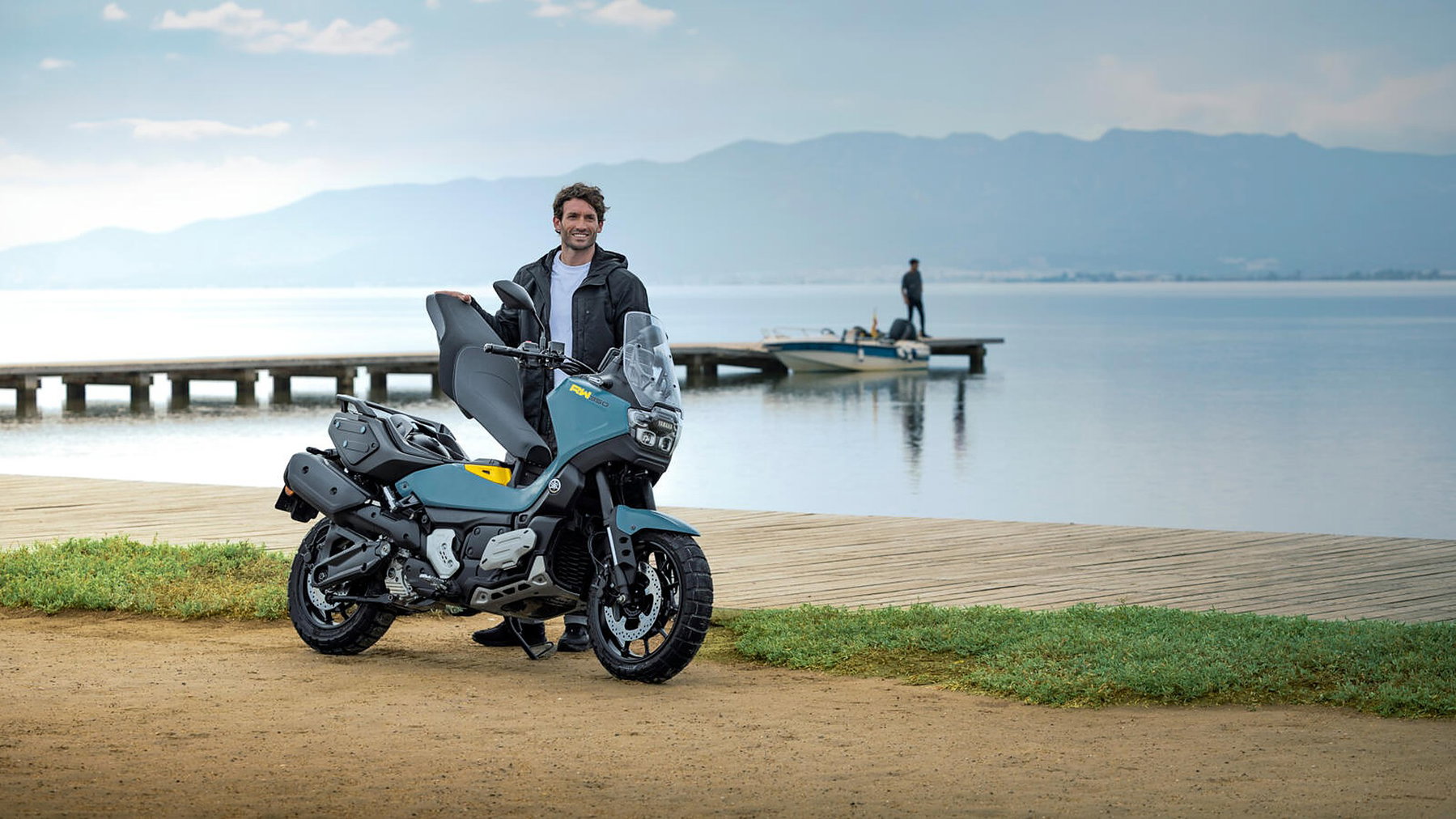
Yamaha has not announced prices for any of the three RW models. The RW350 is scheduled to go on sale in mid-spring 2027, while there is no specific date yet for the RW700 and the RW700 Explore.
Yamaha offers its own accessories for the RW models. These include aluminium side cases, a top case, soft bags and protective parts for the radiator, bodywork and headlight. Some prices are already known: a 34-litre top case costs 249.95 euros (approx. 280 US dollars), the keyless 45-litre top case 339.95 euros (approx. 381 US dollars). For the 700s there is an LED fog light kit for 385.95 euros (approx. 433 US dollars), and for the RW350 retrofit heated grips for 307.95 euros (approx. 345 US dollars).
The RW350 is available in Sage Blue, Arashi Sand and Midnight Black.
Frequently Asked Questions
-
How much horsepower does the Yamaha RW700 have?
The Yamaha RW700 produces 69.3 hp (51 kW) at 8,250 rpm and 65 Nm of torque. For riders with an A2 licence there is a version with 47.6 hp (35 kW). The same applies to the RW700 Explore.
-
How much does the Yamaha RW700 weigh?
The RW700 weighs 221 kg (487 lbs) with a full tank. The RW700 Explore comes in at 224 kg (494 lbs) due to its additional equipment, the RW350 at 192 kg (423 lbs).
-
Does the Yamaha RW700 have an automatic transmission?
Yes, the RW700 uses the automated six-speed Y-AMT gearbox. It shifts fully automatically or via a paddle switch on the handlebar, and there is no clutch lever or gear lever.
-
How much does the Yamaha RW350 cost?
Yamaha has not yet announced a price for the RW350. The market launch is planned for spring 2027.
-
What is the seat height of the RW models?
All three RW models have a seat height of 810 mm. The seat is narrow at the front so that the feet reach the ground more easily.
➜ Find all technical specifications for these models in our motorcycle database: Yamaha RW700 2027, Yamaha RW700 Explore 2027 and Yamaha RW350 2027.
➜ This article is part of our comprehensive overview: New Motorcycles 2027: All Models, Releases and Highlights at a Glance. Find all key information on this topic in one place.
➜ More on this topic in our overview: EICMA 2026: All New Models and Premieres from Milan at a Glance.