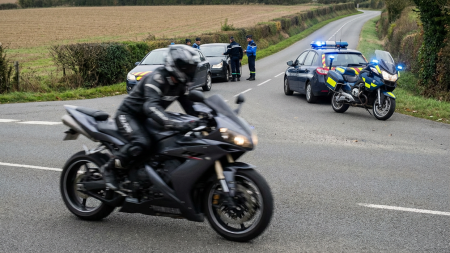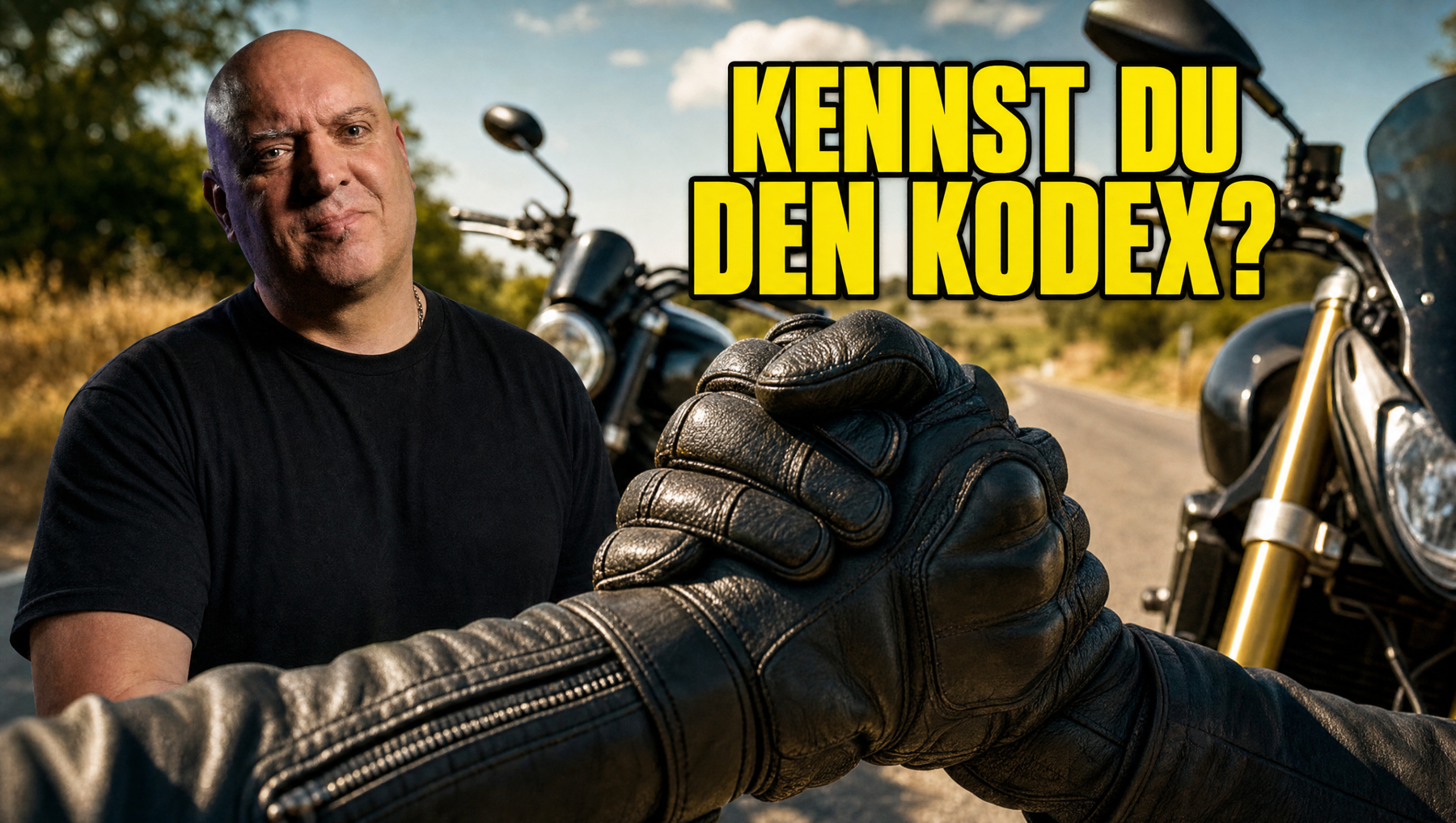
- The code is written down nowhere, yet in clubs, at regulars’ tables and on group rides it works almost like a set of bylaws.
- The warning signals differ internationally: in Italy an outstretched fist warns, in the United Kingdom a foot held out to the side.
- On group rides the pace follows the least experienced rider, and the newcomer rides in position two.
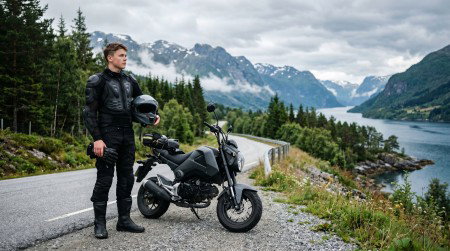
Sunshine, a small country road, a motorcycle coming the other way. Almost automatically the left hand leaves the handlebar, a brief nod, and the ride continues. A few children wave at the roadside, and they get a wave back. These small gestures are exactly where what the scene calls the biker code begins. It is not about statutes, but about a way of getting along that many motorcyclists take for granted.
What is the biker code?
The biker code is a collection of unwritten rules that motorcyclists observe in dealing with one another. It carries no legal force and rests instead on respect, a willingness to help and the feeling of belonging to a community.
Some put it like this: anyone who rides a motorcycle belongs to one big family, even when riding alone. Whether that always holds true is open to debate. The rules themselves, however, really do exist, and anyone who knows them soon notices that they make dealings with each other more relaxed. Tradition plays a part, but above all it comes down to mutual consideration.
Why is the code taken so seriously in Germany?
One reason lies in the pronounced culture of clubs and rules. Clear structures, fixed affiliations and order carry a lot of weight here, and that shows particularly clearly in the motorcycle community.
It becomes visible in many clubs, at regulars’ tables and on joint rides, where the code is treated almost like an unofficial set of bylaws. A second point adds to it: many motorcyclists still struggle with the stereotype of the wild loner. That may be precisely why the need for solidarity and mutual respect is even stronger here than elsewhere. Rules of this kind exist in other countries too, but they are taken particularly seriously here.
How do motorcyclists greet each other?
The greeting is usually understated. A brief nod or the outstretched two-finger peace sign are common, depending on what the traffic situation allows at that moment.
Loud horns or grand gestures are not part of it. The greeting is a sign of respect, nothing more. And it works because it gets returned. Anyone who has ever sent one into the void knows the slightly disappointed feeling that follows.
Who gets greeted and who does not?
There is no consensus on this, and that is exactly what makes the question a perennial topic in the scene. Some take the view that anyone on two wheels belongs, others draw lines.
Some deliberately leave out scooter riders. GS and Harley riders are often said not to greet anyone anyway. In the end the mood of the moment usually decides. Anyone who does not greet at all, though, can expect a comment. Classics include “Whoever does not wave has to ride a GS for five years” or “Whoever waves at a scooter rider buys the next round”. Both are meant with a wink, but they show how seriously the topic is taken in practice.
How do bikers in Italy and the United Kingdom warn about police checks?
In Italy an outstretched left fist, shaken firmly downwards or to the side several times, serves as the warning, sometimes combined with a circling motion. In the United Kingdom a foot held out to the side is the warning signal instead.
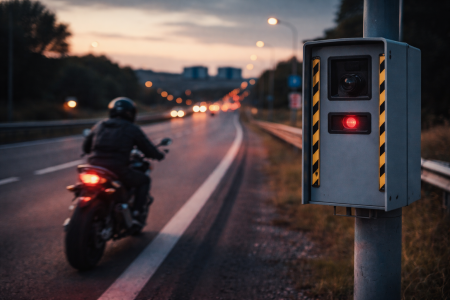
The Italian sign is widespread among motorcyclists there and is used especially on popular riding roads. It is deliberately conspicuous so that everyone in the group immediately understands that there is a speed trap further ahead. In Germany the equivalent hint usually comes in the form of tapping the helmet.
The British signal works differently from what many assume. The foot is taken out loosely to the side without wagging, and there it does not mean a greeting but a warning about police or hazards. The practical background: the hand stays on the handlebar, which can be safer given road conditions there. In German-speaking countries the same extended foot is understood in road traffic more as a thank you. On the race track it serves as an alternative to a raised arm and signals that a rider is slowing down because he is leaving the circuit.
There are differences outside Europe as well. In the United States waving counts as obligatory, but warnings about speed checks are far less common there. One reason is likely that quite a few states take a harder line against such signals. In Japan, by contrast, offers of mutual help are very widespread; the sense of community carries a different weight again there.
One caveat belongs with all of this: warning about police checks is not legally permitted everywhere. Many in the scene nevertheless see it as an act of solidarity.
What applies in the event of breakdowns and emergencies?
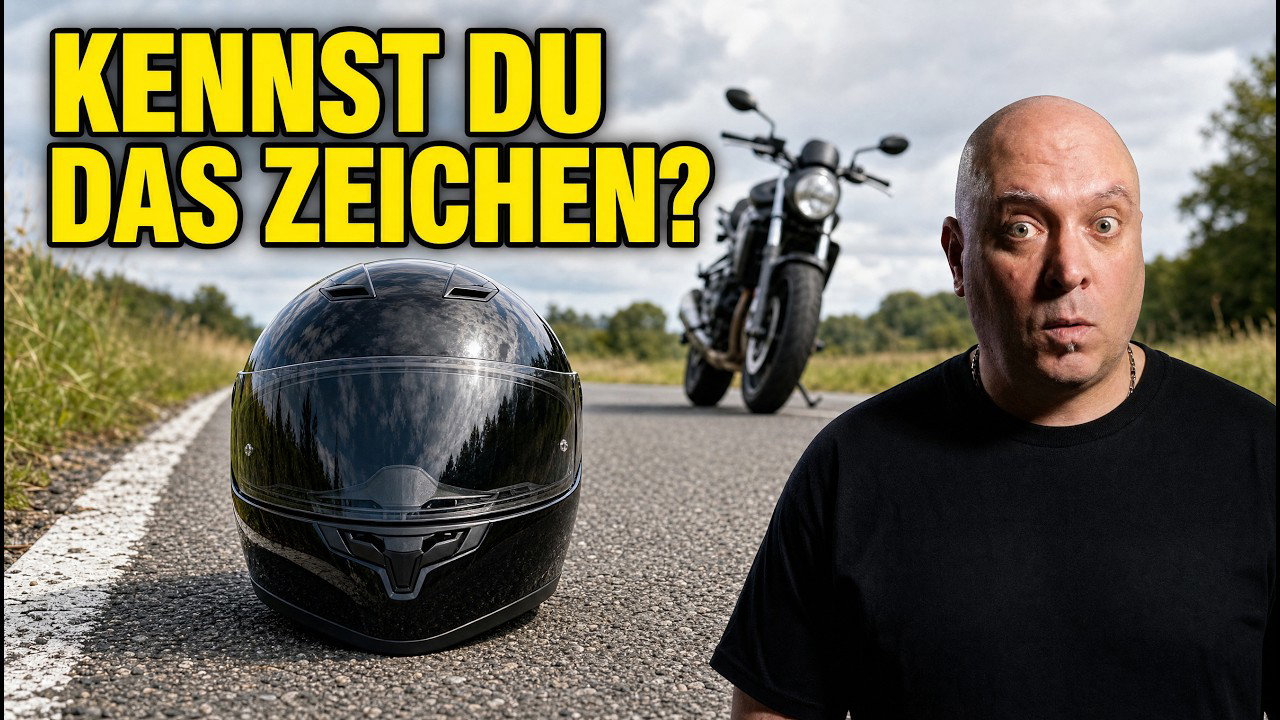
If a motorcyclist is standing at the roadside, riders stop and ask whether help is needed. A helmet lying on the ground next to the machine is taken almost everywhere as a sign that someone is in trouble.
The fact that practically everyone carries a phone these days changes little about that. The brief stop costs a few minutes and is simply a matter of honour for many. Help is also given away from the road, with wrenching just as much as with a breakdown. And one classic from the discretion category persists stubbornly: if the police ask during a check who the other rider was, you were always out on your own.
Which rules apply on group rides?
On group rides the pace follows the least experienced member. Nobody should feel pressured into chasing after the group, because that is exactly how dangerous situations arise.
There is also one simple arrangement for turning off: whoever rides at the front waits until everyone has closed up. Otherwise the group loses riders at the back who cannot keep up.
Why beginners ride in position two
The proven approach is to put the most experienced rider at the front and the newcomer directly behind. That gives the beginner orientation and a riding style to follow.
The second reason is the so-called concertina effect. The flow of traffic forces every group to accelerate and brake again and again. At the front it is barely noticeable, at the back of the group it has a far stronger impact. There riders sometimes have to accelerate hard and then brake hard again just to stay connected. For newer riders that alone can be too much, even when the front of the group is cruising along comfortably.
Parking comes with a fixed habit as well: machines are parked facing the exit. That sounds trivial at first, but in narrow lanes and at big events it saves a lot of pushing and manoeuvring.
Consideration in everyday riding as part of the code
Annoyed looks in a residential area, a family at the edge of a field flinching at full throttle: almost everyone knows scenes like these. The code therefore also covers how riders deal with everyone who does not ride a motorcycle themselves.
In concrete terms that means shifting up a gear in residential areas and riding more quietly, pulling in the clutch when passing animals and not startling families unnecessarily. Anyone who waits until a little way past the edge of town before accelerating saves himself trouble. Then there are small things such as taking the helmet off at the petrol station. Further points from practice: riders do not pass a stationary queue on the right, neither at traffic lights nor at a level crossing. And other people’s motorcycles are not touched without asking.
Which sayings belong to the code and how seriously are they meant?
A large share of the sayings is meant humorously and works more as pub folklore than as a rule of conduct. A smaller share, on the other hand, is taken absolutely seriously.
The first category includes lines such as “Whoever brakes loses”, “Everyone looks better with a helmet on” or “Whoever drops the bike on a test ride has bought it at the asking price”. “You do not lend out your wife or your bike”, “Your brother’s wife is off limits” and “Motorcycle police get a wave too” belong in the same series. The saying “Trophy or hospital” is more divisive, because for some it shows how quickly the line between fun and recklessness is crossed.
Other points, by contrast, are non-negotiable. “Stay on your own damn side of the road” sounds obvious, but in everyday riding it apparently is not always. On alcohol practically everyone agrees: whoever rides does not drink. And one line that links both has stuck around as well: never ride faster than your guardian angel can fly. Practical notes belong here too, such as remembering that leaves combined with wet conditions make grip considerably worse.
Why is the code more important today than it used to be?
Because behaviour on the road has a direct say in which roads stay open in future. Motorcyclists are seen in many places as loud, inconsiderate and disruptive, and that image feeds into closures and debates about riding bans.
Nobody can please everyone. Provoking unnecessarily, however, brings additional headwind and improves the situation for no one. Anyone who sticks to the code not only avoids trouble locally but also helps the community come across better overall. In the best case it even generates support against closures that many consider unfair. The topic thus slots straight into the ongoing discussion about motorcycle noise, road closures and the future of popular touring roads.
Fun does not have to fall by the wayside in the process. Anyone who sticks to the rules in certain places can be more relaxed elsewhere without it standing out negatively. No code is perfect, and everyone has their own exceptions and favourite traditions. As long as the core is right, meaning consideration, solidarity and a healthy dose of humour, it keeps working.
Frequently asked questions
-
What is the biker code?
The biker code is a collection of unwritten rules among motorcyclists. It covers the greeting, help with breakdowns, warnings about hazards and arrangements on group rides. None of it is legally binding, yet in clubs and groups it is often treated like a set of bylaws.
-
Why do motorcyclists tap their helmets?
Tapping the helmet is the usual sign in Germany for a police check or a speed trap further ahead. It warns oncoming riders, but it is not legally permitted everywhere. In the scene it is mostly understood as an act of solidarity.
-
Who rides at the front on a group ride?
The most experienced rider goes at the front, with the newcomer directly behind. That gives the beginner orientation and defuses the concertina effect at the back of the group. The pace of the whole group follows the least experienced member.
-
What does a helmet on the ground next to a motorcycle mean?
A helmet placed on the ground next to the machine is taken as a sign of trouble. Anyone who sees it stops and asks whether help is needed. The same rule applies generally to anyone standing at the roadside with a breakdown.