- The chase started shortly before 5:40 p.m. local time near Dodger Stadium and ended with an arrest at around 6:45 p.m. in South Los Angeles
- Roughly six patrol cars and a police helicopter were involved, and according to police nobody was injured
- Officers found no firearm, and the dirt bike had been reported stolen
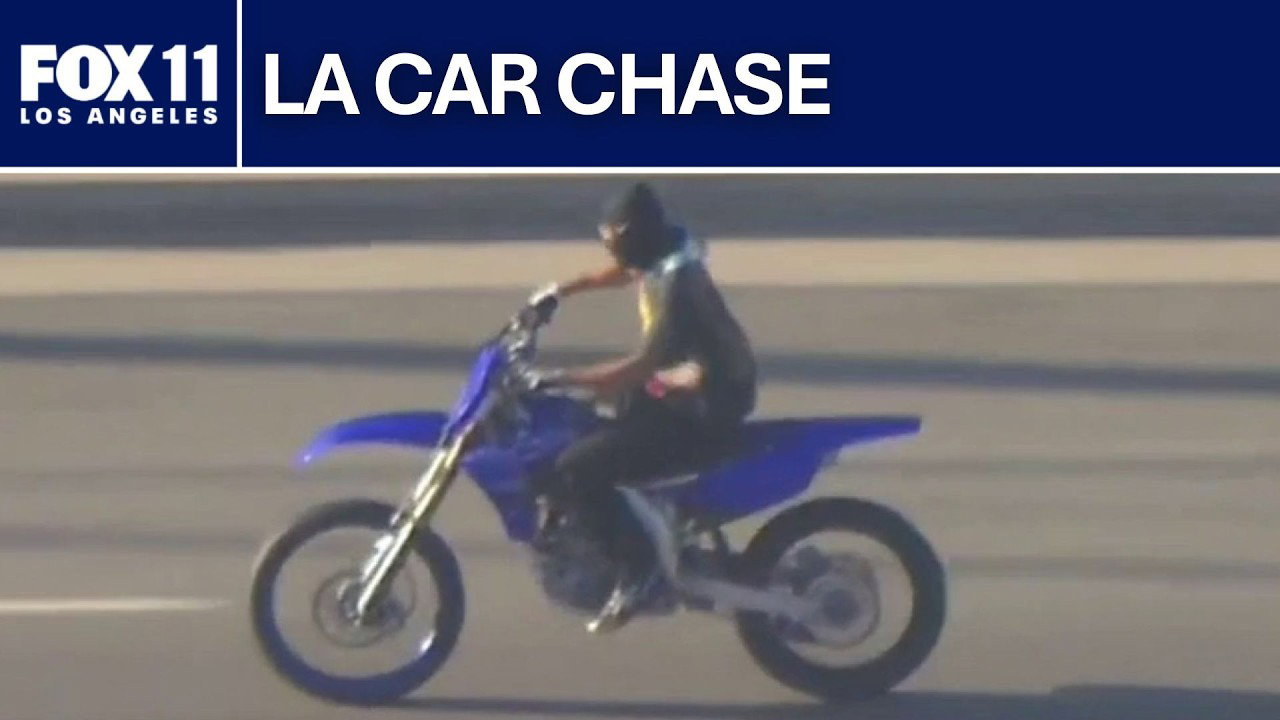
Police pursuits have been a staple of Los Angeles television for decades. Even so, what unfolded on the evening of Wednesday, 19 August 2026, across the south of the city for more than an hour was out of the ordinary. A rider on an off-road motorcycle with no headlight, tail light or indicators led police through half of South Los Angeles, stopped twice for fuel along the way and made phone calls while riding. The chase was broadcast live and ended up lasting longer than an hour.
How did the Los Angeles pursuit begin?
The chase started shortly before 5:40 p.m. local time near Dodger Stadium. According to the Los Angeles Police Department, it was triggered by the suspicion that the rider had been carrying and displaying a firearm on public roads.
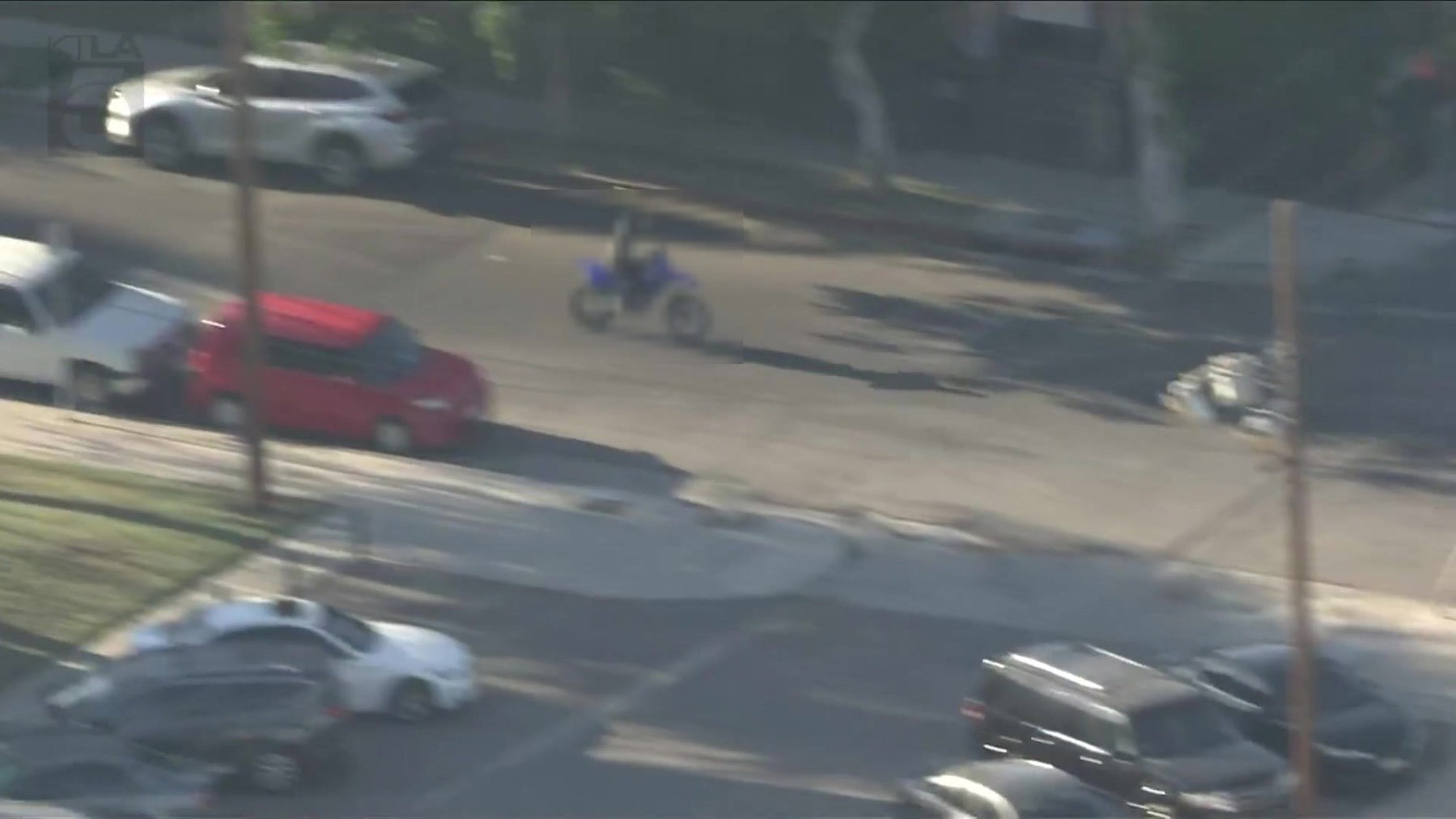
From there it continued through downtown and then south along Figueroa Street. Most of the pursuit then played out around Watts, Compton and the neighbouring districts. The rider stayed almost entirely within a manageable area, turned around repeatedly and kept returning to the same blocks. To the officers, that suggested he knew the area well.
Because a weapons suspicion was in play, the patrol cars stayed considerably closer than they would for a straightforward traffic offence. Around six vehicles followed the motorcycle, while a police helicopter circled overhead and relayed its position.
Why could police not stop the motorcycle?
A lightweight off-road machine is almost impossible to catch in heavy city traffic without endangering other road users. That is exactly what made this pursuit so drawn out.
The rider used the gaps between lanes, passed stationary cars along the centre line, switched to the oncoming lane and cut across car parks. The patrol cars deliberately did not follow him onto the wrong side of the road, because that would have put other drivers at risk. From the air the machine was hard to keep in view as well, because trees and buildings kept breaking the line of sight.
There was another detail that made the case harder still: the machine was not street legal. Without lights or indicators it is barely visible in the dark, and it is narrow and light enough to ride through pedestrian passages and across green spaces where no patrol car can follow. The rider wore no helmet. According to police, the motorcycle had previously been reported stolen.
During the ride he clipped a car and tore off its wing mirror. According to police, nobody was injured in the incident.
What happened at the petrol station?
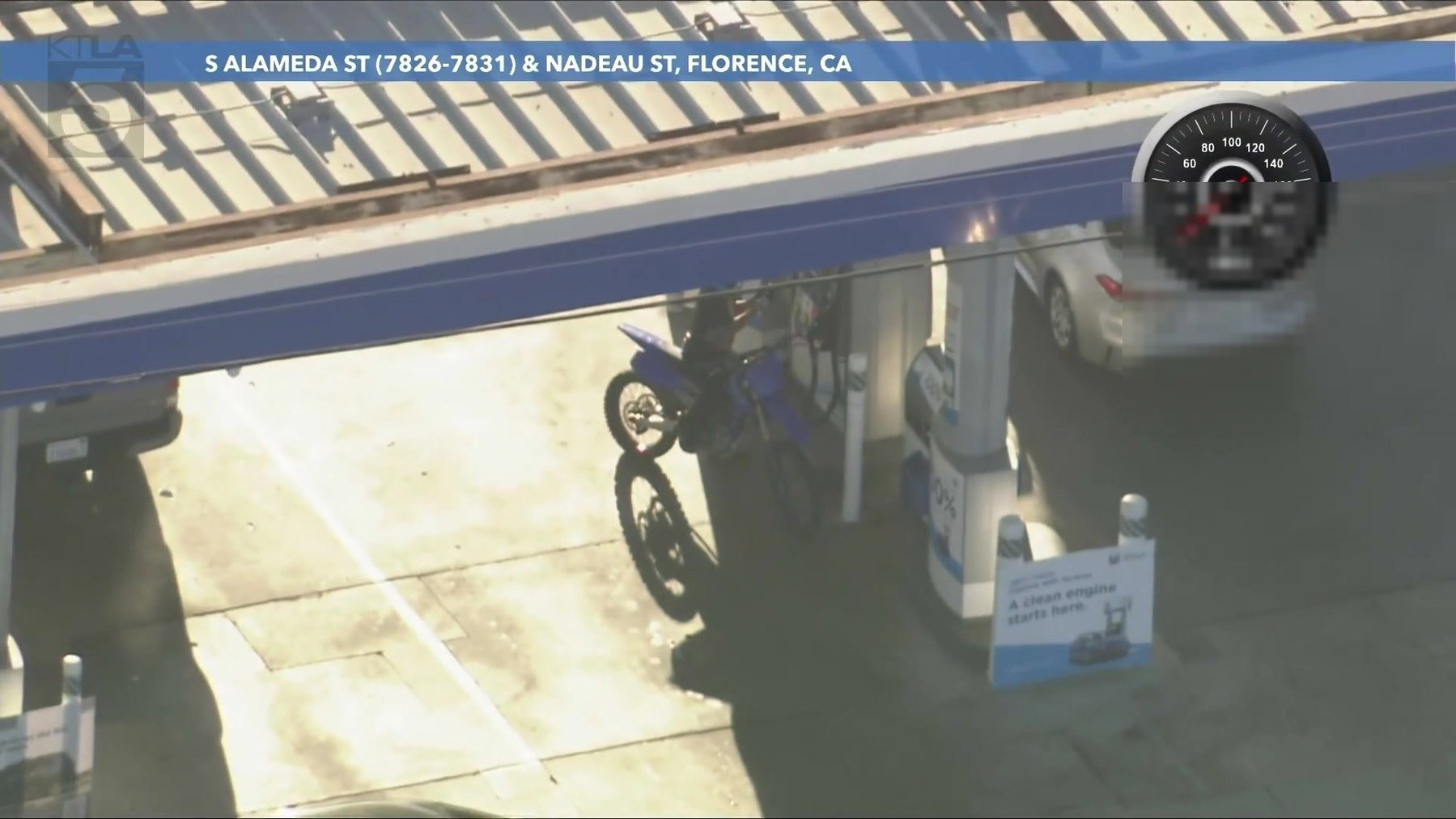
At around 6:20 p.m. the rider pulled into a petrol station on Alameda Street and began refuelling. When a patrol car approached, he rode off without removing the nozzle.
The hose and nozzle dragged alongside the motorcycle for roughly another block before coming loose. During this time the rider visibly held a mobile phone in his left hand. Throughout the pursuit he was texting and apparently made several calls. According to media reports, he even spoke at times with a cameraman from a television station covering the chase from the air.
A stop in the park with a fuel can
The second fuel stop did not take place at a petrol station. The rider left the road, rode across the lawn of Earvin Magic Johnson Park and then headed for Athens Park. Waiting there was a can holding around four litres of petrol that someone had evidently left for him. Who placed the can there has not been established.
He poured roughly half of it into the tank while a patrol car was already standing close behind him. Then he rode off straight across the sports field. Children were training on the grounds at the time. Footage shows players, coaches and parents moving aside to get out of the motorcycle’s way.
For a short stretch two more motorcyclists joined the convoy and filmed the scene with their phones before peeling off again.
Why was the aerial footage patchy at times?
The television helicopters were not permitted to fly through the airspace around Los Angeles airport and had to take a wide detour. During that phase the motorcycle was at times only visible from a long distance, or not at all.
The authorities have evidently taken a far stricter line on helicopter flights close to major airports since a serious air accident in the Washington area. That was less of a problem for the police, because their own helicopter was able to stay with the chase. During this period the broadcast commentators had to rely on radio traffic just to know where the pursuit was taking place.
How did the pursuit end?
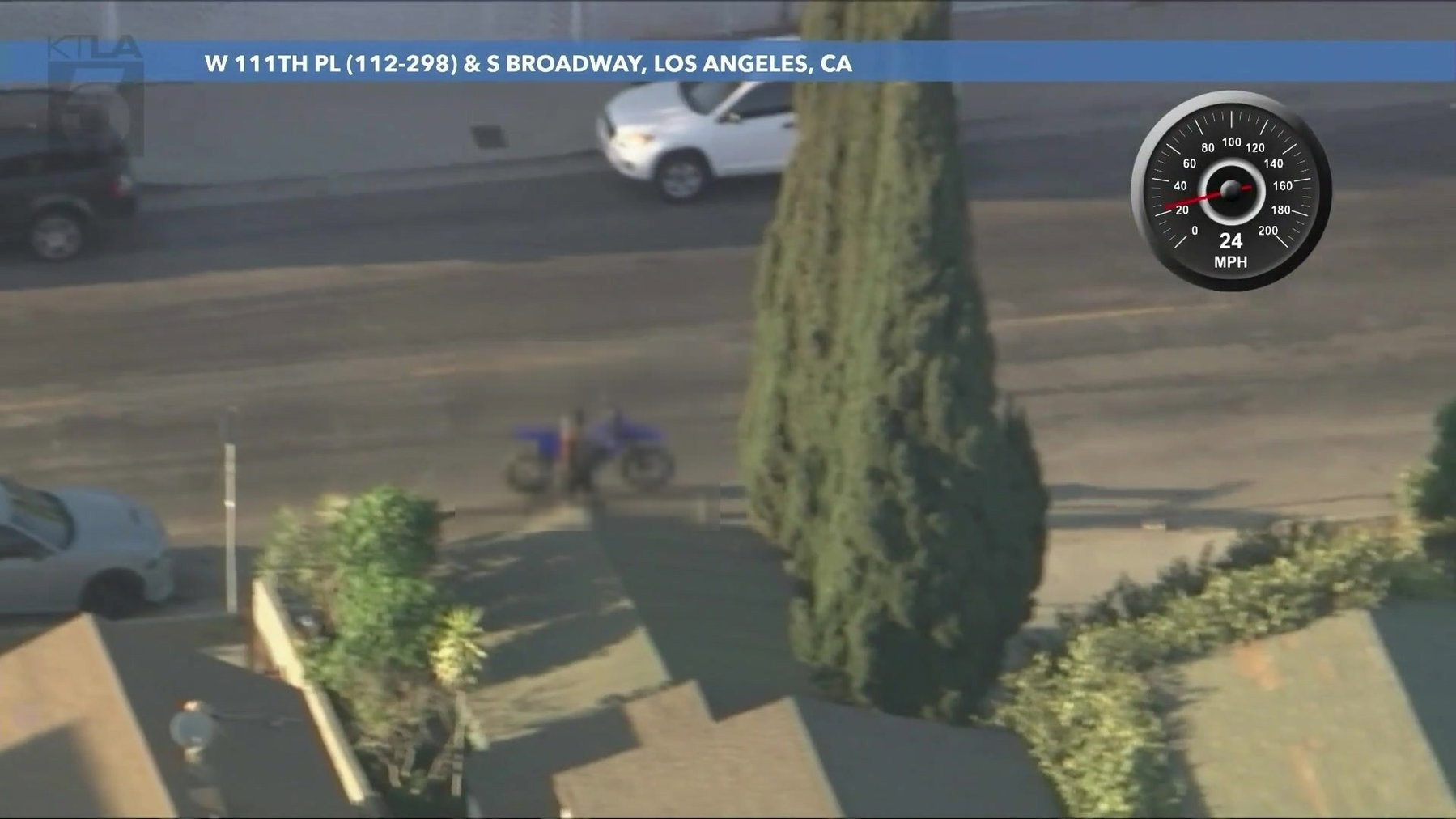
The chase ended on 111th Street when the motorcycle ran out of fuel. The rider left the machine behind and continued on foot.
Accounts differ on the exact sequence of events. Some reports describe the rider simply coming to a halt and parking the motorcycle. Other accounts say he had crashed beforehand. What is certain is that he then fled through several back yards, climbed over fences and walls and was visibly limping, so he had apparently sustained an injury.
Police sealed off the neighbourhood rather than giving immediate chase on foot. Shortly afterwards officers found the rider in a blue recycling bin near 112th Street and South Broadway. With weapons drawn, they ordered him to come out. He raised his hands and was arrested without resistance in a driveway. That was at around 6:45 p.m., a good hour after it all began.
What charges are police bringing?
According to the Los Angeles Police Department, the rider was taken into custody for felony evading, vandalism and possession of a stolen vehicle. Jail records show he is 19 years old and that it was his birthday on the day of his arrest.
The most striking point is the one that set the whole thing off. Police had assumed the rider might be armed. After the arrest they confirmed that no firearm was found. The suspicion that prompted officers to stay so close could therefore not be substantiated. During the pursuit the rider had at times been described as a man in his early twenties, which was later corrected via the jail records.
Why chases like this are a dilemma for police
In pursuits involving lightweight off-road motorcycles, police regularly face the same trade-off: stay close and accept the risk to bystanders, or break off and let the rider get away. The Los Angeles case illustrates both sides of that trade-off very clearly.
The patrol cars stuck to the rule not to move onto the oncoming lane, and did not drive faster than road conditions allowed. But that is precisely what created the gaps the rider was able to use for his fuel stops. Without the helicopter, those involved reckon he would have been lost several times over.
Cases like this fit into a pattern that has been generating debate in California for some time. Unregistered off-road motorcycles are turning up more and more often in ordinary road traffic there, frequently without plates, without lighting and without helmets. For the authorities that is a twofold problem, because such machines are almost impossible to identify after the fact and cannot sensibly be stopped when it matters.
Frequently asked questions
-
When did the Los Angeles pursuit take place?
The chase began on the evening of Wednesday, 19 August 2026, shortly before 5:40 p.m. local time near Dodger Stadium. The arrest followed at around 6:45 p.m. in South Los Angeles. In total the pursuit therefore lasted a little over an hour.
-
Was a firearm found on the rider?
No. Police initially assumed the rider might be armed and used that to justify their approach. After the arrest they confirmed that no firearm was recovered.
-
How did the rider get fuel during the escape?
He stopped twice. First at a petrol station on Alameda Street, which he left without removing the nozzle. Later he picked up a can holding around four litres of petrol that had been left ready for him in Athens Park and poured roughly half of it into the tank.
-
What charges are involved?
According to the Los Angeles Police Department, the 19-year-old was taken into custody for felony evading, vandalism and possession of a stolen vehicle. The motorcycle had previously been reported stolen. According to police, nobody was injured.
-
How exactly did the escape end?
The motorcycle ran out of fuel on 111th Street. The rider abandoned the machine, fled through several back yards and hid in a blue recycling bin, where officers found and arrested him shortly afterwards.