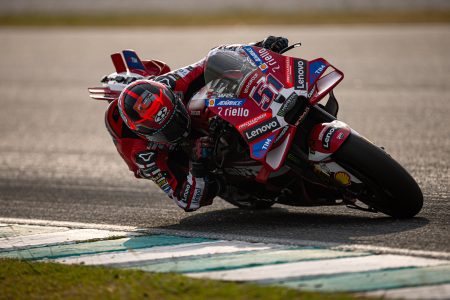
- Fabio Di Giannantonio wins a race shortened to twelve laps after two red flags
- Joan Mir loses second place due to a 16-second tire pressure penalty for being 0.004 bar below the minimum
- Johann Zarco suffers severe knee injuries and must wait several weeks for surgery
- Alex Marquez undergoes collarbone surgery, a cervical vertebra fracture requires further monitoring
- MotoGP sporting director Carlos Ezpeleta defends the decision to restart the race twice
The Catalan GP was supposed to be a normal race Sunday at the Circuit de Barcelona-Catalunya. Instead, it turned into a marathon of interruptions, hospital admissions, and retroactive result corrections that left drivers, teams, and fans alike shaken. What exactly happened and what consequences arise from it is the subject of a heated debate in the 2026 MotoGP season.
How did the two race stoppages in Barcelona come about?
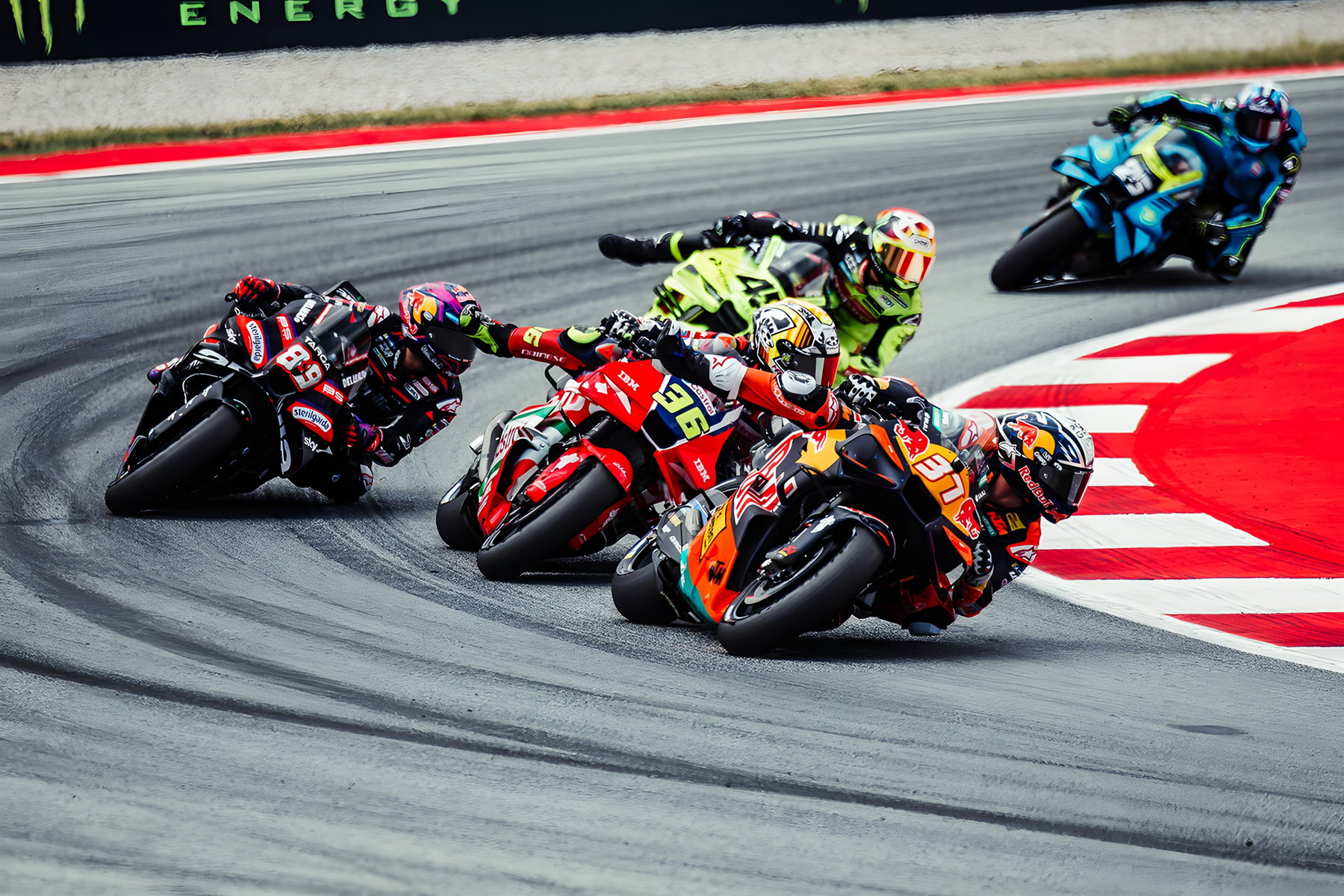
The original 24-lap race was red-flagged as early as lap twelve. The trigger was a serious incident on the straight before turn ten. Pedro Acosta’s KTM suddenly lost its electronics signal — the bike essentially shut down. Alex Marquez was unable to avoid the abruptly slowing motorcycle and slammed into the rear of the KTM at full speed. The Gresini rider crashed heavily after impact, his Ducati completely destroyed in the subsequent collision. Debris flew through the air and struck eventual race winner Fabio Di Giannantonio, Raul Fernandez, and Johann Zarco, among others. Marquez himself was taken by ambulance to the Hospital Universitari General de Catalunya.
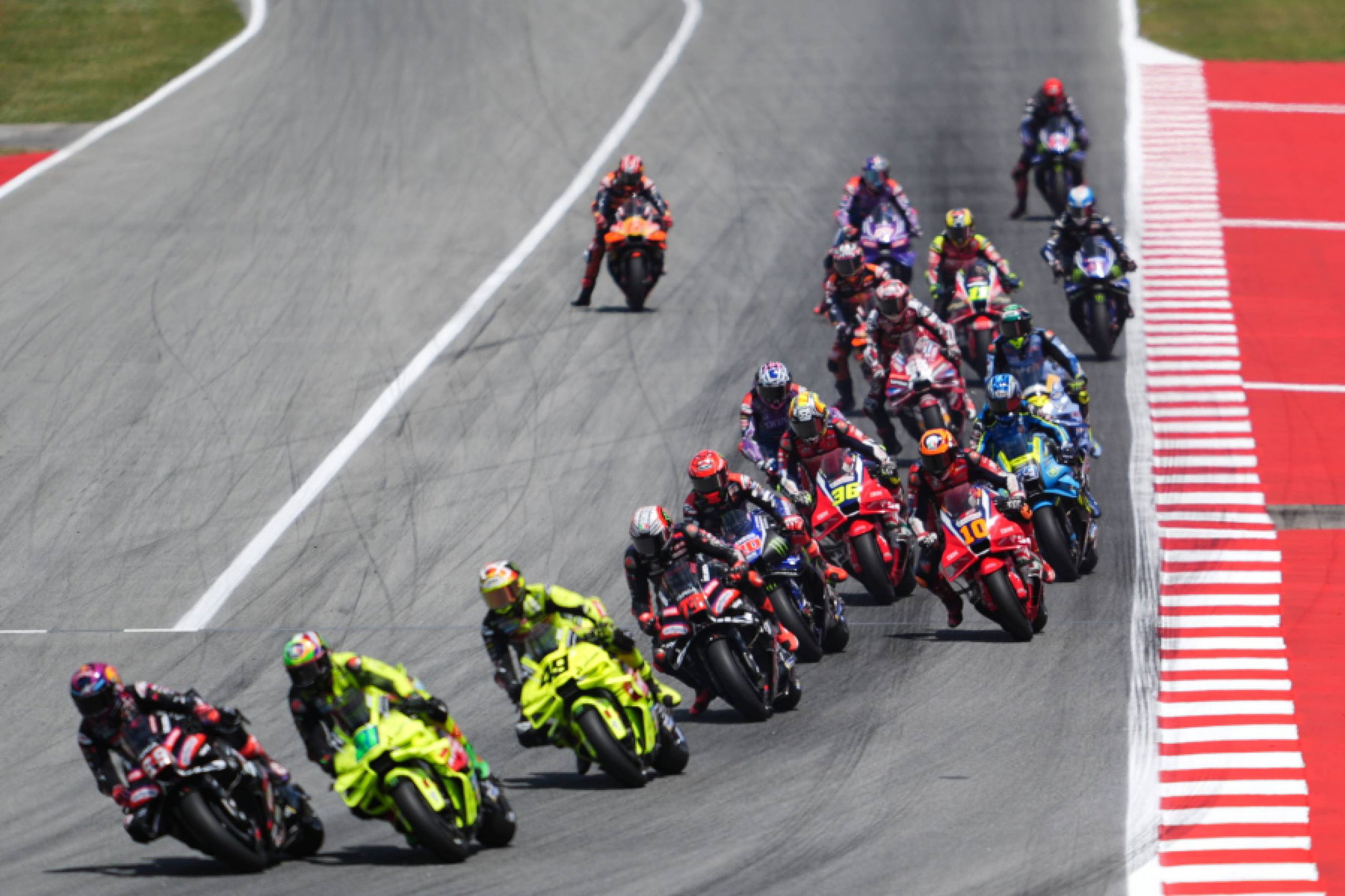
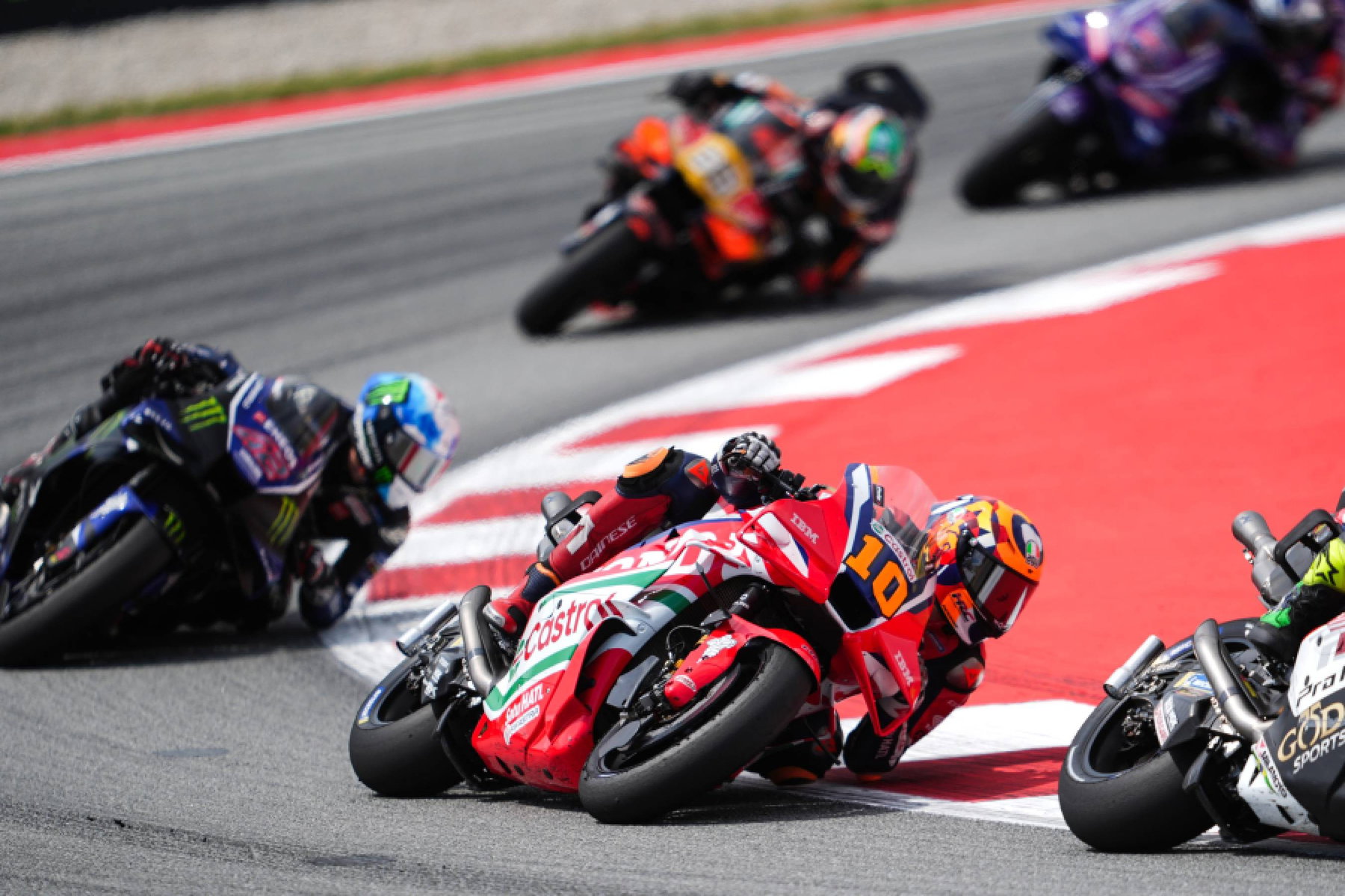
After the first restart with a revised grid order, the next serious crash occurred at turn one. Johann Zarco slammed into the rear of Luca Marini’s Honda, both riders went down and also took Francesco Bagnaia with them. The Frenchman’s left leg became wedged between the wheel, seat, and exhaust of Bagnaia’s Ducati. Zarco remained trapped with the Desmosedici until it came to rest in the gravel trap. Once again, the race had to be stopped, and once again ambulances were dispatched onto the track.
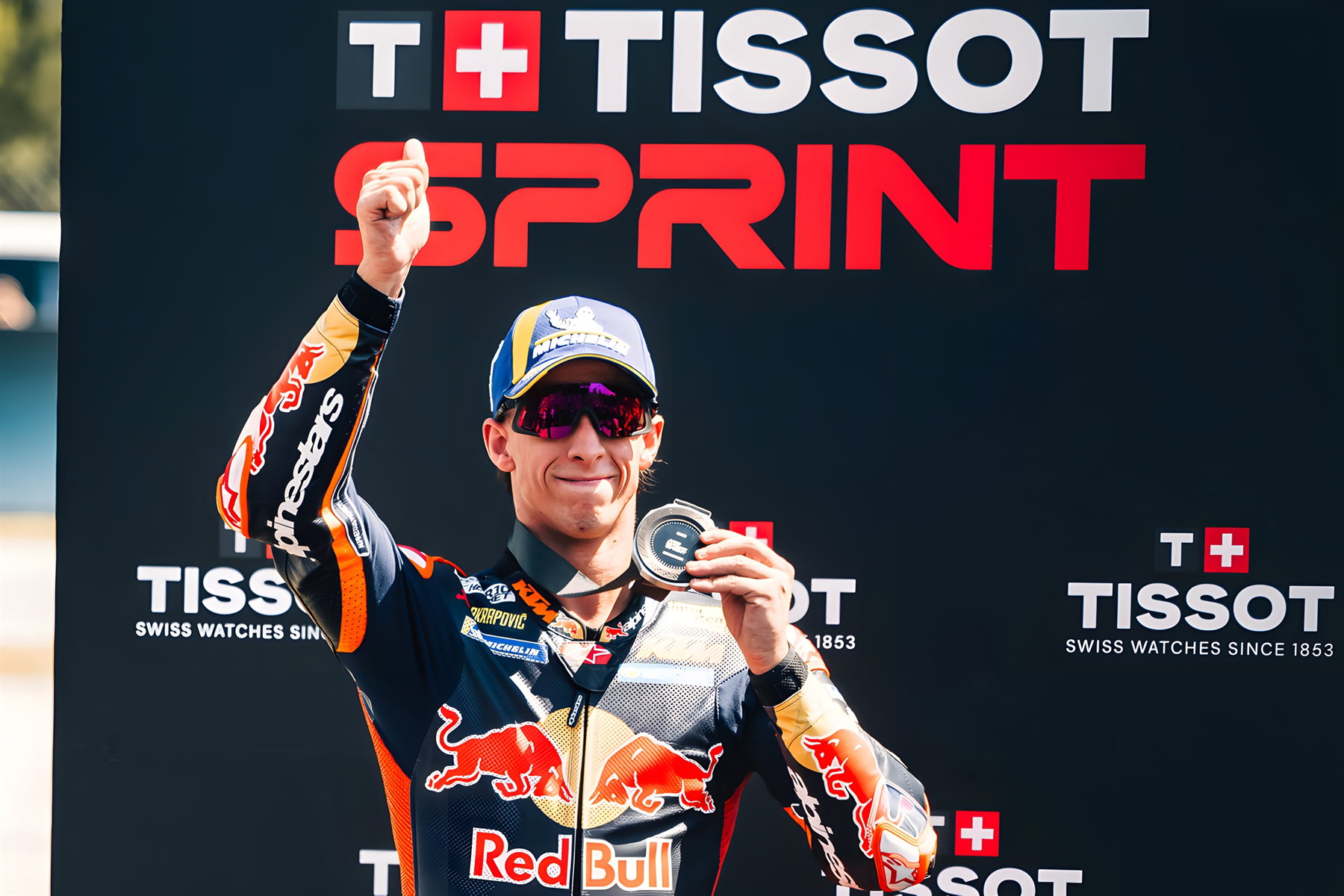
For the second restart, the race distance was set at a total of twelve laps. This third start proceeded without further major incidents. Fabio Di Giannantonio prevailed by 1.250 seconds over Joan Mir, with Fermin Aldeguer completing the podium. However, the results list published after the checkered flag bore little resemblance to the final official result.
What happened to Johann Zarco after the crash?
Zarco described in a detailed interview with the French sports daily L’Équipe how the day unfolded from his perspective. The 35-year-old had already been struck by a piece of debris on his left foot during the first race stoppage. “I couldn’t avoid the biggest parts, but I was still hit by a piece on my left foot,” he described the situation. Back in the garage, his foot had already turned purple, and the pain was considerable despite ice treatment.
In hindsight, Zarco regrets that he still lined up for the first restart. “That’s where I should have made the decision to withdraw from the rest of the race. The images of Alex’s crash and the blow to my foot threw me off. When we went back to the grid, I was no longer focused,” said the LCR Honda rider.
At the second start, his getaway was not as good as the first. As a result, he had more bikes around him. He was pulled along in Luca Marini’s slipstream and was unable to brake in time. His subsequent account of the crash itself is harrowing: “I roll over with his motorcycle and my left leg gets caught between the wheel, the seat and the exhaust. I’m stuck in the gravel, screaming in pain, and everyone around me doesn’t dare to touch me, for fear of making my injuries worse. So I pull on my leg, and eventually they help me. They lift me up, cut my suit, put me on an IV to ease the pain… I had never experienced anything like this – it was truly terrifying.”
How severe are Zarco’s injuries and when can he return?
The diagnosis following his hospital stay in Barcelona includes injuries to the anterior and posterior cruciate ligaments, the medial meniscus, and a small fracture of the left fibula near the ankle. On Monday, Zarco was discharged from the Hospital Universitari General de Catalunya and traveled home to France. On Tuesday, he visited the renowned knee specialist Dr. Bertrand Sonnery-Cottet at the Centre Orthopédique Santy in Lyon.
The LCR team announced after the examination that ligament surgery would be necessary but could not be performed for several weeks. The initial trauma and accompanying knee injuries would first need to subside before the operation could take place. Only after surgery would a detailed rehabilitation plan be drawn up, based on which a possible timeline for his return could be estimated.
LCR team principal Lucio Cecchinello stated on the sidelines of Monday’s test in Barcelona that Zarco would not compete at the Grand Prix in Mugello or in Hungary. Given the severity of the injuries and the pending surgery, the absence is likely to be considerably longer.
What injuries did Alex Marquez sustain in the horror crash?
The Gresini rider was extremely fortunate given the severity of his high-speed impact with Acosta’s KTM. The diagnosis revealed a fracture of the right collarbone and a marginal fracture of the C7 cervical vertebra. The collarbone was stabilized with a plate on Sunday evening at the Hospital General de Catalunya. Marquez was discharged on Monday afternoon but must return next week for further examinations to more closely assess the cervical vertebra fracture and determine whether additional surgery is needed.
Other riders also sustained injuries. Francesco Bagnaia, who was caught up in the Zarco crash, reported problems with his left wrist and is set to undergo further examinations. Race winner Fabio Di Giannantonio, who was hit by debris from the Marquez crash, missed Monday’s test due to pain in his left hand. Jorge Martin crashed during Monday’s test at turn seven and was taken to the hospital as a precaution, where no fractures were found. The 2024 title defender is expected to compete at the next race in Mugello.
Why did Joan Mir lose his podium over 0.004 bar?
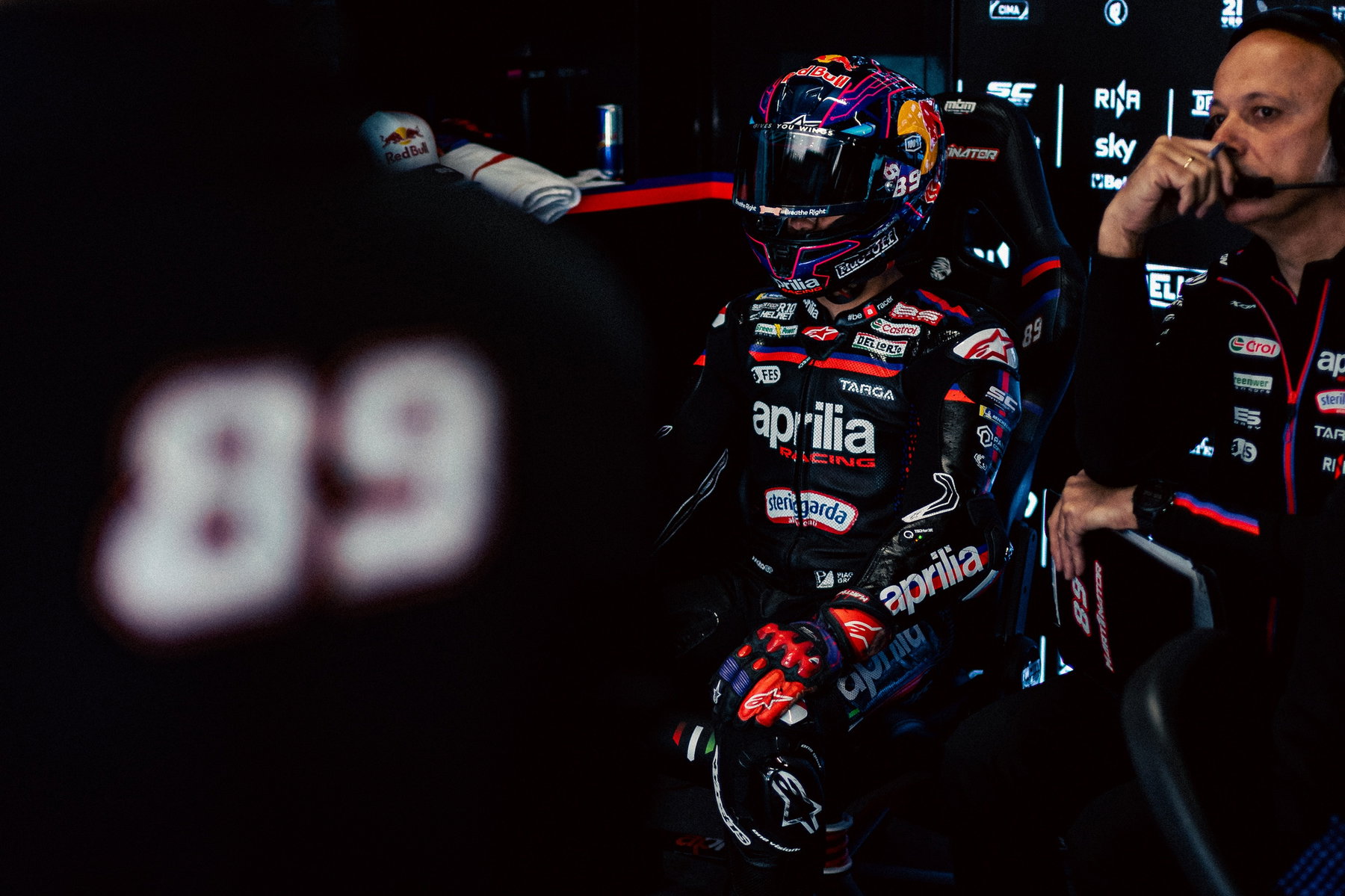
Besides the injuries, the retroactive result correction was the second major talking point of the Catalan GP. Joan Mir had delivered an outstanding race at the third start, crossing the line in second place, 1.250 seconds behind Di Giannantonio. After numerous crashes at previous race weekends, this result represented a breakthrough for the Honda rider and 2020 world champion.
On Sunday, Mir did not yet know how the investigation into his tire pressure would turn out. The MotoGP stewards did not announce their verdicts until considerably later. At Monday’s test, Mir was able to speak publicly for the first time about losing his podium. Asked by how much he had fallen below the prescribed minimum front tire pressure, the Spaniard replied: “It was a small thing. 0.004 [bar].”
In total, five riders received a 16-second time penalty for falling below the minimum front tire pressure: Joan Mir, Raul Fernandez, Alex Rins, Jack Miller, and Toprak Razgatlioglu. Mir was hit the hardest. Instead of 20 points for second place, he collected just three points after dropping to 13th. Rins and Miller fell back to 14th and 15th, still picking up a combined three points for Yamaha. Razgatlioglu went home empty-handed in 16th. For Fernandez, the penalty had no significant impact, as he was already outside the points positions.
Francesco Bagnaia had also been investigated. In his case, however, the stewards determined that the tire pressure had been correctly set at the start of the race and the detected pressure loss was demonstrably caused by a leaking rim. The Italian was cleared and thus inherited third place. “I don’t think I deserved this third place, but for the championship it’s good and the team deserves it for their hard work,” Bagnaia commented on the unexpected podium finish. It was the first trophy for the factory Ducati team in ten Grands Prix.
Why is the tire pressure penalty so controversial?
Mir appeared increasingly frustrated at Monday’s test about the disproportionality of the regulation. “The extent of the penalty is strange to me. We essentially raced a sprint race and the penalty was for the grand prix,” he stated. Indeed, the race distance had been shortened to twelve laps after the two stoppages — exactly the sprint race distance in Barcelona. Yet the penalty remained at 16 seconds, the amount for a full Grand Prix. In a sprint, it would have been only eight seconds according to the regulations.
“In a longer race the gaps to the others get bigger. I probably would have been ninth or eighth. Now I’m 13th. That’s not fair,” Mir made clear. With an eight-second penalty, he would have finished 11th — still in the points.
The lack of proportionality becomes particularly evident when compared with another penalty. Ai Ogura had taken Pedro Acosta out of the race at the final corner and subsequently described his own maneuver as “stupid” and “embarrassing.” For that, the Japanese rider received a three-second penalty. For a deliberate collision that cost a direct rival all his points, the punishment was less than one-fifth as severe as the penalty for being 0.004 bar below the tire pressure minimum.
Mir ultimately accepted the situation with a mix of pragmatism and frustration: “For the championship points it counts, but I don’t care because it’s not my fault. I gave 100 percent and put in a great ride.” Those hoping for an imminent abolition or adjustment of the rule will be disappointed, however: Pirelli, the new tire supplier for MotoGP from 2027 onward, will also retain the minimum pressure rule.
What did Mir say about his ride on the factory Honda?
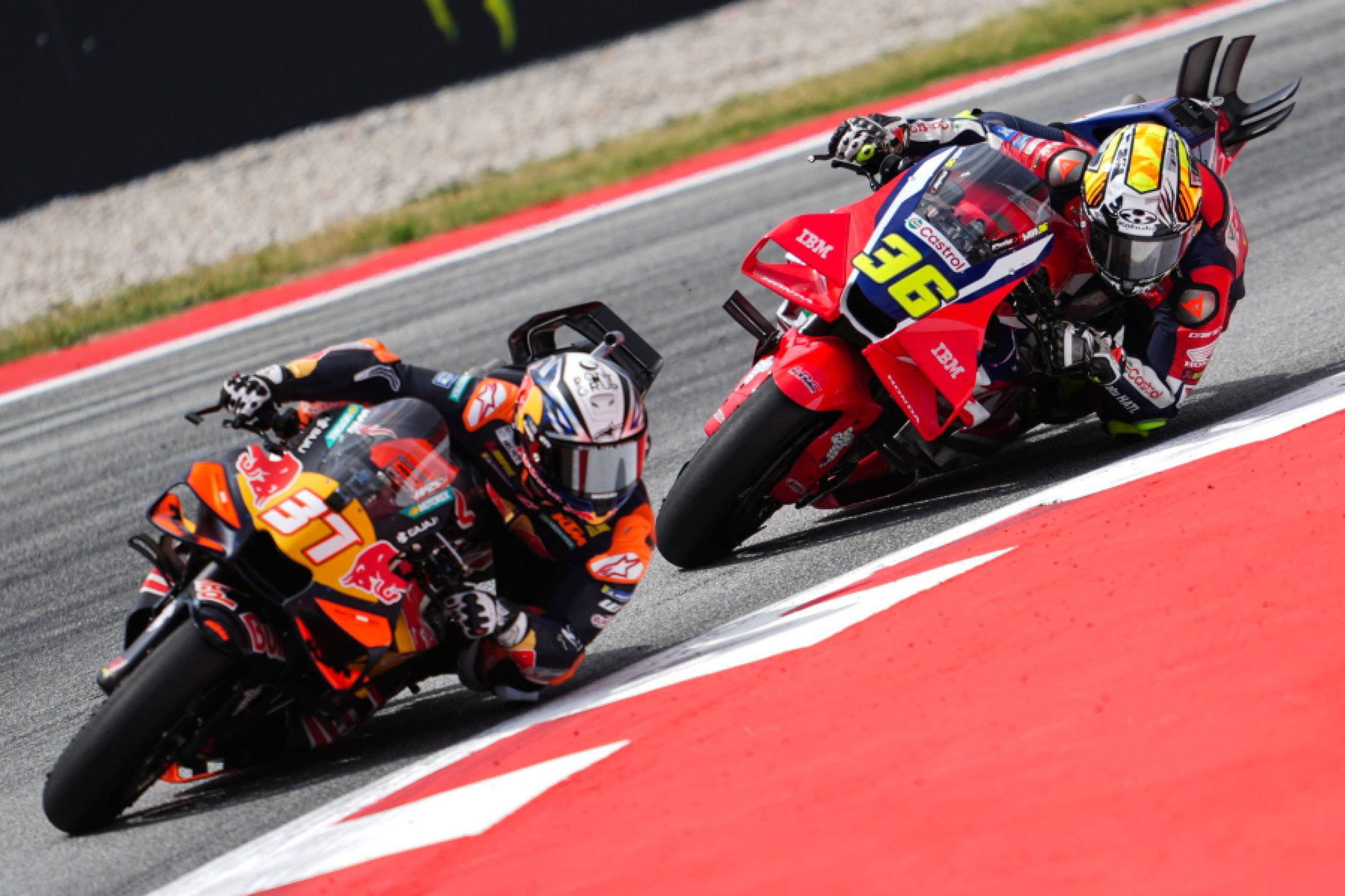
Regardless of the penalty, Mir’s performance in the shortened race was remarkable. The Spaniard spoke openly after the finish about how he assessed the result. “This is what I was looking for in the first five rounds,” he told the TV broadcasters. At the same time, he made clear that this level of performance was not sustainable on a regular basis: “As you could see in the race, I had to ride very on the limit. And this is something that you cannot fight for a podium every race if you ride like this. You can fight for a top six, a top seven, but to fight for the last step with these guys, you have to make something more.”
Mir also explained his race strategy. He initially rode in Pedro Acosta’s slipstream and let the KTM rider do the work. Since their riding styles are similar, he did not have to expend much effort to keep up. The decisive moment was that he took too long to pass Acosta. During that phase, Di Giannantonio overtook both of them and opened up a gap. Mir believed he had the pace to attack the VR46 rider. “But before running, you have to walk, and it’s ok,” said the Honda rider.
How does MotoGP defend the decision to restart?
MotoGP sporting director Carlos Ezpeleta addressed the criticism from several riders who had questioned the continuation of the race after the two serious crashes in a Monday interview with Motorsport.com. Ezpeleta defended race direction’s decisions as compliant with the rules and correct.
“First, I want to say how fortunate we’ve been on Sunday. Of course, Alex and Zarco have major injuries, but it didn’t get worse,” said Ezpeleta. He rejected the accusation that the Barcelona circuit is fundamentally unsafe. The incident between Acosta and Marquez was an isolated occurrence that could happen anywhere. All straights on the calendar are comparably designed.
On the question of why the race was restarted after the second stoppage, Ezpeleta pointed to the fact that both injured riders were conscious and not in a critically life-threatening condition. “Both accidents were very, very graphic and a really shocking image, and that’s what probably started the conversation, but in the normality, the normal thing is to proceed with the race,” said the sporting director.
At the same time, Ezpeleta expressed openness to a debrief with teams and riders to identify possible improvements for the future. Joan Mir had voiced a clear opinion on the recurring issues at turn one of the Circuit de Catalunya: “The risk today was very high. Here in Montmeló something always happens at the start. Yesterday it was with Brad (Binder) and me. Last year too, actually always. We need to think about how to make this first corner a bit safer.”
What does the championship standings look like after the Catalan GP?
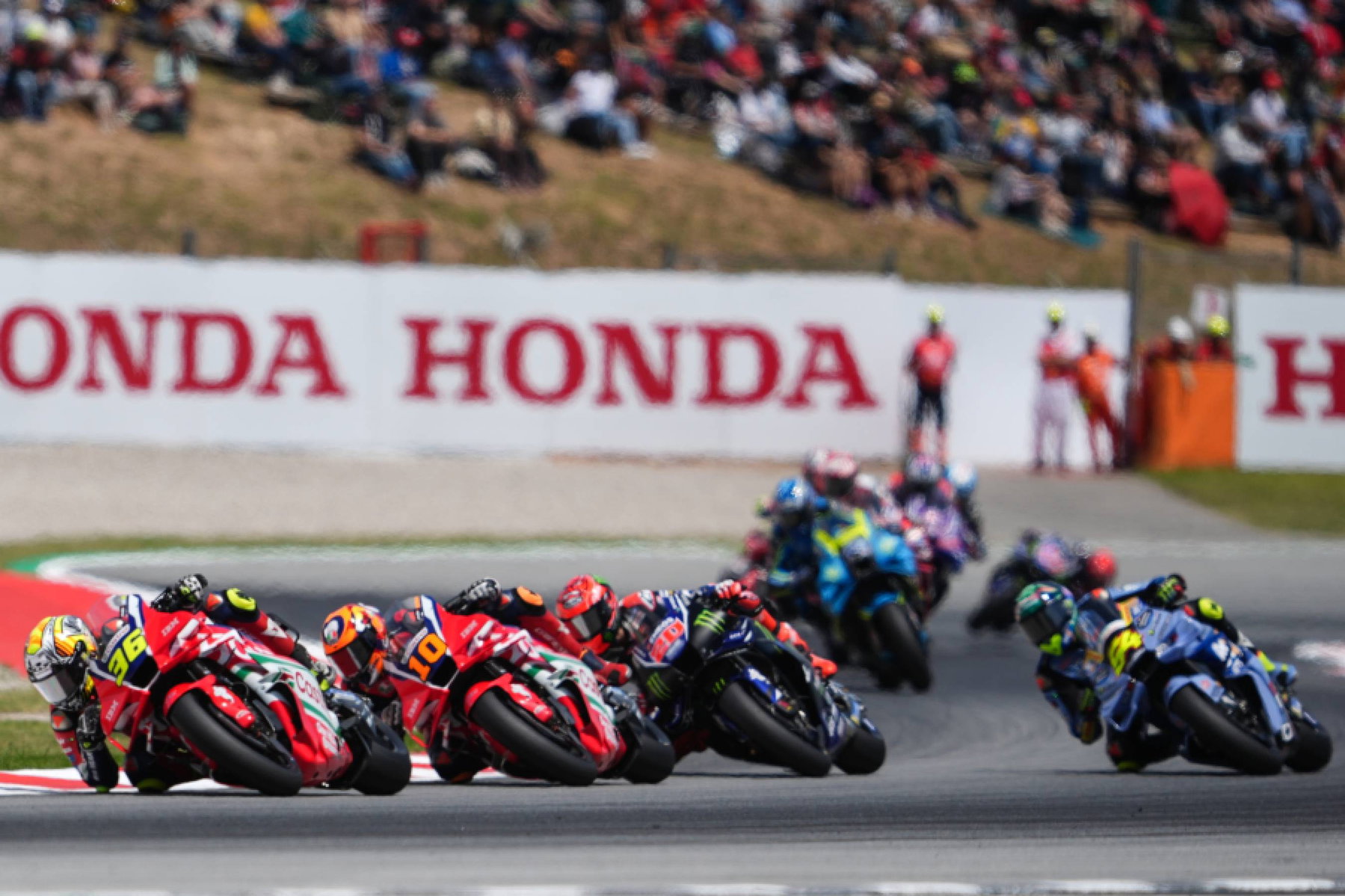
The corrected Barcelona result has implications for the championship standings. In the riders’ championship, Marco Bezzecchi leads after six of the scheduled Grands Prix with 142 points. The Aprilia rider limited the damage with his fifth-place finish in Barcelona. Jorge Martin sits second with 127 points, despite a catastrophic home GP that saw a collision with Raul Fernandez in the race and a crash during Monday’s test. Fabio Di Giannantonio moved up to third with 116 points thanks to his victory and now trails the leader by just 25 points. Pedro Acosta, who was taken out by Ogura in the race, is 49 points off the lead.
In the team standings, Aprilia Racing leads comfortably with 269 points ahead of the Pertamina Enduro VR46 Racing Team on 152 points and Trackhouse MotoGP on 145 points.
Frequently Asked Questions
-
Why was Joan Mir penalized at the 2026 MotoGP Catalan GP?
Joan Mir received a 16-second time penalty because the tire pressure in his front tire was 0.004 bar below the prescribed minimum. The penalty dropped him from second to 13th place. A total of five riders were penalized for the same infringement.
-
How severe are Johann Zarco’s injuries after the Barcelona crash?
Johann Zarco sustained injuries to the anterior and posterior cruciate ligaments, the medial meniscus, and a small fracture of the left fibula. Surgery is necessary but cannot be performed for several weeks as the swelling must first subside. The LCR Honda rider will miss at least the races in Mugello and Hungary.
-
Who won the 2026 MotoGP Catalan GP in Barcelona?
Fabio Di Giannantonio of the VR46 Ducati team won the race, which was shortened to twelve laps. After the corrected results, Fermin Aldeguer finished second and Francesco Bagnaia third. Bagnaia inherited the podium after Joan Mir received the tire pressure penalty and Bagnaia himself was cleared due to a demonstrably leaking rim.
-
Why was the MotoGP race in Barcelona stopped twice?
The first red flag was caused when Alex Marquez crashed at full speed into Pedro Acosta’s KTM after its electronics failed and the bike suddenly slowed. The second stoppage occurred when Johann Zarco was involved in a chain-reaction crash with Luca Marini and Francesco Bagnaia at turn one during the restart, severely injuring his knee.
-
Who leads the 2026 MotoGP championship after the Catalan GP?
Marco Bezzecchi leads the riders’ championship after six Grands Prix with 142 points. Jorge Martin is second with 127 points, and Fabio Di Giannantonio is third with 116 points.
➜ This article is part of our comprehensive overview: MotoGP 2026 Season: The Complete Overview – Teams, Riders, Calendar & Standings. Find all key information on this topic in one place.