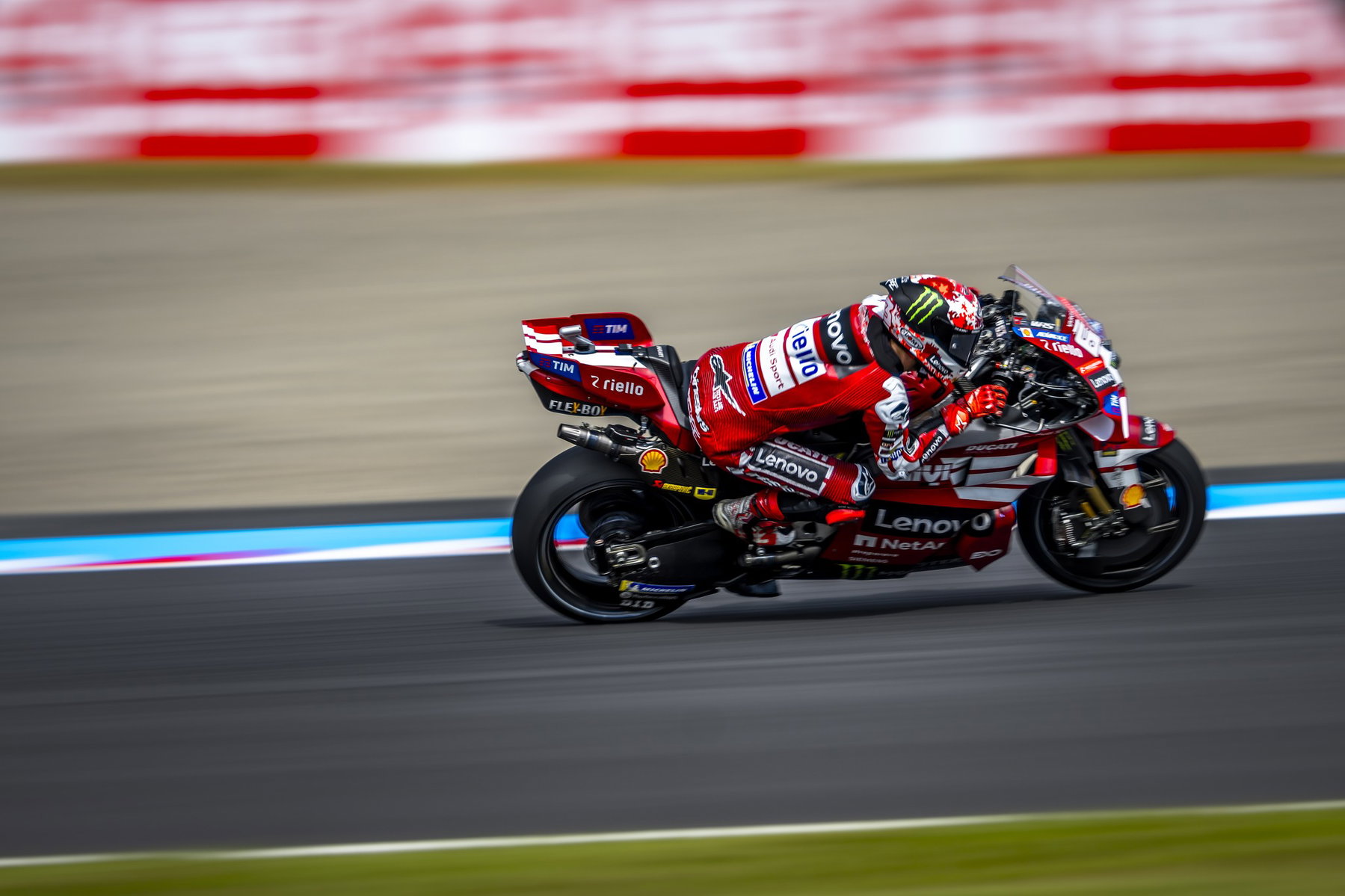
- Only the medium and hard rear tyres are allowed in Sunday’s race
- Warm-up is extended from 10 to 20 minutes so riders can get to know the hard tyre
- Championship standings after the sprint: Jorge Martin 313 points, Marc Marquez 306 points
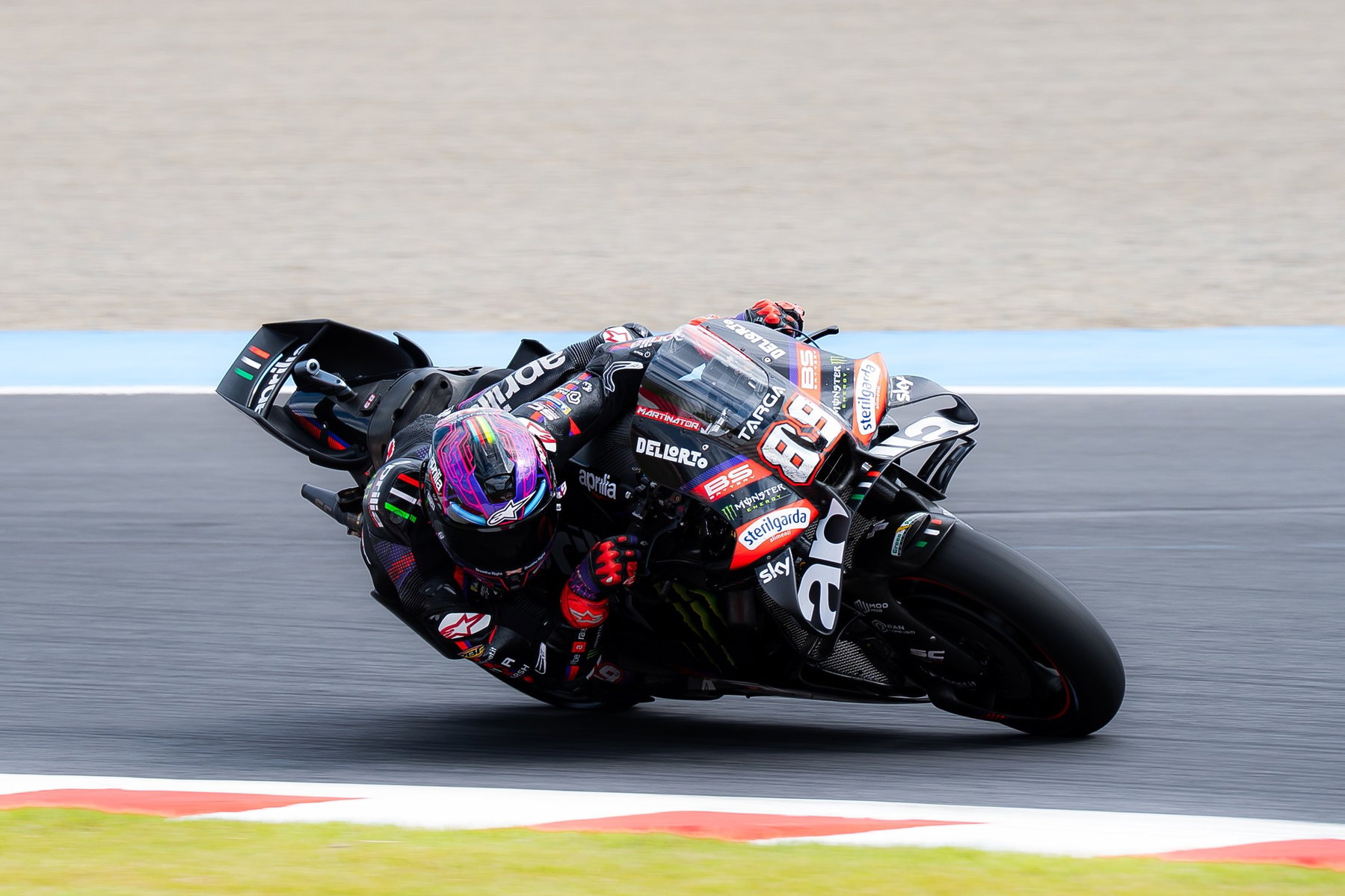
The sprint at Motegi was supposed to be all about the title fight between Jorge Martin and Marc Marquez. In the end, however, the paddock was mainly talking about rubber. Marc Marquez won the twelve-lap race unchallenged. Behind him, Martin only just made it to the finish with a damaged rear tyre, and Francesco Bagnaia parked his Ducati in the garage with a tyre that was literally shredded. In the evening, after talks with the teams and Dorna, Michelin reacted and withdrew the soft rear tyre for the Grand Prix. The 24-lap race starts on Sunday at 7 a.m. CEST. Motegi kicks off the Asian swing and thus the decisive phase of the season.
Why did Michelin ban the soft rear tyre at Motegi?
Michelin withdrew the soft because three bikes showed severe blistering on the rear tyre after the sprint. The tyre manufacturer cites the new, very grippy asphalt, a track temperature of around 40 degrees Celsius and an exceptionally high race pace as the causes.
A figure from Michelin shows just how high the pace was: the sprint was over nine seconds faster than in 2025. Michelin manager Piero Taramasso explains that riders and teams had already been warned on Thursday to keep a close eye on tyre temperatures. According to him, the soft rear tyre was at its limit for almost all riders in practice on Friday and Saturday morning. Michelin nevertheless wanted to allow it for twelve laps.
There is also a peculiarity of the sprint. According to Taramasso, fuel consumption plays no role there. Riders have full power available and go flat out from the first lap to the last. A great deal of energy goes into the tyre, and spinning rear wheels make the problem even worse. Anyone who wants to look after the tyre therefore has to generate less heat and avoid wheelspin.
After the analysis, the decision was made together with Dorna. Taramasso describes it like this: “We spoke with Dorna, and the decision for the race is that the rear soft won’t be allowed, and they will have to work with the medium or the hard one.” According to Michelin, it recommends the hard tyre very clearly, but leaves the choice to the teams and riders.
Which tyres had Michelin brought to Motegi?
Michelin brought three rear tyres to Motegi, all of them stiffer than last year. Because the track had been completely resurfaced and no testing was possible beforehand, the manufacturer expanded the allocation with an additional option.
The soft and medium rear tyres use the standard carcass. The carcass is the load-bearing structure of the tyre, i.e. the framework beneath the rubber compound. The hard rear tyre, on the other hand, has a reinforced carcass that can withstand more heat. It was most recently used at Spielberg, and this season also at Buriram, Mandalika and Goiania. Unlike at those venues, however, the reinforced carcass was only available at Motegi in combination with the hard compound.
At the front, riders could choose between soft, medium and hard. These tyres have the same stiffness as last year; only the hard front tyre also has a reinforced carcass. In the sprint, all 22 riders used the medium at the front. At the rear, everyone except Marco Bezzecchi and Jack Miller went with the soft. Not a single rider had tried the hard rear tyre on Friday or Saturday.
Scepticism was high even before the weekend. Jack Miller of Pramac Yamaha recalled a weak weekend at Spielberg and half-jokingly said he would pack his bags and go home if he had to race that tyre. Honda rider Luca Marini also made it clear that, whenever possible, he always chooses the softer tyre with more grip and the standard carcass.
What happened to Bagnaia’s and Martin’s tyres?
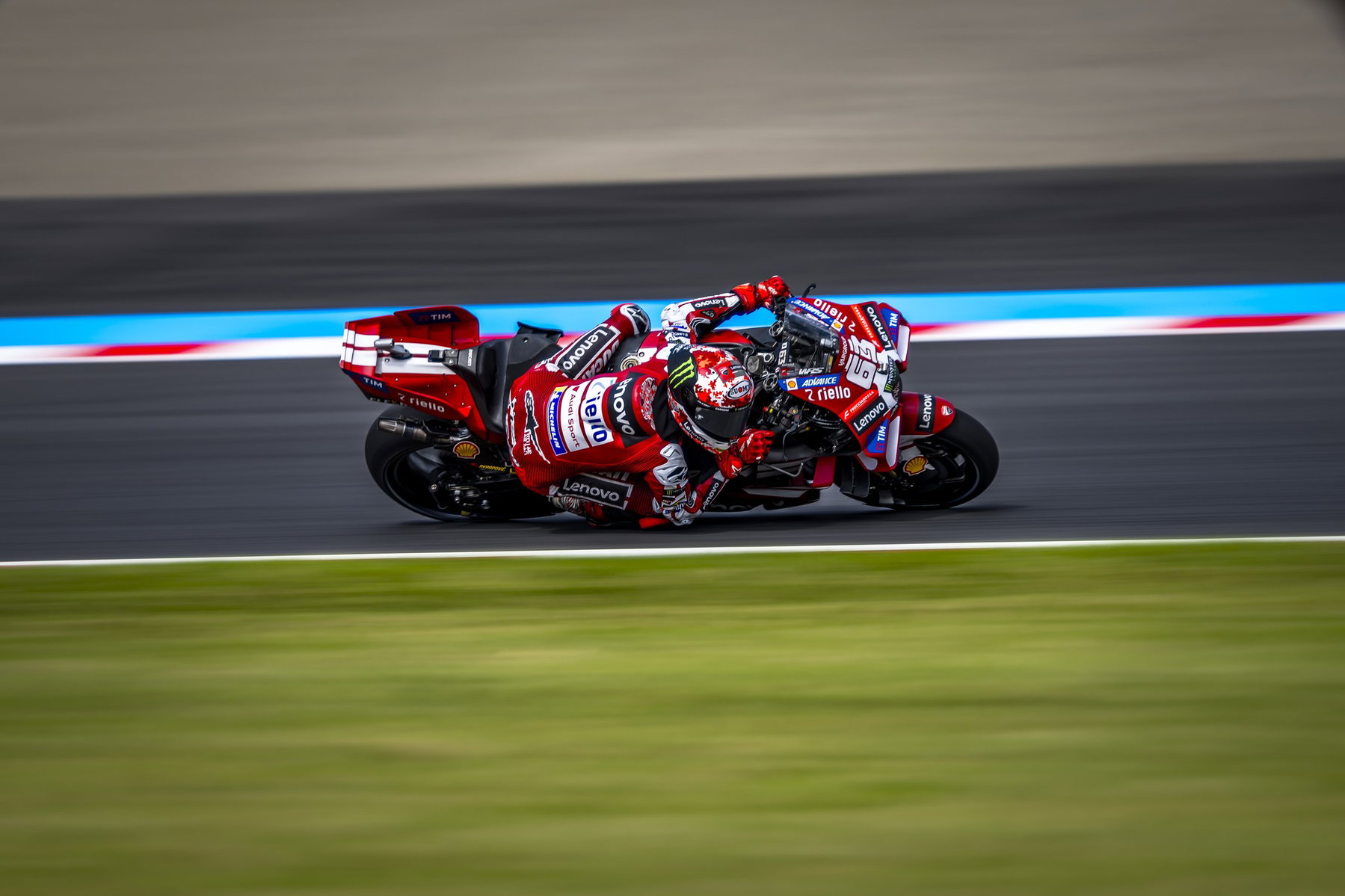
In both cases, the centre of the rear tyre got so hot that blisters formed in the rubber, after which whole chunks broke out of the tread. Experts call this blistering and chunking.
The process can be explained step by step. With blistering, heat builds up deep inside the tyre between the carcass and the tread. The structure remains intact, but gas bubbles form in the rubber, burst and leave holes behind. These cavities weaken the tread from the inside. Enormous forces act when accelerating out of corners, and the asphalt then tears individual pieces out of the tyre. This is called chunking.
Motegi amplifies this effect. The track consists mainly of heavy braking zones and strong acceleration out of tight corners. In addition, tyre warmers are now only allowed to reach lower temperatures. Riders therefore have to bring the tyre up to temperature very aggressively in the first laps. Fabio Di Giannantonio sees the biggest problem on the straights. When riders spend a long time there with the bike lowered, a lot of load is placed on the tyre and it heats up. The same phenomenon already occurred in Thailand this season.
Bagnaia: vibrations from lap six
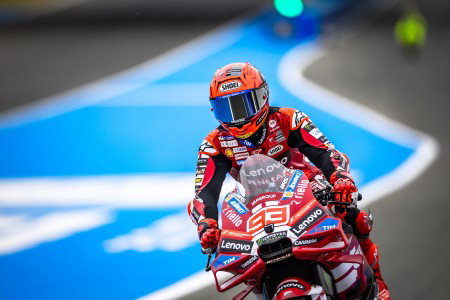
From around lap six, Bagnaia felt strong vibrations when turning in. To dampen them, he used the rear brake more. However, this put even more heat into the rear wheel and made the problem worse. In the end, by his own account, he had no feeling for the bike at all and retired one lap from the finish.
Bagnaia sees the cause in his well-known grip problem. As soon as he opens the throttle, the rear wheel slides and the tyre heats up even more. None of this was noticeable in practice. Anyone riding alone and repeatedly returning to the pits hardly notices such problems. In a dense pack, on the other hand, bike and tyres heat up much faster.
Martin: not a single warning sign
For Martin, the rear tyre dropped off on the left side after seven or eight laps. In the last two laps, he could not even open the throttle properly on the straight. On the final lap, he was the slowest rider in the entire field and lost more than a second. The disintegrating tyre even smashed parts of his Aprilia’s tail section. Enea Bastianini, who was riding directly behind him, noticed strange movements on the bike. Martin himself says he did not feel a single sign of the problem and calls that worrying with regard to the race.
Why did Marc Marquez have no problems with the same tyre?
According to Michelin, wear depends mainly on riding style, setup and tyre management. For Marc Marquez, the soft tyre worked perfectly according to Taramasso, while Bagnaia had to retire on the same bike with the same tyre.
The picture by manufacturer is clear. Two Aprilias and one Ducati suffered massive blistering. No KTM had problems, and only one Honda was affected. Marquez himself explains his victory with a small setup change before the race, after which he felt much more comfortable.
Johann Zarco of LCR Honda describes the dilemma all riders face: “The problem is that sometimes you need to spin to go fast and then when you spin you have a blister in the tyre.” According to Zarco, whoever can control wheelspin when accelerating out of corners will have a good race.
Why isn’t the hard tyre mandatory?
Michelin does not want to penalise the manufacturers who coped well with the soft tyre. Taramasso explicitly names KTM and some Hondas, which put little energy into the tyres.
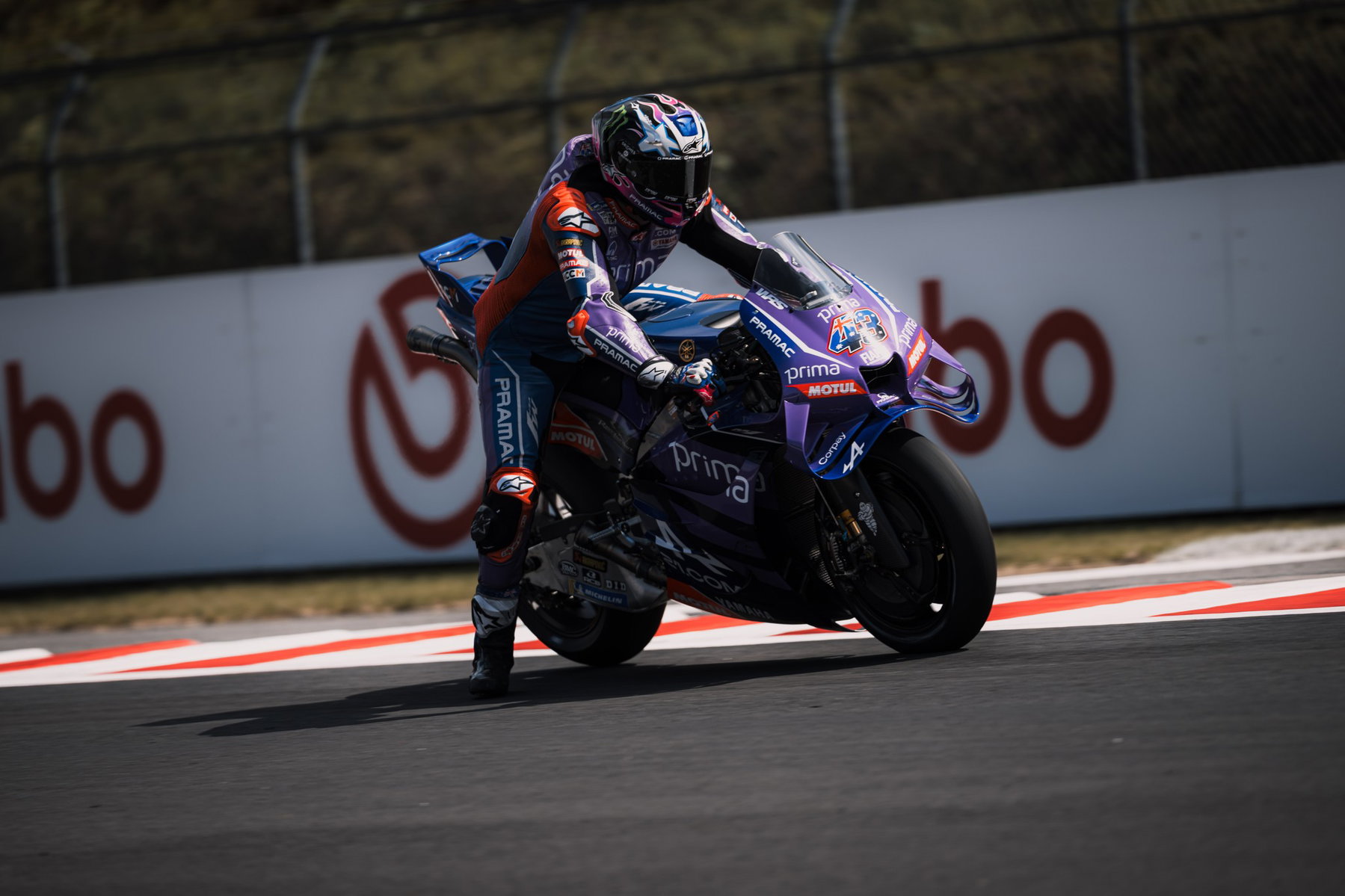
After the sprint, several teams had called for the hard tyre to be made mandatory. Jack Miller was also firmly expecting it. He was one of only two riders on the medium and still had a lot of blisters on the tread, not quite as bad as Bagnaia’s, but not far off. His verdict straight after the race: “So, we’ll all be on the hard tomorrow. I can almost guarantee it.” The prediction did not come true.
Others saw things very differently before the decision. Fabio Quartararo would have preferred to race the soft, and Marc Marquez did not want to rule out the soft tyre either.
Medium or hard: what choice do the teams have in the race?
In the Grand Prix, teams can choose between the medium and hard rear tyres. Michelin points out that the medium requires careful tyre management and recommends the hard to anyone who wants to maintain a high pace over the full distance.
Experiences with the medium are mixed. Bezzecchi’s tyre stayed clean, Miller’s did not. Taramasso explains that the medium is more robust than the soft. But if the setup is not optimal and the rear wheel spins more, the rider has to do everything possible to limit wheelspin. Bezzecchi had deliberately chosen the medium because it gave him good pace and less temperature risk in practice. In the sprint, by his own estimate, he then lacked about a second and dropped back to sixth place. Zarco nevertheless considers the medium the safer choice over the full distance.
The hard tyre is uncharted territory for everyone. That is why Sunday’s warm-up is being extended by ten minutes at Michelin’s request. It runs from 9:35 to 9:55 a.m. local time, i.e. from 2:35 to 2:55 a.m. CEST. Miller expects a major adjustment. He says the engine maps will be completely different and the work of the entire weekend is therefore basically worthless. He thinks a lottery-like race is possible. He would prefer rain, but according to him the weather forecast does not suggest any.
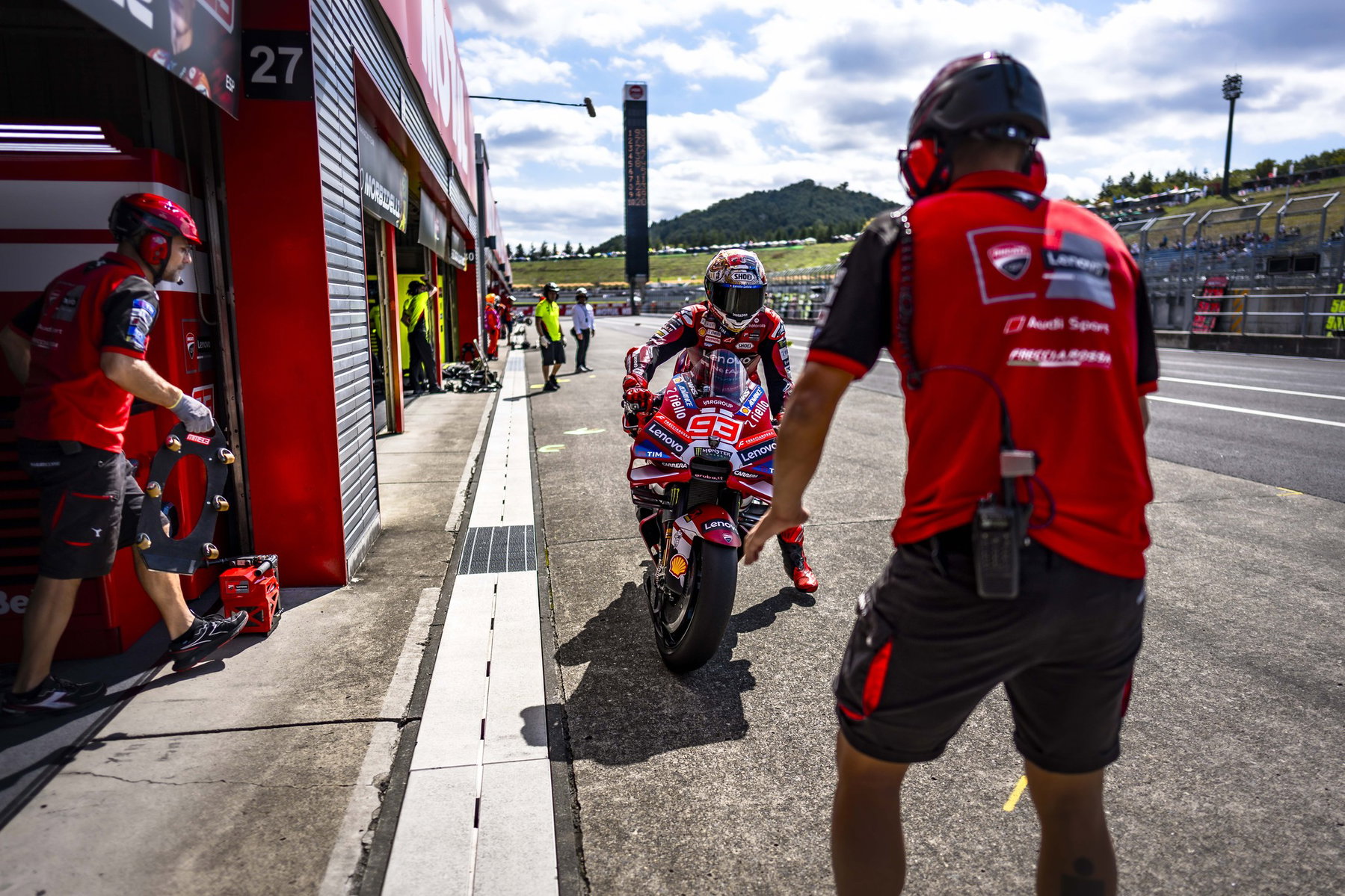
What does the tyre decision mean for the championship fight?
The decision affects the two title contenders differently, because the hard tyre with reinforced carcass has suited Aprilia in particular this season. In Thailand, Brazil and Austria, where this construction was used, the Aprilias were very fast, while Ducati had major problems.
Marc Marquez’s factory Ducati team in particular has struggled with the heat-resistant carcass so far. At Spielberg, Marquez lost important points to the Aprilia duo Martin and Bezzecchi. The fact that the hard is not mandatory at Motegi should therefore work in his favour. In the sprint, he cut his deficit to Martin by five points. Martin now leads with 313 points ahead of Marquez with 306 points, with Bezzecchi third on 268 points.
Tyre dramas of this kind are nothing new in MotoGP history. At the 2013 Australian Grand Prix, then-supplier Bridgestone mandated a bike swap during the race because the tyres were not expected to last the full distance safely. Marquez came into the pits one lap too late, was disqualified and almost lost his first premier-class title as a result.
How did the sprint at Motegi unfold?
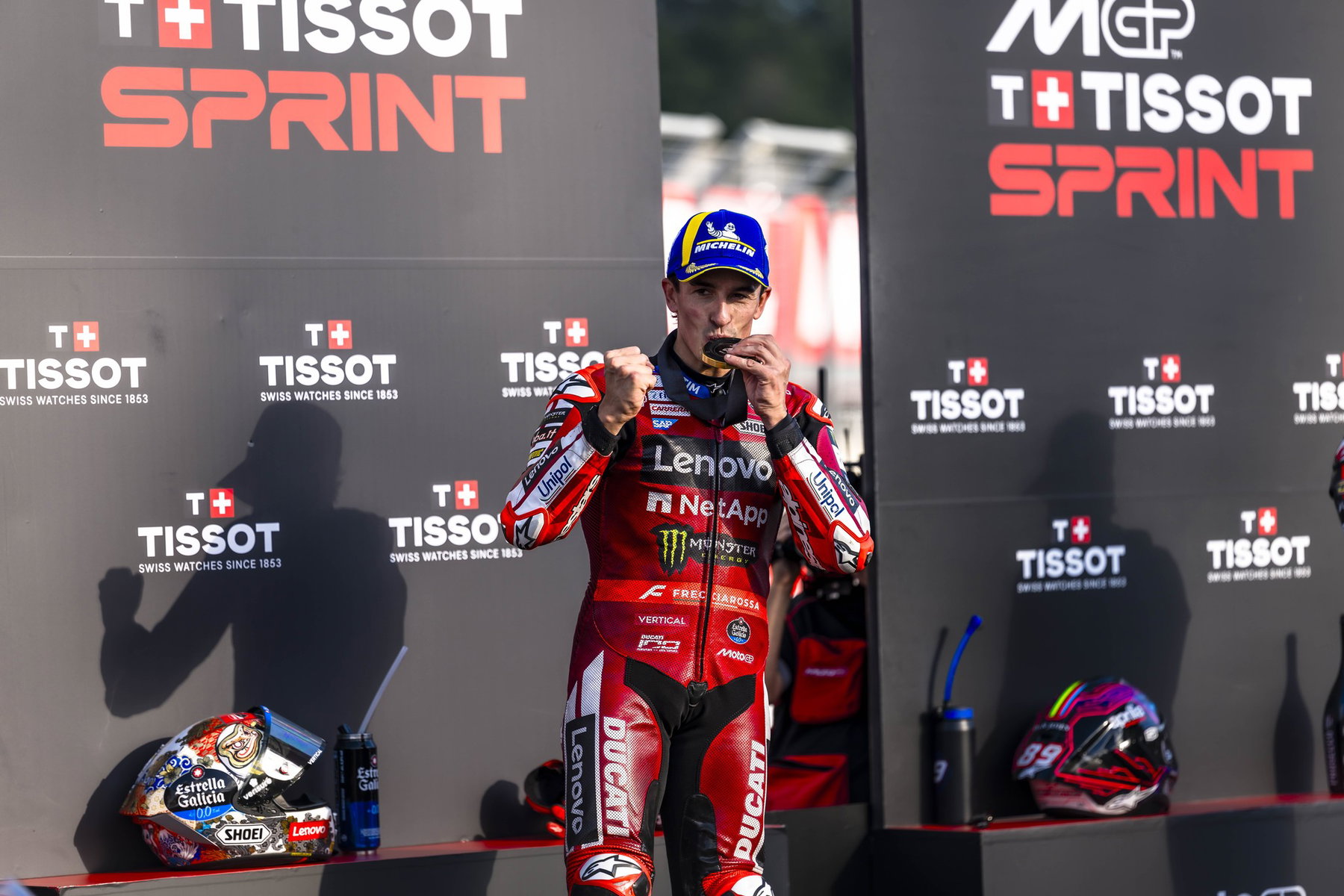
Marc Marquez won the sprint from second on the grid ahead of Diogo Moreira and Jorge Martin. It was his 22nd sprint win.
At the start, Marquez and polesitter Martin accelerated side by side towards the first corner. Marquez had the inside line and took the lead. There was contact: Martin later published a photo showing the Ducati’s front wheel hitting him, and a mark was left on his leathers. On lap six, Marquez extended his lead to one second for the first time, after which Martin had no answer.
Martin, Bastianini and Moreira initially crossed the line in second to fourth. Because Martin and Bastianini exceeded track limits on the final lap, both were dropped one position. As a result, LCR Honda rider Moreira claimed his first MotoGP podium. In third, Martin at least secured Aprilia’s first podium at Motegi. Behind them came Bastianini, home hero Ai Ogura, Bezzecchi, Zarco, Raul Fernandez and Quartararo, who scored Yamaha’s only point in ninth. This meant four different manufacturers occupied the top four places.
Start crash: double long lap penalty for Alex Marquez
The sprint was over for three riders on the very first lap. Alex Marquez of Gresini had dropped from fifth on the grid to seventh and attacked Fabio Di Giannantonio under braking at turn three. He lost the front, crashed into the back of Pedro Acosta and also took Di Giannantonio into the gravel.
The stewards led by Simon Crafar deemed this a breach of Article 1.21.2 of the regulations. Although it was his first offence of this kind this season, Alex Marquez must serve a double long lap penalty in the Grand Prix. He immediately took responsibility, apologised to both riders and called the penalty deserved. Acosta spoke of a rushed move and lamented a good chance of a podium, with which he could have made up points on Bezzecchi in the battle for third in the championship. Di Giannantonio took a heavy blow to his right hip and ribs and initially lay in the gravel with breathing problems. However, the examination at the medical centre revealed no serious injuries.
Frequently Asked Questions
-
Which tyres are allowed in the MotoGP race at Motegi?
In the Japanese Grand Prix, riders may only use the medium or hard tyre at the rear. Michelin withdrew the soft rear tyre together with Dorna after the sprint. Michelin recommends the hard tyre with reinforced carcass, but the choice is up to the teams.
-
Why did Bagnaia’s tyre fail at Motegi?
Francesco Bagnaia’s rear tyre overheated in the centre, causing blisters to form and chunks of rubber to break out. Bagnaia attributes this to a lack of grip, which makes the rear wheel slide when he opens the throttle. His attempt to dampen the vibrations with the rear brake put additional heat into the tyre.
-
Who won the MotoGP sprint at Motegi?
Marc Marquez won the sprint at Motegi on the Ducati. Diogo Moreira finished second and claimed his first MotoGP podium, while Jorge Martin was classified third after a track limits penalty.
-
When does the Japanese Grand Prix at Motegi start?
The 24-lap race starts on Sunday, October 4, 2026, at 7 a.m. CEST. Beforehand, there is a warm-up extended to 20 minutes, in which riders can test the hard rear tyre for the first time.
-
What penalty does Alex Marquez get after the sprint at Motegi?
Alex Marquez must serve a double long lap penalty in the Grand Prix. The stewards held him responsible for the start crash in which Pedro Acosta and Fabio Di Giannantonio fell.