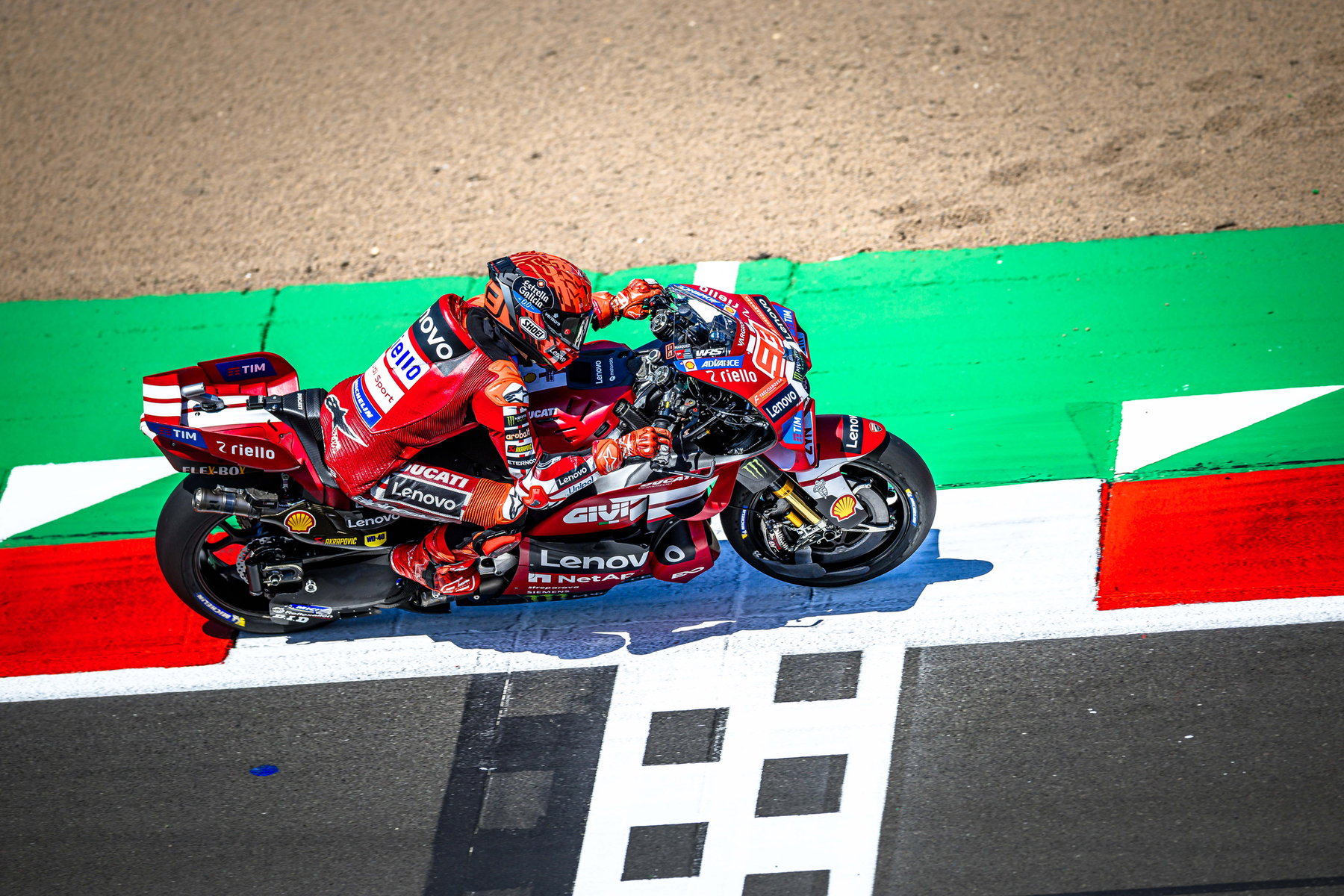
- On lap ten Marquez ran wide at turn 1 because, by his own account, the brake lever met nothing.
- Bagnaia reports that the lever travelled towards his hand three times and he had to push it back out each time.
- Marquez is now twelve points behind Jorge Martin in the world championship.
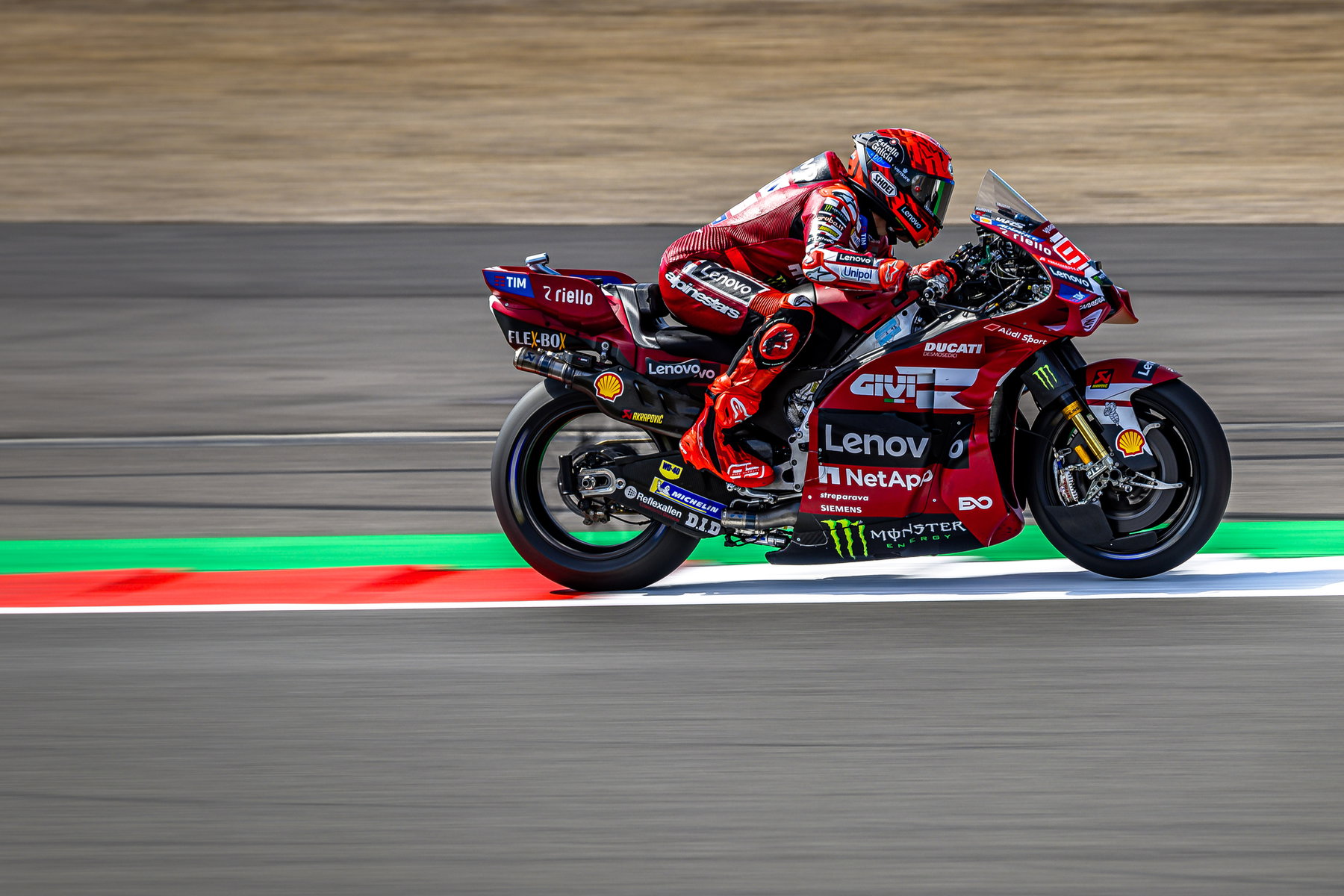
A race weekend can tip over in many places. In Spielberg, for Ducati it was of all things the component a MotoGP rider has to rely on most. Marc Marquez had set the second-best time in the warm-up and was considered a podium candidate. In the 28-lap race he then failed to find the bite point of the front brake for long stretches. In the end he was 7.339 seconds behind winner Pedro Acosta. In hindsight, he rates the fact that he finished at all as a stroke of luck.
What happened to Marc Marquez in the Spielberg race?
From the very first lap Marquez had problems with the front brake, whose lever sat in a different position at every braking point. On lap ten he grabbed nothing at all at turn 1 and ran wide.
The world champion describes the sequence very precisely. “The problem, however, was that I had massive difficulties with the front brake in the first part of the race. That is also why I went wide at turn 1,” he said after the race. And he continued: “The bite point of the lever was completely inconsistent, every braking point felt different. When I made the mistake at turn 1, I applied the brake and grabbed nothing at all, there was no pressure whatsoever.”
In the opening laps he therefore braked deliberately cautiously. Instead of grabbing hard, he felt his way to every braking point just to sense where the lever was at that moment. By his own assessment, that is exactly where he lost most of his time. At half distance he was down in seventh. At one point he was reckoning with the end of his race: “I was already thinking: all right, I cannot carry on like this.”
Then the matter resolved itself as suddenly as it had appeared. “But all of a sudden, from one lap to the next, the brake worked again. From then on I got faster again and was able to make up a few positions, but of course by then it was already too late.” In the final third of the race Marquez was back at the pace of the leading group and passed Brad Binder as well as Fermin Aldeguer. It was not enough for more than fifth place. “The maximum today would have been second or third, in the end we rescued fifth place,” is how he sums up the result.
How did Bagnaia react to the same problem?
Francesco Bagnaia began to feel the problem from around lap seven, but was able to handle it better because he already knew it. In his case the brake lever travelled towards his hand three times, and each time he had to push it back out.
The Italian finished the race in seventh and was comparatively satisfied with the weekend. The conditions had been different from before, he said, with a lot of grip lost. To make progress anyway, he raised his pace by half a second from lap five or six and stayed in the 1:30.6 range for as long as possible. The strategy worked, and in the end he closed back in on Aldeguer and Binder.
The decisive factor, in his view, was that the behaviour of the brake did not surprise him. He talks about having experienced it once before and therefore being able to react correctly instead of panicking. That way he brought the bike home without losing further time. This is precisely what sets him apart from Marquez: the world champion reported the problem for the first time on that Sunday, while Bagnaia already knew it.
Which other Ducati riders were affected?
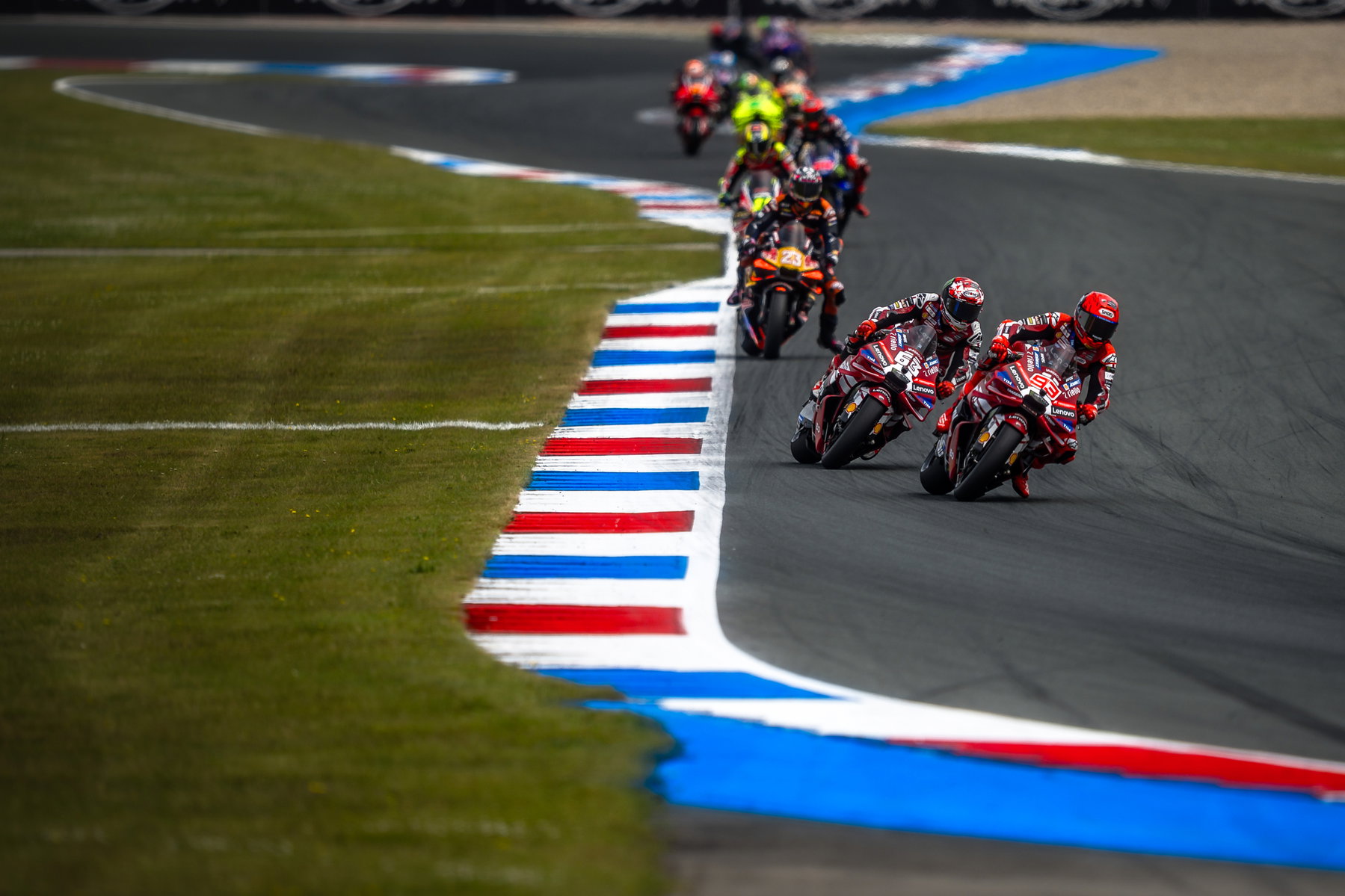
Alongside Marquez and Bagnaia, Fermin Aldeguer and Fabio Di Giannantonio also reported difficulties with the brake. That means the issue affected at least four of the six Ducatis in the field.
On lap five Aldeguer had worked his way up into the top 5 in Brad Binder’s slipstream and was at times even the leading Ducati rider, when Marquez lost his rhythm. Then it hit him too. “Apart from the tyres, which had dropped off more in the second half than recently, the brakes were the real problem. It did not work consistently. I arrived at some corners almost without a brake,” the Gresini rider explained. He dropped back again in the closing stages and finished eighth.
Di Giannantonio, who came home ninth, confirmed the cluster of cases briefly on Italian television: “è un problema che ogni tanto ci capita”, in English: “It is a problem that happens to us every now and then.”
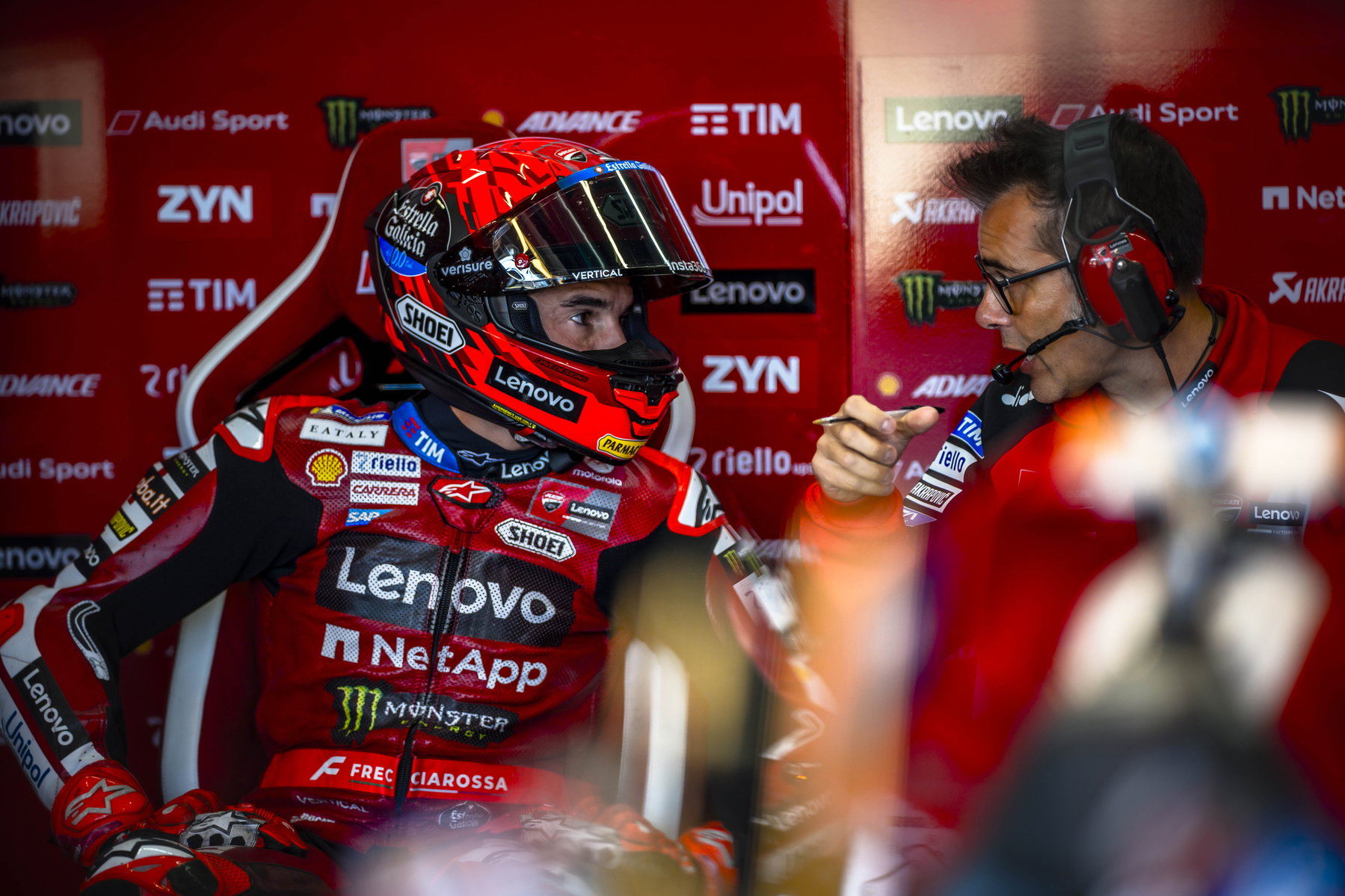
None of those involved offered an explanation for the cause. Marquez at least points out that the incident can be analysed. The positive thing, he says, is that something like this shows up in the data and that the team can derive solutions for the future from it.
Why Ducati were on the back foot in Spielberg anyway
The brake problem hit Ducati on a weekend when the brand was already struggling with the rear tyre. Because of the character of the Red Bull Ring, Michelin brings a harder casing to Austria, meaning a stiffer load-bearing structure inside the tyre.
That construction had not been used since the start of the season. All six Ducati riders found it hard to build up enough grip. Marquez, however, clearly separates the two topics: “That is a different issue, but in the end the conditions are the same for everyone. It is true that we have to work cleanly, because we already had enormous problems in Thailand.” He said they had been competitive in Spielberg nonetheless. In Motegi, Michelin brings back the usual casing, and in Mandalika another special variant follows.
How does the championship look after the Austrian GP?
Jorge Martin leads the world championship, with Marquez second, twelve points behind. Marco Bezzecchi is third, 42 points behind his Aprilia team-mate, and Acosta moved up to fourth after his first MotoGP win, 72 points off the top.
With second place in the sprint and fifth in the grand prix, Marquez lost the championship lead he had only taken over in Misano. He himself expects a four-way title fight in the closing phase of the 2026 season: “The first four riders are fully on course to fight for the title.” In Acosta’s case he points to the technical development at KTM since the sealed engines were allowed to be opened and more power became available again. Asked about his strongest weapon in the title fight, he named neither experience nor talent, but the same thing twice: his bike and his team.
Next up is the Japanese Grand Prix at Motegi from 2 to 4 October, the first of the overseas races. Marquez already sees his next rival ahead there: “As far as Motegi is concerned, Pedro is the favourite again after this grand prix. He has been incredibly fast there every year.”
Frequently Asked Questions
-
What brake problem did Marquez have in Spielberg?
The front brake lever sat in a different position at every braking point, and at times there was no pressure at all. On lap ten Marquez grabbed nothing at turn 1 and ran wide. After a few laps the brake worked normally again for no apparent reason.
-
Where did Marc Marquez finish at the 2026 Austrian Grand Prix?
Marquez finished fifth, 7.339 seconds behind winner Pedro Acosta. That made him the leading Ducati rider. By his own assessment, second or third place would have been possible without the brake problem.
-
Were other riders affected by the brake problem?
Yes, alongside Marquez, Francesco Bagnaia, Fermin Aldeguer and Fabio Di Giannantonio reported the same issue. Bagnaia had to push the lever back out three times, and Aldeguer said he arrived at some corners almost without a brake. Di Giannantonio explained that the problem occurs occasionally.
-
How many points is Marquez behind the championship lead?
After the Austrian GP, Marc Marquez is twelve points behind Jorge Martin. Behind them come Marco Bezzecchi, 42 points behind Martin, and Pedro Acosta, 72 points behind.
➜ This article is part of our comprehensive overview: 2026 MotoGP Season: The Complete Overview – Teams, Riders, Calendar & Championship Standings. Find all key information on this topic in one place.