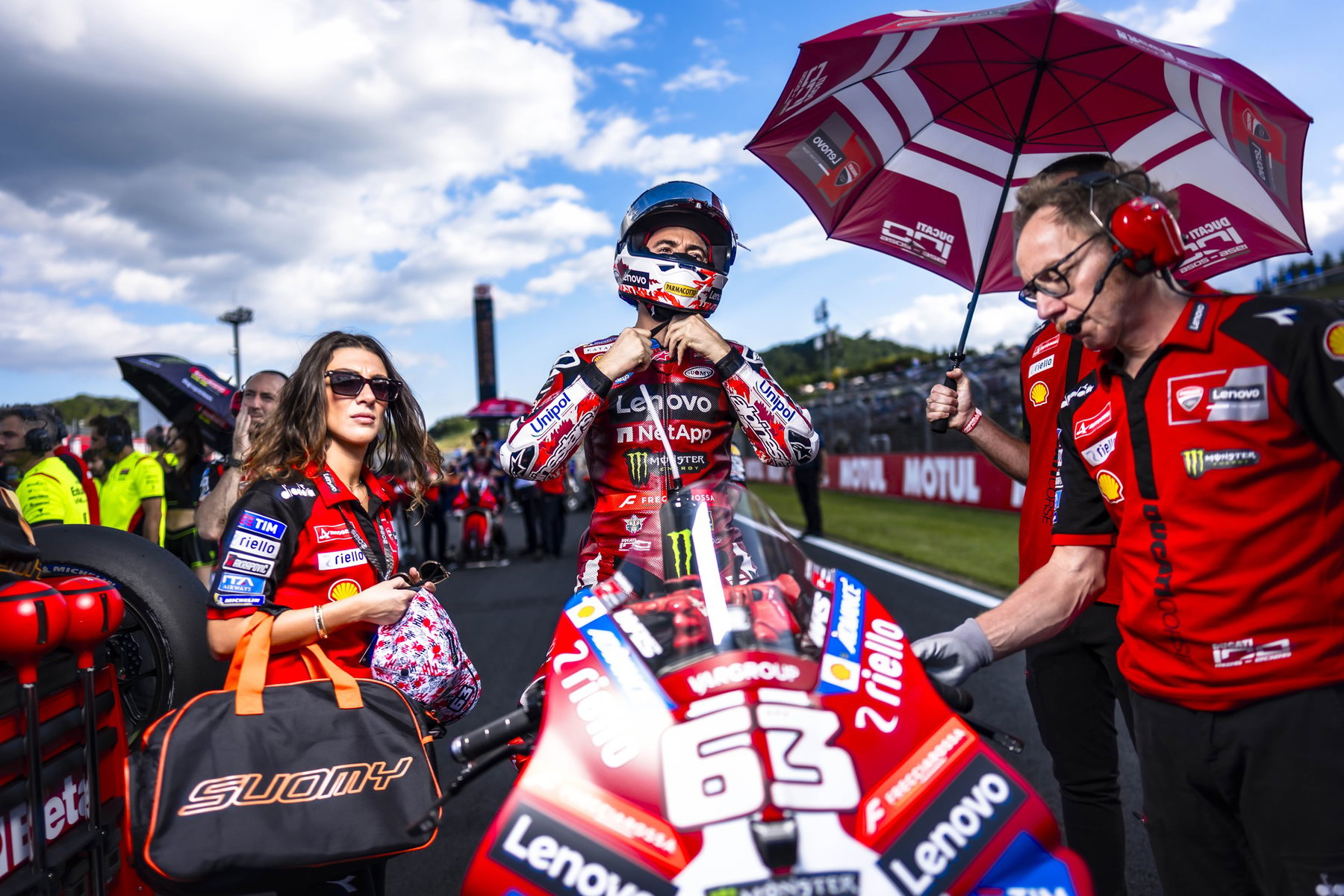
- From 2027, there will be a separate Sprint qualifying on Friday, and Sunday’s warm-up will be dropped
- Only four riders were present at the meeting where the format was explained to them
- MotoGP still has no riders’ association like the GPDA in Formula 1
On Wednesday, October 7, 2026, MotoGP and the world motorcycling federation FIM confirmed the new weekend format for 2027. A day later, ahead of the Indonesian Grand Prix in Mandalika, it was the number one topic in the paddock. Opinions are sharply divided. Francesco Bagnaia, Luca Marini and Marco Bezzecchi see advantages. Pedro Acosta, Marc Marquez and Alex Marquez, on the other hand, warn of even more stress and risk. And almost everyone agrees on one point: the riders had no say in the decision.
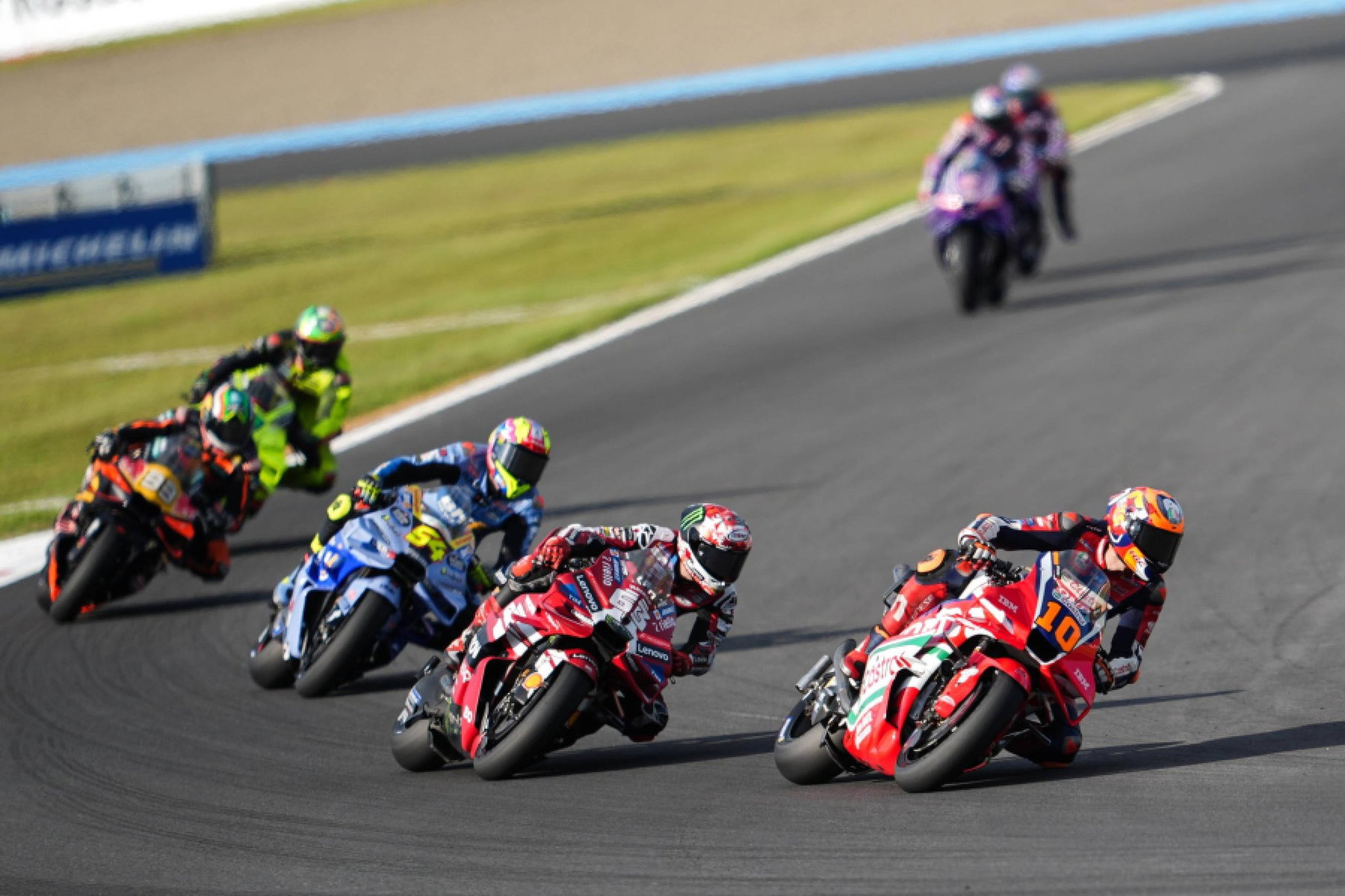
What changes on the 2027 MotoGP weekend?
From 2027, the Sprint gets its own qualifying session on Friday, and the Sunday morning warm-up is dropped. Instead, the pit lane will open for ten minutes before the Grand Prix so riders can do a few sighting laps.
On Friday, FP1 lasting 45 minutes and FP2 lasting 30 minutes are followed by the 15-minute Sprint qualifying. Saturday features a 20-minute FP3. After that, all riders take part in Q1, with the twelve fastest advancing to Q2. According to Carlos Ezpeleta, MotoGP’s deputy CEO, this cuts track time by a total of 35 minutes per weekend. The new format arrives in a season in which a lot is new anyway, with the 850cc bikes and the Pirelli tires.
Who initiated the new MotoGP format?
According to the promoter, the initiative came from the teams and the manufacturers. MotoGP Sports Entertainment Group stresses that it was not the one pushing for the change.
Ezpeleta explains that the teams approached the series because they wanted to improve the format. Above all, the manufacturers wanted less riding time so that individual components rack up fewer kilometers. The slightly later start on Friday is also said to have been a request from the manufacturers. Loris Capirossi, who now shares responsibility for safety in Race Direction, confirms this. He says the manufacturers pushed for less track time because the engines then run less and cost less.
Ezpeleta also sees a new generation of executives in the paddock behind it, one with a clear vision of the championship’s future. He cites Günther Steiner as an example. The former Haas team principal in Formula 1 is part of the group that took over the Tech3 team at the end of 2025.
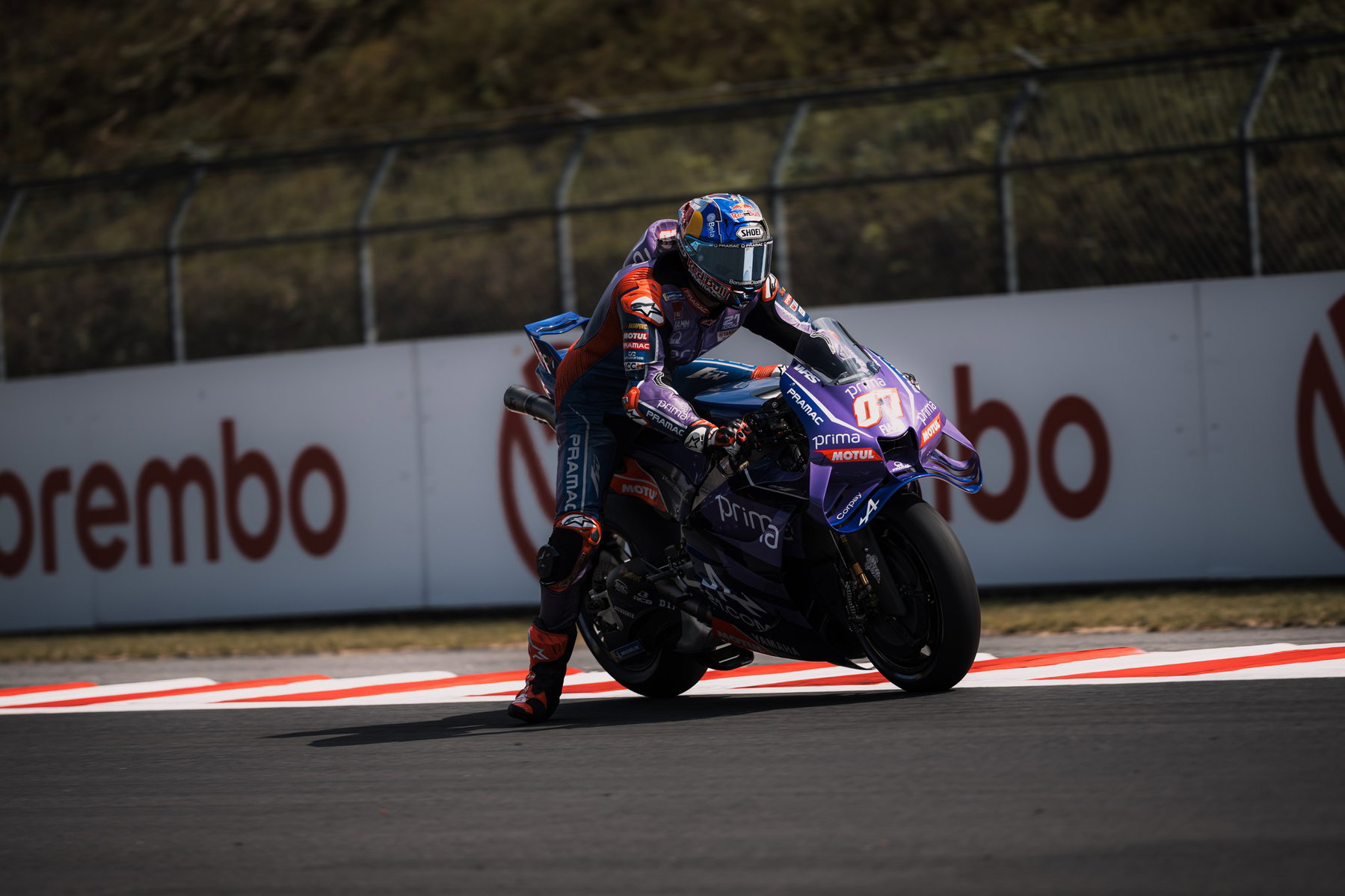
Which MotoGP riders welcome the new format?
Bagnaia, Marini, Bezzecchi and several young riders in particular see an advantage in the second qualifying session. Their main argument: a botched Friday will no longer cost grid positions for both races.
Bagnaia points out that riders have been asking for two separate grids ever since Sprints were introduced. “I like it, it will be good,” says the Ducati rider. Bezzecchi is also happy and says he really likes the new format a lot. Marini sees the change as a proposal from the teams to improve the show and make the series better known. In the end, it could be a positive change. He also likes that the free practice sessions will once again be called FP1, FP2 and FP3, because that is easier to understand.
Toprak Razgatlioglu has a very personal reason to be pleased. He has often had to start from the very back recently, even though he got faster on Saturday. With the second qualifying session, he now has another chance to improve his grid position. Fermin Aldeguer and Diogo Moreira see it similarly: even after a bad Friday, a good result on Sunday is still possible. Brad Binder, who moves to World Superbike in 2027, finds the new format exciting.
Aldeguer, at 21 one of the youngest in the field, even sees a physical advantage in the reduced track time. Extrapolate the 35 minutes across 22 race weekends and it adds up to almost 13 hours per season. Johann Zarco goes a step further. Anyone with little preparation time has to be fast straight away, and that could help him as an experienced rider if the Honda is good in 2027. Fabio Di Giannantonio takes it in stride. For riders and teams who work well together and need little time on track, the format could work well.
Why do Acosta and the Marquez brothers criticize the format?
They fear more risk, more mental strain and even more injuries. Already, hardly any rider gets through a season without an injury.
Pedro Acosta is 22 years old, is leaving KTM and will ride for Ducati alongside Marc Marquez from 2027. He expects an extremely demanding year. The race weekend often starts as early as Wednesday with PR commitments, he says. Then come Sprint qualifying with 22 riders on track, Q1, Q2, the Sprint and the race. He considers it impossible to risk the absolute maximum five times every weekend without getting injured sooner or later. “It just doesn’t work,” he says.
Acosta could understand the format if there were only half as many Sprints, so 11 instead of 22. For comparison: Formula 1 is planning ten Sprints across 24 race weekends in 2027. Acosta finds many Sprints boring anyway, for example at the Sachsenring, where overtaking is barely possible. He also believes riders’ careers are getting shorter and shorter. A career as long as Valentino Rossi’s will then no longer happen.
Marc Marquez sees it the same way. The reigning world champion first wants to understand what the actual goal of the change is. For the riders, he says, it only means more intensity and more strain, especially mentally. “With the [current] schedule, it’s enough. But we don’t decide. It is what it is, and we must shut up.” His own career is nearing its end, but he fully agrees with Acosta. The young riders will adapt. What toll 22 race weekends in this format will take remains to be seen.
His brother Alex Marquez of the Gresini team says the decision was made between the championship and the teams. The format brings significantly more risky moments over a weekend. Riders have always wanted fewer Sprints, at most half as many. But nothing will change, no matter how much they complain.
How heavily injuries shape the field already became clear in the first Sprint season in 2023. Up to round 15 back then, there was not a single race in which at least one rider was not missing through injury.
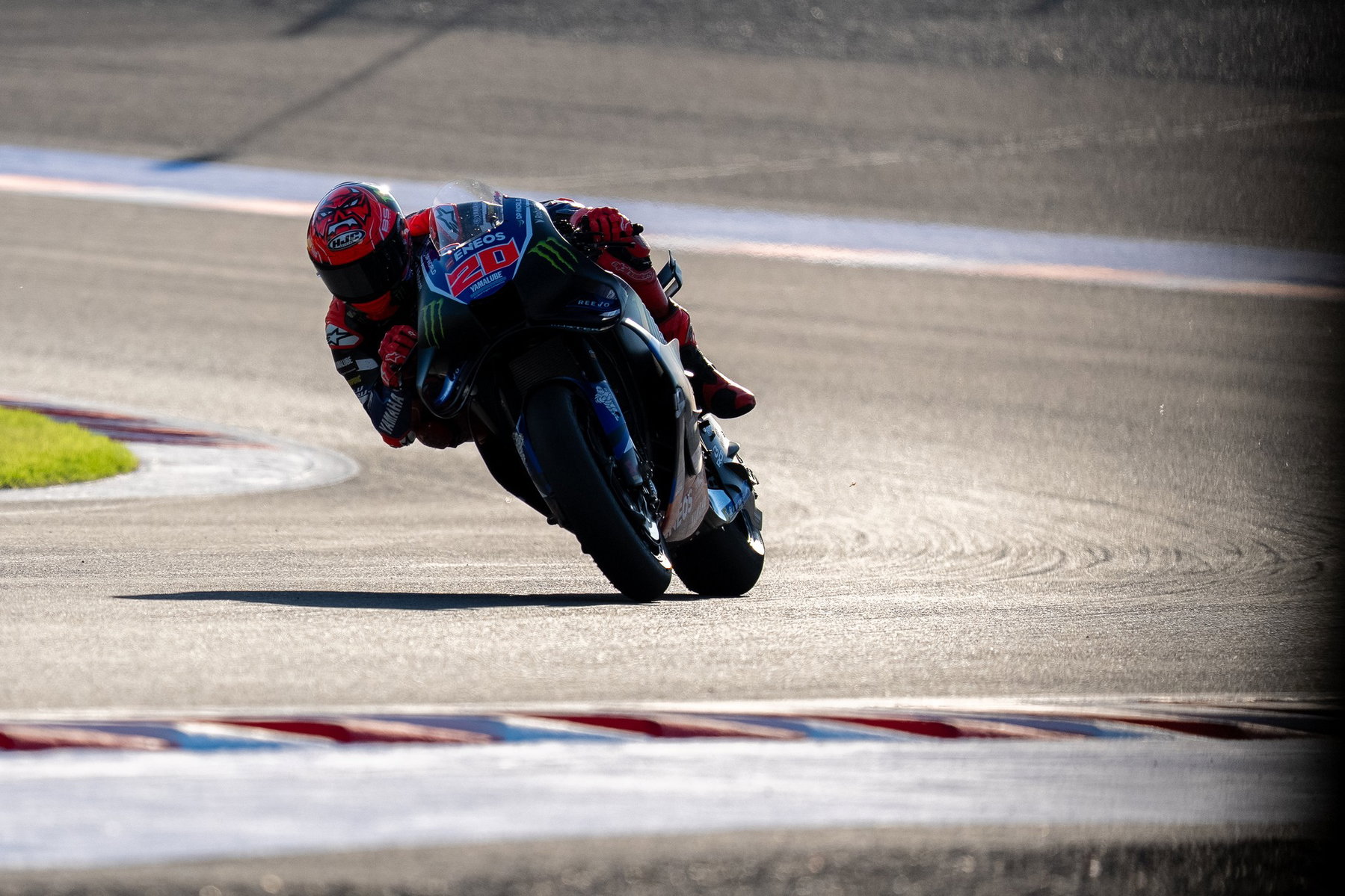
Is there enough practice time with the new 850s?
For Fabio Quartararo and Jack Miller, there is not. Both consider the reduced practice time a problem, especially in the year of the new regulations.
Quartararo moves from Yamaha to Honda in 2027 and has tested neither the new 850s nor the Pirelli tires. He thinks training less with new bikes and new tires is the wrong way to go. The teams lack time to set up the bike properly and understand how long the tires last over race distance. He would, for example, like to extend FP2 to one hour; 30 minutes are planned. He has nothing against the additional qualifying session, though, because it is the same for everyone.
Pramac’s Miller points out that riders already attack flat out in the last 15 minutes of practice today. Until now, there was at least some time beforehand to adjust the bike reasonably. In 2027, riders will have to attack with even less preparation. He does not believe the show will get better with less time on track. In his view, the second qualifying session only makes it harder to keep track. Marini counters that MotoGP riders are trained for exactly these situations.
Why are MotoGP riders arguing about the warm-up?
For many riders, the warm-up was the last chance to check the bike before the race. Others consider the ten minutes on Sunday morning unnecessary.
“A warm-up is absolutely necessary,” says Miller. He also told Carlos Ezpeleta this directly. Riders are not sitting protected inside a car, he says, and riding a motorcycle is physically extremely demanding. Already today, riders stand on the truck during the riders’ parade on Sunday morning massaging their forearms. Without a warm-up, this will become even more uncomfortable at Mugello, for example.
Marini gives another reason: anyone who crashes in the Sprint or makes major changes to the bike can check them in those ten minutes on Sunday morning. The fans in the grandstands would also benefit, as they are already there at 7 a.m. at races such as Jerez, Le Mans or the Sachsenring. Acosta warns that a rider with a problem on his bike may in future have to write off Sunday. Enea Bastianini also says he needs the warm-up to understand a few more things and warm up properly.
On the other side are Jorge Martin and Alex Rins. Martin has never liked the warm-up and even calls its removal the only thing he likes about the new format. Alex Marquez and Moreira are not bothered by its removal either.
There is also a practical problem. Refueling on the grid is not allowed. Anyone who does several sighting laps therefore uses fuel that will be missing in the race. Marini expects riders will mostly take their second bike for these laps.
The warm-up is not completely off the table yet. Bagnaia has asked the series to reinstate it. MotoGP still has to discuss it with the teams, but he thinks it is doable. Ezpeleta says the series is open to changing and improving the schedule. And Capirossi explains that Race Direction can schedule a session on Sunday morning again at any time for safety reasons. That happened most recently in Japan, where the warm-up was extended by ten minutes so that all riders could test the medium and the hard tire. He also recalls that there was a lot of controversy when the warm-up was scrapped in Moto2 and Moto3 in 2023 to make room for the riders’ parade. In the end, it had no negative consequences.
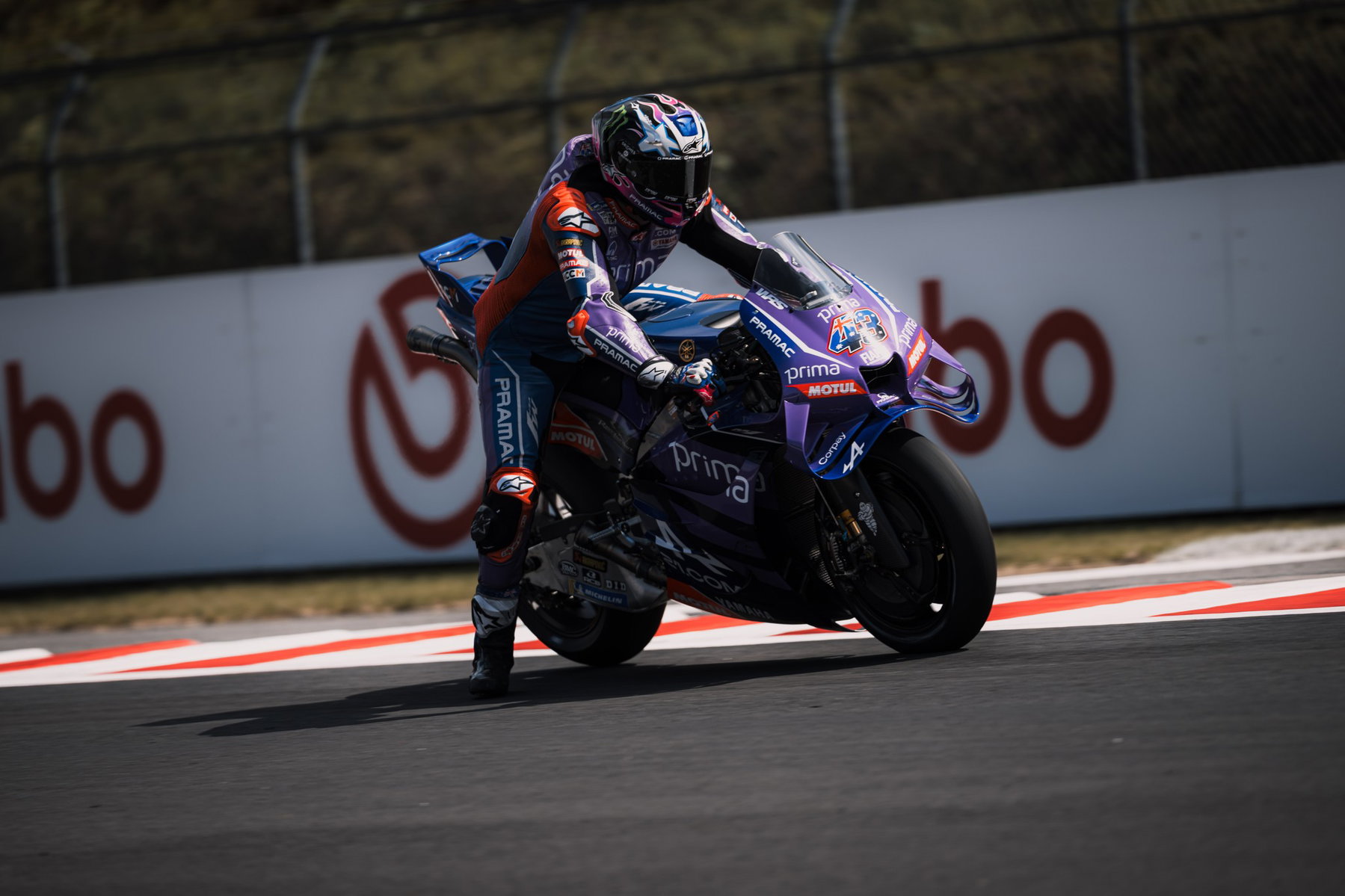
Will the 2027 MotoGP weekend be more dangerous?
The series says no. According to Ezpeleta, the number of fast laps under pressure remains the same, and riders get significantly fewer tires for qualifying.
Until now, the long practice session on Friday afternoon decided who goes straight into Q2. That is why riders did extra time attacks there on low fuel. In future, this session will be completely free. In Sprint qualifying, only one set of tires may be used, so riders have just one fast attempt. There is also a limit for Q1 and Q2. Ezpeleta argues that riders with fewer tires take less risk, because there is no second chance after a mistake. The series has already done a lot for safety this year, he says, such as making the grid longer and wider and banning holeshot devices. These are start devices that lower the bike at the start. Injuries, however, are unfortunately part of this sport.
Some riders also see no greater danger. Marini is not worried about 22 riders on track at the same time. The series will have to work on the penalties. Because aerodynamics will remain important in 2027, the fast riders will want to ride alone anyway to get clean air. Aleix Espargaro, Honda test rider and replacement for Joan Mir this weekend, even believes in more safety. The new tires are easier to ride and the bikes slower, he says. In return, he expects more drama, because top riders will sometimes start from 15th or 20th. Razgatlioglu sums it up briefly: “I like chaos!”
Why did the riders have hardly any say in the decision?
Because hardly any of them attended the decisive meeting. Only four riders were present at the Safety Commission in Motegi when Ezpeleta explained the new format to them.
The Safety Commission meets every race weekend on Friday after practice. There, riders can raise their concerns directly with the series and the FIM. Bagnaia is one of the few who attend regularly. The four present understood the reasons and agreed, he says; they only asked about the warm-up. But he also makes clear where the problem lies: “If instead of four, there had been 20 riders, we could have influenced the decision.”
Many riders deliberately stay away. Di Giannantonio stopped attending the Safety Commission because it was very difficult to get commitments. Since then, he prefers to invest his time in his body and the work in the garage. Bastianini no longer goes either. Acosta says he simply lacks the time. Martin, on the other hand, says: “I feel they don’t even ask us.”
Ezpeleta responded to this criticism on Friday in Mandalika. The series’ door is open to the riders every Friday afternoon, he said. MotoGP has also asked the teams to talk to their riders. However, that has gone very differently in recent races, partly because many riders are currently changing teams. The series has contracts with the teams, not with the riders. The riders are nevertheless part of the championship’s decision-making structures.
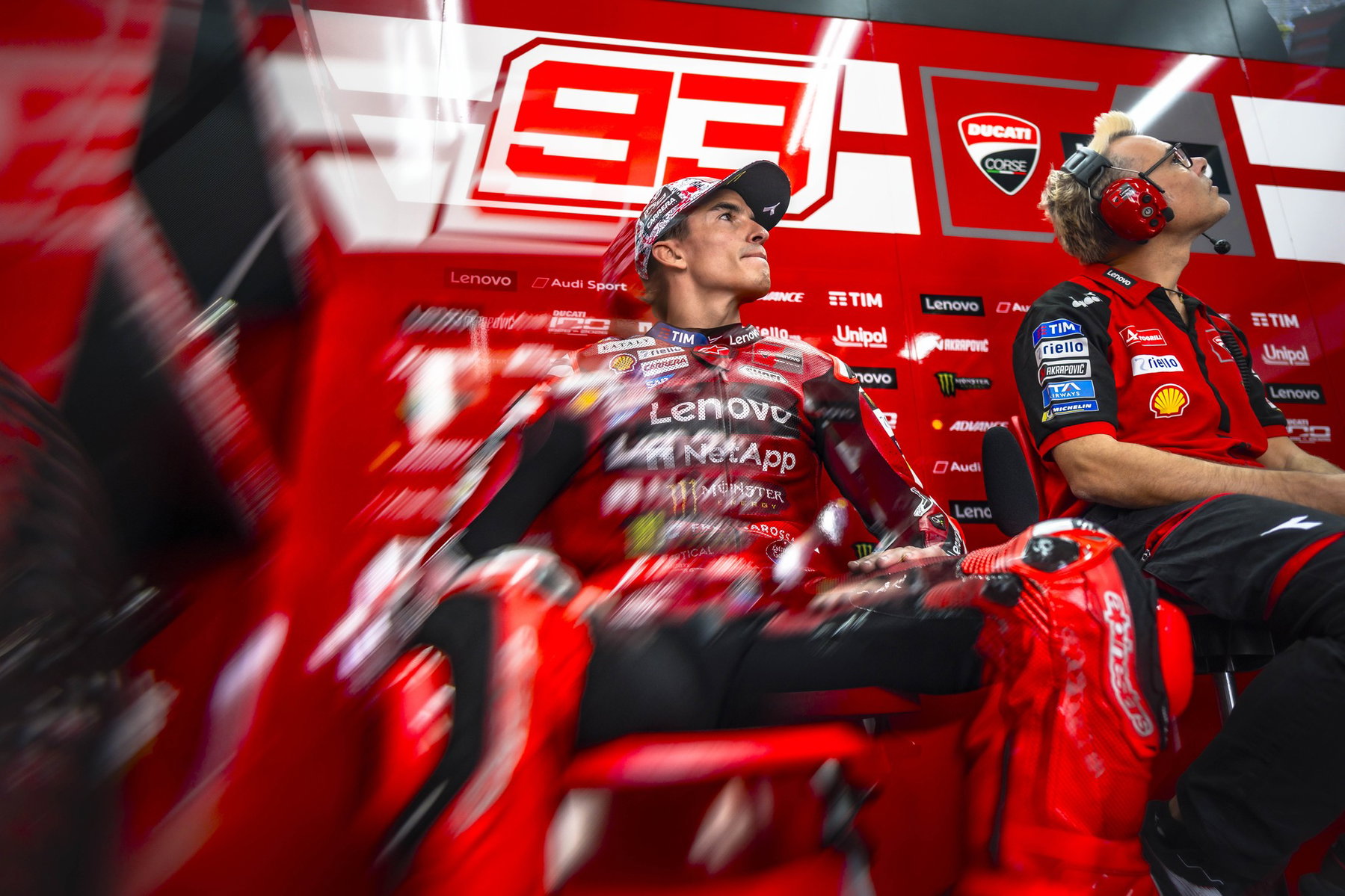
Why is there no riders’ association in MotoGP?
All attempts so far have failed because the riders could not agree on a common line. Teams, manufacturers and the promoter, by contrast, have their own representation: the teams’ association IRTA, the manufacturers’ association MSMA and MotoGP Sports Entertainment Group.
In Formula 1, the Grand Prix Drivers’ Association, GPDA for short, has represented the drivers’ interests since 1961. Its chairman is former Formula 1 driver Alexander Wurz, while Carlos Sainz and George Russell are directors. In MotoGP, there was a serious attempt in 2023. Former World Superbike champion Sylvain Guintoli was to become the face of a riders’ association. Topics were to include safety, the schedule, contracts and a minimum salary. Founding work began at the end of 2023, but the project fizzled out. For several riders, the running costs were too high.
Marini had already suggested earlier this season that the riders elect a common spokesperson. Making attendance at the Safety Commission mandatory would achieve nothing, he says; in the past there were 20 people in the room, and that was even more chaotic. Di Giannantonio says the riders were already quite close to an association, but several riders blocked it. Maverick Vinales describes how he always had the feeling that you get into trouble if you try. So it was better to say nothing and just ride.
Many consider Marc Marquez the rider whose word counts most with the series. Still, he does not want to lead an association. He said so back in 2022, and he sticks to it. “As an active rider, it is impossible to lead a riders’ association,” says the nine-time world champion. The average age in the field is very low, and everyone looks after their own interests. In the long run, however, everyone wants the same thing: to be fast, to win and to ride safely enough for their career to last as long as possible. He is convinced that sooner or later there will be a solution like in Formula 1.
History shows that riders can achieve things together. In 1974, Giacomo Agostini, Phil Read and Barry Sheene refused to race at the Nürburgring for safety reasons. In 1979, there was a similar protest at Spa-Francorchamps involving Kenny Roberts, Sheene, Franco Uncini and Virginio Ferrari. Riders also went on strike in Nogaro in 1982 and in Misano in 1989. In Formula 1, the GPDA drivers led by Jackie Stewart refused to race at Spa-Francorchamps in 1969 because the requested changes to the circuit had not been made. The Grand Prix was subsequently canceled.
What’s next for the 2027 MotoGP format?
The new format has been decided and applies from the 2027 season. The main open question is whether the warm-up will come back after all.
Bagnaia is optimistic, and Ezpeleta is also signaling willingness to talk. The basic structure with two qualifying sessions will not change, however. MotoGP will therefore start the 2027 season with new bikes, new tires and a new weekend schedule. Until then, the 2026 title fight continues, with championship leader Jorge Martin and world champion Marc Marquez going into the next round in Mandalika. The debate about the riders having their own voice is likely to follow them beyond the end of the season.
Frequently Asked Questions
-
What changes in the 2027 MotoGP format?
From 2027, there will be a separate 15-minute Sprint qualifying on Friday, and the Sunday warm-up will be dropped. On Saturday, all riders take part in Q1, with the twelve fastest competing in Q2 for the Grand Prix grid positions. According to the promoter, track time per weekend drops by 35 minutes.
-
What do MotoGP riders think of the 2027 format?
MotoGP riders are divided over the 2027 format. Bagnaia, Marini and Bezzecchi welcome the second qualifying session because a bad Friday no longer costs both races. Acosta, Marc and Alex Marquez, on the other hand, fear more risk, more stress and more injuries.
-
Who decided on the new MotoGP format?
According to MotoGP, the initiative came from the teams and manufacturers. The manufacturers wanted less track time so that components rack up fewer kilometers. The riders were informed at the Safety Commission in Motegi, but only four of them were present.
-
Will there still be a warm-up in MotoGP in 2027?
Not according to the current plan; instead, the pit lane will be open for ten minutes of sighting laps before the race. Bagnaia has asked for the warm-up to return and considers it doable. Race Direction can also schedule a Sunday morning session at any time for safety reasons.
-
Does MotoGP have a riders’ association?
No, MotoGP has no riders’ association like the GPDA in Formula 1. An attempt with Sylvain Guintoli as its face failed at the end of 2023. Marc Marquez believes the riders will join forces sooner or later.