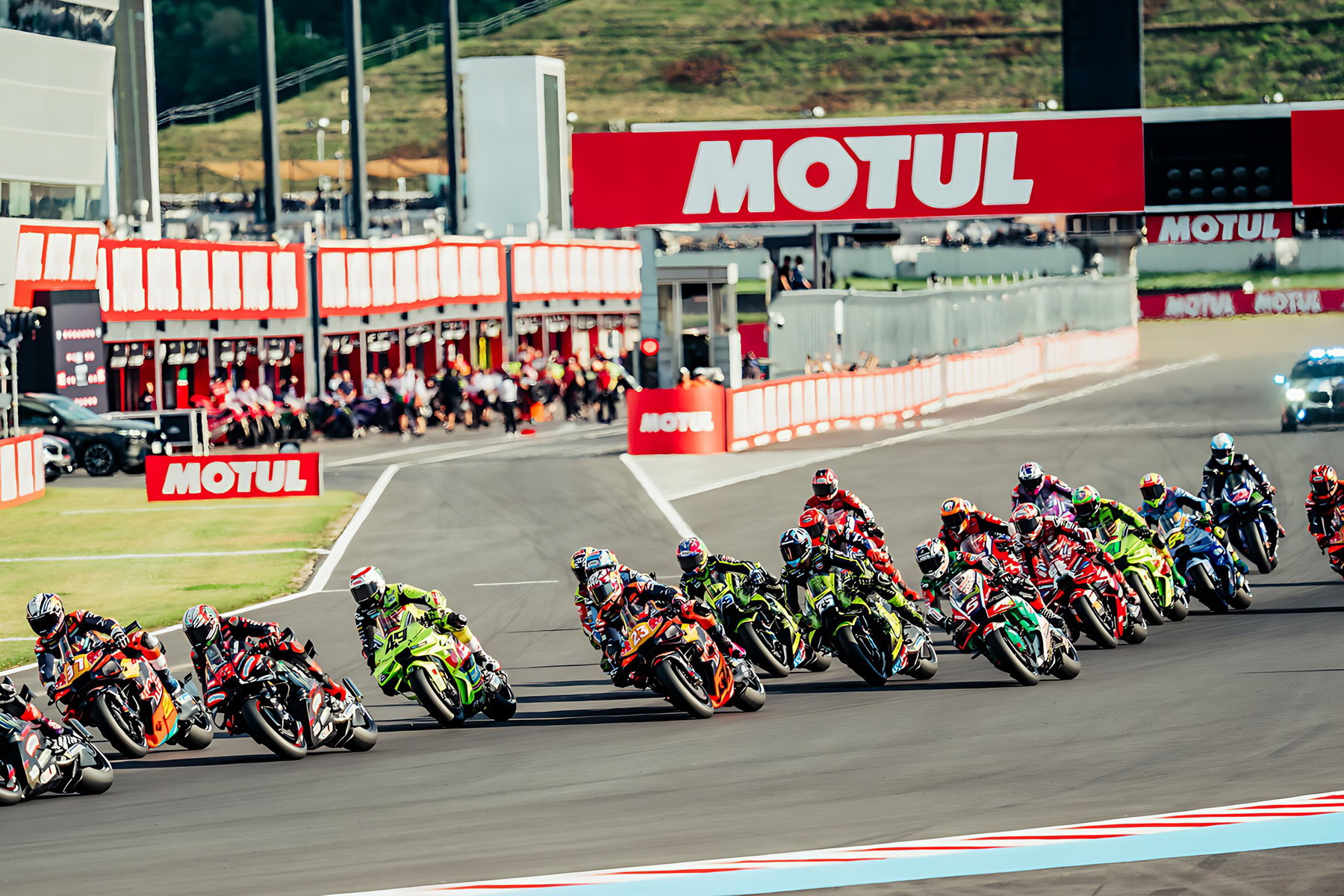
- Friday: FP1 (45 minutes), FP2 (30 minutes) and a new Sprint Qualifying (15 minutes)
- Saturday: FP3 (20 minutes), Q1 with all riders, Q2 with the top twelve, followed by the Sprint
- Sunday: no more Warm-up, instead a ten-minute open pit lane before the Grand Prix
Since the introduction of Sprints in 2023, a single qualifying session on Saturday morning has decided both starting grids in MotoGP. Anyone who makes a mistake there starts from the back twice. That changes from the 2027 season. On 7 October 2026, the Grand Prix Commission confirmed a new weekend format for the premier class after the teams had agreed to it in a vote at the Red Bull Ring. The change comes in a season that already turns a lot upside down: in 2027, displacement drops from 1000 to 850 cc, ride-height devices are banned, aerodynamics are reduced and Pirelli replaces Michelin as tyre supplier.
What changes in the MotoGP weekend from 2027?
From 2027, the Sprint and the Grand Prix will each get their own qualifying session and therefore two different starting grids. At the same time, free practice time is cut and the Sunday morning Warm-up is dropped.
According to the Grand Prix Commission, the cut in practice is meant to offset the additional session. The commission is made up of Paul Duparc for the world governing body FIM, Mike Webb for the teams’ association IRTA, Biense Bierma for the manufacturers’ association MSMA and Carmelo Ezpeleta for MotoGP Sports Entertainment Group, who chairs it. In its announcement, MotoGP itself writes that the new format “balances an incredible spectacle for fans and new stakes in each session with well-balanced track time for riders, teams and factories”.
A three-part qualifying modelled on Formula 1 with Q1, Q2 and Q3 was also discussed. However, this model did not find a majority in the vote in Spielberg.
How will the MotoGP Friday work from 2027?
In future, Friday will consist of three sessions: FP1 over 45 minutes, FP2 over 30 minutes and, to finish, the new Sprint Qualifying over 15 minutes. The Sprint Qualifying only sets the starting grid for the Sprint on Saturday.
Until now, FP1 was followed in the afternoon by a 60-minute session called Practice. It carried a lot of weight, as the ten fastest went straight into Q2. Everyone else had to take the detour through Q1 on Saturday. This session is being dropped. The new FP2 is a pure free practice session: its times decide neither a grid position nor progression to another session.
Essentially, the previous hour is split into 30 minutes of practice and 15 minutes of qualifying. This means 15 minutes of track time are lost on Friday, even though the day gains an extra session. In Sprint Qualifying, all riders are on track at the same time.
What does Saturday look like in the new format?
Saturday starts with a 20-minute FP3, followed directly by qualifying for the Grand Prix. In the afternoon, the Sprint is held as before.
FP3 replaces the previous Saturday morning free practice, which lasted 30 minutes. Qualifying remains split into Q1 and Q2 of 15 minutes each, but the rules change significantly. Until now, only riders who had not made the top ten on Friday took part in Q1, and only the two fastest progressed to Q2. From 2027, all riders start in Q1. The twelve fastest advance to Q2, where they fight for pole position and the first four rows of the grid for Sunday’s Grand Prix.
The Sprint over half race distance, on the other hand, starts from the grid set on Friday. Unlike in Formula 1, it stays on Saturday afternoon. In Formula 1, the Sprint is held on Saturday morning on the relevant weekends.
Why is the Sunday Warm-up being dropped?
Without a Warm-up on Sunday morning, riders have more time for promotional duties and preparation for the Grand Prix in the afternoon. As a replacement, the pit lane opens for ten minutes before the race.
The Warm-up had most recently lasted only ten minutes, and the session has not existed in Moto2 and Moto3 for some time. For MotoGP riders, however, it was the last opportunity to test set-up and tyres before the race. In future, there will be a time window for this after the Moto3 and Moto2 races: the pit lane is open for ten minutes, and riders may complete several sighting laps and ride through the pit lane. This allows them to check that everything on the bike is working and what condition the track is in. Such a phase has not existed until now.
How much practice time do the riders lose?
In free practice including Warm-up, MotoGP riders will lose around 50 minutes per weekend from 2027. Offsetting the new Sprint Qualifying and the open pit lane on Sunday, the net result is around 25 minutes less track time.
The 50 minutes break down as follows: 30 minutes less on Friday, 10 minutes less on Saturday and the scrapped 10-minute Warm-up. Until now, riders had 145 minutes of practice and Warm-up; in future it will be 95 minutes.
The cut comes in the year in which teams and riders have to adapt to the new 850s and the Pirelli tyres. Less practice time means fewer laps to get to know the bike, tyres and track conditions. Unlike in Formula 1, there are no simulators in motorcycle racing that could make up for this. A motorcycle’s behaviour can partly be calculated on a computer, but without the rider.
What are the consequences of the new format for riders and fans?
The new format takes pressure off a single qualifying session, but brings more qualifying sessions and more traffic on track. For spectators at the circuit, there will be no more MotoGP action on Sunday morning.
Two chances instead of one
Until now, a single mistake, a technical failure or a yellow flag could cost the grid positions for both races. Under a yellow flag, lap times in the affected sector are cancelled. With separate starting grids, every rider has two attempts per weekend. As riders will less often start from the same positions on Saturday and Sunday, there could also be more position changes at the start of the Grand Prix.
More strain and more traffic
Anyone who reaches Q2 on Saturday will in future ride three qualifying sessions in one weekend: Sprint Qualifying on Friday as well as Q1 and Q2 on Saturday. With 22 Sprints and 22 Grands Prix, that adds up to 44 qualifying sessions over the season.
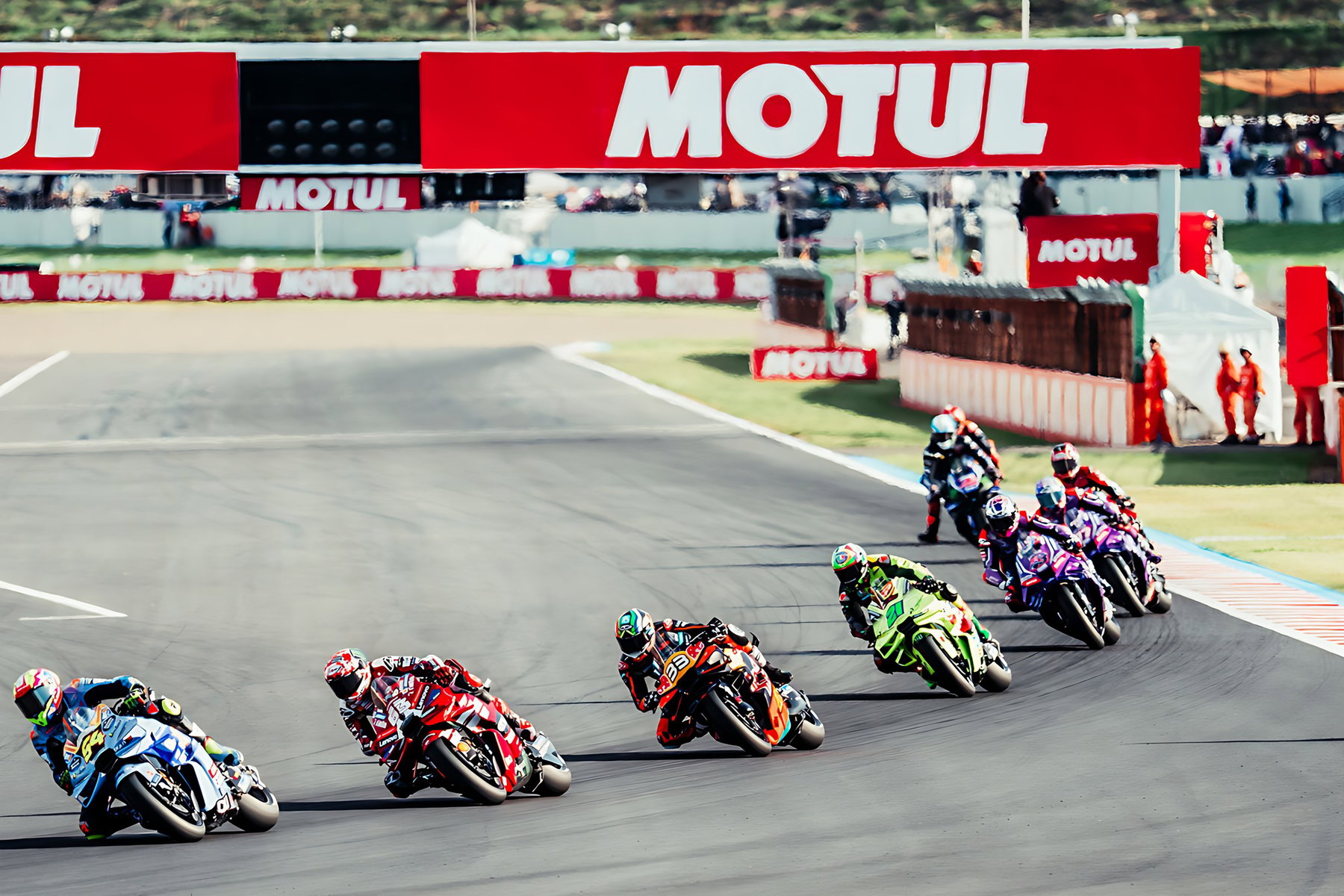
In Sprint Qualifying and in Q1, all 22 riders are on track at the same time. The previous system limited the number of riders going for fast laps at the same time. Being held up, looking for a tow or slow riders on the racing line could therefore become an issue more often in 2027. In such short sessions with so many bikes, more yellow or red flags are also conceivable. It also remains open how many soft tyres will be available for the many fast laps.
Less on the programme on Sunday morning
Without a Warm-up, the Grand Prix will be the only timed MotoGP session on Sunday from 2027. The race lasts around 45 minutes. For spectators, who have often made a long and expensive journey, this means there is no MotoGP action on Sunday morning. If a rider crashes on the first lap, his fans may not see him complete a single fast lap on Sunday.
How does the new format fit into the 2027 MotoGP season?
The new weekend format is one of several major changes with which MotoGP heads into the 2027 season. Alongside 850 cc engines, less aerodynamics and Pirelli tyres, the schedule of every race weekend is now changing too.
Compared with the introduction of Sprints in 2023, the intervention is moderate. Back then, the Sprint was added to every weekend in one go, modelled on Formula 1. That was also announced in 2022 in Spielberg, where the teams have now voted on Sprint Qualifying as well. Since then, riders have repeatedly pointed to the higher stress and greater risk from the additional races. A Sprint win is worth 12 points, a Grand Prix win 25 points.
With the new schedule, MotoGP does not intend to adopt the Formula 1 model, but rather its own version with two qualifying sessions and a Sprint on Saturday afternoon. The changes only affect the MotoGP class.
Frequently Asked Questions
-
What does the 2027 MotoGP weekend format look like?
On Friday, MotoGP riders take part in FP1 (45 minutes), FP2 (30 minutes) and Sprint Qualifying (15 minutes). Saturday brings FP3 (20 minutes), Q1 and Q2 for the Grand Prix and the Sprint. On Sunday there is no longer a Warm-up; instead, the pit lane is open for ten minutes before the race.
-
When does MotoGP Sprint Qualifying take place?
From 2027, Sprint Qualifying takes place on Friday afternoon, directly after FP2. It lasts 15 minutes, all riders are on track at the same time, and the result only applies to the Sprint on Saturday.
-
Who rides in MotoGP Q1 from 2027?
From 2027, all riders take part in Q1. The twelve fastest advance to Q2, where they fight for pole position and the first four rows of the grid for the Grand Prix.
-
Is there still a Warm-up in MotoGP in 2027?
No, the ten-minute Warm-up on Sunday morning is dropped from 2027. Instead, the pit lane opens for ten minutes after the Moto3 and Moto2 races, during which riders can complete several sighting laps.
-
How much less practice is there in MotoGP from 2027?
In free practice including Warm-up, there are around 50 minutes less per weekend. Including the new Sprint Qualifying and the open pit lane, total track time is reduced by around 25 minutes.