- The manufacturers introduced the proposal as part of the ongoing negotiations for the new Concorde Agreement (2027 to 2031).
- The goal is a significant cost reduction, partly through fewer technical personnel.
- Flag-to-flag races in their current form would become a thing of the past.
MotoGP is facing a potential upheaval that could fundamentally change how teams operate and how entire race weekends unfold. As first reported by Motorsport.com, ongoing negotiations between series operator MotoGP Sports Entertainment Group (formerly Dorna) and the manufacturers are discussing a reduction of available motorcycles per rider from two to one. The proposal is part of the comprehensive talks about the new framework agreement that will govern the collaboration of all parties from 2027 to 2031.
Why Does MotoGP Want to Abolish the Two-Motorcycle Rule?
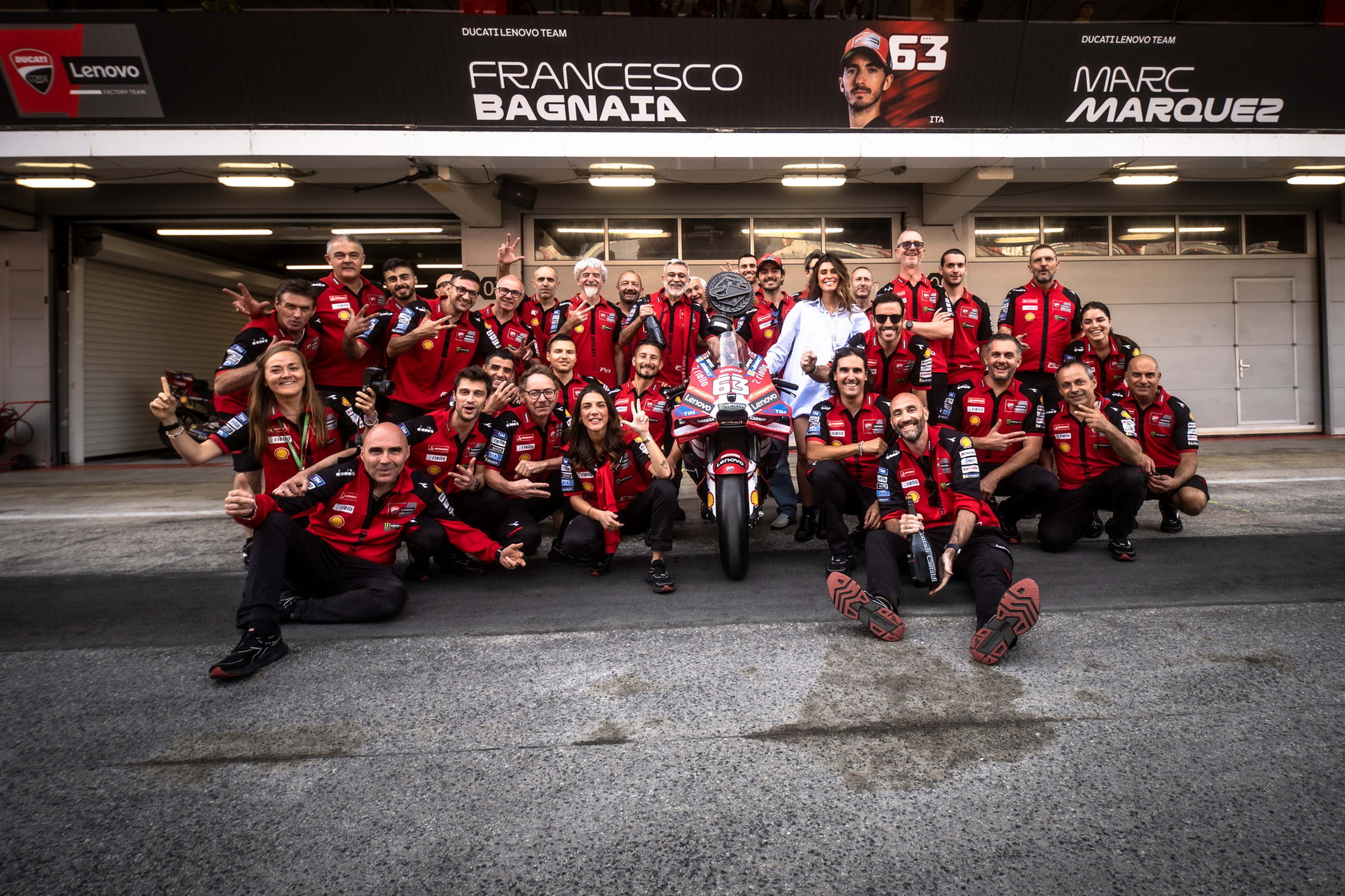
According to Motorsport.com, the initiative comes from the manufacturers themselves. The primary goal is reducing operating costs. If only one motorcycle per rider is used, teams could reduce the number of their technicians. The exact financial savings cannot yet be quantified, however.
The timing of the push is no coincidence. From 2027, a comprehensive new technical regulation will come into effect in MotoGP anyway: displacement will be reduced from 1,000 to 850 cubic centimeters, maximum bore from 81 to 75 millimeters, and the number of permitted engines per season drops from seven to six. The championship will also be run on 100 percent non-fossil fuel. The discussion about reducing machine numbers now falls into this phase of technical transition.
The negotiations surrounding the new Concorde Agreement are far from smooth, however. Yamaha, Aprilia, and KTM reportedly boycotted a meeting with the series operator at the Jerez Grand Prix, further straining the talks. Rider contracts for 2027 have also stalled as a result, although many agreements are reportedly already signed.
What Would Concretely Change in Race Operations?
The impact of such a rule change would be considerable and would affect several key areas of MotoGP operations.
Currently, riders use their two machines to work on different setup directions simultaneously during practice sessions. This option would be completely eliminated. Teams could no longer pursue two different setup philosophies at the same time, fundamentally changing the work in the pit box.
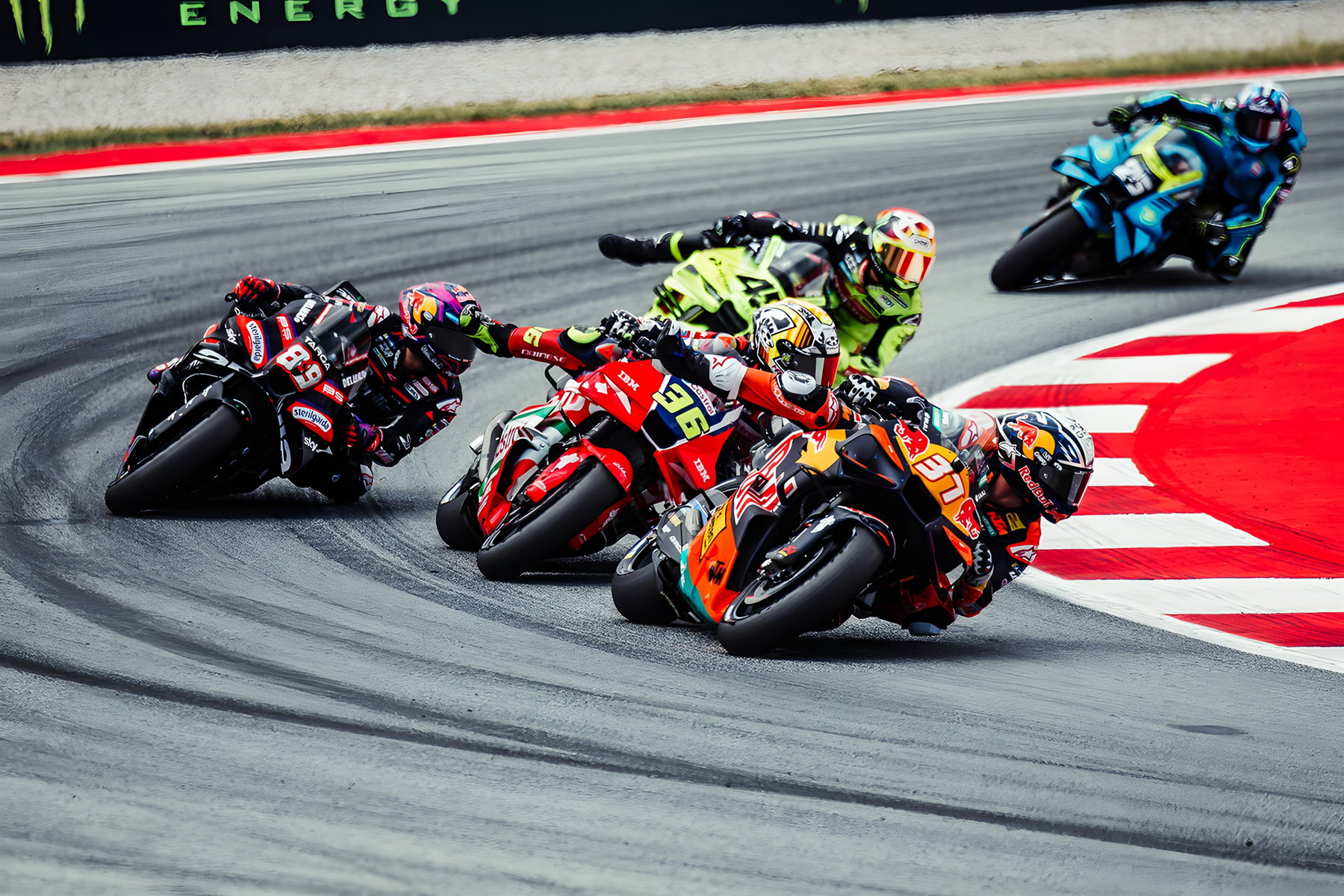
Even more significant would be the consequences of crashes. If a rider damages their only machine during practice or qualifying, the session could potentially be over for them. The recent Catalan Grand Prix provides a vivid example: Fabio Di Giannantonio won the race on his second motorcycle after his first machine was damaged before the initial race stoppage. Pedro Acosta also took part in the restarted race on his spare machine because a technical problem had occurred on his first motorcycle before the red flag. Both scenarios would not have been possible under the new rule.
What Happens with Flag-to-Flag Races If Only One Motorcycle Is Allowed?
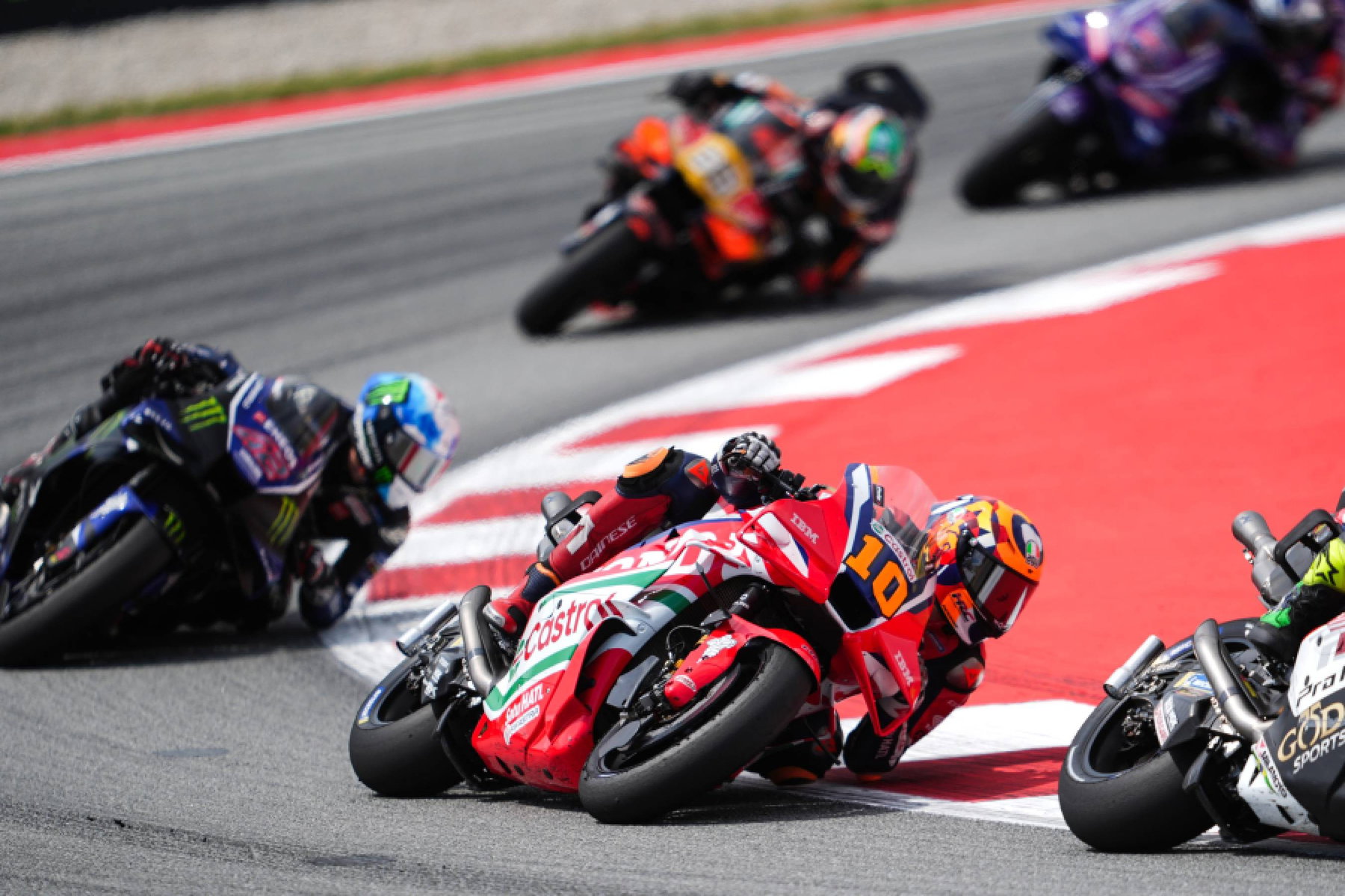
This question is one of the most critical points of the entire discussion. Since the 2006 Australian Grand Prix, riders have been able to ride into the pit lane during changing weather conditions and switch to a second motorcycle with appropriate tire equipment within approximately three seconds. This system has worked for nearly 20 years and produced some of the most memorable races in MotoGP history.
With only one motorcycle, this procedure would no longer be feasible. MotoGP would instead have to switch to an alternative model. Two examples from other series are being debated: either a return to the old system where races under changing conditions are stopped with a red flag and restarted, or the introduction of pit stops with tire changes modeled on the Superbike World Championship. In WorldSBK, flag-to-flag races require a minimum pit stop time during which mechanics change the tires.
How Do Other Motorsport Series Handle the Question of Spare Vehicles?
With its two-motorcycle rule, MotoGP is actually a special case in international motorsport. Both in Moto2 and Moto3, racing has been conducted with just one motorcycle per rider since 2010. In the Superbike World Championship, each rider officially has only one machine available as well, although a spare motorcycle without homologation is kept in the garage or truck. This may only be used after approval from the technical directorate if key components such as the frame are irreparably damaged. Once the spare motorcycle has been deployed, the rider may not switch back to their primary machine for the remainder of the weekend.
Formula 1 has already taken a comparable step: before the 2008 season, so-called T-cars were abolished — the spare vehicles that had previously been available at every race. There too, cost reduction was the primary reason.
However, there is a significant difference between Formula 1 and MotoGP: the frequency and severity of crashes in motorcycle racing is considerably higher than in car racing. Chain reactions in mass crashes, where uninvolved riders are hit by flying debris, are not uncommon. A complete ban on spare machines following the F1 model therefore appears hardly practicable in MotoGP. The WorldSBK model with a hidden reserve that can be released after inspection is considered a far more likely solution.
When Could the New Rule Come into Effect?
Since this is a change to the sporting regulations, the proposal must go through the appropriate voting procedures and be approved by the Grand Prix Commission. GPOne also reports that such a rule change would require unanimity among the manufacturers. Given the already tense negotiating situation surrounding the new Concorde Agreement, the outcome is currently completely open.
A similar initiative had already failed in 2020. At that time, Ducati had proposed reducing the number of motorcycles to one per rider during the coronavirus pandemic. All five other manufacturers rejected the idea, however. Whether the situation is different six years later remains to be seen.
The discussion falls into a phase in which Liberty Media, as the new owner of the commercial rights to MotoGP, has already initiated several changes, including the introduction of street circuits and a convergence of satellite teams with factory teams. The planned single-motorcycle rule fits into these reform efforts but is particularly controversial due to its far-reaching consequences for sporting operations.
Frequently Asked Questions
-
Why should only one motorcycle per rider be allowed in MotoGP from 2027?
The manufacturers introduced the proposal as part of the negotiations for the new Concorde Agreement (2027 to 2031). The primary goal is reducing costs, partly through fewer technical personnel in the teams. The exact savings cannot yet be quantified.
-
What happens during rain races without a second motorcycle?
Flag-to-flag races in their current form, where riders switch to a prepared spare motorcycle within three seconds, would no longer be possible. Alternatives include pit stops with tire changes modeled on the Superbike World Championship or a return to race stoppages via red flag during changing conditions.
-
Do other motorsport series already have a single-motorcycle rule?
In Moto2 and Moto3, racing has been conducted with just one motorcycle per rider since 2010. In the Superbike World Championship, each rider officially has only one machine as well, though a spare can be used after approval from the technical directorate. Formula 1 abolished spare vehicles before the 2008 season.
-
Has such a proposal been discussed in MotoGP before?
Ducati proposed reducing to one motorcycle per rider during the coronavirus pandemic in 2020. The other five manufacturers rejected the idea at that time. Whether the proposal will find more support this time depends on the course of the current negotiations.
➜ More on this topic in our overview: 2027 MotoGP Season: The Complete Overview.
➜ This article is part of our comprehensive overview: MotoGP 2026 Season: The Complete Overview – Teams, Riders, Calendar & Standings. Find all key information on this topic in one place.