- Patents reveal what Honda, Yamaha, BMW, KTM, Kawasaki, Aprilia and CFMoto are working on behind closed doors
- Key areas: forced induction (E-compressor, E-turbo), alternative powertrains (electric, hydrogen, hybrid), safety systems (airbags, automatic evasion) and aerodynamics
- Not every patent becomes reality – but every patent reveals a strategic direction
- This page is updated regularly as new patents are published
Motorcycle patents are a window into the future. Months or years before new technology hits the market, the first clues appear in patent filings. Some become production technology, others remain thought experiments – but all reveal the direction manufacturers are heading.
This page is the central hub for all patents and future technologies covered on Motorcycles.News. Here you’ll find the most important developments sorted by topic, with links to our detailed individual reports. This page is updated whenever new patents are published.
Forced Induction: Turbo, Supercharger and E-Boost
Kawasaki proved with the H2 series that forced induction works on motorcycles. Now competitors are following suit – but with different approaches. Honda uses a fully electric compressor in the V3R, Yamaha is working on an E-turbo that combines classic exhaust gas turbine technology with an electric motor, and KTM has patented a hybrid compressor that combines mechanical and electric drive.
Yamaha E-Turbo
Yamaha has filed a patent for an electrically assisted turbocharger. The system combines a conventional exhaust gas turbine with an electric motor that drives the compressor at low engine speeds – completely eliminating turbo lag. Back in 2020, Yamaha showed a three-cylinder prototype with 847 cc and 180 hp. The E-turbo technology could make this concept production-ready.
→ Yamaha E-Turbo: Patent Shows Electrically Assisted Turbo Technology
KTM Electric Compressor
KTM has patented a hybrid compressor that combines mechanical and electric supercharging. Unlike Honda’s fully electric compressor in the V3R, KTM’s system is driven by both the crankshaft and an electric motor. This is designed to save weight because a smaller battery is sufficient. According to the patent, the technology is initially intended for a single-cylinder enduro engine.
→ KTM Patent: Electrically Assisted Compressor for Motorcycles
Alternative Powertrains: Electric, Hydrogen and Hybrid
The motorcycle industry stands at a crossroads between combustion engines and electric motors. Patents from major manufacturers show that both worlds will coexist for a long time – and that intermediate solutions like hydrogen and range extenders are also in the race.
Kawasaki Hydrogen Motorcycle
Kawasaki is working on a hydrogen motorcycle based on the H2 four-cylinder engine. The latest patent shows a further development with four pressure tanks (instead of two) to double the range. The concept is considered a technology demonstrator – series production is unlikely due to the lack of refueling infrastructure and enormous dimensions.
→ Kawasaki Hydrogen Motorcycle Gets Two Additional Tanks
KTM Range Extender
KTM takes a pragmatic approach to the range problem of electric motorcycles: a modular add-on package mounted like a top case at the rear can contain either a small combustion engine, a fuel cell, or additional batteries. This would allow the range to be extended depending on the intended use.
→ KTM Develops Range Extender for Electric Motorcycles
Honda: Simple E-Motorcycle for Price-Conscious Markets
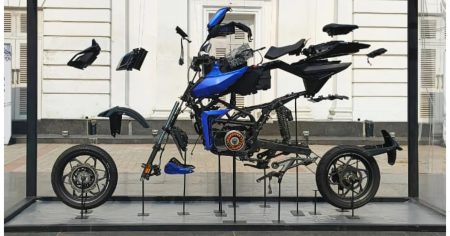
Not all patents aim for high-end technology. Honda shows a deliberately simple electric motorcycle in a patent: steel frame, drum brake at the front, removable battery – aimed at markets like India and Africa, where low costs matter more than peak performance.
→ Honda Patent: Simple, Affordable Electric Motorcycle
→ New Honda Electric Motorcycle Combines Scooter and Cruiser
→ Honda Working on Electric Superbike: Fireblade in E-Format
CFMoto Electric Sports Bike
CFMoto is working on a lightweight electric sports motorcycle where the battery serves as a load-bearing element of the chassis. The patent shows an advanced version of an earlier concept with a focus on weight reduction and compact design.
→ CFMoto Patent: Electric Sports Bike with Load-Bearing Battery
→ CFMoto Working on Electric Supersport
Yamaha: “Fake Engine” for Electric Motorcycles
An unusual approach from Yamaha: a patent describes a replica of a combustion engine built into an electric motorcycle. The unit generates vibrations and sounds to simulate the riding feel of a conventional engine – including intake and exhaust noises via resonators.
→ Yamaha Patent: “Fake Engine” for Sound and Vibration on E-Motorcycles
→ Yamaha Plans Powerful Electric Motorcycle
Safety: Airbags, Evasion Systems and Active Suspension
Motorcycles are becoming safer – but the challenge is far greater than with cars. No crumple zone, no seatbelt, no fixed passenger cell. Patents from Honda and Yamaha show how driver assistance systems could be transferred from cars to motorcycles.
Honda: Automatic Evasion System
Honda has patented a system that actively steers motorcycles away from impending collisions. A camera monitors the blind spot, a control unit evaluates the data and intervenes – either supportively or autonomously – in the steering. The patent distinguishes between two scenarios: if the rider is already reacting, the system reinforces the steering movement. If not, it steers away on its own.
→ Honda Patents Automatic Evasion System for Motorcycles
Yamaha: Airbag Sensor Technology for Motorcycles
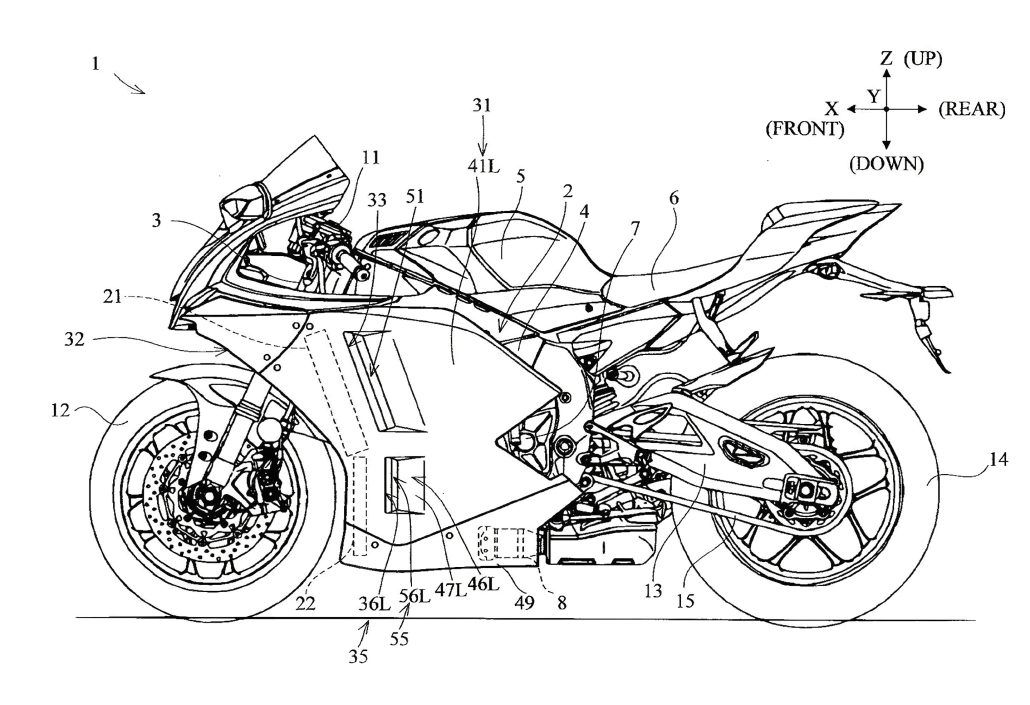
Yamaha is working on improved sensor technology for motorcycle airbags. Two acceleration sensors – one in front of and one behind the center of gravity – detect three-dimensional movements and identify a collision in fractions of a second. The patent drawings show both the YZF-R1 and the Tricity three-wheel scooter as reference models.
→ Yamaha Develops Airbag Technology for Motorcycles
→ Autoliv Develops Shaped Airbags for Motorcycles
Aerodynamics: Flettner Rotors, Winglets and Active Systems
Aerodynamics has been a central development topic since the first winglets appeared in MotoGP. Patents show that manufacturers are thinking far beyond classic winglets – toward active systems that vary downforce depending on the riding situation.
BMW Flettner Rotors
BMW has patented rotating cylinders (Flettner rotors) as an alternative to winglets. The rotors use the Magnus effect: a rotating cylinder generates lift or downforce in airflow. Unlike fixed winglets, the effect can be infinitely adjusted via rotation speed (50,000–100,000 rpm) – and completely deactivated when not needed. Up to five rotors are planned at various positions.
→ BMW Flettner Rotors: Rotating Aerodynamic Elements for Motorcycles
→ Honda Patent: New Rear Aerodynamics
Aprilia Leg Wings
Aprilia is transferring MotoGP aerodynamics to the street: patents show so-called leg wings – aerodynamic elements in the area of the rider’s legs. This technology comes directly from racing, where Aprilia already uses it on the RS-GP.
→ Aprilia Patent: Leg Wings for Street Motorcycles
→ Aprilia Patents Reveal Unpublished MotoGP Aerodynamics
→ Yamaha R1: Patent Shows Active Cooling Air Outlets
Chassis and Suspension: Variable Geometry, Carbon and New Concepts
Modern motorcycles benefit from electronics in chassis and suspension. Patents show the next level: actively adjustable swingarms, anti-dive electronics and carbon frames without a separate swingarm.
Yamaha: Variable Swingarm
Yamaha has patented a swingarm with variable geometry that can adjust traction and cornering behavior depending on the riding situation. The technology enables the power transmission at the rear wheel to be electronically influenced.
→ Yamaha Patent: Swingarm with Variable Geometry
→ Yamaha: Variable Exhaust Direction Influences Handling
BMW Carbon Frame with Integrated Swingarm
BMW is pushing carbon construction to the extreme: a patent shows a one-piece carbon frame in which the swingarm is directly integrated – without a mechanical connection. If this technology goes into production, the successor to the HP4 Race would be the most likely candidate.
→ BMW Patent: Carbon Frame with Integrated Swingarm
Zongshen: Hub-Center Steering with Servo Assistance
Chinese manufacturer Zongshen is working on a novel hub-center steering system with servo drive, based on the Cyclone RA1000. This design could challenge traditional telescopic fork systems.
→ Zongshen: Hub-Center Steering with Servo Assistance
Engine and Transmission: Pre-Chamber Ignition, V4 Comeback and Semi-Automatic
Research on the classic combustion engine continues. Patents show more efficient combustion processes, new engine configurations and semi-automatic transmissions.
Honda: New Engines and Combustion Technology
Honda has filed a patent for a pre-chamber ignition system, similar to those used in Formula 1. A small pre-chamber in front of the main combustion chamber ignites an extremely lean mixture through multiple flame channels. The result: higher efficiency with the same or lower fuel consumption. Additionally, patents point to a comeback of the V4 engine – a possible precursor to a new VFR.
→ Honda Patent: Four-Cylinder Adventure Motorcycle
→ Honda V4 Engine: Signs of a VFR Comeback
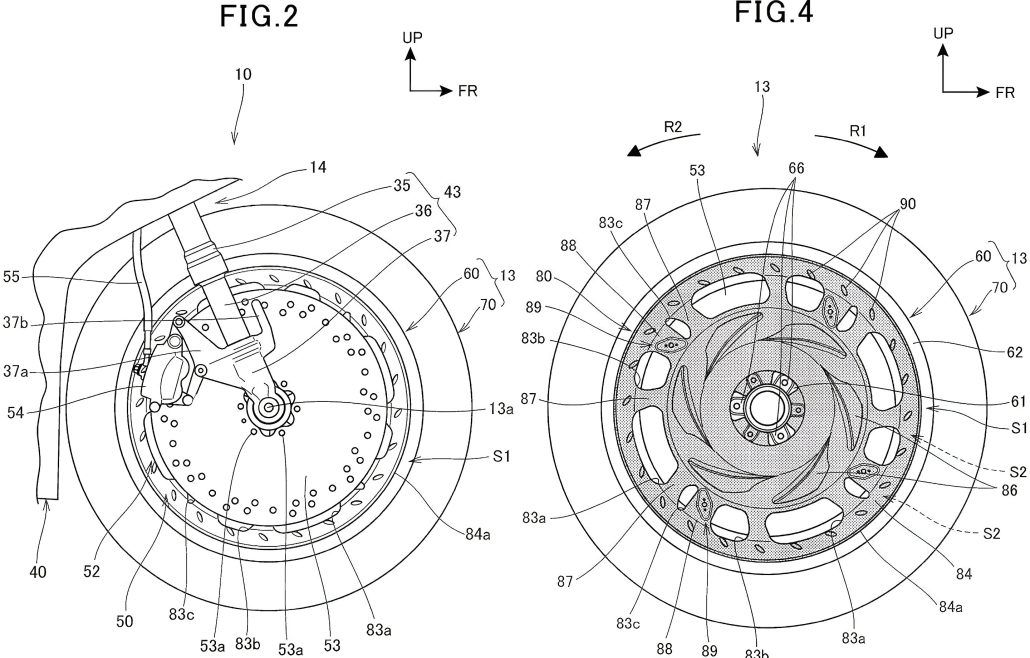
→ Honda: Novel Brake and Rim Design
Yamaha: Simplified Semi-Automatic Transmission
Yamaha is working on a semi-automatic transmission that is simpler and lighter than existing systems (such as Honda’s DCT). The technology could make motorcycle riding more accessible without completely replacing manual shifting.
→ Yamaha: Simplified Semi-Automatic Transmission
→ KTM Plans Semi-Automatic Transmission for Super Duke Models
→ Ducati: Automated Clutch for Street and Track
→ Honda CB1000R with E-Clutch
Design and Curiosities
Not every patent changes the world – some raise eyebrows more than expectations. But even these entries show what’s on manufacturers’ minds.
BMW Logo Screws
BMW has patented screws whose drive profile consists of the BMW logo. A special tool is required to loosen them. DIY mechanics are unlikely to be thrilled – access to certain components would be restricted. Whether the idea will ever go into production is questionable.
→ BMW Patents Screws with Logo Profile
Overview: Key Motorcycle Patents by Manufacturer
| Manufacturer | Technology | Category |
|---|---|---|
| Honda | Automatic Evasion System | Safety |
| Honda | E-Motorcycle for Budget Markets | Electric |
| Honda | Electric Fireblade | Electric |
| Honda | V4 Engine (VFR Comeback) | Engine |
| Yamaha | E-Turbo | Forced Induction |
| Yamaha | Airbag Sensors | Safety |
| Yamaha | Fake Engine for E-Motorcycles | Electric |
| Yamaha | Variable Swingarm | Chassis |
| Yamaha | Semi-Automatic Transmission | Transmission |
| BMW | Flettner Rotors | Aerodynamics |
| BMW | Carbon Frame with Integrated Swingarm | Chassis |
| BMW | Logo Screws | Design |
| KTM | Electric Compressor | Forced Induction |
| KTM | Range Extender | Electric |
| Kawasaki | Hydrogen Motorcycle | Alternative Powertrains |
| Kawasaki | Hybrid Architecture | Hybrid |
| Aprilia | Leg Wings | Aerodynamics |
| CFMoto | E-Sports Bike with Load-Bearing Battery | Electric |
| Ducati | Automated Clutch | Transmission |
| Zongshen | Hub-Center Steering | Chassis |
Understanding Patents: What Do They Really Mean?
A published patent is not a product announcement. Manufacturers often file ideas as a precaution to secure intellectual property – regardless of whether they will ever use the technology. Some patents serve exclusively to block competitors or to document a technological lead.
At the same time, patents are the best publicly available indicator of strategic directions. When a manufacturer files detailed patents on a specific technology – often with specific part numbers and reference models – there is usually serious development work behind it.
Rule of thumb: The more detailed a patent and the closer it is to existing models, the more likely a production introduction. The more visionary and abstract a concept is described, the more likely it is a long-term idea or defensive filing.


- S100 2018S100 2018, Felgenreiniger – 500 ml male


Redakteur bei Motorrad Nachrichten. Fokus auf Technik, Szene und Motorradpolitik – neutral, sachlich, verständlich.
Verantwortlich für die Seiten www.Motorcycles.News, www.Motorrad.Training und den YouTube-Kanal "Motorrad Nachrichten", sowie deren social Media-Seiten.