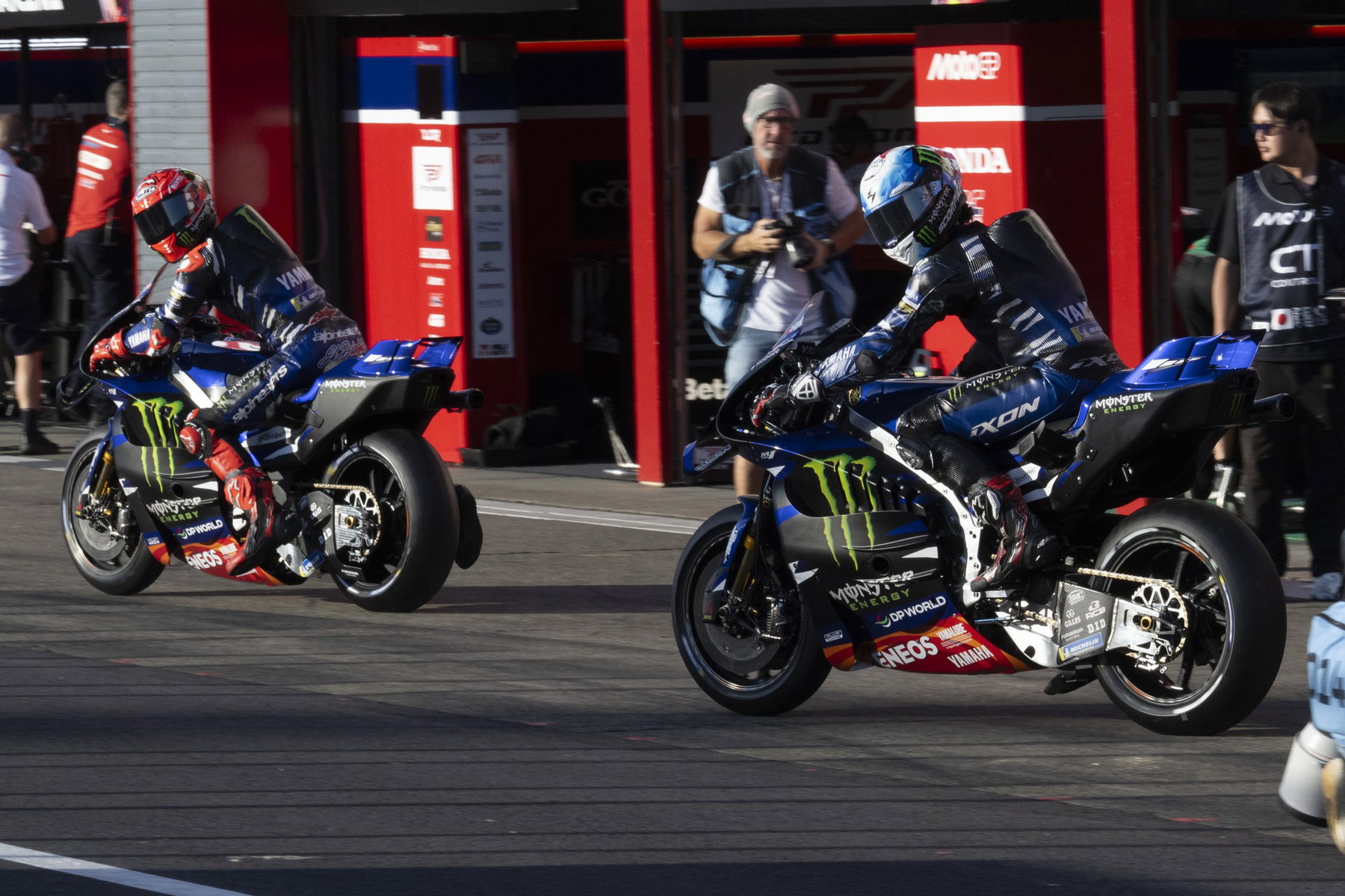
- By Pavesio’s count, the five MotoGP manufacturers carry 70 percent of all investment in the championship.
- He considers the new 850cc bikes from 2027 the right move: still extreme, but a little more human.
- New races should take place where there is a motorcycling culture, such as Goiânia rather than Balaton.
Paolo Pavesio is Managing Director of Yamaha Motor Racing, which makes him the man in charge of the Japanese manufacturer’s MotoGP programme. He spent 24 years at Yamaha before succeeding Lin Jarvis, and his background is in marketing. It is precisely this mix that makes his view of the new MotoGP interesting. Since taking over last year, Formula 1 owner Liberty Media wants to change how the motorcycle world championship presents itself and how much appeal it has. More races close to major cities, the end of wildcard riders from 2027 and a separate starting grid for the Sprint are among the steps that have already been decided or are in the works. Pavesio says he is in favour of progress and change. But it has to be well thought through and part of a clear plan that also brings the long-standing fans along.
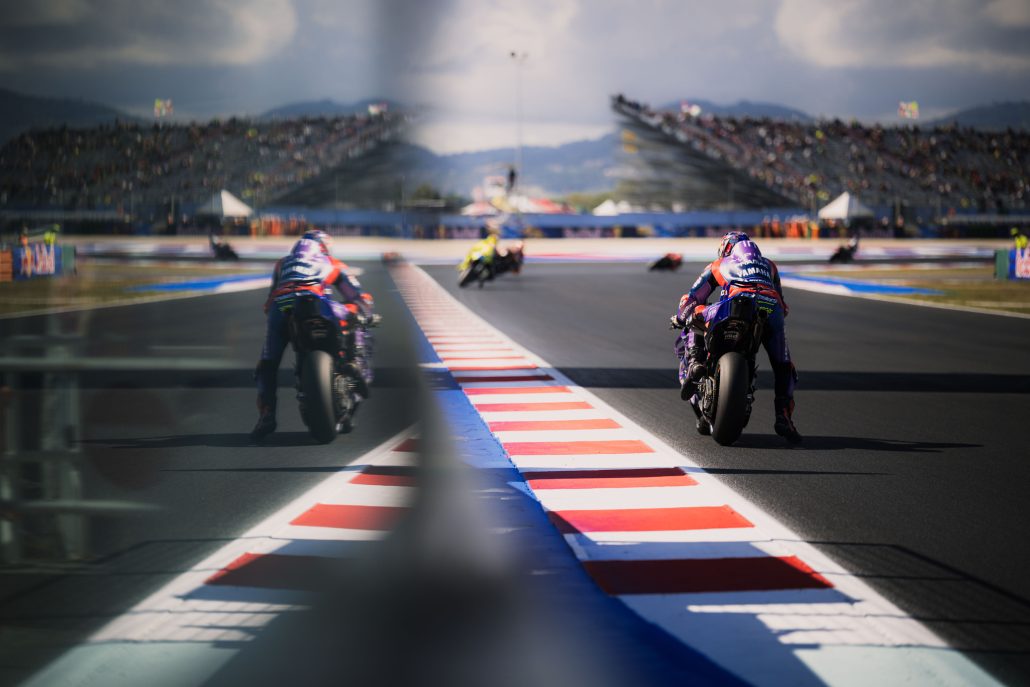
What has changed in MotoGP under Liberty Media?
On paper, mainly the structure; in day-to-day business, less so far than many had expected. Pavesio describes it like this: Liberty Media acquired a majority stake in Dorna, which led to the creation of the MotoGP Sports Entertainment Group. The previous Dorna leadership around Carmelo and Carlos Ezpeleta remains on board, joined by several new board members. Above them sits Derek Chang as president of the holding company that controls both Formula 1 and MotoGP.
For Pavesio, this is not a new company suddenly calling the shots, but a new structure with a great deal of continuity. There are changes in some areas. But anyone who expected someone to open a magic bottle and turn everything upside down overnight was being unrealistic. Perhaps, Pavesio adds, that is not even necessary.
The manufacturers have nevertheless committed for the long term. In mid-June, Aprilia, Ducati, Honda, KTM and Yamaha signed a new agreement running until the end of 2031. This means all five factories will remain in MotoGP for at least five more years. Pavesio says both sides initially needed months to size each other up. Now the goal is to work with Liberty and Dorna to build something of greater value. For him, that includes choosing the right countries and making sure every race weekend becomes an experience worth attending.
Why is MotoGP not a second Formula 1 for Pavesio?
The most important difference is money: in MotoGP, the biggest investments come from the motorcycle manufacturers themselves. Pavesio calculates that the five factories carry 70 percent of the total spending in the championship. The purpose behind it is clear to him.
“E perché lo facciamo? Per vendere le moto. Quindi, noi dobbiamo stare attenti.”
Translated: “And why do we do it? To sell motorcycles. That’s why we have to be careful.”
Of course Yamaha would be glad if it cost a little less, Pavesio admits. But he sees the spending as an investment, and what matters is that the sport grows as a whole. This is exactly where he sees an advantage over Formula 1. New Formula 1 viewers do not go out and buy a Ferrari, a McLaren or an Alpine as a result. In MotoGP, on the other hand, new fans can actually become customers. After all, Yamaha also builds scooters that people use to get around in everyday life. If new people come on board, they could make the audience younger and at the same time drive the manufacturers’ business forward.
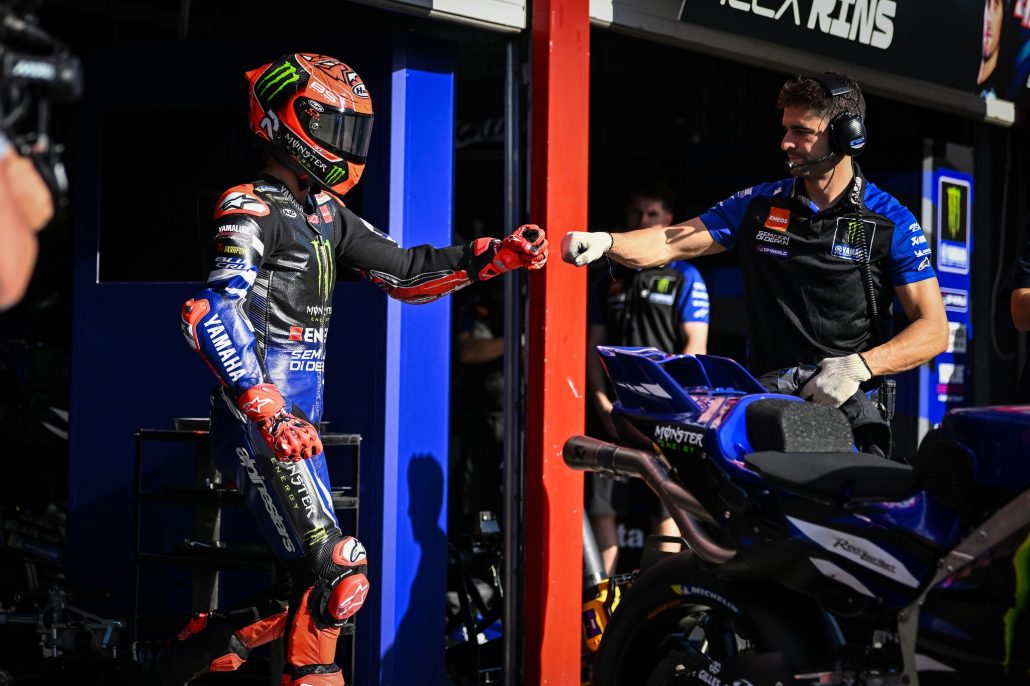
What can MotoGP learn from Formula 1?
Pavesio sees Formula 1 under Liberty Media as an economic role model, but not as a blueprint for MotoGP’s character. He got a sense of this at the Italian Grand Prix in Monza, which he attended thanks to Liberty Media. There he spoke with, among others, two Formula 1 team principals, both engineers. He noticed that people in MotoGP talk about motorsport. In Formula 1, by contrast, they talk about a business that runs through motorsport. That, he says, is no small difference.
At the same time, he acknowledges what Formula 1 has achieved. The series is now almost self-sustaining, several big teams make a profit every year, and its value has multiplied. He cites the budget cap, better marketing of the championship and a business around the series that cannot be compared with that of ten years ago as the reasons. Had today’s crisis in the car industry hit the Formula 1 of back then, it would probably have forced half the teams to quit, in his estimation.
What makes him optimistic above all is how Liberty Media approaches the matter. Unlike pure financial investors who buy, clean up and sell again, Liberty has experience in sports entertainment. The company buys in order to build a product that makes money. But MotoGP does not necessarily have to become a fad for that. Pavesio describes it as a different sport from Formula 1, one in which the rider is more at the centre because he does more dangerous and more extreme things. Only when the audience grows in a healthy way and the numbers add up for the manufacturers should lessons from Formula 1 play a bigger role. If it then also succeeds in turning the teams into assets that generate revenue and profit, as in Formula 1, all the better.
Why is Yamaha warning against losing the existing fans?
Because MotoGP lives above all from motorcycle fans, and for Pavesio they are the core of the whole thing. He puts his central warning like this:
“Dobbiamo stare attenti a non evolvere questo sport a un punto tale per cui i nostri appassionati non ci si riconoscano più e si perdano.”
Translated: “We have to be careful not to change this sport so much that our fans no longer recognise themselves in it and get lost.”
Before talking about changes, it must be clear what they are for and what needs to be protected. The manufacturers race to connect with their fans and ultimately to sell motorcycles. The old formula of win on Sunday, sell on Monday no longer applies one to one today. But a strong brand sells more or sells better. A Japanese colleague always tells him that building the brand is the goal and racing is the means to get there. For Pavesio, there are further benefits: racing helps develop new technology, serves as a school for the company’s own technicians and teaches a lot about organisation and how to deal with difficult phases.
For him, two things follow from this. The current fan base must not be neglected, while at the same time the effort must go into attracting new viewers. Today it is mainly motorcycle fans who watch motorcycle racing. In some regions, enthusiasm for motorcycles is waning. New fans would bring more viewers in front of the TV and at the track, and perhaps some of them would then consider buying a motorcycle of their own. Focusing only on entertainment, on the other hand, is a risk in Pavesio’s view. That is how he explained his perspective as a manufacturer to MotoGP’s new leadership.
A look into his office shows how he himself thinks about tradition. There stands a 500cc bike from 2002, stripped down to frame, engine, wheels and exhaust. He could look at it for hours, says the 54-year-old. But that is the past, and he probably likes it so much precisely because of his age. One floor below stands Giacomo Agostini’s motorcycle with drum brakes, which would probably have meant even more to his grandfather. His conclusion:
“L’evoluzione delle cose non deve farci paura se la governiamo con un’idea e una strategia chiara e condivisa.”
Translated: “The evolution of things does not have to frighten us if we steer it with a clear and shared idea and strategy.”

Which circuits belong on the MotoGP calendar in Pavesio’s opinion?
Pavesio wants to race above all where there is a real motorcycling culture and where the industry can grow. Races in growth markets such as Southeast Asia or South America attract many fans and can strengthen motorcycle sales and the standing of the sport there in the medium term.
As a counterexample, he names Balaton in Hungary. The problem is not that the circuit isn’t nice. Had the crowds been big and had there been passion for MotoGP or for motorcycles, compromises could be made elsewhere. But there is no motorcycling culture there, so MotoGP cannot grow in that location.
Goiânia in Brazil, on the other hand, has Pavesio’s 100 percent support, in his own words, despite all the problems there. The enthusiasm for MotoGP is palpable and the motorcycle industry is growing. According to his observation, spectators came for MotoGP and not just for Diogo Moreira. Some even travelled from Argentina on their own motorcycles because there is no longer a race in their home country.
How does Pavesio rate the new 850cc MotoGP from 2027?
He considers the technical step the right one, because the bikes remain extreme but become a little more human. From the 2027 season, displacement drops from 1000 to 850cc, and Pirelli becomes the new tyre supplier. This downsizing, however, was already planned before Liberty Media came on board.
Pavesio expects the show to benefit and motorcycle fans to still experience the new machines as extreme and entertaining. Individual systems, their introduction or their ban can still be discussed afterwards. In principle, he sees it as positive if the bikes can be built without getting into a technical arms race with absurd budgets that does nothing for the show.
With that, Yamaha’s racing boss is preparing for the fresh start that will shape the whole of MotoGP in 2027: new bikes, new tyres and a separate starting grid for the Sprint. For Yamaha, there is an additional task of its own. Pavesio stresses that, amid all the debate about the championship’s future, it must not be forgotten that Yamaha itself has to move further forward again, on the grid and at the end of the races.
Frequently Asked Questions
-
What does Pavesio say about Liberty Media?
Paolo Pavesio views Liberty Media positively in principle and believes the company can add value to MotoGP. However, he warns against changing the sport so much that existing fans no longer recognise themselves in it. In his view, change should be steered wisely and implemented with a shared strategy.
-
How much do the manufacturers invest in MotoGP?
By Pavesio’s count, the five MotoGP manufacturers carry 70 percent of the total investment in the championship. Their goal is to sell motorcycles through racing. He sees this as the biggest difference from Formula 1.
-
Who is Paolo Pavesio?
Paolo Pavesio is Managing Director of Yamaha Motor Racing and is therefore responsible for Yamaha’s MotoGP programme. He spent 24 years at Yamaha before succeeding Lin Jarvis. Professionally, his background is in marketing.
-
What changes in MotoGP in 2027?
From 2027, MotoGP bikes will run with 850 instead of 1000cc displacement and on Pirelli tyres. In addition, wildcard entries will be dropped and the Sprint is set to get its own starting grid. Pavesio considers the technical reset the right move because the bikes remain extreme but become a little more human.
➜ This article is part of our comprehensive overview: 2027 MotoGP Season: The Complete Overview – Teams, Riders, Calendar and the New 850cc Rules. Find all key information on this topic in one place.