- For the first time in MotoGP history, all five manufacturers have signed a joint agreement
- Fixed annual payment of around 8 million euros (approximately 9.2 million US dollars) per team instead of percentage-based revenue sharing
- Contract runs until 2031 with an option to extend until 2036
- Formal announcement planned for Friday at the Grand Prix in Brno
What had been the biggest political issue in the premier class of motorcycle racing for over a year is now settled as of the Czech Republic GP. The five manufacturers competing in MotoGP and the series promoter, the MotoGP Sports Entertainment Group (MGPSEG, formerly Dorna), have agreed on a commercial framework agreement. In paddock terminology, the contract is referred to as the “Concorde Agreement,” named after the similar agreement in Formula 1. It is the first time in World Championship history that all constructors have signed a unified contract for the next five years.
Why did the negotiations take over a year?
The negotiations dragged on significantly longer than either side had originally planned. A key reason was the strategy of the manufacturers’ association MSMA, which recognized the current moment as a unique opportunity to secure maximum concessions. For the first time, the five manufacturers presented a united negotiating front, led by MSMA President Massimo Rivola, CEO of Aprilia, and Lin Jarvis, former Managing Director of Yamaha.
At its core, the dispute revolved around how the championship’s revenues would be distributed in the future. Manufacturers and teams demanded a percentage share of the series’ total revenues, comparable to the Formula 1 model, which is also owned by Liberty Media. The argument: those who invest hundreds of millions in development should share in the platform’s economic success while being motivated to contribute to its growth.
For Carmelo Ezpeleta, CEO of MGPSEG, and his son Carlos Ezpeleta, the sporting director, this was a red line. A variable revenue share would have given the manufacturers significantly more influence over the championship in the long term, similar to what Formula 1 experienced in the 2000s when automobile manufacturers politically dominated the series.
The negotiations escalated several times during the 2026 season. At the Spanish Grand Prix in Jerez in April, several teams failed to attend an event organized by the promoter to attract sponsors and media partners. This boycott illustrated how entrenched the positions had become. At the United States Grand Prix in Austin, a summit meeting with Liberty Media leadership under CEO Derek Chang followed, but also ended without a result.
What does the financial agreement look like?
In the end, no percentage-based model prevailed. Instead, the parties agreed on a fixed annual payment of around 8 million euros (approximately 9.2 million US dollars) per team, divided across several compensation categories. Compared to the previous contract, this represents an increase of about one million euros. The previous payments to the eleven teams totaled around 70 million euros per season.
The agreement in principle was reached at the Hungarian Grand Prix at Balaton Park two weeks ago. The formal signing took place ahead of the Czech Republic GP in Brno, where the official press conference is scheduled for Friday. The contract also includes an option to extend the key provisions until 2036.
What changes does the agreement bring for the teams?
In addition to the financial regulations, the agreement also includes operational requirements, some of which are set to take effect as early as 2027. MGPSEG and Liberty Media are requiring teams to significantly strengthen their communications and marketing departments. This area is seen as strategically crucial for the continued growth of the championship.
Among the discussed innovations is the reduction to one motorcycle per rider. Previously, each MotoGP rider had two machines at their disposal. Furthermore, from 2027 there will no longer be a formal distinction between factory teams and independent teams, similar to the Formula 1 model. Independent teams could commission their own rolling chassis from specialized companies such as Suter Industries or Kalex Engineering and equip them with leased 850cc engines. A concept reminiscent of the early days of the four-stroke era in MotoGP from 2002, when for example Team Roberts built their own motorcycles with purchased engines.
However, some details of the agreement are still being finalized, particularly regarding the specific obligations of teams from the upcoming season. The basic agreement serves as a framework contract, on the basis of which independent teams will subsequently sign their own contracts.
What does the agreement mean for the 2027 rider market?
The agreement ends months of standstill on the rider market. Numerous contracts for 2027 are said to have been signed since spring but could not be officially announced without the commercial framework agreement. The teams had agreed not to make any rider signings public as long as the economic framework conditions were unresolved.
So far, only one transfer for 2027 is official: Marco Bezzecchi extended his contract with Aprilia. According to consistent reports from several international specialist media outlets, numerous further announcements are expected in the coming days. The expected moves reportedly include Marc Marquez extending his contract with Ducati, Pedro Acosta joining the Ducati factory team, Francesco Bagnaia moving to Aprilia, Jorge Martin transferring to Yamaha, and Fabio Quartararo switching to Honda.
If these rumors are confirmed, Ducati would field one of the strongest rider pairings in recent MotoGP history in 2027 with Marc Marquez and Pedro Acosta. At Aprilia, Bezzecchi and Bagnaia, two close friends and former rivals, would be reunited.
What role does Ducati play in MotoGP’s future?
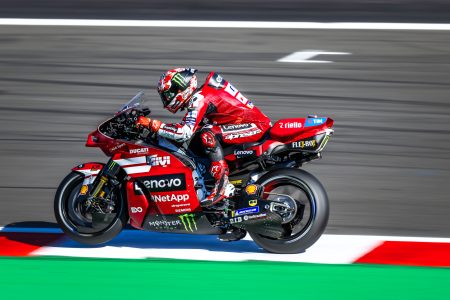
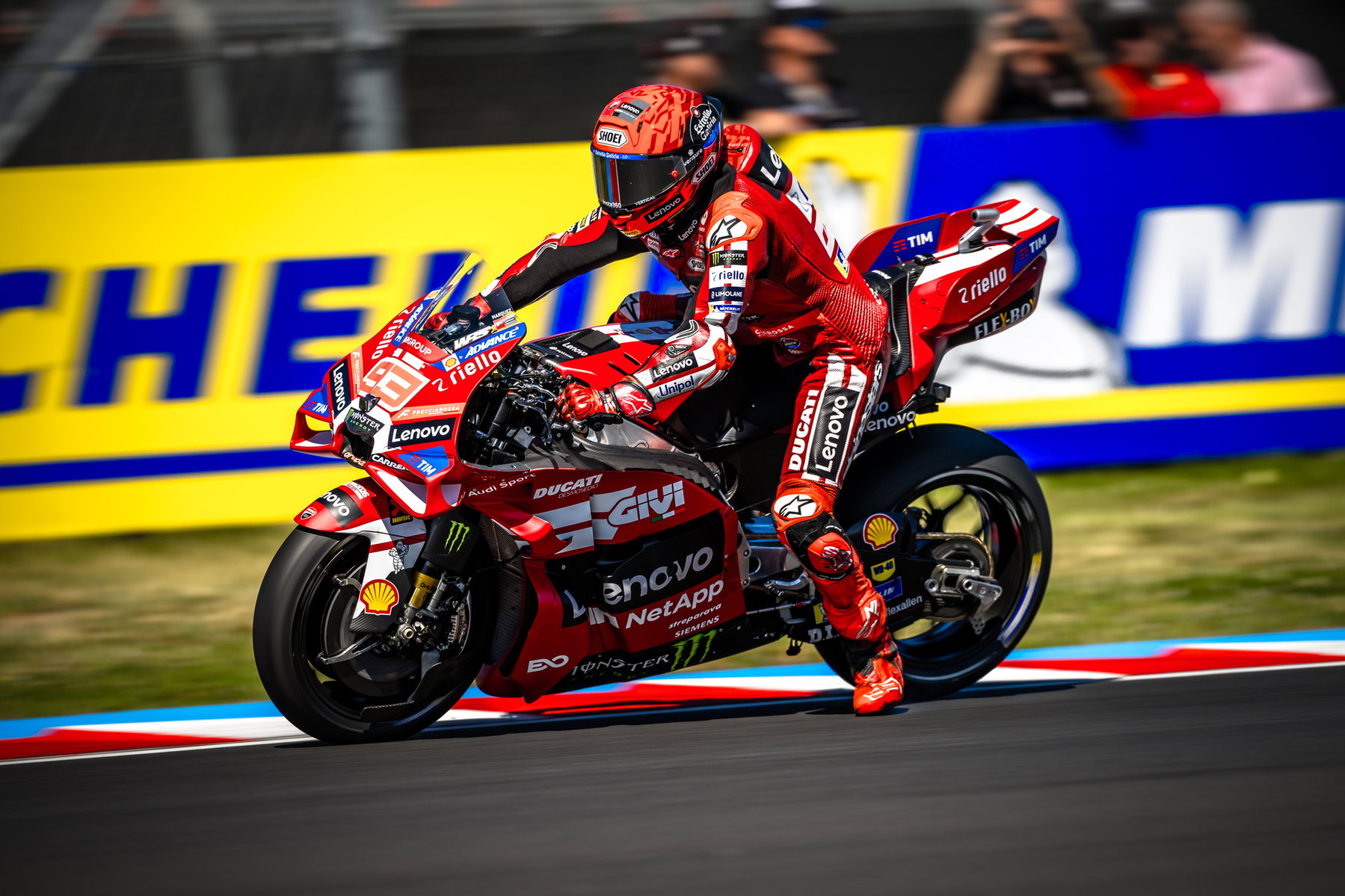
Ducati welcomed the signing of the agreement in its own press release. With the new contract, Ducati as a manufacturer will complete at least 29 consecutive seasons in the MotoGP World Championship. The track record of the Ducati Desmosedici GP to date includes 430 race starts, 126 victories, 121 pole positions, 127 fastest race laps, and 365 podium finishes.
Claudio Domenicali, CEO of Ducati, put the commitment into perspective: “Racing has always been at the core of Ducati’s DNA and remains a key driver for innovation, technological development and brand strength.” He said that motorsport was the natural path for Ducati given the extraordinary results of recent seasons. Domenicali emphasized that competition was constantly increasing, and that was precisely what made the championship so unique.
Luigi Dall’Igna, General Manager of Ducati Corse, described the joint agreement of all manufacturers as a significant milestone. He spoke of competing fiercely against each other on track but having agreed on a successful future for MotoGP off it. “This agreement provides stability and a clear direction for the years ahead, creating the right environment for manufacturers to continue investing in technology, performance and talent,” said Dall’Igna. The joint commitment of all five manufacturers would ensure that MotoGP remains the highest expression of motorcycle racing.
What technical changes are coming to MotoGP in 2027?
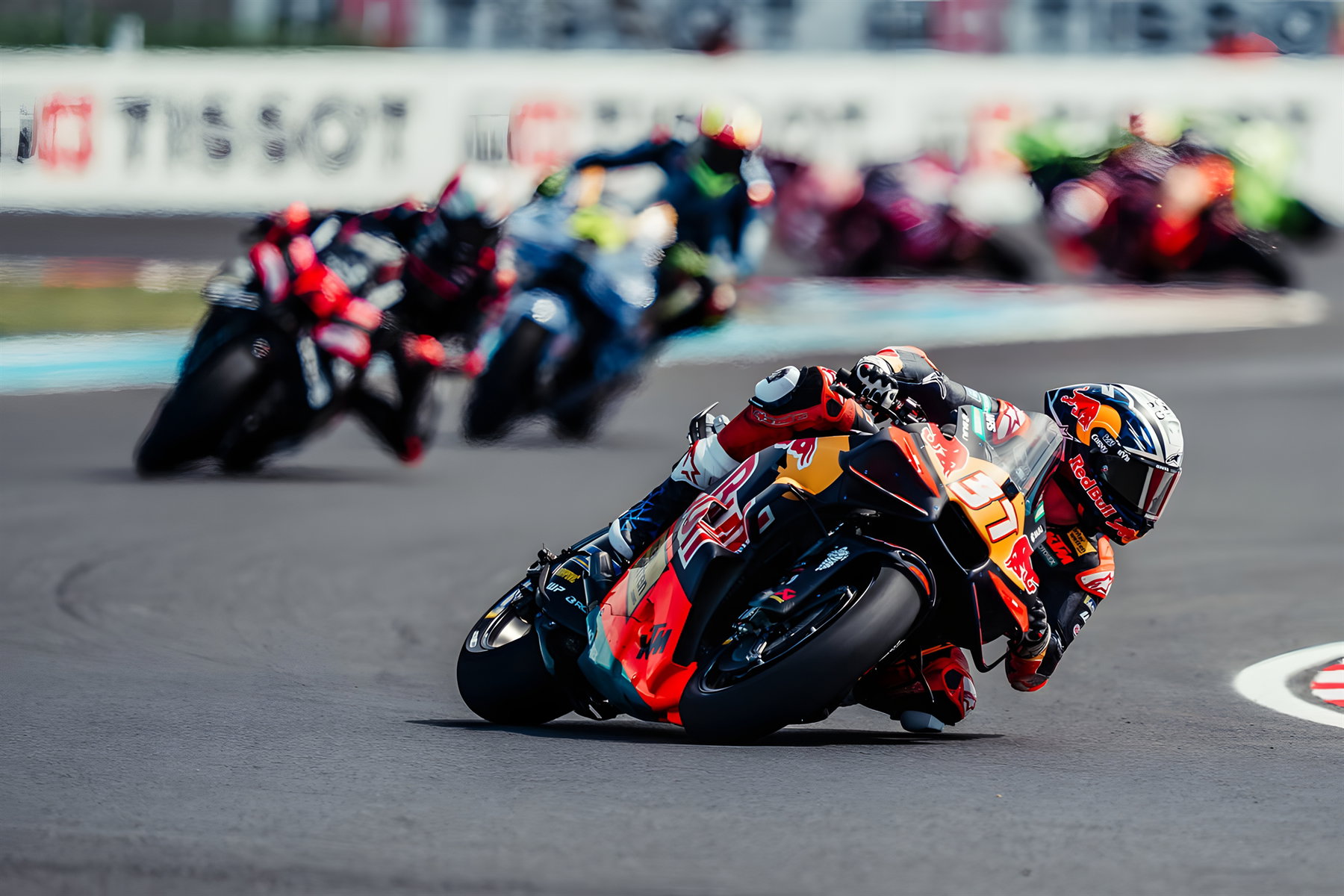
The new Concorde Agreement coincides with a comprehensive technical regulation change. From 2027, MotoGP engine displacement will be reduced from the current 1,000cc to 850cc. Additionally, ride-height devices will be completely banned, and the aerodynamics of the machines will be significantly restricted. Pirelli will replace the current supplier as the sole tire manufacturer. The combination of a commercial fresh start and a technical revolution makes the 2027 season the most profound transformation MotoGP has experienced since the introduction of four-stroke engines in 2002.
What does the agreement mean in the bigger picture?
The agreement marks an important step for Liberty Media, which acquired the commercial rights to MotoGP last summer. The US corporation’s strategy aims to develop MotoGP into a global entertainment platform following the Formula 1 model. With the signed framework agreement, the promoter, manufacturers, and teams now have a common foundation for the next five years on which the championship can be developed further in sporting, technical, and commercial terms.
In parallel, MotoGP, the manufacturers, the teams, and the FIM are working on concrete measures to improve both the technical and sporting aspects of the championship. A particular focus is on safety, which has moved increasingly into the spotlight during the current season following several incidents. MotoGP has already announced that starting from the German GP, the grid will feature larger gaps between positions.
➜ This article is part of our comprehensive overview: 2026 MotoGP Season: The Complete Overview – Teams, Riders, Calendar & Championship Standings. Find all key information on this topic in one place.
Frequently Asked Questions
-
When was the MotoGP Concorde Agreement signed?
The agreement in principle was reached at the Hungarian Grand Prix in early June 2026. The formal signing took place ahead of the Czech Republic GP in Brno, where the official press conference is scheduled for Friday, June 20, 2026.
-
How much money will MotoGP teams receive from 2027?
The teams will receive a fixed annual payment of around 8 million euros (approximately 9.2 million US dollars) per team. A percentage-based revenue sharing model following the Formula 1 blueprint did not prevail in the negotiations.
-
Which manufacturers are part of the MotoGP Concorde Agreement?
All five manufacturers active in MotoGP have signed the agreement: Ducati, Aprilia, Honda, KTM, and Yamaha. It is the first time in the history of the championship that all constructors have signed a joint contract.
-
What rider transfers are expected in MotoGP 2027?
Only Marco Bezzecchi’s contract extension with Aprilia has been officially confirmed so far. According to consistent media reports, Marc Marquez is expected to stay at Ducati, Pedro Acosta to join the Ducati factory team, Francesco Bagnaia to move to Aprilia, Jorge Martin to Yamaha, and Fabio Quartararo to Honda.
-
How long does the MotoGP Concorde Agreement run?
The contract covers the period from 2027 to the end of 2031. It also includes an option to extend the key provisions until 2036.
➜ More on this topic in our overview: 2027 MotoGP Season: The Complete Overview.