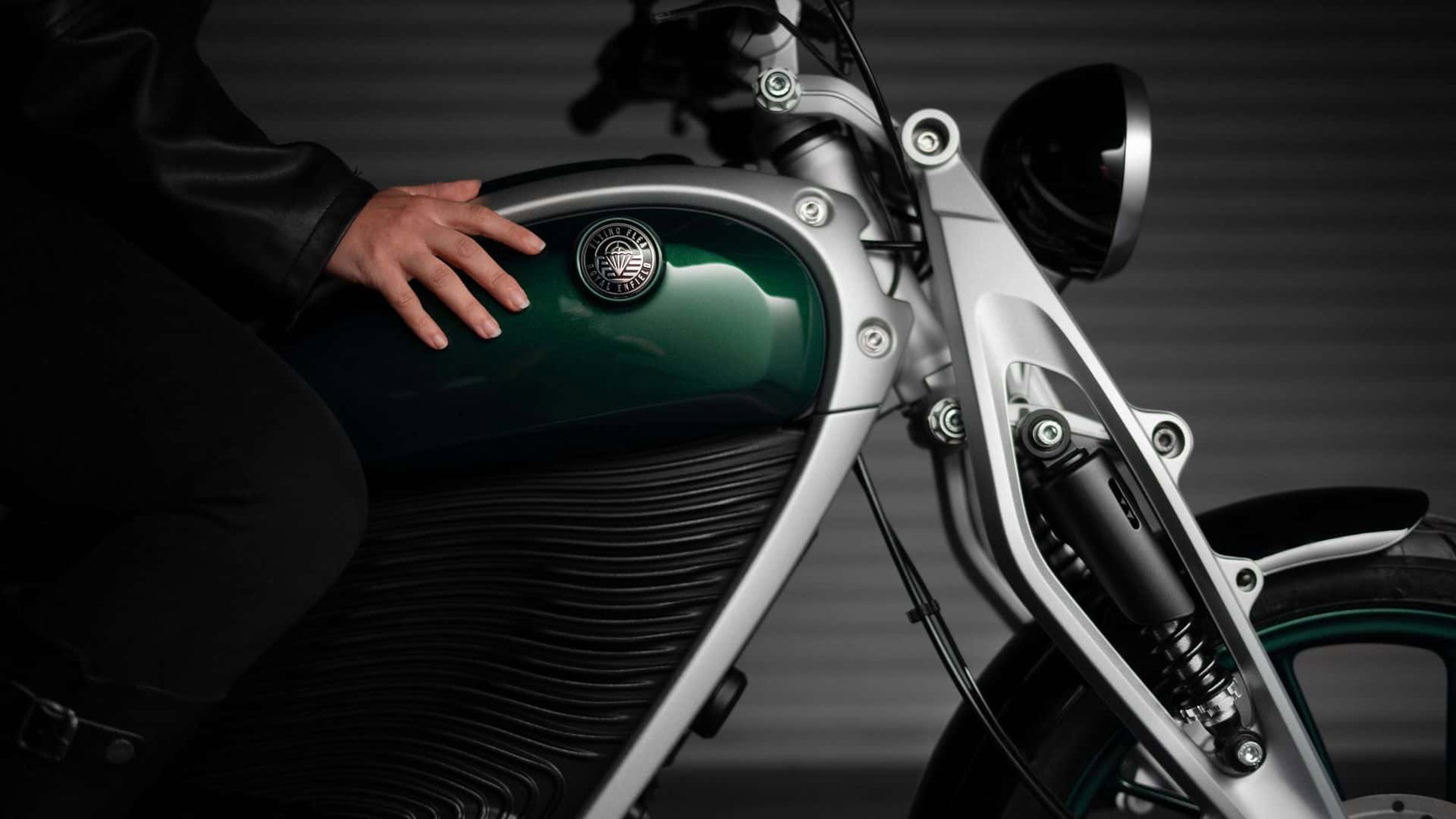
- Investment of around 6 million euros (7 million US dollars), with the lab built in roughly one year
- Battery packs made up of 224 cylindrical cells are joined using a laser welding system
- The new assembly line is designed for up to 120,000 vehicles per year
Royal Enfield is known for single-cylinder and twin-cylinder combustion engines. With the Flying Flea brand, the company is building a second pillar alongside them. So that the technology required for this does not have to be bought in entirely, the manufacturer has set up its own development centre at the Tiruvottiyur site near Chennai. It sits in the middle of the existing plant, where combustion engines are produced around the clock.
What does Royal Enfield’s new development centre do?
Batteries, drivetrains and vehicle software are developed and tested at the centre. According to the company, around 6 million euros (7 million US dollars) were invested, and the facility was built in roughly one year.
Technical chief Umesh Krishnappa describes the timeframe like this: “This lab was built in almost one year.” According to him, the equipment is specified to last until 2033. For the work, Royal Enfield brought together specialists from the motorcycle industry and from the electrical industry.
One focus is on the durability of the electrical components. Before the market launch, according to Krishnappa, every subsystem was measured to see whether it would last 100,000 kilometres or ten years. With mechanical components the industry speaks of fatigue strength, with electrical components of reliability.
How are the Flying Flea’s battery packs built?
The cells are aligned on a jig and then connected to the busbars by laser. One battery pack consists of 224 cylindrical cells.
Busbars are conductive metal strips that connect all the cells with one another. With conventional welding, a lot of heat travels into the cells in the process. The laser method largely avoids this heat input, which means the condition of the cells stays better. According to the company, it is the first battery development using such a system, at least within the Indian two-wheeler industry. The area was set up from June 2024 onwards, because the battery was designed in-house and therefore also had to be built in-house.
The pack is housed in a magnesium casing, a material Royal Enfield had not used before. According to Krishnappa, this production step requires a great deal of cooling so that no damage occurs to the structure. In return, the casing is light and dissipates heat better, which is intended to prevent the battery from overheating.
How does Royal Enfield test the safety of the battery cells?
The cells themselves come from suppliers, and random samples are scanned in the lab using an industrial computed tomography scanner. According to the company, the device costs around 1.04 million euros (1.2 million US dollars).
Testing takes place at different temperatures across 2,000 charging cycles, which corresponds to roughly 60,000 kilometres. Certified test chambers are used for this, designed to remain safe even if a battery pack explodes during a test. The manufacturer then sorts the cells into three classes according to their internal resistance and assembles them so that the deviation between them is no more than 20 millivolts.
On top of that come a high-current discharge test and a seal test against water and dust. The battery management system watches over operation, meaning the electronics that monitor charge, temperature and current flow. Krishnappa sums up the order of priority briefly: “Ultimately in EVs, safety has priority.” To that end, the system is also allowed to limit current and thereby reduce speed.
Why does Royal Enfield test the software in the lab?
Because faults show up that way before a motorcycle reaches the road. Hardware-in-the-loop and software-in-the-loop test benches are available for this, simulating operation on a computer.
On these test benches, deliberate attempts are made to crash the system. Krishnappa gives an example himself: on one vehicle, it was no longer possible to exit cruise control. The case was recreated in the lab, the cause identified and fixed by a software change. Such facilities are expensive, and accordingly rare in the industry, as he describes it. He frames the spending as a long-term decision and says the electric project is not laid out for one or two years.
The central element in the vehicle is the vehicle control unit, or VCU for short, the control module that brings all signals together. According to the company, it is certified for cybersecurity. Royal Enfield developed it in-house; it is still manufactured externally, with production at its own plant planned. Since the Flying Flea C6 is to be sold internationally, the lab additionally has a dedicated area for software and connectivity.
How many electric motorcycles can the new line build?
According to the company, the assembly line is designed for up to 120,000 vehicles per year. It consists of three sections for motors, batteries and final assembly.
Since batteries had never been assembled at the plant before, there are additional protective measures. Individual rooms are specially secured, and certain areas may not be entered during battery assembly. On the layout of the line, Krishnappa says: “The line can take all sorts of models.” Initially the Flying Flea C6 rolls off it, with further electric models to follow.
What does this mean for the Flying Flea C6?
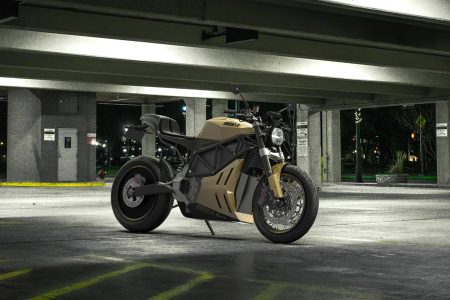
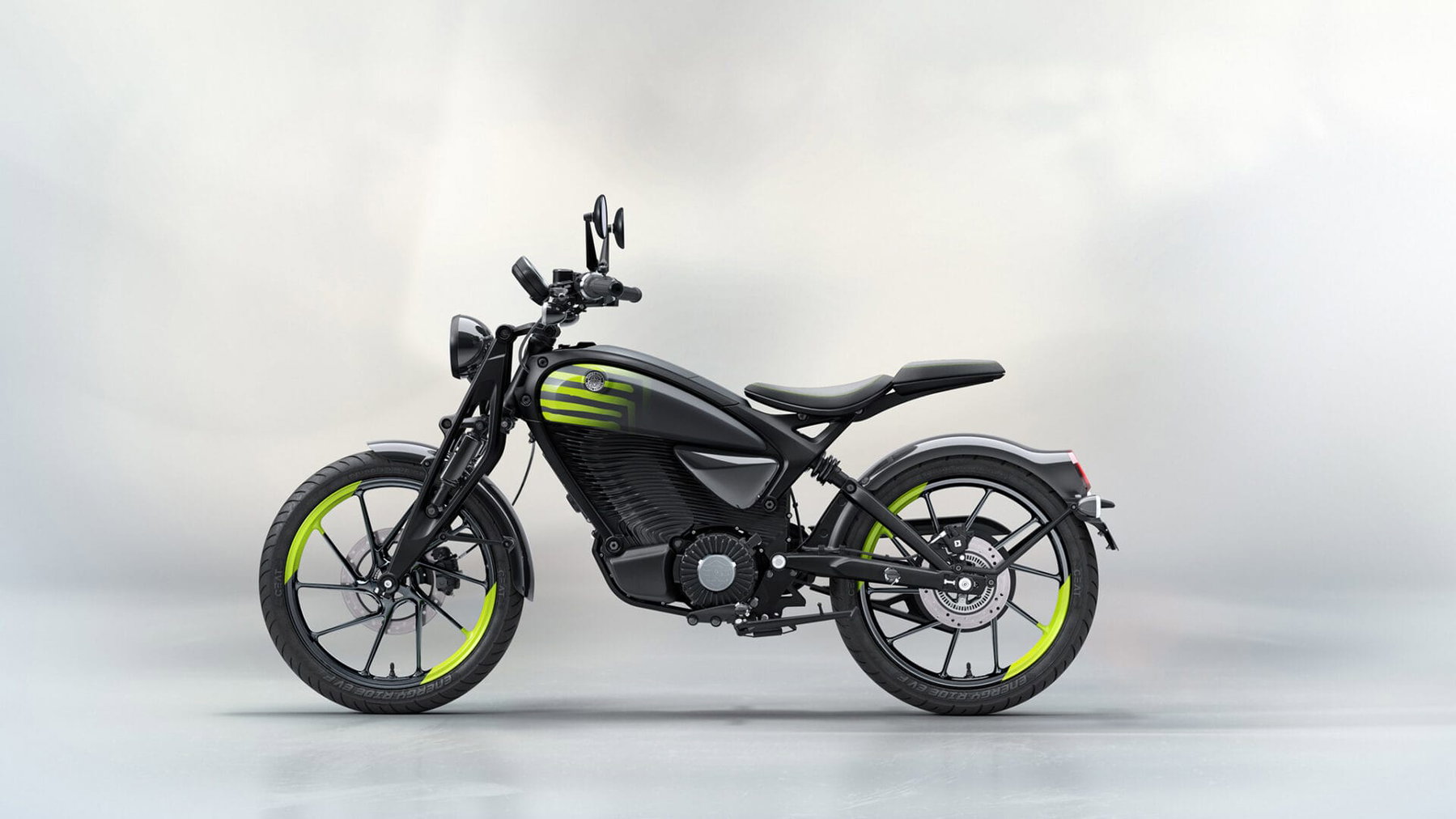
The production model corresponds exactly to what was developed and tested in the lab. The C6 works with a 3.91 kilowatt-hour battery in a magnesium casing, and the electric motor produces around 21 hp (15.4 kW) and delivers 60 Nm of torque.
In India the model has been on sale since April 2026, with the rollout progressing city by city. According to media reports, the S6 sister model in scrambler style is set to follow later in the year and will also be built on the new line.
The Flying Flea brand was presented in November 2024 in Milan. According to the company, more than 200 engineers in India and the United Kingdom are working on the technology, and over 40 patent applications have been filed. Motor, battery, battery management and software are developed in-house, and the operating system runs on a Qualcomm chip. That places the C6 among the electric models from established motorcycle manufacturers in the 2026 model year where the drivetrain technology is deliberately created in-house rather than at a supplier.
Frequently Asked Questions
-
Where is the Royal Enfield Flying Flea C6 built?
The Flying Flea C6 rolls off a new assembly line at the Tiruvottiyur plant near Chennai. The line has its own sections for motors, batteries and final assembly. It is designed for up to 120,000 vehicles per year.
-
How much has Royal Enfield invested in the development centre?
According to the company, around 6 million euros (7 million US dollars). The facility was built in roughly one year. It is expected to last until 2033.
-
How many cells make up the Flying Flea C6 battery?
One battery pack consists of 224 cylindrical cells. They are connected to the busbars by laser and sit in a magnesium casing. Capacity is 3.91 kilowatt-hours.
-
How does Royal Enfield test the durability of the electric technology?
Every subsystem was measured before the market launch for 100,000 kilometres or ten years. Battery cells additionally go through 2,000 charging cycles at various temperatures, which corresponds to roughly 60,000 kilometres. Random samples are scanned with a computed tomography scanner.