- Date: Bolivia Speed Trials from 22 to 27 October 2026 on the Salar de Uyuni
- Goal: more than 400 mph (643.7 km/h); the current record stands at 376.363 mph (605.697 km/h)
- Course: around 30 kilometres long, at an altitude of about 3,600 metres
Sixteen years have passed since Rocky Robinson set the motorcycle world record on the Bonneville Salt Flats in Utah that still stands today. The mark has never been seriously threatened since. Chris Rivas did not come close to it at the Bonneville Speed Trials in August 2026 either. Now the record holder himself is making a fresh attempt. Together with designer and team boss Mike Akatiff, Robinson is heading to Bolivia, to the largest salt flat in the world. The target is a barrier that no motorcycle has officially broken yet: 400 miles per hour.
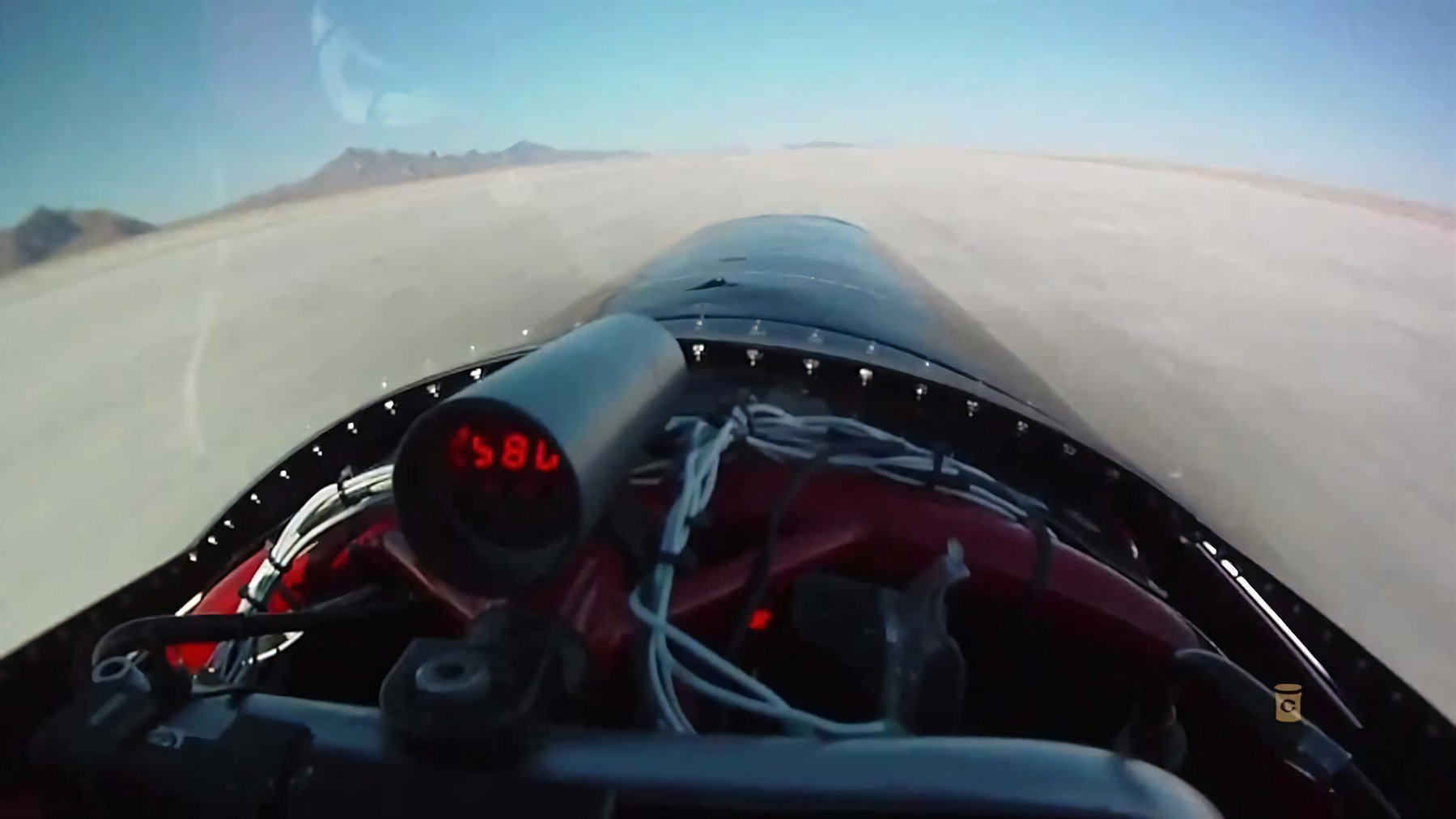
Who wants to ride the Ack Attack to 400 mph?
At the controls is Rocky Robinson, who has been listed as the fastest motorcyclist in the world since 2010. He used to race speedway and has already taken the absolute motorcycle speed record three times.
Robinson set his first record on 3 September 2006 at 342.797 mph (551.7 km/h). A year later he wanted to go even faster and crashed at more than 320 mph (515 km/h), with the machine rolling over 16 times. In 2008 he returned to Bonneville and set his second record at 350.884 mph (564.7 km/h). His third record followed on 25 September 2010 at 376.363 mph (605.697 km/h). That figure is still in the record books of the world motorcycling federation FIM today.
The man behind the project is Mike Akatiff. He designed and built the Ack Attack, he owns it and he runs the team. According to the team, he has been working on the machine for more than 20 years.
What is inside the Ack Attack?
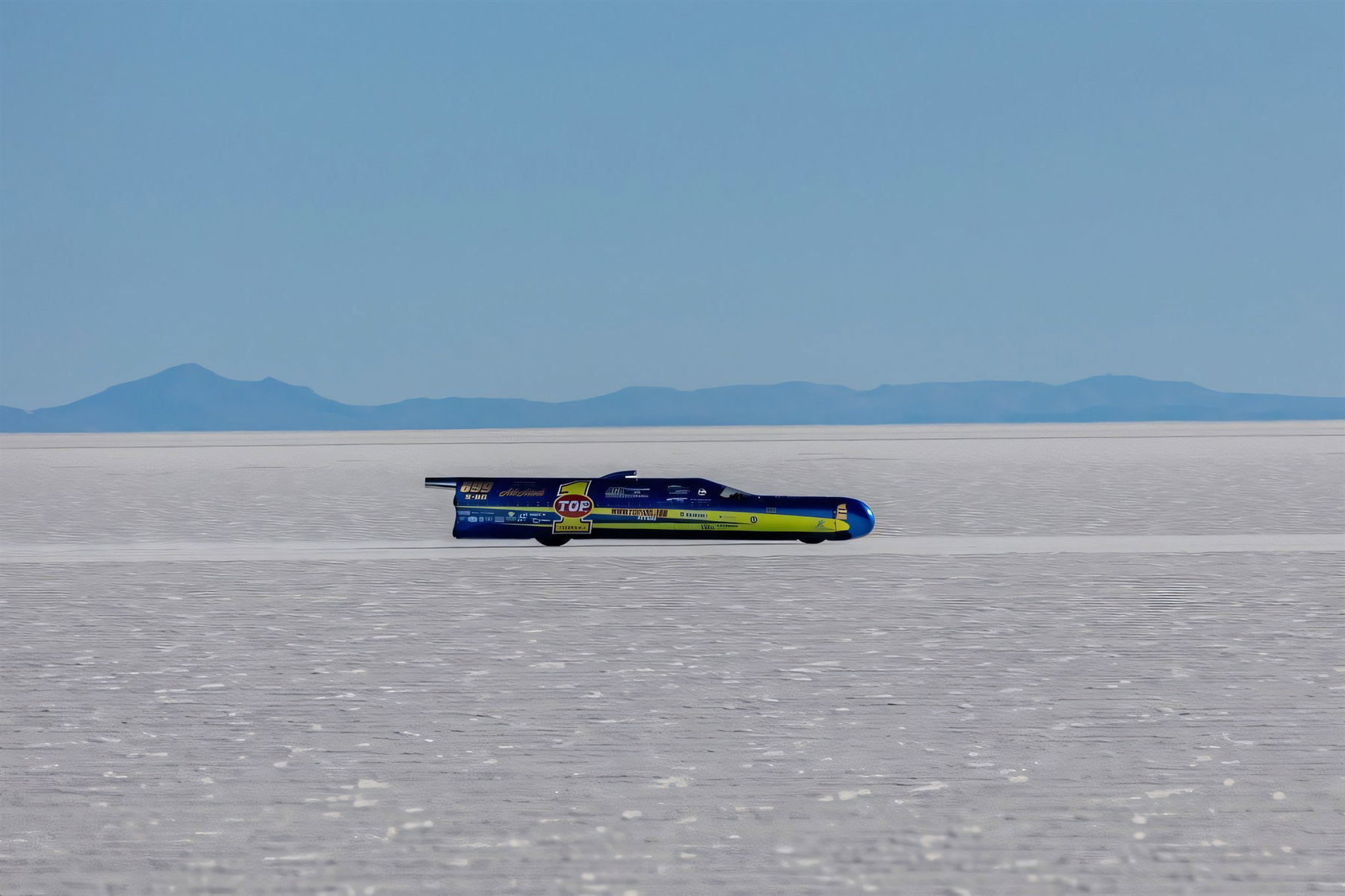
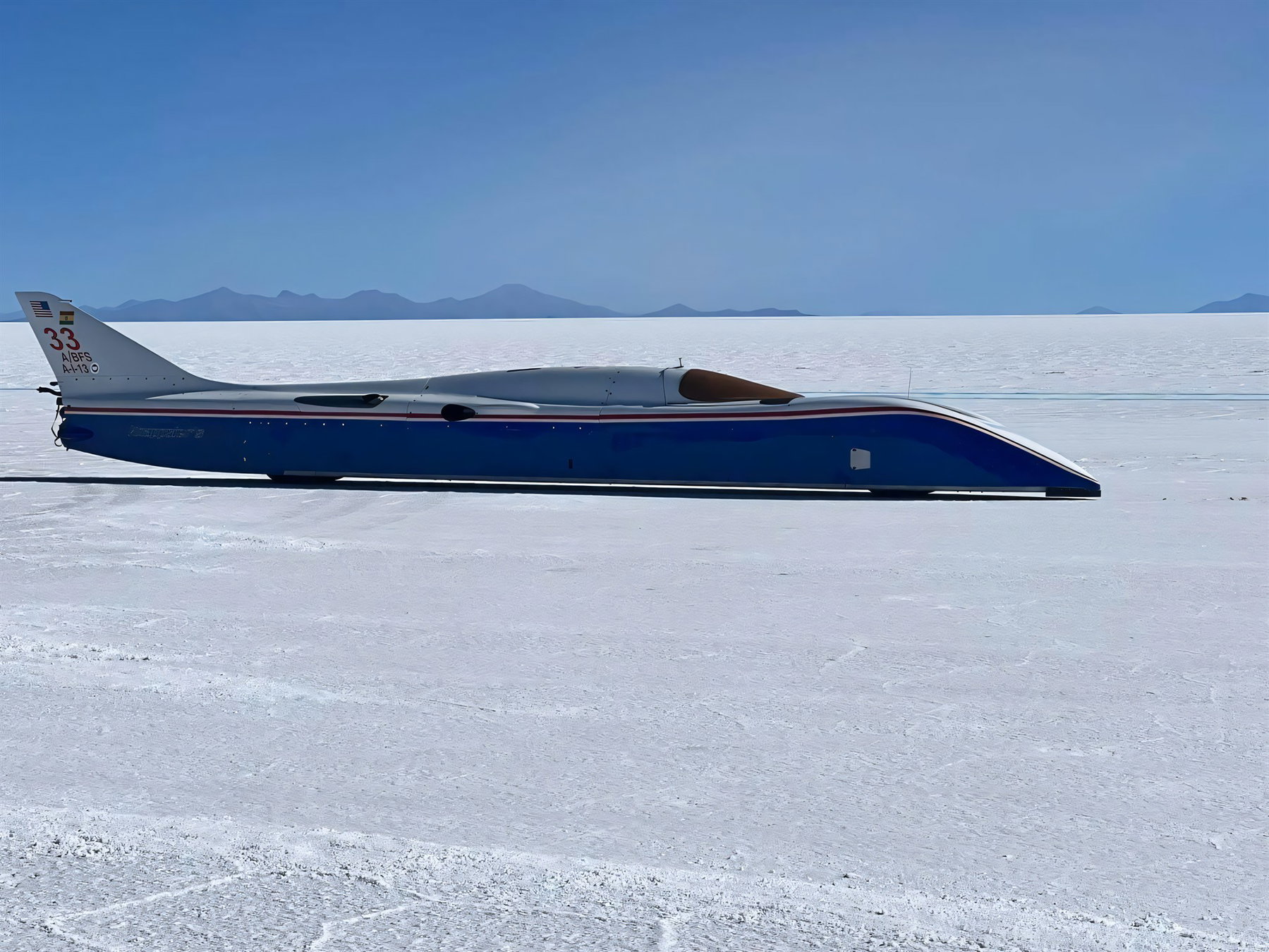
The Ack Attack is a so-called streamliner, a fully enclosed, aerodynamically shaped record motorcycle with two engines and turbocharging. It is around 6.1 metres (20 feet) long.
It is powered by two Suzuki Hayabusa engines of 1,300 cc each. According to the team, a Garrett turbocharger with intercooler pushes 35 psi of boost into the system, which is roughly 2.4 bar. The result is said to be more than 910 hp (671 kW). However, these figures date back to 2017. The team has not published any current performance data.
The long course in Bolivia puts particular strain on the technology. Even before the first Bolivia attempt, Akatiff talked about the machine getting around ten miles of run-up to the timing traps there. The key question, he said, was how hard and how long the engines could be loaded. At the time he was impressed by the Hayabusa engines and called them very robust.
To stop the Ack Attack from toppling over when pulling away and coming to a halt, it has retractable outrigger wheels. How important they are became clear on the salt flat in 2017.

Why is the record attempt taking place in Bolivia?
The Salar de Uyuni offers two things that are hard to find anywhere else: a very long straight course and thin air. A motorcycle that is supposed to go faster than 640 km/h needs both.
The salt flat lies in south-western Bolivia on the Altiplano plateau in the Andes. Covering more than 10,000 square kilometres, it is the largest salt flat in the world. It is also considered so flat that NASA uses it to calibrate satellite altimeters. The salt crust is almost ten metres thick.
The course for the Bolivia Speed Trials is to be around 30 kilometres long and 33 metres wide. That leaves enough space to accelerate and enough room to slow down. Because the salt flat sits at an altitude of around 3,600 metres, the air there is thinner. That significantly reduces aerodynamic drag. At the same time, the engines get less air to breathe, which the turbocharging is meant to compensate for. Holding the event at the end of the Bolivian winter should bring good weather and only a low chance of rain.
Akatiff himself sums up the team’s hopes like this: “We’ve spent more than 20 years developing The Top 1 ACK Attack and have already proven it is the fastest motorcycle in the world. At Uyuni, we finally have the distance and conditions to see if a motorcycle can officially break the 400 mph barrier.”
Why is the record so hard to break at Bonneville?
The salt layer on the Bonneville Salt Flats has been getting thinner for years, and wet conditions repeatedly prevent fast runs. As early as 2017, Robinson said that the previous years at Bonneville had brought the team nothing but disappointment. He had not been able to reach the speeds he wanted and had felt neither safe nor comfortable doing so.
How difficult the situation is became clear again this year. At the Bonneville Motorcycle Speed Trials from 23 to 27 August 2026, Chris Rivas wanted to attack Robinson’s record with the BUB Seven streamliner. His fastest run was 180.64 mph (290.71 km/h), far below the record. The 2010 mark therefore remains untouched after the season in Utah, and the scene is now looking to Bolivia.
What went wrong on the first attempt in Bolivia in 2017?
In 2017 the Ack Attack failed in Bolivia mainly because of logistics. The container with the machine arrived on the salt flat three weeks late, leaving the team only two days to run.
That was not enough to set up the complex machine properly. Even so, the Ack Attack was fast. On its best run it reached 378 mph (608.3 km/h), according to Robinson. Then, around half a mile (about 800 metres) before the timing traps, the turbo manifold cracked. Robinson coasted through the measured section without drive at 338 mph (544 km/h). On another run a rear tyre came apart, after which a manifold cracked again. Once Robinson shot a quarter of a mile (around 400 metres) past the pit area and came to a stop on unprepared salt. On yet another run the outrigger wheels failed to deploy, and the Ack Attack tipped over in the pits as it rolled to a halt.
The official record remained unchanged at 376.363 mph. Robinson also took part in the Bolivia Speed Trials in 2023, once again aiming to break the 400 mph barrier. It did not work out that time either.
How is a motorcycle world record officially measured?
For an official FIM record, a motorcycle must complete two runs in opposite directions. An average is calculated from both times, and only that value counts.
Speeds are measured over both a mile and a kilometre. After the first run, there are two hours for the return run. A single fast run is therefore not enough. The machine has to reach the speed a second time without anything breaking.
The Bolivia Speed Trials are part of the FIM Land Speed World Records discipline. They are back on the calendar for the first time since 2023 and take place just two months after the Bonneville Speed Trials. For the record hunters, this is their second chance in 2026 to write themselves into the books. The salt flat was first used for an FIM record event in 2017, then again in 2018 and 2023. According to the organisers, official world records are possible this year under the rules of both the FIM and the world motoring federation FIA.
Who is behind the Bolivia Speed Trials?
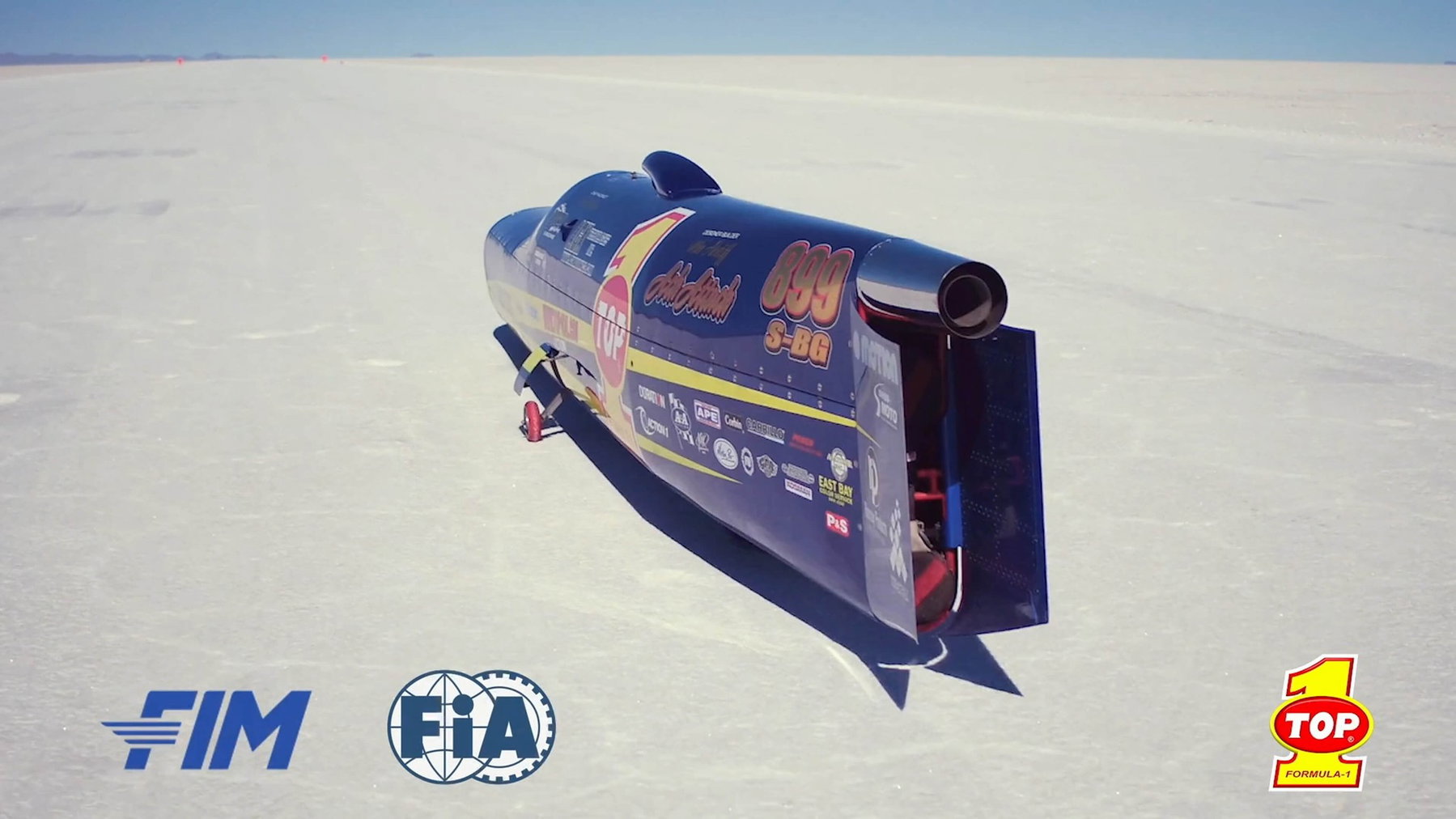
The event is funded by Mike Akatiff, Jamie Williams and Jim Knapp, supported by lubricant manufacturer Top 1 Oil. Akatiff is therefore not only competing as team boss, he is also making sure the event happens at all.
He says the Salar de Uyuni offers the space and distance the fastest vehicles in the world need to show their full potential. The aim is to create conditions under which riders can safely target more than 400 mph and challenge existing FIM records. In his view, the meeting could become one of the most important record events in many years.
The record attempt is also set to form the climax of a documentary series. It is called “400 MPH: The Last Run” and is hosted by Tory Belleci, known from the TV show MythBusters. The series draws on almost 20 years of footage. It tells the story of the Ack Attack from a workshop in California to the world record at Bonneville and on to the attempt in Bolivia. The title hints at what Akatiff also writes in the announcement: after 20 years and three world records, 400 mph is to be the project’s last big goal.

Frequently Asked Questions
-
How fast is the Ack Attack?
The Ack Attack has held the absolute FIM speed record for motorcycles since 2010 at 376.363 mph (605.697 km/h). Rocky Robinson set it on the Bonneville Salt Flats in Utah. On a single run in Bolivia in 2017 the machine reached 378 mph (608.3 km/h) according to Robinson, but that does not count officially.
-
When is the 400 mph attempt in Bolivia taking place?
The Bolivia Speed Trials take place from 22 to 27 October 2026 on the Salar de Uyuni. The event is part of the FIM Land Speed World Records and returns to the calendar for the first time since 2023.
-
What engines does the Ack Attack have?
The Ack Attack is powered by two Suzuki Hayabusa engines of 1,300 cc each. A Garrett turbocharger with intercooler provides the necessary boost. According to team figures from 2017, this adds up to more than 910 hp (671 kW).
-
Why is the motorcycle world record not being attacked at Bonneville?
The salt layer at Bonneville has been getting thinner for years, and wet conditions repeatedly prevent fast runs. The Salar de Uyuni, by contrast, offers a course around 30 kilometres long and, thanks to its altitude of about 3,600 metres, less aerodynamic drag.