The key points:
- DMC groups will hold up to 31 riders and passengers instead of the previous 15
- Public Mesh connects riders without prior pairing, Remote Grouping works via an invitation link
- Installing the firmware deletes every DMC group stored on the device
Cardo released the Mesh Boost software update for its Packtalk communication systems on 17 August 2026. It is free and arrives over the air on the devices via the Cardo Connect app. The manufacturer had already announced the package back in November 2024, at the time with planned availability in early 2025. So it has arrived with a considerable delay. In return, the scope is broader than originally communicated, and alongside the pure increase in numbers the update brings two features that are likely to change everyday life in a group.
How many riders fit into a Cardo group from now on?
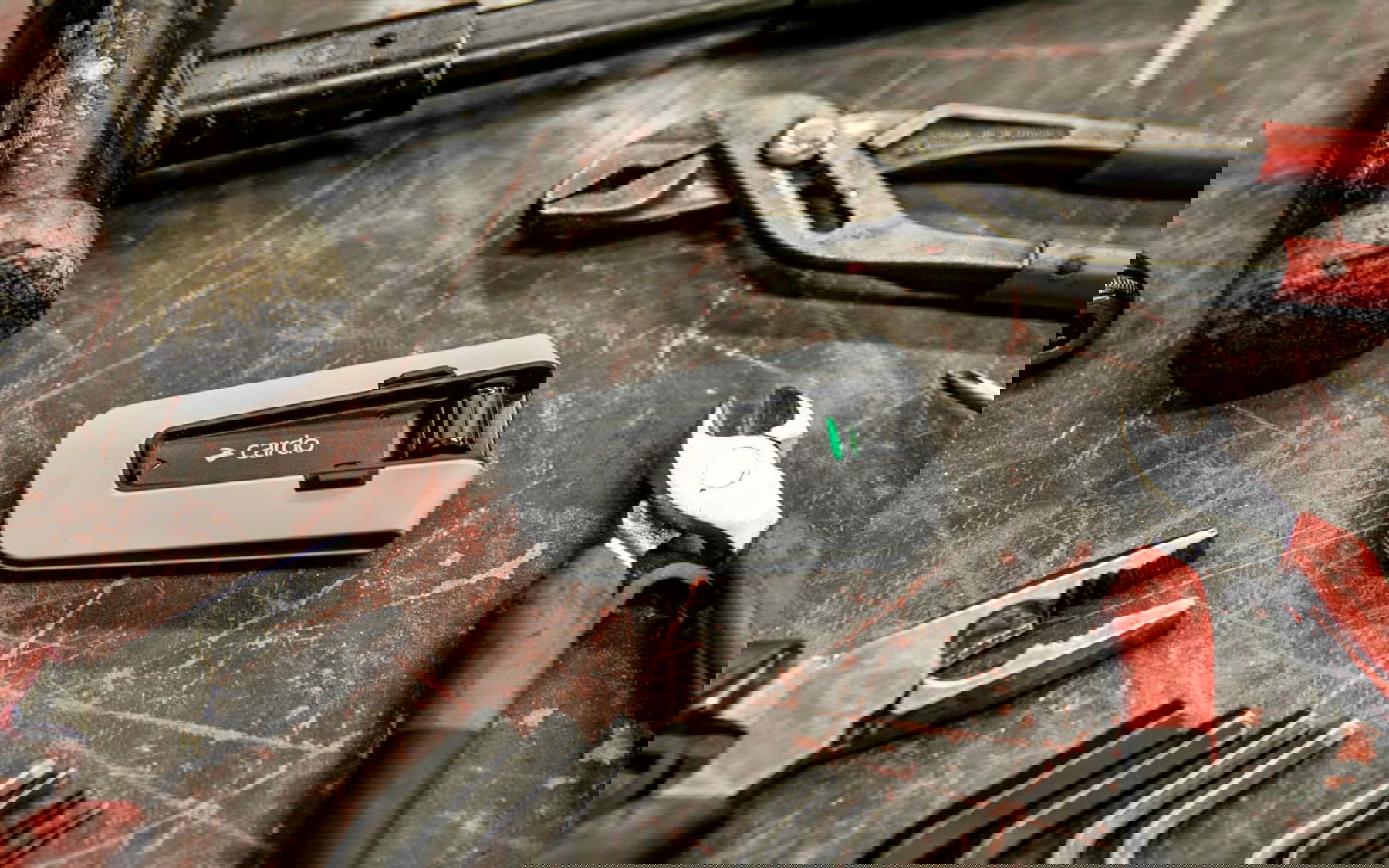
After the update, a DMC group holds up to 31 riders and passengers. Previously the limit was 15 participants, so capacity has more than doubled.
Important in practice: devices are counted, not vehicles. A sidecar rig or a bike with a pillion where both wear their own Cardo device accordingly takes up two slots in the group.
DMC stands for Dynamic Mesh Communication and refers to a radio network that re-links itself. If a rider drops out of range or joins later, the connection rebuilds automatically without the entire group having to stop and pair again. Signals are passed along via other participants, which specialists call multi-hop. That keeps even widely strung-out groups connected. The whole thing runs in full duplex mode, so everyone can speak at the same time as on a phone call rather than taking turns as with a walkie-talkie.
How does Public Mesh work?
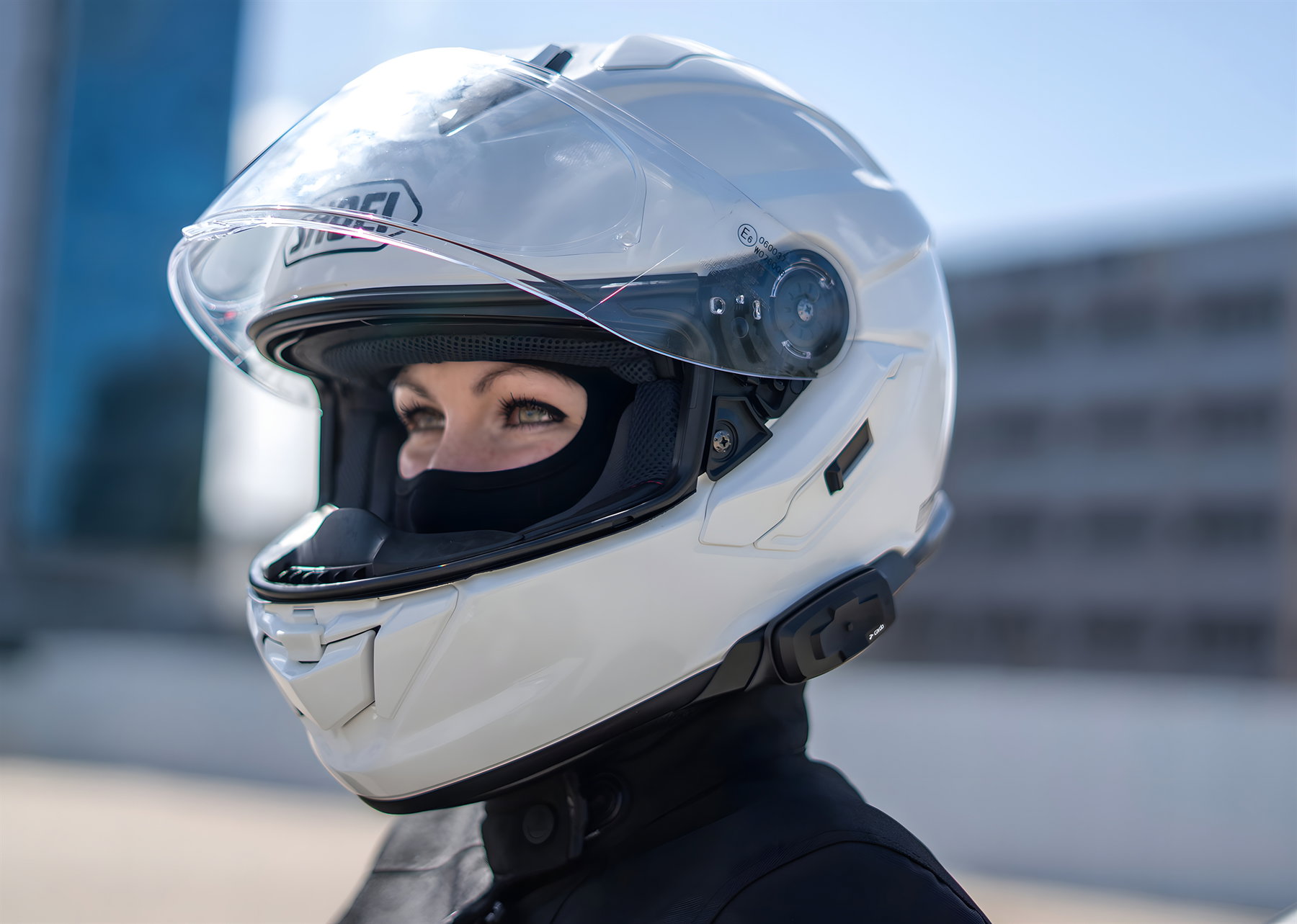
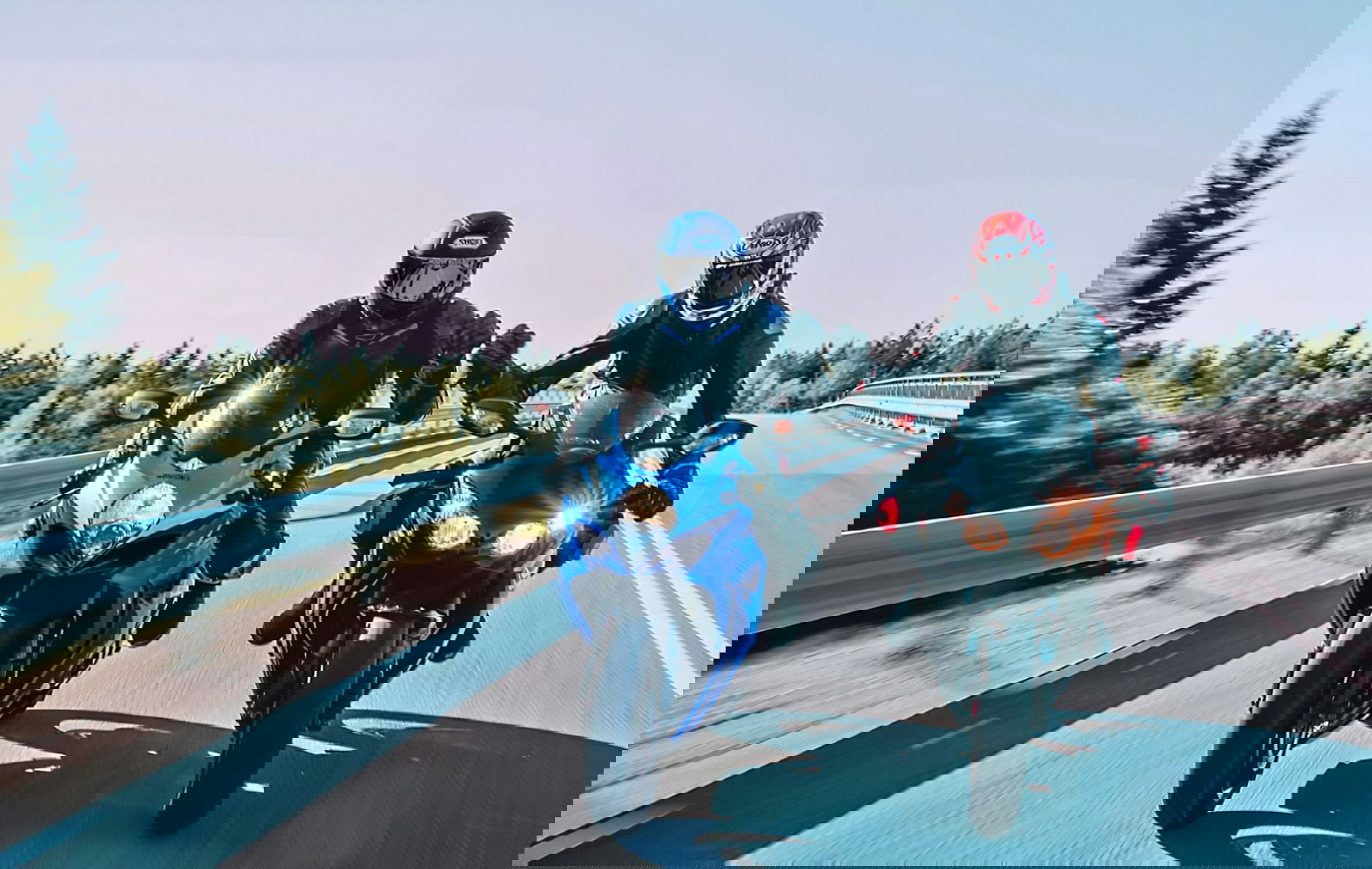
Public Mesh is an open conversation channel that riders can join without setting up a private group beforehand. The feature is activated in the Cardo Connect app, after which all DMC users who are also running Public Mesh connect to each other automatically as soon as they come into range.
There is no invitation process, no pairing sequence, no group owner and no administrator. Unlike simple open channels, DMC’s multi-hop capability is retained, so signals continue to be passed along via other participants. In Public Mesh, too, the upper limit is 31 participants. Cardo names rider safety training, dealer test rides, charity runs, motorcycle meet-ups and spontaneous weekend tours as typical use cases. It is practical, for example, when you run into other riders at a petrol station or on a mountain pass, where pairing used to be a laborious affair.
Where Public Mesh runs into limits
The open channel has side effects. The Cardo Connect app does not show who else is in the conversation. At larger events or busy meeting points it can also happen that another Public Mesh group is audible. Anyone who wants to limit communication to a specific circle is still better served by a private DMC group. Contact does not, however, come about entirely involuntarily: both sides have to have switched Public Mesh on actively.
What does Remote Grouping deliver?
Remote Grouping makes it possible to set up a private DMC group before the ride, without the participants having to be in the same place. The organiser generates an invitation link or a QR code in the app and sends it out in advance.
As soon as the invited riders later come within radio range, their devices connect to the mesh network automatically. That does away with the usual wait in the car park until the last straggler is paired. Several groups can be saved in the app, so it is possible to switch between regular riding groups without setting everything up from scratch each time.
To match, Cardo has reworked the user interface of the Connect app. There is a dedicated group list and simplified procedures for creating, saving, joining and managing groups. On top of that come two new voice commands: “Hey Cardo, call intercom” joins a conversation, “Hey Cardo, end intercom” leaves it again.
Which Cardo devices get Mesh Boost?
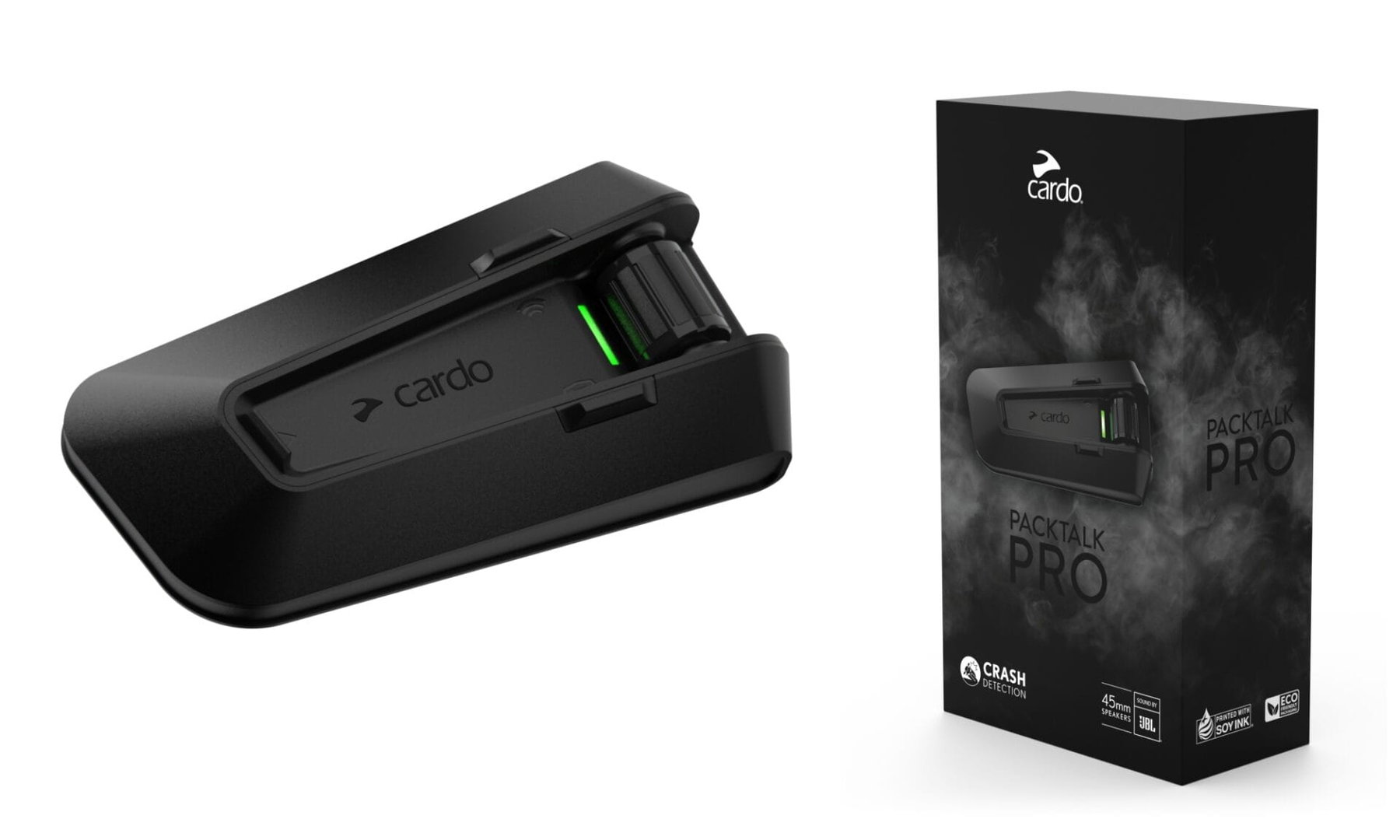
Mesh Boost runs on second-generation DMC devices. The final compatibility list turns out broader than the three models named in the original announcement, Packtalk Pro, Edge and Neo.
According to the manufacturer, supported devices include the Cardo Venture, Packtalk Pro, Packtalk Pro 20 Years RSD Edition, Packtalk Edge, Packtalk Edge ORV, the Packtalk Edge special editions for Ducati, Honda, Simpson and Louis, Packtalk Neo, Packtalk Neo SE, Packtalk Custom, Packtalk-S, HJC Packtalk, Packtalk Polaris Delta V, 509 Mesh as well as the Ruroc Shockwave Mesh and Ruroc RG2. That means the update also reaches riders away from the road, for instance in the enduro, quad and snowmobile segments. It is distributed via the Cardo Connect app and via the Mac application Cardo Update.
Not included for the time being are the Harley-Davidson variants and the Schuberth SC Edge devices. According to Cardo they use different software, and a separate Mesh Boost update is due to follow in the fourth quarter of 2026. Also not yet included are the previously announced Private Chat+ and Cellular Intercom features, meaning communication over the mobile network. Both remain in development.
Can older Packtalk models still join in?
Yes, older devices such as the Packtalk Bold, Packtalk Black and Packtalk Slim can still take part in a group. Mixed groups are, however, subject to several restrictions.
If even a single device without Mesh Boost is in the group, the maximum group size drops back to 15 participants. Remote invitations do not work for these users; for the classic pairing procedure they have to be on site and within range with their device. Individual Mesh Boost functions are also unavailable in such groups. Cardo recommends that a rider with an updated device opens the group.
What to bear in mind before installing
One point deserves particular attention: installing the Mesh Boost firmware deletes every DMC group stored on the device. They have to be set up again afterwards.
The requirements are the Cardo Connect app in version 9.1 or newer and device firmware from version 5.4. The sensible order is to update the app first, then connect the device and follow the instructions in the app. Cardo advises doing this calmly at home rather than five minutes before departure in the car park.
Does Public Mesh need a mobile connection?
No. The DMC network transmits directly between the devices and works while riding without mobile coverage or internet. That applies to Public Mesh as well.
An internet connection is only needed in three places: for updating the Cardo Connect app, for downloading and installing the firmware, and for sending and accepting Remote Grouping invitations. Once everything is set up, groups can be formed on the road even without a network, nearby participants can be added and Public Mesh can be used. For tours in remote areas with patchy reception, that is a relevant difference.
Why the update took so long
Cardo openly admits the delay. Chief Marketing Officer Dan Emodi puts it down to the standard set for reliability: “Mesh Boost has always been about making group communication simpler and more capable. While this journey took longer than we originally planned, we made a conscious decision not to compromise on reliability. With larger group capacity, spontaneous Public Mesh, and easier setup through remote pairing, Mesh Boost strengthens our leadership in mesh technology and builds on a decade of innovation since launching the first motorcycle mesh communicator in 2015.”
The manufacturer also describes how every additional participant increases the complexity of the network. Over the course of months, the software was refined and tested in various scenarios with riders and test teams before being released worldwide. Features that were not fully mature were deliberately held back, which explains the postponement of Private Chat+ and Cellular Intercom.
Mesh Boost thus fits into a development in which manufacturers of communication systems have been competing for years over larger groups and easier setup. Cardo itself introduced the first Bluetooth intercom in 2004 and brought mesh technology to the motorcycle segment in 2015. According to the company, its devices are now sold in more than 100 countries.
Frequently asked questions
-
What does the Cardo Mesh Boost update cost?
The update is free. It is distributed over the air via the Cardo Connect app and via the Mac application Cardo Update, and is available for all supported second-generation DMC devices.
-
How many riders can be connected with Cardo Mesh Boost?
Up to 31 riders and passengers in one DMC group. Individual devices are counted, not vehicles. Before the update the limit was 15 participants.
-
Will my saved groups be lost during the update?
Yes. Installing the Mesh Boost firmware deletes every DMC group stored on the device. They have to be set up again afterwards, which is why the update is not a good idea shortly before a planned ride.
-
Can strangers join my conversation uninvited?
No. Public Mesh only works if both sides have actively switched the feature on. Anyone who does not use it remains unreachable for other Public Mesh participants.
-
When do Harley-Davidson and Schuberth devices get the update?
A separate Mesh Boost update is planned for the Harley-Davidson variants and the Schuberth SC Edge devices in the fourth quarter of 2026. According to Cardo they use different software and are not part of the first rollout.