- Patent US 12550961 B2, granted in February 2026, filed by Polaris.
- The helmet measures an energy value via sensors and triggers an alarm when fixed thresholds are exceeded.
- If the rider does not respond, the system can limit the vehicle’s speed or power output.
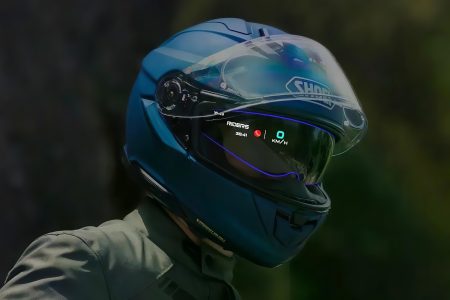
Connected helmets are not a new topic. Cameras, head-up displays, crash detection and communication systems have been available for years, yet many riders still rely on a conventional helmet with a clip-on intercom. A recently granted patent shows that Polaris is thinking in a more comprehensive direction: in the filing, the helmet becomes an active part of the vehicle that collects data, communicates with other helmets and, under certain conditions, can intervene in the drivetrain.
What Does the Polaris Helmet Patent Describe?
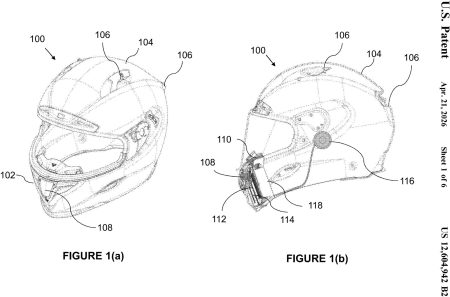
The Polaris helmet patent describes a modular smart helmet equipped with sensors, radio technology and a processing unit that communicates with the vehicle as well as with other helmets. It is filed under number US 12550961 B2, with Polaris Industries listed as the applicant, and was granted in February 2026.
The document is broadly conceived. The helmet described is not limited to motorcycles but is explicitly intended for a wide range of vehicle classes, including side-by-side vehicles, snowmobiles, ATVs, off-road vehicles and three-wheelers. Polaris has a broad presence in the powersports sector, which explains the variety of intended applications. Three inventors are named in the patent specification. According to the filing, work on the concept dates back to at least 2022, and the document also references an earlier application from 2021.
How Does the Helmet Detect Fatigue?
The helmet detects fatigue by continuously calculating an energy value and comparing it against fixed thresholds. Polaris refers to this value in the patent specification as “Total Energy Imparted,” meaning the total energy acting on the rider.
Several measured values feed into the calculation. These include acceleration, head rotation rates, data from an inertial measurement unit as well as biometric values captured by a sensor on the forehead. This sensor can determine heart rate, body temperature, oxygen saturation and respiratory rate, among other metrics. Additionally, vehicle suspension data can be incorporated, such as shock absorber movements. From these input variables, the processing unit calculates a cumulative energy value over time. When this value exceeds a first threshold, a graduated warning procedure begins, with each subsequent level having a higher threshold. According to the patent specification, a machine learning process can adjust the thresholds based on the rider’s reaction times, and separate configurations for on-road and off-road operation are also provided.
What Happens if the Rider Does Not Respond?
If the rider does not respond to the warnings, the system can intervene directly in the vehicle after several escalation levels. Among the measures described are speed limitation up to and including bringing the vehicle to a complete stop.
In the first level, the helmet initially issues a warning. This can be a loud audio signal through the speakers, a vibration or a notification on the vehicle’s display. According to the document, vibration can also be transmitted to the handlebars or steering wheel via the electric power steering. In subsequent levels, the system requires active confirmation, such as pressing a button on the helmet or the vehicle, to verify whether the rider is alert. If this response is not received within a specified time period, the system can modify a vehicle function. The measures mentioned include speed limitation, throttle or engine RPM reduction, and deceleration to a standstill. If the rider is traveling in a group, the other members can also be notified.
What Additional Features Does the Patent Describe?
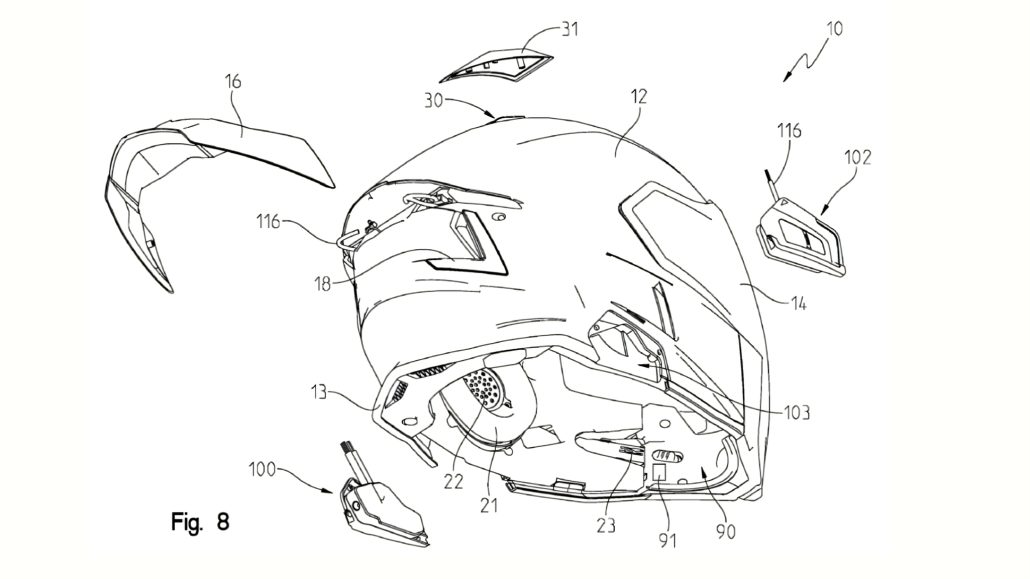
Beyond fatigue detection, the patent describes numerous additional features, ranging from networking multiple helmets to controlling vehicle and accessory functions. The helmet is modular in design and can be equipped with various components.
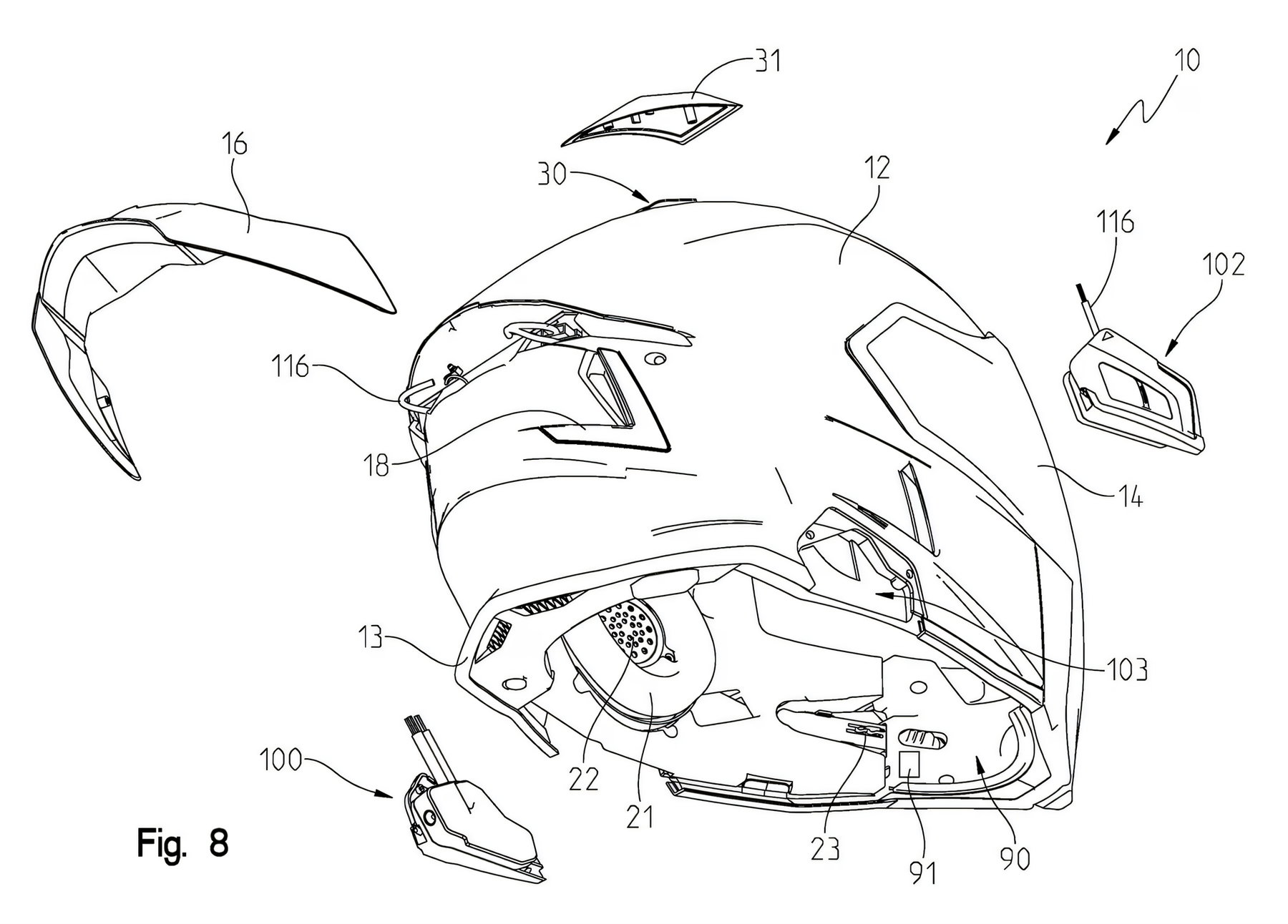
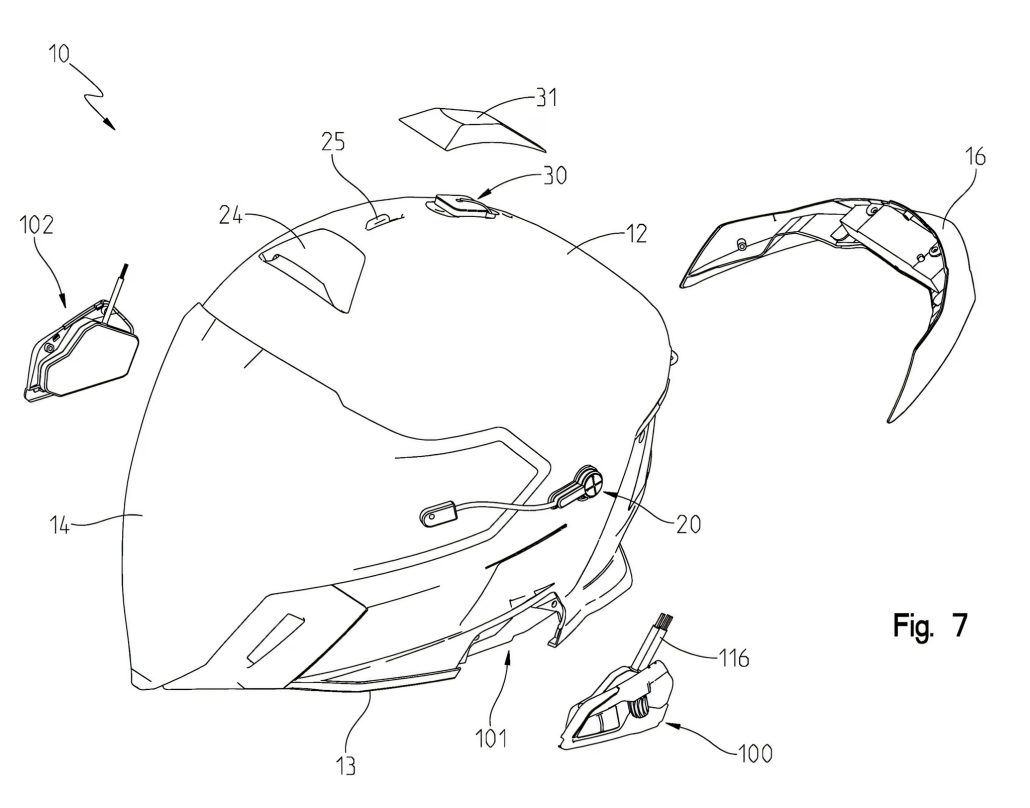
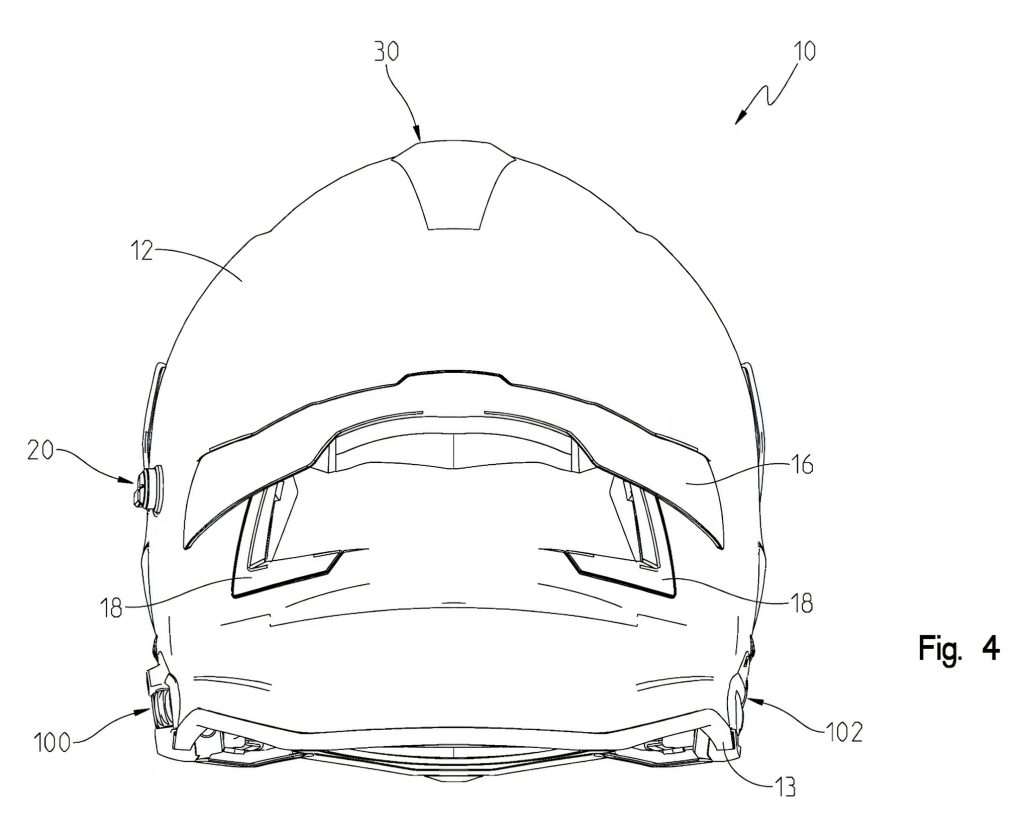
A central feature is modularity. Interchangeable modules are mounted on the sides of the helmet, which, depending on the configuration, can contain a radio, GPS or sensors, or can be fitted as simple covers without any technology. An additional, removable module can provide functions such as long-range radio connections, crash detection or a geofence function. Multiple helmets can be connected to form a network. The mesh network operates at 2.4 gigahertz according to the patent specification and allows one helmet to be designated as the group leader.
Further ideas build on this foundation. Synchronized lighting allows groups to visually distinguish themselves, and a leader can be identified by a unique light pattern. A function described as Smart Tether creates a virtual radius around the group leader and alerts when a participant moves too far away. The radio automatically adjusts its transmission power via location data to comply with locally permitted limits, for which the document references the proprietary Ride Command app.
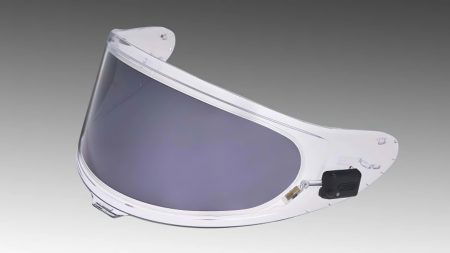
Vehicle operation also partially migrates to the helmet. Buttons on the helmet can be freely assigned to functions such as suspension, steering, drivetrain, lighting, audio system or climate control. Accessories can also be controlled, including heated clothing, heated footwear, goggles with a heated lens or a winch. A heated breath box is intended to prevent the microphone from icing up in cold conditions, and a wirelessly powered visor can be heated. The lights on the helmet can serve as turn signals as well as brake and tail lights, communicating with the vehicle for this purpose.
Will the Polaris Helmet Actually Reach the Market?
Whether and when such a helmet enters production remains open. A patent grant does not constitute a product announcement, and many patented ideas never make it to market.
Numerous manufacturers file technology patents that are never produced. The patent therefore reveals less about a finished product than about the direction in which a major manufacturer is thinking. According to media reports, the Polaris corporation also includes the apparel brand Klim, which means a future implementation might appear not under the Polaris name but under one of its brands.
The project should be seen in the context of a longer development trajectory. In recent years, numerous rider assistance systems have been introduced, from lean-angle-sensitive ABS and traction control to radar-based distance functions and blind-spot warning systems. These systems have so far primarily monitored the vehicle. The approach described in the patent additionally turns the focus onto the rider.
Frequently Asked Questions
-
What is the Polaris helmet patent?
The Polaris helmet patent is a US patent numbered US 12550961 B2, granted in February 2026. It describes a connected helmet that monitors the rider’s condition and communicates with the vehicle. The applicant is the powersports corporation Polaris.
-
How does the helmet measure rider fatigue?
The helmet calculates an energy value from acceleration, head rotation rates, biometric data and suspension data, which Polaris refers to as “Total Energy Imparted.” When this value exceeds defined thresholds, the system triggers graduated warnings. A forehead sensor captures heart rate and respiratory rate, among other metrics.
-
Can the helmet stop the vehicle?
Yes, at the highest escalation level, the system can intervene in the vehicle according to the patent specification. The measures described include speed limitation, engine power reduction and deceleration to a standstill. This only occurs when the rider has not responded to previous warnings.
-
What vehicles is the helmet designed for?
The helmet is not limited to motorcycles. The patent mentions side-by-side vehicles, snowmobiles, ATVs, off-road vehicles and three-wheelers, among others. Polaris covers a large portion of these vehicle classes with its products.
-
Is the helmet already available for purchase?
No, so far it is only a patent. A grant is not a product announcement, and many patented concepts never reach the market. A specific launch date is not known.
➜ This article is part of our comprehensive overview: Motorcycle Patents and Future Technology: What Manufacturers Are Developing. Find all key information on this topic in one place.