- The priority according to Jorge Martinez: World Superbike first, MotoGP after that
- No fixed date, Martinez speaks of maybe three to five years
- The MotoGP grid is locked in until 2031 with five manufacturers and eleven teams
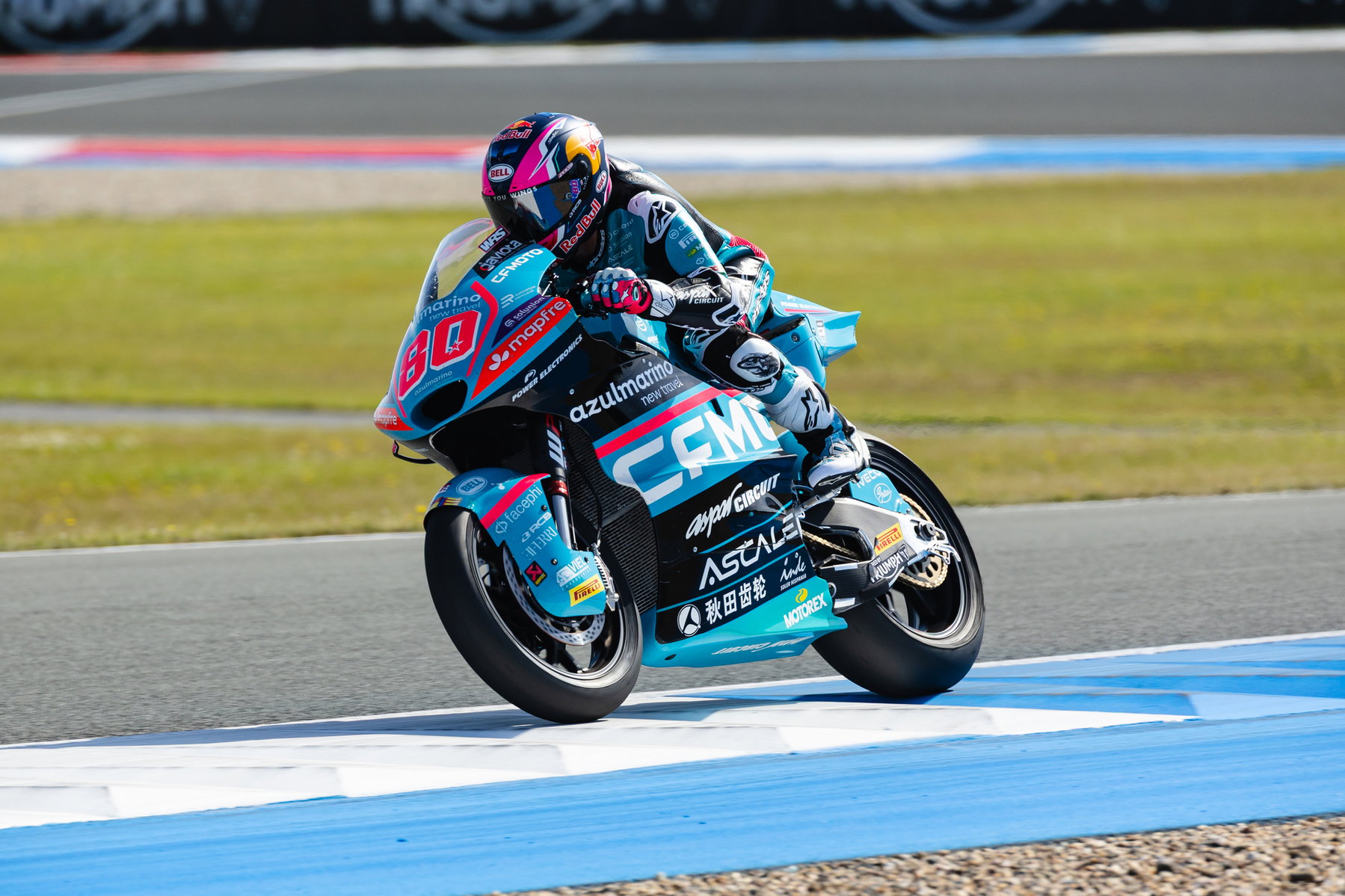
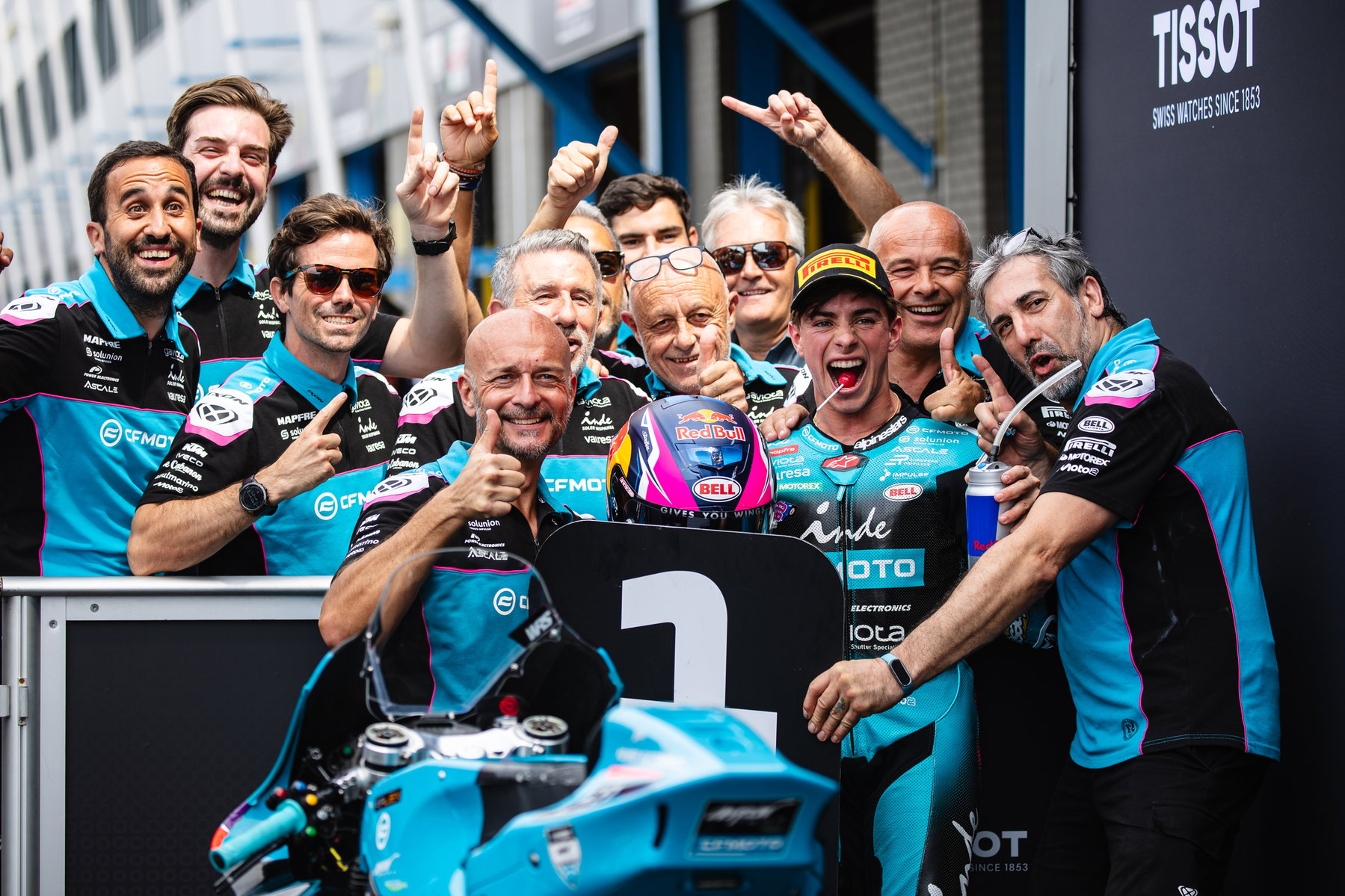
CFMoto has been part of Grand Prix racing since 2022, back then as a partner of the German PrüstelGP team in the smallest class. That first step has since grown into a programme covering Moto3, Moto2, a German chassis builder and a superbike of its own. Just how far the plans reach has now been described by Jorge „Aspar“ Martinez, whose team has raced under the Chinese manufacturer’s name since 2024.
What has Jorge Martinez said about CFMoto’s MotoGP plans?
Martinez confirms MotoGP as a shared goal but explicitly avoids naming a date. What matters more to him is the order of events: „The priorities are set. Our partner CFMOTO has a strong interest in developing towards World Superbike and then MotoGP as well.“
He frames the commitment as something the sport has not seen in this form before: a major manufacturer from China making investments that cover every important area, from developing young riders and supporting teams through to infrastructure and technology.
On timing the Spaniard stays vague. „I cannot give a clear timetable here, maybe it is three or five years, but I can confirm that the shared vision is MotoGP,“ he said. The partnership between his team and the manufacturer was extended earlier this year and runs until at least 2031.
Why does the route lead to World Superbike first?
Because World Superbike requires a production-based motorcycle, which is exactly what CFMoto is working on anyway. A MotoGP project, by contrast, would demand a pure prototype built from the ground up.
Other Chinese brands have already taken this route. Kove entered Supersport 300 in 2023, QJ Motor has been racing in World Supersport since 2024, and ZXMoto added another entrant in the middle category for 2026. CFMoto, however, is aiming straight at World Superbike and would therefore become the first manufacturer from China to compete in that class.
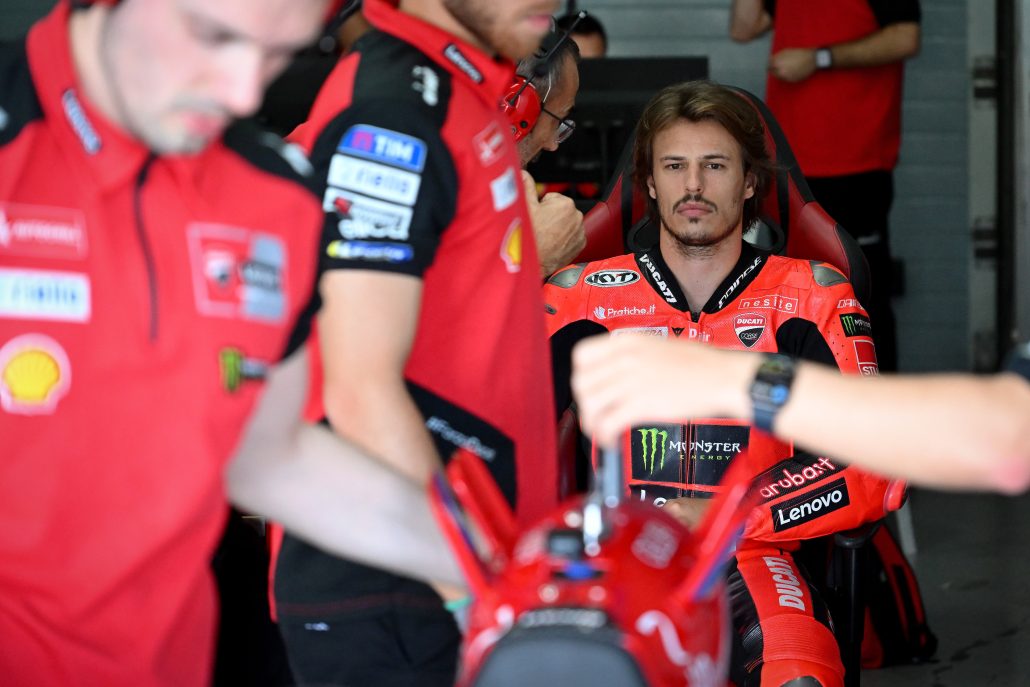
Preparations have reportedly been under way for many months. According to media reports there is already an agreement with Matteo Ferrari as test rider, and initial test runs are said to have taken place. The Italian won the 2019 MotoE championship and brings experience from Moto2 as well as World Supersport, where he is racing for a Ducati team in 2026. At times the manufacturer’s senior management discussed whether experience should first be gathered in the Supersport class before moving into Superbike.
What can the CFMoto V4 SR-RR do?
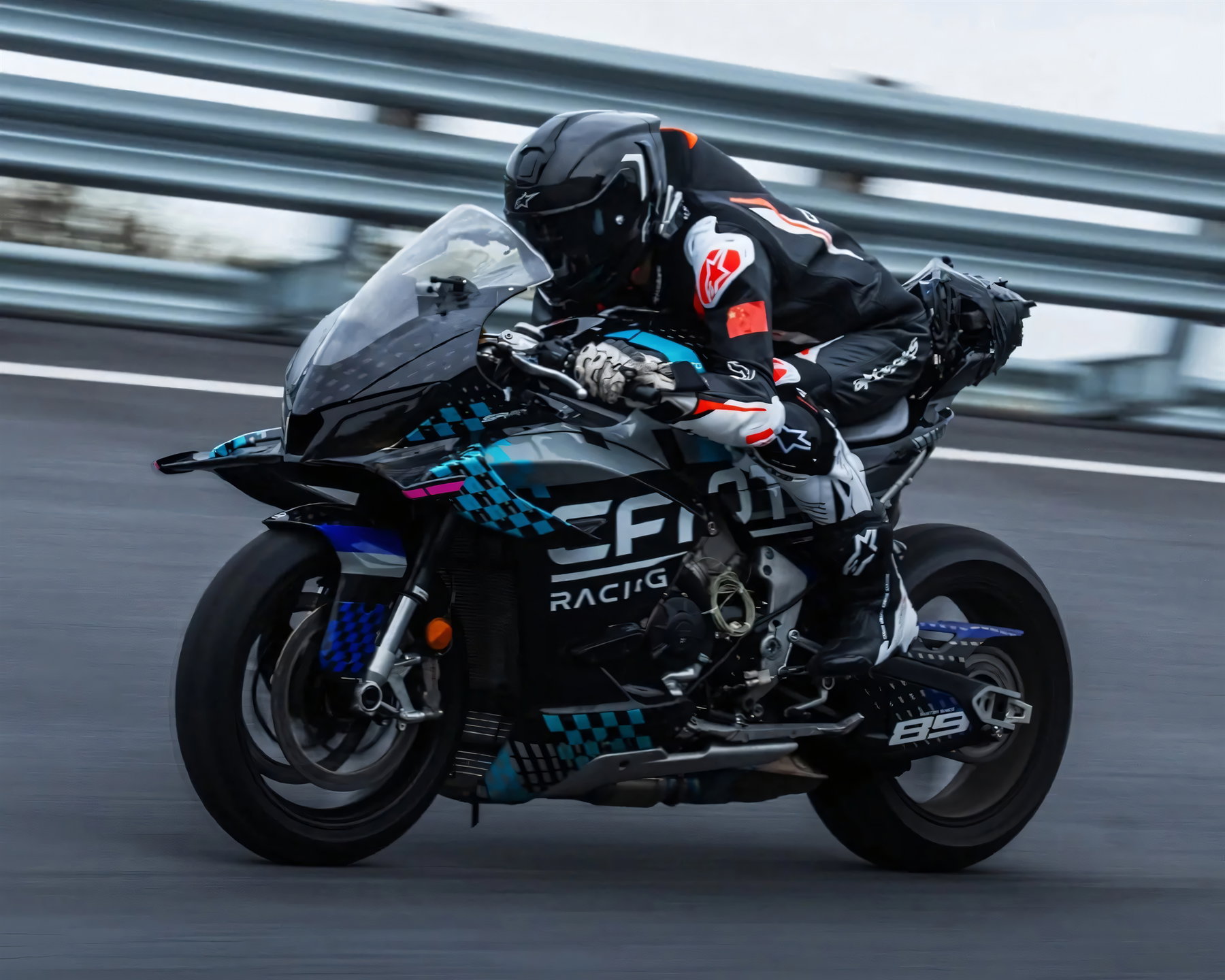
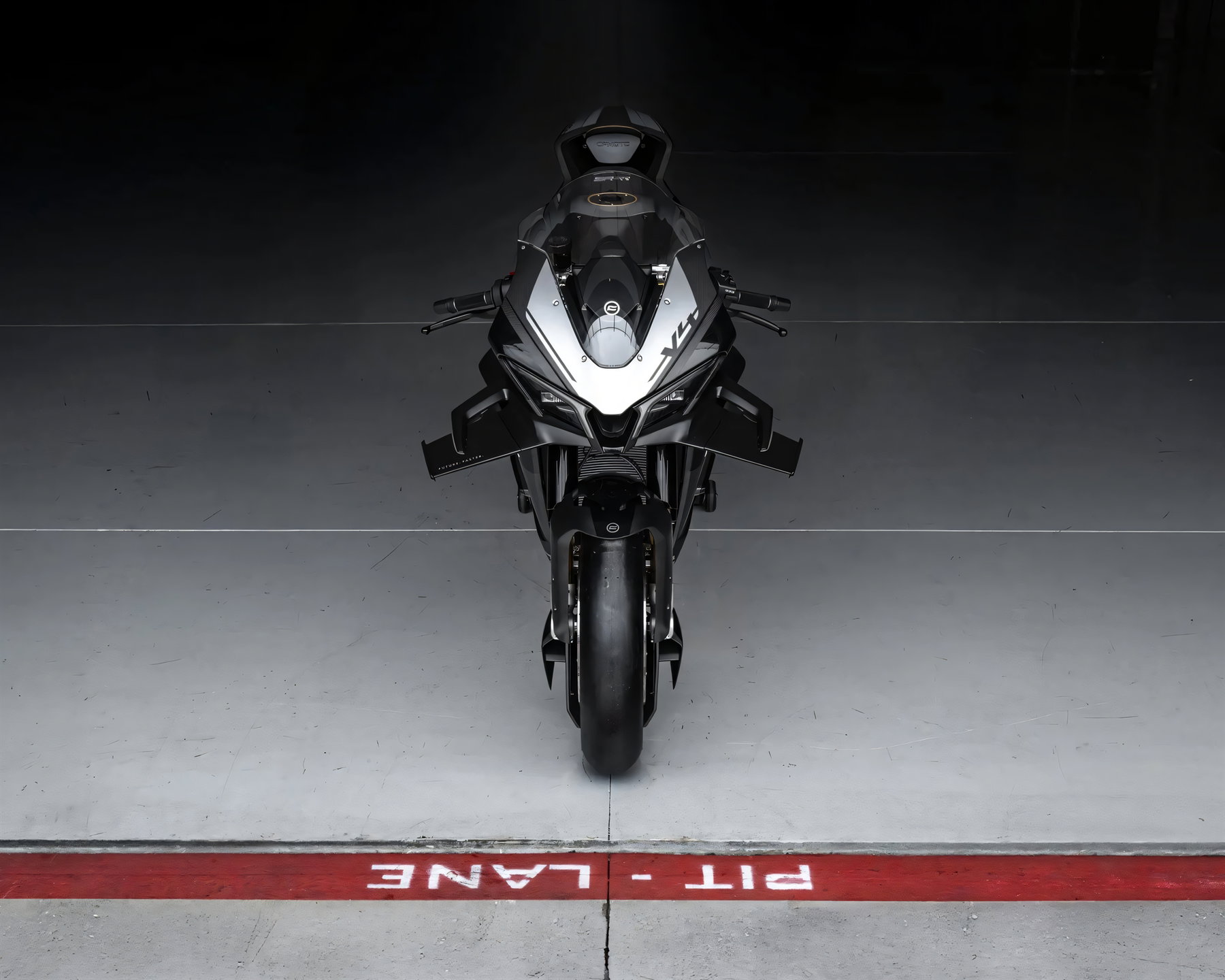
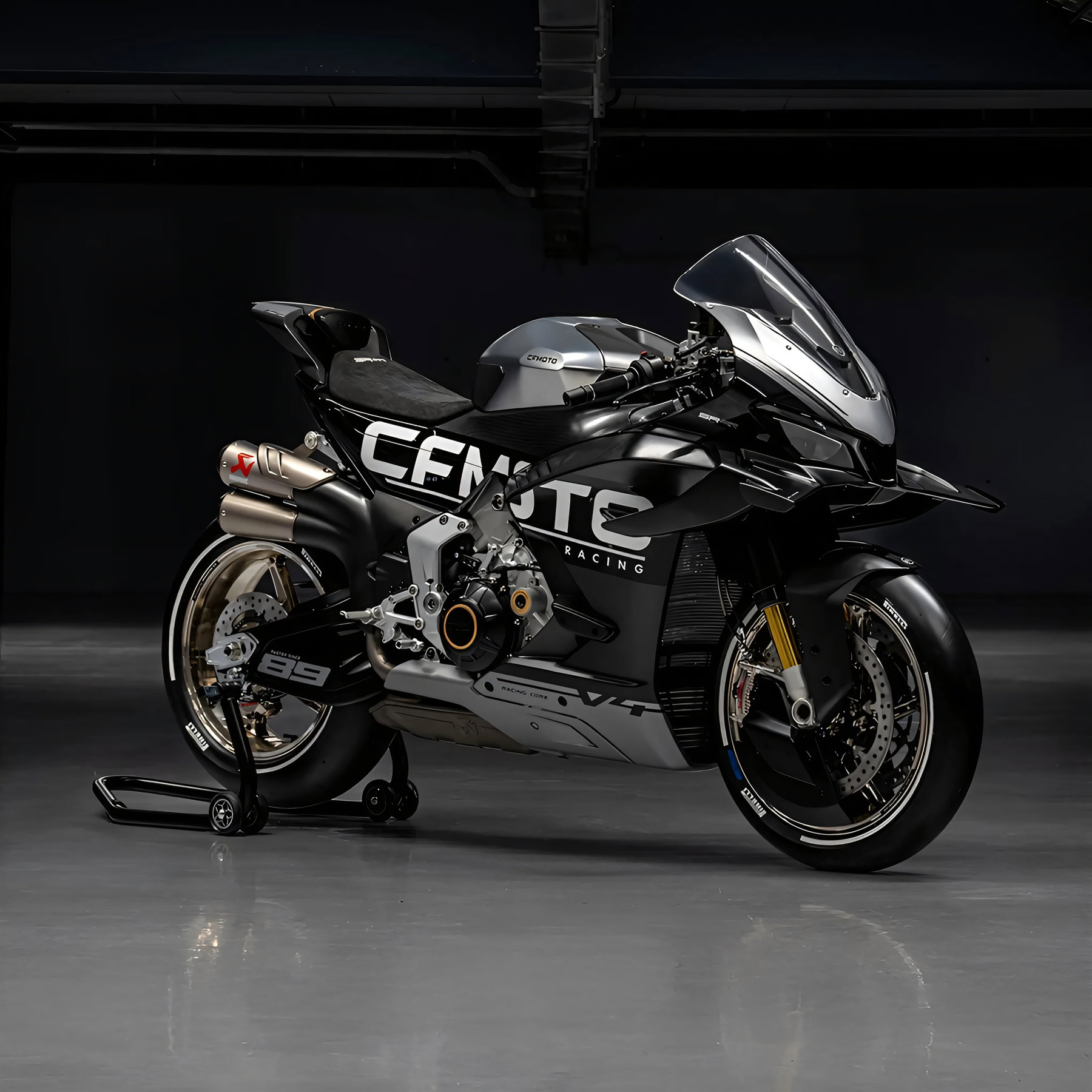
The V4 SR-RR is a superbike with 997 cubic centimetres and more than 210 hp, due to go on sale in 2027. It is the motorcycle that makes an entry into World Superbike possible in the first place.
CFMoto showed the V4 engine for the first time at the EICMA motorcycle show in 2024, with the prototype of the complete bike following a year later. Figures under discussion at one point were 212 hp (156 kW) at 14,500 rpm, road legal and compliant with the Euro 5+ emissions standard. Values quoted the year before were 209 hp at 14,500 rpm and 114 Nm (around 84 lb-ft) at 12,500 rpm, with an engine weight of 61.5 kg (around 136 lbs). Total weight is meant to stay below 200 kg (around 441 lbs) with a full tank.
Technically the manufacturer follows what is standard practice in racing. The crankshaft rotates backwards, which counteracts the bike’s tendency to wheelie and improves handling. MotoGP machines use the same principle. The cylinder angle is 90 degrees, the test bike runs Brembo calipers, an Akrapovič exhaust system and semi-active suspension. The prototype also carries electronically controlled winglets that adapt to the riding situation. Whether the production model will adopt that technology remains open.
On 15 June 2026 CFMoto reported a speed record for motorcycles built in China. At the CCCC Automotive test facility in Shangrao, 315.82 km/h (196.2 mph) were measured as part of the China Motorcycle Topspeed Record Challenge and certified by a notary on site. For comparison: the MotoGP best mark stands at 368.6 km/h, set by Jorge Martin at Mugello.
Kalex, Moto3 and the step-by-step build-up of expertise
For CFMoto, racing is also a route to technical expertise. That became visible in February, when the stake in German chassis manufacturer Kalex became known. Legally the deal had already been completed in December 2025; it only became public at the MotoGP season opener in Thailand.
CFMoto took over 51 percent of Kalex Engineering GmbH, based in Bobingen near Augsburg. Previously Alex Baumgärtel, Klaus Hirsekorn and Günther Holzer each held a third. Holzer’s share went entirely to CFMoto, while Baumgärtel and Hirsekorn each gave up enough to produce the majority. Kalex has supplied Moto2 since 2010, and since 2013 every constructors’ title in the class has gone to the company, which currently employs eight people, three of them engineers. For the 2026 season Kalex equips ten teams with two riders each.
Baumgärtel remains managing director and keeps sole decision-making authority on Moto2 matters. „It does not feel like a takeover, it feels like a partnership,“ he said. He describes the purpose of the link-up like this: „The goal behind it is to bring racing technology into their series production, in other words a transfer of know-how.“ He rules out any preferential treatment for the Aspar team, and contract work for other manufacturers remains possible.
CFMoto also wanted to take on responsibility in Moto3. The manufacturer bid to become the sole supplier of the class’s new technical platform from 2028. Alongside CFMoto, KTM and Honda took part in the tender, but the contract went to Yamaha, which is converting the 689 cubic centimetre parallel twin from the R7 for racing. The tender stipulated that a rolling chassis, meaning the bike without an engine, may cost no more than 50,000 euros (around 57,000 US dollars) from 2028. At present that figure stands at 100,000 euros (around 114,000 US dollars). For CFMoto, Moto3 would have been an opportunity to gather experience on a large scale.
When would a MotoGP entry be possible at the earliest?
There is no room before 2032. The framework for MotoGP’s new era from 2027 is fixed at five manufacturers and eleven teams and runs through to the end of 2031.
The question of when CFMoto will race in MotoGP therefore hinges on the next big round of negotiations, in which the series will be defined from 2032. By then, in the view of people in the paddock, the manufacturer should have everything in place to enter under its own steam.
Martinez had already made clear in January that a quick entry would not make sense anyway: „We have to be realistic. We are in 2026, and we have already prepared and finalised everything for 2026. Building the infrastructure for 2027 would be crazy.“ He pointed instead to a step-by-step approach.
He would have experience of the premier class himself. Martinez was active in all classes for almost a decade and withdrew from MotoGP at the end of 2018 in order to focus more on developing young riders. For 2027 his Moto2 structure is supplying two riders to the premier class, David Alonso and Dani Holgado.
What a Chinese manufacturer would bring to MotoGP
For the series itself it is about reach and money. Martinez puts it like this: „With a powerful manufacturer, MotoGP gains access to new partners and sponsors.“ In his view further projects could follow as a next step, up to and including a Grand Prix in China. The sport will become considerably more international in the coming years, he argues, and that is also necessary.
Were it to happen, CFMoto would join a small group with programmes in both series. At present only Ducati, Honda and Yamaha compete in MotoGP and World Superbike at the same time. That used to apply to Suzuki, Aprilia and Kawasaki as well.
Seen across the 2026 season as a whole, the statement fits into a series of steps all pointing in the same direction: the extension with the Aspar team until 2031, the majority stake in Kalex, the bid for the Moto3 platform and the development of an in-house superbike. A timetable for MotoGP is still missing. But the manufacturer is visibly collecting the building blocks for it.
Frequently asked questions
-
When will CFMoto race in MotoGP?
No date has been set. Jorge Martinez speaks of maybe three to five years but stresses that MotoGP is the shared vision. Since the grid is locked in until 2031 with five manufacturers and eleven teams, a realistic entry would only be possible from 2032.
-
Why does CFMoto want to enter World Superbike first?
World Superbike requires a production-based motorcycle, and that is exactly what the manufacturer is working on with the V4 SR-RR. According to media reports an entry is planned for 2027, as the first manufacturer from China in this class.
-
What is CFMoto’s connection to the Aspar team?
CFMoto replaced GasGas as title sponsor of Jorge Martinez’ team in 2024 and has been present in Moto3 and Moto2 ever since. The partnership was extended in early 2026 and runs until at least 2031.
-
How much power does the CFMoto V4 SR-RR have?
The manufacturer quotes more than 210 hp from 997 cubic centimetres. At one point 212 hp (156 kW) at 14,500 rpm were under discussion. The production model is due to reach the market in 2027.
-
Why did CFMoto lose the Moto3 tender?
The contract for the new Moto3 platform from 2028 went to Yamaha with a concept based on the parallel twin engine from the R7. KTM and Honda had also applied alongside CFMoto. One deciding factor was the cost cap of no more than 50,000 euros (around 57,000 US dollars) for a rolling chassis.
➜ More on this topic in our overview: 2027 MotoGP Season: The Complete Overview.
➜ This article is part of our comprehensive overview: 2026 MotoGP Season: The Complete Overview – Teams, Riders, Calendar & Championship Standings. Find all key information on this topic in one place.