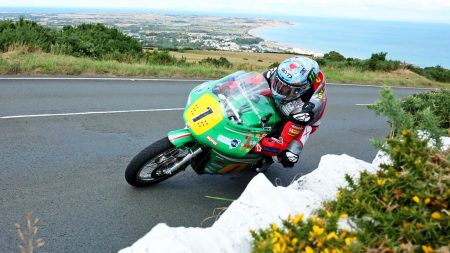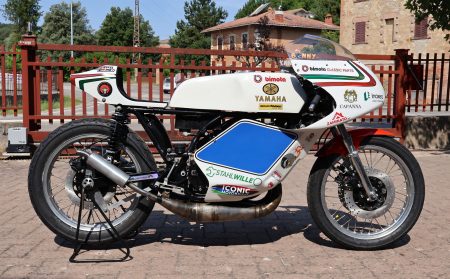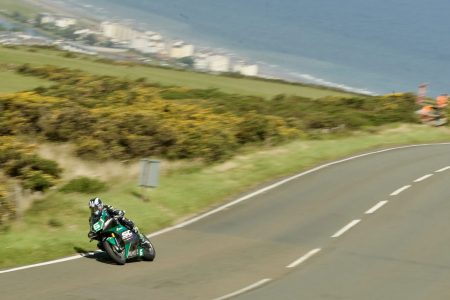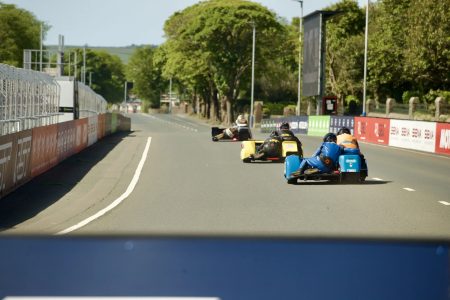
- All Classic TT races now take place between Saturday 22 and Tuesday 25 August
- Mike Browne lapped at 127.551 mph in Formula One, the fastest lap of the week
- Historic Junior and Junior 600 have been cut from three laps to two
The 2026 Classic TT has had a difficult opening week. Rain, cancelled sessions and delayed start times meant riders got no meaningful track time until Wednesday. On Friday evening the organiser drew the consequences and reshuffled the entire race schedule. Instead of three race days spread across the week, racing now takes place on four consecutive days. In sporting terms a clear picture has emerged nonetheless: in almost every class there is one rider who has pulled clearly ahead.
Why were the Classic TT races moved forward?
The organiser is reacting to the weather forecast for the coming week. According to official information, conditions deteriorate significantly from Wednesday 26 August, with rain, heavy showers and wind until at least Friday 28 August.
The window between Saturday and Tuesday is regarded as the most favourable currently available. The organiser speaks of the best available opportunity to complete the remaining Manx Grand Prix and Classic TT programme in full. The decision was taken after evaluating a specialist weather report and in consultation with those responsible for safety, medical cover, marshalling and road closures.
The organiser also explains why it did not simply wait: holding on until Wednesday would have meant losing the remaining racing opportunities only once the bad weather had already arrived. There is still no guarantee. Every session remains dependent on the weather, on track conditions and on safety requirements, and further changes are explicitly possible.
When do the Classic TT races take place now?
All five Classic TT races are now spread across Saturday, Sunday, Monday and Tuesday. The original race days were Monday 24, Wednesday 26 and Friday 28 August.
On Saturday 22 August the roads close at 9:30 am. A qualifying session for all classes runs at 10:15 am, with a second at 1:45 pm. Manx Grand Prix races run in between and afterwards. The Classic TT Historic Junior starts at 4:45 pm over two laps.
Sunday 23 August belongs entirely to the Classic TT. The roads close at 12:45 pm, the Formula One race starts at 1:30 pm over three laps, and at 3:30 pm the Lightweight and Ultra-Lightweight run together over three laps.
Monday 24 August brings two separate closures. After the two Manx Grand Prix races, the Historic Senior starts at 2:45 pm over three laps. The roads open briefly from 5 pm before closing again at 6 pm. The Junior 600 follows at 6:30 pm over two laps.
Tuesday 25 August brings the conclusion. The Senior Classic TT starts at 10:15 am over four laps, at 12:30 pm the TT Rewind parade and the Classic Sidecar parade follow, and at 1:45 pm comes the parade in honour of John McGuinness and his 30 years on the island.
Two races have been shortened in the process. Historic Junior and Junior 600 now run over two laps instead of three. The organiser cites the available track time and the operational contingency needed in the schedule.
Who is fastest in Formula One?
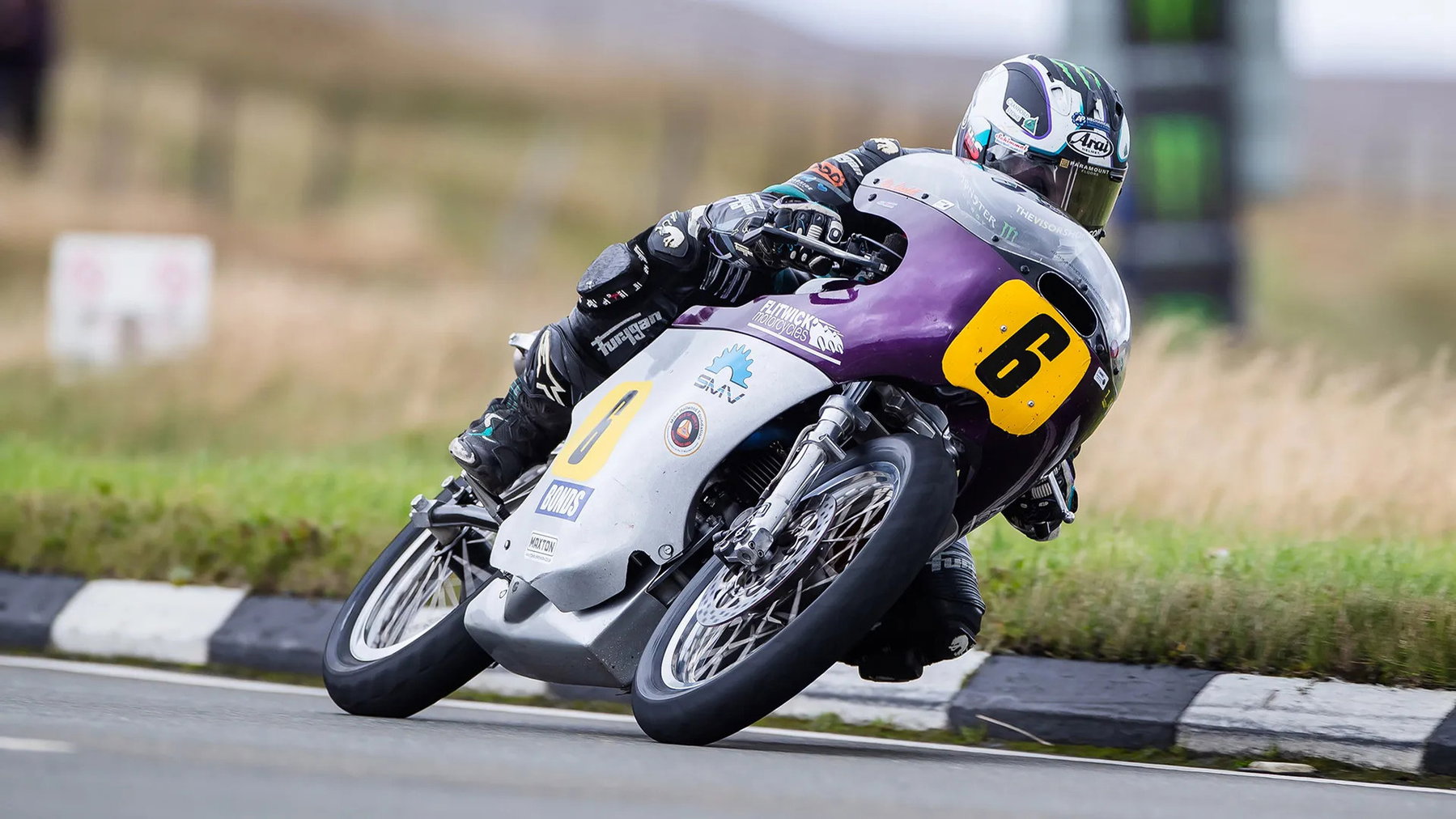
Mike Browne. On Friday afternoon the Irishman lapped at 127.551 mph on the Electric Van Company team Kawasaki, the fastest lap of the entire week.
That lap was 0.498 seconds inside the class best set by Bruce Anstey in 2017, which stands at 127.496 mph. Because qualifying times do not count towards the official record list, the record formally remains. The time is a signal nonetheless, as Browne was 8.2 seconds quicker than Jamie Coward, who managed 126.572 mph on the Greenall Racing Kawasaki.
Behind them come David Johnson at 125.278 mph and Michael Dunlop at 125.191 mph on the Team Classic Suzuki GSX-R 750 SRAD. Shaun Anderson, quickest on Wednesday, recorded 123.638 mph, with Conor Cummins on 123.411 mph.
The way the week developed is striking. On Wednesday Anderson led with 122.822 mph, on Thursday Nathan Harrison took over with 124.721 mph, and on Friday Browne pulled clear. Harrison himself had bad luck on Friday: he was quickest as far as Glen Helen, then lost more than a minute and a half on the way to Ballaugh and ended up at 113.569 mph.
Dunlop and McGuinness set the pace in the classic classes
In the Lightweight, Michael Dunlop has improved day by day. On Wednesday he completed only a single lap at 111.875 mph on the Milenco by Padgetts Motorcycles Honda, leaving him behind Browne, Stuart Hall and Paul Jordan. On Thursday he improved to 116.470 mph, and on Friday to 117.596 mph. His margin over Paul Jordan on the Laycock Racing Yamaha was most recently a good three miles per hour.
In the Historic Senior the week belongs to John McGuinness. On the Team Winfield Paton he went from 101.061 mph on Wednesday to 111.750 mph on Thursday and 113.092 mph on Friday. That lap was also only just off the class record. McGuinness himself spoke of excellent conditions on the course. Second quickest on Friday was Mike Browne at 111.163 mph on the Peter Lodge Racing Norton, his first lap of the week in this class.
In the Historic Junior, Dean Harrison leads. The seven-time TT winner managed 104.373 mph on the Craven Classic Racing and Ted Woof Honda, putting him ahead of Paul Jordan at 103.232 mph and Jamie Coward at 102.404 mph. Harrison too stayed only just above the class record.
The number of riders doubling up remains notable. Browne, Dunlop, Jordan and Coward each appear near the front in several classes, in some cases on completely different machines.
What do the new Junior 600 and Ultra-Lightweight classes bring?
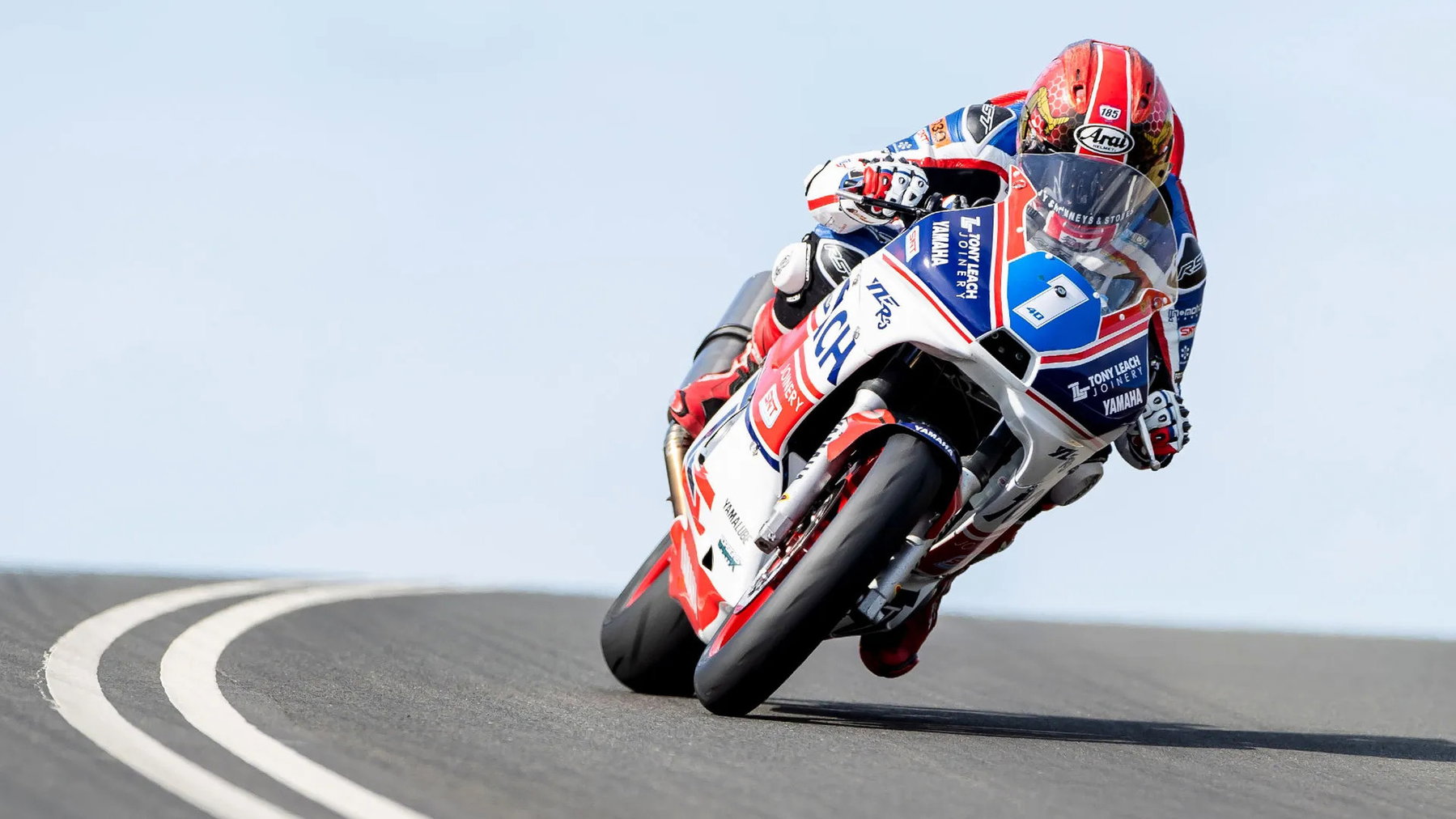
Both classes are new to the Classic TT programme in 2026 and each has produced a clear favourite. In the Junior 600 that is Joe Yeardsley, in the Ultra-Lightweight Joe Loughlin.
On Friday, Yeardsley became the first in the class to lap at over 120 mph on the Tony Leach Joinery Yamaha, specifically 120.143 mph. That was 20.9 seconds clear of Barry Furber at 117.963 mph. Before that, Michael Russell had set the benchmarks on the Complete Plumbing Solutions Yamaha YZF-R6 with 114.500 mph on Wednesday and 117.194 mph on Thursday. Wednesday shows how close the class was early on: Russell was just 0.332 seconds ahead of Brian McCormack.
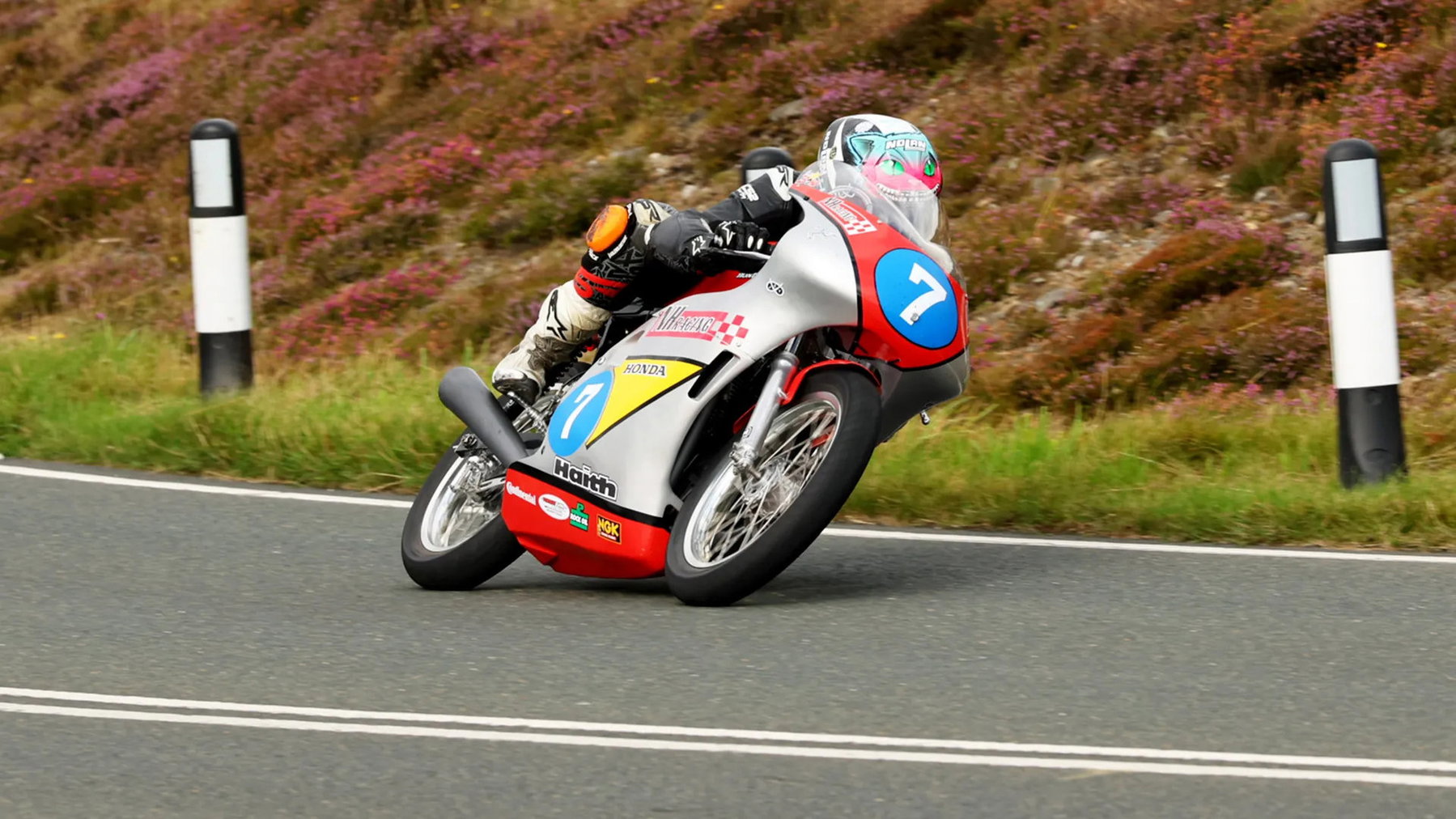
In the Ultra-Lightweight, Loughlin improved from 105.657 mph through 108.552 mph to 110.310 mph on the G2 Technical Services Kawasaki. The Irishman had not ridden the Mountain Course since his TT debut in 2022. Behind him come Joey Thompson at 106.847 mph and Harley Rushton at 105.170 mph. Paul Cassidy, who had been quickest on Wednesday, made no further improvement at the front on Friday.
The schedule change makes a particular difference for spectators in these two classes. The Junior 600 now runs as an evening race on Monday, while the Ultra-Lightweight runs together with the Lightweight on Sunday afternoon.
How did the qualifying week go overall?
Largely chaotic. Only a fraction of the planned sessions went ahead, and Classic TT riders got no usable track time until Wednesday.
The opening day on Sunday ended early and Monday qualifying was cancelled entirely. On Tuesday evening the session was stopped after a few laps. On Wednesday afternoon the clerk of the course used a reserve slot for the first time, with the evening programme lost to the forecast. On Thursday only the afternoon session ran again, and the evening was cancelled because of damp conditions. On Friday the start was pushed back by three hours to let the course dry. A Friday evening slot was held in reserve but not used.
The week was overshadowed by two fatal accidents in qualifying for the parallel Manx Grand Prix. In Classic TT qualifying, Stuart Hall also crashed at Laurel Bank on Wednesday. He was conscious after the fall.
Together with the Manx Grand Prix, the Classic TT makes up the August part of the racing season on the Snaefell Mountain Course, whose sporting highlight is the Tourist Trophy in early summer. Both August events share a schedule, road closures and organisation. Disruption to one part of the programme therefore has an immediate effect on the other.
The Classic TT itself still officially runs until Friday. Should the race programme be completed on Tuesday and the weather allow no further track activity, an extended support programme is planned around the Mercury Club, which also houses the John McGuinness exhibition. Rider and team appearances, panel discussions, podcasts and interviews are planned there. If the forecast improves significantly, the organiser can use additional slots on the course.
Frequently Asked Questions
-
When does the 2026 Classic TT end?
The 2026 Classic TT race programme is due to be completed on Tuesday 25 August. The event itself officially runs until Friday 28 August. For the remaining days a support programme away from the course is planned in case the weather allows no further racing.
-
Which Classic TT races were moved forward?
All remaining races were moved forward. The Historic Junior now runs on Saturday, the Formula One as well as the Lightweight and Ultra-Lightweight on Sunday, and the Historic Senior and Junior 600 on Monday. The Senior Classic TT closes the programme on Tuesday.
-
Who was fastest in 2026 Classic TT qualifying?
The fastest lap of the week was set by Mike Browne in Formula One at 127.551 mph. In the other classes the most recent leaders were Michael Dunlop in the Lightweight at 117.596 mph, John McGuinness in the Historic Senior at 113.092 mph, Dean Harrison in the Historic Junior at 104.373 mph, Joe Yeardsley in the Junior 600 at 120.143 mph and Joe Loughlin in the Ultra-Lightweight at 110.310 mph.
-
Why were two Classic TT races shortened?
Historic Junior and Junior 600 now run over two laps instead of three. The organiser explains that the programme has to remain deliverable within the available track time. Operational contingency also needs to be preserved.
-
Which classes are new at the 2026 Classic TT?
The Junior 600 and the Ultra-Lightweight are new to the programme. That takes the 2026 Classic TT to six classes in total. Both new races were run for the first time during qualifying week.
➜ This article is part of our comprehensive overview: Isle of Man TT 2026: The Complete Overview – Schedule, Riders, Teams & Results. Find all key information on this topic in one place.