- Around 1,100 products have been tested since 2018, currently 173 per year
- One garment dropped from 3.7 to 1.2 seconds of abrasion time while the price stayed the same
- Comparative measurements show that 1.4 seconds of abrasion time is enough for the top AAA class
The regulation on personal protective equipment has applied in Europe since April 2018. Since then, every motorcycle jacket and every pair of motorcycle trousers has had to be tested and certified. It sounded like a major step forward for safety. Eight years on, a test programme from the other side of the world is raising doubts. The number of certified products is rising while the measured level of protection is falling.
What is behind the MotoCAP test programme?
MotoCAP is an independent assessment programme for motorcycle clothing from Australia and New Zealand. It is run by an alliance of transport authorities, accident insurers and motorcycle associations that publish scientific results on protection and thermal comfort.
The decisive difference from certification lies in the procedure. For the standard, the manufacturer submits its own sample. MotoCAP, by contrast, buys the clothing anonymously at retail, two examples of each jacket or pair of trousers and three pairs of gloves, each from different sources. A computer program picks the candidates at random from what is on the market. Testing covers abrasion resistance, the strength of seams and fasteners and the energy absorption of the protectors, plus breathability and water resistance. The laboratory is accredited to ISO/IEC 17025.
The programme started in 2018. Back then it tested 152 products a year, today the figure is 173. In total, around 1,100 items have passed through the laboratory. Interest has changed too. According to the programme, website traffic is around five times higher than in the early years, when there were 2,000 to 3,000 users a month.
The chief scientist is Associate Professor Chris Hurren of Deakin University. He still sees the task as providing riders with a basis for their decisions, not with rules. The programme does not tell anyone what to wear, he says, but supplies the information for their own choice.
Why is protection falling on certified clothing?
Because the requirements of the standard are set too low in the testers’ view, and manufacturers are going down to exactly that limit. The growing database shows a protection value that falls year on year for jackets and trousers carrying EN 17092 certification, even though every single item meets its certification.
Hurren is blunt about it. In his words, “manufacturers are pulling protection out of gear to save money”. The standard, he says, was set low from the outset.
Abrasion resistance is affected most, meaning the time it takes for a material to wear through while sliding along the road. One product managed 3.7 seconds in an earlier version. A later version of the same product lasted only 1.2 seconds. The retail price was unchanged. On single-layer motorcycle jeans, the laboratory has measured values that barely differ from ordinary jeans.
The measurement series clearly show that several layers do more than one thick one. With a denim weighing 400 grams per square metre, one layer lasts 0.6 seconds, two layers last 2 seconds and three layers 4 seconds. The construction of a garment therefore matters more for protection than the brand name on the label.
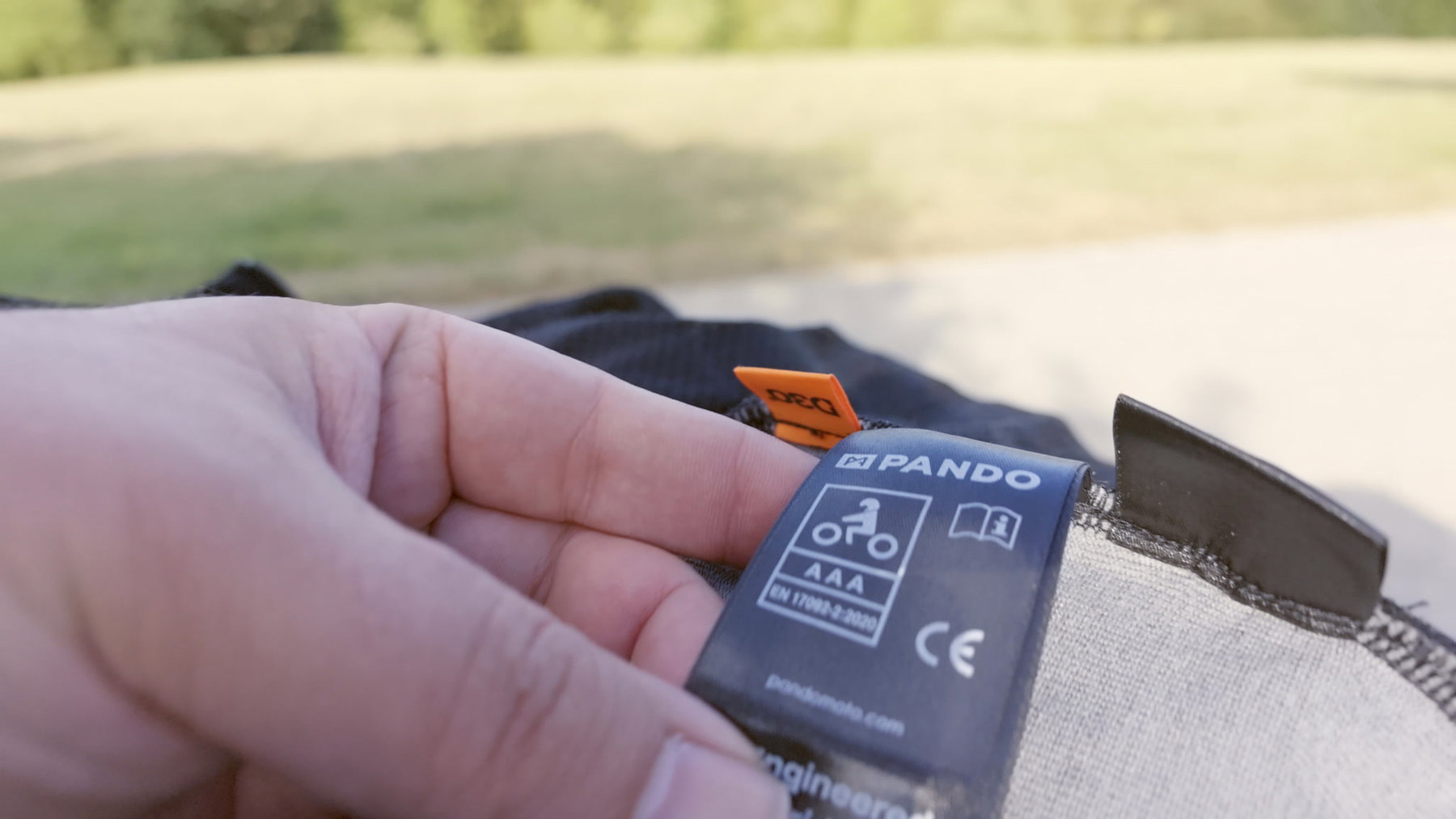
How strict is EN 17092 really?
The standard works on a pass or fail basis. It states that a garment meets a minimum requirement, but not by how much it exceeds that requirement.
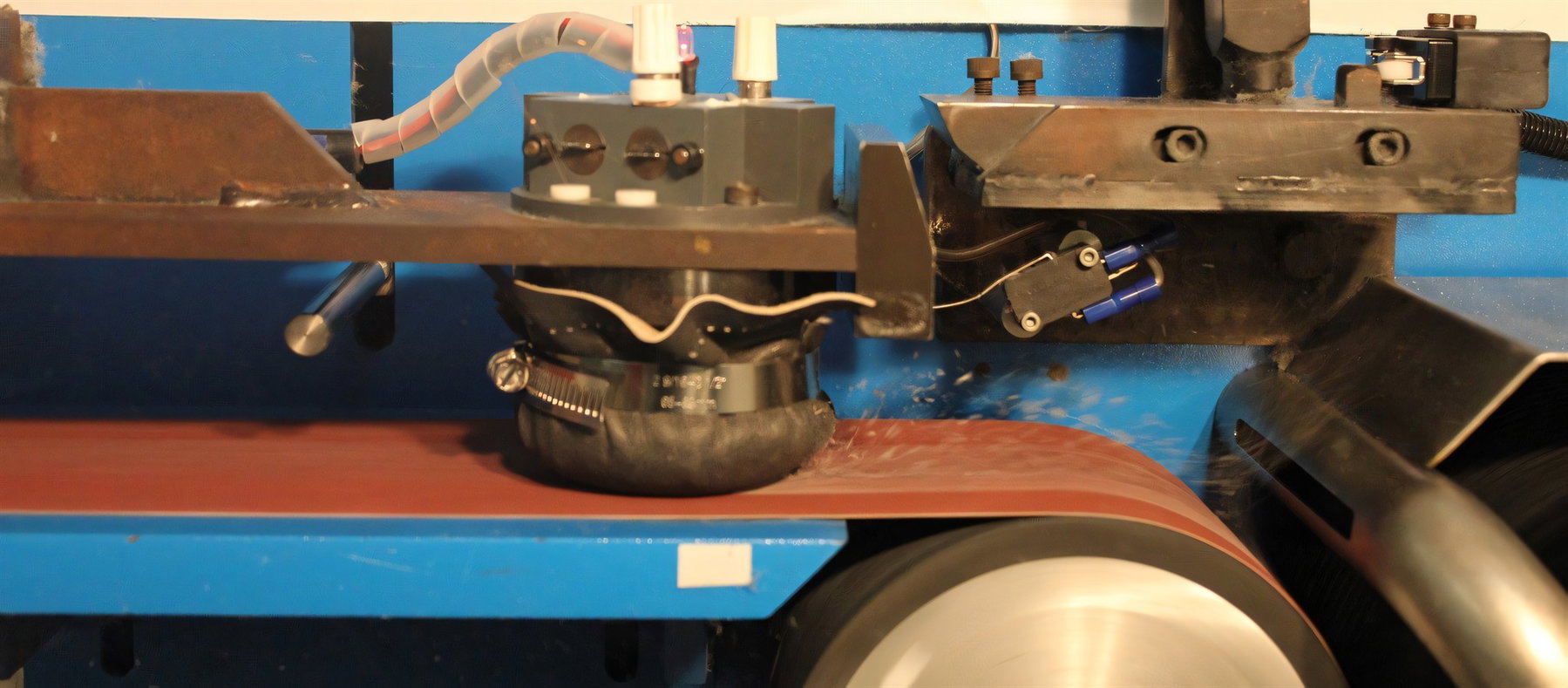
The difference shows up in the test method. EN 17092 uses what is known as the Darmstadt method. A material sample is dropped onto a concrete surface while rotating and then runs out. The only thing assessed is whether a hole larger than five millimetres has appeared afterwards. The older Cambridge method, by contrast, measures the exact time in seconds until a hole forms, on a 60-grit abrasive belt at 28 kilometres per hour. MotoCAP works with this procedure.
A guide for manufacturers published by researchers at Deakin University in 2022 contains the direct comparison. For the top AAA class, an abrasion time of 1.4 seconds on the Cambridge machine is enough. At the same time, a pair of leather trousers also rated AAA achieved 7.28 seconds in the same tests and was given five stars by MotoCAP. Both items carry the same label.
Paul Varnsverry, an independent expert on protective equipment, has translated the gap into percentages in a rough and explicitly simplified way. If what is technically achievable is set at 100 per cent, AAA would come to about 60 per cent, AA to around 40 per cent and A to about 20 per cent. The stricter predecessor standard EN 13595 would have covered the upper range, but it was withdrawn as a basis for CE marking on 5 September 2022. No replacement for that upper field exists so far.
Fairness demands the counter-check. MotoCAP has found 45 certified items that scored only half a star or one star in its own testing. There are, however, also items with EN 17092 certification that manage three stars and more. A certificate is therefore not a bad sign, it simply says little about the gap to the competition.
What the road surface has to do with protection
The surface plays a part in how long a material holds out. More recent measurements on real roads have shown that urban asphalt is around 4.5 times less aggressive on clothing than the coarse chip seal found on many rural roads. This surface is created by spraying bitumen and then rolling in loose chippings.
This is not a purely Australian issue. A British review of enquiries to highway authorities found that around 43 per cent of the roads examined under local authority responsibility have such a chip seal surface. The smoother trunk roads make up only two to three per cent of the network there. Anyone who enjoys winding back roads is therefore often riding on precisely the rougher surface. The link makes mechanical sense: on fine asphalt the fabric rests over a large area and spreads the load, whereas on coarse chippings the force hits only individual points and tears fibres out more quickly.
How many stars make sense?
MotoCAP recommends at least two stars for riding in town and three stars or better for rural roads. To reach three stars, a garment has to achieve at least 3 out of 10 for abrasion.
An analysis from spring 2025 shows how far reality is from that. Of 61 women’s motorcycle trousers tested, 84 per cent scored only 3 or worse for abrasion. Forty of those trousers came in at 1 out of 10. Only three models reached 5 out of 10 or above.
Even so, Hurren sees no reason for doom and gloom. He points out that gear is fundamentally better than no gear. If a garment with three stars is just as comfortable and costs the same as one with half a star, everything speaks for the better item. And a three-star item that comes along on every ride is worth more than a five-star item that stays in the wardrobe.
Why the topic matters in Europe too
EN 17092 is the standard used to certify motorcycle clothing in the European Union. Everything sold in German shops carrying the AAA, AA or A classes follows exactly this test system. The criticism from the Australian laboratory therefore also applies to the domestic market, regardless of which road surfaces are tested there.
There is another side to it. The programme has observed that several Australian manufacturers have steadily improved their products since the testing began. Smaller and less well-known brands in particular benefit when an independent result confirms their work. Hurren sees genuine value in that for the industry.
For buyers, one simple conclusion remains. Price, brand reputation and certification say little on their own about how one garment compares with another. Anyone who wants to know the difference needs measured values rather than labels. In the debate around protection classes and motorcycle clothing, that is currently the most important point.
Frequently Asked Questions
-
What does EN 17092 mean for motorcycle clothing?
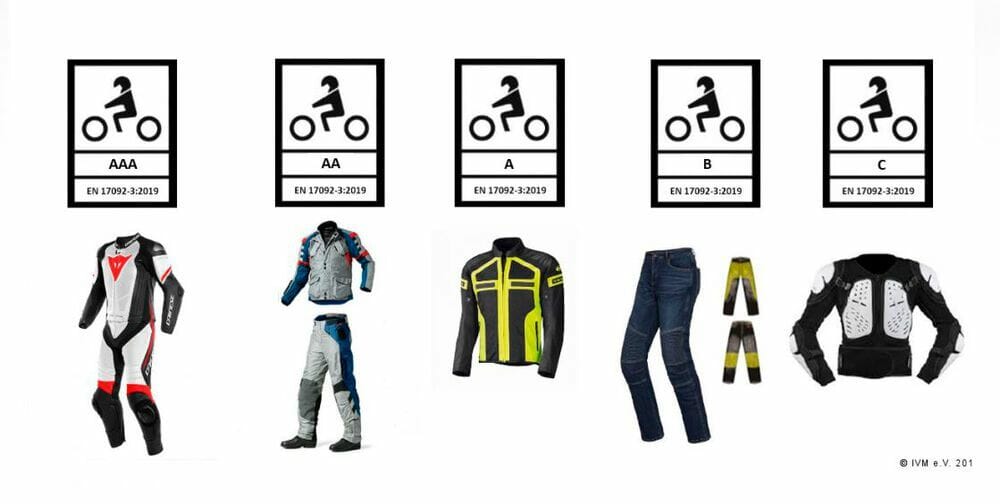
EN 17092 is the European standard for certifying motorcycle jackets and trousers. It has five levels, namely AAA, AA, A, B and C, with B and C being special cases without full protection. It works on a pass or fail basis and does not show by how much an item exceeds the minimum requirement.
-
How many seconds of abrasion time does class AAA require?
According to comparative measurements, 1.4 seconds on the Cambridge machine is enough to meet the abrasion requirement of the top AAA class. By comparison, a pair of leather trousers also rated AAA achieved 7.28 seconds in the same tests. Both carry the same marking.
-
Why do some certified items score poorly at MotoCAP?
Because the two systems test differently. The European standard uses the Darmstadt method with a concrete surface, while MotoCAP uses the Cambridge method with a coarse abrasive belt. Forty-five certified items scored only half a star or one star, while others reached three stars and more.
-
Which level of protection is recommended for rural roads?
MotoCAP recommends at least three stars for rural roads, while two are enough for town riding. The reason lies in the surface, because coarse chip seal is around 4.5 times more aggressive than smooth urban asphalt. To reach three stars, a garment has to score at least 3 out of 10 for abrasion.