- 122 hp (89.6 kW) at 9,500 rpm from 948 cc
- From 13,270 euros in Germany, market launch in April 2027
- Front and rear radar for adaptive cruise control, collision warning and blind spot detection
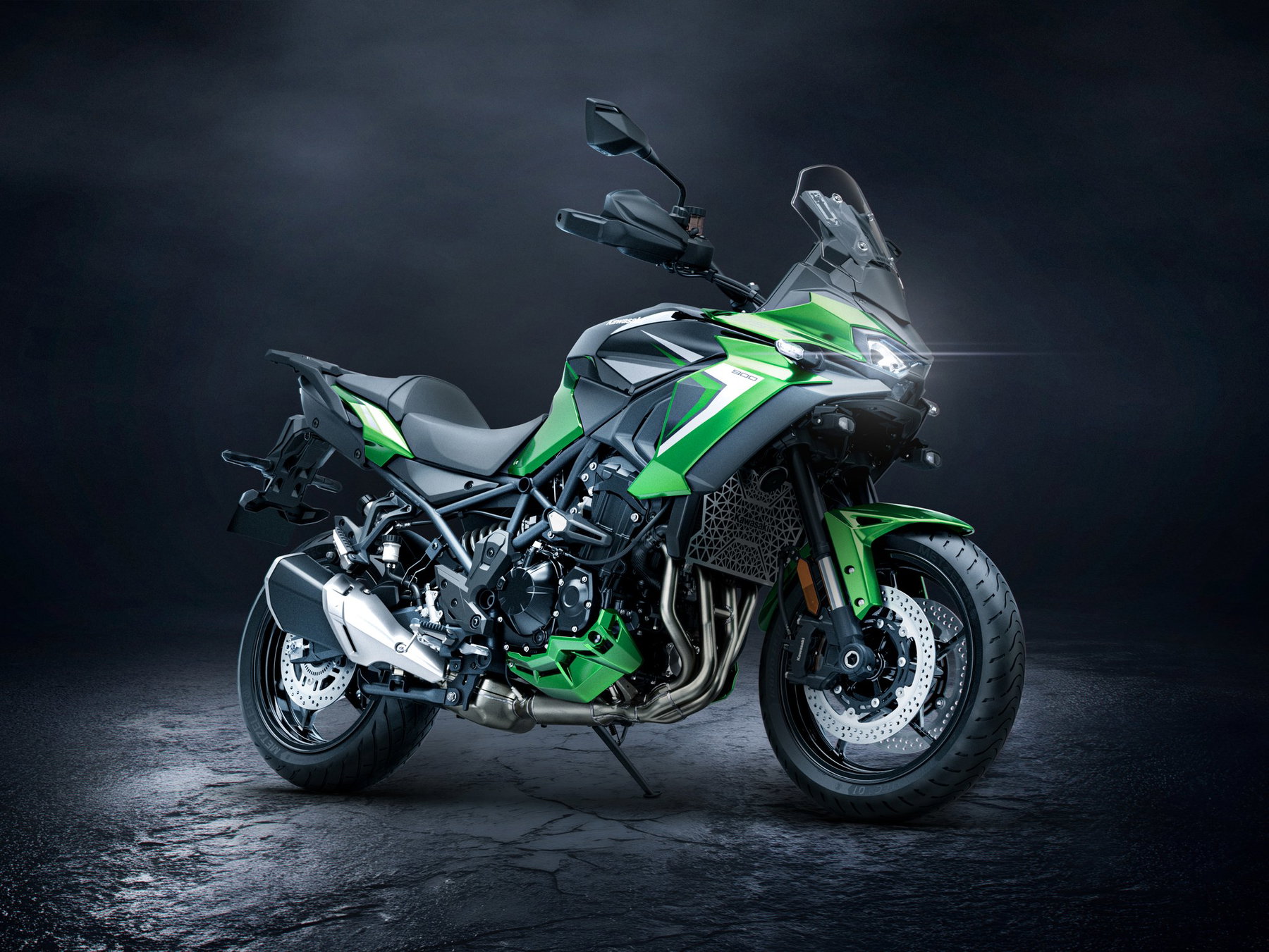
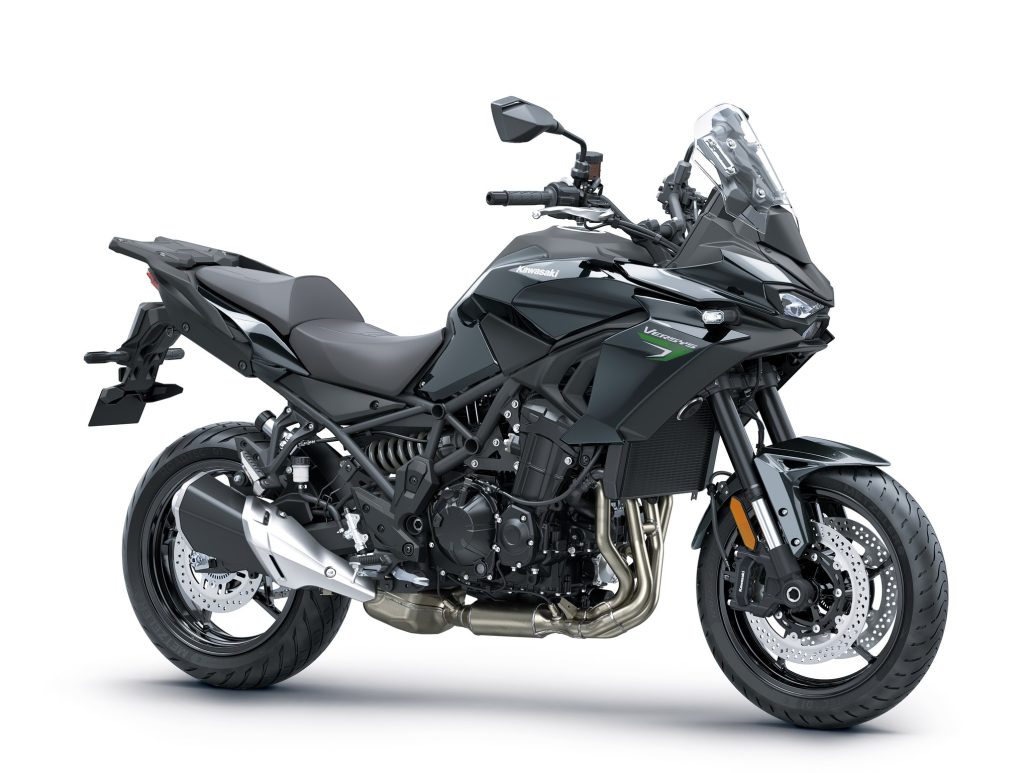
Until now, there was a gap in the Versys family between the twin-cylinder Versys 650 and the Versys 1100. Kawasaki closes this gap for the 2027 model year with the Versys 900. The model does not come as a complete surprise. The bike had already been spotted during a video shoot in Montenegro in summer 2026, and a teaser on social media had named October 13 as the date. Kawasaki presents the Versys 900 under the motto “Destination Adrenaline” and calls it a sporty multi-purpose motorcycle. According to the manufacturer, it is meant to be the sportiest Versys yet. It is designed for the road, not as an off-road enduro.
What engine powers the Kawasaki Versys 900?
The Versys 900 uses the 948 cc inline four-cylinder from the Z900, which Kawasaki has retuned for touring use. It produces 122 hp (89.6 kW) at 9,500 rpm and delivers 97.3 Nm (71.8 lb-ft) at 8,000 rpm.
For comparison: the Z900 currently makes 124 hp (91 kW) at 9,500 rpm and 97 Nm at 7,700 rpm. The differences in peak figures are therefore small. In the tuning, however, Kawasaki has set different priorities. Intake and exhaust are designed to deliver plenty of torque at low and medium revs. Between 6,000 and 10,000 rpm, the engine is said to respond smoothly and directly before revving freely towards the top.
Technically, it remains a liquid-cooled engine with double overhead camshafts and 16 valves. Bore and stroke measure 73.4 x 56.0 mm, so the engine is short-stroke. Long, slim intake funnels provide more torque in the lower range. The airbox has been redesigned to fit the new frame. The throttle is controlled electronically via 36 mm throttle bodies. The pistons are made using a forging-like casting process, and a balancer shaft dampens vibrations. The 4-into-1 exhaust system has a 5.5-litre pre-chamber under the engine. This makes the silencer more compact and keeps the mass closer to the centre of gravity.
For touring, the long final drive ratio of 42/15 is particularly important. It lets the engine run at lower revs on the motorway. The six-speed gearbox comes with an assist and slipper clutch and the KQS quickshifter. It works in both directions and operates from as low as 1,500 rpm.
New trellis frame and long-travel suspension
Kawasaki has developed a new steel trellis frame for the Versys 900. According to the manufacturer, the starting point was an analysis of the aluminium twin-spar frame of the Versys 1100. The frame is designed to give good front-wheel feel while remaining stable even when fully loaded. The engine is mounted at five points and acts as a stressed member.
For the subframe, Kawasaki based the construction on the Z900. The tube routing comes from the Ninja H2 SX, with the tubes reaching down to the swingarm pivot. As a result, the permitted payload is 220 kg (485 lbs), the same as on the Versys 1100. This should be enough for a passenger, top case and side cases. The aluminium swingarm follows the design of its bigger sister.
How is the geometry of the Versys 900 designed?
The geometry puts a lot of weight on the front wheel to create a direct riding feel. The rake is 24.5 degrees, the trail 106 mm and the wheelbase 1,550 mm. The front and rear wheels carry almost the same weight. This 50:50 distribution is achieved partly by moving the rider and the swingarm pivot further forward. In addition, the inside of the 20-litre tank is shaped so that the fuel moves forward.
At the front is a 43 mm upside-down fork with 150 mm of travel. It is adjustable for spring preload and rebound damping. At the rear is a shock with Horizontal Back-link linkage and 159 mm of travel. Rebound and preload are adjustable here as well, the preload via a hand wheel. This allows the suspension to be adjusted quickly when a passenger or luggage is added.
At the front, two floating 310 mm discs with radially mounted four-piston monobloc calipers and a radial master cylinder provide braking. At the rear is a 260 mm disc. The five-spoke 17-inch wheels come in the Z900 design and are fitted with Metzeler ROADTEC 01 tyres. Long suspension travel and sporty 17-inch wheels are typical of the Versys range.
What can the radar assistance systems of the Versys 900 do?
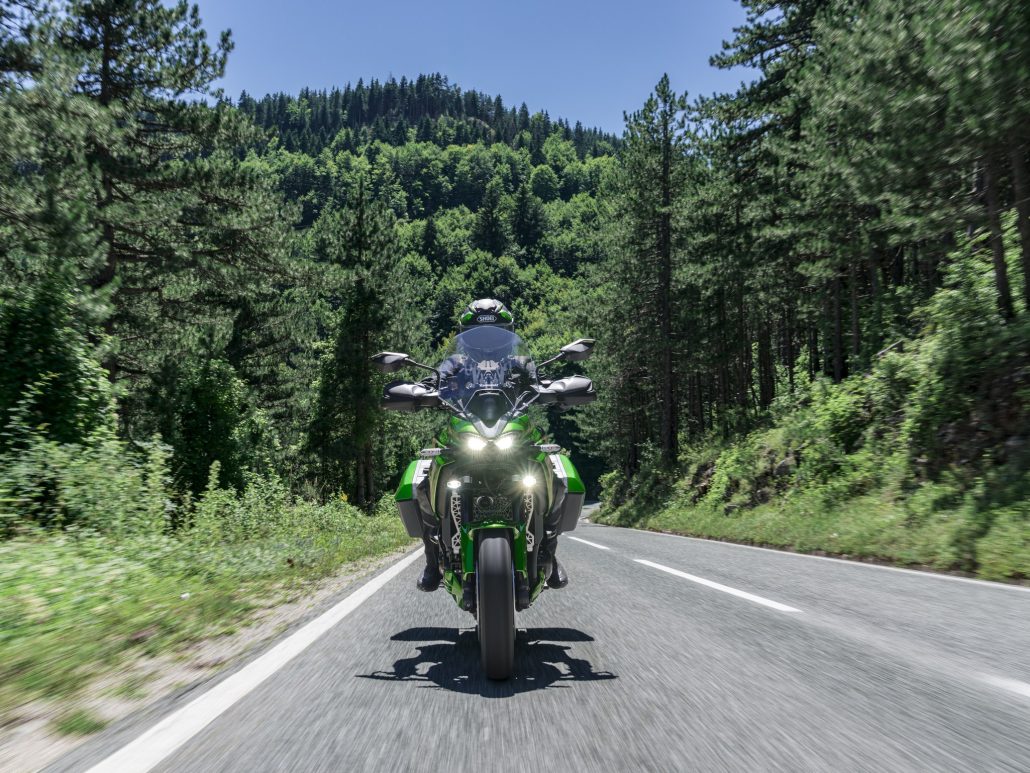
The Versys 900 is the first Versys with Kawasaki’s ARAS assistance package, which works with radar sensors at the front and rear. It includes adaptive cruise control, forward collision warning and blind spot detection.
The adaptive cruise control is called ACC Lite. It holds the set speed and adjusts it when the distance to the vehicle in front shrinks. The rider can choose between three following distances. The suffix “Lite” is important: unlike the system on the Ninja H2 SX, ACC Lite only regulates via the electronic throttle and does not brake. If the vehicle ahead brakes hard, the rider has to brake themselves.
The Forward Collision Warning (FCW) alerts the rider via the TFT display when a rear-end collision is imminent. How early it warns can be set in three levels, and it can also be switched off. The Blind Spot Detection (BSD) indicates vehicles in the blind spot via an LED in the mirror on the respective side. If the rider activates the indicator at that moment, the LED flashes. There is also the Emergency Stop Signal, which rapidly flashes the indicators during emergency braking to warn following traffic.
What other rider aids does the Versys 900 have?
The basis is a six-axis inertial measurement unit that records lean angle and riding conditions. The KCMF cornering management function coordinates the KTRC traction control and the cornering ABS. The ABS also takes into account how much the bike dives forward under braking. KTRC has three levels and can be switched off.
There are also two Power Modes. Full delivers full power, Low around 75 percent. In addition, there are the riding modes Sport, Road, Rain and a freely configurable Rider mode.
Cockpit, ergonomics and touring equipment
The riding position is upright and relaxed. The rider’s seat can be set to 825 or 845 mm without tools and is separate from the passenger seat. The windscreen can be adjusted by hand in seven steps, by a total of 48 mm. According to Kawasaki, more than 100 wind tunnel tests were carried out to balance wind protection and a sporty silhouette. Riders who want more protection can fit an accessory screen that is 98 mm taller. The tank is shaped so that the rider can easily reach the ground with their feet and the knees find secure grip.
The wide handlebar sits in rubber mounts and has bar-end weights. Handlebar and footpegs are damped against vibrations. Adjustable levers, a luggage rack and a USB-C socket on the cockpit come as standard.
What displays and connectivity does the TFT screen offer?
The 5-inch colour display offers two layouts and connects to the smartphone via the Rideology The App Motorcycle app. Type 1 puts the engine in the foreground with a bar-style rev counter. Type 2 is intended for touring and shows navigation and vehicle information in larger form.
Via the app, turn-by-turn navigation appears directly in the display. Rides can also be recorded, notifications displayed, settings adjusted and voice commands used. Everything is operated via a new joystick on the left handlebar switchgear.
How much luggage fits on the Versys 900?
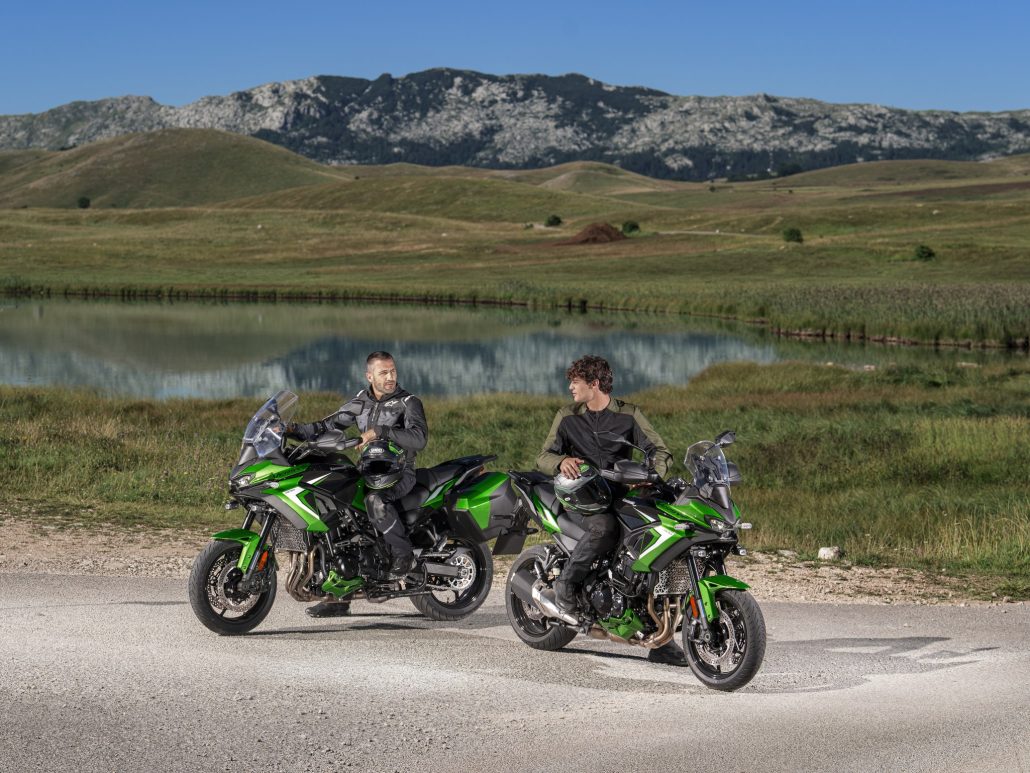
The accessory luggage system from SHAD consists of a 47-litre top case and two side cases with 32 litres each. According to Kawasaki, the top case holds two full-face helmets. All cases can be opened and removed with the ignition key. Damping elements in the mounts are designed to absorb vibrations and movements so that the bike remains stable even with luggage. The cases were developed together with the motorcycle and match the new Aero Edge design concept. It uses layered bodywork parts, open surfaces and free-standing elements intended to make the bike look light. Kawasaki supplies the cases in the bike’s colour.
Versys 900 SE, 70 kW version and Edition models
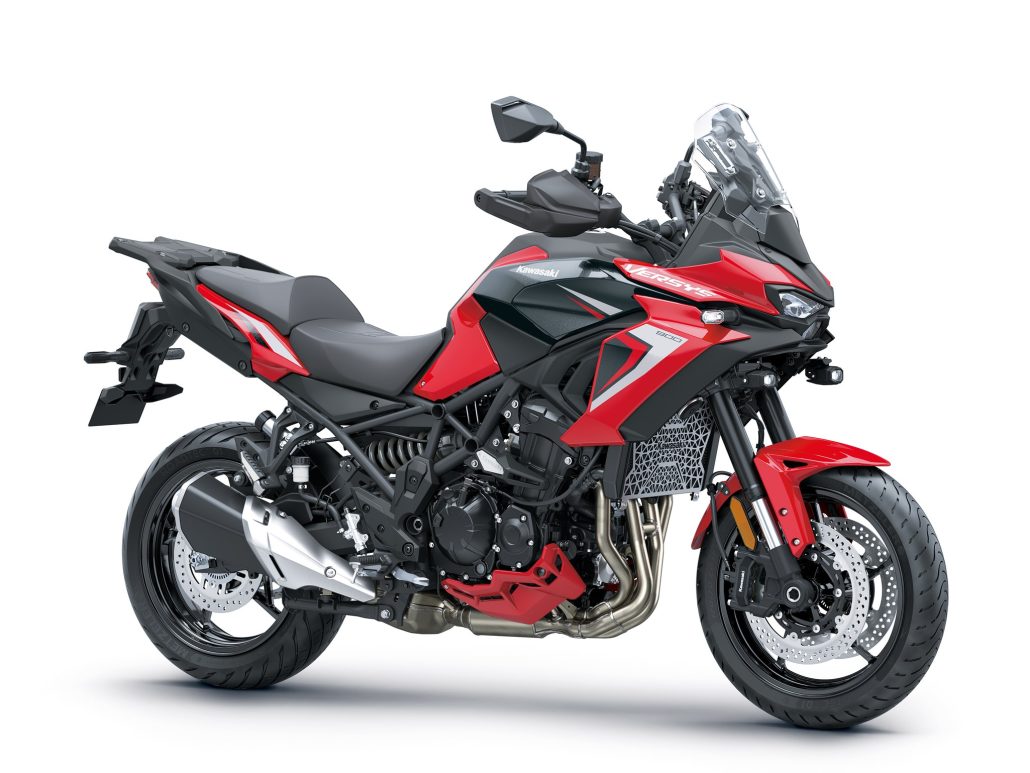
Alongside the base version, there is the Versys 900 SE. It comes with factory-fitted accessories that are only available separately for the standard version: compact LED fog lights, hand guards, heated grips, a radiator guard, frame sliders, an engine spoiler and a centre stand.
For riders with an A2 licence, both versions are also available as a 95 hp (70 kW) variant that can be restricted to 48 hp (35 kW). These variants keep the traction control but have no Power Modes and no integrated riding modes. They cost the same as the full-power versions. Kawasaki dealers are also set to offer Edition models, including Tourer and Grand Tourer variants with genuine accessories.
How much does the Kawasaki Versys 900 cost in Germany?
In Germany, the Kawasaki Versys 900 costs from 13,270 euros (approx. 14,850 US dollars), the Versys 900 SE 14,170 euros (approx. 15,855 US dollars). Both prices include delivery charges.
This means the SE costs 900 euros more than the base version in Germany. Prices in other countries are slightly different:
- Italy: Versys 900 from 12,890 euros (approx. 14,420 US dollars), Versys 900 SE from 13,790 euros (approx. 15,430 US dollars), with the 70 kW variants at the same price
- United Kingdom: Versys 900 from 10,899 pounds (approx. 12,905 euros / 14,435 US dollars), Versys 900 SE from 11,799 pounds (approx. 13,970 euros / 15,630 US dollars)
When will the Kawasaki Versys 900 arrive at dealers?
In Germany, the Versys 900 is expected at dealers from April 2027. April is also named as the market launch in the UK, while in France sales are set to start as early as mid-March 2027. There is no date yet for Italy.
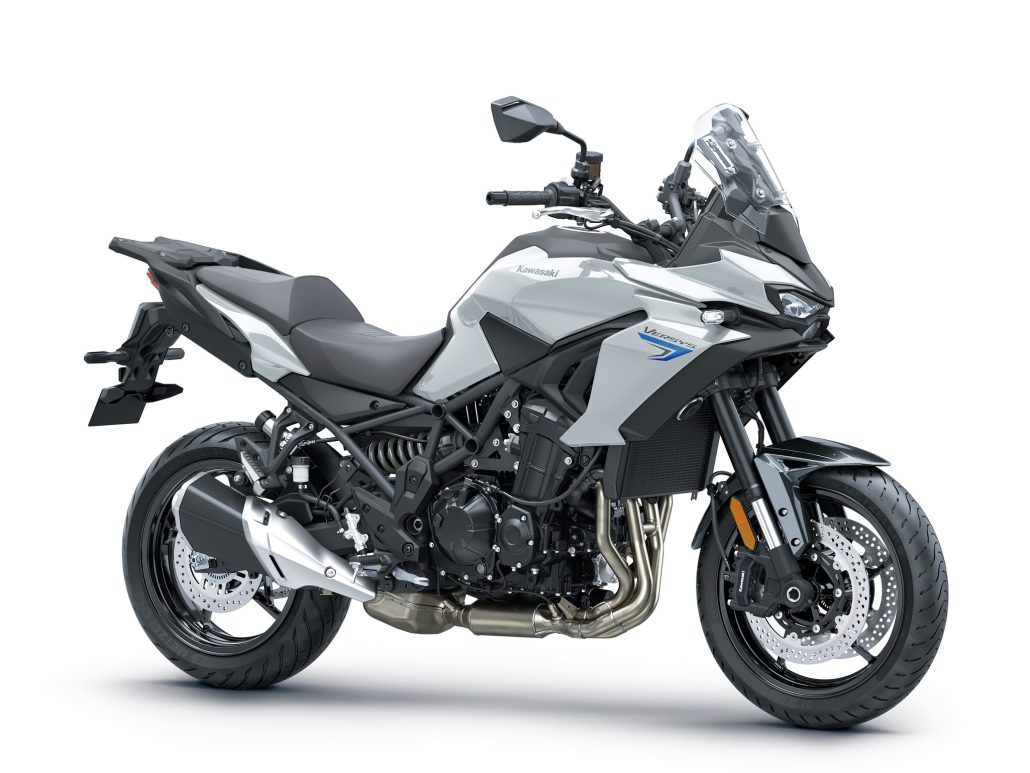
According to the international press release, the standard version is available in Metallic Spark Black and Pearl Robotic White. In Germany, it will initially only come in black. The SE is available in Plasma Lime Green/Metallic Spark Black and in Firecracker Red/Metallic Carbon Gray. Which colours and models are available in which country may vary by market.
Some data is still missing. Kawasaki has not yet published weight, fuel consumption and other figures. The Versys 900 is set to be shown to the public for the first time at EICMA in Milan. For Kawasaki, it is one of the new models for the 2027 model year. The Versys family now offers a choice of three displacement classes for the road.
Frequently Asked Questions
-
How much horsepower does the Kawasaki Versys 900 have?
The Kawasaki Versys 900 produces 122 hp (89.6 kW) at 9,500 rpm. Maximum torque of 97.3 Nm is delivered at 8,000 rpm. For riders with an A2 licence, there is a 95 hp (70 kW) variant that can be restricted to 48 hp (35 kW).
-
How much does the Kawasaki Versys 900 cost?
In Germany, the Versys 900 costs from 13,270 euros and the SE 14,170 euros, both including delivery charges. In Italy, prices start at 12,890 euros, in the UK at 10,899 pounds.
-
Does the adaptive cruise control of the Versys 900 brake by itself?
No, the ACC Lite of the Versys 900 only regulates speed via the electronic throttle. If the vehicle ahead brakes hard, the rider has to brake themselves. This is where the system differs from that of the Ninja H2 SX.
-
What is the seat height of the Versys 900?
The seat can be set to 825 or 845 mm without tools. Together with the tank, which is shaped for good ground contact, this should also suit shorter riders.
-
What distinguishes the Versys 900 SE from the base version?
The SE comes with factory-fitted LED fog lights, hand guards, heated grips, radiator guard, frame sliders, engine spoiler and centre stand. In Germany, it costs 900 euros more than the base version.