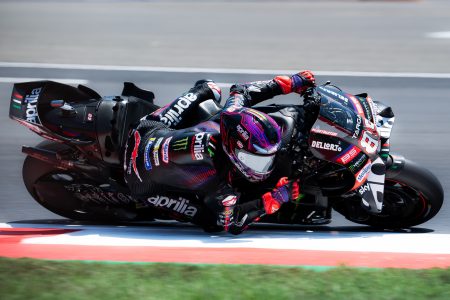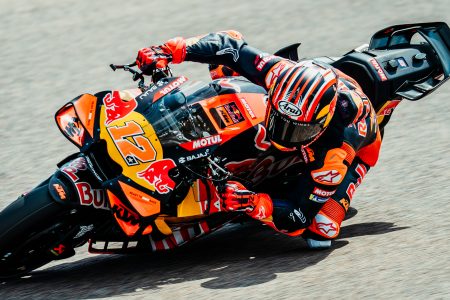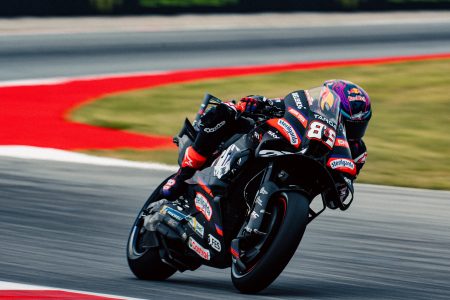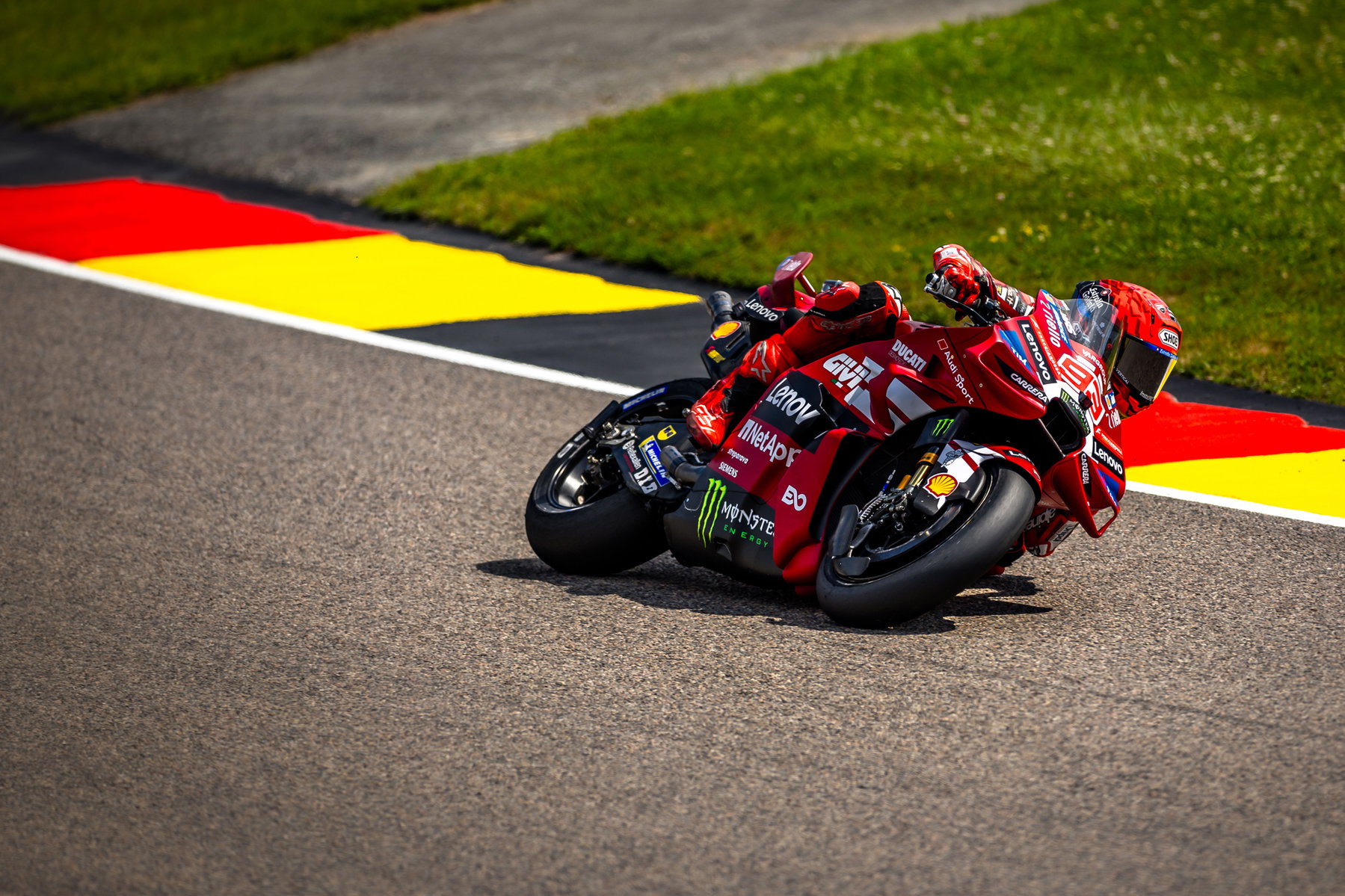
- Alex Marquez is leaving Gresini and moving to KTM in 2027, where he will form a new factory duo with Fabio di Giannantonio.
- Cal Crutchlow criticizes the tire pressure rule, which will remain in place even after the switch from Michelin to Pirelli.
- Marc Marquez has tested the 850cc bike in Brno and sees the biggest change in the tires.
Right now, much of MotoGP revolves around a date that hasn’t even arrived yet. A major technical overhaul is coming for the 2027 season, and riders and teams are already aligning their plans around it. That’s evident in three current developments: Alex Marquez is tying his future to KTM, Cal Crutchlow is frustrated with the tire rules, and Marc Marquez has already tried out the new machine. However different these stories may seem, they all come down to the same question: how the new era will shift the balance of power.
What Is Changing in MotoGP for 2027?
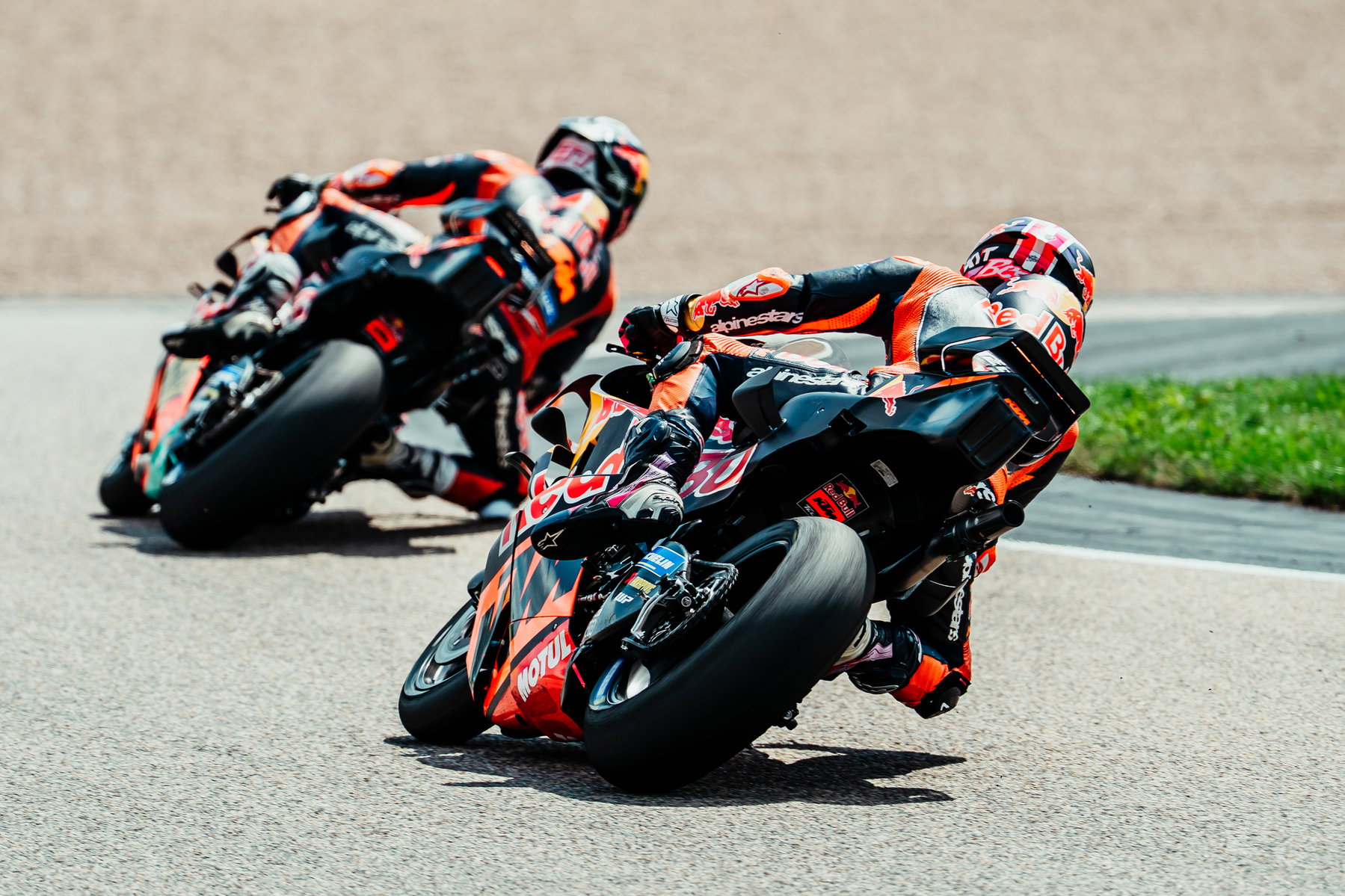
For the 2027 season, MotoGP is switching to 850cc bikes, along with new rules and a tire change from Michelin to Pirelli. The machines are meant to rely on less aerodynamics, and the spec tires will in future come from a new supplier. For riders, that means a lot of familiar ground is disappearing and everyone involved has to adjust. That very shake-up explains why MotoGP 2027 is already the dominant topic in the current season. Anyone who wants to be well positioned for the new era has to set the course now.
Why Is Alex Marquez Moving to KTM?
Alex Marquez is leaving Gresini and moving to KTM in 2027 because it lets him become a factory rider again. That opportunity was one he couldn’t turn down, the Spaniard explains. At KTM he forms a completely new factory duo with Fabio di Giannantonio, who also comes from the Ducati camp. For Marquez, it’s only the second time he has ridden for a factory team in MotoGP. He made his debut in 2020 at Honda, succeeding the retired Jorge Lorenzo, before moving to LCR and thus into a satellite team.
The path back to a factory team became his goal after his strongest season yet. Last season Marquez finished runner-up in the championship, beaten only by his brother Marc. After that, he says, he set out to get a factory contract and, above all, a seat on a genuine factory team. Especially because of the new rules, it was important to get all the innovations directly from the manufacturer. KTM then approached him on their own initiative. “We need you, we want you, and we want you in our project,” is how he describes what he was told.
Marquez emphasizes that money wasn’t the deciding factor. More important were the project, the people behind it, and his wish to be a factory rider again. Now 30 years old with seven years of experience in the class, he trusts himself to lead a factory project. But he says he’s a rider, not an engineer — his job is to be fast and bring the manufacturer podiums and wins.
The Farewell to Gresini Is Hard
The move comes with an emotional farewell. Marquez joined Gresini in 2023, which offered him a competitive bike and a better working environment after difficult years at Honda. He won a sprint race in his very first season there and later established himself as one of the strongest Ducati riders. This year he received a bike in full factory specification, but the step up to the official Ducati team eluded him. Instead, the team brought in Pedro Acosta from KTM to fill Francesco Bagnaia’s seat.
Saying goodbye after three years is one of the hardest parts of the move, Marquez says. He spoke with team boss Nadia Padovani on the phone every day and explained everything to her. Back in November, he says, he had already promised her he would reach out to her personally the moment the first factory team approached him. “She was sad, but at the moment, she was super happy for me because she said to me, ‘you deserve it,'” he reports.
What Bothers Cal Crutchlow About the Tire Pressure Rule?
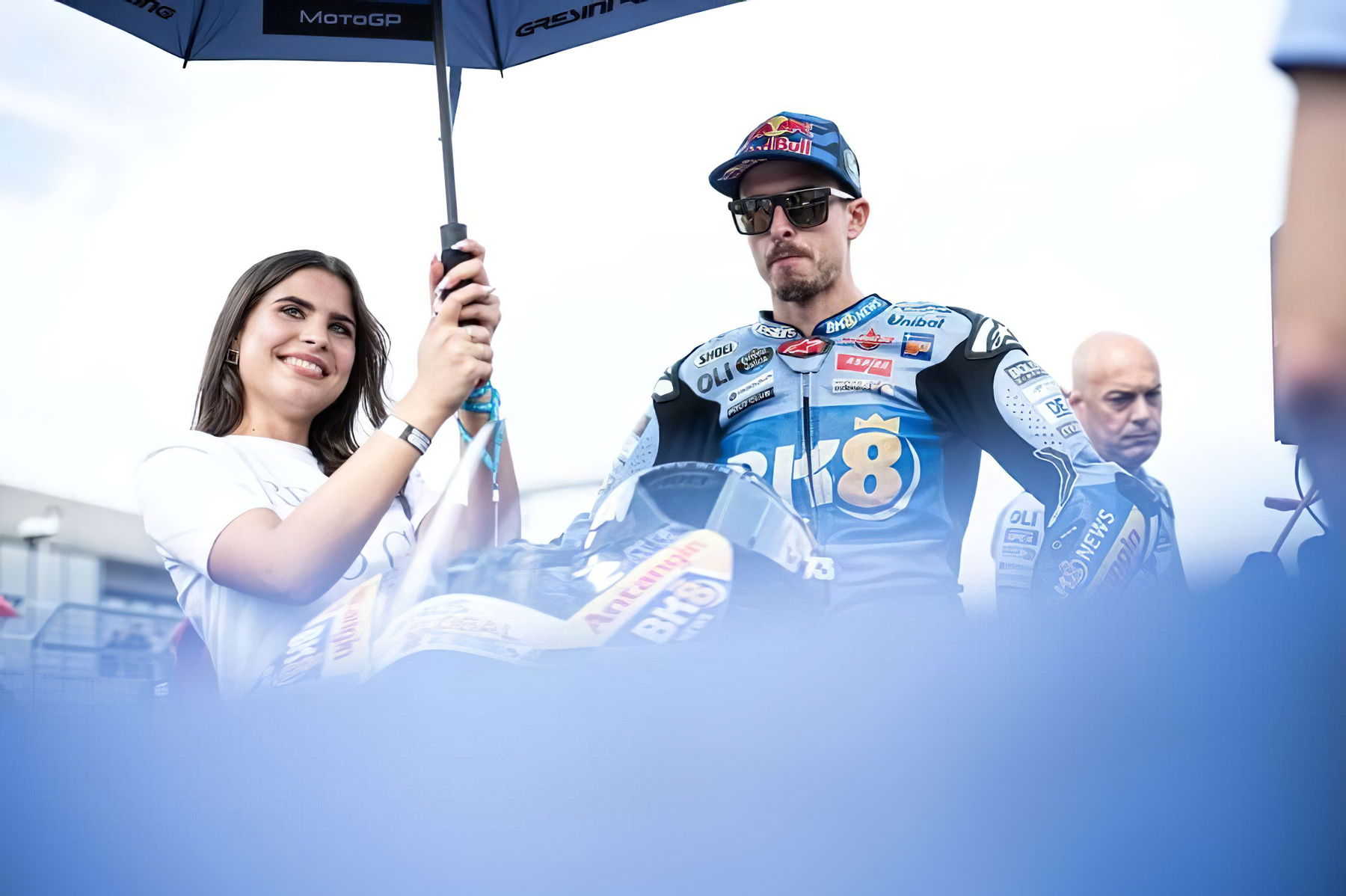
Cal Crutchlow is bothered by the fact that the tire pressure rule keeps him from pacing his race the way he wants. The Briton was brought out of retirement in late May and stepped in for the injured Johann Zarco at LCR Honda. At the German Grand Prix at the Sachsenring, he delivered his strongest showing since his comeback. In the end, though, he didn’t finish, crashing out on lap 22. Up to that point he had held off Maverick Viñales and battled Toprak Razgatlioglu over several laps.
Still, Crutchlow wasn’t satisfied, and that had nothing to do with the crash. Had he been able to pace the 30-lap race freely, he believes he could have kept up with Yamaha factory rider Alex Rins, who finished 14th and scored two championship points. He says the tire pressure rule was the reason for his problems. Whenever he sat behind another rider, the pressure in his front tire rose too much, forcing him to repeatedly back off and then attack again.
How Does the Tire Pressure Rule Work?
The rule mandates a minimum pressure in the front tire. Over 60 percent of the race distance, the pressure must be at least 1.8 bar. If that value is undercut on more than 40 percent of the laps, a 16-second time penalty is applied after the race. In sprints the threshold applies to 30 percent of the laps, with an 8-second penalty. To avoid a penalty, many riders start with a higher pressure than they’d actually like — and that’s exactly where Crutchlow’s problem comes from.
For the 40-year-old, the situation is new, since the rule didn’t exist yet in his last full season in 2020. It was introduced in 2023, the last time he raced before this year’s comeback. His criticism is blunt. “The rules are just bullshit!” he fumes, arguing that riders should be allowed to pace their own races. He says he understands the safety reasoning, but the rule makes sensible overtaking nearly impossible. Michelin has done a good job for years, he says — it’s the regulation itself that he calls a joke.
For riders, the issue stays relevant beyond 2026 too. The tire pressure rule is set to remain in place for 2027 as well, at least initially. While the tires will then come not from Michelin but uniformly from Pirelli, that change won’t affect the rule itself for now, according to Pirelli.
What Is Marc Marquez’s Verdict on the 850cc Test?
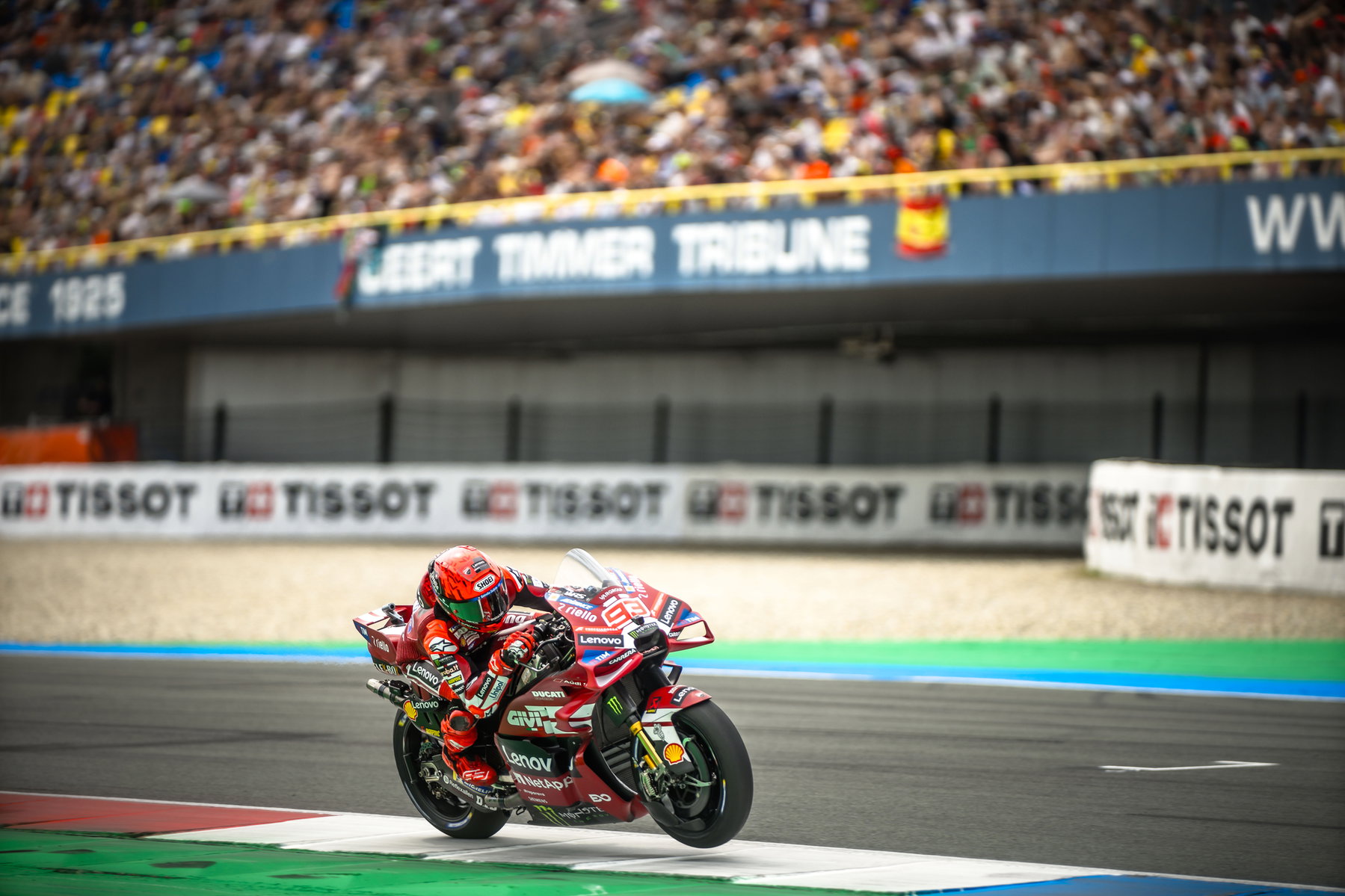
Marc Marquez considers the new 850cc bike slower, but sees the biggest change in the tires. He tested the machine in Brno, the Ducati champion explains. Fans will probably not even notice the drop in speed, he says; what matters far more is the tire switch. On aerodynamics, he would even have liked to see an even bigger reduction. Without aerodynamics, closer battles would be possible, similar to Moto3. In MotoGP that’s harder, he says, because reducing downforce also costs the bike performance. Every era, he notes, has its pros and cons.
Marc Marquez and Life With His Injuries
Besides the technical side, Marquez also spoke about his physical condition in an interview with the YouTube channel Soy Blanc. The many injuries of his career still accompany him every single day. In the past, he says, he still had time in between to train and rest; today little of that remains. His routine ranges from endurance and strength training to recovery work and a dedicated session for his right arm.
As an athlete, he says, you have to live with the pain and can’t constantly complain, otherwise you’d spend the whole day in physiotherapy. He can’t sleep on his right side because of his arm — that’s off-limits for him. He doesn’t seek psychological support from a professional but from the people around him. He says he was lucky to be surrounded by people with a healthy mindset who respected him. Injuries, and especially the time that follows them, are physically hard, he says, but mentally even harder.
Tires as the Common Thread of the New Era
As different as these three stories are, one thread runs through all of them. In the end, they all come back to the tires. Marc Marquez calls the tire switch the biggest change for 2027, Cal Crutchlow’s recent example shows just how much tire regulations can shape a race, and Alex Marquez cites the need for a factory team’s full support with the new tires and rules as one reason for his move. The shake-up ahead of the 2027 season is thus no longer a purely future topic — it is already shaping career decisions, race outcomes, and the mood in the paddock.
Frequently Asked Questions
-
What is changing in MotoGP for 2027?
In MotoGP 2027, smaller 850cc bikes will be used, and the series is switching from Michelin to Pirelli as tire supplier. Aerodynamics will also be reduced, which will noticeably change how the bikes handle.
-
Which team is Alex Marquez joining in 2027?
Alex Marquez is leaving Gresini and will ride for KTM’s factory team starting in 2027. There he forms a new duo with Fabio di Giannantonio.
-
How does the tire pressure rule work in MotoGP?
The front tire pressure must be at least 1.8 bar over 60 percent of the race distance. If it drops below that on more than 40 percent of the laps, a 16-second time penalty follows; in sprints, it’s 8 seconds.
-
Will the tire pressure rule remain in place for 2027?
Yes, the rule will initially stay in place for 2027 too. According to Pirelli, the switch from Michelin to Pirelli won’t change that for now.
-
What does Marc Marquez say about the new 850cc bike?
After testing it in Brno, Marc Marquez considers the machine slower but sees the biggest change in the tires. He says he would have liked to see an even bigger reduction in aerodynamics.
➜ More on this topic in our overview: 2027 MotoGP Season: The Complete Overview.
➜ This article is part of our comprehensive overview: 2026 MotoGP Season: The Complete Overview – Teams, Riders, Calendar & Championship Standings. Find all key information on this topic in one place.