- First official MotoGP test with 850cc machines and Pirelli tires, conducted with contracted riders
- All five manufacturers were represented with two motorcycles each; the day took place behind closed doors
- Tire manufacturer Pirelli drew a positive conclusion; the next tests follow after the Austrian GP and in Valencia
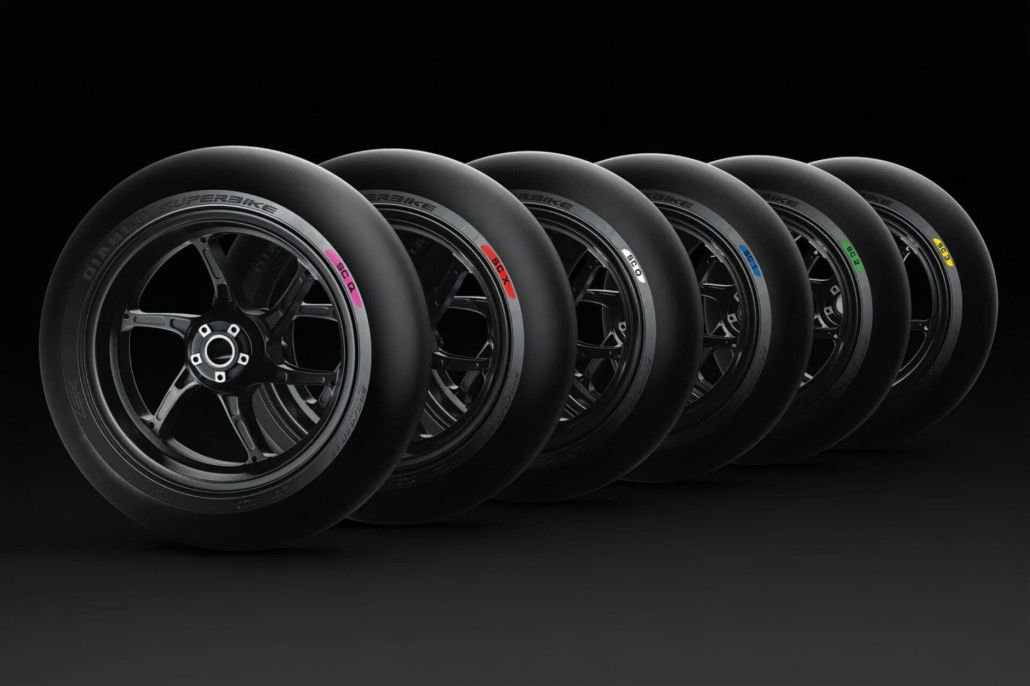
One day after the Czech Republic Grand Prix, MotoGP took an important step toward the 2027 season at the Automotodrom Brno. On Monday, the manufacturers completed the first jointly organized test with the new generation of motorcycles that will replace the current class the year after next. At the center were two fundamental changes: an engine downsized to 850 cubic centimeters instead of the current 1000cc, and the switch of tire supplier. Starting in 2027, Italian manufacturer Pirelli will be the sole tire supplier of the premier class, replacing Michelin, which has held that role since early 2016.
What Was Tested at the Brno Test?
The Brno test was primarily about having the Pirelli tires developed for 2027 evaluated by contracted riders for the first time. Until now, only the manufacturers’ test riders had sampled the new rubber. Two vehicle concepts were in action on track: genuine prototypes of the upcoming 850cc machines on one hand, and current 1000cc motorcycles that had been detuned and modified to simulate the 2027 technical configuration on the other. Pirelli had asked each manufacturer to field at least one regular rider, plus one or two test riders on the second machine.
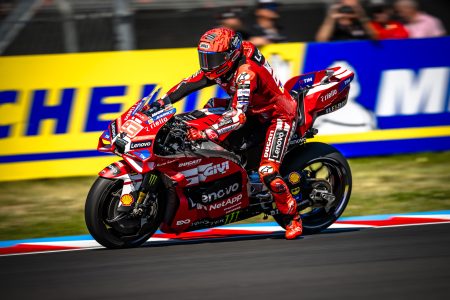
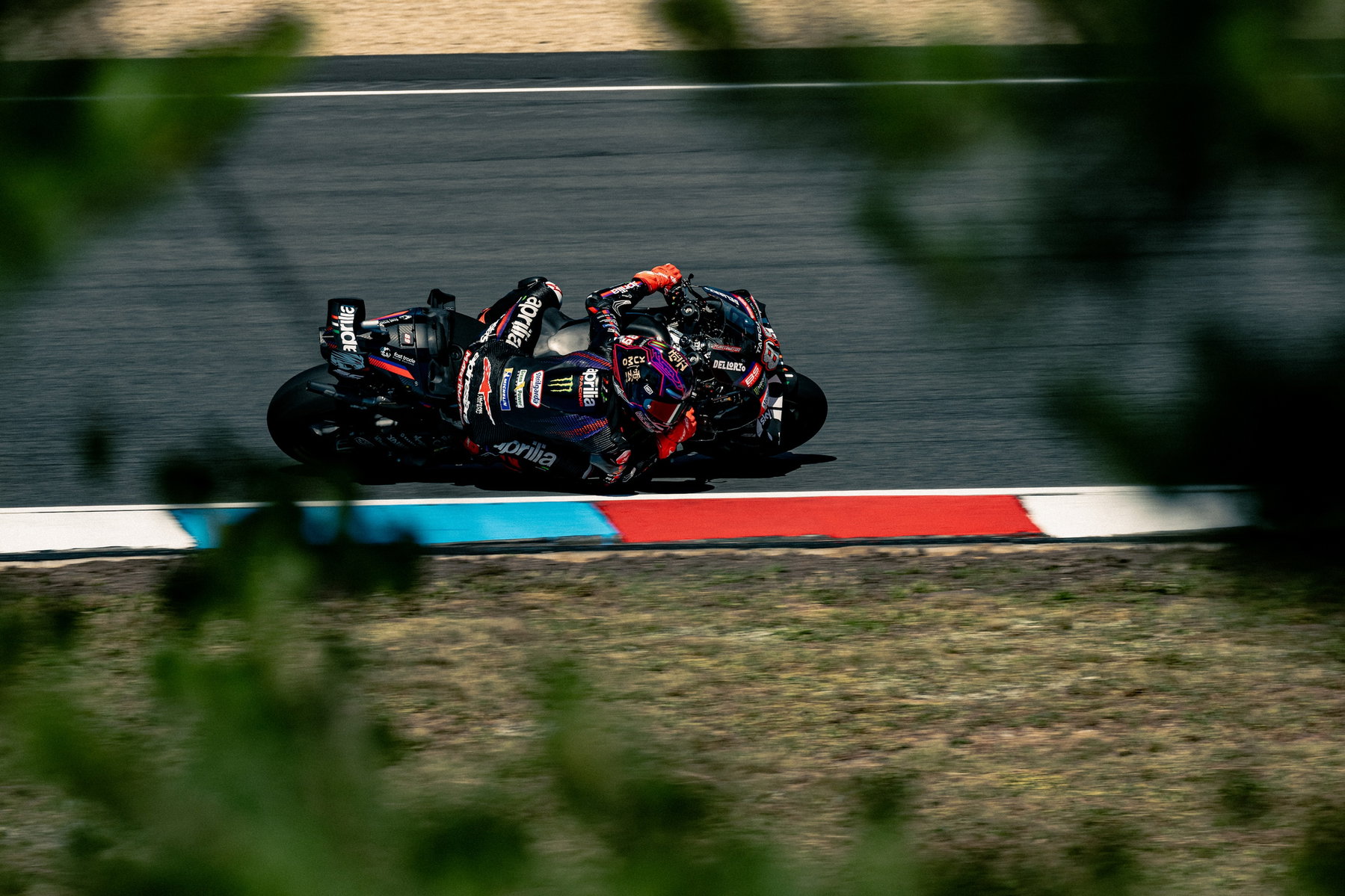
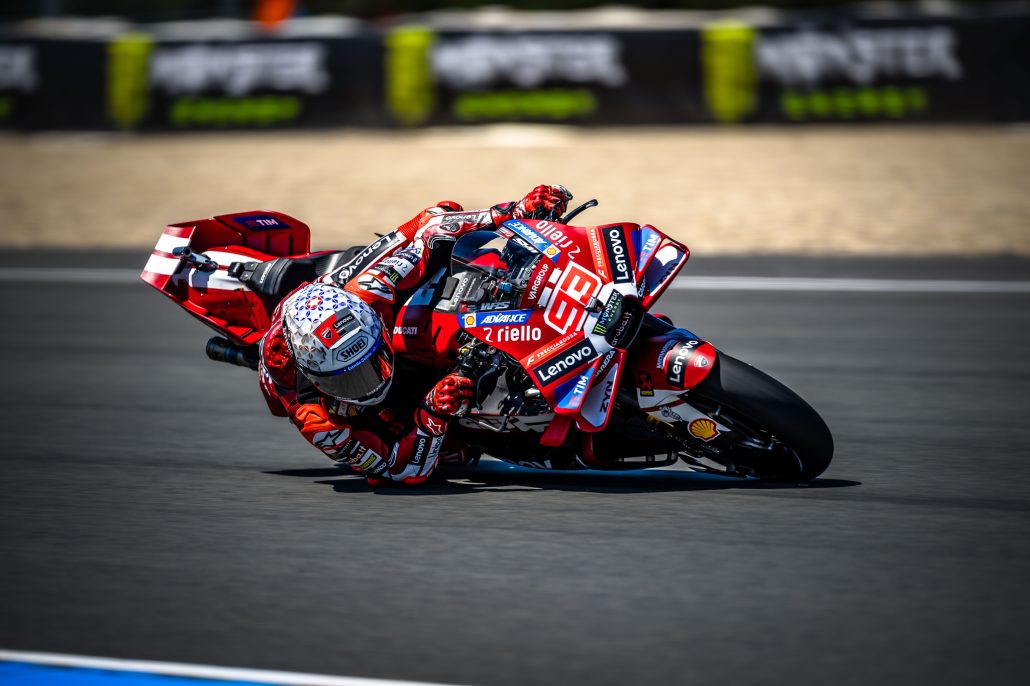
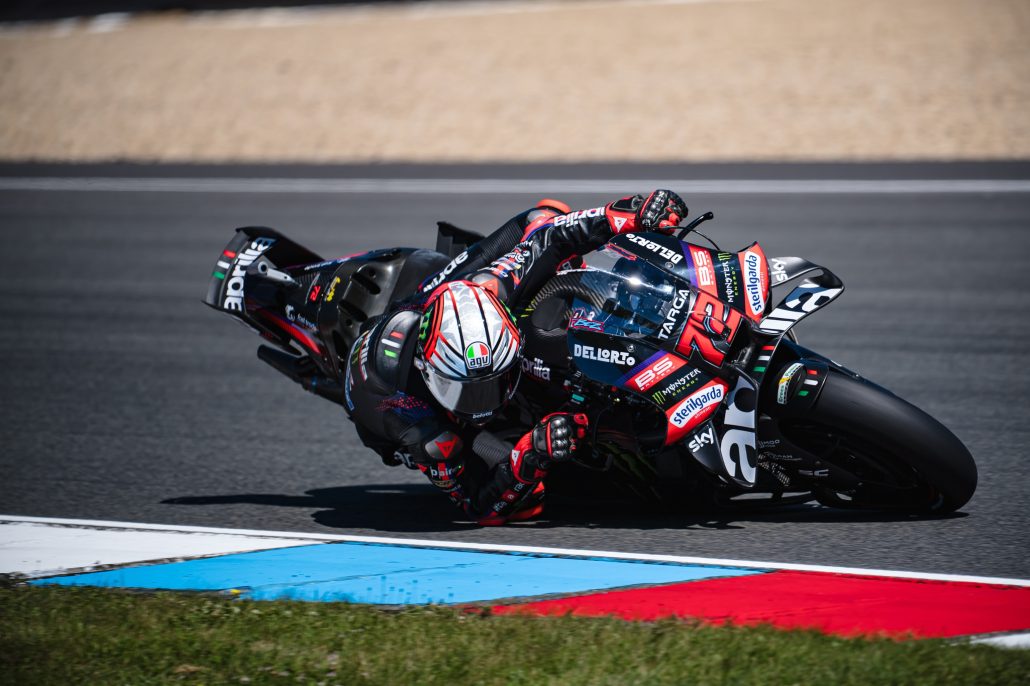
The transition to 2027 goes well beyond engine and tires. In addition to the smaller displacement and the tire switch, ride-height devices — the systems used to alter vehicle height — will be banned, and aerodynamics will be further restricted. Some of these regulation changes were even brought forward with immediate effect: holeshot devices have already been banned, a step originally planned for 2027. At the test, the different technical approaches of the manufacturers were already visually apparent. Ducati’s 850cc prototype stood out with a large aero package at the rear, while Aprilia ran pronounced vertical winglets.
The test program had been coordinated in advance with the manufacturers and the teams’ association IRTA, with different run plans for each manufacturer’s two machines to gather as much data as possible. Some riders completed sprint simulations and full race-distance runs. Toprak Razgatlioglu had already announced on Sunday evening that Yamaha would go straight into a sprint simulation.
Which Riders Were in Action at Brno?
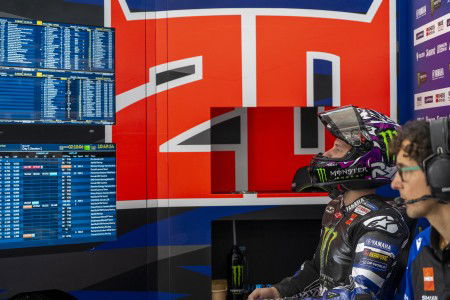
Eight regular riders and three test riders from the five manufacturers were on track at Brno. Because numerous riders are switching manufacturers for the 2027 season, the field was deliberately kept small. Marc Marquez and Fermin Aldeguer rode for Ducati, Aprilia fielded Marco Bezzecchi and Raul Fernandez. Honda was represented by Joan Mir and Luca Marini, while Toprak Razgatlioglu rode for Yamaha — a rider who knows Pirelli tires inside out from his three World Superbike Championship titles. Pedro Acosta was KTM’s sole regular rider.
They were joined by test riders Dani Pedrosa and Pol Espargaro for KTM and Augusto Fernandez for Yamaha. One source also lists Takaaki Nakagami as a third Honda representative. Regular riders such as Francesco Bagnaia, Fabio Quartararo, Fabio Di Giannantonio, and Jorge Martin were not scheduled for the test. Bezzecchi, who had missed Sunday’s Grand Prix due to a suspension, returned to the track for the test.
How Long and Under What Conditions Was the Test Held?
Riding took place over eight hours, split into two four-hour sessions in the morning and afternoon, separated by a one-hour lunch break. The track was open from 9 a.m. to 6 p.m. The sun shone throughout Monday, with some clouds rolling in during the afternoon. Temperatures hovered just below the 30-degree Celsius mark, slightly lower than the race weekend, which had seen oppressive heat at times.
The 5.4-kilometer Automotodrom offered excellent grip thanks to the preceding race weekend, with laid-down rubber already on the asphalt. Track contamination was not an issue. The test took place entirely behind closed doors — neither spectators nor journalists were admitted. There was no official timing, which meant teams had to rely on their own stopwatches to assess the competition’s performance.
What Lap Times Were Set at Brno?
There were no official times, but some figures leaked out and point to an advantage for Aprilia. According to journalist Rosario Triolo from broadcaster Sky Italia, Marco Bezzecchi and Raul Fernandez reportedly topped the timesheets on the new Aprilia at 1:53.9 each. Fermin Aldeguer on the Ducati was said to be roughly a tenth of a second behind. Razgatlioglu is listed at 1:54.2 for Yamaha, followed by Acosta at 1:54.3 on the KTM. Marc Marquez reportedly lapped at 1:54.4 in sixth place, while the two Hondas of Marini and Mir are placed in the 1:55.0 range.
These figures should be treated with caution, as they do not come from official timing and five different front and rear tire compounds make a direct comparison difficult. For context, the race weekend times serve as a reference: Ai Ogura’s pole time on the current 1000cc Aprilia was 1:51.139, and the fastest race lap was set by Fabio Di Giannantonio on the Ducati at 1:53.122. That puts the fastest 850cc test times about three seconds off pole and just a few tenths behind the weekend’s fastest race lap.
Were There Any Incidents or Crashes?
Marc Marquez crashed during the test but escaped uninjured. According to Spanish media reports, the crash occurred on his way to his fastest lap, with accounts differing on whether it happened in the morning or afternoon session. The reigning world champion sustained no injuries — an important consideration for all participating riders in a development test of this nature. Beyond that, very few details about on-track proceedings reached the outside world.
How Did Pirelli Assess the Test?
Pirelli drew a positive conclusion, calling it an important milestone on the road to MotoGP. Giorgio Barbier, Pirelli’s motorcycle racing director, summed up the outcome: “The overall test outcome was positive, both in terms of feedback quality and constructive contribution made by riders and Manufacturers. All developments are progressing according to plan.”
Barbier also pointed to the demanding conditions. After a race weekend marked by intense heat and with the next Grand Prix just days away, there had been numerous solutions to evaluate. For the first time, following sessions previously conducted exclusively with test riders, useful feedback on the 2027 tires for the future 850cc machines had been gathered from several regular riders. All manufacturers had completed the agreed programs, with different run plans for their two machines to maximize data output. The participation of regular riders made it possible to combine information collected in earlier tests with real feedback on MotoGP-level performance.
Reports on the tire allocation vary. There is broad agreement that Pirelli brought a total of 400 tires to Brno. Due to the intense heat, wet and intermediate tires were not used.
What Comes Next After the Brno Test?
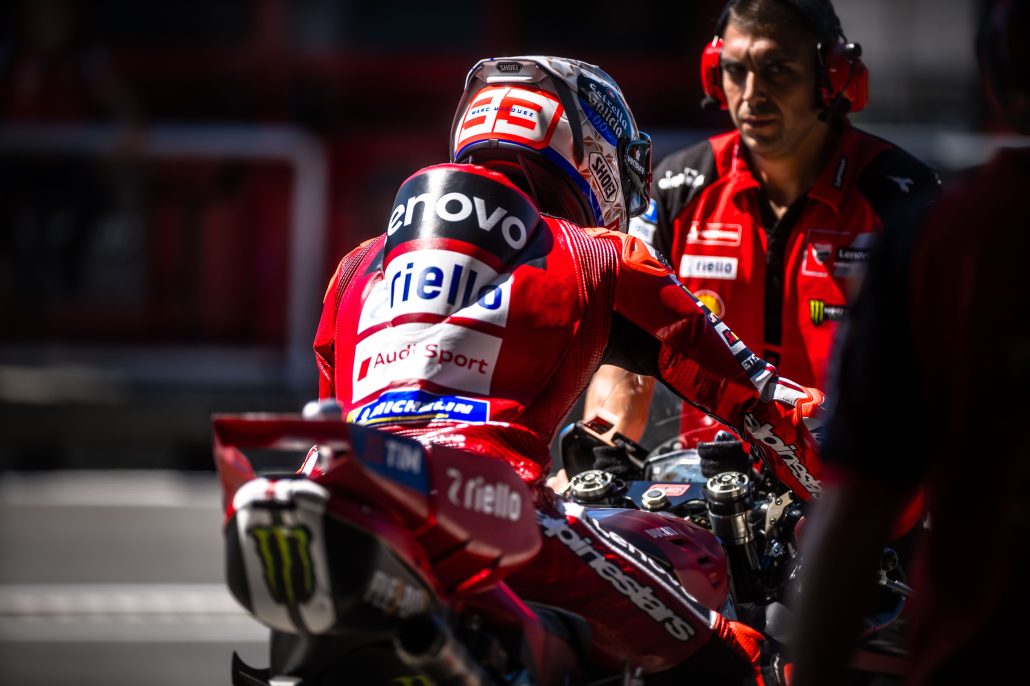
The Brno test was the first of three sessions with regular riders this season. The next takes place on the Monday after the Austrian Grand Prix at the Red Bull Ring in Spielberg, with another scheduled for the Tuesday after the season finale in Valencia. The September test is also expected to be held behind closed doors; it is not until late autumn in Valencia that the first public test is anticipated. At that point, the remaining regular riders of the 2027 season are likely to get their first laps on the new machines, though a confirmed date has yet to be set.
An open question for the September test is whether all manufacturers can provide enough 850cc prototypes and whether riders switching teams will at least be allowed to try the new tires on the current 1000cc bikes. Development began the previous year at Misano, on the Tuesday after the San Marino Grand Prix, initially with test riders. Numerous private sessions followed, leading to the specification of the tires now tested at Brno. Private test outings with the respective test riders remain available to manufacturers at any time. The Brno test thus fits into MotoGP’s long-term transition to a new technical era, whose cornerstones are a smaller displacement, reduced aerodynamics, the elimination of ride-height devices, and the tire switch to Pirelli.
Frequently Asked Questions
-
What was tested at the first 850cc test in Brno?
The focus was on the new Pirelli tires and the 850cc prototypes for the 2027 season. For the first time, regular riders evaluated the rubber that had previously only been tested by test riders. Both genuine 850cc prototypes and detuned 1000cc machines were used.
-
Which riders took part in the Brno test?
Eight regular riders and three test riders rode for the five manufacturers: Marc Marquez and Fermin Aldeguer for Ducati, Marco Bezzecchi and Raul Fernandez for Aprilia, Joan Mir and Luca Marini for Honda, Toprak Razgatlioglu for Yamaha, and Pedro Acosta for KTM. They were joined by test riders Dani Pedrosa, Pol Espargaro, and Augusto Fernandez.
-
What lap times were set during the 850cc test?
There were no official times, but leaked figures point to an advantage for Aprilia. Bezzecchi and Fernandez reportedly set the pace at 1:53.9, followed by Aldeguer on the Ducati roughly a tenth of a second behind.
-
Did Marc Marquez crash during the test?
Yes, Marquez crashed during the test but escaped uninjured. According to Spanish media reports, the crash occurred on his way to his fastest lap.
-
When is the next 850cc test scheduled?
The next test with regular riders takes place on the Monday after the Austrian Grand Prix at the Red Bull Ring in Spielberg. A further session is planned for the Tuesday after the season finale in Valencia.
➜ More on this topic in our overview: 2027 MotoGP Season: The Complete Overview.
➜ This article is part of our comprehensive overview: 2026 MotoGP Season: The Complete Overview – Teams, Riders, Calendar & Championship Standings. Find all key information on this topic in one place.