- Honda technical director Romano Albesiano considers current performance comparisons of the 850cc prototypes worthless
- The new MotoGP bikes are expected to produce around 100 hp more than a Moto2 machine despite the smaller displacement
- Test rider Aleix Espargaro raves about the riding behavior but faces months out after a severe crash
MotoGP is facing its biggest technical upheaval in years. From 2027, the prototypes will run with 850 cubic centimeters instead of the current 1,000cc, Pirelli replaces Michelin as tire supplier, the ride-height devices disappear, and the aerodynamics are being cut back. But Honda technical director Romano Albesiano is tempering expectations: anyone making performance comparisons at this point is wrong.
Nobody in the MotoGP paddock yet knows where the individual manufacturers truly stand with their 850cc prototypes. Development is happening behind closed doors, there are no official lap times, and the few test riders who have already ridden the new machines are barely allowed to reveal details. It is precisely in this phase that Albesiano warns against drawing premature conclusions from the test impressions so far.
Why does Honda consider current 850cc comparisons worthless?
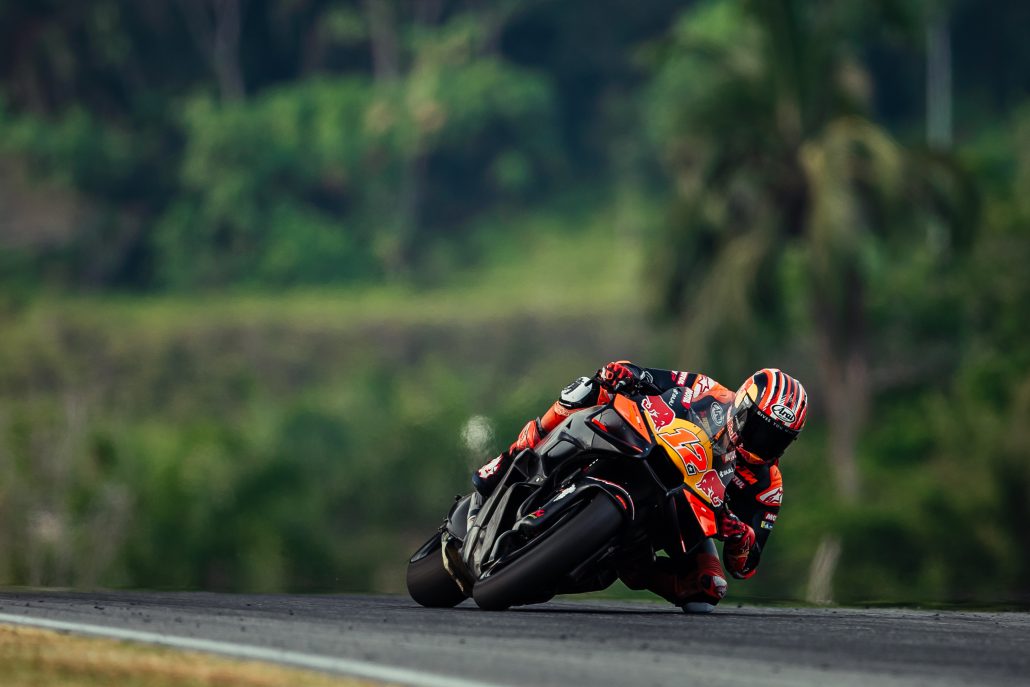
Albesiano calls it pointless to compare the performance of different manufacturers at this point. “To talk about the performance of this motorcycle, our motorcycle and the motorcycles of the competition, is still very, very, very early… worthless, I would say,” the Italian told Speedweek.com. There is still much to develop and especially much to understand about the tires.
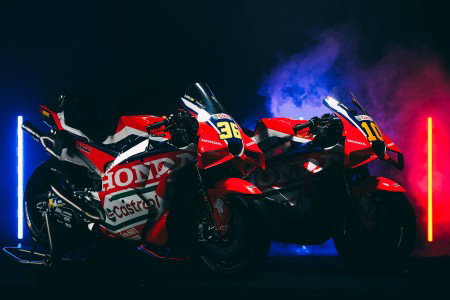
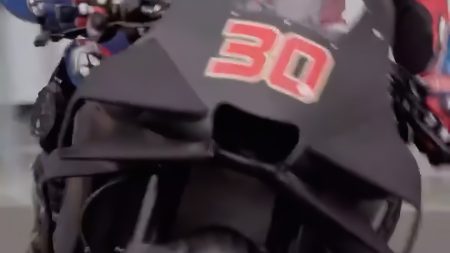
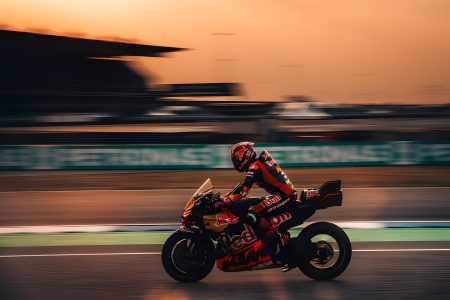
Honda was the second manufacturer after KTM to bring its 850cc prototype to the track. In December 2025, the new machine rolled out of the garage in Sepang for the first time. Since then, test riders Takaaki Nakagami and Aleix Espargaro have completed further outings. But Albesiano emphasizes that the current motorcycle is still a kind of test platform. New components are being integrated step by step, with Honda expecting the final version toward the end of summer. After that, the motorcycle will naturally continue to evolve.
The true pecking order of the 850cc generation is unlikely to become apparent until the winter test in Sepang at the earliest. Perhaps we’ll start to understand something at the Sepang test. Not before,” said Albesiano.
Will the 850cc MotoGP bikes become glorified Moto2 machines?
This is a frequently discussed topic in the scene. The switch to Pirelli tires, the smaller displacement, and the elimination of ride-height devices do indeed resemble the middle class of the Motorcycle World Championship on paper. Many Moto2 riders are already familiar with Pirelli’s characteristics from their racing routine, raising the question of whether riders with Moto2 experience could even have an advantage in developing the new generation.
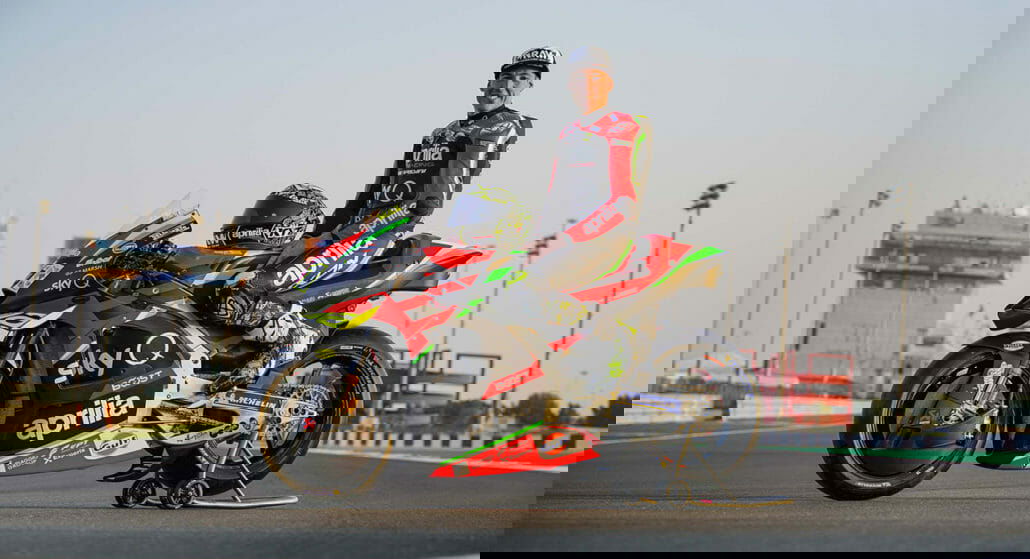
Albesiano considers this thought quite plausible. “Yes, that could make sense. Because they are used to similar tyres. And if you look at the motorcycle itself, you could say that the bike becomes somewhat similar to a Moto2.” In Honda’s case, Moto2 champion Diogo Moreira could become an important asset for the 850cc project.
But at precisely this point, the former Aprilia technical chief contradicts the widespread theory that the new bikes will automatically be tamer. The 850cc motorcycles are still expected to produce around 100 hp more than a Moto2 machine. “That’s why a MotoGP bike remains a beast. A completely different animal than a Moto2 bike,” Albesiano stated clearly.
What role does aerodynamics play in the 850cc prototypes?
A central one, if Albesiano is to be believed. The wings are getting smaller, but that by no means reduces their relevance. On the contrary: manufacturers understand aerodynamics better and better and recognize the potential that still exists under the new regulations. Albesiano therefore expects that aero could be even more important for the 850cc bikes than for the current 1000cc machines.
At the same time, some of the previous electronic aids are being eliminated, which should make the motorcycles more demanding at the limit. The combination of fewer technical aids and still enormous engine power could mean that the new bikes are harder for riders to master than the current generation.
Interestingly, Albesiano also looks at the Moto2 class: considerable work is now being done there in the area of aerodynamics as well. He emphasizes that Moto2 is not a low-level category. Nevertheless, the gap to the premier class remains enormous. According to Honda, the 850cc MotoGP motorcycles will not be disguised Moto2 machines but will continue to be highly developed prototypes with brutal performance.
What does test rider Espargaro say about the 850cc riding behavior?
Honda test rider Aleix Espargaro is one of the few riders who have already been able to gain extensive experience with the new generation. His impressions are extremely positive. “I’m really not allowed to talk about this project, but what I can say: the bike is incredibly fun,” the Spaniard told MotoGP.com. It is significantly more fun than the current 1,000cc motorcycle.
Three factors in particular appear to fundamentally change the riding behavior. The new Pirelli tires offer enormously high grip, according to Espargaro. Less torque at low RPMs allows more aggressive cornering because the motorcycle can be better controlled at the apex. And the lower weight of roughly ten kilograms is particularly noticeable during fast direction changes, which Espargaro describes as fantastic.
The lap times of the 850cc bikes are also closer to the current 1000cc machines than many observers had expected. While Espargaro cannot cite exact figures, he confirms that the comparison between the two generations is tighter than assumed in the scene. According to information from Motorsport.com, the difference is only two to three seconds depending on the track.
The 36-year-old expects that spectators will also benefit from the new era because there should be significantly more wheel-to-wheel battles.
How severe was Espargaro’s crash during the Sepang test?
Despite his enthusiasm for the new machine, Espargaro also had to experience the risks of development work firsthand. In early April, he crashed heavily during testing at Sepang. The Spaniard braked too late on the long back straight, locked the rear brake, and was thrown off in a highsider.
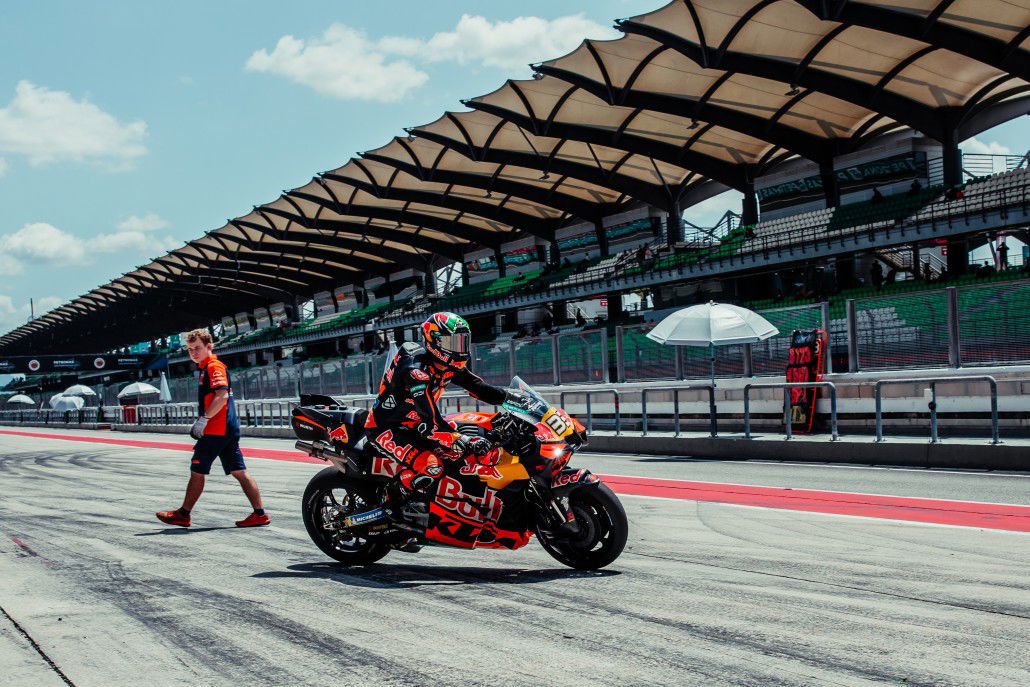
“It was probably the worst crash of my career. I broke four vertebrae,” Espargaro described the incident. Surgery was necessary, which according to Espargaro went well. One month after the crash, he is still in rehabilitation and needs several more months of recovery time. He hopes to return at the end of summer when the new 850cc prototype arrives from Japan.
Until then, development work on the 850cc project rests mainly in the hands of Takaaki Nakagami. The division of labor was planned from the start: Espargaro was initially supposed to work with the 1,000cc motorcycle and switch to the 850cc project during the summer. The crash has delayed this timeline.
When can regular riders test the 850cc bikes for the first time?
Testing opportunities for active MotoGP riders are strictly regulated. Albesiano explained that contracted riders are only allowed to ride the 850cc bikes on select days. The exact conditions are still being discussed, according to the technical director.
The first major milestone is set for June 22: after the Czech Grand Prix in Brno, a test day will take place where regular riders will sit on the 850cc prototypes for the first time. It will be the first test with multiple manufacturers, Pirelli tires, and race riders simultaneously. However, this day will also take place behind closed doors, without media access.
Whether the Monday test planned for September at Spielberg will be open to the public has not yet been decided. Manufacturers will closely observe each other during testing and measure the competition’s lap times. But Albesiano urges patience: only at the winter test in Sepang can one begin to assess the actual performance capability of the various prototypes.
The 2027 MotoGP season will usher in one of the most exciting transition phases in recent history with the regulation overhaul. Whether the new generation truly delivers closer racing and more wheel-to-wheel battles, as Espargaro predicts, or whether the manufacturer hierarchy quickly re-establishes itself, simply cannot be said at this point. That is precisely Albesiano’s message.
Frequently Asked Questions
-
How much horsepower do the new 850cc MotoGP bikes have compared to Moto2?
According to Honda technical director Romano Albesiano, the 850cc MotoGP prototypes produce around 100 hp more than a Moto2 machine. Despite the smaller displacement, the premier class bikes remain significantly more powerful than the middle class.
-
When is the first joint 850cc test with regular riders taking place?
The first multi-manufacturer test with 850cc prototypes, Pirelli tires, and active MotoGP race riders is scheduled for June 22, 2026 in Brno. The test day takes place after the Czech Grand Prix, but without media access.
-
How much slower are the MotoGP 850cc prototypes compared to the 1000cc bikes?
There are no official lap times available. Honda test rider Aleix Espargaro confirms that the 850cc bikes are closer to the 1000cc machines than expected. Depending on the track, the gap is reportedly only two to three seconds.
-
What happened during Aleix Espargaro’s 850cc test crash?
Espargaro crashed heavily during testing at Sepang in early April 2026 in a highsider and broke four vertebrae. He required surgery and has been in rehabilitation since. He plans to return at the end of summer 2026.
-
Will aerodynamics become less important on the 850cc MotoGP bikes?
No, quite the opposite. According to Albesiano, aerodynamics could be even more important for the 850cc bikes than for the current 1000cc machines. While the wings will be smaller, manufacturers continue to expand their understanding of aerodynamic potential.
➜ This article is part of our comprehensive overview: MotoGP 2026 Season: The Complete Overview – Teams, Riders, Calendar & Standings. There you’ll find all the important information on the topic in one place.