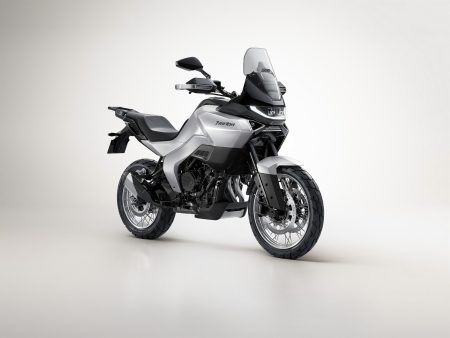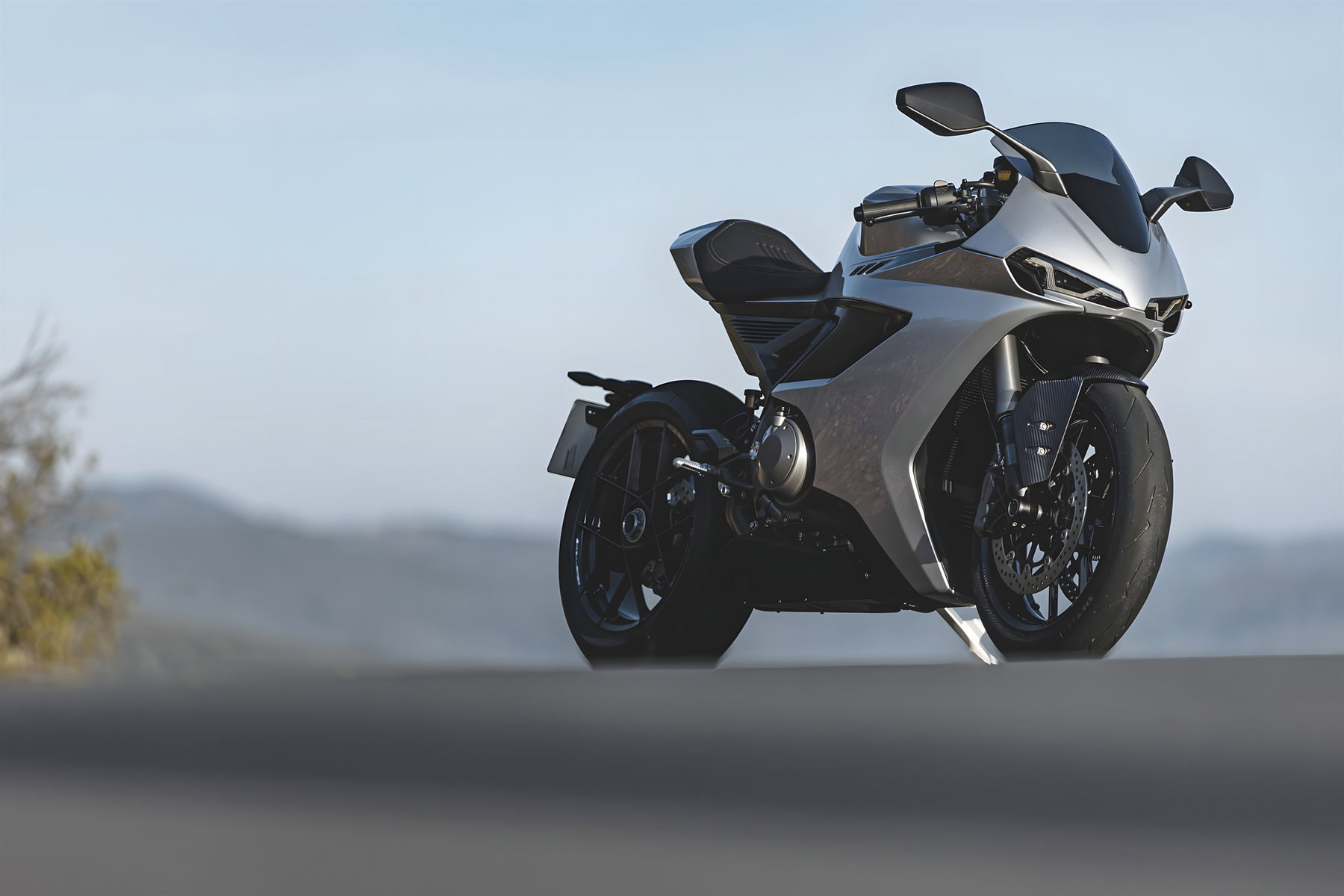
- Linear position sensors in the fork and shock of the Manx R, updated every three milliseconds according to Norton
- Manx R with 209 hp (153.6 kW) at 11,500 rpm and 130 Nm at 9,000 rpm
- Atlas with 69 bhp, roughly 70 PS (51.5 kW), from 9,250 euros (around 10,690 US dollars)
Norton’s new model family consists of four motorcycles: the Manx R as the sports bike, the Manx as the naked bike, plus the Atlas and the Atlas GT in the middleweight class. The spec sheets first draw attention to the usual figures, meaning displacement, power output and the length of the rider aid list. More interesting is a look at which sensors Norton fits and what their data is actually used for. That is exactly where the Manx R differs from many other motorcycles in its class, and the Atlas inherits part of it.
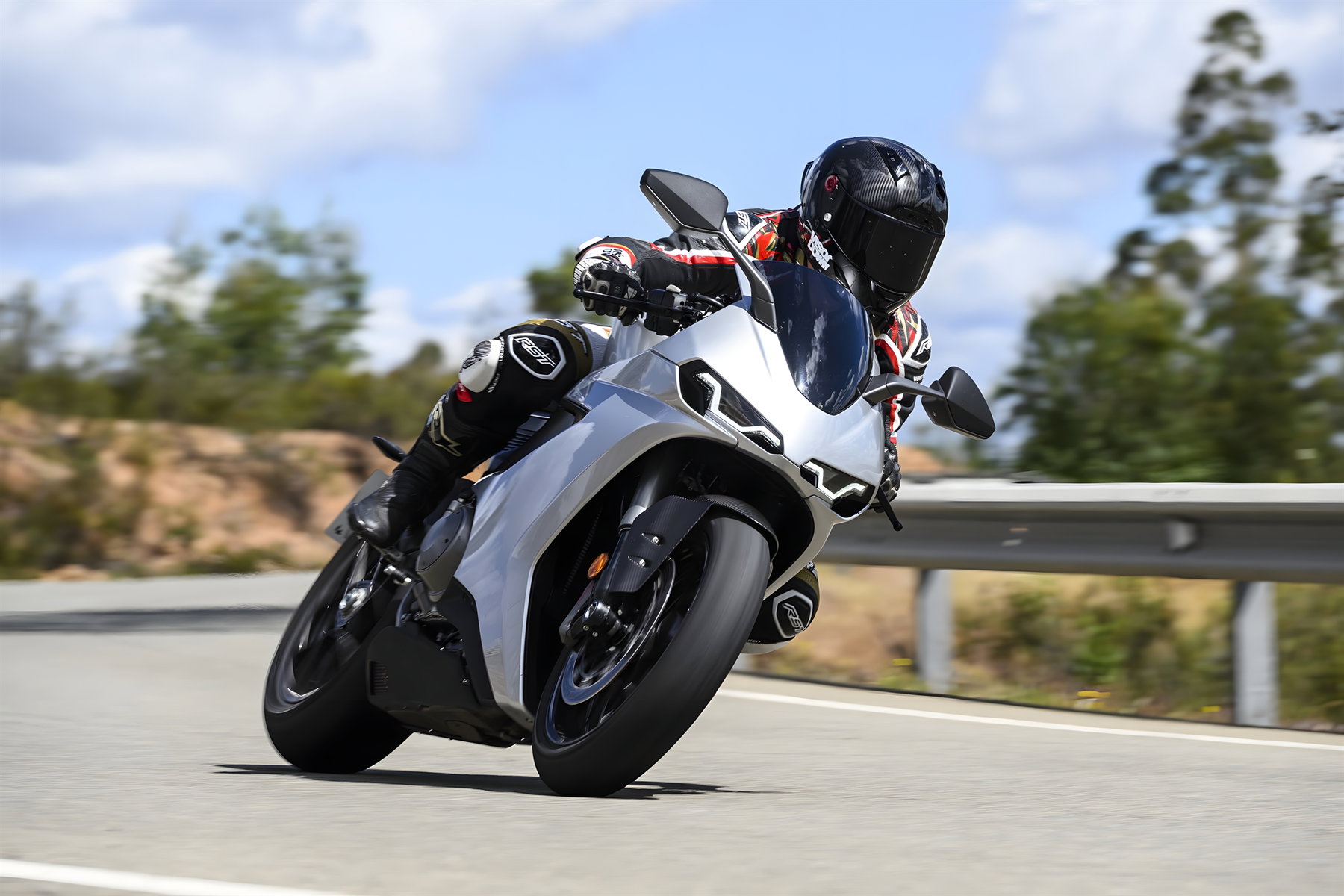
How does the semi-active suspension of the Norton Manx R work?
The Marzocchi suspension of the Manx R works with linear position sensors that sit directly in the fork and the shock. They continuously record how far, how fast and with what acceleration the suspension elements compress.
Semi-active suspension has long been widespread in the premium class. In most cases it relies on data from the IMU, the sensor unit that measures the accelerations and rotational movements of the entire motorcycle. From that, what is happening at the suspension is derived. According to its own statements, Norton goes one step further and measures the movement where it occurs.
The control unit is said to recalculate the values every three milliseconds and adjust rebound and compression damping at the front and rear wheel independently of each other. Road surface condition, brake pressure, throttle position and lean angle are taken into account. To put it into perspective, Norton offers a comparison from human perception: a blink of an eye takes roughly 100 to 400 milliseconds.
Suspension measurement this fine-meshed has so far been known mainly from MotoGP and the Superbike World Championship. Norton describes its use in a production motorcycle as a first. Whether the difference is noticeable while riding cannot be judged from the manufacturer’s figures alone.
What is inside the new 1,200 cc V4?
The V4 of the Manx R keeps the 72-degree cylinder angle and the 1,200 cubic centimetres of the predecessor engine, but according to Norton it does not share a single component with it. The layout targets usable torque in the range between 4,000 and 8,000 rpm.
For that, Norton uses a firing order the company calls Phased Pulse. The idea behind it: an uneven firing interval distributes the torque peaks so that the rear wheel has more time to build grip between the ignitions. The traction control should therefore need to intervene less often. For mixture preparation, two electronic throttle bodies and two injectors per cylinder work together to match fuel delivery across the entire rev range.
According to Norton, 77 percent of maximum torque is available from 5,000 rpm. Peak torque of 130 Nm arrives at 9,000 rpm. Development is said to have covered several tens of thousands of kilometres of road testing; there is no independent confirmation of that.
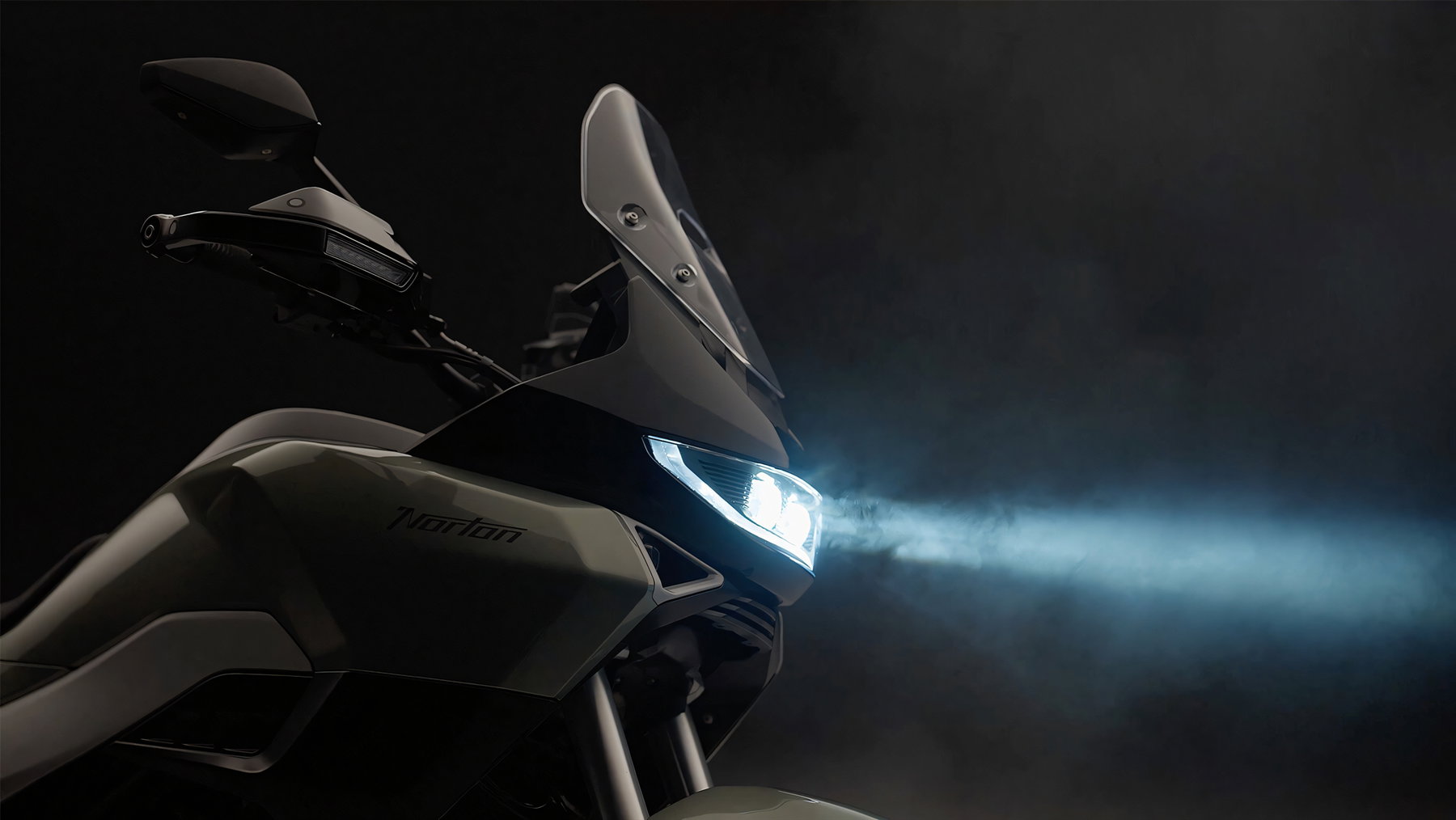
What electronics does the Norton Atlas offer?
The Atlas uses a six-axis IMU from Bosch and controls lean-sensitive ABS, cornering traction control, wheelie control, drift or slide control and a cornering cruise control through it. Five riding modes and a quickshifter are also part of the equipment.
The cornering cruise control is the technically most unusual function in this class. A conventional cruise control simply holds a set speed. The Atlas system additionally recognises that the motorcycle is leaning and adjusts engine torque so that speed stays even through long bends. Norton expects this to reduce fatigue on long stages, because fewer corrections are needed.
The Manx R builds on that and adds launch control, slide control for the rear wheel, a quickshifter with blipper function, shift recommendations, freely adjustable traction control and a hill hold assistant. The latter is otherwise found more often in touring machines and adventure bikes. Both models show the information on an 8-inch TFT touchscreen with navigation, Bluetooth connection, riding modes and diagnostic functions. On the Manx R, GoPro control, location tracking and an immobiliser that can be activated remotely are added.
What makes the 585 cc twin of the Atlas durable?
The parallel twin of the Atlas does without conventional steel liners and instead uses a very thin coating of the cylinder bores, applied by atmospheric plasma spraying. According to the manufacturer, this reduces friction and weight and improves heat dissipation.
Added to that are two oil pumps, knock sensors and an elaborately designed cooling system. Knock sensors detect uncontrolled combustion and allow the control unit to adjust ignition timing. That is relevant above all in markets with fluctuating fuel quality. The twin works with a 270-degree crank pin offset, which is now widespread in this segment and gives the engine a more uneven running character. A restricted A2 version is available.
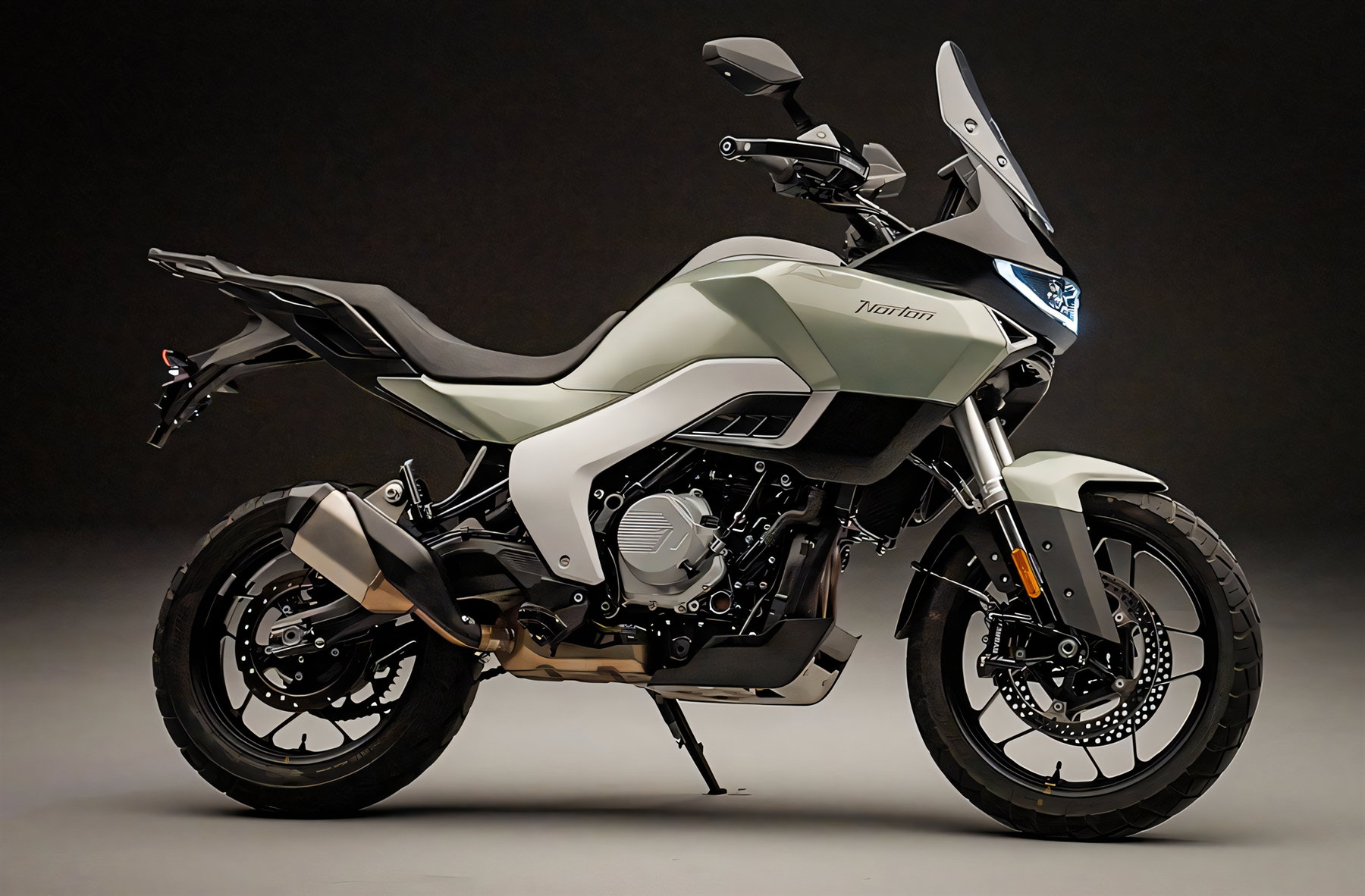
What does the Norton Atlas cost and where is it available?
The Atlas starts at 9,250 euros (around 10,690 US dollars), the higher-specified Apex version at 10,525 euros (around 12,160 US dollars). The standard version rolls on spoked wheels, 19 inches at the front and 17 inches at the rear, while the road-focused Atlas GT runs 17-inch cast wheels at both ends.
Both variants share the chassis, in which the engine is integrated as a stressed member, plus fully adjustable KYB suspension. Among other things, the Apex models bring adaptive cornering lights. The Atlas is set to join the Manx R in the lower middleweight class during the summer of 2026. Norton delivers all new models with a three-year manufacturer warranty and breakdown cover; according to the manufacturer, the protection can be extended to up to five years through a free dealer extension.
One practical catch remains: for Germany, Norton currently lists just three dealers, in Solingen, Duisburg and Ludwigshafen.
Norton is rebuilding its dealer network
This is exactly where an announcement from 5 August 2026 comes in. Norton is working with the architecture practice Foster + Partners on a new retail concept and is targeting more than 200 locations worldwide. The first wave is set to cover the United Kingdom, Italy, Germany, France, Spain, India and the USA, initially at flagship locations.
According to Norton, the concept can be implemented from 50 square metres of sales floor and is intended to last around seven years before a larger overhaul becomes necessary. Both aim at dealer costs, which otherwise require more frequent investment when brand presentations change. Norton has not yet named specific opening dates or locations. Nothing changes for the motorcycles themselves, but it could become relevant for availability in Germany in the medium term.
The technology offensive thus fits into the wider picture of the brand, which has rebuilt its product range, development and production in Solihull and India since the takeover by TVS in 2020.
Frequently Asked Questions
-
How much power does the Norton Manx R have?
The Norton Manx R produces 209 hp (153.6 kW) at 11,500 rpm. Maximum torque is 130 Nm at 9,000 rpm. According to Norton, 77 percent of the torque is available from 5,000 rpm.
-
What is special about the suspension of the Norton Manx R?
Linear position sensors sit in the fork and the shock and measure the position, speed and acceleration of the suspension elements directly. According to Norton, the system recalculates every three milliseconds and controls rebound and compression damping separately at the front and rear.
-
How much power does the Norton Atlas have?
Norton quotes 69 bhp at 9,300 rpm for the Atlas, which corresponds to around 70 PS (51.5 kW). Maximum torque is 57.5 Nm at 7,300 rpm. The 585 cc twin is also available as a restricted A2 version.
-
What does the Norton Atlas cost?
The Atlas starts at 9,250 euros (around 10,690 US dollars), the Apex version at 10,525 euros (around 12,160 US dollars). In Germany, Norton currently lists three dealers.
-
What is a cornering cruise control?
A cornering cruise control keeps the speed constant even when the motorcycle is leaning. To do so, the system detects the lean angle via the IMU and adjusts engine torque. Norton fits the function as standard on the Atlas.
➜ This article is part of our comprehensive overview: New Motorcycles 2026: All Models, Releases, and Highlights at a Glance. Find all key information on this topic in one place.