- 585 cc parallel twin with 270-degree crankshaft, 70 hp (51.5 kW) and 57.5 Nm
- Four variants: Atlas and Atlas GT, each as base model and higher-spec Apex version
- European prices starting at €9,250 (approximately $10,700), US pricing still to be confirmed
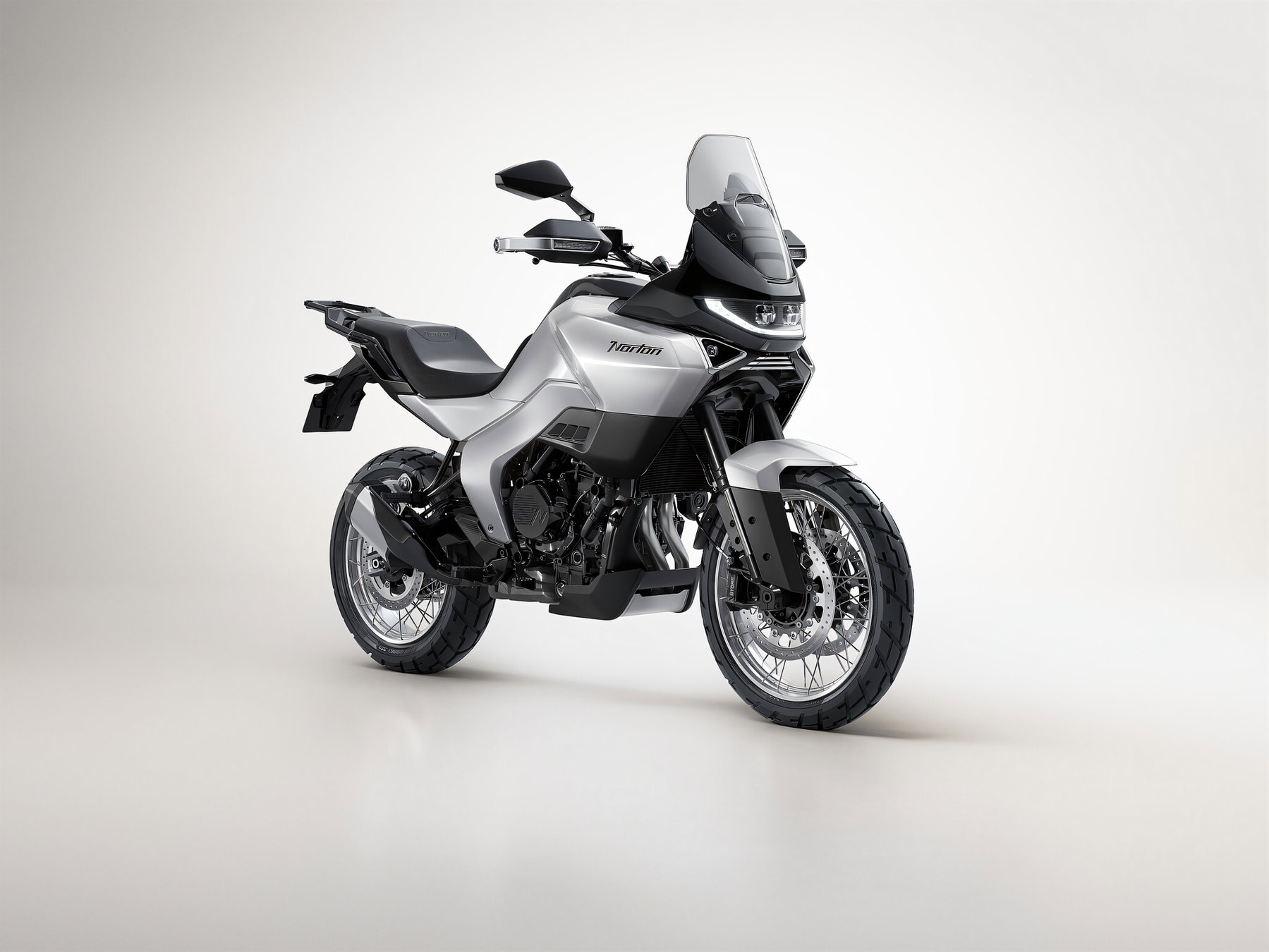
Few motorcycle brands carry as much history as Norton, and few have experienced as many upheavals in recent years. After a long period of uncertainty, the Indian TVS Group acquired the brand and has since been working on a complete rebuild. With the Atlas and the Atlas GT, Norton is now entering the midsize adventure touring and sport touring segment for the first time. Developed and built at the British factory in Solihull, the two models form an entirely new model family together with their siblings, the Manx and Manx R.
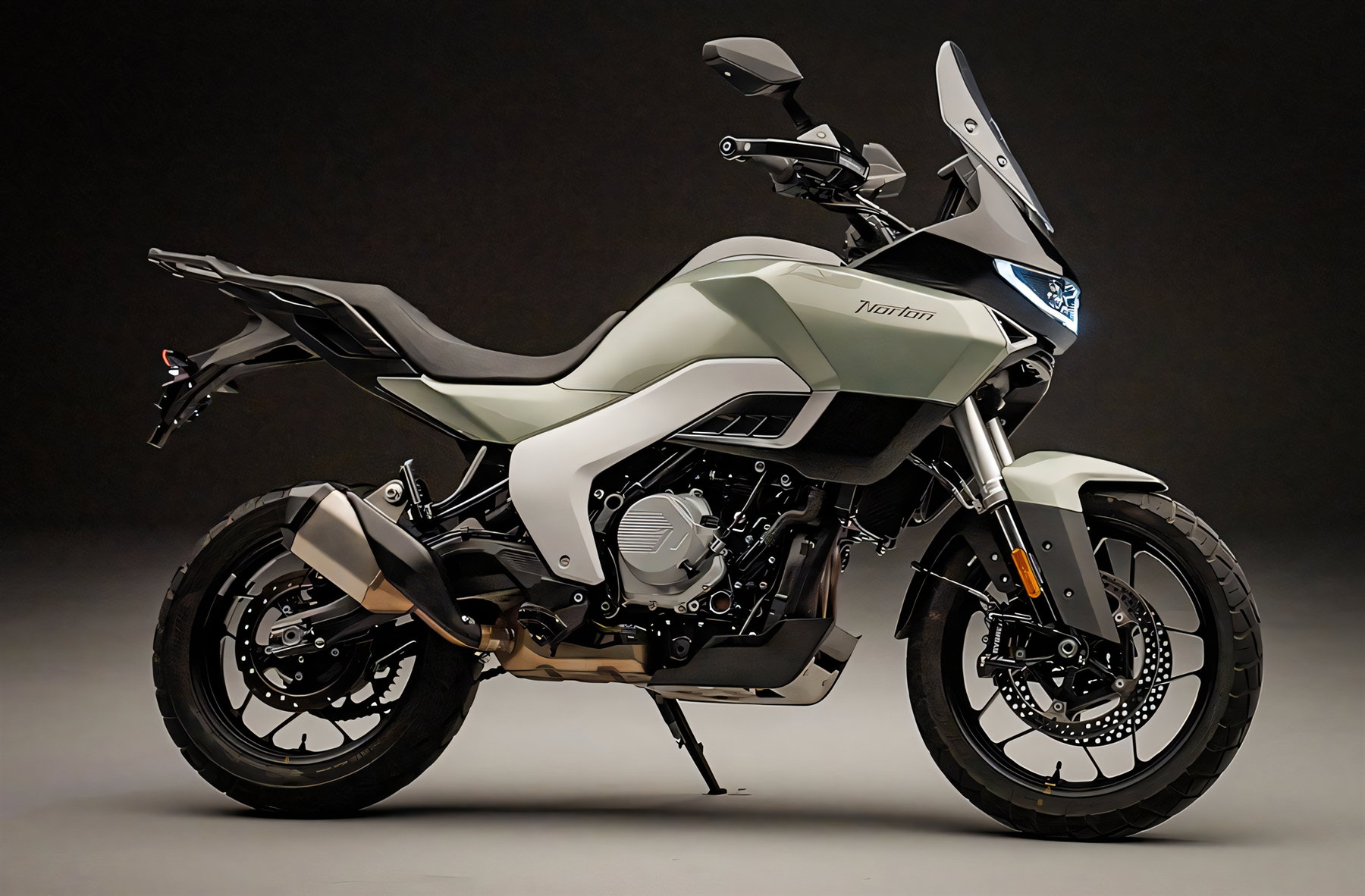
What distinguishes the Norton Atlas from the Atlas GT?
The Atlas is the off-road-oriented variant with a 19-inch front wheel and more suspension travel, while the Atlas GT is the road-focused sibling with 17-inch wheels and shorter suspension travel. Both share the same technical platform but interpret the midsize touring concept differently. The Atlas rolls on a 19-inch spoked front wheel and 17-inch rear, offers 180 millimeters of suspension travel at both ends and provides 220 millimeters of ground clearance. The Atlas GT features 17-inch cast wheels front and rear, reduces suspension travel to 140 millimeters and receives sharper steering geometry for more direct handling on tarmac. Seat height also separates the two models: the Atlas measures 845 millimeters, while the GT sits approximately 30 millimeters lower at 815 millimeters. How significant the differences prove in everyday riding will only become clear in a practical test.
How much power does the Norton Atlas 585 twin produce?
The liquid-cooled parallel twin produces 70 hp (51.5 kW) at 9,300 rpm and delivers a maximum torque of 57.5 Nm (approximately 42 lb-ft) at 7,500 rpm. From 585 cubic centimeters of displacement with a bore of 78 millimeters and a stroke of 61.2 millimeters, plus a compression ratio of 12.2:1, Norton claims the engine produces broadly usable torque. A 270-degree crankshaft provides the characteristic firing order. Technically, the DOHC engine features several durability-oriented solutions: APS-coated cylinder liners, dual oil pumps for reduced friction and stable lubrication, a knock sensor for varying fuel quality, as well as a protected intake system and a specially shaped radiator. Power reaches the chain via an anti-hopping clutch and a six-speed gearbox with a standard bidirectional quickshifter. Ride-by-wire throttle control is also standard equipment.
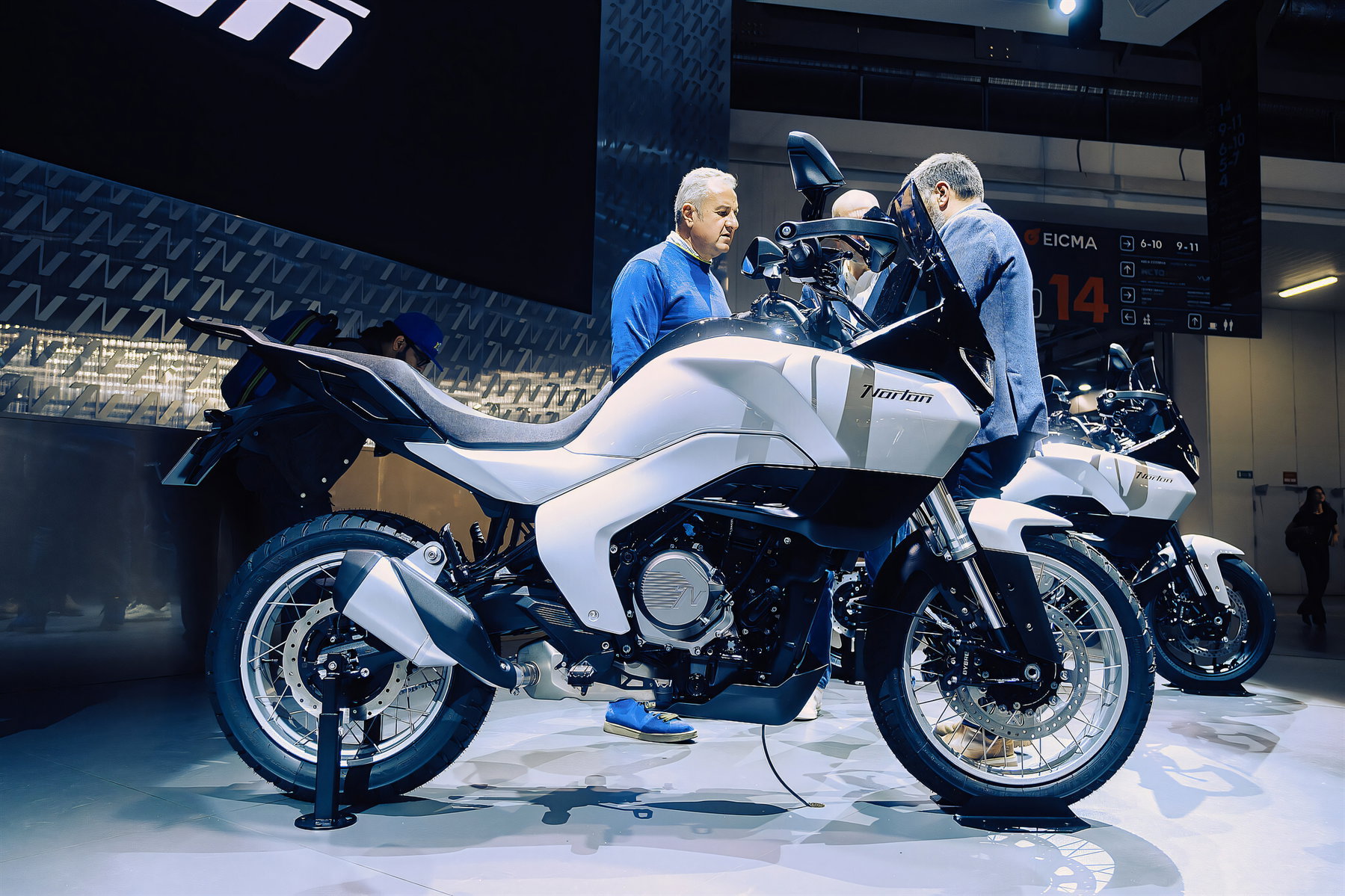
How is the Atlas engine related to the BMW F 450 GS?
Both motorcycles are manufactured by TVS, and according to media reports the new twin shows visual similarities to the 420 cc engine of the BMW F 450 GS, but is independently engineered in its details. TVS produces the F 450 GS on behalf of BMW, which likely explains the parallels. Unlike the Bavarian engine with its unusual 135-degree crankshaft, Norton opts for the 270-degree offset, along with greater displacement from different bore and stroke dimensions. There are also similarities in the frame: the steel trellis frame, in which the engine serves as a stressed member, reportedly shares the 1,465-millimeter wheelbase and 180-millimeter suspension travel with the F 450 GS according to media reports. This assessment comes from the specialist press and is not an official Norton statement.
Suspension and brakes of the Norton Atlas in detail
The fully adjustable suspension comes entirely from KYB. Up front, a 43-millimeter upside-down fork handles duties, while a monoshock with hydraulic remote preload adjustment works at the rear. In the base version, the shock is adjustable for rebound damping and preload, while the Apex models receive a fully adjustable unit. Braking is handled at the front by two 310-millimeter discs with radially mounted ByBre calipers, while a 270-millimeter disc is fitted at the rear. The Apex variants upgrade to fully floating discs but retain the same calipers. The Atlas is shod with Eurogrip Explo R Plus tires in 110/80 ZR19 front and 150/70 ZR17 rear. Norton lists the dry weight at 188 kg (approximately 414 lbs) for the Atlas and 192 kg (approximately 423 lbs) for the Apex version.
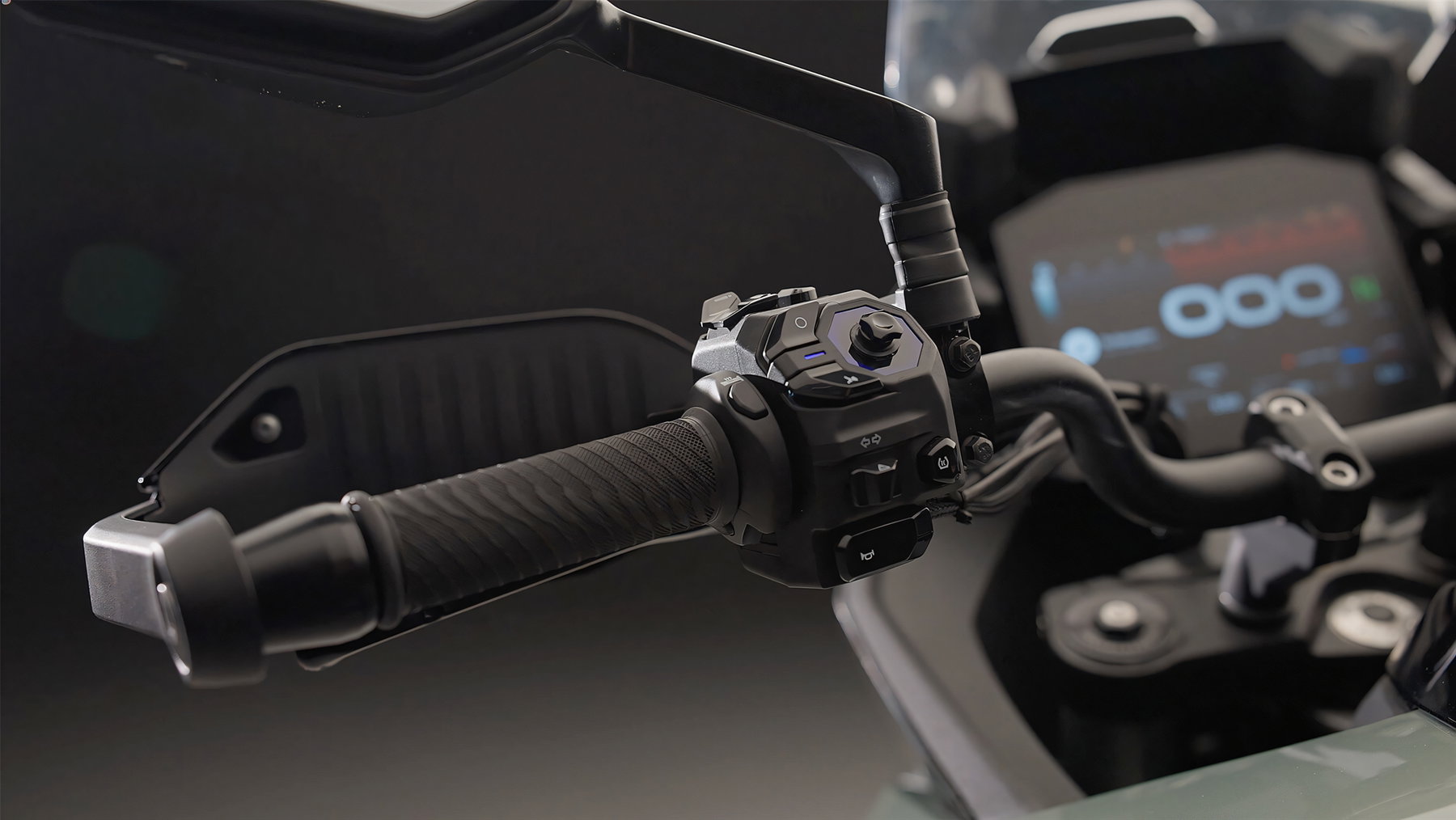
What electronics and equipment does the Norton Atlas offer?
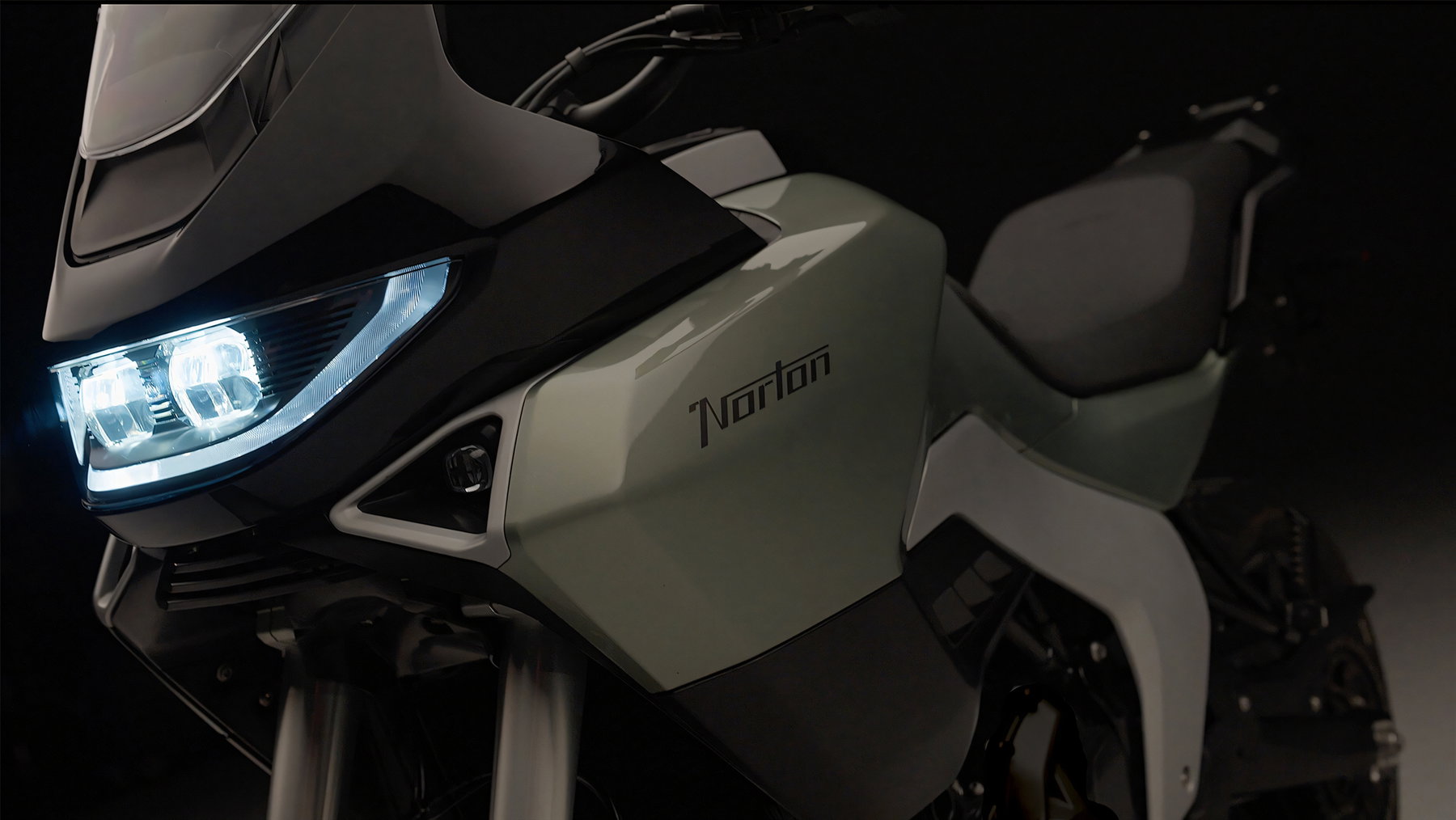
At the heart sits a Bosch six-axis IMU that controls a comprehensive rider assistance package. This includes lean-sensitive ABS, traction control, wheelie control, slide and lift detection, engine braking control as well as cornering cruise control. Five riding modes (Urban, Rain, Sport, Tour and Enduro) are available. The Apex versions add a vehicle hold function, an electronically combined braking system and use a higher-specification Bosch 10.3ME IMU instead of the 10.3 unit fitted to base models. An 8-inch TFT touchscreen with 720p resolution serves as the cockpit, featuring navigation, Bluetooth and Wi-Fi connectivity, over-the-air updates, GoPro control and integration with the Norton Rider App, operated via a joystick on the handlebar. A keyless ignition system, electronic fuel cap, seat lock and a USB-C port are standard. The Apex models additionally include heated grips, tire pressure monitoring, adjustable levers, an adjustable screen, a luggage rack, cornering lights and an aluminum engine guard. All lighting is fully LED with dual projection headlights and dynamic DRL brightness. Color options for the base models include Matrix Black, Trophy Silver, Veronica Green and Sinopia Orange, while the Apex versions add Glacier Blue.
How much do the Norton Atlas and Atlas GT cost?
In Europe, the Atlas starts at €9,250 (approximately $10,700), with the Atlas Apex priced at €10,525 (approximately $12,200). In the home market of the United Kingdom, the Atlas starts at £8,250 (approximately €9,400 / $11,050). The prices are currently communicated by Norton as guide prices. An official US price has not yet been confirmed but is expected to be close to European levels according to media reports. The Atlas and Atlas Apex will be available first, with complete specifications and pricing for the Atlas GT and GT Apex to follow at market launch. Norton has not yet announced a specific sales date, though media reports suggest a market launch during the course of 2026. All new Norton models will be delivered in the EU with a 36-month warranty without mileage limitation as well as Norton Roadside Assist, available around the clock. This positions the Atlas range as part of the brand’s ongoing realignment, which previously took shape with the Manx and Manx R models.
Frequently Asked Questions
-
How much horsepower does the Norton Atlas have?
The Norton Atlas produces 70 hp (51.5 kW) at 9,300 rpm. Maximum torque is 57.5 Nm at 7,500 rpm. It is powered by a 585 cc parallel twin with a 270-degree crankshaft.
-
How much does the Norton Atlas cost?
The Norton Atlas starts at €9,250 (approximately $10,700) in Europe, with the Apex version priced at €10,525 (approximately $12,200). An official US price has not yet been confirmed.
-
What is the difference between the Atlas and the Atlas GT?
The Atlas is off-road oriented with a 19-inch front wheel, 180 millimeters of suspension travel and an 845-millimeter seat height. The Atlas GT is road-focused with 17-inch wheels, 140 millimeters of suspension travel and an 815-millimeter seat height.
-
Which variants of the Norton Atlas are available?
There are four variants: Atlas and Atlas GT, each available as a base model and a higher-spec Apex version. The Apex models add features including heated grips, tire pressure monitoring, cornering lights and a fully adjustable shock.
-
When will the Norton Atlas be available?
Norton has not yet announced an official sales date. The Atlas and Atlas Apex will be available first, with the Atlas GT to follow later. Media reports suggest a market launch during the course of 2026.
➜ This article is part of our comprehensive overview: New Motorcycles 2026: All Models, Releases, and Highlights at a Glance. Find all key information on this topic in one place.