- Over 250 reports of phantom braking incidents across Europe, affecting vehicles from Tesla, Renault, Audi and Volkswagen
- On June 29, 2026, eleven drivers filed a class action lawsuit at the court in Aix-en-Provence
- Automatic emergency braking systems have been mandatory in all new vehicles since 2022
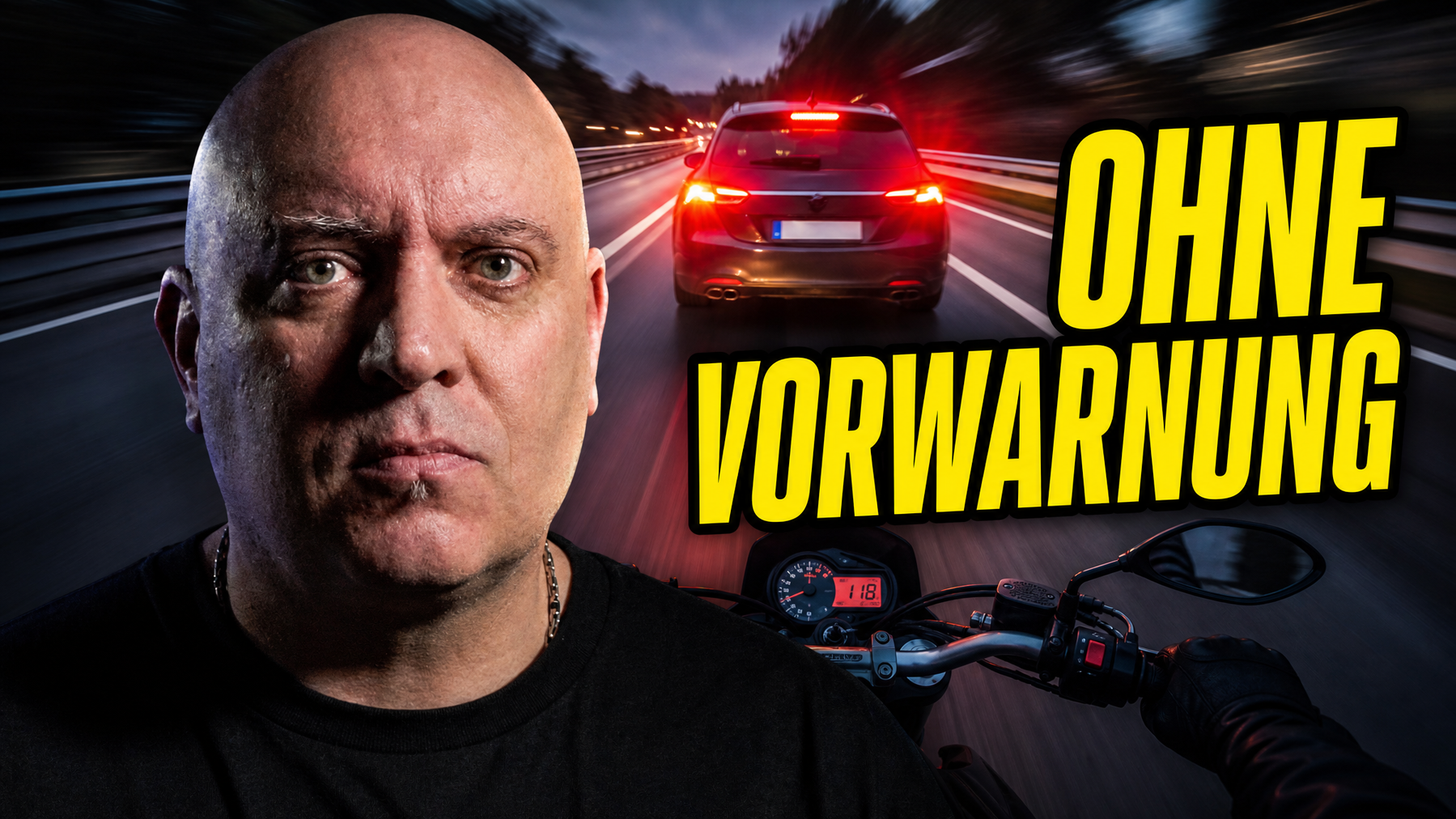
A car is cruising calmly on the motorway, then suddenly brakes with full force even though nothing is in front of it. The driver is usually protected by the car’s body and seatbelt. Anyone riding a motorcycle behind it has no such protection. Seen from this angle, an issue that is already unsettling many car drivers takes on an entirely different edge for riders on two wheels.
What Is Phantom Braking?
Phantom braking is a sudden, hard braking maneuver triggered by an automatic emergency braking system even though no real obstacle is present. The vehicle decelerates abruptly, often at high speed, and then continues on as if nothing happened. The phenomenon isn’t new, but in recent months it has reached a scale that is now keeping the courts busy. Fast-moving stretches of road such as motorways are particularly affected, where an unexpected full stop can have especially dangerous consequences.
What Happened on Europe’s Roads?
The current debate was triggered by a serious incident in the summer of 2025. A Peugeot 208 braked from 120 km/h to a complete stop on the A40 motorway in France and caused a multi-vehicle collision. Over 250 similar reports followed, involving a wide range of brands including Tesla, Renault, Audi and Volkswagen. That suggests the problem isn’t tied to a single manufacturer. The consumer lawyers’ dossier also lists widely sold models, including the Volkswagen Tiguan, the Dacia Bigster, the Peugeot 308, the Citroën C4, the Skoda Kodiaq and the Ford Focus. This range suggests that shared components or software used across several manufacturers could be playing a role, rather than an isolated single fault.
How Does an Automatic Emergency Braking System Work?
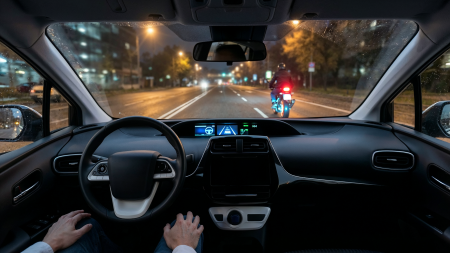
An automatic emergency braking system monitors the road and independently initiates braking when it detects an impending collision. Internationally, the technology is abbreviated as AEB, for Automatic Emergency Braking. Extended variants that also detect pedestrians and cyclists are known as AEBS. To make this work, the braking system, sensors, camera and electronics work together. Radar or laser sensors, usually mounted near the radiator or bumper, along with a camera behind the windshield, continuously calculate the distance to obstacles. If the safety distance becomes too small, the system first issues a warning and then intervenes in the engine and braking management.
Why Do the Systems Trigger Without Reason?
Several technical causes could be behind the false triggers. Ongoing investigations point to possible malfunctions in radar sensors and cameras, which can be linked to unusual weather conditions or calibration errors after minor collisions. Dirty sensors, snow covering the measuring points, or heavy rain in front of the camera can also distort the data, temporarily disable the system, or trigger false alarms. There’s another factor as well: not every braking event that feels unwarranted is actually a genuine defect. In some cases, manufacturers deliberately tune their systems to intervene earlier than a human driver would. When braking genuinely occurs without cause, the calibration of sensors and camera should be checked, including after a windshield replacement.
Why Is Phantom Braking Especially Dangerous for Motorcyclists?
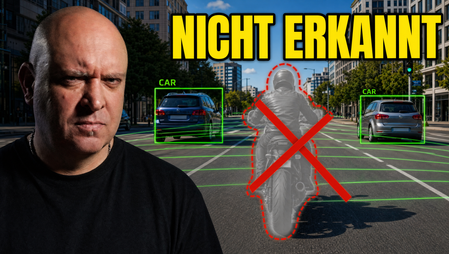
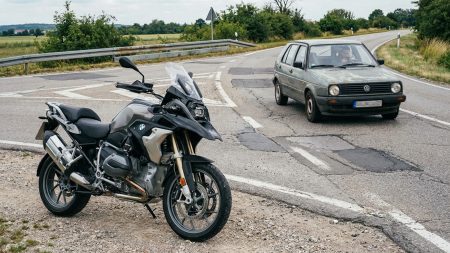
For motorcyclists, phantom braking is particularly tricky because the usual safety distance relies on predictable behavior from the vehicle ahead. Riders learn early on to gauge their distance based on how the vehicle in front behaves, meaning braking that announces itself, unfolds smoothly and fits the flow of traffic. Phantom braking breaks this pattern completely. It happens without warning, with no visible cause, often exactly where reaction time is already tight, namely at high speed on the motorway. On two wheels, physics leaves little room for error. Anyone forced to brake with the same force as the car ahead, without any warning, risks a rear-end collision or a crash during the emergency stop. Many posts in online groups on the topic, with one Facebook group alone counting around 2,800 members, come from people who were riding a motorcycle behind such vehicles. Motorcycles also remain at a technical disadvantage: automatic emergency braking systems in cars don’t always reliably detect motorcycles ahead, especially in darkness or poor visibility.
Who Is Liable in an Accident Caused by Phantom Braking?
Who is liable after a rear-end collision caused by phantom braking cannot be answered in general terms and depends on the individual case. A ruling by the Higher Regional Court of Frankfurt am Main, however, shows where case law can lean. In that case, a driver whose vehicle had triggered a phantom braking event was assigned one-third liability. She had sued the truck driver who rear-ended her, but was found partly at fault because the court classified her conduct under German road traffic rules as a violation. The court thereby held her partly responsible for a technical failure in her own vehicle. That the technology itself can create a new hazard was also shown in a case in California, where a traffic camera captured a Tesla braking to a full stop for no apparent reason, causing a multi-vehicle pile-up with damage and injuries.
What Changes Under the New EU Regulations?
The emergency braking systems are part of a European framework that is gradually mandating more assistance technology. The requirement has applied to newly developed vehicle types since July 6, 2022, and to all newly registered passenger cars since July 2024. The next stage takes effect on July 7, 2026. From then on, automatic emergency braking systems must reliably detect not only other vehicles but also pedestrians and cyclists. Also new is an expanded head-impact protection zone at the front of the vehicle, intended to reduce injuries in accidents involving pedestrians, cyclists and motorcyclists. In addition, a distraction warning system that monitors driving behavior and a mandatory emergency lane-keeping assistant are being introduced. The debate over phantom braking is unfolding at a time when more and more vehicles are intervening independently in the driving process.
How Should Motorcyclists Behave Now?
As long as the causes remain unclear, a bigger safety margin is a motorcyclist’s best protection. A generous following distance and constant readiness to brake are no longer just a rule from driving school under these conditions, but a real necessity. What matters is staying aware that the car ahead can brake unannounced at any time, even without any apparent reason. Answers to the open technical questions may come from the ongoing investigations in France. The French Ministry of Transport has commissioned an independent body to carry out a technical review, including direct testing and hearings with experts and suppliers of the systems involved. Initial results are expected in the coming months.
Frequently Asked Questions
-
What is phantom braking?
Phantom braking is a sudden, hard braking maneuver triggered by an automatic emergency braking system even though no real obstacle is present. The vehicle decelerates abruptly and then continues on. Especially on the motorway at high speed, this can lead to serious rear-end collisions.
-
Which car models are affected by phantom braking?
Reports span multiple brands, including Tesla, Renault, Audi and Volkswagen. The consumer lawyers’ dossier also names the Volkswagen Tiguan, the Dacia Bigster, the Peugeot 308, the Citroën C4, the Skoda Kodiaq and the Ford Focus. The range suggests shared components or software from several manufacturers.
-
Why is phantom braking dangerous for motorcyclists?
The safety distance on a motorcycle relies on predictable behavior from the vehicle ahead. Phantom braking, however, happens without warning and with no visible cause. On two wheels, this significantly raises the risk of a rear-end collision or a crash during the emergency stop.
-
Who is liable in an accident caused by phantom braking?
That depends on the individual case. The Higher Regional Court of Frankfurt am Main assigned one-third liability to a driver whose car had triggered a phantom braking event. Anyone seeking to hold the manufacturer liable must expect considerable difficulties in providing evidence.
-
Since when have automatic emergency braking systems been mandatory?
In the EU, the requirement has applied to newly developed vehicle types since July 6, 2022, and to all newly registered passenger cars since July 2024. From July 7, 2026, the systems must also reliably detect pedestrians and cyclists.