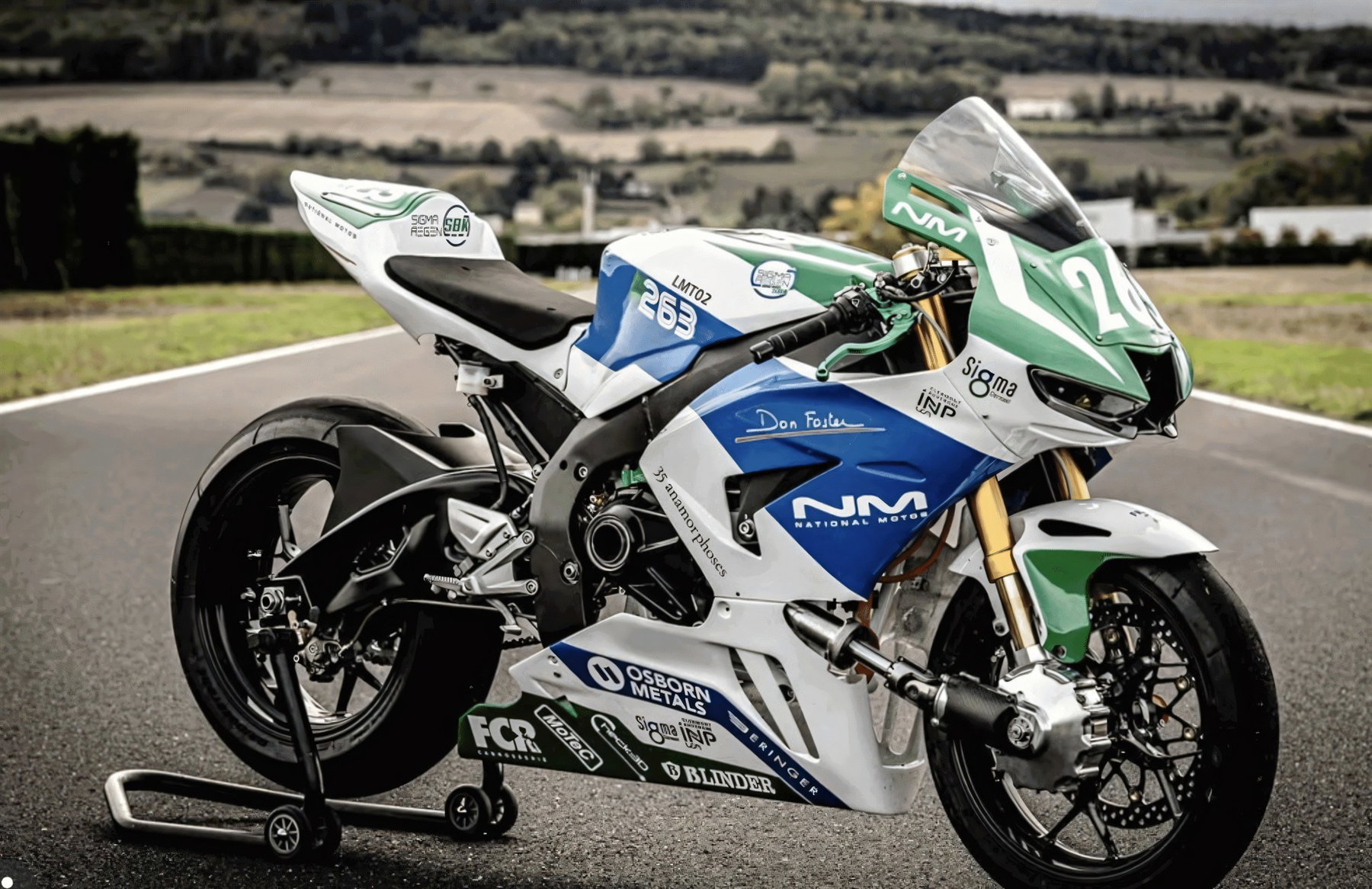
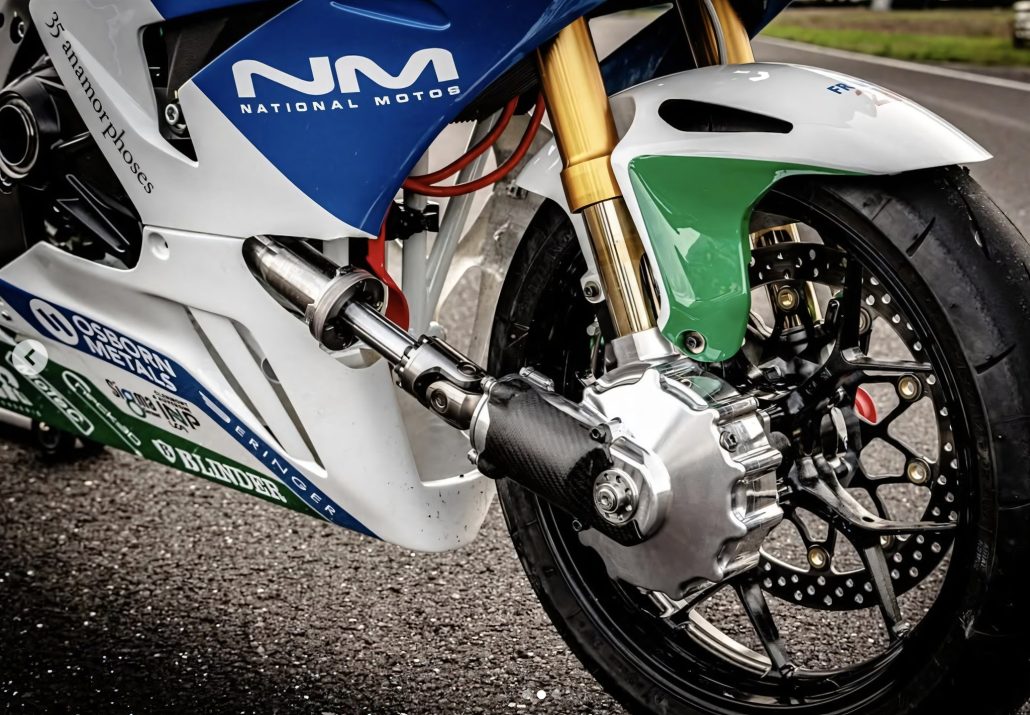
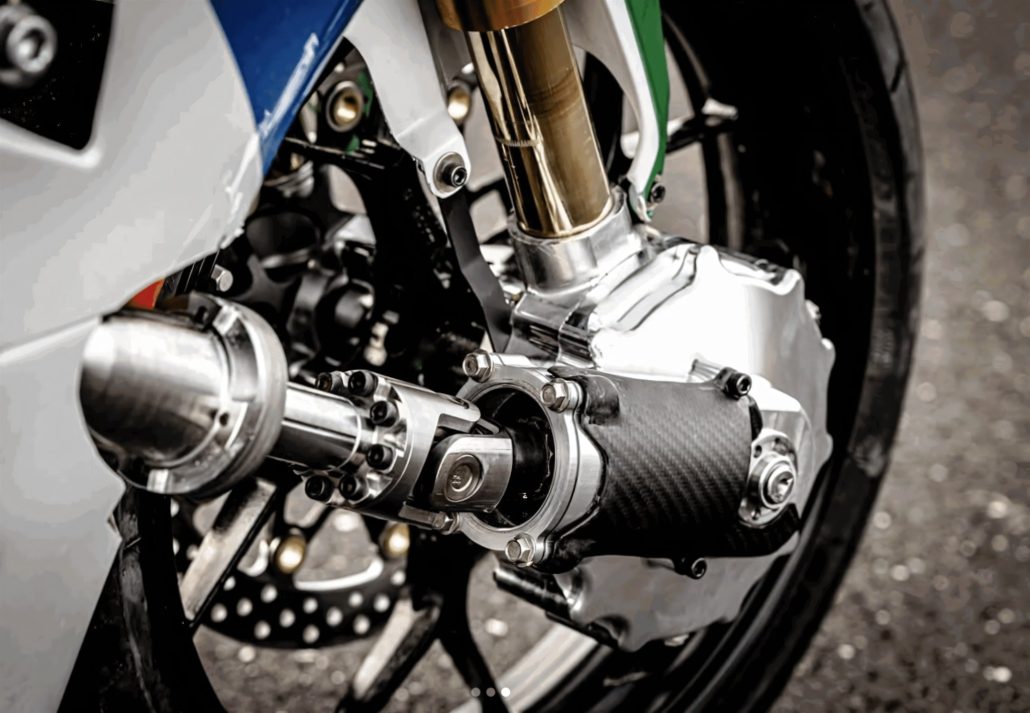
- The SIGMA LMT02 uses its front wheel both for propulsion and for recovering energy.
- Up to 33 percent of the battery energy is meant to be recovered this way.
- The team still needs around 190,000 euros for fast-charging high-performance batteries.
A motorcycle with two driven wheels has never lined up at the 24-hour race in Le Mans. That is exactly what the SIGMA Regen Superbike project is aiming for. With the LMT02, the team has now presented the second prototype of its electric Fireblade. It is the first one in which the front wheel is driven as well, and it is meant to pave the way for an entry in the endurance classic at Le Mans in 2029.
What is new about the SIGMA LMT02?
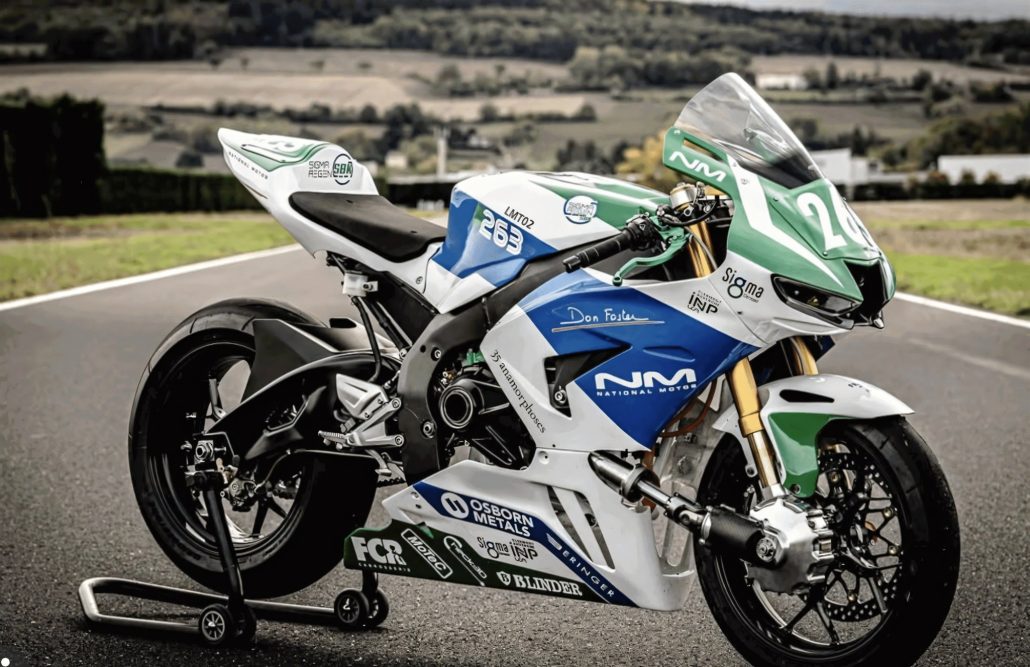
The SIGMA LMT02 has two-wheel drive: in addition to the rear wheel, the front wheel also drives the motorcycle and recovers energy under braking. On top of that comes revised control electronics.
The base is still a Honda CBR1000RR-R Fireblade whose combustion engine has made way for an electric drivetrain. With its predecessor, the LMT01, the main goal was to get the electric motor, battery and energy recovery working in principle. It was a pure test mule. With the new electronics and the additionally driven front wheel, the test bike now becomes a prototype that is much closer to a finished racing motorcycle.
How does energy recovery at the front wheel work?
When slowing down, the front wheel brakes the Fireblade and converts kinetic energy back into electricity for the battery. According to the team, this should return up to 33 percent of the battery energy, roughly a third.
There is a simple reason why the engineers focus on the front. Under braking, weight shifts forward. The front wheel therefore does a large part of the braking work, and that is where a correspondingly large amount of recoverable energy lies. Until now, this so-called regeneration only took place via the rear wheel in this project.
The system is called SRERA. The abbreviation stands for “Système de Récupération d’Énergie sur la Roue Avant”, which translates roughly as “energy recovery at the front wheel”. According to the team, it has now been tested and validated.
Why are there hardly any two-wheel-drive motorcycles?
Two-wheel drive is technically difficult to achieve on a combustion bike because the front wheel also steers and can therefore only be driven mechanically with great effort. Extra weight, more complexity and little available space have held such solutions back so far.
Still, the idea is not entirely new. Off-road, there have already been motorcycles with two driven wheels. The best-known example is the Yamaha WR450F 2-Trac, which was used at the Dakar Rally.
With an electric motorcycle, the equation looks different. A separate, independently controlled electric motor can drive the front wheel directly. A mechanical power transmission to the front is then not needed. This removes the biggest obstacle on which two-wheel-drive systems for combustion motorcycles have failed so far.
Who is behind the SIGMA Regen Superbike project?
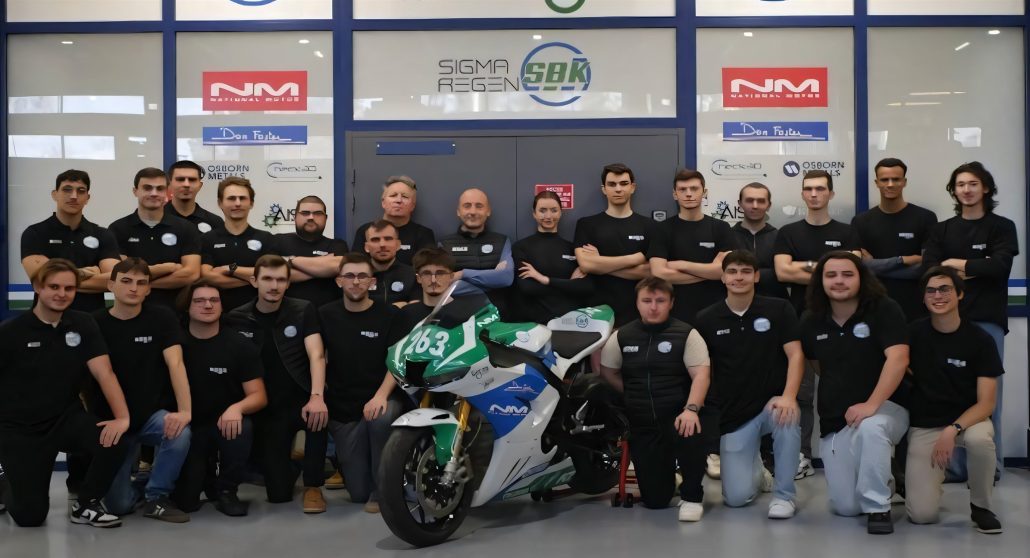
The electric Fireblade is the work of students and engineers at the SIGMA Clermont engineering school in France. They are supported by National Moto, an experienced endurance racing team that also supplied the original Fireblade chassis.
We already reported on the project in June 2025, back then still with the LMT01 as a converted test mule.
What does the roadmap to Le Mans 2029 look like?
After the LMT02, the team plans two more motorcycles before it intends to race at the 24 Heures Motos in Le Mans in 2029. Each stage has its own goal.
Next up is the LMR01. With it, the team wants to attack the lap record for electric motorcycles on the Bugatti circuit in Le Mans, the very track on which the 24-hour race will later take place. The actual race bike is then set to be the LMR02. Plans call for 800-volt technology and an output of up to 340 hp (250 kW).
Counting the LMT01, that makes four development stages from the first test bike to the endurance racer. Around two and a half years remain until the goal. If the plan works out, the electric Fireblade would be the first two-wheel-drive motorcycle to start at the Le Mans classic.
What does the Le Mans entry still depend on?
Besides the technology, the money is the main open question. The team is still looking for around 190,000 euros (approx. 208,850 US dollars) to develop fast-charging high-performance batteries.
Energy recovery at the front wheel helps, but it does not replace a powerful battery. Whether the university project turns into a motorcycle that can last an endurance race by 2029 therefore depends heavily on whether the funding comes together.
Frequently Asked Questions
-
What is the SIGMA LMT02?
The SIGMA LMT02 is the second prototype of the SIGMA Regen Superbike project. It is based on an electrically powered Honda CBR1000RR-R Fireblade and drives both the rear and the front wheel.
-
How much energy does the LMT02 recover at the front wheel?
According to the team, up to 33 percent of the battery energy is to be recovered. This is done by the SRERA system, which generates electricity at the heavily loaded front wheel under braking.
-
How much horsepower will the electric superbike for Le Mans have?
The later race version, the LMR02, is set to produce up to 340 hp (250 kW). It is planned to use 800-volt technology.
-
When is the electric Fireblade supposed to race at Le Mans?
The team is aiming for an entry at the 24 Heures Motos in 2029. Before that, the LMR01 is to attack the lap record for electric motorcycles on the Bugatti circuit.