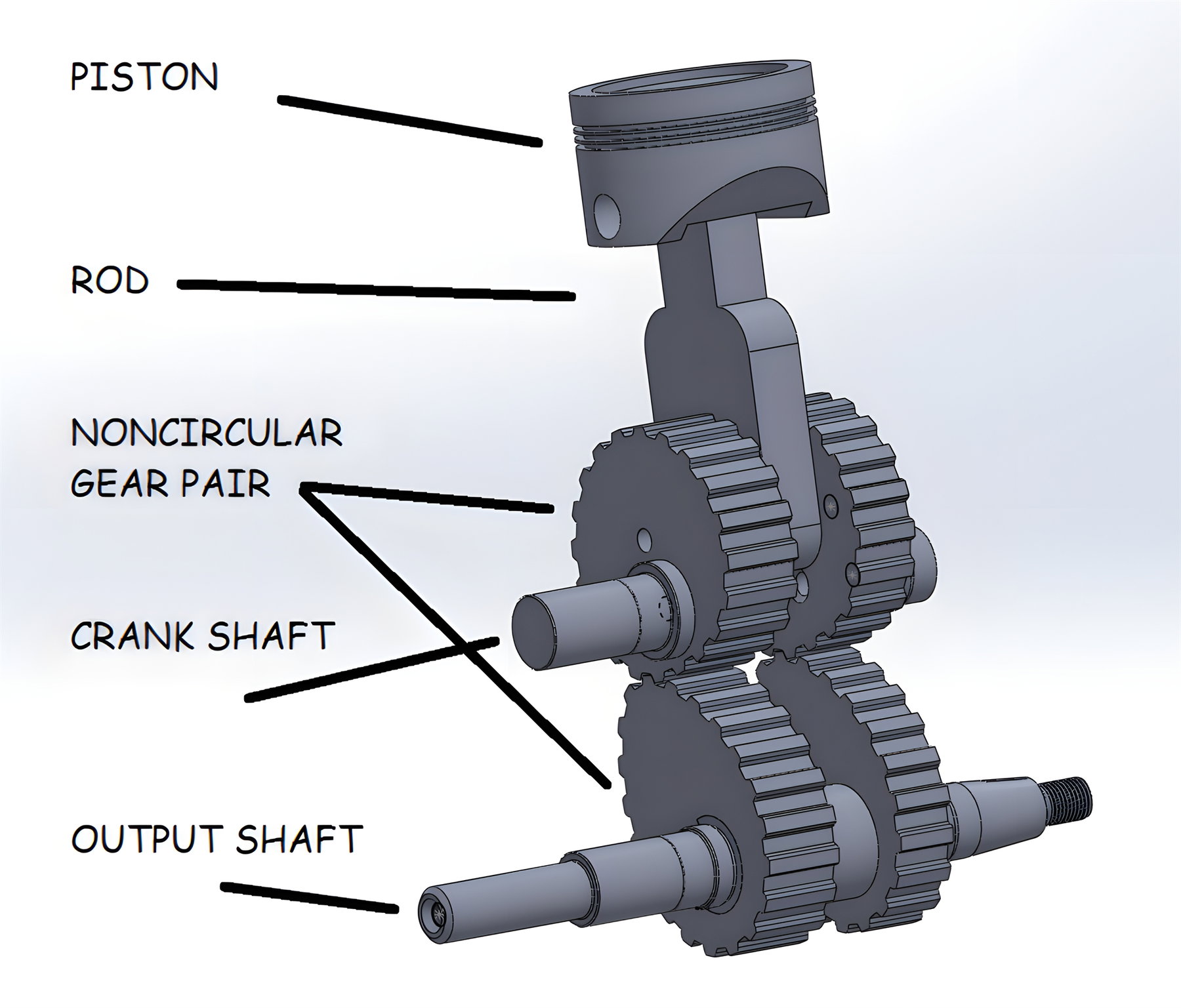
- Inventor Brian Schmidt from Galena, Ohio, lists the Speed Stroke Engine as “patent pending”
- Non-round gears on the crank drive are intended to extend the intake and power strokes while shortening compression and exhaust
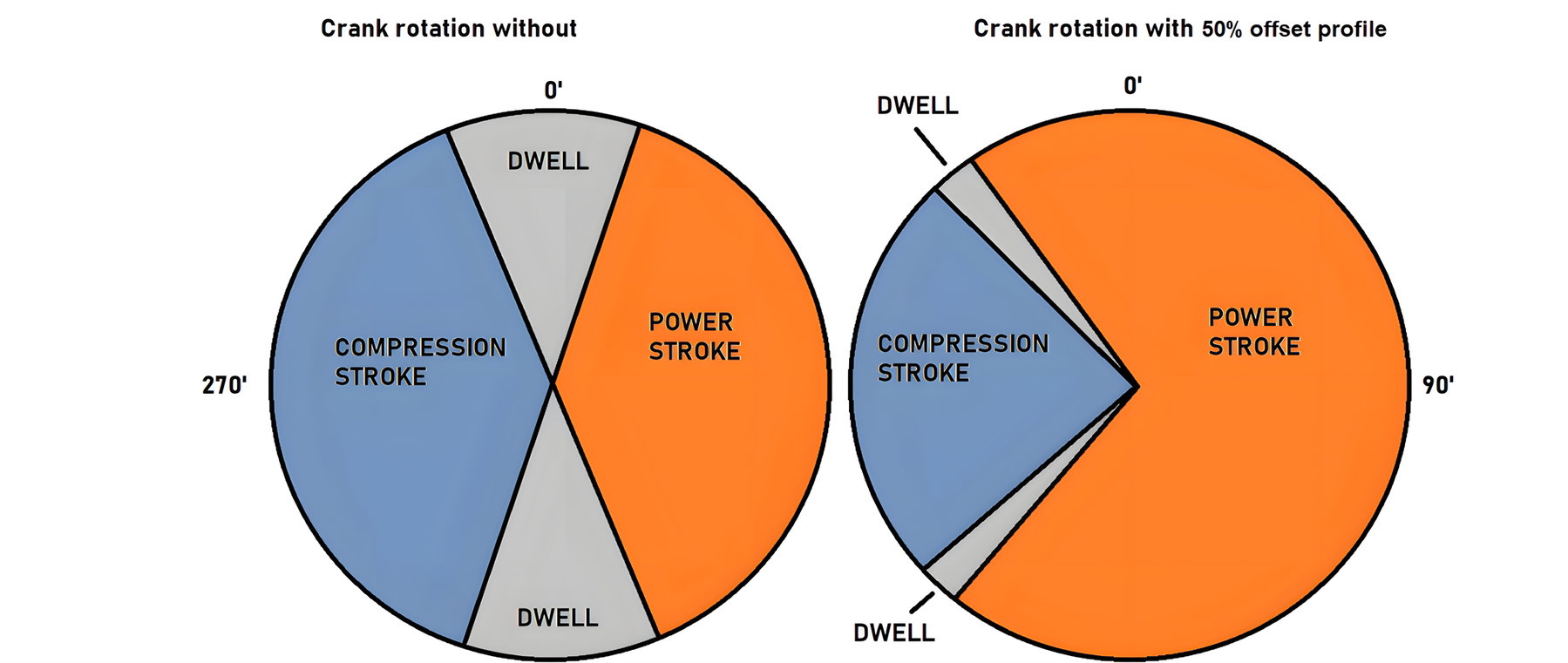
- In the example profile shown, compression duration drops by around 50 percent while the power stroke becomes roughly 50 percent longer
The reciprocating piston engine has accompanied mobility for well over a hundred years, and remarkably little has changed about its basic principle. An invention from the United States targets one of its inherent design weaknesses. It aims to teach the engine to give each of its strokes a different amount of time without changing engine speed. A pair of non-round gears that deliberately redistributes the piston’s motion is supposed to make this possible. What sounds technically appealing, however, quickly runs into the well-known limits of mechanical engineering.
What Is the Speed Stroke Engine?
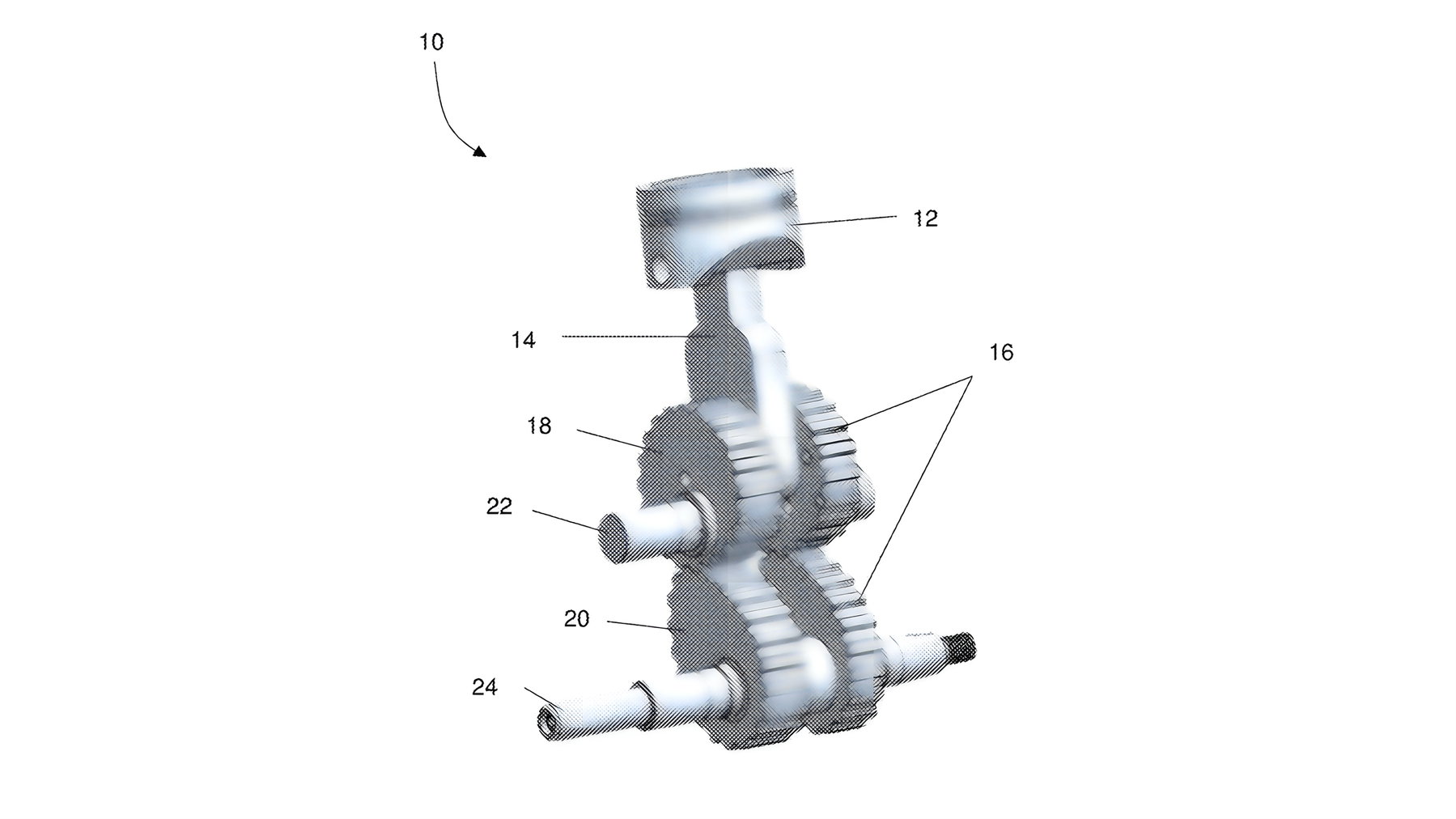
The Speed Stroke Engine is a patent-pending engine concept by US inventor Brian Schmidt that aims to make the duration of individual strokes controllable through non-round gears. According to the project page, the technology is intended for both two-stroke and four-stroke engines as well as gasoline and diesel powerplants, and is supposed to deliver more power, more torque, and better efficiency. The inventor illustrates the basic idea with an analogy: if one hour is available for a meal, cooking can be shortened to fifteen minutes to gain forty-five minutes for eating. The total time remains the same — only its distribution changes. Applied to the engine, this means a full revolution takes just as long as before, but the important strokes get more time because it is taken away from the less important ones.
Where Does the Core Problem of the Reciprocating Engine Lie?
The fundamental problem is that in a conventional reciprocating piston engine all strokes last approximately the same amount of time, even though it would be more beneficial from a gas-dynamics standpoint to extend some strokes and shorten others. Over two or four strokes the revolution remains uniform, and the ratio of strokes to one another is fixed by design. Ideally, the duration of individual piston movements could be changed without affecting the time of a complete revolution. It is precisely this ratio that the invention seeks to break open.
How Does the Gear-Based Crank Drive Work?
In the Speed Stroke Engine, the counterweight section of a conventional crankshaft is reshaped into a non-round gear profile and paired with a matching gear on an additional output shaft. As a result, the output shaft rotates faster at some points and slower at others within a single revolution, while the overall gear ratio across one full revolution remains 1:1. According to the inventor, the non-round profile can be tailored to each application to optimize either power or efficiency. In this way, the time the piston needs for each movement shifts without any change in engine speed.
Which Strokes Get Longer, Which Get Shorter?
In the example profile shown by Schmidt, the intake and power strokes are extended while compression and exhaust become shorter. Specifically, the duration of the upward compression stroke is reduced by around 50 percent, and the downward power stroke is extended by roughly 50 percent. The same mechanism produces a longer intake stroke and a shorter exhaust stroke. A longer intake phase means more time to draw cool, slower-flowing fresh charge into the cylinder, which increases the potential of cylinder filling. The extended power stroke gives combustion pressure more time to be converted into torque. The shortened exhaust pushes the hot gas out of the combustion chamber more quickly, which is intended to reduce heat buildup. Additionally, according to the inventor, the non-round profile design can reduce the piston’s dwell time at dead center, so the engine loses less momentum.
What Advantages Does the Technology Promise?
Schmidt promises more power, more torque, and higher efficiency because the engine gets more time for intake and for harvesting combustion energy. As an additional benefit, he cites the reduced dwell time at dead center and the resulting lower heat input. For motorsport, the inventor notes that the technology would presumably not count against restrictions on airflow, displacement, or forced induction, since it does not directly change any of these parameters but merely adjusts their temporal utilization.
Why Do Experts Doubt the Efficiency Gains?
From a technical standpoint, the potential efficiency gain is disputed because the concept requires numerous gears and additional plain bearings that generate friction of their own. Thermodynamically, more torque per ignition event is fundamentally possible, but the additional friction could negate the gain. Moreover, such a crank drive would likely run rough and loud, and the gears would be unevenly loaded and subject to wear. Since compression and exhaust are shorter, it also remains unclear whether a shorter compression stroke is even beneficial.
The Speed Stroke Engine in the Context of Engine Development
The Speed Stroke Engine joins a long list of unconventional engine concepts that aim to wring more efficiency from the reciprocating piston principle. The engine industry has known the compromise of the reciprocating engine for over a hundred years and, for cost reasons, prefers to keep developing it rather than switching to fundamentally different designs. According to its own documentation, the invention is at the “patent pending” stage. A production-ready unit is therefore a long way off, which means the concept remains an interesting idea for now.
Frequently Asked Questions
-
What is the Speed Stroke Engine?
The Speed Stroke Engine is a patent-pending engine concept by US inventor Brian Schmidt. Non-round gears on the crank drive are intended to change the duration of individual strokes in order to increase power and efficiency.
-
How does Brian Schmidt’s gear motor work?
The counterweight section of the crankshaft is reshaped into a non-round gear profile and combined with a gear on an additional output shaft. This shifts the duration of the strokes while the overall gear ratio across one full revolution remains 1:1.
-
Which strokes are extended in the Speed Stroke Engine?
The intake and power strokes are extended, while the compression and exhaust strokes are shortened. In the example profile shown, the change amounts to roughly 50 percent in each case.
-
Is the Speed Stroke Engine production-ready?
No, according to the inventor the technology is at the patent-pending stage. Whether and when a running engine will follow remains uncertain, especially since additional friction and wear are considered technical hurdles.
➜ This article is part of our comprehensive overview: Motorcycle Patents and Future Technology: What Manufacturers Are Developing. Find all key information on this topic in one place.