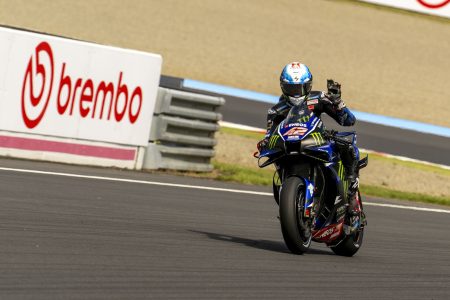
- Fabio Quartararo’s best V4 result so far is fifth place in Barcelona; over a full race distance it is sixth at Le Mans.
- The M1 accelerates better than before but lacks top-end power in fifth and sixth gear.
- With the 850 cc M1 for 2027, Yamaha appears to have recovered the easy turn-in.
For Yamaha, 2026 is a year of upheaval. For the first time, the YZR-M1 runs a V4 engine, in which the four cylinders sit in two banks angled towards each other. For years Yamaha had relied on an inline four. Because MotoGP engine capacity drops to 850 cc in 2027, the factory planned the current season as a learning and test year from the outset. How far Yamaha has come after almost a year was described by two senior figures in exclusive interviews: team manager Massimo Meregalli in an interview with Motorsport-Total.com, and Paolo Pavesio, Managing Director of Yamaha Motor Racing, in September in conversation with Motorsport.com Italia.
How does Yamaha’s first year with the V4 engine look on paper?
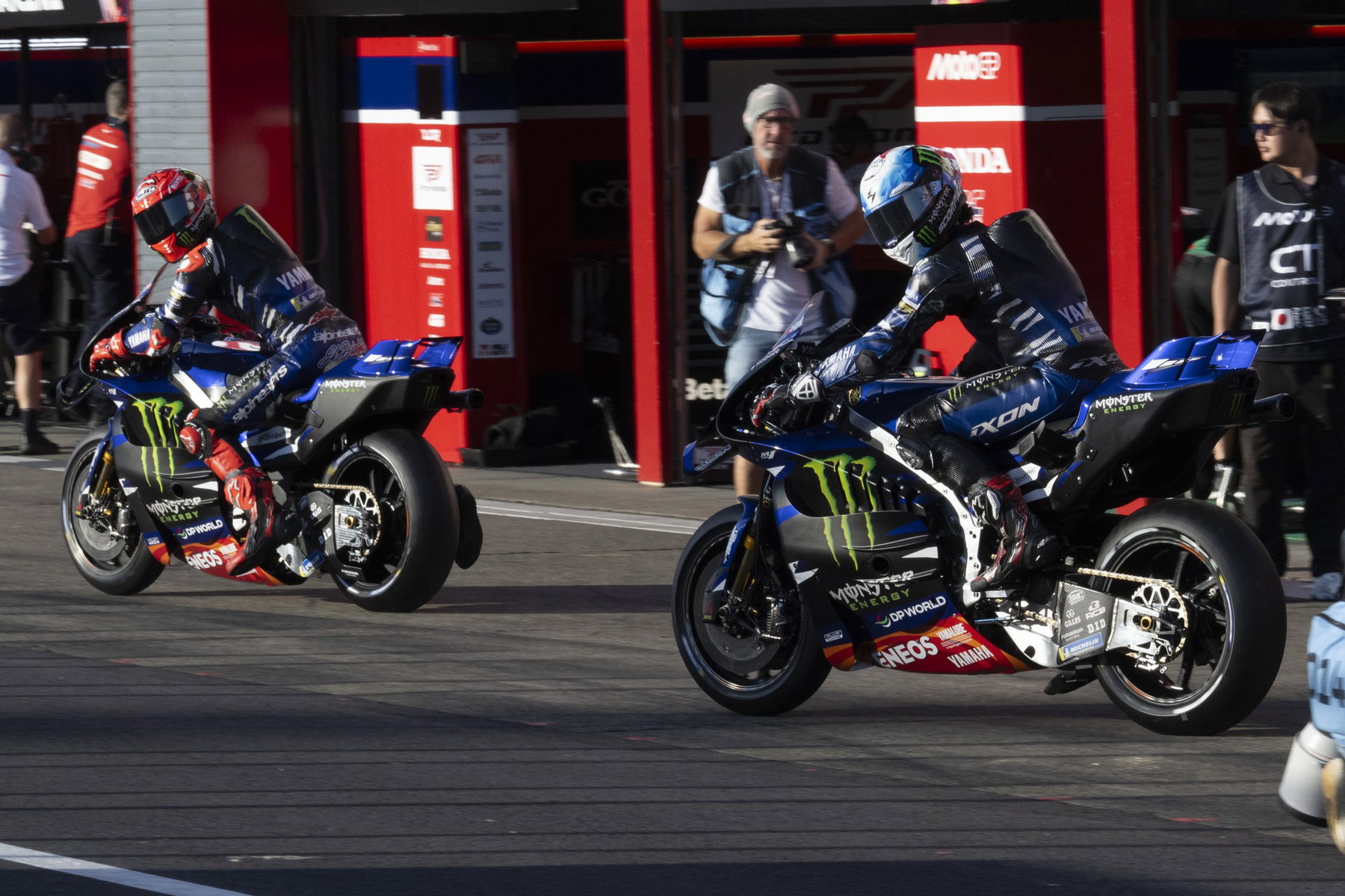
The best result so far is fifth place for Fabio Quartararo in Barcelona, in a race that was interrupted several times. Over a full race distance, he finished sixth at Le Mans. By its own assessment, Yamaha is therefore closer to the lower end of what the factory had expected.
Pavesio admits that the road has been harder than planned. The main reason was engine durability problems. As long as an engine does not run reliably, there is no way to extract performance from it. That phase is now over, he says, so engine updates aimed at next season are set to follow.
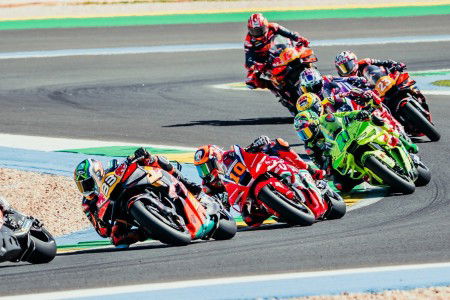
Meregalli calls the year tough without sugar-coating it. He also points to how closely matched the field is. In the past, a gap of half a second to the front was still enough for a place in the top three or four. Today the riders are so close together that the task has become even harder. Meregalli expressly does not want this to be seen as an excuse, but as a sober description of the situation.
Why did Yamaha switch from an inline four to a V4 engine?
Aerodynamics tipped the balance. A V4 is narrower than an inline four, which leaves more room around the side fairing for aerodynamic parts.
With 2027 in mind, a second factor came into play. The new regulations limit the width of the aerodynamics, and according to Pavesio a narrow V engine would have been necessary anyway. The competition has been gathering experience with this layout for years. Making the switch one year before the new rules was therefore hardly avoidable for Yamaha.
The inline four had worked well for around 18 years, but development eventually overtook it. The other manufacturers had long since chosen a different layout, and the tyres were also tailored to their bikes. In the 2025 season the M1 was therefore often fast in qualifying but barely competitive in the race. It wore its tyres harder, found too little traction and struggled to put its power on the track.
Where is the Yamaha M1 with the V4 engine still losing time?
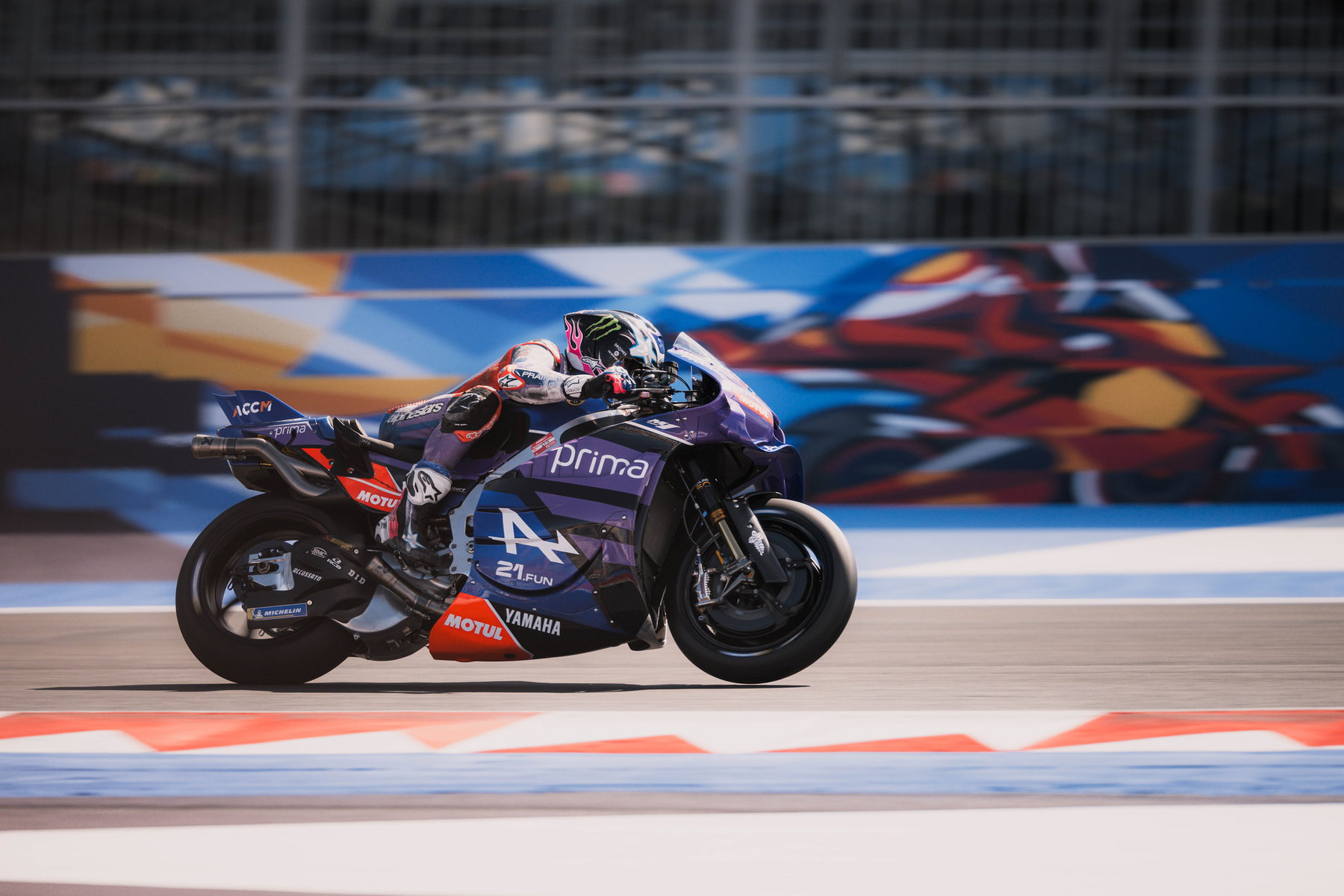
On the straights. The engine lacks top-end power in fifth and sixth gear, and Yamaha also knows this deficit from its dyno measurements.
At the same time, there is a clear improvement exactly where the old engine was weak. When accelerating out of corners, the V4 is superior to the inline four, especially at the exit of chicanes. In his interview with Motorsport.com Italia, Pavesio concluded from this that the basic concept is right: “Oggi la moto accelera bene, per cui secondo noi è nata sana.” In English: “Today the bike accelerates well, so in our view it is fundamentally sound.”
Aragon showed how both aspects interact. Jack Miller came out of the final sequence of corners onto the back straight well. Rivals could still pass him, but only shortly before the end of the straight. Pavesio describes this as frustrating, but places the responsibility firmly with the factory. Making the engine faster is Yamaha’s job, he says.
The lack of power has consequences beyond the straights. Meregalli explains that the riders try to win back the lost time on the brakes. They therefore brake later and harder than is good for the bike. This over-braking makes the set-up more difficult and costs extra time at corner entry, because the M1 then turns in less well than the competition.
Why is every circuit new territory for Yamaha?
Because the data from the inline-four years is of little use for the V4. At every race weekend, the team has to find out anew how the bike responds to changes.
Meregalli describes the M1 as a completely blank sheet. Many of its quirks only emerged gradually, and most of them were problems that kept recurring. Had Yamaha made the switch a year later, the team would, in his view, have ended up in exactly the same place.
The new engine has a particularly strong effect on the chassis. In Meregalli’s words, the old chassis was among the best in the field. With the different engine shape, however, the stiffness of the frame and the position of the engine in the bike have changed significantly. Yamaha calculated and simulated the behaviour in advance, but still does not fully understand some areas. Overall, Meregalli’s impression is that the bike now works reasonably well.
Technical director Max Bartolini had made clear at the start of the project that the engine change alone would not bring a turnaround. A racing bike is always an overall package, Meregalli recalls. Yamaha understands the M1 much better today than at the start of the season, but it is still too early for a final verdict.
Where does Yamaha stand on electronics and aerodynamics?
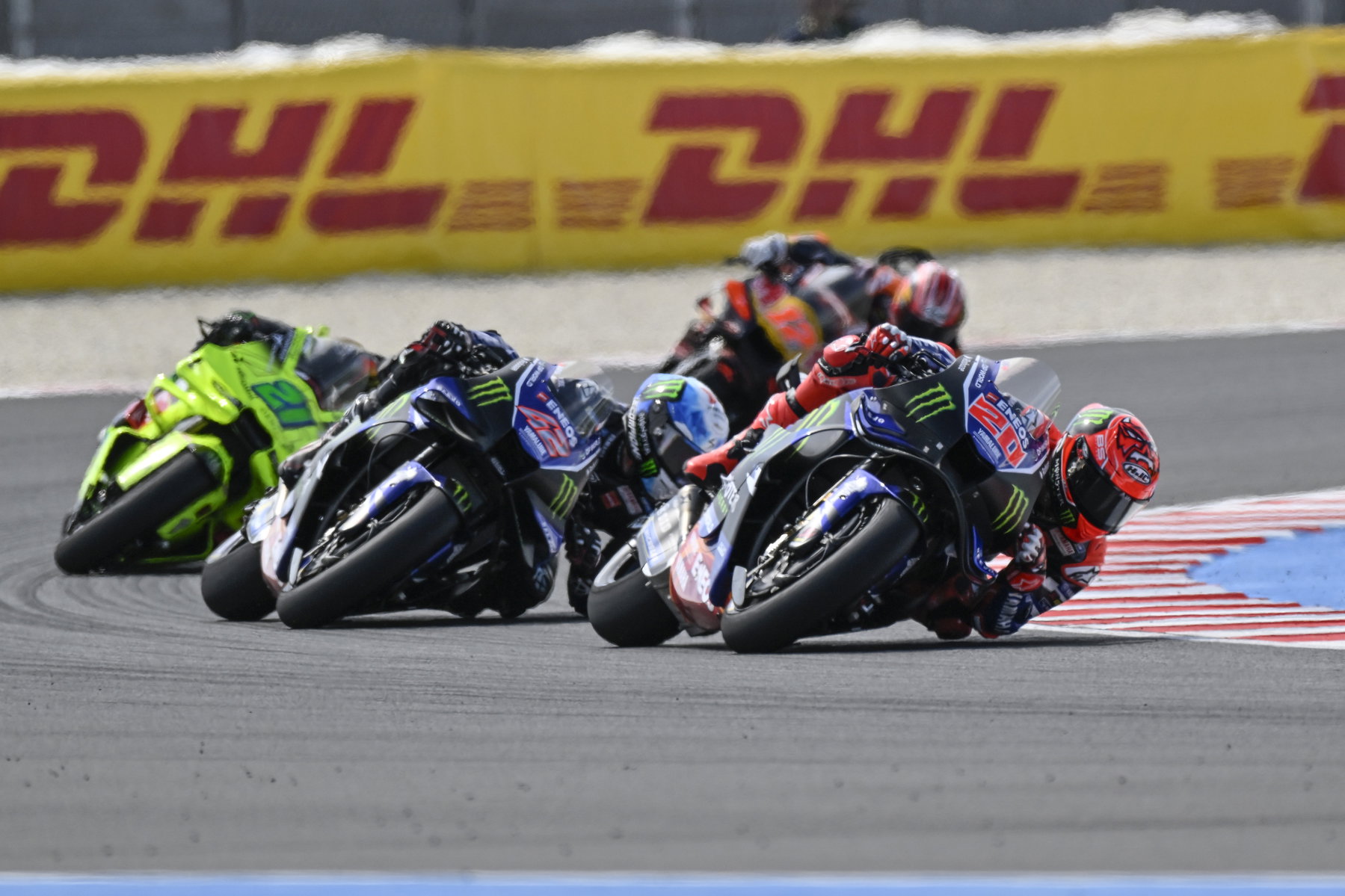
In both areas, Meregalli now sees Yamaha at the level of the other manufacturers. The team has closed the gap of earlier years here, he says.
One important step was the signing of Max Bartolini, who came from Ducati at the end of 2023 and became technical director. Even in the inline-four era, Yamaha worked under him on new electronics strategies. The factory also brought in engineers from other manufacturers. Meregalli sees no disadvantages in electronics as a result of the engine change, and there are hardly any complaints from the riders.
On the outside, the M1 looks more restrained than the Aprilia, for example, whose fairing has a strong wind-tunnel look. Meregalli points to smaller solutions on the Yamaha that are hard to spot from the outside. Because the teams know their rivals’ concepts well, he considers Yamaha’s own position reasonable by comparison.
What are Yamaha’s plans with the V4 engine for the 2027 MotoGP season?
The lessons of the learning year feed directly into the new 850 cc M1. Yamaha aims to be fully competitive in 2028, with the 2027 season laying the groundwork.
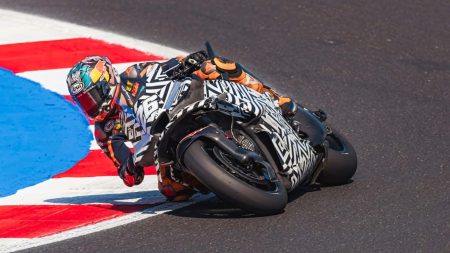
According to Pavesio, Yamaha was still at the start of testing with the 2027 base in September. The test team rode in Barcelona and at a circuit in Italy. Up to then, all manufacturers had been running interim solutions, such as restricted 1000 cc engines or prototypes. Of the regular riders, only Toprak Razgatlioglu had ridden such an interim version: a 1000 cc bike with an 850 cc engine, without ride-height adjustment and with stripped-back aerodynamics. He tested two engine variants, because the character of the engine also affects how well the bike goes through corners. According to Pavesio, this produced positive impressions, and Yamaha has already chosen a direction.
One point is especially important. The riders report that the 2026 M1 has lost its former strength, namely easy turn-in. With the 2027 model, Yamaha appears to have regained this character. What remains open for all manufacturers is how they will cope with the new Pirelli tyres. Pavesio stresses that without the V4 already running, Yamaha would not even have been able to test an interim bike.
The rider line-up is also changing for the 850 cc era. Jorge Martin and Ai Ogura will ride for the factory team in 2027. At the Pramac satellite team, rookie Izan Guevara gets a seat alongside Toprak Razgatlioglu.
Frequently Asked Questions
-
Why does Yamaha use a V4 engine in MotoGP?
Mainly for aerodynamic reasons. A V4 is narrower than an inline four and leaves more room on the side fairing for aerodynamic parts. In addition, the 2027 regulations limit the width of the aerodynamics, which would have made a narrow V engine necessary anyway.
-
What is the best result of the Yamaha V4 in MotoGP?
Fabio Quartararo finished fifth in Barcelona, in a race that was interrupted several times. Over a full race distance, sixth place at Le Mans is his best result.
-
Where does the Yamaha V4 struggle in MotoGP?
The engine lacks top-end power in fifth and sixth gear. The riders try to make up the deficit on the brakes and therefore brake too late and too hard, which makes turn-in worse. When accelerating out of corners, however, the V4 is stronger than the old inline four.
-
Who will ride for Yamaha in MotoGP in 2027?
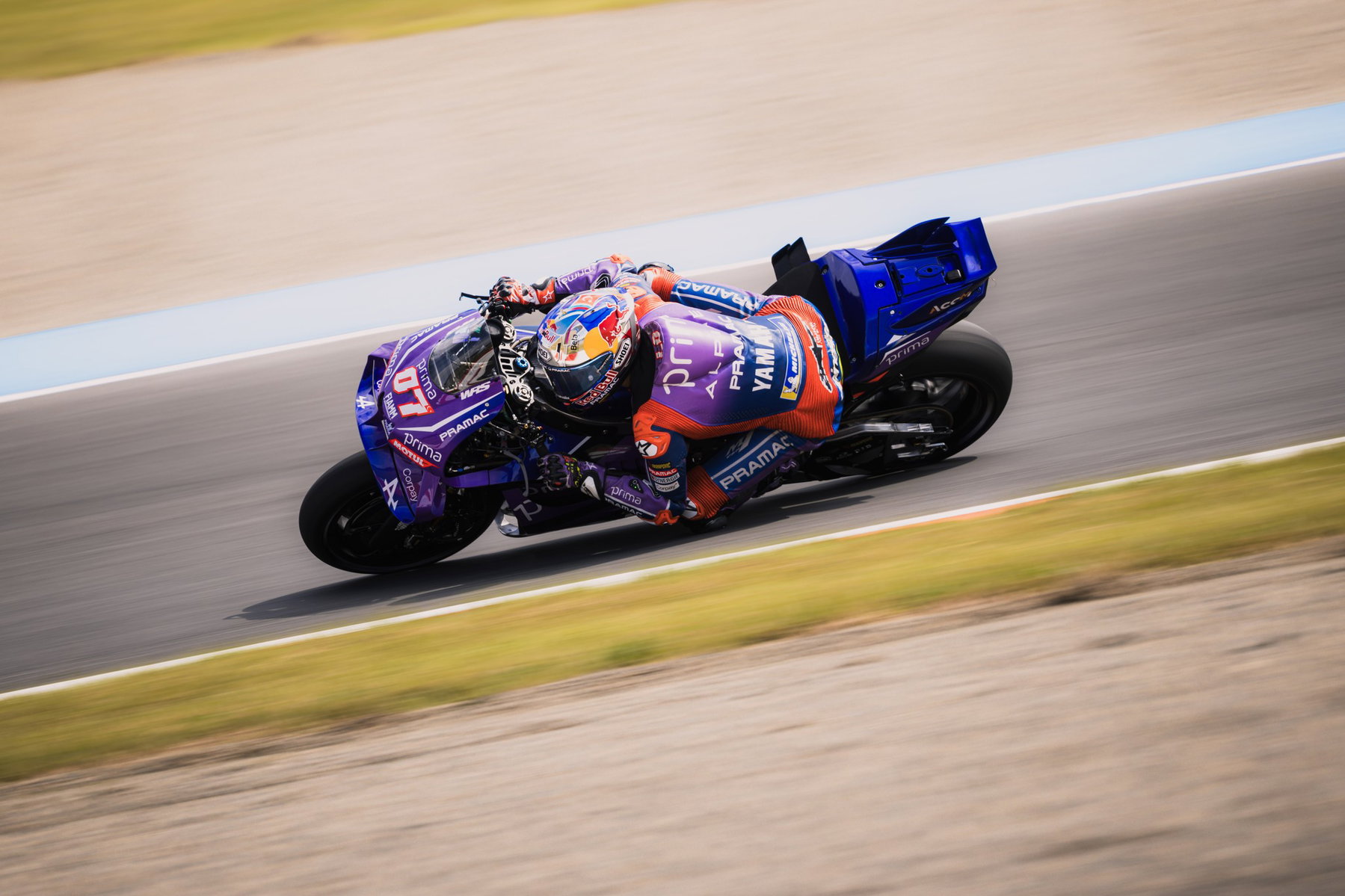
Jorge Martin and Ai Ogura will ride for the factory team in 2027. At the Pramac satellite team, Toprak Razgatlioglu and rookie Izan Guevara will line up.
➜ This article is part of our comprehensive overview: 2026 MotoGP Season: The Complete Overview – Teams, Riders, Calendar & Championship Standings. Find all key information on this topic in one place.