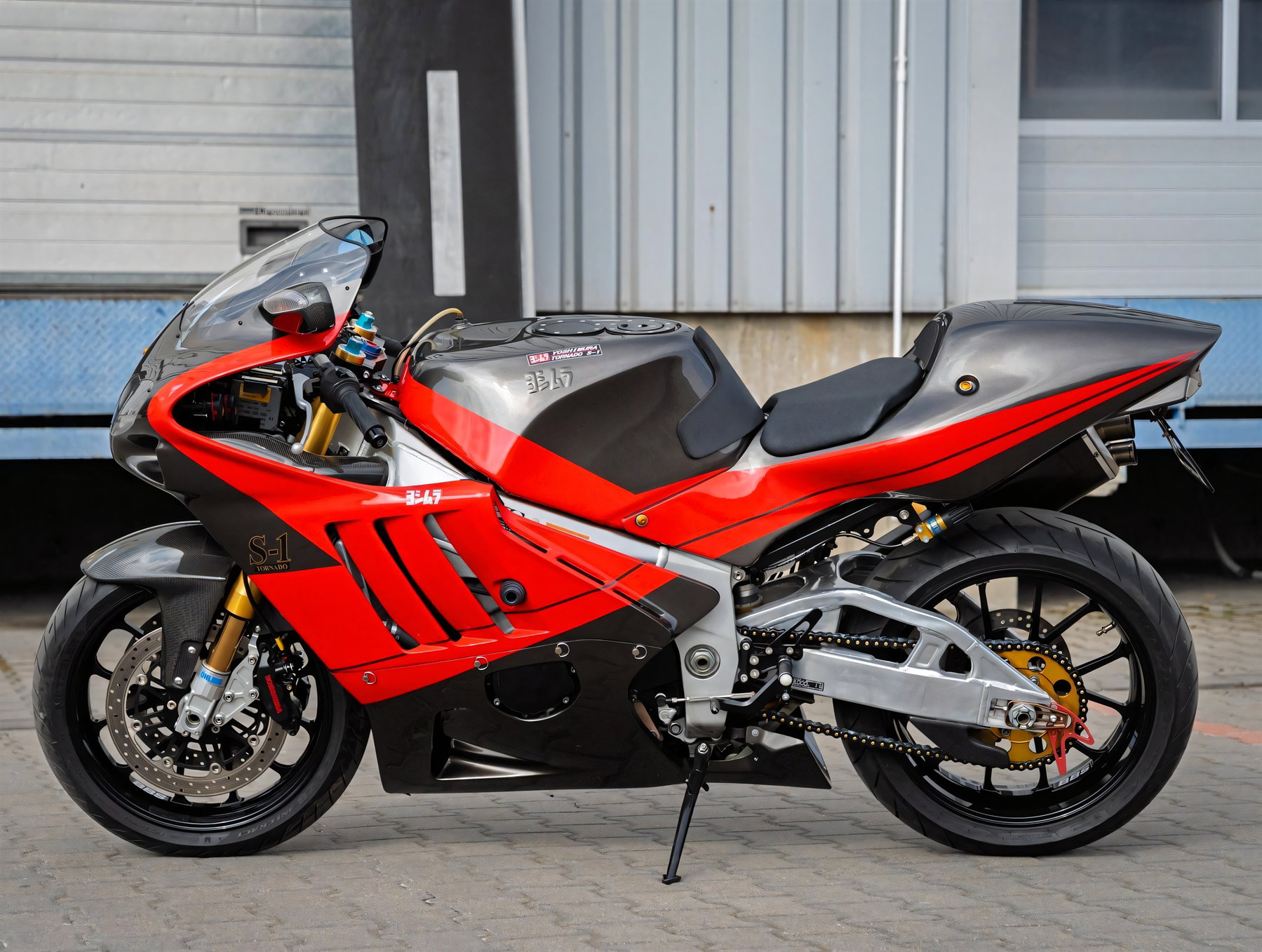
- Production run: 50 individually numbered motorcycles based on the first-generation Suzuki GSX-R1000
- Output according to the Yoshimura data sheet: 170 hp (125 kW) at 12,000 rpm
- Price: 40,000 euros (around 46,200 US dollars) with 6,986 kilometers on the clock
Almost every motorcyclist knows Yoshimura as a manufacturer of exhaust systems and as a tuner closely associated with Suzuki. Far fewer are aware that the company also built complete motorcycles. The Tornado S-1 is the best known of those projects, and it ranks among the rarest street-legal sports bikes ever to come out of Japan. One example from the series has now resurfaced on the market.
What makes the Yoshimura Tornado S-1 so rare?
Yoshimura built only 50 examples of the Tornado S-1, each of them individually numbered. The motorcycle was intended exclusively for the Japanese market and was never officially exported. According to Italian media reports, every single example had already been sold before production even began.
By way of comparison, media reports point out that this figure is lower than the runs of limited-series machines such as the Ducati Desmosedici and the Honda RC213V-S. Yoshimura itself lists the Tornado S-1 as a 2001 model that, according to the official company chronicle, went on sale in 2002. The list price was 3,780,000 yen, which at today’s exchange rate amounts to around 20,600 euros (23,700 US dollars). At the exchange rate of the time, that came to roughly 30,300 euros (35,000 US dollars); adjusted for purchasing power, it would be around 55,500 euros (64,000 US dollars) today.
How much power does the Yoshimura Tornado S-1 make?
Yoshimura’s data sheet quotes more than 170 hp (125 kW) at 12,000 rpm and around 108 Nm (80 lb-ft) at 10,000 rpm. Those figures were measured at the rear wheel, which is why other sources speak of more than 177 hp (130 kW). The standard 2001 GSX-R1000 produced around 162 hp (119 kW) and about 110 Nm (81 lb-ft) at the crankshaft, with a dry weight of roughly 170 kilograms (374 pounds).
The route to those numbers ran through the cylinder head. It was reworked and fitted with a thinner head gasket, raising compression from the standard 12.0:1 to 13.2:1. Added to that were camshafts from Yoshimura’s ST-1 range and stronger valve springs, allowing the 988 cubic centimeter inline-four to rev 500 rpm higher, up to a limit of 12,700 rpm.
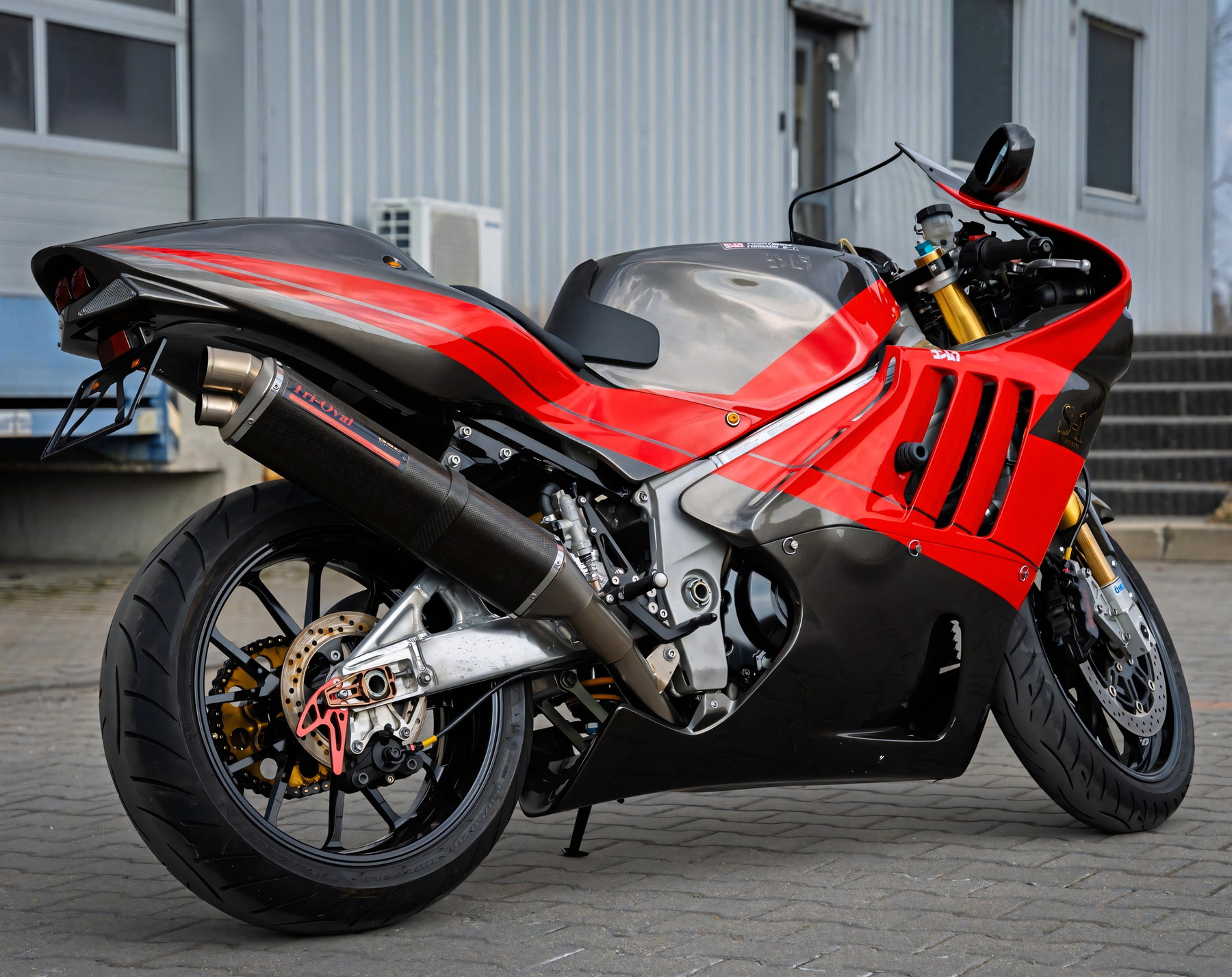
Suzuki’s standard electronics gave way to Yoshimura’s own engine management. A three-way switch on the handlebar let the rider change between different ignition and fueling maps while riding, something that was anything but common in 2002. There was also a quickshifter for clutchless gear changes and a shift light in the cockpit. A revised oil pan holds 300 cubic centimeters more oil than the standard item, an idea borrowed from endurance racing, where Yoshimura has been active for decades. The exhaust is a four-into-one titanium system with an oval silencer and a carbon sleeve.
What technology is in the chassis and brakes?
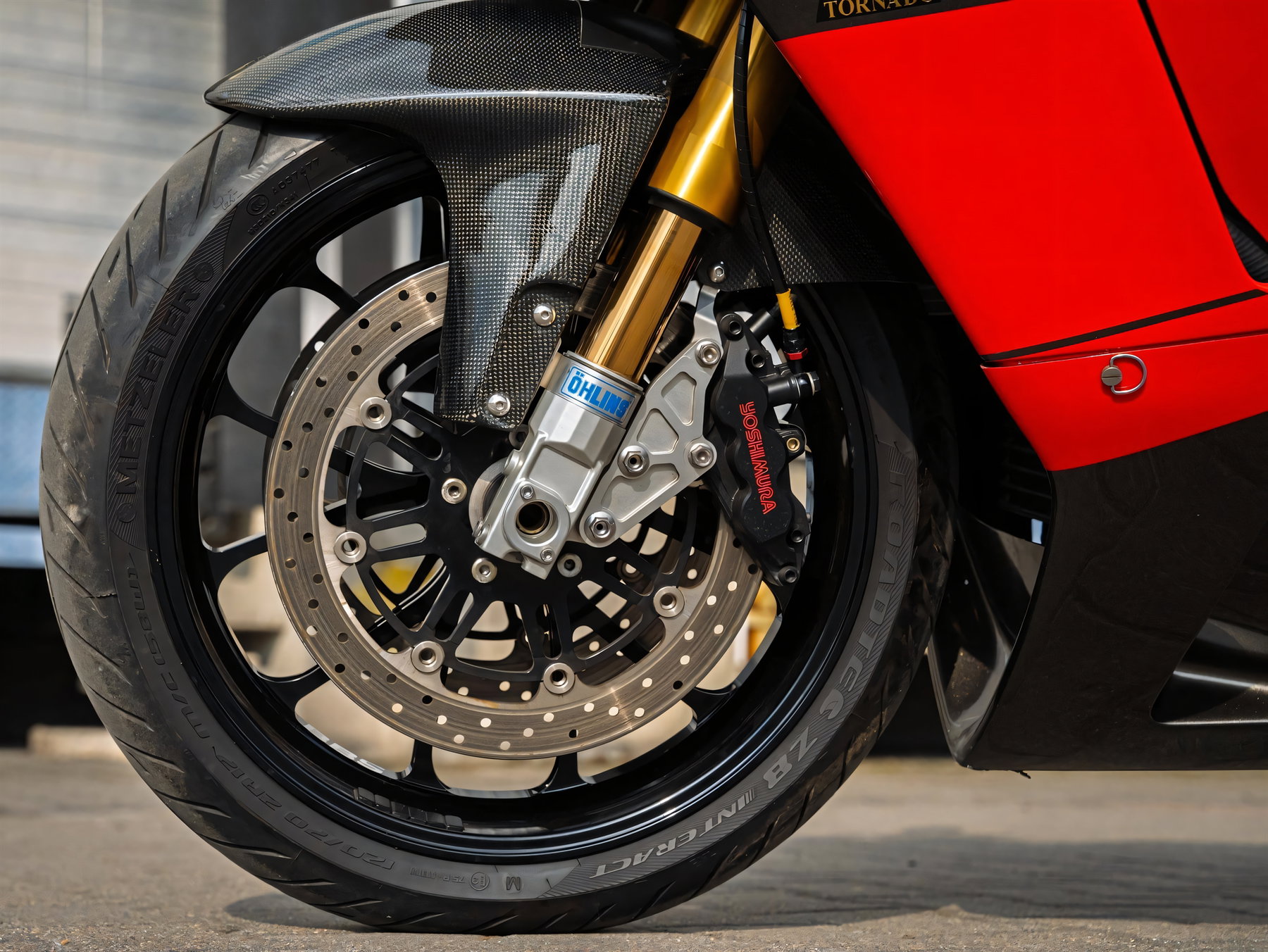
Yoshimura fitted Öhlins suspension units front and rear with its own settings, plus a steering damper from the same brand. There was also a revised steering head, a modified linkage for the rear suspension and a purpose-built swingarm.
Braking is handled by reworked six-piston Nissin calipers, combined with a radial master cylinder and braided steel lines. Instead of the standard wheels, lightweight BBS aluminum rims are fitted, shod with Dunlop D208 Super Sport tires in 120/70 ZR 17 at the front and 190/50 ZR 17 at the rear. Kerb weight is quoted at around 187 kilograms (412 pounds) with a full tank.
Bodywork, equipment and accessories
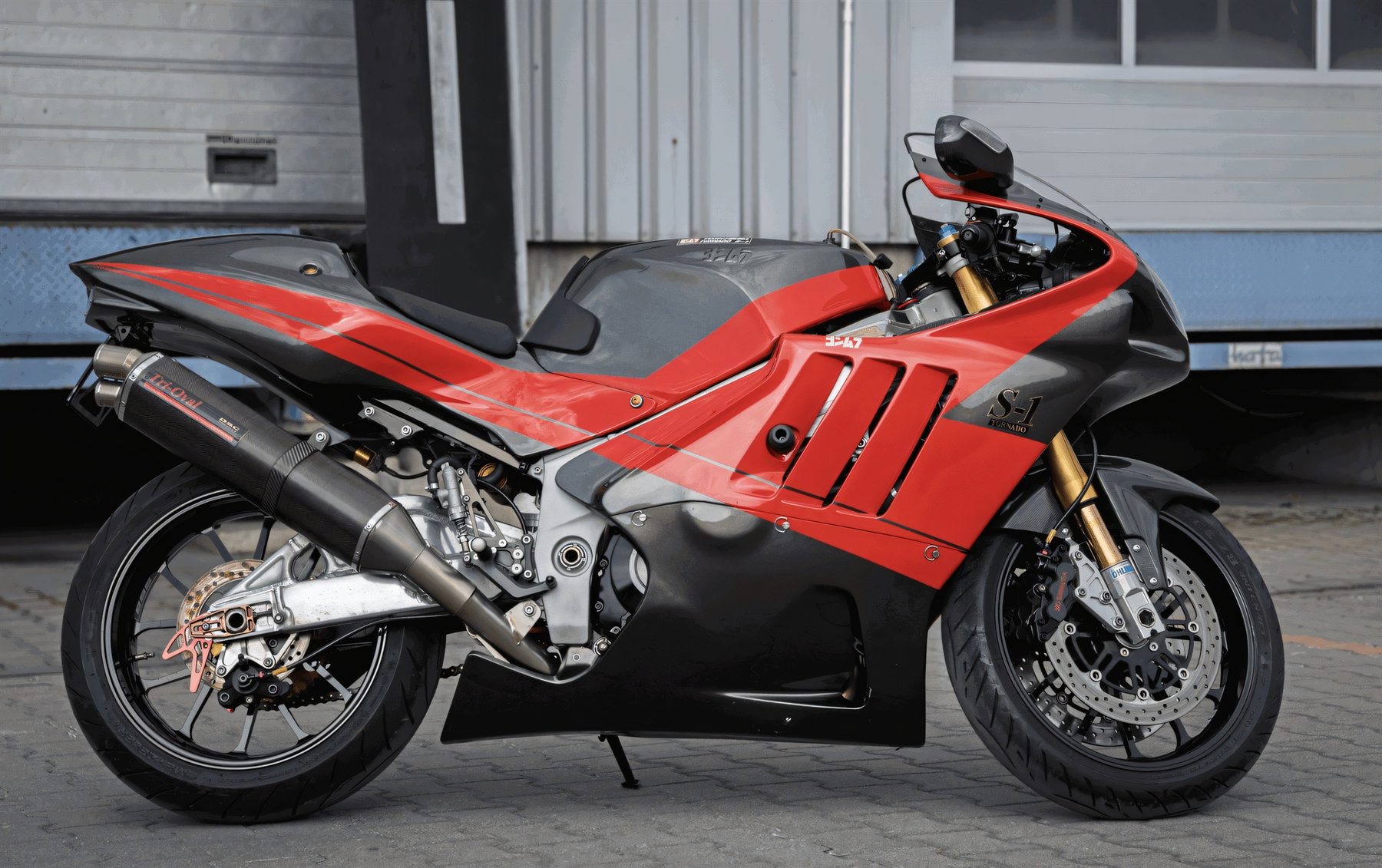
The entire fairing is made of carbon fiber and was designed and manufactured by Yoshimura itself. It conceals the bike’s Suzuki origins so thoroughly that the Tornado S-1 is barely recognizable as a GSX-R1000 at first glance. The 24-liter tank is made of aluminum and closed off by a racing filler cap. On top of that come headlights with gas-discharge lamps and projector optics, aluminum sprockets from AFAM and racing footpegs.
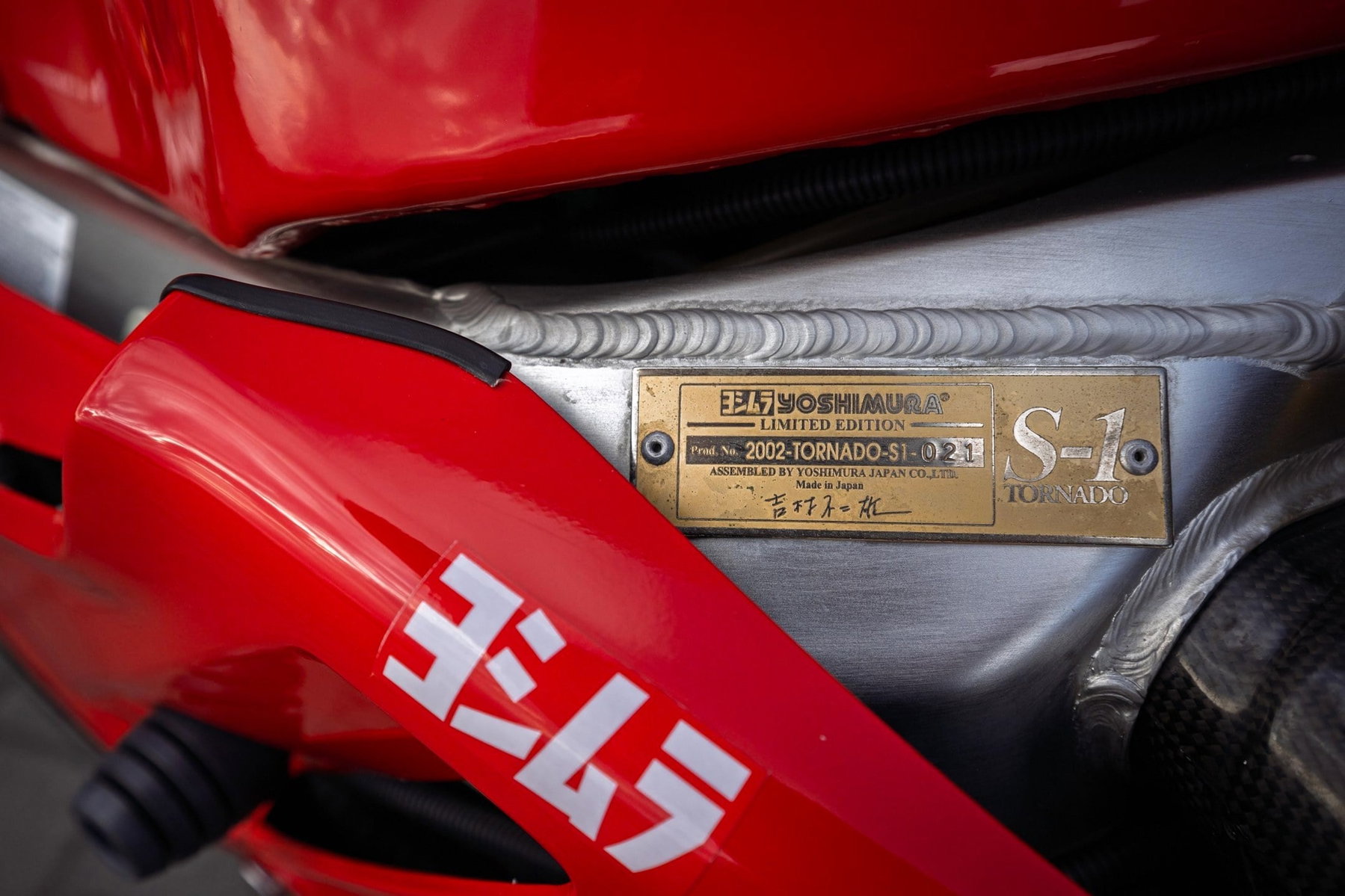
Each of the 50 motorcycles received a plate with its own serial number. Delivery included a book about the S-1, a Snap-On tool kit and a bike cover.
Who was Pops Yoshimura?
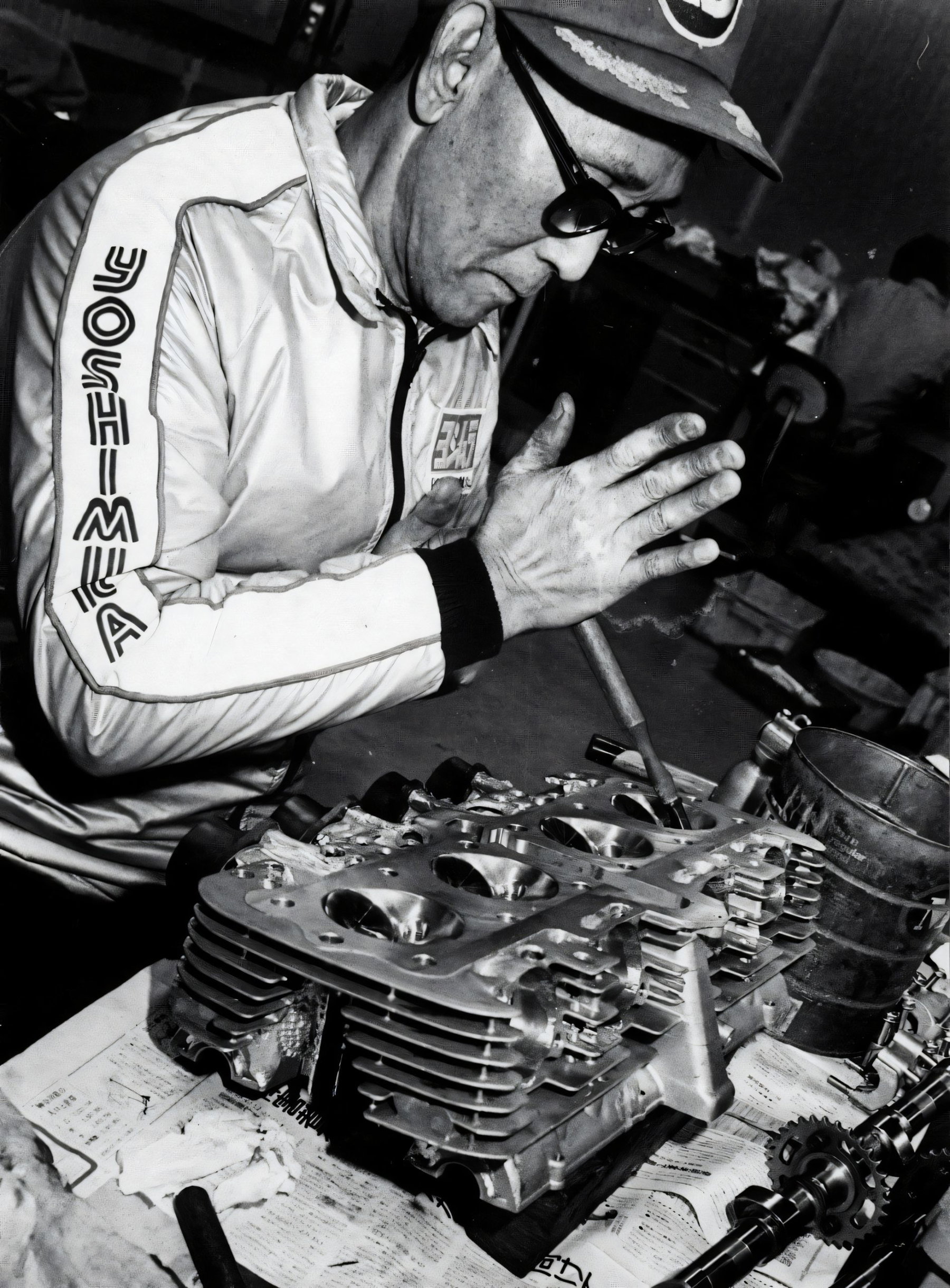
Hideo Yoshimura, nicknamed „Pops” by American soldiers, was born in Fukuoka on 7 October 1922 and is regarded as one of the most influential engine tuners in motorcycling history. During the Second World War he trained as an aircraft mechanic; after the war he worked on the motorcycles of American servicemen near the Itazuke air base. The nickname stayed with him for the rest of his life.
In 1954 he founded Yoshimura Motors in Fukuoka, where his wife Naoe, his daughter Namiko and his son Fujio all worked. In 1964 a machine he had prepared won the 18-hour race at Suzuka, and a year later the company moved to Fussa near Tokyo. The decisive step came in 1971, when Pops and Fujio moved to Los Angeles and opened a workshop in North Hollywood. The switch to Suzuki in 1978 brought the breakthrough: Steve McLaughlin won the Superbike race at Daytona, while Wes Cooley and Mike Baldwin took victory in the first Suzuka Eight Hours. In 1979 Cooley claimed the first AMA Superbike title for Yoshimura. Pops died of cancer on 29 March 1995 at the age of 72, and was inducted into the AMA Motorcycle Hall of Fame in 2000.
Which models came before the Tornado S-1?
Long before the S-1, the Tornado name stood for Yoshimura’s most elaborate conversions. It started in 1987 with the Tornado 1200 Bonneville based on the GSX-R1100, of which only three were built.
Next came the Hayabusa X-1 in 2000, with 100 examples based on the GSX1300R, and the Katana 1135R in 2001, of which just five motorcycles were built. The Tornado S-1 continued that line and represents the most comprehensive conversion of a street-legal superbike ever carried out by Yoshimura among the Japanese special models of the early 2000s.
What does a Yoshimura Tornado S-1 cost today?
The example currently on offer is priced at 40,000 euros (around 46,200 US dollars). On the rare occasions when a Tornado S-1 appears on the market at all, recent asking prices have ranged from around 26,000 euros (30,000 US dollars) to well over 36,400 euros (42,000 US dollars).
One case in point was a motorcycle sold out of Lisbon in early 2023. It had covered 13,400 kilometers and was listed at 36,800 euros (42,500 US dollars) or best offer.
The machine now on offer carries number 21 and shows 6,986 kilometers. The seller describes it as being in consistently collectible condition with very well preserved original paint. It arrived in the European Union from Japan in 2025, and in March 2026 it received a service in Poland including an oil and filter change plus a thorough detailing. It is offered with the paperwork for international registration. Notably, the same motorcycle was already listed on an auction platform in spring 2026 and is now looking for a new owner once again, this time at a fixed price.
Frequently Asked Questions
-
How many Yoshimura Tornado S-1 were built?
Exactly 50 examples were made, each with its own serial number on an identification plate. All were intended for the Japanese market, and no official export ever took place.
-
Which motorcycle is the Yoshimura Tornado S-1 based on?
The basis is the first-generation Suzuki GSX-R1000 with its 988 cubic centimeter inline-four. Yoshimura reworked the engine, chassis, brakes and bodywork so comprehensively that visually almost nothing of the standard machine remains.
-
How much power does the Yoshimura Tornado S-1 have?
According to the manufacturer’s data sheet it produces more than 170 hp (125 kW) at 12,000 rpm and around 108 Nm (80 lb-ft) at 10,000 rpm. Those figures refer to the rear wheel, which is why other sources quote more than 177 hp (130 kW).
-
What did the Yoshimura Tornado S-1 cost when new?
The list price in 2002 was 3,780,000 yen, which at today’s exchange rate is around 20,600 euros (23,700 US dollars). At the exchange rate of the time, that corresponded to roughly 30,300 euros (35,000 US dollars).
-
Where is the Yoshimura Tornado S-1 that is for sale?
The motorcycle with number 21 is located in Poland and is being offered for 40,000 euros (around 46,200 US dollars). It has covered 6,986 kilometers and is sold with the documents for international registration.
➜ You will find the full technical specifications for this model in our motorcycle database: Yoshimura Tornado S-1 2002.