- Brembo and CFMoto are jointly developing future brake systems for mid-size and large models, starting from the initial concept phase
- The agreement also covers racing, brand development, and young-rider development
- Domenicali admits that Europe cannot win a price war against China
For a long time, a simple rule applied: if you saw Brembo brakes on a Chinese motorcycle, you knew the manufacturer meant business. The Italian calipers and pumps carried a credibility that many Chinese brands lacked in the eyes of buyers. For manufacturers trying to shake off their reputation as budget players, a well-known European name on the spec sheet was almost as important as the product itself. That exact logic is now being turned on its head.
What Exactly Did Brembo and CFMoto Agree On?
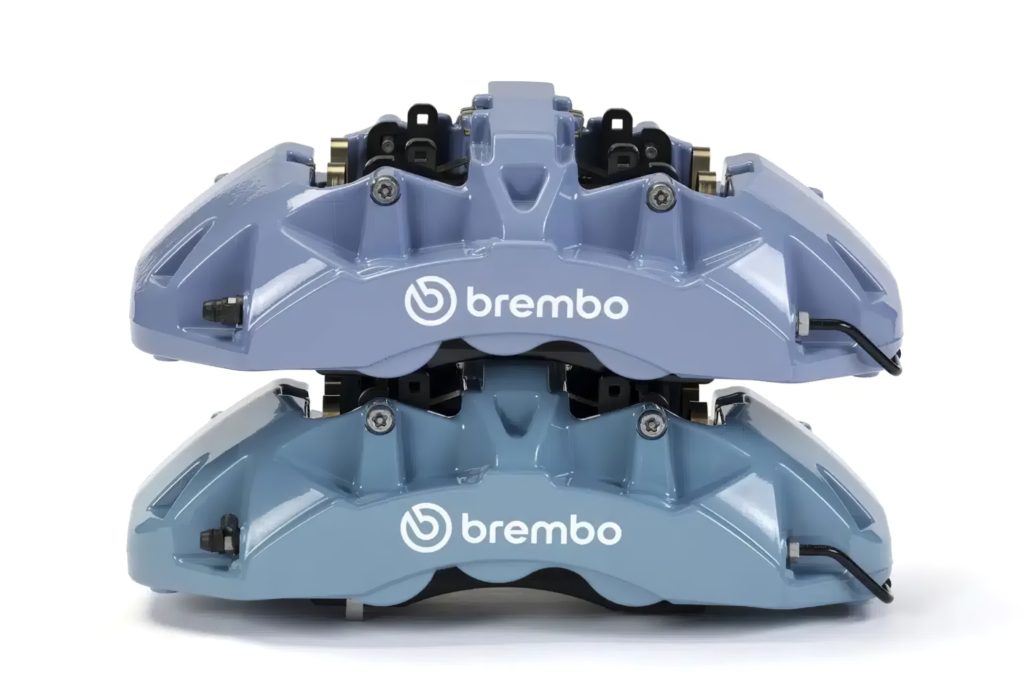
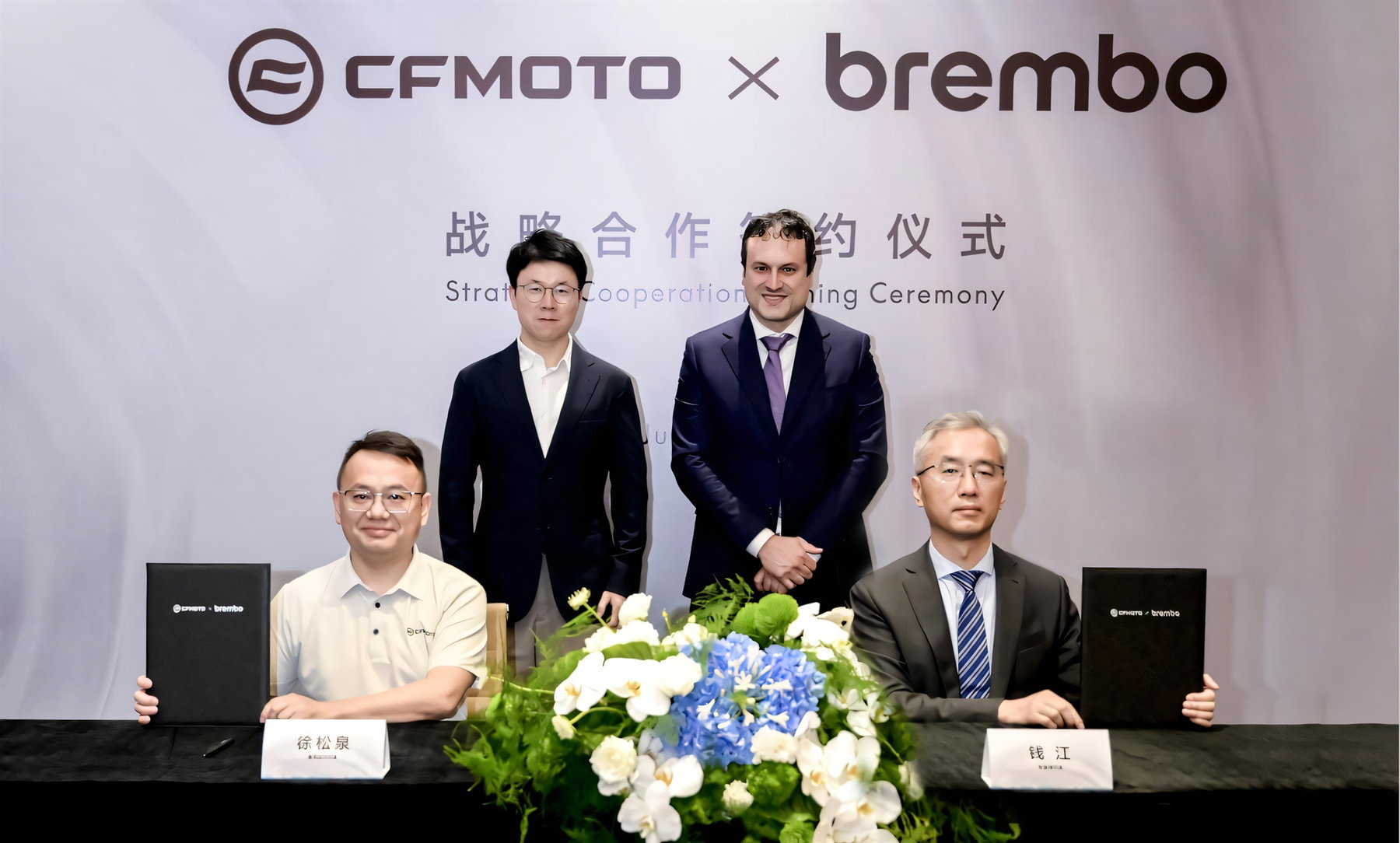
Both companies will jointly develop future brake systems instead of sourcing finished components late in the process. The agreement was signed on July 8, 2026, in Hangzhou, China, and covers upcoming mid- and large-displacement models.
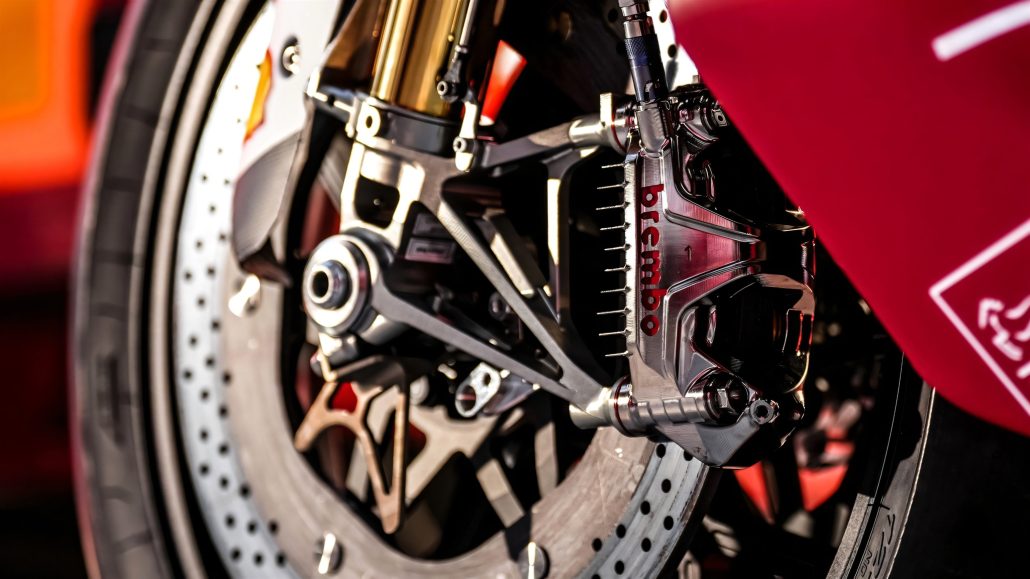
According to both companies, this is explicitly more than a simple supply arrangement. Brembo is involved as early as the concept phase, meaning initial design and braking performance targets. System integration, calibration, and validation also begin earlier than has been standard practice. The advantage is obvious: the brake is tailored to the specific platform and intended use, rather than being bolted onto a finished motorcycle at the end of development. According to the partners, the goal is a better-balanced relationship between safety, control, and performance.
The collaboration goes further still. It covers technological innovation, racing, brand development, and young-rider development. Brembo is becoming a strategic partner of the CFMOTO Talent Project, which aims to develop young Chinese racers. According to reports from China, the group brands ByBre and J.Juan will also play a role. ByBre is Brembo’s brand for mid-displacement brake systems, combining Italian development work with local production in China.
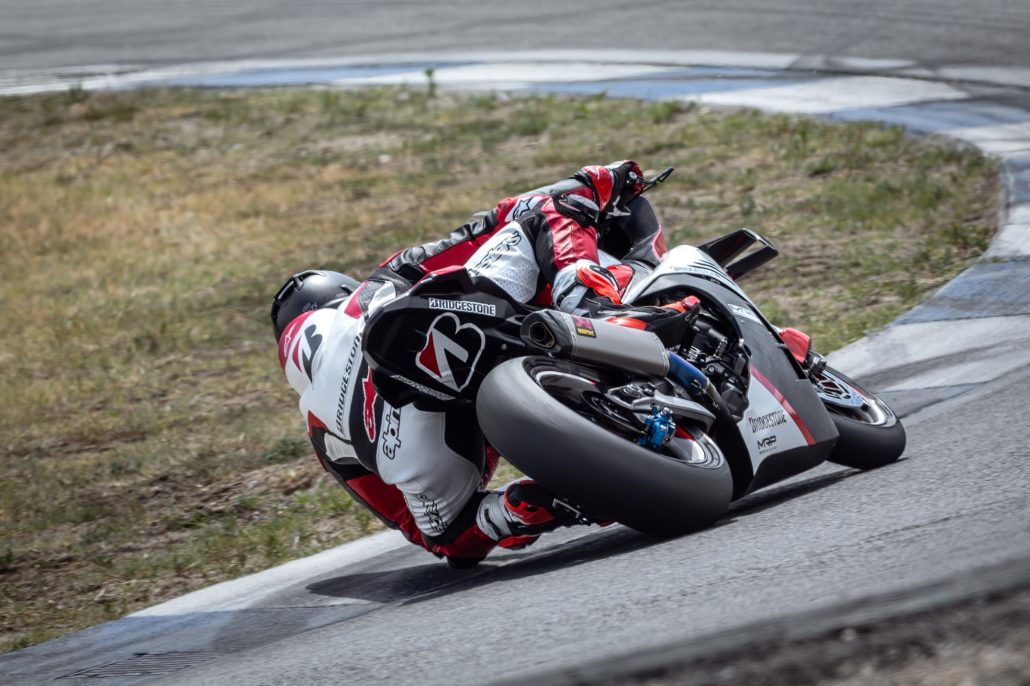
Both sides know each other from Grand Prix racing. CFMoto has been winning races and titles in Moto3 and Moto2 for three seasons running, while Brembo supplies the entire MotoGP field and has been active in motorsport for more than 50 years. For scale: Brembo was founded in Bergamo in 1961, employs around 16,000 people across 18 countries, and reported revenue of 3.7 billion euros (roughly 4.3 billion US dollars) in 2025. The group’s brands include AP Racing, ByBre, J.Juan, Marchesini, Öhlins, and SBS Friction.
Why Is This Deal Uncomfortable for Europe?
Because Brembo doesn’t need CFMoto, but CFMoto clearly benefits from Brembo. When a supplier of this caliber commits development capacity and long-term planning to a Chinese manufacturer, that says something about where the industry is heading.
Brembo supplies MotoGP, Formula 1, and practically every major name in motorcycle manufacturing. The company doesn’t need new customers. That it is nonetheless committing to one of China’s fastest-growing manufacturers over the long term suggests CFMoto isn’t seen there as an up-and-comer, but as a fixed part of the industry’s future. Ten years ago, Chinese brands were buying credibility in Europe. Today, Europe is investing credibility in China.
The reason is likely simply growth. Europe’s motorcycle markets are mature, and some are shrinking. Regulations are getting stricter, development costs are rising, and the average age of riders keeps climbing. China, by contrast, is growing both domestically and in exports, to Europe as well as South America and Southeast Asia. A supplier weighing where its customers will come from in ten years does the math quickly.
What Does Ducati CEO Domenicali Say About This?
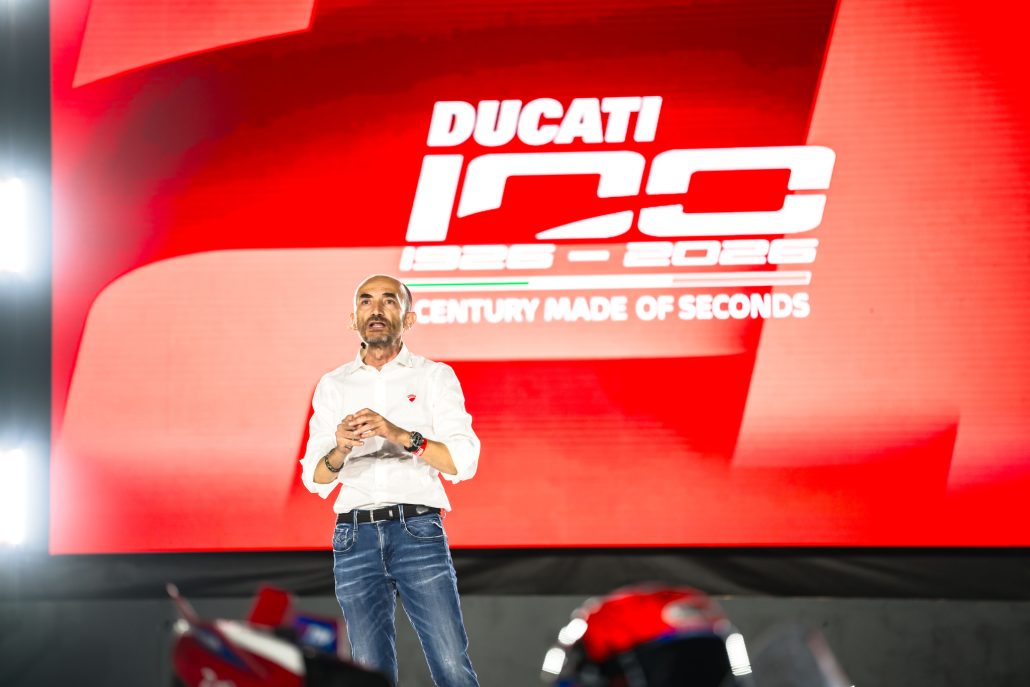
He warns against taking success for granted. At World Ducati Week, where the brand celebrated its 100th anniversary, Claudio Domenicali spoke about the pressure from China in unusually blunt terms.
“Success is not granted. It has to be regained continuously over time,” he said. Coming from the head of a brand that dominates MotoGP and is currently expanding its model range into motocross and enduro, that’s a notable statement.
On one point, Domenicali is especially clear: Europe cannot win a price war. Raw material costs are similar worldwide, but wages and energy cost significantly more in Europe than in China or India. So no advantage can be gained on manufacturing costs alone. Ducati is therefore betting on something else: racing success, the dealership experience, owners’ clubs, factory visits, and major events like World Ducati Week. “We are not selling the bike. We are selling the package,” he summed up. The argument is that Chinese brands could build motorcycles that are on paper just as good. A hundred years of history, MotoGP trophies, and a fan base are harder to copy.
How Fast Has China Really Developed?
Considerably faster than the industry expected. Instead of slowly climbing the same ladder Japanese manufacturers did in the 1970s, China has skipped several rungs.
This becomes visible at EICMA in Milan. As recently as 2018, Chinese motorcycle and parts manufacturers were tucked away in a side hall, alongside makers of electric bicycles and tuk-tuks. By 2025, they were spread across the entire venue, in some cases with bigger stands and broader model ranges than established brands.
The old cliché of the copycat manufacturer stuck around for a long time because it was true for a long time. Early products relied on licensed engines or outright copying. Little of that remains. CFMoto builds motorcycles and engines together with KTM, ZXMoto and QJMotor are entering World Superbike, and Kove has made a name for itself at the Dakar Rally in a short amount of time. Brands like Voge, Zontes, and Benda are pushing into Europe with products increasingly judged on quality rather than price alone. Even ownership among suppliers is shifting: Marzocchi now belongs to QJ Motor’s parent company.
In terms of price, the models remain below their European competitors. But the gap in quality, technology, and engineering is closing faster than many expected. In some areas, such as electronics integration and manufacturing scale, Chinese companies are now building advantages of their own.
What Role Do the Ducati Sale Rumors Play?
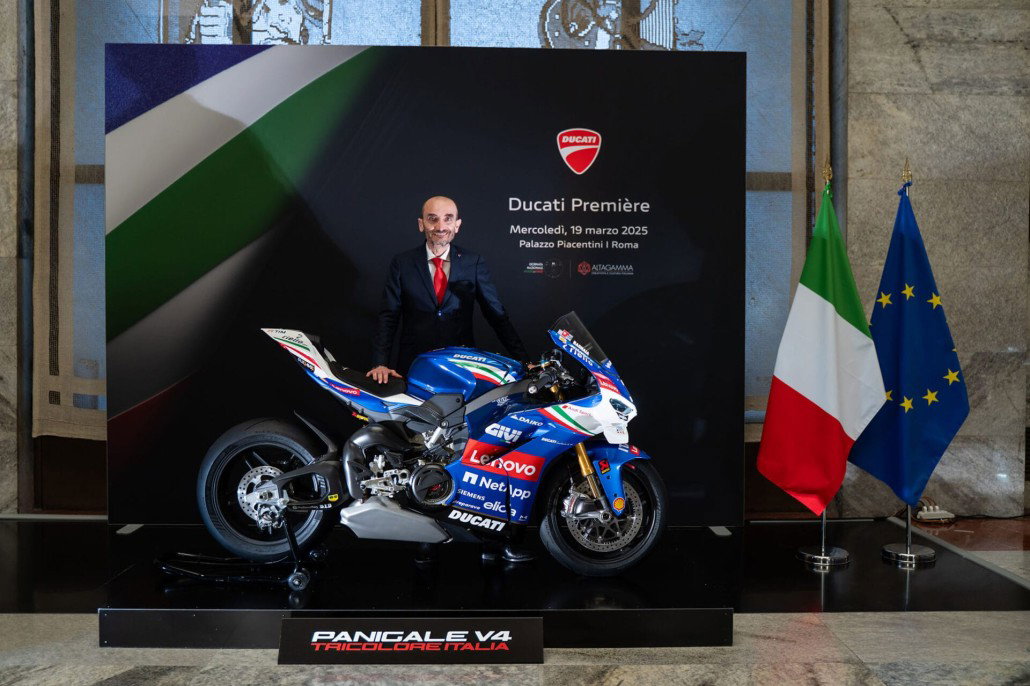
They show the kind of pressure European corporations are under. The Volkswagen Group is grappling with Chinese competition, tariffs, high costs, and weaker demand in Europe. Against this backdrop, reports resurfaced that advisors are examining whether valuable holdings like Ducati or Lamborghini could be used to raise capital.
There is no solid evidence that Volkswagen has officially put Ducati up for sale. The group hasn’t explicitly denied the speculation either, instead pointing to a broad restructuring and the relevant governing bodies. Domenicali himself plays down the rumors and describes Ducati as financially self-sufficient: “The company is in very good shape. It is also completely self-standing. We do not really need support from the shareholder to make our investment plan for the future, to make the new models. It is a very solid investment plan.”
At the same time, he doesn’t categorically rule out a change down the road. “At the moment, there is no discussion happening in Borgo Panigale,” he said. Whether a brand is bought or divested, he added, is up to the shareholder and its needs.
That a sale of one of Europe’s best-known motorcycle brands is even considered plausible says a lot about the state of the major carmakers. For context: according to Reuters, the German government wants to prevent plant closures in Germany after Volkswagen reportedly considered closing four plants and cutting up to 100,000 jobs.
What Does This Mean for Buyers?
Above all, it means a motorcycle’s country of origin is becoming less important. A future flagship model could carry a Chinese badge and still come equipped with Italian brakes, European suspension, and Japanese electronics.
Twenty years ago, “Made in China” was a warning sign for many riders. The success of models like the CFMoto 450MT suggests that assumption is fading. Buyers choosing a motorcycle that fits their needs and budget are asking less and less where it was built. Once that mental hurdle falls away, geography loses its value as a selling point.
None of this means Ducati, BMW, or KTM are in trouble. History, brand loyalty, and technical expertise still count for a lot. But history alone rarely protects an industry permanently. British manufacturers learned that in the 1960s, when they underestimated Japanese competition. Parts of the European car industry are learning it again right now.
For the motorcycle industry in 2026, the Brembo agreement fits into a bigger picture: China spent years trying to catch up with Europe. Now Europe could find itself trying to keep up with China.
Frequently Asked Questions
-
What does the Brembo and CFMoto partnership include?
Brembo and CFMoto are jointly developing future brake systems for mid- and large-displacement models. Brembo is involved from the early development phase onward, from concept design through integration to calibration and validation. The agreement also covers racing, brand development, and young-rider development.
-
When was the agreement signed?
Talks were concluded in early July 2026 in Hangzhou, and the agreement was signed on July 8, 2026. The partnership is long-term and covers CFMoto’s upcoming model generations.
-
Which brands belong to Brembo?
The group’s brands include AP Racing, ByBre, J.Juan, Marchesini, Öhlins, and SBS Friction, among others. ByBre is the brand for mid-displacement brake systems and is set to play a key role in the collaboration with CFMoto.
-
What did Ducati CEO Domenicali say about Chinese manufacturers?
He acknowledged that success is not guaranteed for European premium manufacturers and must be earned again and again. He said Europe cannot win a price war because of higher labor and energy costs. Ducati, he said, is betting on racing, the dealership experience, and brand loyalty rather than the lowest price.
-
Is Ducati being sold?
There is no solid evidence that Volkswagen has officially put Ducati up for sale. Domenicali said there is currently no discussion about it happening in Borgo Panigale, but did not rule out a later decision by the shareholder.