- Advisors are reportedly urging Volkswagen to sell Ducati
- The backdrop is a savings program involving up to 100,000 job cuts
- On July 9, 2026, the supervisory board will decide on next steps
Volkswagen is facing the largest restructuring in its corporate history and is reviewing the sale of non-core assets. This puts motorcycle manufacturer Ducati back in the spotlight as a potential divestiture candidate.
For years, Ducati’s place within the Volkswagen Group seemed secure. Now, the financial difficulties of Europe’s largest automaker are once again putting the Bologna-based brand in play as a possible sale candidate. The trigger is a sweeping reorganization of the group that is putting the entire brand portfolio under review.
Why is a Ducati sale being discussed right now?
The trigger is Volkswagen’s ongoing restructuring, during which investment bankers are reportedly advising the group to sell Ducati. According to reports, this recommendation is based on a recently completed sale: Volkswagen divested a majority stake in its marine engine division Everllence and generated approximately 7.4 billion euros (around 8.7 billion US dollars) in the process.
The high proceeds from this deal are said to have encouraged advisors to propose further divestitures to the group. In addition to Ducati, a possible spin-off of Lamborghini is also being discussed. The goal would be to raise additional capital and focus more closely on the core automotive business. However, there is a considerable gap between such a recommendation and an actual decision.
What is Volkswagen’s financial situation?
Volkswagen is going through one of the most difficult phases in its recent history and is planning a drastic savings program. The plan involves cutting up to 100,000 jobs worldwide and closing four plants in Germany.
According to reports, the plants in Hannover, Zwickau, Emden, and Neckarsulm are under consideration, which could eliminate production capacity for around 750,000 vehicles. In Germany alone, approximately 40,000 employees are reportedly at risk of losing their jobs. The works council reacted with outrage: Vice Chairman Jürgen Mahnkopf spoke of a breach of trust, as management had still promised employment guarantees in December 2024.
The numbers underscore the pressure to act. In the first quarter of 2026, profit fell by 30 percent to 1.56 billion euros (approximately 1.83 billion US dollars), after the previous year had already ended with a significant decline in earnings. The main reason cited is the shrinking market share in China, where domestic manufacturers such as BYD and SAIC are increasingly encroaching on the Wolfsburg-based group. High energy costs and new US tariffs add to the challenges. A company spokesperson openly acknowledged that the existing business model is no longer working.
What role does Chinese competition play?
The pressure from Chinese electric car manufacturers is considered a central cause of the current financial problems. Volkswagen must invest significant resources to develop a new generation of electric vehicles, while at the same time more and more EV brands from China are reaching the European market.
Analysts expect the costs of the restructuring to quickly consume the proceeds from the Everllence sale. It is precisely this gap that is fueling speculation that additional group assets could come to market. The crisis is clearly reflected on the stock exchange: the preferred share last closed at 74.40 euros (approximately 87 US dollars), just above its annual low. Since the beginning of the year, the share price has lost nearly 30 percent.
When will the decision on VW’s austerity plans be made?
The key decision is expected on July 9, 2026. On that date, the supervisory board will deliberate on the final implementation of the savings package and the future of the affected plants.
The path to recovery is also politically sensitive. The state of Lower Saxony holds 20 percent of voting rights in the group and can exercise a veto on the supervisory board. In parallel, Volkswagen is reviewing the sale of non-core assets such as Ducati or car rental company Europcar to secure additional liquidity.
Have there been earlier rumors about a Ducati sale?
Yes, the current debate is not new. Back in 2017, Volkswagen considered selling Ducati as part of a strategic realignment before abandoning the plan.
At the time, the group was dealing with the fallout from the diesel emissions scandal and needed funds to cover penalty payments. Former VW CEO Matthias Müller reportedly considered a sale to help defray the costs of the diesel affair. Interested parties mentioned at the time included Harley-Davidson, Royal Enfield, Benetton, Eicher Motors, Bajaj, and Polaris, along with several investment funds. Ultimately, the works council vehemently opposed a sale, and an internal dispute over the comparatively small subsidiary was something the group leadership could not afford in the middle of the emissions scandal.
The topic also remained on the agenda in 2018 and 2020. In 2018, then-CEO Herbert Diess openly considered divesting peripheral businesses and for Ducati also floated the idea of partnerships or a merger with other brands. In 2020, the Reuters news agency reported that Volkswagen had sounded out the market for potential investors but denied an actual sale. In December 2020, the supervisory board ultimately decided that Ducati and Lamborghini would remain within the group.
What is Ducati’s significance within the VW Group?
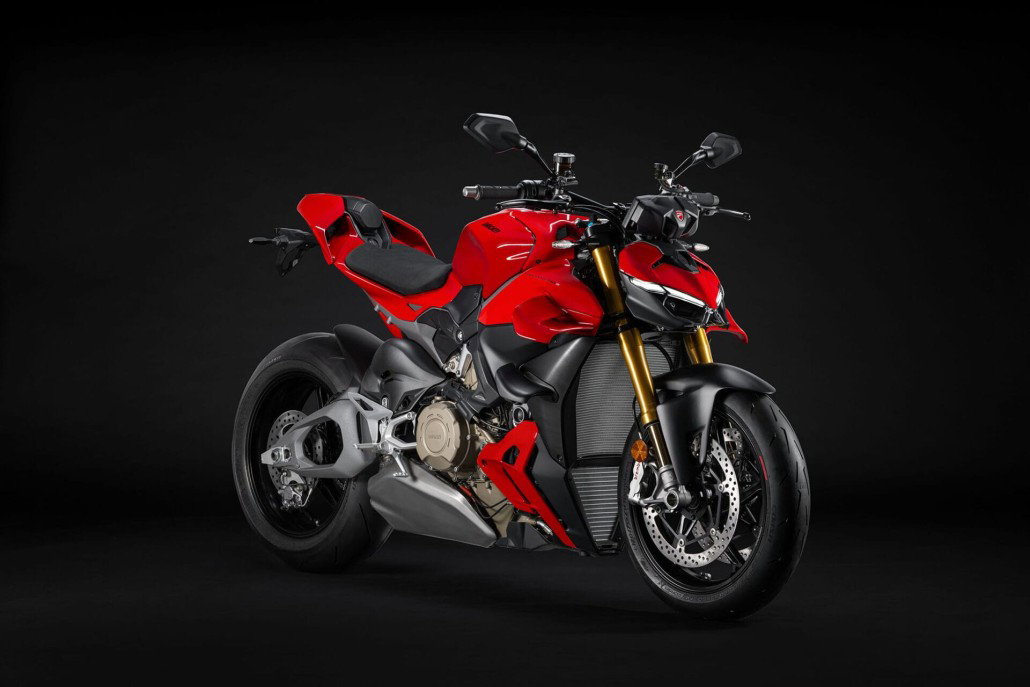
Ducati is one of the most valuable non-automotive brands in the group and is considered profitable. Unlike some other group divisions, the Italian manufacturer enjoys stable demand, a premium brand image, and success in racing, both in MotoGP and the Superbike World Championship.
From a business perspective, however, Ducati is a small item within the overall group. According to an insider, the brand’s revenue accounts for only about 0.3 percent of total VW Group revenue, which means a sale would barely change the overall financial picture. This was precisely one of the arguments against a divestiture in the past: a brand with a strong image that fits the group outweighs the comparatively modest proceeds.
Ducati was integrated in 2012 as a sporty brand into the Audi Group, similar to Lamborghini and Italdesign. The driving force behind the acquisition was former supervisory board chairman Ferdinand Piech, who was determined to have a motorcycle brand within the group. The purchase price at the time was reportedly around 870 million euros, which is said to have included assumed debts. From a technical standpoint, the group was particularly attracted by the desmodromic valve train and the Italians’ lightweight construction expertise.
How likely is a Ducati sale?
Despite the renewed rumors, a sale is far from a foregone conclusion. Several unnamed analysts continue to consider it unlikely, and Volkswagen itself declined to comment on whether additional major assets might be divested.
Currently, little has changed in terms of the facts: Ducati is not officially for sale, and there is no indication that Volkswagen has made such a decision. However, should the group be forced to raise significant capital through asset sales, Ducati would likely attract interested parties from around the world. What is clear above all is this: the notion that the Bologna-based brand could one day find a new home outside the Volkswagen Group is back on the table for the first time in nearly a decade.
Frequently Asked Questions
-
Does Volkswagen want to sell Ducati?
A sale has not been officially decided. According to media reports, advisors are urging Volkswagen to consider selling Ducati, but the company itself has not commented. Several analysts continue to consider a sale unlikely.
-
Why is a Ducati sale being discussed again?
The backdrop is the largest restructuring in Volkswagen’s history. The group is planning up to 100,000 job cuts and the closure of four plants and is reviewing the sale of non-core assets such as Ducati or Europcar to secure liquidity.
-
When will Volkswagen decide on the austerity plans?
The decision is expected on July 9, 2026. On that date, the supervisory board will deliberate on the final implementation of the savings package and the future of the affected plants.
-
How long has Ducati been part of Volkswagen?
Ducati was integrated into the Audi Group in 2012, which in turn belongs to the Volkswagen Group. The purchase price at the time was reportedly around 870 million euros.
-
Have there been earlier rumors about a Ducati sale?
Yes, primarily in 2017 during the diesel scandal as well as in 2018 and 2020. At the time, Harley-Davidson, Royal Enfield, and Benetton were among those named as potential buyers. In December 2020, the supervisory board decided that Ducati would remain within the group.