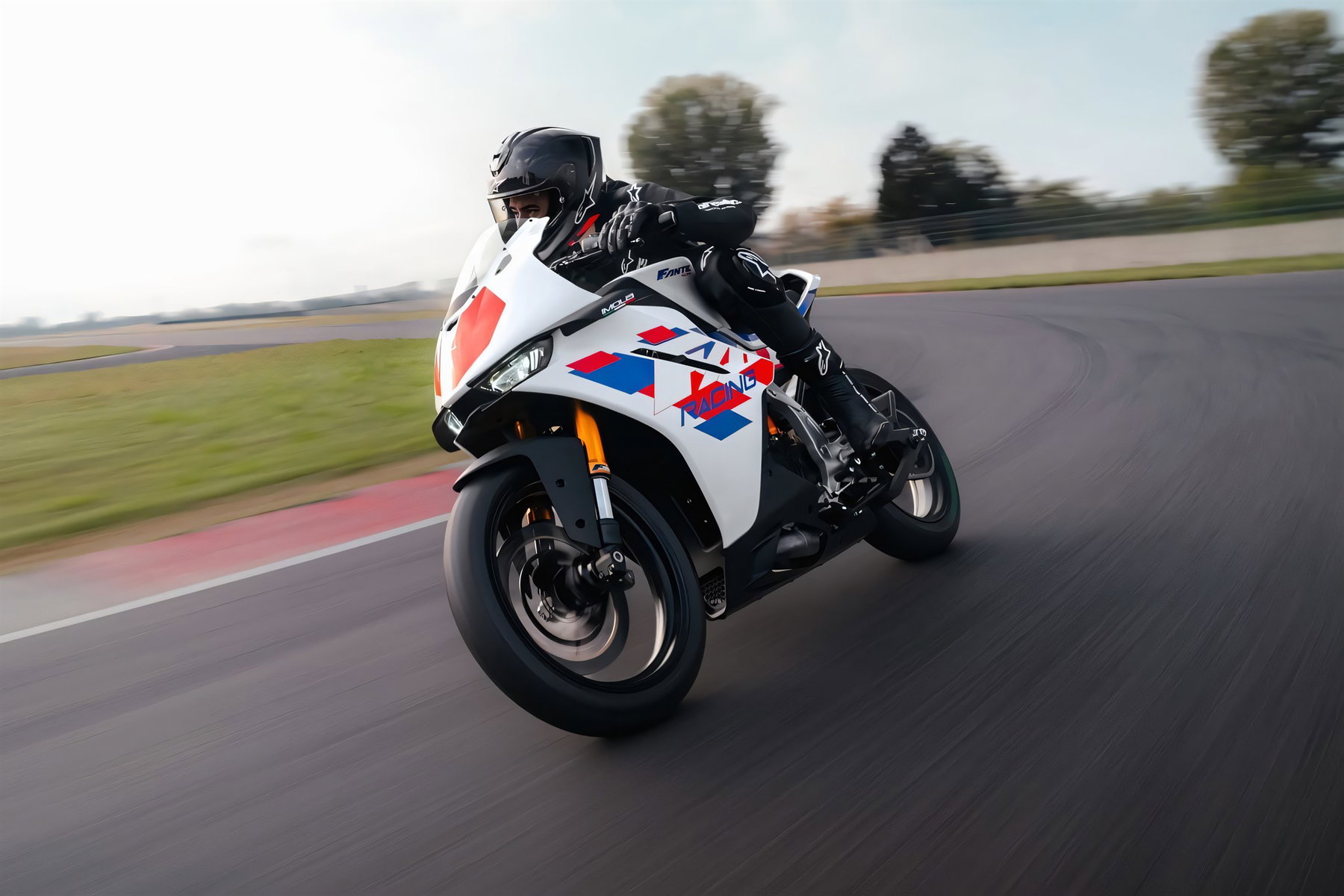
- Minarelli MM460 single-cylinder with 463 cc and up to 10,500 rpm, A2-compliant
- 150 kg without fuel, fully adjustable FRS suspension, cornering ABS and traction control
- On sale from May 2027, priced at 6,990 euros in Italy and France (approx. 7,670 US dollars)
At Fantic, it took a long time for the idea of a small sportbike to become a finished motorcycle. Now the Imola 500 stood in Milan in its final form. It is the fully faired sister of the Stealth 500 naked bike and uses the same base engine and the same frame layout. In many areas, however, Fantic has clearly tailored it to sporty riding and track use. It is built at Motori Minarelli in Calderara di Reno. This makes the Imola 500 one of the EICMA 2026 newcomers that will shape the 2027 model year in the A2 segment.
What sets the Fantic Imola 500 apart from the Stealth 500?
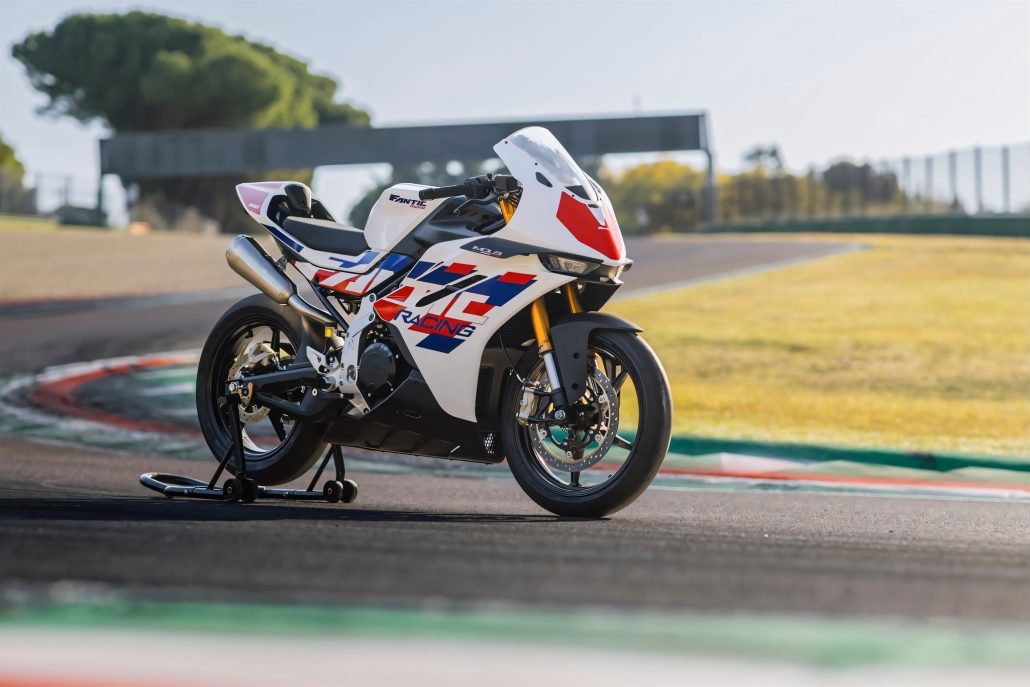
The Imola 500 gets a revised engine, considerably more sophisticated suspension and a sporty riding position with clip-on handlebars. On top of that comes the full fairing, which Fantic developed in the wind tunnel.
On the single-cylinder, Fantic has changed the intake, the exhaust routing and the piston. The Imola has its own airbox, a new header and a lighter, racing-inspired piston. Because less mass moves inside the engine, it revs up to 10,500 rpm. The modified intake and the new exhaust system are also meant to deliver a fuller and more even power curve.
The gap is even bigger when it comes to the chassis. At its launch, the Stealth 500 had a 41 mm upside-down fork and a shock that was adjustable for preload only. The Imola 500, by contrast, rolls on fully adjustable suspension from the new Fantic Racing Suspension (FRS) division. A dedicated upper triple clamp and adjustable clip-ons change the cockpit. All of this costs little in terms of weight: Fantic quoted 147 kg dry for the Stealth 500, while the Imola 500 weighs 150 kg without fuel, just three kilograms more.
How much horsepower does the Fantic Imola 500 have?
Fantic has not yet released official power or torque figures for the Imola 500. The manufacturer only stresses that the motorcycle fits the A2 licence class without modification, which is capped at 48 hp (35 kW).
Technically, the engine is well known. The liquid-cooled four-stroke MM460 comes from Minarelli, displaces 463 cc and is homologated to Euro 5+. Two overhead camshafts actuate four valves via finger followers. The mixture is supplied by fuel injection with a 46 mm throttle body, controlled electronically by ride-by-wire. Power is sent through a multi-plate oil-bath clutch with anti-hopping function to a six-speed gearbox. In the Stealth 500, Fantic rates this single at 45 hp. How much of that the revised version in the Imola keeps or gains will only be revealed by the official data.
With this concept, Fantic takes a different route from the established A2 sportbikes. The Aprilia RS 457 with 47.6 hp and the Kawasaki Ninja 500 with 45 hp use parallel twins, which run more smoothly. The Imola, on the other hand, relies on a free-revving single, low weight and a chassis that can be adjusted far more precisely than on its two rivals.
FRS suspension, brakes and frame of the Imola 500
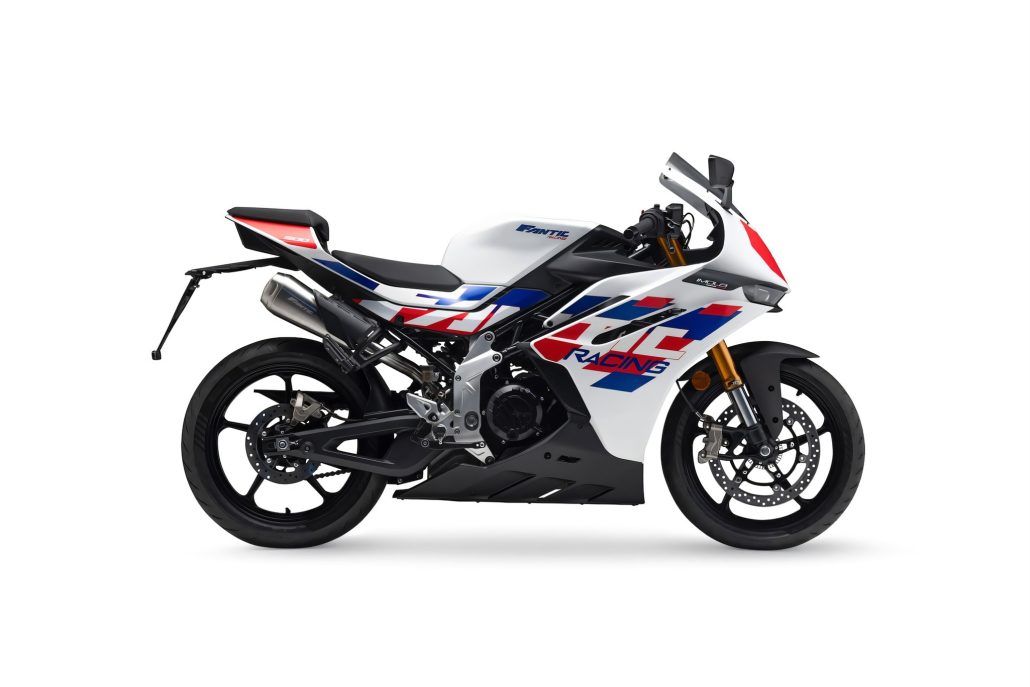
Up front works the TRACK43 upside-down fork with 43 mm stanchions and 130 mm of travel. At the rear sits the TRACK14 shock. Both units are fully adjustable, and the shock can additionally be adjusted for length and thus rear ride height. FRS is Fantic’s in-house suspension division, whose technology will be found in several of the brand’s production models from the 2027 season onwards.
Braking is handled by a ByBre system. At the front, a radially mounted caliper grips a 320 mm disc, while a 230 mm disc is sufficient at the rear. The five-spoke aluminium wheels are said to have low rotational inertia. Pirelli Diablo Rosso IV tyres are fitted as standard, in 110/70-17 at the front and 150/60-17 at the rear.
The frame combines two materials. At the front, a steel trellis structure forms the backbone, complemented by forged aluminium side plates, with a bolt-on steel subframe at the rear. The aluminium swingarm is reinforced with an underbrace. When arranging the components, Fantic focused on a low centre of gravity: the large pre-silencer sits low down, the light end can high up, and the tank and other heavy parts are positioned close to the centre of gravity. The Imola 500 is 1,996 mm long, has a 1,372 mm wheelbase and an 810 mm seat height. The tank holds 12 litres.
What electronics does the Fantic Imola 500 have?
The Imola 500 has a six-axis inertial measurement unit (IMU) that adapts ABS and traction control to the lean angle. The cornering ABS can be switched off at the rear wheel, which is particularly interesting on the track.
Four riding modes are available: Street, Wet, Track and Custom. They combine the two engine maps Fun and Wet with different settings for the rider aids. Information is shown on a 5-inch TFT display. There is also a USB-C charging socket, LED indicators and an LED headlight with two lenses.
Why is the Fantic Imola only coming in 2027?
The manufacturer’s financial crisis slowed down series production of the Imola. The sportbike was originally supposed to reach dealers by the end of summer 2026.
The idea is considerably older. Fantic showed a concept of the Imola around three years ago, at the time together with the Stealth 125 on the same platform. The Imola 500 was first shown at EICMA 2024. A year later, Fantic was absent from the Milan show because of its difficult financial situation, but continued to announce the Imola for the end of summer 2026.
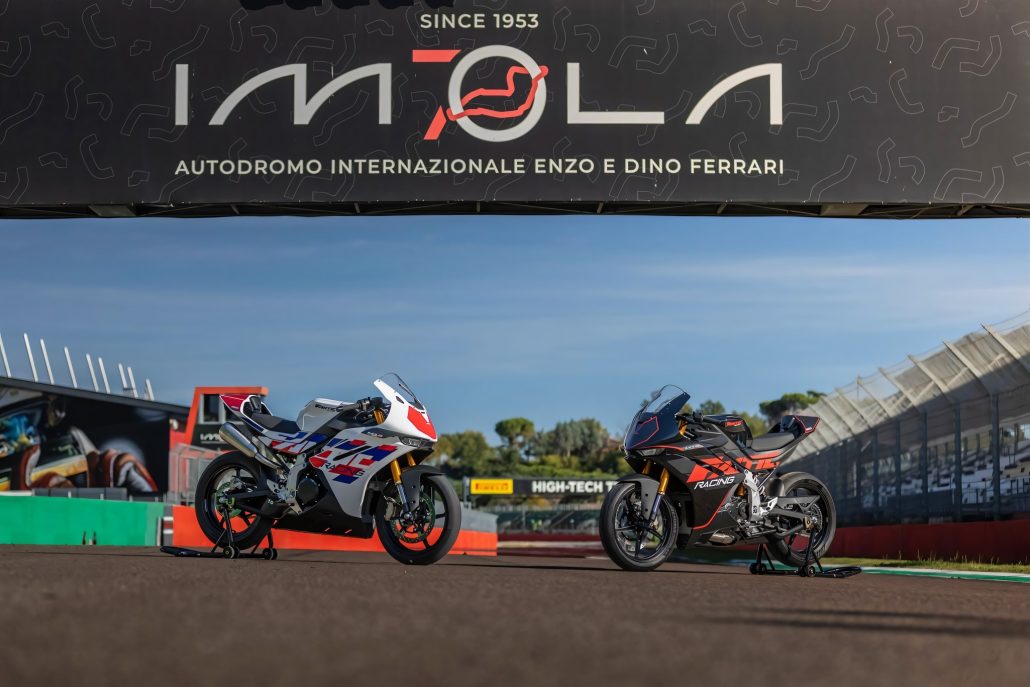
The restructuring has since been completed. On 14 October 2026, the court in Venice approved the debt restructuring agreements of Fantic Motor and Motori Minarelli, after more than 90 percent of the creditors had agreed. Both companies are being merged into the new Fantic S.p.A., in which public and private investors hold stakes and whose capital comes entirely from Italy. The sportbike’s name refers to the Imola racetrack, which is located around 50 kilometres from the Minarelli factory.
How much does the Fantic Imola 500 cost and when is it coming?
The Imola 500 is set to arrive in the Fantic dealer network from May 2027. In Italy it costs 6,990 euros including VAT (approx. 7,670 US dollars), and the same price has been announced for France.
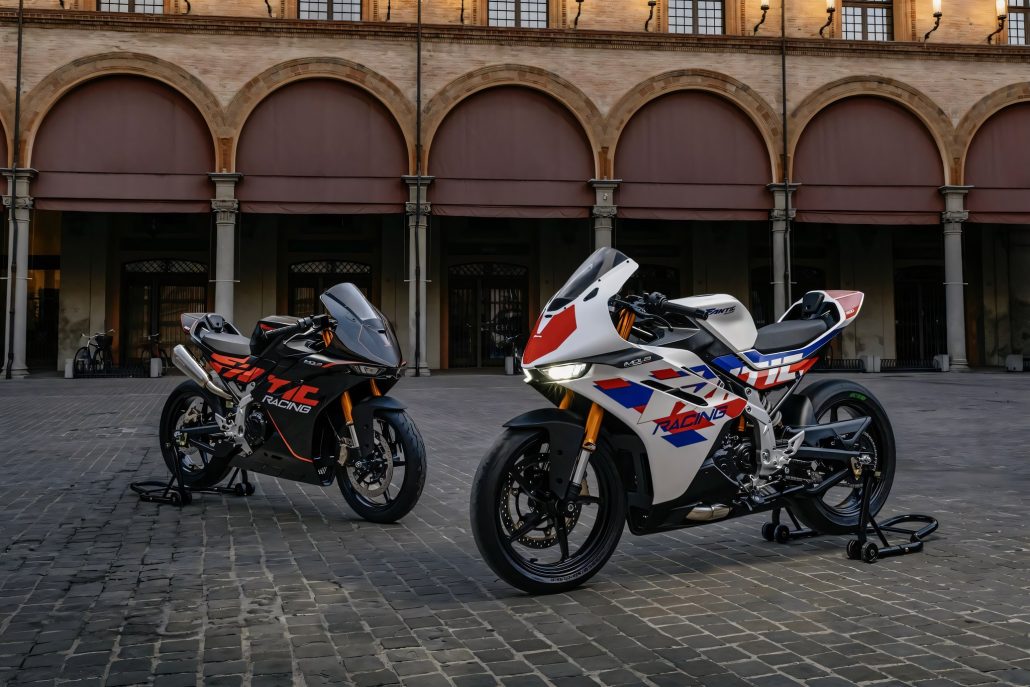
Compared with the Stealth 500, which cost 6,490 euros in Italy at launch, the premium is 500 euros (approx. 550 US dollars). There is no price for Germany yet. Two colours are available: Factory White in the classic Fantic colours and Racing Black, which is inspired by the design of the Moto2 team.
Imola 125 for A1 and B196
In parallel, Fantic is launching the Imola 125 with the same basic construction. Its liquid-cooled 125 cc Minarelli engine has four valves and VVA variable valve timing, plus an anti-hopping clutch as well. Fantic quotes a dry weight of 130 kg. The smaller Imola is more simply equipped in terms of suspension: it has a 41 mm FRS fork and a shock that is adjustable for preload only. There are two riding modes, Street and Track, based on a single engine map. Cornering ABS is only available at extra cost. In Italy and France, the Imola 125 costs 5,990 euros (approx. 6,570 US dollars).
Frequently Asked Questions
-
How much horsepower does the Fantic Imola 500 have?
Fantic has not yet published an official power figure. The manufacturer only says that the Imola 500 is A2-compliant without modification, which means it has a maximum of 48 hp (35 kW). According to Fantic, the same base engine produces 45 hp in the Stealth 500.
-
How much does the Fantic Imola 500 cost?
In Italy and France, the Fantic Imola 500 costs 6,990 euros (approx. 7,670 US dollars). That is 500 euros more than the Stealth 500 in Italy. A German price has not yet been announced.
-
How heavy is the Fantic Imola 500?
Fantic quotes a weight of 150 kg without fuel for the Imola 500. That is three kilograms more than the 147 kg the manufacturer stated for the Stealth 500. The Imola 125 weighs 130 kg dry.
-
When will the Fantic Imola 500 be on sale?
The Imola 500 is set to arrive at Fantic dealers from May 2027. The market launch was originally planned for the end of summer 2026, but the manufacturer’s restructuring delayed it.