- KTM firmly rejects allegations of illegal enduro sales
- All enduro models leave the factory in homologated condition, according to KTM
- The manufacturer cites FIM regulations as the basis for dual usability
- European enduro models account for around 3% of KTM’s global sales
Two days after ten European media outlets published their coordinated investigation into KTM sport enduros on May 26, 2026, the official response from Mattighofen came swiftly. On May 27, KTM AG posted a statement on its website that clearly positions itself against the narrative presented by the participating editorial teams. We have already covered the background of the investigation, the undercover dealer visits, and the context of the allegations in detail.
What does KTM say in the statement?
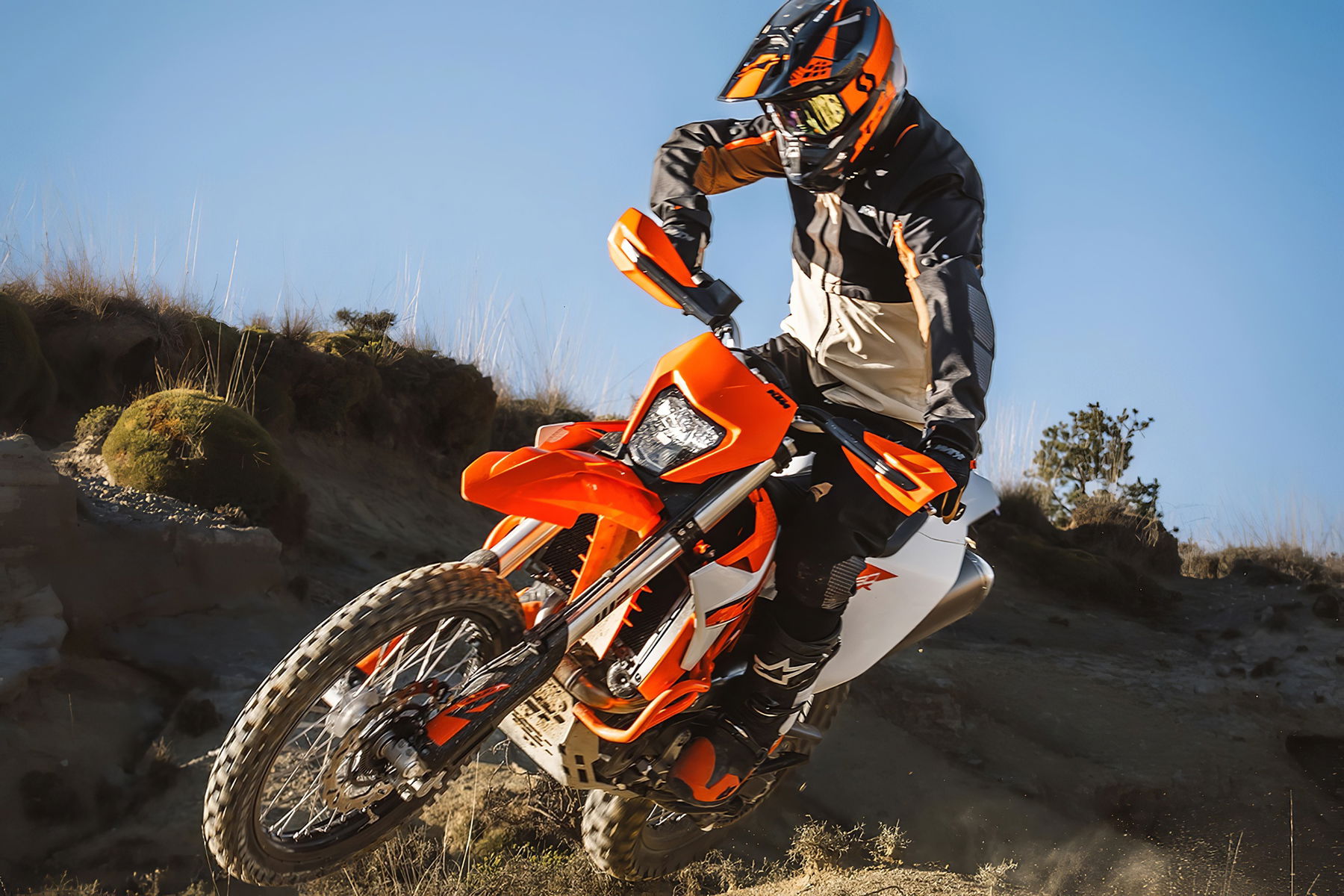
KTM AG describes the reporting as the result of a fundamental misunderstanding. The manufacturer emphasizes that enduro models are inherently sports equipment that may also be ridden on public roads in their homologated delivery condition. This dual usability is intentional, necessary, and standard practice across the industry.
As justification, KTM refers to the regulations of the motorcycle world federation FIM: In order for enduro machines to compete in official competitions, they must first have been delivered in homologated condition. This is neither a KTM-specific practice nor a process that gives the company an unfair advantage over its competitors. All enduro models from the KTM, Husqvarna, and GasGas brands leave the factory exclusively in street-legal, homologated condition.
How does KTM position itself on the dealer conversion issue?
On the core allegation that dealers de-restrict the machines before handover, KTM responds briefly but clearly. At the customer’s request, the machines can be configured for competition and off-road use by an authorized dealer after purchase. Buyers are explicitly informed that the street homologation is voided with the conversion for competition and that the vehicle may no longer be used on public roads.
However, the statement does not address the specific findings of the undercover dealer visits, in which sales staff in several countries had actively recommended de-restriction and openly described the street homologation as a mere formality.
How does KTM address the emissions question?
KTM takes up the emissions measurements prominently featured in the investigation and provides its own assessment. According to the German Federal Environment Agency, motorcycles account for around 0.3% of total CO₂ emissions in Germany. Competition enduro models represent only a small fraction of that. Their mileage is many times lower than that of street motorcycles, as they are only used for a few hours per year in sport and training operations.
With this argument, KTM questions the proportionality of the debate without directly commenting on the specific measurement results of the ICCT at the Technical University of Prague.
What is the economic significance of the affected models?
The statement also provides a specific figure: The enduro models distributed in Europe account for around 3% of KTM’s global sales. This signals that, measured against the overall business, it is a niche segment. However, for the ongoing investigation by the German Federal Motor Transport Authority (KBA) and the potential regulatory consequences, the economic scale is secondary. What matters is whether the authority identifies regulatory violations and what measures follow.
KTM is already going through a difficult phase. Following the insolvency proceedings in 2024, the group is in the process of rebuilding. The allegations hit the company at a time when trust among customers, dealers, and investors is particularly important. The statement is clearly designed to refute the portrayal of systematic fraud and to shift responsibility for any violations to the dealer and end-customer level. Whether this stance is tenable given the documented dealer practices and the ongoing KBA investigation remains to be seen.
➜ This article is part of our comprehensive overview: Motorcycle Law & Policy: Regulations, Court Rulings and Developments for Riders. Find all key information on this topic in one place.