- Seven KTM MotoGP engines failed in 2026, only one of them on Pedro Acosta’s bike
- The culprit was a faulty supplier part that broke after 50 to 100 kilometres
- Acosta’s retirement in Barcelona had a different cause: the ECU briefly shut down
After the insolvency and Bajaj’s arrival as majority owner, 2026 was meant to bring calm to KTM at last. The racing programme was secured and the future in MotoGP was no longer in doubt. Then the engines started to fail. Motorsport director Pit Beirer has now explained what was behind the series of failures and why KTM was unable to intervene for so long. For him, it was the hardest phase of the entire MotoGP project, the company’s financial worries aside. He sums it up like this: “This year, I thought we go back to a normality, then this engine issue almost killed us.”

What caused KTM’s engine crisis?
The cause was a powertrain component that KTM buys from an external supplier. It did not meet the quality requirements and could not withstand the high loads inside the race engine.
KTM has not revealed exactly which part was affected. Beirer, however, describes the fault quite clearly: where there should have been a welded joint, there was only air. The parts gave way after only around 50 to 100 kilometres, which is very early. For Beirer, that made it obvious that something inside the engine was not as it should be. He had already voiced his suspicion about a bought-in part at the Sachsenring race.
Of all things, old engines put the team on the right track. Because nobody knew which engine could still be trusted, KTM brought back high-mileage units. As the fault struck so early, these engines could not be affected. That helped narrow down the suspect parts.
How many engines did KTM lose in 2026?
KTM lost seven engines over a certain period. According to Beirer, Pedro Acosta was only affected once, while Brad Binder was hit more often.
The problem really came to light at the Italian Grand Prix at Mugello. One engine broke in the morning. With high-revving race engines that happens to every manufacturer now and then, so it was no cause for alarm yet. But two more failures followed that same day. From that moment, Beirer says, nobody at KTM really knew what was going on. By the end of August, three engines from Binder’s quota alone had been destroyed.

Why was KTM not allowed to simply open the engines?
In 2026, MotoGP has a development freeze on engines, known as the engine freeze. Ducati, Aprilia and KTM race with the engines homologated, meaning officially approved, for 2025. These engines are sealed.
In principle nothing may be changed on them. Exceptions are only allowed for reasons such as safety or reliability, and only if no performance gain results. For KTM this meant the team could see the consequences but was not even allowed to touch a single part. Normally a team facing such problems simply goes back to the last configuration that worked. That route did not exist here, because nothing on the engine had changed compared with the previous year.
KTM could only ask for permission once the cause had been established. Before that, nobody knew what actually needed to be replaced.
How did KTM get approval from the other manufacturers?
KTM had to disclose an unusual amount to its rivals. This included the name of the supplier, serial and batch numbers, and X-ray images of the parts.
The aim was to prove that this was about a defect and not a hidden advantage. Three conditions applied: it had to be a quality defect rather than a design change, the problem could not be solvable by reducing performance, and there had to be a safety risk. Asked whether he had feared for the riders’ safety, Beirer said yes. Some data was only held by the supplier, and the time difference added further delays.
The other manufacturers did not agree straight away. By mid-July, Aprilia was the only one to have given its backing. Beirer understands this, as anyone wanting to open a sealed engine naturally raises suspicion. He did not see the many questions as harassment but as justified. During the summer break between the Sachsenring and Silverstone, all manufacturers finally gave the green light. The teams’ association IRTA was present and supervised the work. Beirer expressly thanked the competition.
Was Acosta’s crash in Barcelona related to the engines?
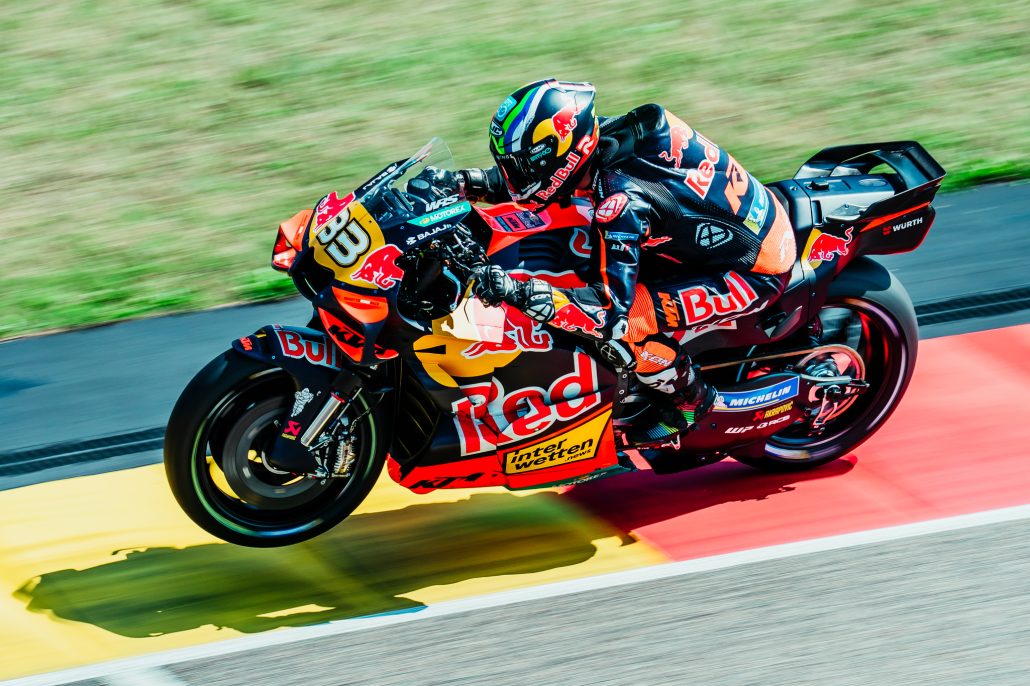
No. While leading the Catalan GP, Acosta lost power because the ECU briefly shut down. It had nothing to do with the faulty engine part.
Alex Marquez ran into the back of Acosta, there was a heavy crash and the race was stopped. The ECU, or engine control unit, acts as the electronic brain that manages the engine. For a moment there was no signal, and afterwards the bike ran completely normally in the garage. According to Beirer, nobody in the whole paddock had experienced a problem like this before. Electronics manufacturer Magneti Marelli helped with the investigation. There were also further difficulties with electronics and sensors, which were likewise unrelated to the engine failures.
Why didn’t KTM simply lower the revs?
The problem was too big for that. Instead, KTM fell back on the older high-mileage engines, which had proven to last longer.
That cost performance. At Mugello in particular, the KTMs were noticeably short of speed on the straights. Ahead of the Misano race it was unclear whether the riders would get 500 rpm back there. KTM has not officially confirmed this.
Seven engines repaired in Munderfing
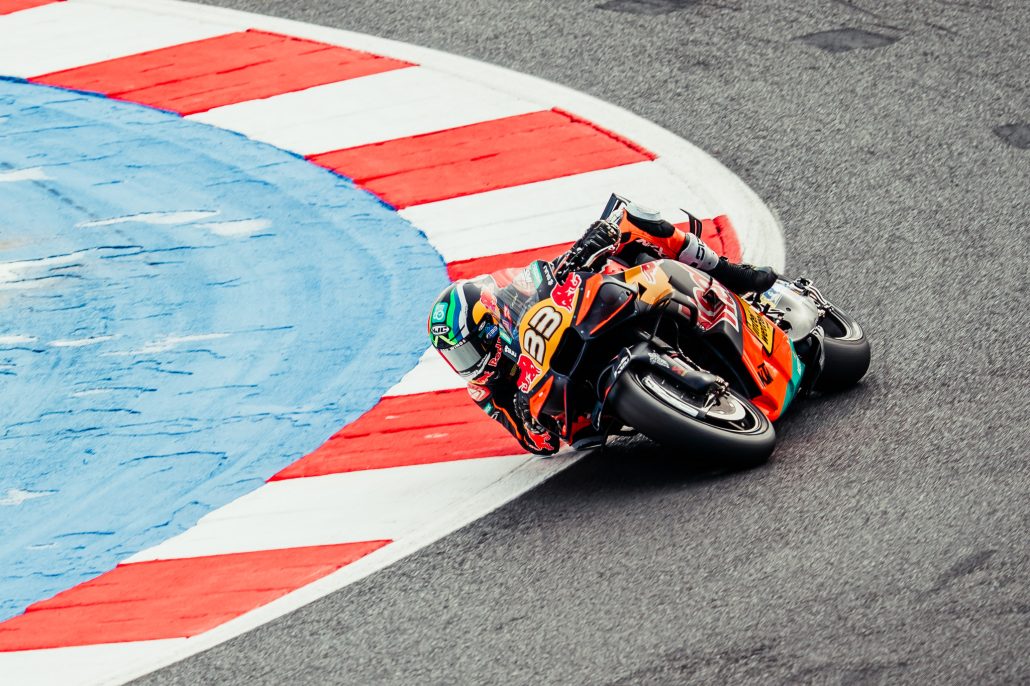
After approval, KTM opened seven engines at its engine plant in Munderfing. The faulty parts were replaced, then the engines were sealed again and put back into the pool.
That does not quite close the matter. Because several engines were lost, the KTM riders have smaller reserves. Some engines may therefore have to run longer than planned, which can cost performance.
How has Pedro Acosta fared since the repair?
Since the Aragon Grand Prix, Pedro Acosta has finished every race on the podium. At Spielberg he took his first MotoGP win.
Before the Misano race he was sixth in the championship. Beirer sees this as a good sign. In his view, Acosta picked up at Aragon where KTM had left off in Barcelona. Until then, the team had been getting closer and closer to the front. Beirer now hopes the season can carry on normally.
Is KTM selling its MotoGP team?
No. KTM CEO Gottfried Neumeister rules out selling the MotoGP team, including selling a stake in it.
According to him, KTM is in a better financial position again. In the second quarter the company reached break-even at EBIT level, meaning earnings before interest and taxes. That was the first time in almost two years. In the first half of the year KTM sold almost 100,000 motorcycles. The manufacturer has signed a five-year contract with Dorna for the new 850cc era. According to Neumeister, the MotoGP title is one of the few that KTM is still missing.
Neumeister also recalls the period when money was short and hardly any new parts could be developed. He does not blame the riders. The problems were KTM’s responsibility and not their fault. In 2027 KTM starts with a new rider line-up: Alex Marquez and Fabio Di Giannantonio in the factory team, Luca Marini and rookie Senna Agius at Tech3.
How does KTM want to cut costs in MotoGP?
Neumeister proposes a standard fuel from a single supplier for all teams. He wants to save where spectators won’t notice.
Before that, the idea of allowing each rider only one bike from 2027 had failed. All five manufacturers would have had to agree. Ducati and Aprilia are said to have been in favour, while KTM opposed it. For KTM, the show should not suffer from cost-cutting.
Neumeister sees an opportunity in the switch to 100 per cent sustainable fuel. Every manufacturer needs a partner for this anyway, which is laborious and expensive. In his view, one shared supplier for everyone would save money without fans seeing any difference. The teams would still have to get the most out of the same fuel. At the Austrian Grand Prix in Spielberg, Neumeister also said he understood Liberty Media and Dorna. The manufacturers had to play their part too, and a cost cap was a natural step if there was no more money available.
Frequently Asked Questions
-
What caused KTM’s engine crisis in 2026?
A highly stressed powertrain component from an external supplier did not meet quality requirements. According to Pit Beirer, there was only air where a welded joint should have been. The parts broke after only around 50 to 100 kilometres.
-
How many engines did KTM lose in 2026?
KTM lost seven engines over a certain period, and Pedro Acosta was only affected once. By the end of August, three of Brad Binder’s quota engines had been destroyed. After approval, KTM repaired seven engines in Munderfing.
-
Why wasn’t KTM allowed to open its MotoGP engines?
The engine freeze applies in the 2026 season and the engines are sealed. They may only be opened for safety or reliability reasons and only with the consent of all manufacturers. That consent came during the summer break between the Sachsenring and Silverstone.
-
Why did Acosta retire in Barcelona?
Acosta’s ECU briefly shut down in Barcelona, which had nothing to do with the engine defect. The bike then ran normally again. Magneti Marelli helped find the cause.
-
What does KTM propose to cut costs in MotoGP?
KTM CEO Gottfried Neumeister wants a standard fuel from a single supplier, in line with the switch to 100 per cent sustainable fuel. KTM rejected the rule allowing only one bike per rider from 2027.
➜ This article is part of our comprehensive overview: 2026 MotoGP Season: The Complete Overview – Teams, Riders, Calendar & Championship Standings. Find all key information on this topic in one place.