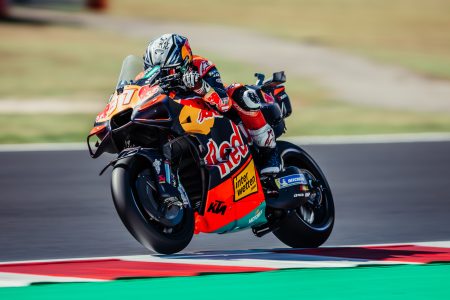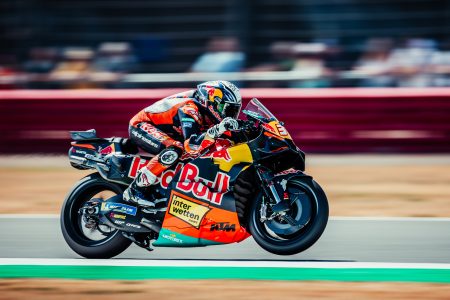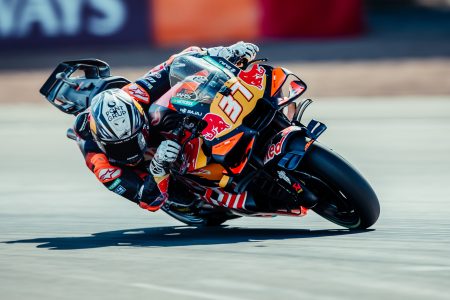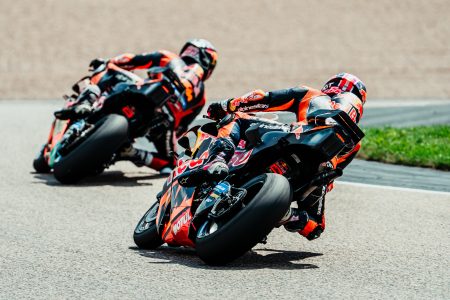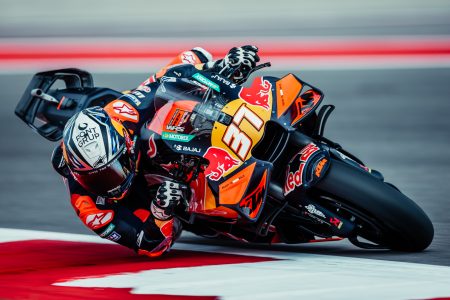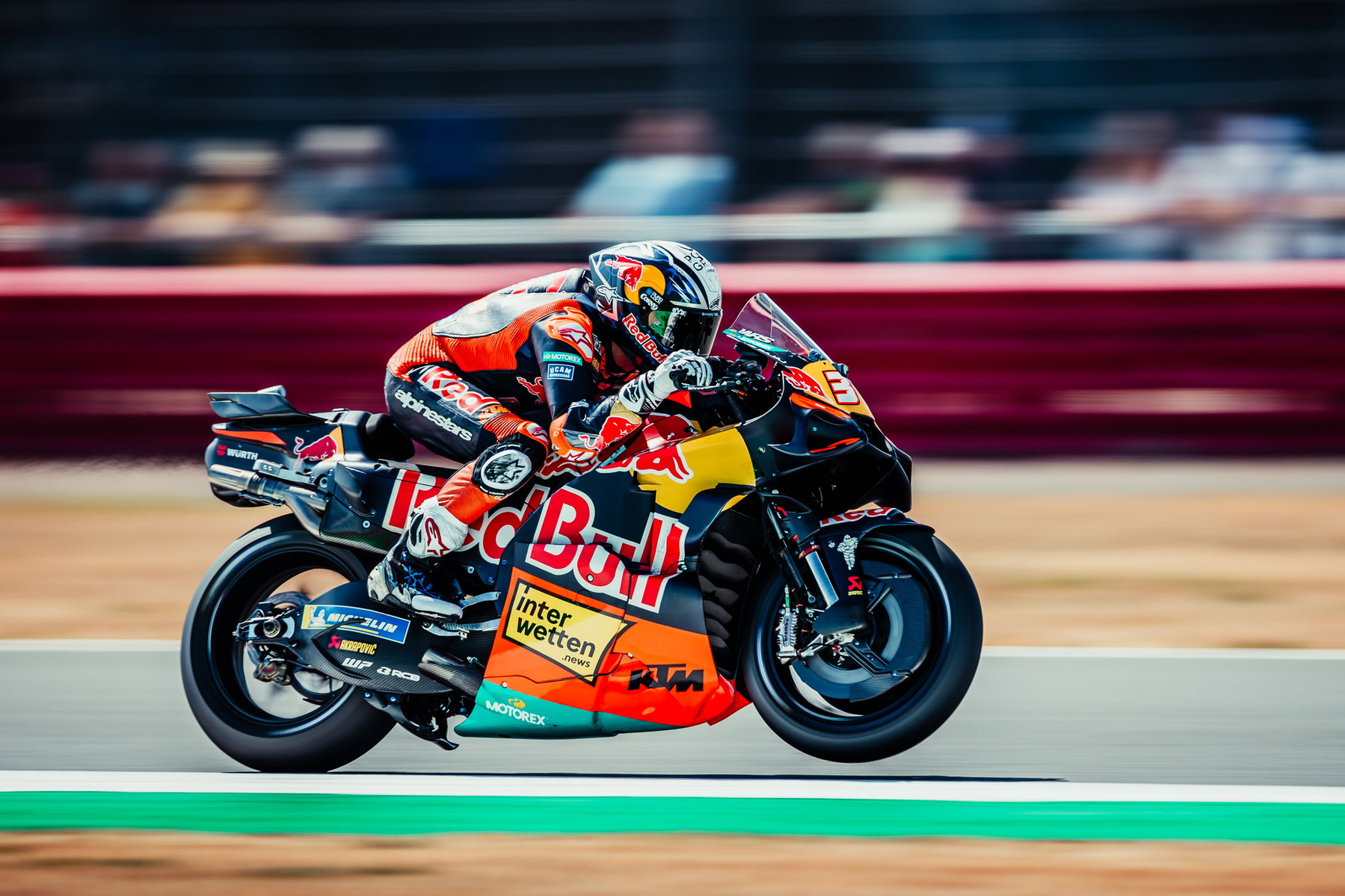
- A reduction of 500 rpm, affecting Pedro Acosta, Brad Binder, Enea Bastianini and stand-in rider Pol Espargaro
- The return of full revs from Misano is widely expected but has not been officially confirmed
- Binder has already opened six of his nine permitted engines, three of which have been withdrawn
Cutting maximum engine speed by 500 rpm sounds like a minor intervention. On a MotoGP prototype it is not. KTM took this step during the 2026 season in order to protect its own engines from further damage. What that has meant in the daily life of the race teams goes well beyond a few kilometres per hour on the straight. KTM test rider Pol Espargaro, who most recently deputised for the injured Maverick Vinales, described after the race at Aragon exactly where the missing revs actually hurt.
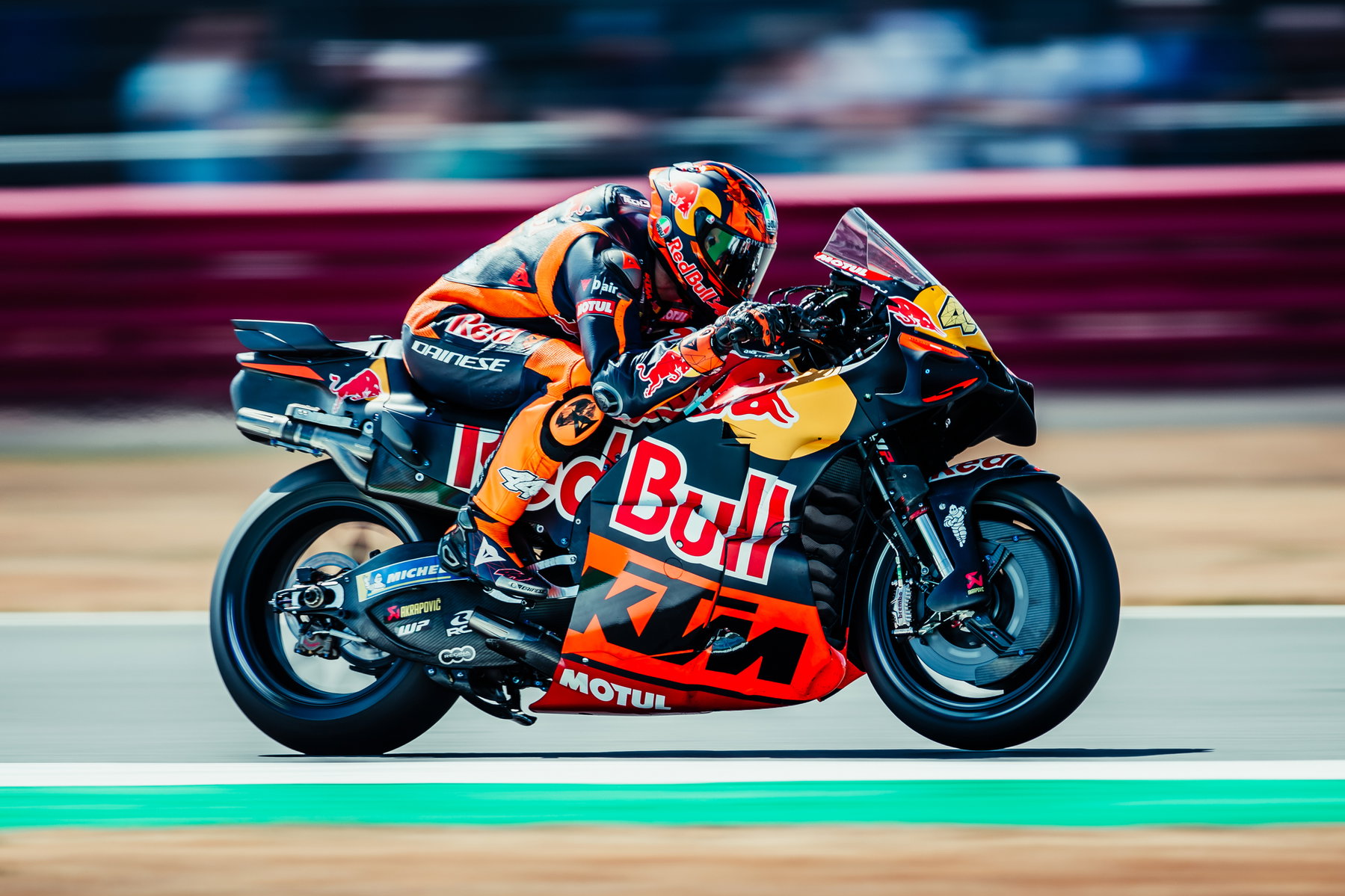
Why did KTM reduce the revs on the RC16 in the first place?
KTM lowered the maximum engine speed because engine failures on the RC16 were mounting up and the manufacturer had to safeguard reliability. The cause lay in mechanical components from a supplier that did not meet the specified quality.
The route to a repair was blocked for KTM. Engine development in MotoGP is frozen, the units are sealed and must correspond exactly to the homologated specification on file. Anyone deviating from it breaches the so-called Engine Freeze Agreement, the deal that halts engine development. In the most extreme case, disqualification looms. KTM therefore argued that this was not a change of specification but the correction of defective parts.
Until approval came through, the only option was a precautionary intervention via the electronics. Revs down, so the engines would last. The season’s most prominent incident does not belong in this sequence, however: when Acosta lost power at Barcelona and Alex Marquez ran into him, media reports attributed that to the spec electronic engine control unit rather than the engine itself. In timing terms, the start of the rev limitation still roughly coincides with that weekend; counting from Barcelona, KTM raced seven times with a reduced rev band.
What the missing 500 rpm changed about the set-up
The most noticeable consequence was not top speed but the gearbox. That is exactly what Espargaro pointed to after the Aragon weekend.
Having more revs available, in his account, brings the least benefit where most people assume it does, namely in fifth and sixth gear and at maximum speed. Something else was decisive: at certain circuits the engine hit the limiter so early that a gear could not be held all the way to the next braking point. Those missing 500 revolutions decided whether a ratio would last as far as the corner or not.
The fix for that is not a local one. Change one gear ratio and you change the entire package. Espargaro put it like this: “You need to adapt all the gearbox, which affects all the corners.” A protective measure for the engine thus turned into a compromise that influenced an entire lap. Acceleration, corner exits, shift points, all of it hung on a single adjustment that was only ever meant to secure durability.
The loss in top speed was harder to pin down. At Aragon, Binder once again recorded the highest figure of any rider on the back straight, but at 352.9 km/h compared with 356.4 km/h the previous year. That is only partly meaningful, because most manufacturers were slower in 2026, and factors such as the aero package, slipstreaming and wind direction distort such comparisons.
How many engines has the rev limitation cost KTM?
The arithmetic is uncomfortable: Binder has opened six of his nine permitted engines, three of which have already been withdrawn. That leaves him worst off in the field.
Acosta is likewise at six of nine units opened and has lost his two most recent engines. Bastianini stands at five of nine with two units taken out of service. Vinales has so far opened only four engines and has not had to write off any of them. Espargaro drew on that allocation during his stand-in outings. The field average is five of nine engines opened.
Only one other rider has had to retire three engines so far, Toprak Razgatlioglu. He has eleven rather than nine available, however, because Yamaha enjoys concessions status, the allowances granted to less successful manufacturers. For KTM, that leaves a disadvantage that persists even after the repair: the remaining engines have to cover more kilometres to make up for the ones taken out of service.
A case of this kind is rare but not new. In 2020 Yamaha faced a similar problem over faulty valves, but withdrew its request to the manufacturers’ association. Points deductions in the constructors’ and team standings followed, because it emerged that a change of supplier lay behind the defect.
Why is Misano exactly the right moment?
Misano is regarded as a very high-grip circuit where a lot of acceleration out of the corners is required. That is precisely where extra revolutions, and the freer gearbox set-up they allow, have the strongest effect.
Espargaro expects that a few additional revs would help considerably at this track. The Gran Premio di San Marino is scheduled from 11 to 13 September 2026, and for KTM it is the first weekend on which the engine overhaul and full revs could take effect together.
The groundwork is done. After the other manufacturers had given unanimous approval, KTM was allowed to open the sealed four-cylinder engines of Acosta, Binder, Vinales and Bastianini under supervision. The work took place during the two-week break after the Silverstone weekend at Munderfing in Upper Austria. The race department confirmed briefly at the time: “The engines were overhauled this week.”
What is still open for Misano
Whether full revs will actually be released from Misano onwards has not been officially confirmed. Espargaro himself said after the Aragon race that he had no idea what would happen with the revs, and that he was hoping for it.
The situation at Aragon is also described in different ways. Part of the coverage assumed that KTM was already running there with fully healthy engines and without a reduced peak rev limit. Other accounts suggest the RC16 was not yet at its normal power level at Aragon and that KTM first wanted to check whether everything was working cleanly after the overhaul. Both fit together in terms of timing if the engine repair and the release of the revs are understood as two separate steps.
In competitive terms, the Aragon weekend gave KTM a lift in any case. Acosta finished second behind Marc Marquez, beating the highly rated Aprilias in the process. Espargaro spoke of a big dose of oxygen for everyone at the factory and said Acosta was extracting more from the bike than the package really allows. In the championship standings, Acosta sits sixth on 189 points, behind leader Jorge Martin on 256.
Espargaro will ride at Misano too, because Vinales remains sidelined. After that comes a test at Mugello for him, followed by more development work on the 850 for the 2027 season. If KTM really does get the full rev band back at Misano, it would mean not only more power but above all renewed freedom of movement in the set-up.
Frequently Asked Questions
-
Why were the KTM RC16 revs reduced?
KTM lowered the maximum engine speed by 500 rpm to prevent further engine damage. The cause was mechanical components from a supplier that did not meet the required quality. Because the engines are sealed and development is frozen, an immediate repair was not possible.
-
When will KTM run with full revs again?
The return to the full rev band is expected from the Misano race weekend on 11 to 13 September 2026. The step has not been officially confirmed, however, and after the Aragon race Espargaro himself spoke only of a hope.
-
Which riders are affected by the rev limitation?
The four RC16 riders Pedro Acosta, Brad Binder, Enea Bastianini and Maverick Vinales were affected. As Vinales is sidelined by injury, test rider Pol Espargaro was most recently on his machine. Espargaro will stand in again at Misano.
-
What does the rev limitation cost beyond top speed?
The bigger loss was in the gearbox set-up. Because the engine hit the limiter too early, on some circuits a ratio did not last as far as the next braking point. Adjusting the gear ratios then has an effect on every corner of a lap.
-
How many engines may a MotoGP rider use per season?
Nine engines per season are allocated to the KTM riders concerned. Riders with concessions status, the allowances granted to less successful manufacturers, have more available; at Yamaha the figure is eleven.
➜ This article is part of our comprehensive overview: 2026 MotoGP Season: The Complete Overview – Teams, Riders, Calendar & Championship Standings. Find all key information on this topic in one place.