- All manufacturers gave their approval on Friday, 7 August 2026
- The engines may be opened in the week before the Aragon GP under the supervision of an IRTA technician
- At Silverstone the maximum rev limit stays reduced, which costs performance
The first half of the 2026 MotoGP season was a run of setbacks for KTM. Again and again the bikes cut out without warning, hitting Pedro Acosta several times, but also Brad Binder and the riders of the Tech3 team. For weeks the Austrian manufacturer had been looking for a way to tackle the problem at its root. That was exactly what it was denied until now, because the regulations tied its hands. Now the blockade has fallen.
Why was KTM not allowed to open the engines until now?
KTM is subject to the so-called engine freeze, the development stop on engines. The units were sealed at the start of the season and may neither be opened nor stripped down without the approval of all other manufacturers.
The background is the MotoGP concession system. KTM sits in rank C and is therefore not allowed to change the homologated engine specification during the season. Ducati, Aprilia and Honda are affected as well. Only Yamaha, still classified in group D, may work freely on its engines. In practice that hardly matters, because Yamaha is no longer introducing a new four-cylinder with 1,000 cubic centimetres this season and is concentrating on the 850 machine for 2027.
Anyone ignoring the freeze risks heavy penalties. How serious a broken seal can be was shown this season by a Moto3 case in which a rider was retroactively excluded from all races run with the engine in question. The two cases are not comparable in substance, because with KTM it is explicitly about safety and not about an advantage. For the race department, going it alone was nevertheless never an option.
What is defective inside the RC16 engines?
According to KTM, the failures stem from bought-in components that did not meet the specified quality standard. These highly stressed parts in the drivetrain failed under certain conditions.
Motorsport director Pit Beirer first addressed the problem openly at the Sachsenring. In a television interview he described the situation like this: „There is something in our engines, a faulty part that we have to buy in, and it is not in order. The situation is not easy.“ He added that this risk still exists in some engines and that individual units were no longer used at all for safety reasons. After the root cause analysis, KTM rules out that the damage would also have occurred with faultless parts. According to the manufacturer, it is therefore not a design flaw in the engine itself.
How serious the matter was had already become clear in May. At the Catalan GP, Acosta’s RC16 cut out while leading at a fast section of the track. Alex Marquez came up in the slipstream and crashed heavily. According to media reports, further riders were involved in the incident. After that the run did not stop: at four of six race weekends there was at least one failure, among others in Barcelona, Mugello, Brno and Assen. After the Czech GP, Acosta publicly demanded that his employer finally deliver answers.
Who approved the opening?
All four rivals agreed, but only at the second attempt. Initially only Aprilia had given the green light.
KTM submitted the formal request in mid-July via the manufacturers association MSMA and the teams association IRTA, accompanied by extensive documentation. There were several meetings about it at the Sachsenring, the last one on Sunday afternoon. Beirer thanked Fabiano Sterlacchini and Massimo Rivola of Aprilia explicitly for their support at the time. Ducati, Honda and Yamaha, by contrast, initially refused. Why was never officially explained. In the paddock discussion it was assumed that the three factories feared a return of KTM to full power. That reading is not proven.
During the summer break the mood turned. According to consistent reports, Ducati, Yamaha and Honda gave their approval with a view to rider safety. Tech3 team principal Günther Steiner spoke on Friday morning at Silverstone of a clean handling of the matter by KTM: „KTM has not decided to be in this situation. It was a supplier issue, and they dealt with it very well, in my opinion.“ Steiner went on to say that Beirer had kept him informed throughout and that the matter had been a personal one for him. He also thanked the other manufacturers for working together with KTM.
When will the KTM engines be repaired?
The work is due to take place in the week before the Aragon GP, which runs from 28 to 30 August. The engines will be opened at the factory in Austria, under the supervision of an IRTA technician.
The procedure is precisely governed by the regulations. The official checks which component is replaced and then seals the engine again. In this way the unit still counts as the originally homologated one and does not have to be added to the allocation as a new engine. That is exactly what matters: in concession rank C, every rider is entitled to eight engines for the whole season. A ninth engine would mean a pit lane start for each outing. With the repair, KTM therefore avoids not only further failures but also looming penalties.
The timetable is not entirely certain yet. Parts of the coverage leave open whether all affected engines can be reworked in time for Aragon. KTM itself deliberately remains vague in its statement and only says that it wants to act as quickly as possible.
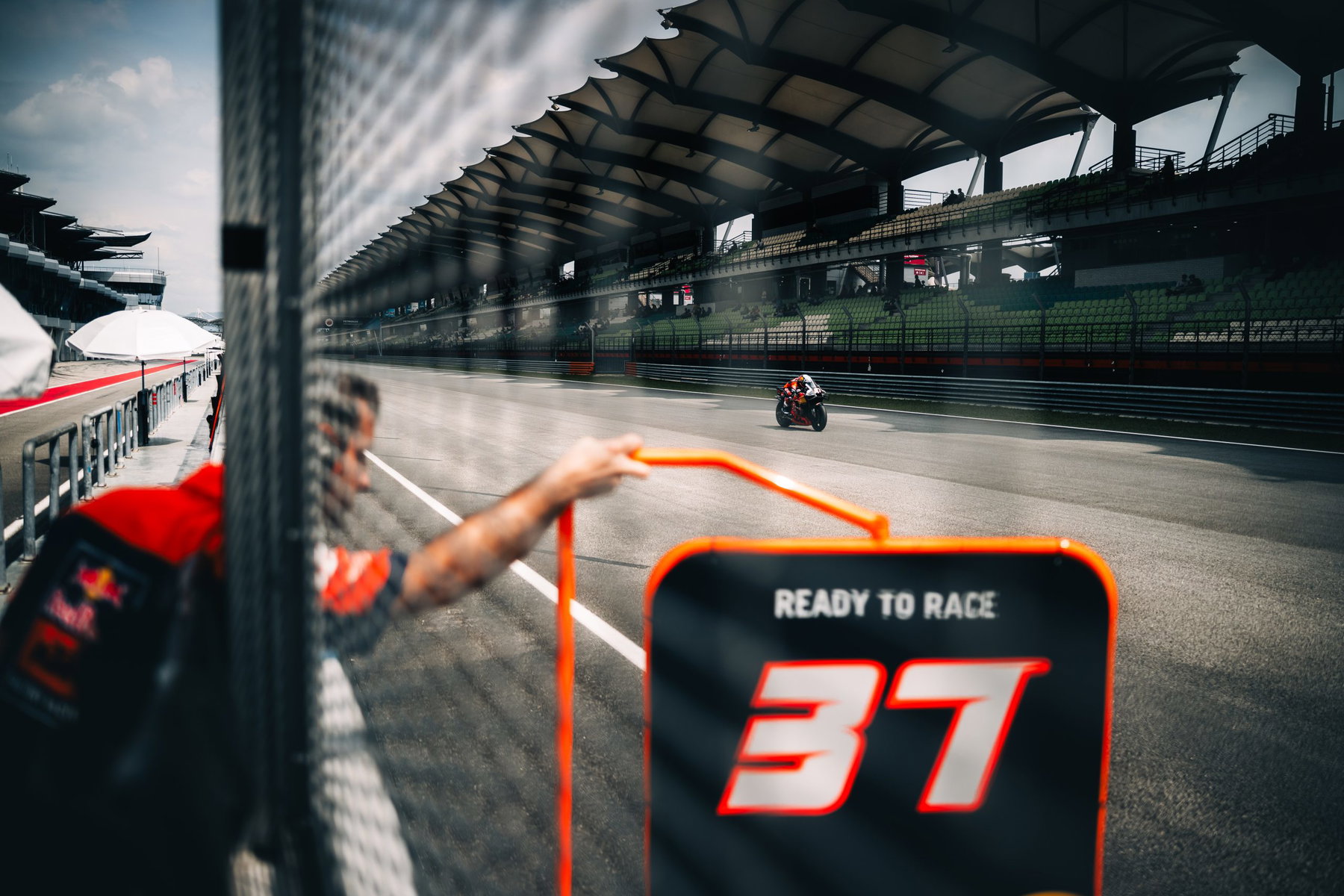
At Silverstone the revs stay limited
For the race weekend in Great Britain nothing changes for now. KTM confirmed this in a written statement: „We can confirm that we have received the necessary approval to proceed with the corrective measures related to the technical matter we have been managing. We aim to implement these measures as soon as possible. For Silverstone, we will continue with the interim solutions currently in place.“
That interim solution consists above all of lowering the maximum revs of all available engines. This reduces the load on the critical components but costs performance. Silverstone of all places is an unfavourable venue for that, because the track thrives on high speed and long full-throttle sections.
Will KTM get full power back from Aragon?
That is the decisive open question, and the answers differ. Several reports assume that after the components have been swapped, the riders will return to the originally set maximum revs and thus have full power available.
From the paddock, however, there is also the opposite assumption. According to that, the definitive solution itself is said to come with a reduction in engine power, which would keep the RC16 slightly slower on the straights. That is not confirmed, it is a rumour. Clarity is unlikely to come before the Aragon GP. Steiner, at any rate, was confident on Friday and said he believes KTM has found a solution and that everything should be fine from now on.
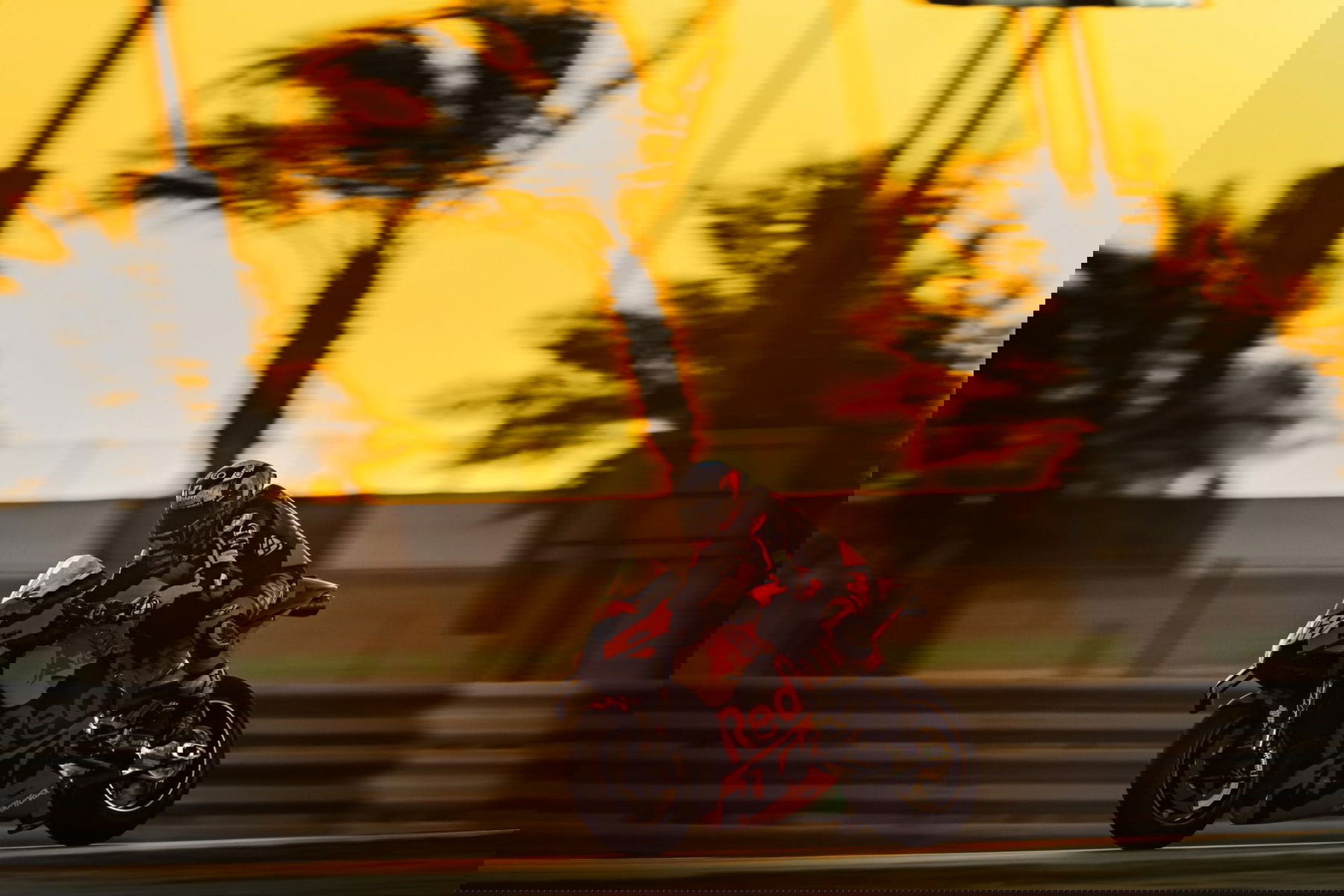
The precedent from the year 2020
A comparable case dates back six years. Back then Yamaha asked its rivals for permission to open its own engines for safety reasons, and got it. There too the cause lay with a supplier: valves deviated from the specification by a minimal fraction in their dimensions and caused damage as a result. The case shows that the MSMA can in principle approve such requests when no performance advantage is involved.
What the decision means for the second half of the season
In sporting terms KTM is under pressure. As the best RC16 rider, Acosta sits seventh in the riders standings, and in the constructors standings KTM is third of five manufacturers. At the top of the riders world championship is Jorge Martin with 208 points ahead of Ai Ogura with 194 and Marc Marquez with 190.
The clearance comes late, but not too late. Without it, KTM would have had to contest the rest of the season with throttled engines and additionally risk penalties. Now there is at least the prospect of finishing the last races of the 1000cc era without further technical failures. From 2027 a new engine regulation with 850 cubic centimetres applies in MotoGP anyway. For all manufacturers, the current season is therefore also the closing phase of an expiring concept in which there is hardly anything left to improve.
Frequently Asked Questions
-
Why did KTM have a MotoGP engine problem in 2026?
According to the manufacturer, bought-in components in the drivetrain were faulty and did not meet the required quality standard. Under certain conditions they failed, causing the bikes to cut out without warning. A design flaw in the engine itself is ruled out.
-
When is KTM allowed to open the MotoGP engines?
In the week before the Aragon GP, which takes place from 28 to 30 August 2026. The engines are opened at the factory in Austria and only under the supervision of a technician from the teams association IRTA, who then seals the unit again.
-
Why did KTM need the permission of the other manufacturers?
Because the engines are subject to the development freeze and were sealed at the start of the season. A sealed engine may only be opened with the approval of all members of the manufacturers association MSMA. At first only Aprilia agreed, after the summer break Ducati, Honda and Yamaha followed.
-
How many engines is a KTM rider entitled to per season?
As a manufacturer in concession rank C, KTM may use eight engines per rider for the entire season. If a ninth engine becomes necessary, a pit lane start follows for each outing. With the approved repair, KTM avoids this penalty.
-
Will the KTM riders run full power at Silverstone?
No, at Silverstone the interim solution with reduced maximum revs remains in place. That costs performance, especially on a fast track with long full-throttle sections. Only after the component swap could that change.
➜ This article is part of our comprehensive overview: 2026 MotoGP Season: The Complete Overview – Teams, Riders, Calendar & Championship Standings. Find all key information on this topic in one place.