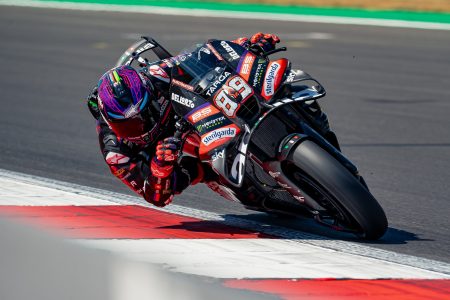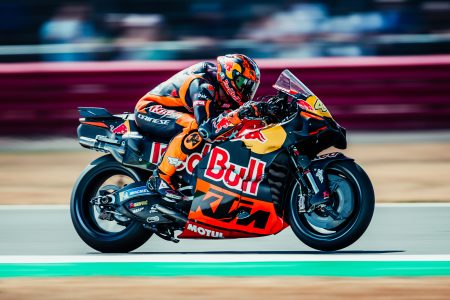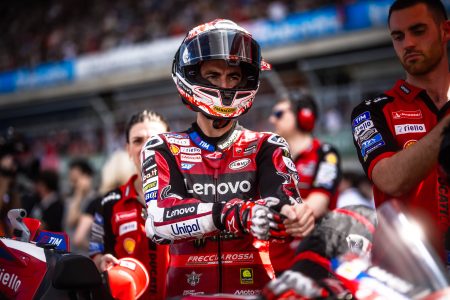
- Ai Ogura has collected 157 points since Jerez, with Marc Marquez close behind on 145
- Over the past four race weekends, Marquez scored 119 points, more than any other rider
- Marquez has lived in Madrid since his injury, citing the medical resources available there
Eight races from Jerez to the Sachsenring lie behind MotoGP, followed by a summer break in which plenty is being reshuffled. A look at the numbers – and at what Marc Marquez has said in recent days – shows who has gathered the most points in this stretch, who has lost ground, and why a move within Spain of all things plays a role in the title fight.
Who Has Scored the Most Points Since the European Opener?
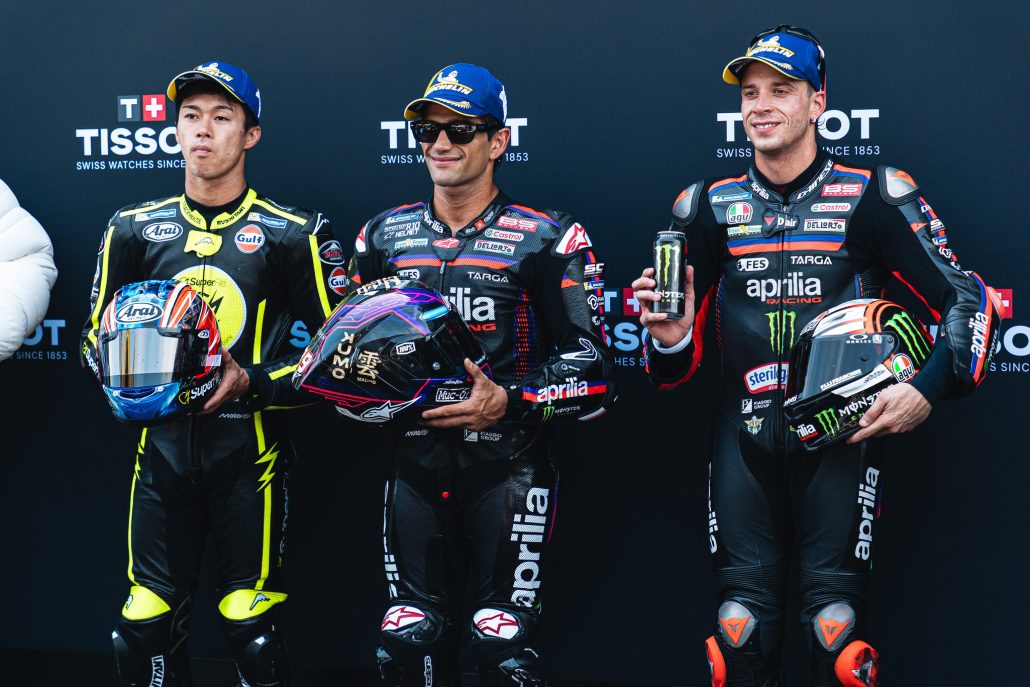
Ai Ogura has scored the most points since the Spanish Grand Prix in Jerez. The Trackhouse rider tallied 157 points across the eight European races, an average of 19.6 points per race weekend.
That makes the Japanese rider the most successful points scorer in the entire field over this stretch. In the overall standings he has moved up to second place, trailing only his Aprilia teammate Jorge Martin. Ogura had already shown strong form in the early overseas races, benefiting from the progress made with the Aprilia RS-GP. While other Aprilia riders suffered repeated setbacks over the course of the season, last year’s rookie impressed above all with his consistency.
The standings since Jerez at a glance:
- Ai Ogura, 157 points
- Marc Marquez, 145 points
- Fabio Di Giannantonio, 134 points
- Jorge Martin, 131 points
- Raul Fernandez, 119 points
- Francesco Bagnaia, 118 points
- Marco Bezzecchi, 105 points
- Pedro Acosta, 88 points
Combined with his well-known strength in the second half of races, Ogura has established himself as a serious title contender. Whether he can withstand the pressure of his second MotoGP season in the long run will only become clear in the coming months.
How Strong Has Marc Marquez Been Since His Comeback?
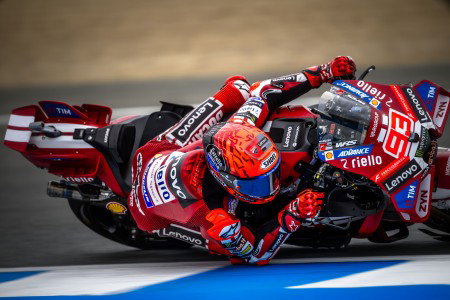
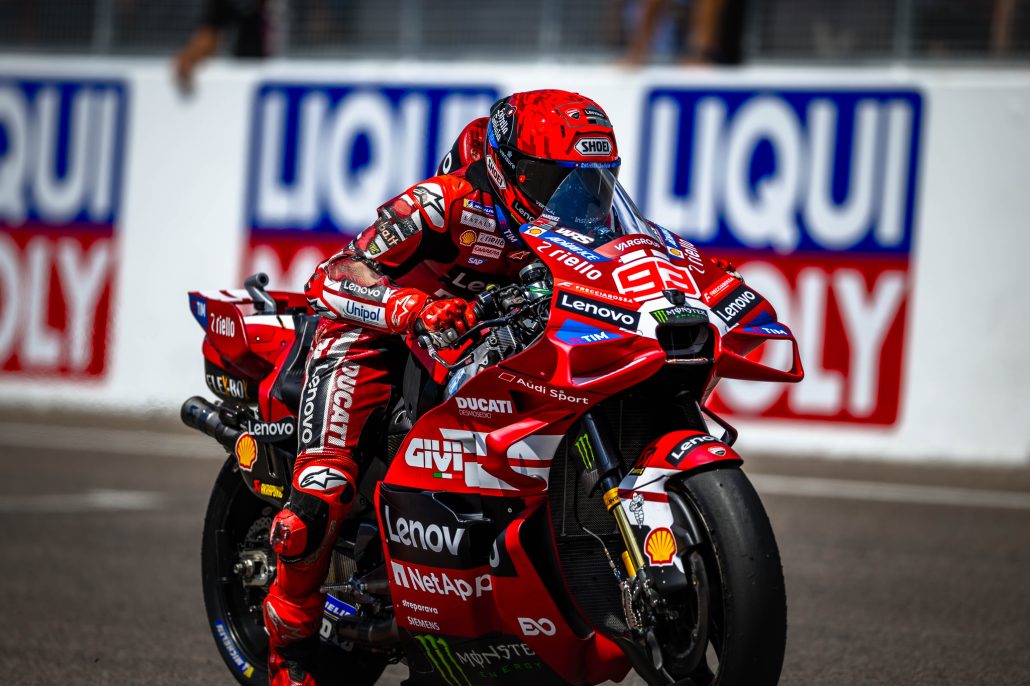
Since his comeback, Marc Marquez has been the benchmark in the field. Over the past four race weekends he collected 119 points, clearly more than any other rider.
His record is all the more remarkable because the Ducati factory rider missed the Sunday race in Le Mans and the entire Barcelona weekend following surgery. It was only after his return in Mugello that he rediscovered the form that had eluded him since his crash in Indonesia last October. Since then he has won three of the last four Grands Prix. In the first three race weekends of the season he had managed only 45 points; since the European start, 145 more have followed.
The standings for the past four race weekends:
- Marc Marquez, 119 points
- Ai Ogura, 102 points
- Raul Fernandez, 72 points
- Francesco Bagnaia, 61 points
- Jorge Martin, 52 points
- Fabio Di Giannantonio, 50 points
- Pedro Acosta, 45 points
- Enea Bastianini, 37 points
- Luca Marini, 33 points
- Alex Marquez, 20 points
- Marco Bezzecchi, 13 points
Who Has Lost Ground in Europe?
Marco Bezzecchi experienced the sharpest decline. The Italian collected 105 points since Jerez and celebrated a commanding Grand Prix win in Mugello, but then came away empty-handed on four consecutive race Sundays.
Only a handful of decent sprint results kept June and July from being a complete blank for him. In total, only 13 points were added during this period.
Others also fell short of their potential. Raul Fernandez and Francesco Bagnaia are separated by just a single point in the European standings, 119 to 118. Fernandez was sidelined at times by health issues, while Bagnaia repeatedly struggled with technical problems that cost him points. Fabio Di Giannantonio, by contrast, confirmed his strong form. The VR46 rider scored 134 points since Jerez, won in Catalonia, and suffered a setback only at the Sachsenring. Jorge Martin did take over the championship lead in summer, but his season has been up and down so far. Outstanding results have repeatedly been followed by difficult weekends, and at times heavy crashes have also set him back physically.
Why Does Marc Marquez Live in Spain and Not in Andorra?
Marc Marquez has stayed in Spain for almost his entire career, while many of his compatriots have moved to Andorra. He explains this by saying he wants to live wherever he sees the best conditions for his performance on the track.
There are several reasons riders move to the principality. The mountainous terrain is well suited to altitude training, while also allowing for a relatively secluded lifestyle. On top of that, Andorra is a low-tax country, an argument that draws many Formula 1 drivers to Monaco.
Marquez does not see the tax aspect as decisive for himself, since by his own account he earns enough even while paying taxes. Asked about Andorra on the sidelines of the German Grand Prix, he replied: “I understand the people that want to move, they are free to move.” He continued: “But just in my personal opinion, I feel free if I’m living where I want.”
In a television interview in January he revealed that he had indeed tried it. He has known Andorra since he was 15 years old, since his hometown of Cervera lies about an hour from the border. He used to drive there with his parents to go shopping, spent weekends in the country and raced there. At 22, in 2015, he bought a house as a second home, partly to store his ski equipment. What was meant to be more than just one winter came about especially because many riders were making that move at the time and the tax burden is considerably lower there. After two months in a row he abandoned the attempt and settled on Spain. According to his own account, he has paid his taxes in Spain throughout his entire sporting career, though he still owns the house in Andorra. He is explicit that he does not intend to send a message with this – he delivers his messages on the motorcycle.
What the Move to Madrid Has to Do With His Form
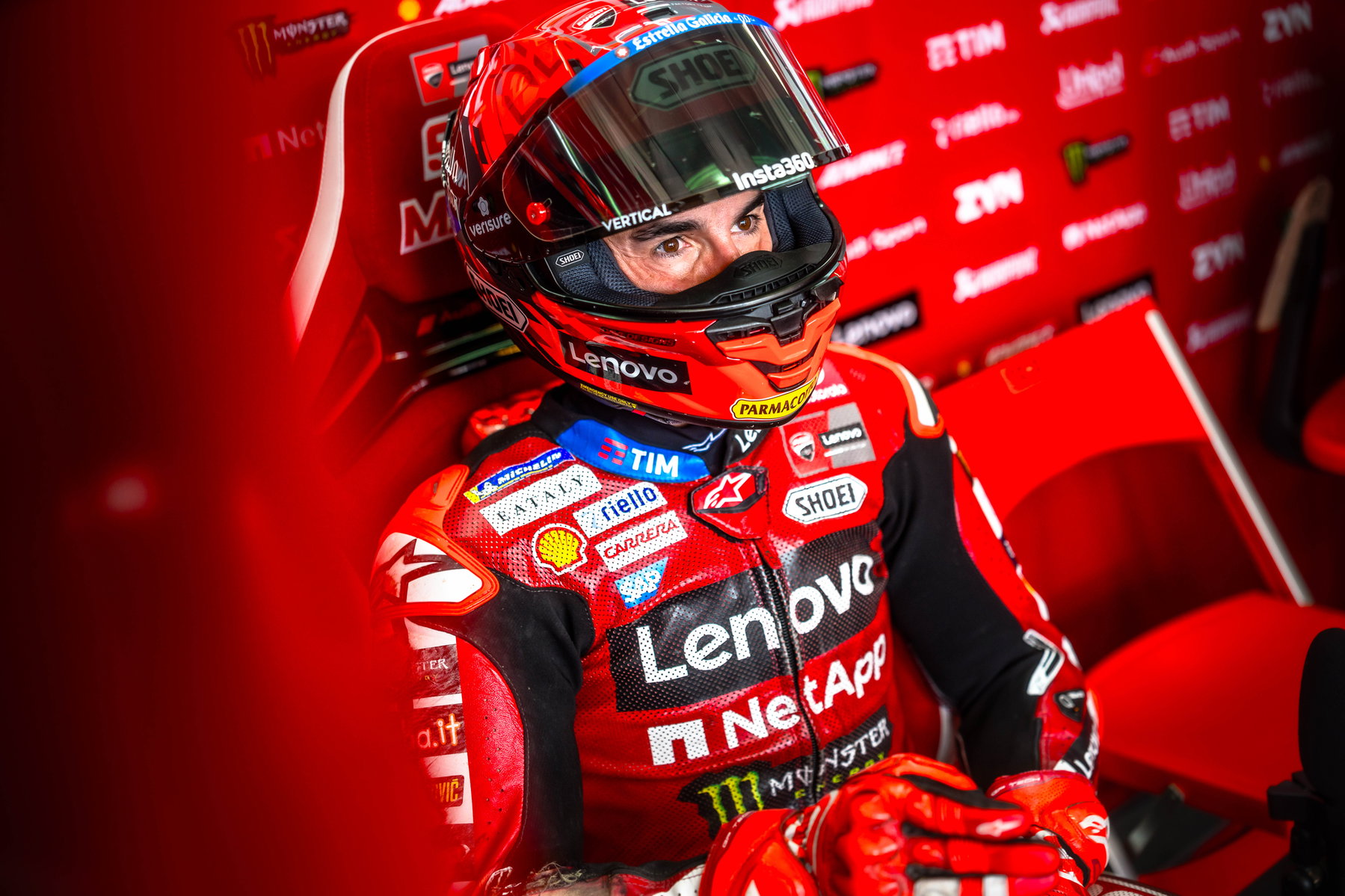
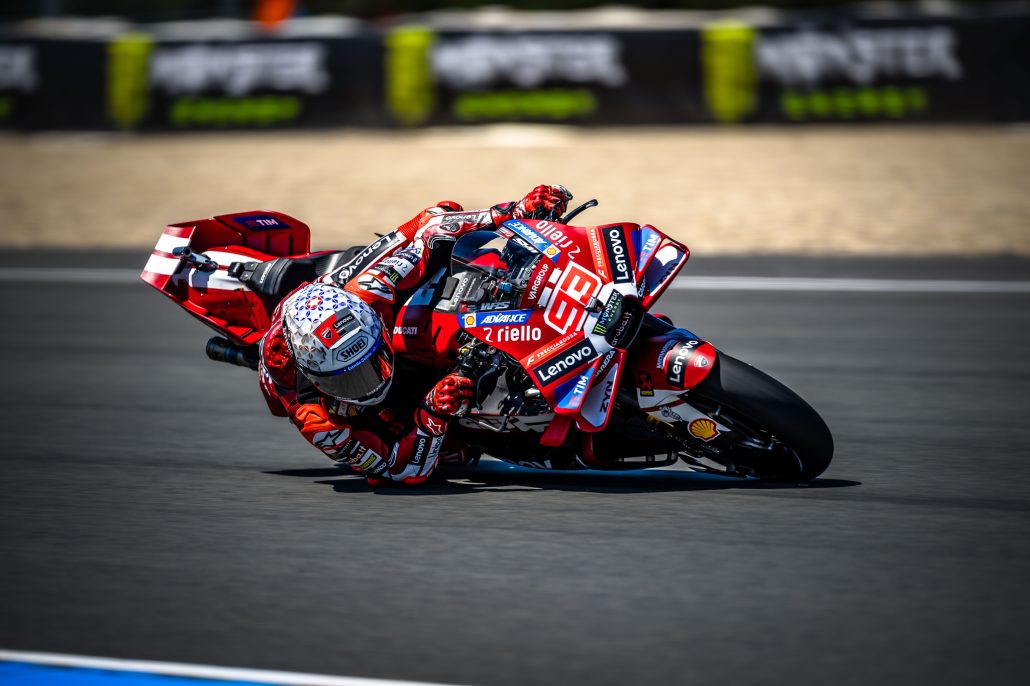
The real reason behind his choice of residence lies in medical care. Marquez used to live in Cervera because it allowed him to relax and he needed neither physiotherapists nor special equipment. That has changed since his injury.
“Now, since the injury, I need special machines, I need physios, I need different kind of training, and then I move to Madrid because I found there a good team and a good center.”
Against the backdrop of the surgery that cost him Le Mans and Barcelona, this decision takes on sporting significance in the 2026 title fight. His points tally since Mugello shows how quickly he found his way back to his previous level after the procedure.
Why Does Marquez Miss the MotoGP Bikes From 2014 to 2016?
As a rider, Marquez regards 2014 to 2016 as the finest phase of his MotoGP career. The reason is the absence of the aerodynamics found on every prototype today.
The premier class machines are faster than ever. Aerodynamics, ride-height systems that alter the chassis height, and constant technical development have fundamentally changed the riding style. For Marquez, the class has lost part of its original character as a result. Today’s motorcycles are, he says, very nice to ride, but correspond more to a “robot style”, as he describes it in a video interview. You have to follow what the aerodynamics dictate.
Specifically, he means that a modern bike can no longer be overridden. Anyone who tries anyway works against the aerodynamics and becomes slower. In the years 2014 to 2016, exactly the opposite was true. Whoever overrode the motorcycle back then was faster. There were slides, the front wheel would slip, and it was an era of many saves, where a crash is caught at the very last moment. Marquez names the downforce of today’s machines – the aerodynamically generated contact pressure – as the decisive difference. That pressure acts on the tire. Once the motorcycle starts sliding, grip can no longer be rebuilt.
It is important to him to clarify that this is not about the manufacturer. During that period he rode for Honda, today he rides for Ducati. He stresses that he enjoyed the riding style of those bikes more, not one brand over the other.
What Changes With the 2027 Regulations
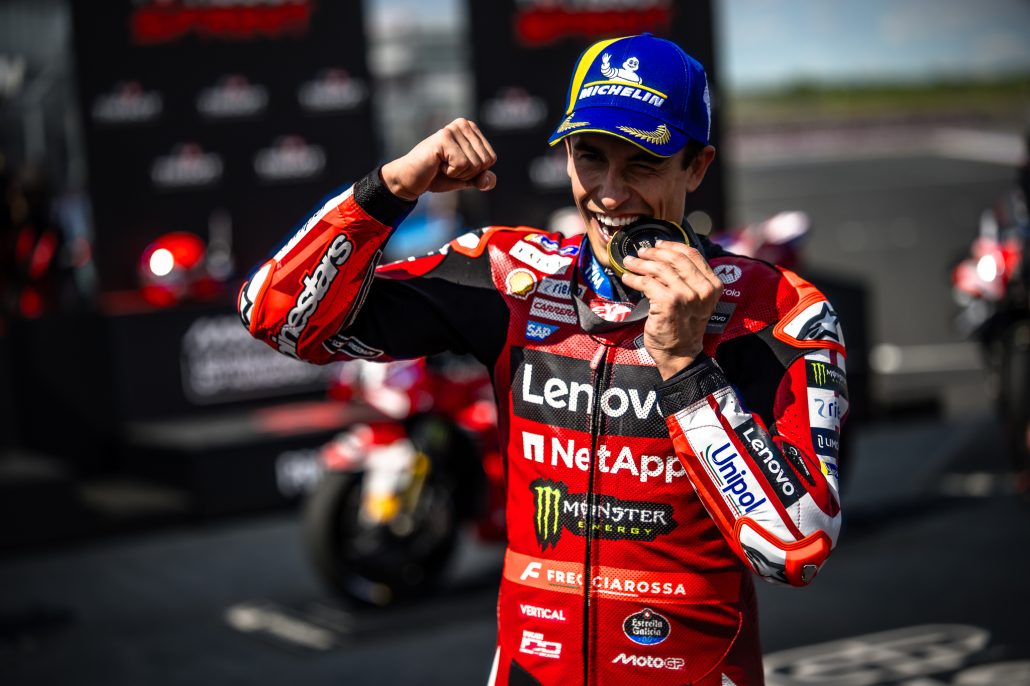
From 2027, MotoGP will switch to 850cc engines, while aerodynamics will be significantly restricted. The new technical regulations are intended to reduce the influence of aerodynamics and give riders more opportunity to make the difference on track themselves.
Marquez’s comments are likely to catch the attention of many fans of the earlier premier class. Anyone who remembers the bikes without pronounced aero elements will find in his description exactly the arguments used to justify the rule change.
What Happens After the Summer Break?
After the summer break, four more European races are on the calendar in August and September. MotoGP then travels to a series of five overseas events in the Asia-Pacific region.
The season concludes in late November in Portugal and Valencia. Until then, the question of how the balance of power between Aprilia and Ducati continues to develop also remains open. Aprilia set the tone at the start of the season, while Ducati fought its way back over the course of the European races. Since then the roles have switched several times, with one or the other Italian manufacturer holding the advantage depending on the track characteristics.
Frequently Asked Questions
-
How many points has Marc Marquez scored since Jerez?
Marc Marquez has collected 145 points since the European season opener in Jerez. That puts him second in this special standings behind Ai Ogura. In the first three race weekends of the season he had managed only 45 points.
-
Who is the most successful points scorer of the European races?
Ai Ogura leads this standings with 157 points from eight races. That equates to an average of 19.6 points per race weekend. As a result, he is second in the overall championship standings behind Jorge Martin.
-
Why did Marc Marquez move to Madrid?
The decisive factor was the medical resources available in the Spanish capital. Since his injury, he has needed physiotherapists, special equipment, and a modified training regimen. In Madrid, he says, he found a suitable team and a suitable center.
-
Which MotoGP bikes does Marc Marquez prefer?
As a rider, he enjoyed the motorcycles from 2014 to 2016 the most, because they still did without today’s aerodynamics. Back then, the bikes could be overridden, which gained time. Today, that riding style works against the downforce and costs lap time.
-
How many races remain in 2026?
After the summer break, four European races follow in August and September. Five overseas events in the Asia-Pacific region are next. The season finale takes place in late November in Portugal and Valencia.
➜ This article is part of our comprehensive overview: 2026 MotoGP Season: The Complete Overview – Teams, Riders, Calendar & Championship Standings. Find all key information on this topic in one place.