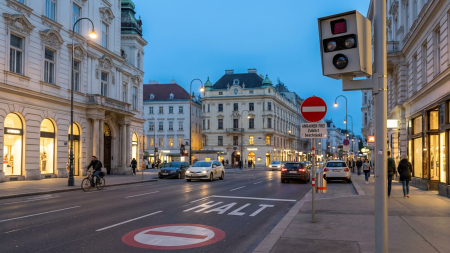
- In future, whoever is already on the roundabout should always have right of way, even without a sign
- On multi-lane roundabouts, the exit you take should determine whether you ride on the inside or outside lane
- The old law still applies for now; the package is due to come into force on 1 January 2028 at the earliest
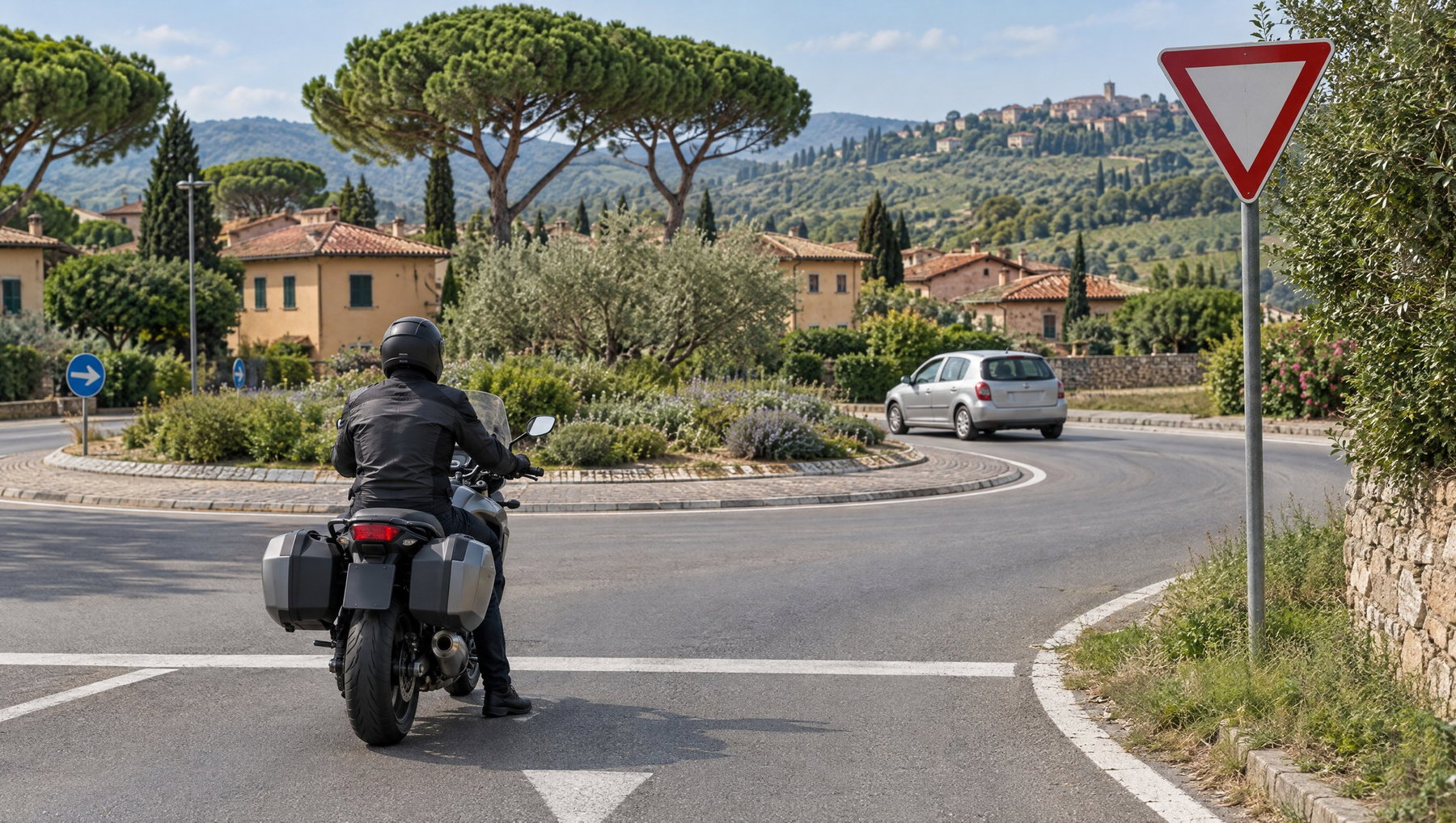
Anyone riding a motorcycle to Italy will come across countless roundabouts. At most of them, the red-and-white triangle “Dare precedenza”, meaning “Give way”, stands before the entry, and everything works as you would expect: whoever enters waits. What matters, however, is this sign and not the round shape of the junction. If it is missing, has been knocked over or is barely recognisable, current law says priority to the right applies. In that case, the person already on the roundabout may have to brake. The government in Rome wants to close this gap with the new Codice della Strada, the Italian highway code. Incidentally, the situation is not entirely unknown in Germany either.
Who has right of way at a roundabout in Italy today?
Today, the signage at the entry alone decides. If it says “Dare precedenza”, traffic on the roundabout has priority; if there is no regulation at all, priority to the right applies under Article 145 of the Italian highway code.
The reason lies in a gap in the law. The Codice della Strada dates from 1992 and still contains no specific provision for roundabouts. Legally, a roundabout therefore counts as an ordinary junction, and for those Article 145 paragraph 2 applies: whoever comes from the right has right of way, unless signs say otherwise.
A simple example shows what this means on a roundabout. A motorcycle is waiting at the entry while a car approaches on the circulating carriageway. From the rider’s point of view, the car is coming from the left; from the driver’s point of view, the motorcycle is coming from the right. Without a sign, the car on the roundabout would therefore have to brake and let the motorcycle in.
The fact that this hardly ever happens in everyday life is down to paragraph 4 of the same article. It allows the responsible authority to order a different right of way, provided it is indicated by signs. Municipalities make use of this at most roundabouts: with the triangle before the entry and often also with a give-way line on the tarmac.
Does traffic on the roundabout always have right of way in Germany?
No, in Germany too this only applies with the appropriate signage. A standard roundabout is signposted with sign 205 “Give way” and, below it, sign 215 “Roundabout”; vehicles on the roundabout then have right of way and whoever enters must wait.
That is the norm in Germany. But there are exceptions. If sign 205 is missing, the junction is legally not a roundabout but merely a so-called circular junction. Priority to the right applies there, just as at an ordinary junction without signs. Anyone entering such a roundabout in Germany may therefore also have right of way over traffic already on it.
So today the two countries hardly differ on this point: in both, right of way depends on the sign, and without a sign priority to the right applies. There is one difference when it comes to indicating: at a German roundabout with signs 205 and 215, you do not indicate when entering, but you do when exiting.
What does the new highway code change at roundabouts?
In future, anyone entering a roundabout should always give way to vehicles already on it. This is to apply even where there is no sign, as long as no other signage stipulates otherwise.
Italy would thereby turn the so-called French solution, which is already widespread thanks to the signs, into a fixed basic rule. For everyday riding at most roundabouts, little will change as a result. The new rule becomes important where there is uncertainty today: at roundabouts without a triangle, with faded markings or with signs missing after an accident or a storm. It is precisely such cases that have so far led to disputes over who is to blame in an accident.
The comparison with Germany is interesting. If the reform goes ahead as planned, Italy would treat an unsigned roundabout differently from Germany. There, a roundabout without sign 205 remains a circular junction with priority to the right. In Italy, on the other hand, traffic on the roundabout would have right of way even without a sign.
The roundabout rule is just one building block of the reform, with which Italy is reorganising its entire traffic law.
When will the new roundabout rule apply in Italy?
Not yet. The Council of Ministers provisionally approved the draft on 13 October 2026; according to the current plan, the new highway code is due to come into force on 1 January 2028.
The text has been before parliament since 14 October. The relevant committees of the Chamber of Deputies and the Senate are to deliver their opinions by mid-January 2027. The draft then goes back to the Council of Ministers for final approval. Only after publication in the official journal, the Gazzetta Ufficiale, will the rules come into force. The basis is a law of 25 November 2024, with which parliament instructed the government to reorganise traffic law.
Until then, the wording may still change. Anyone travelling in Italy today should continue to follow the signs and markings on site.
What rules will apply on multi-lane roundabouts in future?
On multi-lane roundabouts, the desired exit is to determine where you ride. Anyone taking the first exit stays on the outside. Anyone going straight on, turning left or going all the way round moves to the inside lane.
The obligation to use the inside lane is to apply even when the roundabout is completely empty. No such requirement exists at present. It is intended to sort vehicles before they even enter, so that no one has to cut across the lanes on the roundabout any more.
There is a clear order for getting out. Anyone moving from the inside to the outside lane to exit must give priority to vehicles already on the outside. They must signal the lane change in good time with their indicator. However, the indicator only shows what someone intends to do. It does not give a right to change lanes ahead of others. A rider on the outside lane would therefore have priority over a car wanting to move across from the inside, even if it is indicating.
What does a right-of-way offence at a roundabout cost in Italy?
For failing to give way, Article 145 currently provides for fines of 167 to 665 euros (around 185 to 737 US dollars). On top of that, 5 points are deducted from the driving licence account.
Anyone who commits the same offence at least twice within two years also loses their licence for one to three months. These penalties are also to apply to breaches of the new roundabout rule. Whether the amounts will remain the same in the final text is not yet certain.
Regardless of the reform, it is worth taking a close look at the “Dare precedenza” sign. It does not require you to stop at every entry. If the roundabout is clear, you may roll in slowly. You only have to stop if you would otherwise force a vehicle on the roundabout to brake or swerve. Conversely: anyone who has right of way should not force it. If the other road user keeps going, waiting is the safer option.
After an accident, more counts than just the question of who was on the roundabout and who was not. Signs, riding lines, the position of the vehicles, speed and the behaviour of both drivers are examined. Even someone who had right of way can be found partly to blame if they could have prevented the accident.
Frequently Asked Questions
-
Who has right of way at a roundabout in Italy?
Today it depends on the signage. If the “Dare precedenza” sign stands before the entry, traffic on the roundabout has right of way. If it is missing, priority to the right applies, and the vehicle entering may then have priority.
-
Does priority to the right apply at roundabouts in Italy?
Yes, but only if no signs regulate right of way differently. Because the Codice della Strada has no specific rules for roundabouts, they legally count as ordinary junctions. Most roundabouts, however, have a “Give way” sign.
-
Are there roundabouts with priority to the right in Germany too?
Yes. If sign 205 “Give way” is missing, a roundabout is legally not a roundabout but a circular junction. Priority to the right applies there, as at an ordinary junction.
-
When will the new roundabout rule come into force in Italy?
There is no fixed date yet. The draft first has to pass through parliament and then be given final approval by the Council of Ministers. According to the current plan, the new highway code is to apply from 1 January 2028.