- The StVG amendment takes effect on July 1, 2026.
- Anyone commercially involved in points trading risks a fine of up to 30,000 euros.
- The statute of limitations increases from three to six months, and the digital driving license is set to launch in 2026.
The amended Road Traffic Act 2026 bundles several changes that will noticeably alter German traffic law in the coming months. The basis is the so-called Fifth Act Amending the Road Traffic Act and Other Road Traffic Regulations, which the Bundestag passed on March 26, 2026. It affects all motor vehicle drivers equally, including motorcyclists, and ranges from a new fine offense against points trading to the legal basis for scan vehicles to the introduction of the digital driving license. The changes are part of a whole series of traffic law amendments taking effect in 2026.
What changes to the Road Traffic Act on July 1?
On July 1, 2026, four central changes take effect: the ban on points trading, the legal basis for largely automated parking enforcement, an extended statute of limitations, and the foundation for the digital driving license. The measures pursue different goals, from protection against authority deception to more efficient parking controls to the digitization of documents. According to the federal government, the amendment is accompanied by the ambition to reduce bureaucracy and contribute to road safety.
Why is points trading now being banned?
Points trading is being banned because in the future, even the deception of an authority about the actual driver in a traffic violation, as well as the commercial offering of such services, will be penalized. Until now, there was a gap in the law. Behind the term lies the practice of naming another person as the driver for offenses carrying penalty points, sometimes for payment, to shield the actually responsible person from consequences.
With the new fine offense, the legislator aims to prevent investigations into traffic violations from coming to nothing. Violations can be punished with a fine of up to 30,000 euros. The ADAC had, by its own account, advocated for closing this gap for many years and considers the step a contribution to greater road safety. Federal Transport Minister Patrick Schnieder had also announced his intention to take action against this form of penalty evasion.
Does points trading still have a loophole?
According to experts, an open question remains because the new regulation explicitly only covers commercial offers. At the public hearing of the Transport Committee on February 23, 2026, a representative of the German Police Union generally welcomed the aim to prevent points trading. At the same time, he pointed out that many points transfers take place within families or among friends and acquaintances, thus falling outside the scope of commercial activity. Whether the regulation adequately covers these cases will likely only become clear in practice.
What are scan cars and how does digital parking enforcement work?
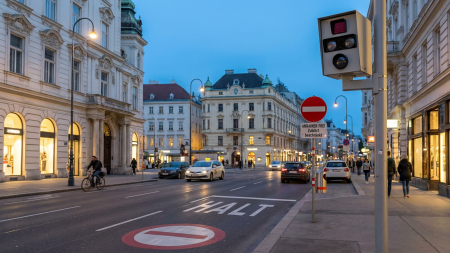
Scan cars are vehicles that automatically compare license plates while driving past, thereby detecting parking violations. The amendment creates for the first time a legal basis for this largely automated monitoring of stationary traffic. Both unauthorized parkers who park without appropriate permission and illegal parkers in no-parking zones are to be detected.
The ADAC takes a cautious view of the technology: scan cars could support municipalities in penalizing parking violations but are not a comprehensive solution and do not eliminate the fundamental parking problem. Whether and to what extent the technology proves effective remains to be seen, according to the club. At the hearing, a representative of the Auto Club Europa pointed out that search-for-parking traffic in city centers can account for up to 30 percent of traffic and that better parking enforcement could therefore also serve road safety. In parallel, the law creates a basis for the Federal Motor Transport Authority to provide information from its databases using the vehicle identification number.
Statute of limitations increases from three to six months
The statute of limitations for traffic administrative offenses is being extended from three to six months. Concretely, this means that drivers must expect a fine proceeding for significantly longer after a violation than before. Anyone who has been caught by a speed camera, for example, can in the future receive a notice over a longer period before the offense becomes time-barred.
When will the digital driving license arrive?
The digital driving license is expected to be available via a smartphone app during the course of 2026, once the technical prerequisites are met. The classic card-format driving license remains fully valid and will not be replaced for the time being. The new law creates the legal basis for the digital driving license as a supplementary electronic document to the card license.
A precursor already exists: with the i-Kfz app developed by the Federal Motor Transport Authority, the vehicle registration document can already be carried digitally since last year, according to the Transport Ministry. For registration, however, an identity card with activated online function is currently required, and not every smartphone is supported. The President of the Federal Motor Transport Authority, Richard Damm, described the digital driving license regulation as essential for digitization at the hearing. In the medium term, the solution is also intended to facilitate the use of rental car and car-sharing services and to integrate into a planned digital wallet that, according to Digital Minister Karsten Wildberger, is to launch on January 2, 2027.
How did the new law come about?
The law went through a multi-stage parliamentary process. The government bill was first debated in the Bundestag on January 16, 2026, followed by a public hearing in the Transport Committee on February 23, 2026, where the proposal was largely met with approval by experts. On March 26, 2026, the Bundestag finally passed the law in a version amended by the Transport Committee, with the votes of CDU/CSU, SPD, and Alliance 90/The Greens, against the votes of the AfD, and with the Left Party abstaining. During the deliberations, the group of those eligible for resident parking permits was more precisely defined, so that, for example, tradespeople or ambulatory care services with special parking needs can also be covered.
➜ This article is part of our comprehensive overview: Motorcycle Law & Policy: Legislation, Court Rulings and Developments for Riders. Find all key information on this topic in one place.
Frequently Asked Questions
-
What changes in the Road Traffic Act 2026?
The Road Traffic Act 2026 introduces four central changes: a ban on points trading, the basis for scan vehicles for parking enforcement, a longer statute of limitations, and the introduction of the digital driving license. The changes take effect on July 1, 2026.
-
How high is the fine for points trading?
Points trading can be punished with a fine of up to 30,000 euros. Penalized are the deception of an authority about the actual driver and the commercial offering of such services.
-
What are scan cars?
Scan cars are vehicles that automatically compare license plates while driving past, thereby detecting parking violations. They are intended to identify both unauthorized parkers without permits and illegal parkers in no-parking zones.
-
When will the digital driving license arrive?
The digital driving license is expected to be available via a smartphone app in 2026, once the technical prerequisites are met. The existing card-format driving license remains fully valid.
-
When does the new Road Traffic Act 2026 take effect?
The update to the Road Traffic Act takes effect on July 1, 2026. The underlying law was already passed in the Bundestag on March 26, 2026.