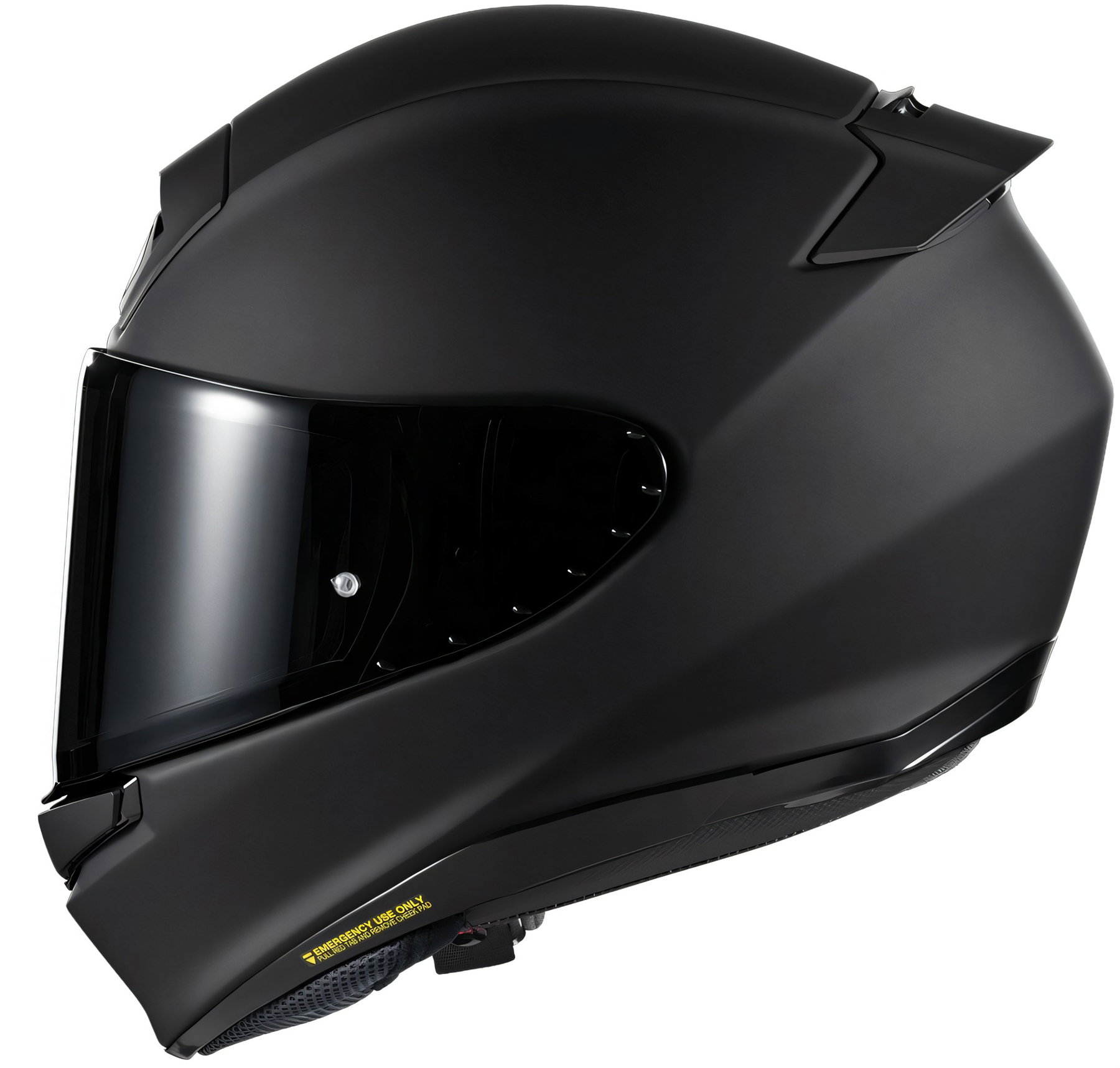
- New AIM+ shell, according to Shoei around 1.9 times more airflow at the top intake and about 40 percent more at the chin
- 13 percent less lift and 3 percent less drag than its predecessor
- From 499 euros (approx. 557 US dollars) in Italy, in the USA as the RF-1500 from 699.99 US dollars (approx. 627 euros)
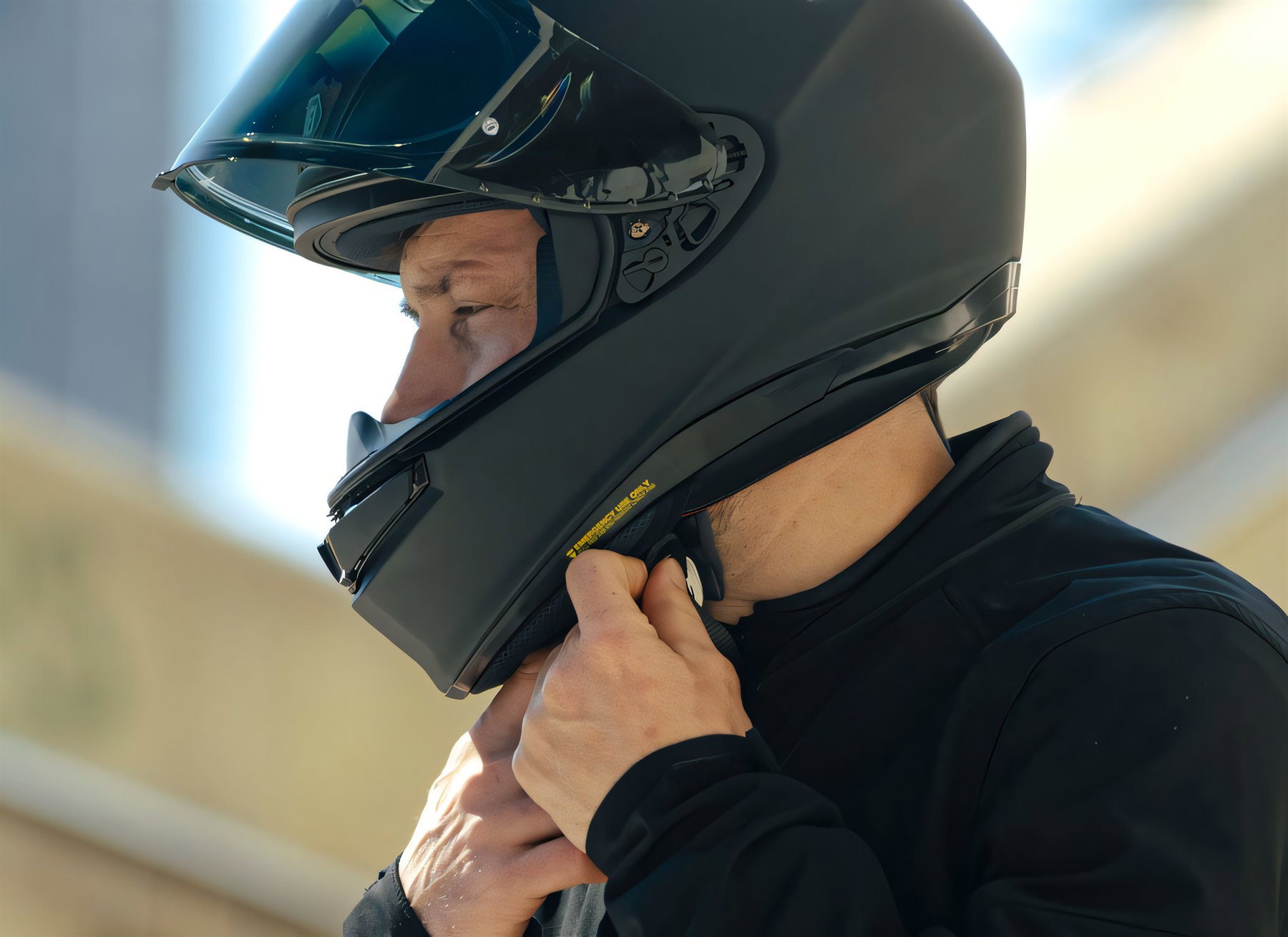
The NXR 3 replaces the NXR 2 and is meant to improve above all in ventilation, wind noise and visor operation. At the same time, the shell construction changes. The Japanese manufacturer first presented the helmet at home as the Z-9, while in Europe it carries the name NXR 3. In parallel, US importer Helmet House has presented the RF-1500, for which Shoei lists the same improvements. That makes it easy to put the first riding impressions from America into context, even though certification and sizes differ from market to market.
What is new on the Shoei NXR 3?
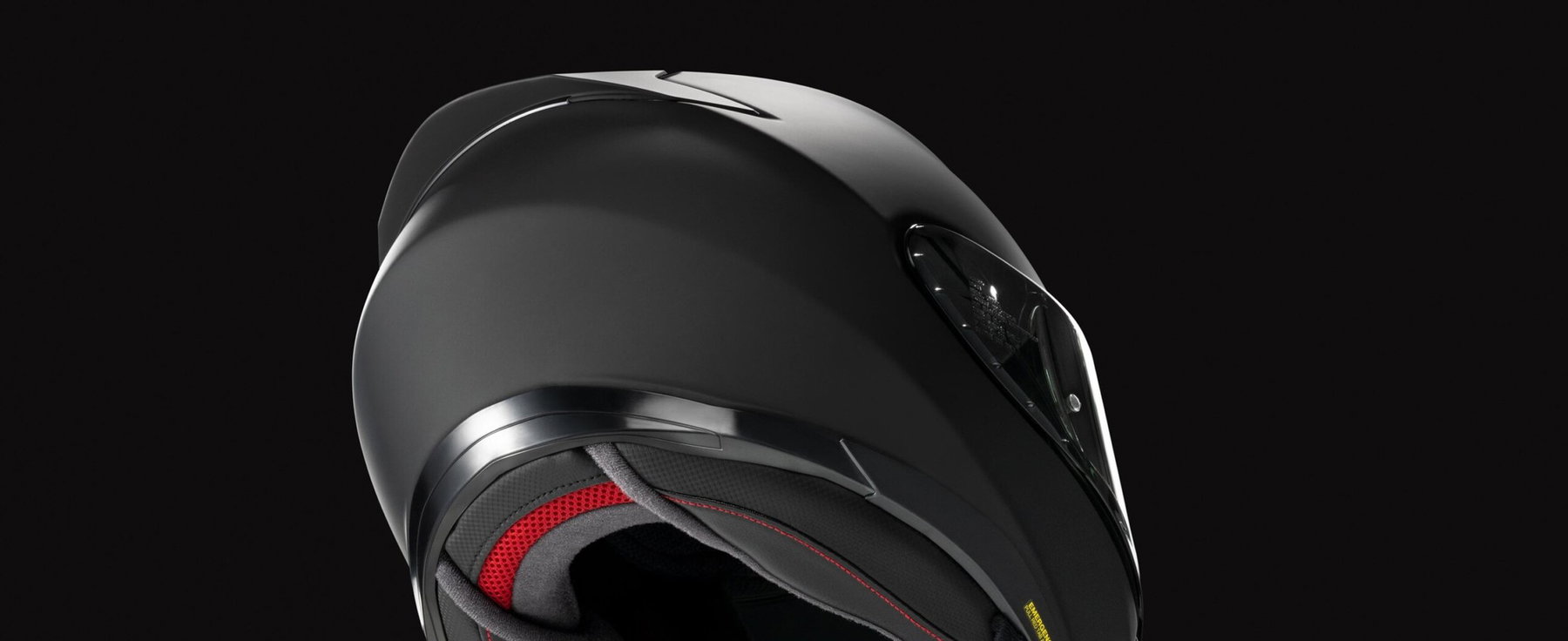
The NXR 3 gets a completely redesigned AIM+ shell, a reworked ventilation system and a revised visor system. On top of that come new liners and preparation for communication systems.
AIM+ stands for Advanced Integrated Matrix Plus. It refers to a composite of fiberglass and organic fibers. For the US version, Shoei describes six layers: fiberglass on the outside and inside, with several layers of high-strength and reinforced organic fibers in between. According to the manufacturer, the shell is thicker than on the predecessor. The EPS has also been changed in key areas. EPS is the foam inside the helmet that absorbs energy in an impact. On the new helmet it consists of several parts with different densities.
Visually, the ribs stand out, running from the intakes along the sides to the spoiler at the back of the head. At the lower edge, Shoei does away with the previous parting line in the shell. This is meant to keep the shape more compact and make the chin bar stiffer. According to Shoei, the NXR 3 is the lightest full-face helmet among the brand’s ECE 22.06 certified models. The manufacturer has not yet given a weight for the European version. For the RF-1500, Shoei quotes 1,655 grams (3.65 lbs) in size M, while a size L example weighed 1,750 grams (3.86 lbs) in testing. That makes the US helmet slightly heavier than the RF-1400. Shoei attributes this to the thicker shell and the multi-piece EPS, which are meant to meet its own safety requirements.
Is the Shoei RF-1500 the same helmet as the NXR 3?
The technical specifications largely match. For the RF-1500 in the USA, Shoei quotes exactly the same ventilation and aerodynamic figures as in Japan for the Z-9, which is sold in Europe as the NXR 3. Graphics such as Diggia Echo, Kaboom and Burnside also appear in both ranges.
There are differences in certification and shell sizes. The RF-1500 is certified to Snell M2025D and the US DOT standard. Snell is a private testing foundation with its own tests. The RF-1500 is built in seven sizes from XS to 3XL on six outer shells, with only XS and S sharing a shell. The European NXR 3 has ECE 22.06 certification and comes with five outer shells for sizes XXS to XXXL.
The RF series has a long tradition in the USA. It began in 1984 with the RF-101. It was later followed by the RF-1000 in 2004, the RF-1100 in 2010, the RF-1200 in 2014 and the RF-1400 in 2021. The RF-1500 replaces the RF-1400 after around five years.
How much more air does the new ventilation deliver?
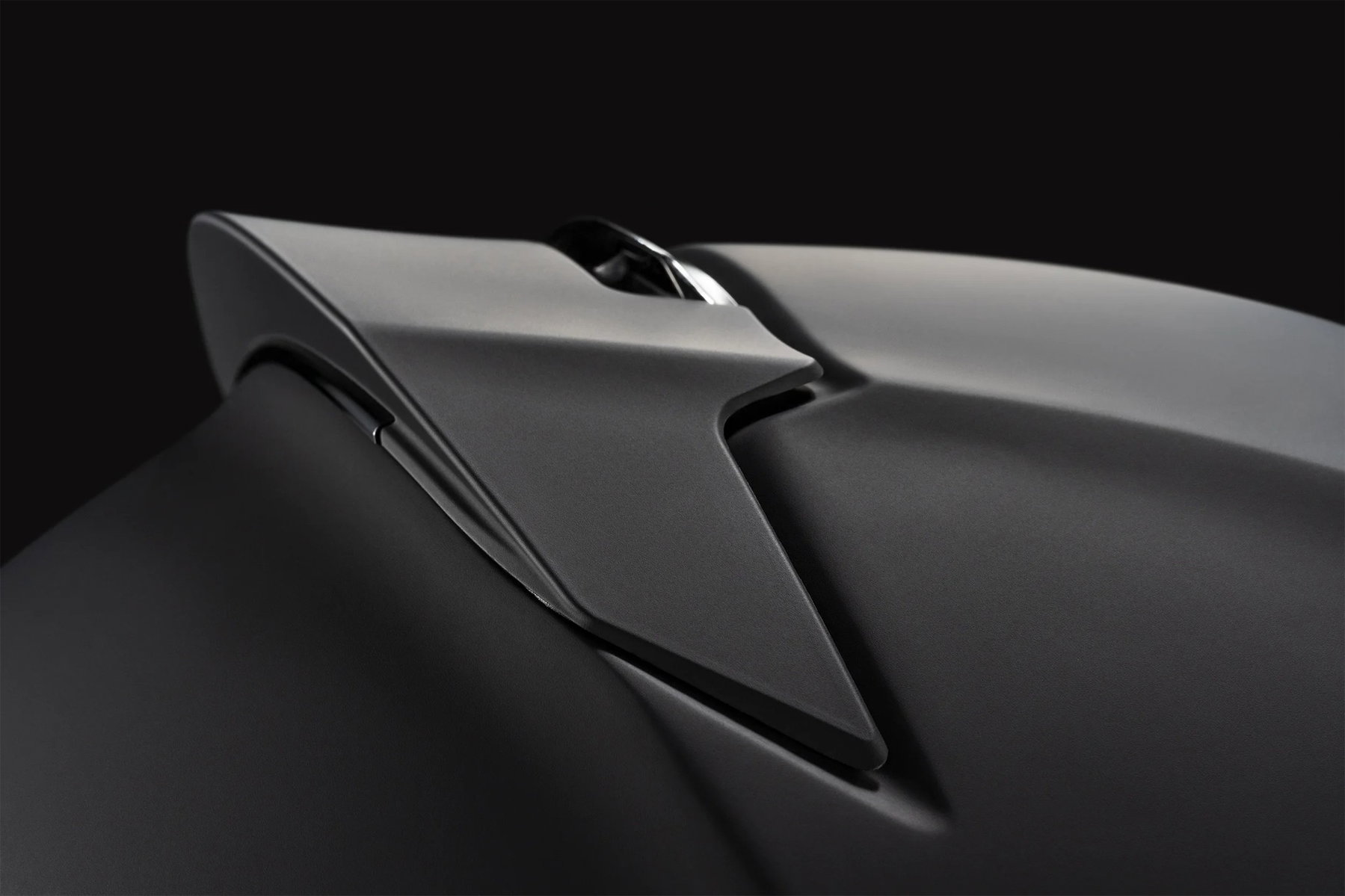
At the top intake, the new helmet is said to let through around 1.9 times as much air as its predecessor, and around 40 percent more at the lower intakes. These figures come from Shoei’s wind tunnel.
The four openings on the forehead now sit closer to the center and are combined in a single component. The shutter for them is larger and integrated with the Shoei logo so that it can be operated even with thick gloves. The two additional side openings that the RF-1400 still had are gone. At the chin there are two redesigned intakes with flaps that tilt open from the top instead of sliding sideways. Shoei Japan sees this as a nod to older Z models from the Z-III to the Z-6. In total, Shoei Europe counts six intakes at the forehead and chin and four exhausts at the back of the head. The exhaust in the spoiler cannot be closed.
Ultimate Motorcycling has already tested the RF-1500 on the road. The testers noticed that the forehead intake, positioned far forward and slightly lower, ventilates noticeably more strongly than on many other helmets. Opening and closing the chin flaps on the highway created a slight additional noise. Another test from the USA criticized that the top shutter has no clear detents and is hard to locate with gloves.
How quiet is the Shoei NXR 3?
Shoei says it has specifically reduced wind noise. In the wind tunnel at a speed equivalent to 100 km/h, the new helmet is said to let through less noise than its predecessor, especially at low frequencies.
Several details contribute to this. Small vortex generators sit on the visor. These are edges that deliberately swirl the air so that fewer turbulences develop at the side of the visor near the ears. Shoei tried out different shapes, numbers and spacings in its own wind tunnel. Ear pads are meant to dampen sound, and the perforated plates behind them are designed to reduce echoes inside the helmet, even when the pads are removed.
Aerodynamics also play a role: according to Shoei, lift drops by about 13 percent and drag by around 3 percent. In tests on naked bikes, there was neither buffeting nor noticeable lift. Behind large vehicles in turbulent air the head moved slightly, while in clean airflow at highway speed the helmet stayed calm. In terms of noise level, the testers rate the RF-1500 at least on par with the RF-1400. Earplugs still make sense.
Visor and interior in detail
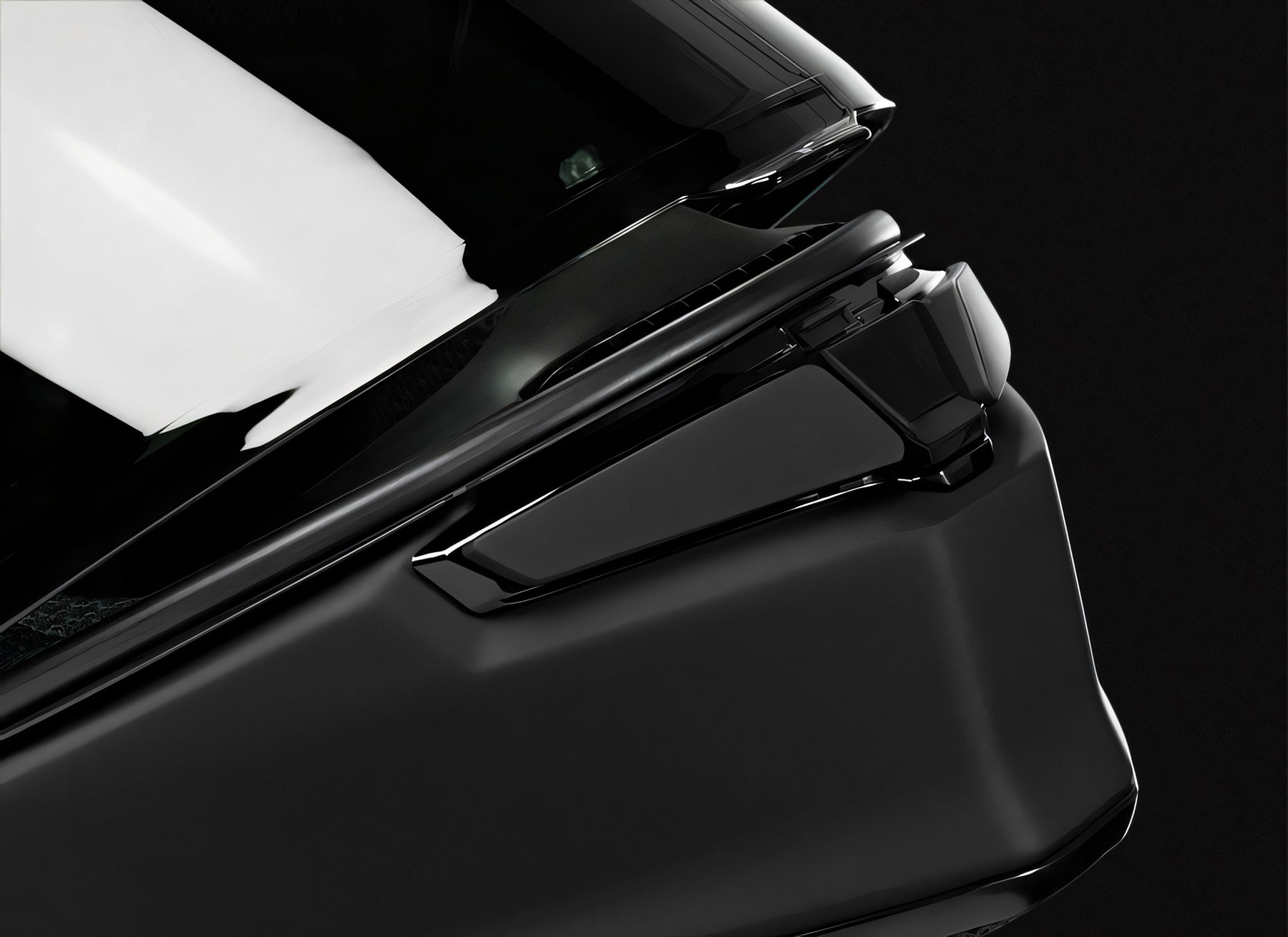
For the visor, Shoei continues to rely on the CWR-F2, which is also used on the X-Fifteen. New is a larger locking button in the center. A central lock is meant to prevent the visor from twisting when opened and to press it more evenly against the seal. A small lever at the visor base allows the seal to be readjusted, according to Shoei Japan by around one millimeter per side, should a gap develop over time.
An additional position holds the visor open by a crack. This is meant to help against fogging at low speeds and let in more air. In one of the US tests, the visor stayed open in this position even at high speed. A Pinlock EVO insert is included. Pinlock is a second lens inside the visor that prevents fogging like double glazing. Its retaining pins sit further out, so the fog-free area covers almost the entire field of view. As accessories, Shoei Europe lists tinted and mirrored visors, a self-tinting Transitions visor and variants of the CWR-F2R, among others. Shoei also lists the electronically tinting e:DRYLENS as an option.
Inside there is a removable and washable liner with a 3D center pad. Shoei Europe offers cheek pads in 31, 35, 39 and 43 millimeters thickness. Dealers with the Shoei Personal Fitting System can customize the center pad after measuring the head. The chin strap still closes with a double D-ring. For emergencies, the E.Q.R.S. is on board, an emergency system that allows rescuers to quickly pull out the cheek pads and remove the helmet more gently.
Both US testers praise the fit without pressure points. In one of the tests, the RF-1500 was easier to put on than the RF-1400 because the opening at the bottom is less tight. The channels for glasses arms were also generous.
Can a communication system be installed?
Yes, the NXR 3 is prepared for it. Inside the helmet there are recesses for speakers, a cable routing and a spot for the microphone.
In Japan there is an optional Comlink adapter for the Z-9, made of three clip-on parts. In sizes XS to XXL it accommodates the Sena SRL3, while earlier Sena systems such as the SRL, SRL2 and SRL-Mesh do not fit. The Sena SRL3 and SRL3 Plus can also be installed in the European NXR 3 via Comlink and matching accessories. In the USA, a dedicated communication system for the RF-1500 is set to follow in early 2027. Shoei hints that it will again be developed with Sena and clip directly onto the shell via an adapter. The RF-1500 does not have an external mount for the device, as found on the Neotec 3 or GT-Air 3.
How much does the Shoei NXR 3 cost?
In Italy, the NXR 3 starts at 499 euros (approx. 557 US dollars). No official price for Germany has been announced yet.
In the UK, the solid-color version costs 449.99 pounds (approx. 539 euros / 602 US dollars). Graphics cost 539.99 pounds (approx. 647 euros / 723 US dollars), and the Diggia Echo replica 589.99 pounds (approx. 707 euros / 790 US dollars). In the USA, the RF-1500 costs 699.99 US dollars (approx. 627 euros) in solid colors, 799.99 US dollars (approx. 717 euros) with graphics and 849.99 US dollars (approx. 761 euros) as a replica. Shoei Europe offers a five-year warranty.
In Japan, Shoei announced the helmet as the Z-9 for September 2026. Shoei UK listed the NXR 3 as coming soon in early November.
Which colors and graphics are available for the NXR 3?
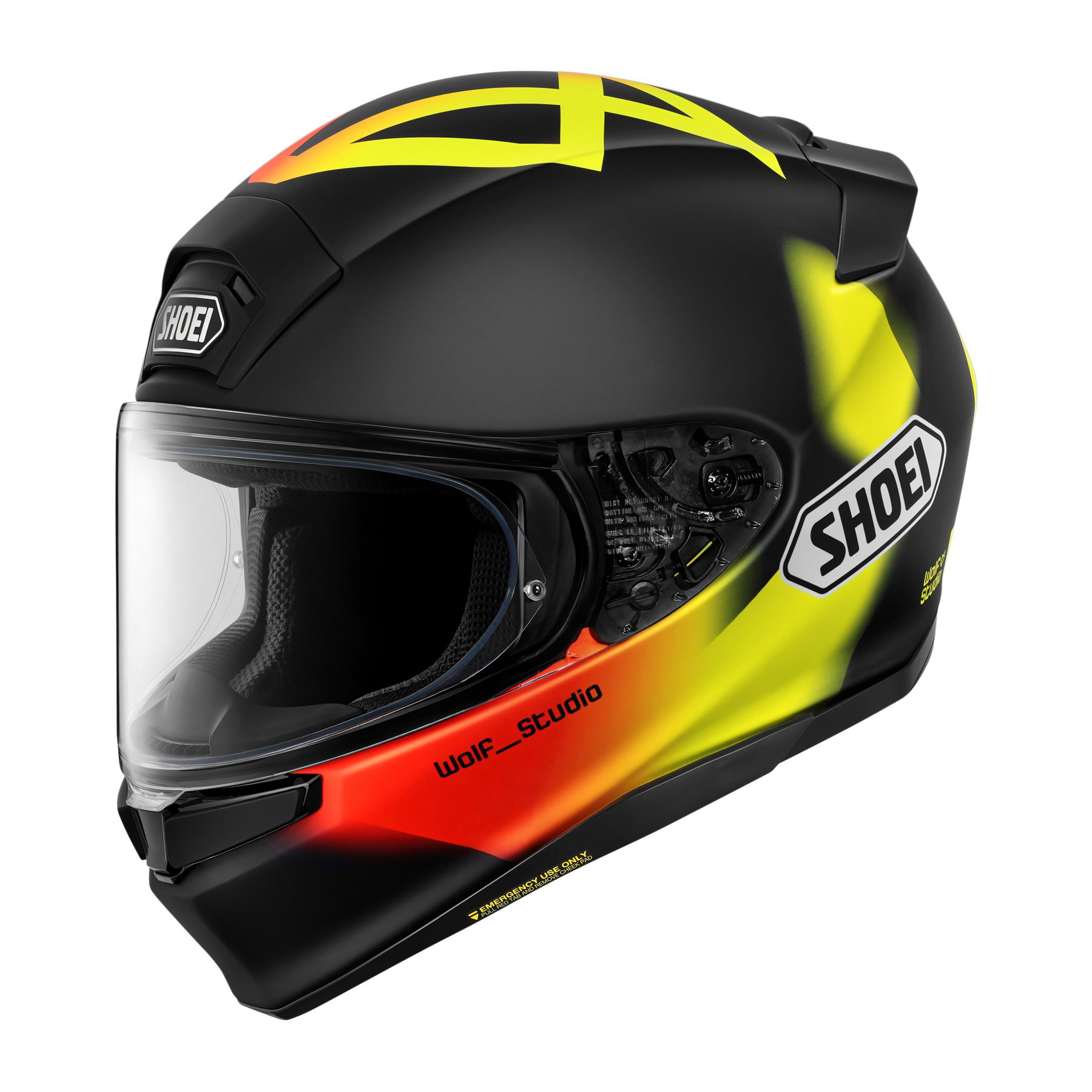
Shoei Europe offers the NXR 3 in seven solid colors and several graphics. The solid colors include White, Black, Matt Black, Basalt Grey, Chalk Grey, Matt Radiant Blue and Shine Red.
Among the graphics, two designs with a MotoGP connection stand out: Marquez BCN Streets in the TC-1 color scheme and Diggia Echo as a replica of Fabio Di Giannantonio in TC-3. They are joined by Burnside in several color variants, Kaboom, Lean Angle, Cloud Stream and Ronin’s Rest. In the USA there is an additional graphic called Dedicated 3. Like all Shoei models, the helmet is handmade in Japan. According to the manufacturer, 65 employees work on each helmet in 26 steps, with five layers of paint and eleven inspections.
This makes the NXR 3 one of the helmet highlights of EICMA 2026 in Milan, where plenty of new gear is on display alongside the 2027 motorcycles.
Frequently Asked Questions
-
How much does the Shoei NXR 3 cost?
In Italy, the NXR 3 starts at 499 euros (approx. 557 US dollars). In the UK, prices start at 449.99 pounds (approx. 539 euros / 602 US dollars), while replicas cost 589.99 pounds. No official price for Germany has been announced yet.
-
What is the difference between the Shoei NXR 3 and the RF-1500?
Shoei quotes the same ventilation and aerodynamic figures for both helmets. The RF-1500 for the USA is certified to Snell M2025D and DOT and has six outer shells. The European NXR 3 has ECE 22.06 certification and five outer shells.
-
How heavy is the Shoei NXR 3?
Shoei has not yet published a weight for the European version. According to the manufacturer, the RF-1500 for the USA weighs 1,655 grams (3.65 lbs) in size M. According to Shoei, the NXR 3 is the brand’s lightest ECE 22.06 certified full-face helmet.
-
Does a Sena communication system fit the NXR 3?
Yes, the helmet has recesses for speakers, microphone and cables. The Sena SRL3 can be fitted via the Comlink system, while earlier systems such as the SRL, SRL2 and SRL-Mesh do not fit according to Shoei Japan.