- Traffic psychologist Patrick Grieser is calling for a ban on uploading speeding videos to social media.
- Four people died on the B500 in 2026 up to the end of September, and a package of measures is due to take effect by the 2027 season.
- Grieser considers a permanent licence revocation with an MPU assessment more effective than fines, signs or speed limits.
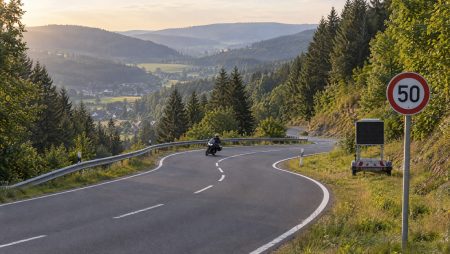
The Black Forest High Road and the routes around Baden-Baden are among the best-known motorcycle areas in south-west Germany. In 2026, however, they have mainly made headlines because of serious crashes. Authorities, districts and towns have therefore agreed on a whole bundle of countermeasures. Traffic psychologist Patrick Grieser doubts whether these measures will reach the riders they are really aimed at. In an interview with the Badische Neueste Nachrichten, he explains why structural changes and penalties only have a limited effect. He talks about the role videos on the internet play and what, in his view, really makes a difference. Grieser works with people whose fitness to drive has been called into question by the licensing authority on grounds of character.
Why should speeding videos no longer be allowed online?
Grieser sees speeding videos as a kind of template that leads young riders in particular, who lack experience, to copy what they see. He believes the influence of social media is far too strong. In his opinion, uploading such clips should be banned altogether.
He describes a mechanism made up of two parts. Anyone who admires a fast rider online gradually adopts that rider’s behaviour. At the same time, they play down their own riding because they are still slower than their role model. Grieser sums up this attitude in the interview like this: “Well, I’m not riding as fast as that YouTuber.” Combined with the habituation effect, where one’s own speed starts to feel normal over time, he considers this very dangerous.
He is not alone in his concern. Manfred Wirsch, president of the German Road Safety Council (DVR), warned back in early 2026 that such clips make speeding look harmless or even cool, encouraging young people to drive more riskily. At the time, however, the discussion was about car drivers on the Autobahn.
How many motorcyclists have died in the northern Black Forest in 2026?
On the B500 alone, four people lost their lives in 2026 up to the end of September. Across the entire area covered by the Offenburg police headquarters, 33 people died in road traffic up to the end of August, including 12 motorcyclists.
This means the number of road deaths after just eight months was already higher than for the whole of the previous year, which saw 28 fatalities. One of the most serious crashes happened on 30 August near Bühl, when two motorcyclists collided on the Black Forest High Road. An 18-year-old female rider and a 41-year-old male rider were killed. Police name excessive speed as the most common cause of crashes on the route. There were also two fatal crashes on the L76b near Gernsbach. There, the Rastatt district plans to respond between Reichental and Kaltenbronn with speed limits, new road markings and crash barriers with underride protection.
What measures are planned for the B500 from 2027?
At a round table on 22 September, authorities and local councils agreed on a joint package that is to be implemented by the start of the 2027 motorcycle season. The B500 will serve as a pilot route.
The meeting was attended by the regional councils of Freiburg and Karlsruhe, the Ortenau district, the Rastatt district, the towns of Baden-Baden, Bühl, Achern and Gaggenau, and the police. The agreed measures include:
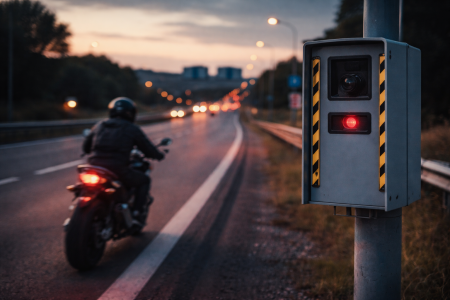
- more checks using unmarked vehicles and drones
- tougher action against offences, up to and including the confiscation of motorcycles
- an assessment of rumble strips and special markings in corners
- an assessment of one-way rules on particularly accident-prone sections
- logbook requirements if a rider cannot be identified after an offence
- more public awareness campaigns
Whatever works on the B500 is later to be transferred to other routes as well. At the next meeting on 17 November, those involved want to decide on the next steps. As early as the beginning of September, the Offenburg police headquarters had announced significantly more checks at weekends on the B500 and other popular motorcycle routes.
Do rumble strips and checks stop risk-taking motorcyclists?
Only partly, says Grieser. Sensible structural changes do initially reduce the risk of crashes. However, general warnings often fail to reach riders who are particularly willing to take risks.
He also warns against too many signs. A habituation effect sets in, and the effect can even turn into the opposite. When it comes to checks, what matters in his view is how likely a rider thinks it is that they will be caught. If that risk is close to zero, checks are no deterrent. Anyone who wants to achieve something with checks has to carry them out consistently and frequently, so that riders actually expect them. Even then, neither checks nor high penalties change behaviour on their own. In the end, according to Grieser, it is a question of attitude.
What drives motorcyclists to ride riskily?
Grieser sees the core of the problem in the strong emotions involved in motorcycling. Freedom, riding pleasure and mastering the machine are nothing bad in his eyes. It becomes dangerous when the joy of riding turns into a search for ever greater challenges.
Experts call this “sensation seeking”, the urge to experience ever stronger stimuli and to top the last experience. Some riders also overestimate their own abilities. Anyone who has already mastered many difficult situations quickly feels safer than they really are. In this mindset, crashes only ever happen to others. That is why, in Grieser’s experience, even reports of fatal crashes hardly act as a deterrent.
What role does the group play at biker meeting points?
Groups can create pressure, but they can also slow things down. If everyone else is riding fast, nobody wants to fall behind. If high speed is seen as a sign of skill within the group, real pressure builds up. However, Grieser warns against demonising groups across the board. If many experienced and defensive riders are part of it, the group can also have a positive effect. There are several well-known meeting points of the scene in the northern Black Forest.
Do older motorcyclists ride more carefully?
The willingness to take risks does indeed decrease with age. Grieser attributes this to greater life and riding experience, but also to slower reactions that older riders adjust to. In his practice, he sees former keen motorcyclists eventually switching to a trike because it gives them more control.
When do speeders really change their behaviour?
Usually only when the licence is gone for good and an MPU is on the cards. In Grieser’s experience, it is only this turning point that makes many of those affected seriously reflect on themselves.
A temporary riding ban, on the other hand, barely registers with many. Grieser describes how some simply schedule it for their summer holiday, when they would not be riding anyway. He observes a similar attitude with fines: anyone who has to pay tends to see themselves as simply unlucky. No notorious speeder comes to his practice voluntarily. But if the driving licence is lost permanently, those affected lose their sense of freedom, speed and mobility. Then they have to work on themselves and try out new behaviours. According to Grieser’s approach, the first step is to find out what drives someone: the thrill, recognition within the group or a feeling of control. Only then is it possible to work on questioning one’s own thought patterns.
Grieser considers the MPU, the German medical-psychological assessment, to be very effective. According to him, studies put the reoffending rate at five to seven per cent. That matches his experience in practice, where he only sees a few people again.
Call for a power limit and fitness test for young riders
In Grieser’s view, young people get access to powerful vehicles too quickly. He considers little experience, lots of power, overconfidence and social media a dangerous mix.
He therefore supports a power restriction during the probationary period. He could also imagine a mandatory talk with a traffic psychologist before someone is allowed to ride a powerful motorcycle. This would clarify why someone wants this vehicle and whether they will handle it responsibly. Grieser is convinced that a mandatory psychological fitness test would significantly reduce the number of fatal crashes.
Are there already penalties for speeding videos in Europe?
A ban like the one Grieser is calling for has already been proposed in Belgium. In March 2023, the then mobility minister Georges Gilkinet announced a bill intended to penalise the glorification of speeding and dangerous driving on social media.
Anyone sharing images or videos showing themselves or others driving at greatly excessive speed or endangering others would face a fine of up to 1,000 euros (around 1,119 US dollars) and a driving ban of one to twelve months. This was also meant to cover aggressive driving, ignoring right of way, constant lane changes and drink-driving. It was not supposed to matter whether a video was only intended for a small circle, because such content spreads quickly online. No fixed speed threshold was planned, as speed can hardly be determined accurately from images. Whether the proposal has since become law has not been confirmed.
Frequently Asked Questions
-
Why is a traffic psychologist calling for a ban on speeding videos?
Patrick Grieser sees speeding videos as a role model that leads young and inexperienced riders in particular to copy them. Anyone who admires such clips adopts the behaviour and plays down their own risk. In his view, such videos should therefore no longer be allowed to be uploaded at all.
-
How many people died on the B500 in 2026?
Up to the end of September 2026, four people lost their lives on the B500. On 30 August, an 18-year-old female rider and a 41-year-old male rider were killed in a collision near Bühl.
-
What measures are coming to the B500 in 2027?
Planned measures include more checks with unmarked vehicles and drones, tougher action up to the confiscation of motorcycles, and logbook requirements. Rumble strips, corner markings and one-way rules are also being assessed. The package is to be implemented by the start of the 2027 season.
-
How effective is the MPU for speeders?
Traffic psychologist Patrick Grieser considers the MPU very effective. According to him, studies put the reoffending rate at five to seven per cent. In his view, temporary riding bans or fines, by contrast, have little effect.