- Munich Administrative Court admits the lawsuit filed by Germany’s Federal Association of Motorcyclists against the Sudelfeld road closure
- Hearing expected in late summer or autumn 2026, possibly held directly on the B307
- The trial period of the measure ends on October 31, 2026
In the dispute over the motorcycle road closure at the Sudelfeld, an important procedural hurdle has been cleared. Munich Administrative Court has admitted the lawsuit against the one-way road closure for motorcycles, despite the responsible district authority having applied for its dismissal. The Munich judges will now examine the substance of whether the closure of the federal highway popular with motorcyclists is lawful. A decision is not expected before late summer.
What has Munich Administrative Court decided on the Sudelfeld closure?
Munich Administrative Court has admitted the lawsuit against the closure and will rule on its legality. Previously, the Rosenheim district authority had filed a five-page response requesting the court to dismiss the case, citing several reasons why it considered the lawsuit inadmissible. The court did not follow this line of argument and allowed the proceedings to go ahead. The decision on the closure now rests with the Munich judges.
Behind the lawsuit is the Federal Association of Motorcyclists (BVDM), which is supporting the case of an affected motorcyclist. The outcome, however, is far from predetermined, as the verdict will largely depend on the arguments presented during the hearing.
Why does the court want to visit the road in person?
The court is considering visiting the location before making its decision and potentially holding the oral hearing directly at the road. “Both are likely to take place in late summer or autumn,” a court spokeswoman explained.
This means the hearing would fall toward the end of the motorcycle season and coincide with the expiry of the two-year trial period on October 31, 2026. What happens afterward remains open. The court’s ruling is likely to be decisive for the future of the regulation.
How has the BVDM reacted to the admitted lawsuit?
The BVDM views the admission of the lawsuit positively. “The BVDM welcomes the decision of Munich Administrative Court,” said chairman Michael Lenzen. The association expressly welcomed the court’s intention to visit the site in person. Lenzen declined to comment specifically on the chances of success. “We have already won quite a few cases,” he noted, but added: “You can never predict how it will turn out.” His conclusion: “We hope that the court will follow our arguments this time as well.”
The association had hoped the matter would have been resolved by the start of the season. Lenzen pointed out that court dates are scarce and the courts are overloaded, which they have to accept. The BVDM is currently not considering another demonstration like last year’s: “We have made our statement and will wait to see what the court says.” At the same time, he emphasized that the association does see the problem but demands different measures: “We see the problem, but we demand different measures.”
In a public statement, the association described the judicial review as a signal that blanket road closures can be challenged. The BVDM also combined the announcement with an appeal for support, pointing to the costs of such legal proceedings. With an annual membership fee of 48 euros, new members can help fund the legal and political advocacy.
What is the Sudelfeld motorcycle closure about?
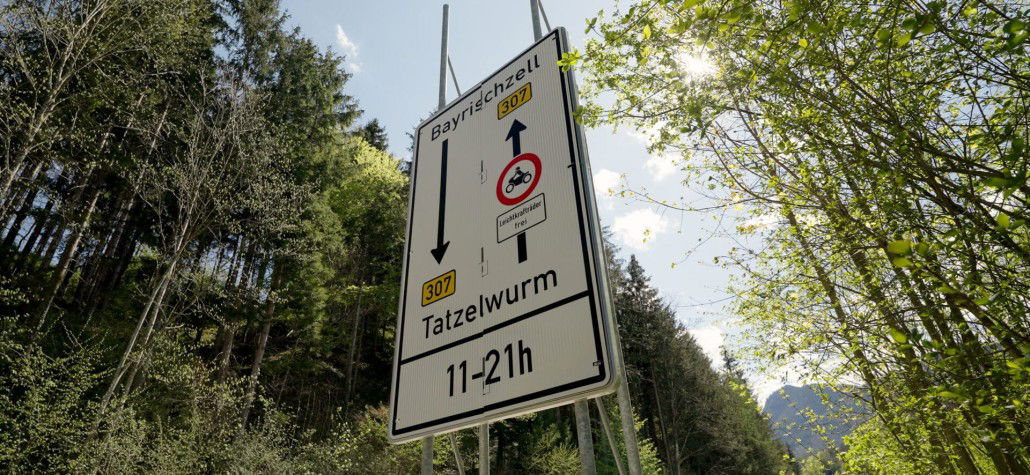
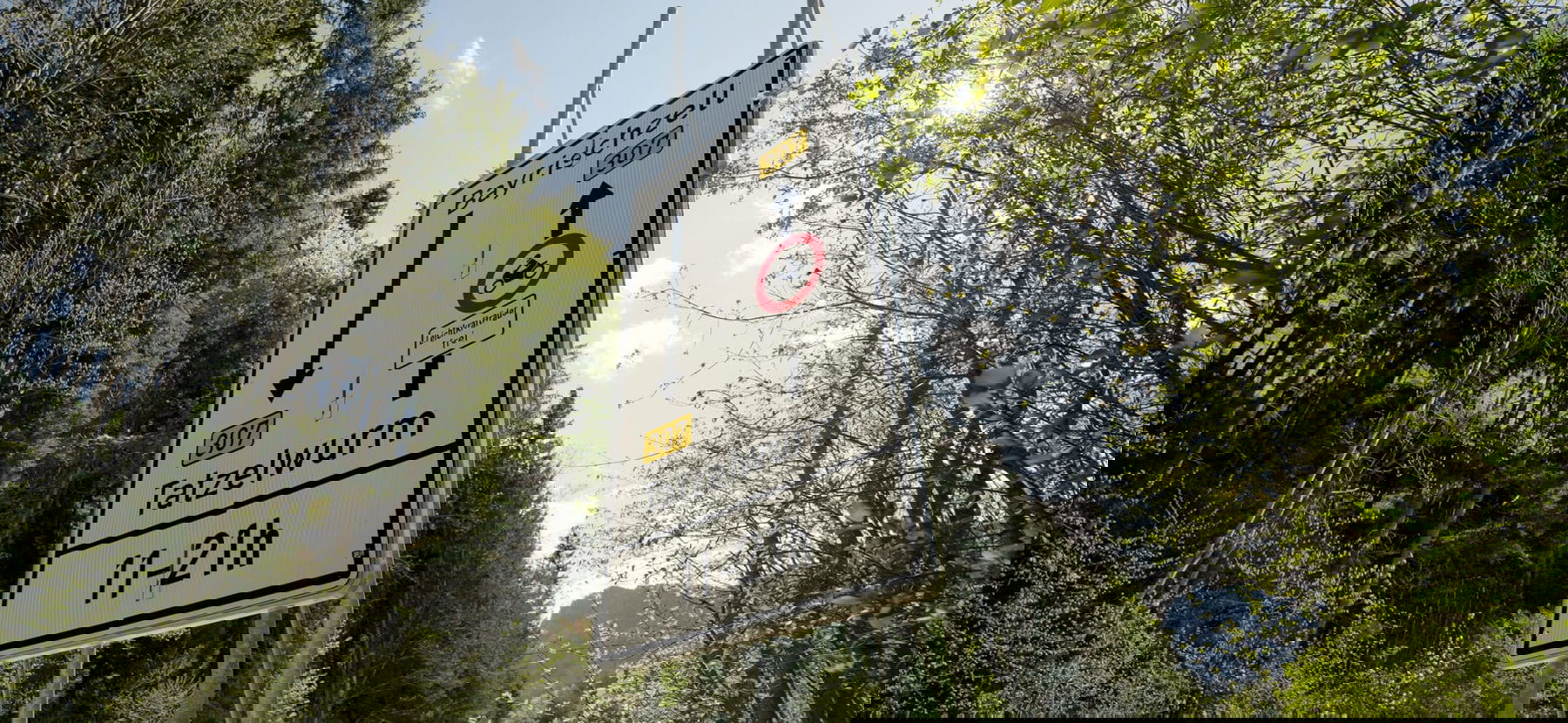
Since April 30, 2025, a one-way closure for motorcycles has been in effect on the B307 at the Sudelfeld. The affected section is the winding stretch of the Sudelfeld road between the Inn Valley and Bayrischzell. During the summer season, motorcycles may only ride the section in the direction of Tatzelwurm between 11 am and 9 pm; the opposite direction toward Bayrischzell is closed during these hours. Mopeds, small motorcycles, and light motorcycles are exempt.
The measure is designed as a two-season traffic experiment and is administered by the district authorities of Rosenheim and Miesbach. After the first phase in 2025, the regulation runs again in 2026 until October 31. The authorities justify the closure with the accident situation and the use of the road for leisure and racing purposes. Previously, structural and traffic-regulatory measures had already been implemented, including underride guards, double center lines, road studs, rumble strips, speed limits, overtaking bans, and increased enforcement.
According to official figures, 97 motorcycle accidents were registered on the stretch between 2018 and 2024, in which two people died. 40 people were seriously injured and 58 sustained minor injuries. The worsening of the situation in recent years is partly attributed to a shift in traffic after the closure of the Kesselberg pass. In the first year of the measure, the closure led to a decline in serious accidents involving motorcyclists, according to police. The case is part of a series of similar road closures for motorcycles that the BVDM systematically challenges.
How did the lawsuit and the demonstration come about?
The lawsuit against the closure was filed at Munich Administrative Court in mid-August 2025 and was initially directed against the Rosenheim district authority. It was submitted by an affected motorcyclist with support from the BVDM. The association had requested access to the files as part of the proceedings in order to review the traffic counts and analyses underlying the closure.
In parallel with the legal action, the BVDM had called for a demonstration in Rosenheim on September 20, 2025. Approximately 1,500 to 2,000 motorcyclists took part. At the rally outside the district authority, Rosenheim’s district administrator Otto Lederer (CSU) faced the criticism. The demonstrators described the closure as an unjustified collective punishment and demanded targeted measures against individual offenders rather than blanket bans. Lederer defended the approach on safety grounds and pointed to reduced accident figures since the introduction of the partial closure. At the same time, around 100 local residents, alpine farmers, and dairy workers had spoken out in an open letter in favor of maintaining the regulation.
What happens after the ruling?
What happens after the court’s decision remains open. Since the two-year trial period ends on October 31, 2026, the expected hearing coincides with the conclusion of the traffic experiment. Only afterward will the participating district authorities decide on a permanent regulation. The Administrative Court’s ruling is likely to be the decisive factor in that decision.
Frequently Asked Questions
-
Has the court already overturned the Sudelfeld closure?
No. Munich Administrative Court has merely admitted the lawsuit against the Sudelfeld motorcycle closure for hearing. The legality of the closure will only be decided during the oral hearing, which is expected to take place in late summer or autumn 2026.
-
When is the hearing at Munich Administrative Court expected?
According to a court spokeswoman, the hearing and a possible on-site visit are expected in late summer or autumn 2026. This coincides with the end of the trial period on October 31, 2026.
-
How is the motorcycle closure at the Sudelfeld regulated?
Since April 30, 2025, motorcycles may only ride the affected section of the B307 in the direction of Tatzelwurm between 11 am and 9 pm during the summer season. The opposite direction toward Bayrischzell is closed during these hours. Mopeds, small motorcycles, and light motorcycles are exempt.
-
Who is suing against the closure?
The lawsuit was filed by an affected motorcyclist and is supported by Germany’s Federal Association of Motorcyclists (BVDM). It is directed against the Rosenheim district authority.
-
How long does the trial period at the Sudelfeld last?
The measure is designed as a two-year traffic experiment and ends on October 31, 2026. Only afterward will the district authorities of Rosenheim and Miesbach decide on a permanent regulation.
➜ All info & history of this road (German): Sudelfeld (B307): Einseitige Sperrung für Motorräder – Überblick & Chronik
➜ This article is part of our comprehensive overview: Motorcycle Law & Policy: Legislation, Court Rulings and Developments for Riders. Find all key information on this topic in one place.